Tag: Western Front

  • Haig vs. Foch: The Two Strategies That Broke the German Army

    Haig vs. Foch: The Two Strategies That Broke the German Army

    On the morning of August 8, 1918, a dense fog rolled over the fields of Amiens. Under its cover, hundreds of British tanks and infantry from Australia and Canada surged forward. By nightfall, they had torn a 15-mile gap in the German lines, capturing 12,000 prisoners. General Erich Ludendorff called it the “black day of the German army.” The Allies had finally broken the stalemate that had killed millions since 1914.

    But who deserved the credit for this victory and the war itself? Two commanders had shaped the Allied path to that moment: Douglas Haig, the British commander who had spent years grinding down the German army at a horrific cost, and Ferdinand Foch, the French general who became Supreme Allied Commander in 1918 and orchestrated the final, crushing blow. Their strategies were different, their personalities clashed, and their legacies remain contested. This is the story of how two very different approaches—attrition and coordination—together won the war, and why the question of who deserves the laurels is more complicated than it seems.

    The Two Commanders and Their Doctrines

    Douglas Haig took command of the British Expeditionary Force in December 1915. He was a cavalryman by training, but he became the architect of a brutal, industrial war of attrition. His idea was simple: keep attacking the German army relentlessly, even if it meant losing tens of thousands of men, because Germany would run out of soldiers before the British Empire did. The results were staggering. On the first day of the Somme in July 1916, the British suffered 57,000 casualties—the bloodiest day in British military history. By the end of Passchendaele in November 1917, the British had gained a few miles of mud at the cost of hundreds of thousands of lives. Critics called him the “Butcher of the Somme.”

    Ferdinand Foch, by contrast, was a French artilleryman and a fierce advocate of the offensive spirit. Before the war, he had preached the doctrine of “offensive à outrance”—attack with everything you have, and the strongest will to win will prevail. That doctrine had proven disastrous in 1914, when French offensives in Alsace and Lorraine were mowed down by German machine guns. But by 1918, Foch had evolved. As Supreme Allied Commander, he would become the master of coordination, not the champion of the frontal assault.

    The Crisis of 1918: When the Allies Almost Lost

    The spring of 1918 brought the war to a tipping point. With Russia out of the war, Germany transferred 50 divisions to the Western Front, hoping to knock out the Allies before American troops arrived in strength. On March 21, they launched Operation Michael, a massive offensive aimed at the British Fifth Army. The British lines buckled and nearly broke. The Allies faced the real prospect of being split apart and defeated.

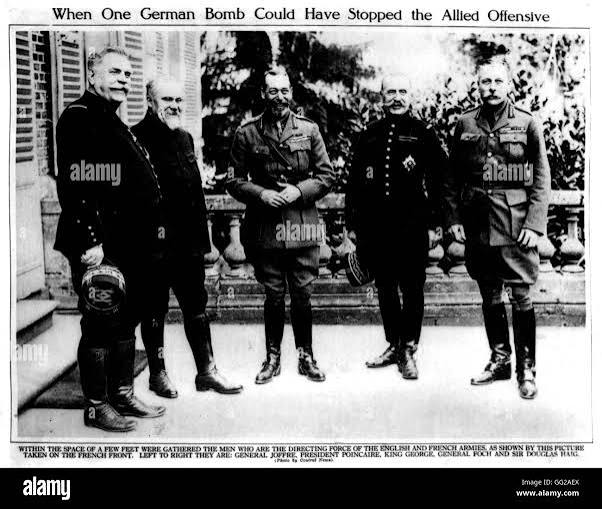
    At the Doullens Conference on March 26, the Allies made a historic decision: they appointed Foch as Supreme Allied Commander, giving him authority over all Allied forces on the Western Front. It was the first time in the war that a single commander had coordinated the efforts of the British, French, and later American armies. Haig, who had been reluctant to serve under anyone, accepted the arrangement, recognizing the emergency. It was a moment of unity that would prove decisive.

    Foch’s Strategy: Flexibility and Counter-Attack

    Foch’s approach in 1918 was radically different from his pre-war doctrine. Instead of rigid defense or reckless offense, he emphasized flexibility. His motto was “Tout le monde à la bataille”—everyone to the battle. He managed reserves like a chess master, refusing to commit them to static defensive lines. Instead, he waited for the right moment to counter-attack.

    That moment came on July 18, 1918. The German spring offensives had exhausted themselves, and Foch launched a counter-offensive at the Marne, throwing in French and American troops. The attack was a stunning success, pushing the Germans back and signaling that the initiative had shifted. Foch’s coordination of reserves had prevented a German breakthrough in the spring and set the stage for the final Allied advance.

    Haig’s War of Attrition: The Long Grind That Made Victory Possible

    While Foch’s 1918 coordination was brilliant, it rested on the foundation laid by Haig’s attrition strategy. From 1916 to 1917, Haig had kept relentless pressure on the German army, even when the gains were measured in yards. The Somme and Passchendaele were horrific, but they inflicted irreplaceable losses on the Germans. By 1918, German divisions were understrength, poorly fed, and demoralized. Ludendorff’s own memoirs admit that the German army was a shadow of its former self.

    Haig also oversaw the transformation of the British army into a modern, combined-arms fighting force. The BEF had grown from 6 divisions in 1914 to 60 divisions by 1918—the largest Allied army on the Western Front. Under his command, the British adopted new tactics: creeping barrages, tanks, aircraft coordination, and infiltration techniques. The Battle of Amiens was a textbook example of this new warfare. It was a British-planned and British-executed victory, with Australian and Canadian troops at the spearhead. Foch had actually pushed for a more ambitious offensive, but it was Haig’s forces that achieved the breakthrough.

    The Hundred Days: Two Strategies Merge

    In the autumn of 1918, Foch orchestrated the final offensive—a “sledgehammer” of simultaneous attacks along the entire front. The goal was to prevent the Germans from shifting reserves from one sector to another. Haig, initially reluctant to extend his offensive, eventually pushed for the breakthrough of the Hindenburg Line. On September 29, British, Australian, and American forces broke through the supposedly impregnable line. The German army was in full retreat, mutiny was spreading, and the Kaiser abdicated. On November 11, the Armistice was signed.

    The Hundred Days Offensive was a coordinated triumph, but it was built on the attrition of the previous years. Without Haig’s grinding warfare, the German army might have been strong enough to withstand the final blow. Without Foch’s coordination, the Allies might have squandered their advantage. The two strategies were complementary, not opposed.

    The Legacy and the Debate

    The question “Which general won the war?” is, in many ways, the wrong question. The war was won by the combined efforts of millions of soldiers and the strategies of both commanders. Haig’s attrition was necessary but costly; Foch’s coordination was brilliant but depended on the foundation Haig had built. Their legacies, however, are wildly different. Haig remains the “Butcher of the Somme” in popular memory, though revisionist historians argue he was a necessary evil. Foch is celebrated as the architect of victory, though his pre-war offensive doctrine had proven deadly. The truth is that both men adapted to the realities of industrial warfare—Haig by embracing attrition, Foch by embracing coordination—and together they broke the German army.

    The debate between Haig and Foch is not a simple choice. It is a story of two men with different philosophies who, in the crucible of 1918, found a way to work together. Haig’s attrition wore down the enemy; Foch’s coordination delivered the final blow. The war was won by both—and by the millions who fought and died under their command. Their strategies, though different, were two halves of a single whole, and the question of who deserves the credit is best answered by recognizing that neither could have won without the other.

    Summary

    • Douglas Haig commanded the British Expeditionary Force from 1915, implementing a strategy of attrition that inflicted heavy losses on the German army, despite massive British casualties.
    • Ferdinand Foch became Supreme Allied Commander in March 1918, coordinating Allied reserves and launching counter-offensives that turned the tide.
    • Foch’s flexibility and coordination were crucial in 1918, but they relied on the weakened German army that Haig’s attrition had created.
    • The Hundred Days Offensive was a coordinated effort, with Haig’s forces achieving key breakthroughs like Amiens and the Hindenburg Line.
    • The war was won by a combination of both strategies, not by one general alone.

    FAQ

    Q: Who was Douglas Haig?
    A: Douglas Haig was the Commander-in-Chief of the British Expeditionary Force from December 1915 to the end of World War I. He is known for his attrition strategy, which led to heavy casualties at battles like the Somme and Passchendaele, but also contributed to the eventual defeat of Germany.

    Q: Who was Ferdinand Foch?
    A: Ferdinand Foch was a French general who became the Supreme Allied Commander in March 1918. He coordinated the Allied response to the German Spring Offensive and planned the final Hundred Days Offensive that led to the Armistice.

    Q: What was the Hundred Days Offensive?
    A: The Hundred Days Offensive was the final Allied offensive of World War I, from August 8 to November 11, 1918. It consisted of a series of coordinated attacks along the Western Front that broke the German army’s will to fight.

    Q: Why is Haig called the ‘Butcher of the Somme’?
    A: Haig earned this nickname because of the massive casualties suffered under his command, particularly on the first day of the Battle of the Somme, which saw 57,000 British casualties. Critics argue he was reckless, while supporters say his attrition strategy was necessary.

    Q: Did Foch and Haig agree on strategy?
    A: Not always. They had different approaches—Haig favored attrition, while Foch favored coordination and counter-attack. However, they worked together in 1918, with Haig accepting Foch’s overall command and Foch relying on Haig’s forces for key breakthroughs.
  • Verdun 1916: The 303-Day Battle That Became a Symbol of Industrialized Slaughter

    Verdun 1916: The 303-Day Battle That Became a Symbol of Industrialized Slaughter

    On February 21, 1916, at 7:15 AM, the German army unleashed over 2 million shells on a narrow front near the French fortress city of Verdun. The bombardment lasted nine hours, and the sound was heard 100 miles away. By the time it stopped, the landscape had been transformed into a lunar crater field, and the battle that followed would not end for 303 days.

    Verdun was not just another battle on the Western Front. It became the ultimate symbol of the futility and horror of World War I—a battle fought not for territory, but for national pride and the destruction of an army. When it was over, an estimated 700,000 to 800,000 soldiers were dead, wounded, or missing, and the front line had barely moved.

    The Strategy of Bleeding France White

    Verdun was the brainchild of Erich von Falkenhayn, the German Chief of Staff. By late 1915, the Western Front was a stalemate of trenches and barbed wire. Germany faced a war of attrition against the Allies, who had more manpower and industrial capacity. Falkenhayn believed France was the weaker link in the Allied chain. In a December 1915 memorandum to the Kaiser, he argued that by attacking a position the French could not abandon—for reasons of strategy and national honor—Germany could force the French army to “bleed to death.”

    Verdun was the perfect target. It was a fortified salient jutting into German lines, a historic fortress city on the Meuse River that had guarded the route to Paris since Roman times. Its loss would be a psychological blow and open a corridor into the French rear. Falkenhayn’s plan was not to capture Verdun itself, but to draw the French army into a battle of attrition where German artillery would slaughter them.

    The German preparations were massive. Over 1,200 artillery pieces, including 420mm “Big Bertha” howitzers, were massed along an 8-mile front. The initial bombardment was designed to be so overwhelming that it would crush French morale and allow a rapid infantry advance. The Germans also had a secret weapon: the new flamethrower, used for the first time in large numbers.

    The Fortresses That Were Supposed to Be Obsolete

    Verdun was ringed by a series of forts built after the Franco-Prussian War of 1870. Fort Douaumont and Fort Vaux were the most formidable, with thick concrete and steel armor. But by 1916, the French high command, led by General Joseph Joffre, had stripped many of these forts of their heavy artillery, believing they were obsolete in the age of modern siege guns. The forts were undermanned and poorly supplied.

    This was a critical mistake. On February 25, just four days after the attack began, a small German raiding party captured Fort Douaumont—the largest and most powerful fort on the Verdun perimeter—without firing a shot. The French were shocked. The fort’s fall was a major blow to French morale and gave the Germans a strong defensive position.

    Fort Vaux would hold out longer, but not by much. Its commander, Major Sylvain Eugène Raynal, and his garrison defended the fort for seven days in June, fighting in the dark, flooded corridors, and communicating with the outside world by carrier pigeon. When they finally surrendered, they were down to their last canteen of water.

    The Sacred Way and the Noria System

    After the initial German advance, the French reacted with desperation. General Philippe Pétain was given command of the 2nd Army and tasked with holding Verdun at all costs. Pétain understood that the key to survival was logistics. The city was nearly surrounded, with only one road connecting it to the rear—a narrow, two-lane road from Bar-le-Duc.

    Pétain organized an around-the-clock convoy of trucks to keep the road open. At its peak, a truck passed every 14 seconds, delivering 1,800 tons of supplies and 2,000 troops per day. The road became known as the “Voie Sacrée” (Sacred Way), and it was the lifeline of the French defense. Without it, Verdun would have fallen in weeks.

    Pétain also implemented the “noria” system—a rotation of divisions. Instead of leaving units in the line until they were destroyed, he cycled them through the battle for short periods, then pulled them back to rest and refit. Over the course of the battle, 70% of the entire French army passed through Verdun. This kept morale relatively intact and ensured that no single unit bore the full brunt of the slaughter.

    The Human Cost: A Hell on Earth

    Verdun was a battle of matériel, but it was fought by flesh and blood. The soldiers on both sides described it as “hell on earth.” The constant artillery bombardment churned the ground into a muddy, cratered moonscape. Bodies were buried and reburied by each new shell. The wounded often drowned in mud-filled craters. Rats and lice were constant companions.

    The psychological toll was immense. French soldier René Benjamin wrote: “You have to have seen Verdun to understand what war really is. It’s not war; it’s apocalypse.” A German soldier described the battlefield as “a sea of mud, blood, and iron.”

    The battle also took a toll on the officers who would later become famous. Charles de Gaulle was a young French captain at Verdun. He was captured by the Germans in March 1916 and spent the rest of the war as a prisoner of war. On the German side, a young lieutenant named Friedrich Paulus fought at Verdun; he would later command the German 6th Army at Stalingrad.

    The Failure of Attrition

    The battle dragged on for months, with neither side able to achieve a decisive breakthrough. The Germans captured the village of Fleury in June, coming within 2.5 miles of Verdun, but they could not take the city itself. The French counterattacked in October, recapturing Fort Douaumont and Fort Vaux. By December, the front line had returned to roughly where it had started in February.

    The strategic outcome was a French victory, but at a staggering cost. French casualties numbered about 377,000, while German casualties were about 337,000. Falkenhayn’s plan to bleed France white had failed—Germany had bled nearly as much as its enemy. The battle also failed to prevent the Allied offensive on the Somme, which began in July 1916 and further drained German resources.

    Historians today debate whether Falkenhayn’s “bleed France white” memo was a genuine strategy or a post-hoc justification for a failed breakthrough attempt. Crown Prince Wilhelm, who commanded the German 5th Army, later wrote that he believed the goal was to capture Verdun, not to bleed the French. The evidence is ambiguous, but the result is clear: Verdun was a military and human disaster for both sides.

    The Legacy of Verdun

    Verdun became a symbol of French resistance and sacrifice. The phrase “Ils ne passeront pas” (“They shall not pass”)—attributed to General Robert Nivelle, who succeeded Pétain—became a rallying cry for the entire war. In France, Verdun is still remembered as the quintessential battle of World War I, a place where the nation’s soul was tested and preserved.

    The battle had political consequences as well. In France, Joffre was replaced as Commander-in-Chief by Nivelle in December 1916, partly due to the perceived mishandling of Verdun. In Germany, Falkenhayn was dismissed as Chief of Staff in August 1916, replaced by Paul von Hindenburg and Erich Ludendorff.

    Today, the battlefield of Verdun is a memorial to the dead. The remains of 130,000 unidentified soldiers lie in the Douaumont Ossuary, a bone house built after the war. The ground is still scarred by craters and littered with unexploded shells, making it one of the most dangerous places in France—a century later, it is still too dangerous to farm or walk freely.

    The Battle in Numbers

    • 303 days: the length of the battle
    • 2 million: shells fired in the first 24 hours
    • 1,200+: German artillery pieces massed
    • 70%: percentage of the French army that served at Verdun
    • 14 seconds: the interval between trucks on the Voie Sacrée
    • 800,000: approximate total casualties
    • 300,000+: estimated dead on both sides

    Verdun was a battle that should never have been fought, and once fought, could not be stopped. It was a product of industrial warfare, where the logic of attrition trumped human life. The battle’s legacy is not a glorious victory, but a grim reminder of what happens when nations commit to total war. Today, Verdun stands as a warning—a silent, scarred landscape that tells us that some battles are not won, but survived.

    Summary

    • The Battle of Verdun lasted from February 21 to December 18, 1916, approximately 303 days, making it the longest battle of World War I.
    • German Chief of Staff Erich von Falkenhayn designed the attack to “bleed France white” through attrition, but the plan backfired, costing Germany nearly as many casualties as France.
    • French commander Philippe Pétain organized the Voie Sacrée supply road and a division rotation system that kept the French army functioning, becoming a symbol of French endurance.
    • The battle resulted in an estimated 700,000–800,000 total casualties, with about 300,000–400,000 dead, and ended with the front line nearly unchanged.
    • Verdun became a powerful symbol of the futility of war, memorialized by the Douaumont Ossuary and the phrase “Ils ne passeront pas.”

    FAQ

    Q: Why was Verdun so important to the French?
    A: Verdun was a historic fortress city on the Meuse River, guarding the route to Paris. It had been a bastion since Roman times and was a point of French national pride. Its loss would have been a psychological blow and opened a corridor into the French rear.

    Q: What was the “Voie Sacrée”?
    A: The Voie Sacrée was a single road from Bar-le-Duc to Verdun that was kept open by continuous truck convoys. At peak, a truck passed every 14 seconds, delivering 1,800 tons of supplies and 2,000 troops per day. It was the lifeline of the French defense.

    Q: Did the Germans actually aim to capture Verdun?
    A: There is debate. Falkenhayn’s plan was to “bleed France white” through attrition, not necessarily to capture the city. However, Crown Prince Wilhelm and field commanders believed the goal was to take Verdun itself. The plan’s failure led to Falkenhayn’s dismissal.

    Q: How many soldiers died at Verdun?
    A: Estimates of total casualties (killed, wounded, missing) range from 700,000 to 800,000. Of those, about 300,000 to 400,000 were killed, with French losses around 377,000 and German around 337,000.

    Q: What is the Douaumont Ossuary?
    A: The Douaumont Ossuary is a memorial building near Verdun that contains the remains of at least 130,000 unidentified soldiers from the battle. It was built after the war as a resting place for the dead of both sides.

  • The Last German Gamble: How the Second Battle of the Marne Broke the Kaiser’s Army

    The Last German Gamble: How the Second Battle of the Marne Broke the Kaiser’s Army

    In the summer of 1918, the German army made one final, desperate gamble to win World War I before American troops could tip the balance. The Second Battle of the Marne, fought from July 15 to July 18, 1918, was the last German offensive of the war—and it failed catastrophically. This article unpacks the battle’s strategy, the turning point it represented, and why it set the stage for the Armistice just four months later.

    The battle was not just another clash on the Western Front. It was a high-stakes race against time. Germany had knocked Russia out of the war and transferred hundreds of thousands of troops west, hoping to achieve a decisive victory before the United States could deploy its millions of fresh soldiers. The Marne was where that gamble collapsed, and the Allied counteroffensive that followed marked the beginning of the Hundred Days Offensive that ended the war.

    The Strategic Setting: A Salient Pointing at Paris

    By early 1918, Germany’s strategic position was dire. The British naval blockade was strangling its economy, and the entry of the United States into the war in 1917 threatened to tip the manpower balance decisively against the Central Powers. General Erich Ludendorff, the de facto German commander, launched a series of massive offensives in the spring of 1918—Operation Michael, Georgette, Blücher-Yorck, and others—designed to crush the Allies before American divisions arrived in force.

    These Spring Offensives drove deep into Allied territory, creating a large bulge in the front line along the Marne River, only about 60 miles from Paris. This salient was a tempting target for the Allies, but for Ludendorff it was a launching pad. His plan, Operation Marneschutz-Reims, called for a two-pronged assault: one army would cross the Marne east of Reims, another west of Reims, to encircle the city and split the French lines. If successful, the Germans would capture Reims, roll up the French defenses, and potentially force a negotiated peace before the Americans could matter.

    But Ludendorff was overreaching. His troops were exhausted after months of offensive operations, supply lines were stretched thin, and he had no significant reserves to exploit a breakthrough. The plan was a gamble that relied on speed and surprise—and surprise was the one thing he didn’t have.

    The Allied Intelligence Advantage

    The French had broken German radio codes and knew the timing and location of the attack in advance. General Henri Gouraud, commanding the French Fourth Army east of Reims, used this intelligence to devastating effect. He deliberately evacuated his frontline trenches, leaving only light screening forces to absorb the initial German barrage. Meanwhile, he concentrated his artillery on the rear areas where German troops would mass.

    When the German artillery opened fire on July 15, it was largely wasted on empty trenches. Then, as German infantry advanced, they walked into a killing zone of French artillery and machine-gun fire. The attack east of Reims stalled almost immediately.

    West of Reims, the Germans initially had more success. They crossed the Marne River and pushed forward several miles, but they were soon slowed by determined resistance, particularly from the American 3rd Division. This division, which had only recently arrived in France, held its ground at the Marne crossings, earning the nickname “Rock of the Marne.” At the bridge at Mézy, American troops counterattacked and threw the Germans back across the river.

    The Great Counteroffensive: July 18, 1918

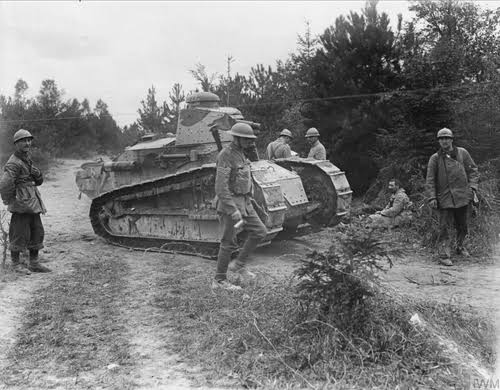
    With the German attack stalling, Supreme Allied Commander Ferdinand Foch saw his opportunity. On July 18, he launched a massive counteroffensive against the western flank of the Marne salient, near Soissons. The attack featured about 350 tanks—mostly French Renault FTs—and a combined force of French and American infantry, including the U.S. 1st and 2nd Divisions.

    The assault caught the Germans completely off guard. They had been focused on their own offensive and had not expected the Allies to launch a major attack so quickly. The use of tanks, which were still a relatively new weapon, allowed the Allies to break through German lines despite minimal artillery preparation. The French and Americans advanced up to five miles on the first day, threatening to cut off the German forces inside the salient.

    Faced with the prospect of encirclement, Ludendorff ordered a retreat. Over the following weeks, the Allies pushed the Germans back to the Aisne and Vesle rivers, erasing the Marne salient entirely by early August. The battle was over, and the strategic initiative had passed permanently to the Allies.

    Why the Battle Was a Turning Point

    The Second Battle of the Marne was decisive for several reasons. First, it marked the end of German offensive capability on the Western Front. The German army had suffered approximately 139,000 casualties during the battle—killed, wounded, or captured—and had lost irreplaceable equipment and experienced soldiers. Ludendorff’s dream of winning the war before the Americans arrived was shattered.

    Second, it demonstrated the effectiveness of combined-arms tactics. The Allied counteroffensive integrated infantry, artillery, tanks, and air power in a coordinated assault, a precursor to the more sophisticated operations of the Hundred Days Offensive. The success also validated Foch’s strategy of maintaining a strong central reserve and using it to strike at the enemy’s weakest point.

    Third, the battle had profound psychological effects. For the French, it was a vindication after the devastating mutinies of 1917 and the German advances of early 1918. The defense of Paris was a national triumph. For the Americans, it proved that their troops could fight and win against the best of the German army. For the Germans, the defeat was a demoralizing blow; many soldiers began to see the war as unwinnable, and desertions increased in the months that followed.

    The Human Cost

    Casualty figures are grim. Allied losses were approximately 95,000 French, 16,000 British, and 12,000–15,000 American soldiers. German losses were higher, around 139,000. For many American soldiers, this was their first major battle, and they showed remarkable bravery and effectiveness. The 3rd Division’s stand at the Marne became a legend, but it came at a price: the division suffered over 1,900 casualties in three days of fighting.

    German soldiers faced a different kind of suffering. Many were underfed, exhausted, and increasingly disillusioned. The arrival of fresh American troops, who seemed to have endless supplies and high morale, further undermined their confidence. The Second Marne was not just a military defeat; it was a psychological blow from which the German army never recovered.

    The Road to the Armistice

    The Allied counteroffensive at the Marne did not end the war overnight, but it set the stage. In August 1918, the Allies launched the Hundred Days Offensive, a series of coordinated attacks that pushed the Germans back relentlessly. With its army collapsing and its allies surrendering, Germany sued for peace, and the Armistice was signed on November 11, 1918.

    The Second Battle of the Marne is often overshadowed by other events of the war, but it deserves recognition as one of the most important battles of the conflict. It was the turning point where the Allies seized the initiative and never let go. For the Germans, it was the last great offensive, and its failure sealed the fate of the Kaiserreich.

    The Second Battle of the Marne was more than just a military engagement; it was the decisive moment when the tide of World War I turned irrevocably. The failure of the German offensive and the success of the Allied counteroffensive demonstrated that the Central Powers could no longer win the war. It was a battle of intelligence, courage, and strategic vision, and it paved the way for the final Allied victory. Understanding this battle helps us appreciate the complexity of the Great War and the fragility of empires that dared to overreach.

    Summary

    • Dates and Outcome: The Second Battle of the Marne (July 15–18, 1918) was the last German offensive of WWI, ending in a decisive Allied victory.
    • German Plan: Operation Marneschutz-Reims aimed to encircle Reims and split French lines, but the Allies knew the plan in advance thanks to broken codes.
    • Allied Counteroffensive: On July 18, Foch launched a tank-led attack that collapsed the Marne salient, forcing the Germans to retreat.
    • Casualties: German losses were ~139,000; Allied losses were ~95,000 French, 16,000 British, and 12,000–15,000 American.
    • Significance: The battle ended German offensive capability, boosted Allied morale, and set the stage for the Hundred Days Offensive and the Armistice in November 1918.

    FAQ

    Q: Why was the Second Battle of the Marne important?
    A: It was the last major German offensive of World War I. Its failure marked the turning point of the war, as the Allies seized the initiative and launched the Hundred Days Offensive that led to the Armistice.

    Q: What was the “Rock of the Marne”?
    A: It was the nickname given to the U.S. 3rd Division for its determined defense of the Marne River crossings on July 15, 1918, where it held its ground against German attacks.

    Q: How did the Allies know about the German attack?
    A: The French had broken German radio codes and knew the timing and location of the offensive. This allowed them to prepare a devastating defense, including evacuating frontline trenches and concentrating artillery.

    Q: What role did tanks play in the battle?
    A: The Allied counteroffensive on July 18 used about 350 tanks, mostly French Renault FTs. Their surprise appearance helped break through German lines and was crucial to the success of the attack.

    Q: How many American troops fought in the Second Battle of the Marne?
    A: Approximately 85,000–110,000 American troops participated, including the 3rd, 1st, and 2nd Divisions, among others. Their performance demonstrated that American soldiers could fight effectively against the German army.

  • Mud, Rats, and the Human Cost: Inside the Trenches of World War I

    Mud, Rats, and the Human Cost: Inside the Trenches of World War I

    By 1917, the Western Front stretched 475 miles from the North Sea to the Swiss border, a scar across Europe that would hold for years. Within that line, soldiers carved out a world of mud, rats, and constant fear—a world that produced its own kind of horror, from trench foot to shell shock. This is the story of that world, told through the daily grind of the men who lived it.

    A City Underground

    The trench system was not a single ditch but a sprawling network. An estimated 35,000 miles of trenches crisscrossed the Western Front, with front-line, support, and reserve lines connected by zigzag communication trenches. The fire trench faced the enemy, its sandbagged parapet offering a slim shield against bullets. Behind it, support and reserve trenches sat 70 to 100 yards back, housing reinforcements and supplies. Dugouts—some shallow, some deep—provided shelter from shells and a place to sleep, though many were vulnerable to direct hits.

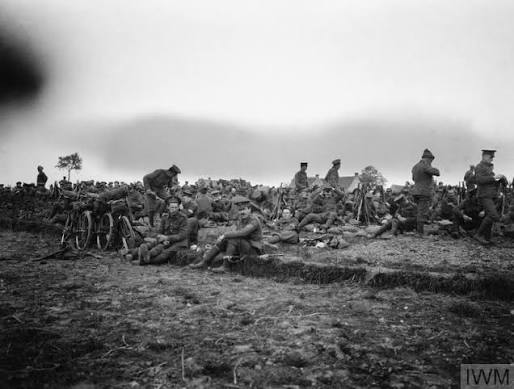
    Soldiers lived in these cramped, damp spaces for days at a time. A typical rotation sent men to the front for four to six days, then back to support, then reserve, then rest areas behind the lines. But even in “rest,” there was little rest: fatigues, repairs, and drills filled the hours.

    The Mud That Swallowed Men

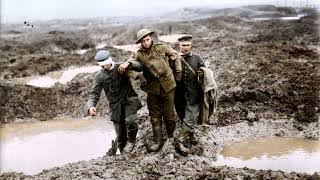
    Flanders’ clay-heavy soil turned to glue with the first rain. A single storm could leave trenches waist-deep in water, and the mud was more than an inconvenience—it was a killer. At Passchendaele in 1917, men and horses drowned in shell craters filled with liquid mud. Artillery shells that hit the muck often failed to explode, while soldiers struggled to move, their boots sucked down with each step.

    Trench foot, a non-freezing cold injury, became epidemic. In the winter of 1914–15 alone, over 20,000 British soldiers were treated for it. The condition—swollen, numb, decaying tissue—often led to amputation. Soldiers tried to ward it off by drying their feet and changing socks, but in the waterlogged trenches, such efforts were rarely enough.

    Rats and Lice: The Constant Companions

    Brown rats, Rattus norvegicus, thrived in the trenches. They fed on corpses, food scraps, and horse carcasses, growing to the size of cats, soldiers claimed. Millions of rats infested the front lines, and men killed them with shovels, bayonets, and even trained dogs—but the numbers were overwhelming. One soldier wrote of rats running over his face at night, their claws scratching against his skin.

    Lice were just as pervasive. They caused “trench fever,” a relapsing illness that added fever and pain to the misery. The daily ritual of “chatting”—searching clothing for lice—was a constant, futile battle.

    The Invisible Wound: Shell Shock

    The term “shell shock” emerged during the war to describe the tremors, paralysis, mutism, and nightmares that struck soldiers without physical injury. The British Army recorded around 80,000 cases, and in 1916, shell shock accounted for about 40% of casualties in some front-line units. Treatments ranged from rest and tonics to electroshock and hypnosis—often with little understanding of the condition.

    Many shell-shocked men were branded cowards or malingerers. Some faced courts-martial and execution for desertion; the British executed 306 soldiers, several of whom likely suffered from shell shock. The legacy of shell shock helped shape modern military psychiatry, but for the men who endured it, the war never ended.

    A Day in the Trenches

    Life followed a grim rhythm. “Stand-to” at dawn and dusk meant manning the fire step, bayonets fixed, watching for attack. Days were spent inspecting, repairing, and hauling supplies. Nights were for work—repairing wire, patrolling No Man’s Land, or raiding enemy trenches.

    Food was cold and monotonous: bully beef, hard biscuits, jam, and tea. Fresh food was a luxury, often arriving in parcels from home. Sleep came in shifts, in wet clothes, in cramped dugouts. Chronic exhaustion was universal.

    The Human Toll

    The trenches were a machine designed to grind men down—body and mind. The mud, the rats, the lice, the fear—they all combined into a daily endurance test. The men who survived carried the scars, visible and invisible. Shell shock and trench foot were just the names for the damage; the reality was a generation changed forever.

    The trenches of World War I were more than a military strategy; they were a world unto themselves, a place where the human spirit was tested to its limits. The mud, the vermin, and the psychological wounds left an indelible mark on all who passed through. Understanding that world is not just about remembering the past—it’s about honoring the endurance of those who lived it.

    Summary

    • The Western Front spanned 475 miles, with 35,000 miles of trenches by 1917.
    • Trench foot affected over 20,000 British soldiers in the winter of 1914–15 alone.
    • Brown rats and lice were ubiquitous, causing disease and constant torment.
    • Shell shock affected an estimated 80,000 British soldiers, yet many were treated as cowards.
    • Daily life was a cycle of stand-to, hard labor, and sleep deprivation, all under the threat of death.

    FAQ

    Q: What was the typical depth and width of a trench?
    A: Trenches were usually 6–8 feet deep and 3–5 feet wide, with duckboards on the floor to keep men above water.

    Q: How did soldiers deal with rats?
    A: They used shovels, bayonets, and dogs to kill rats, and tried traps and poison—but the rat population was so vast that these efforts had little impact.

    Q: What were the symptoms of shell shock?
    A: Symptoms included tremors, paralysis, mutism, nightmares, anxiety, and dissociation. It was not a formal diagnosis at the time.

    Q: How long did soldiers spend in the front line?
    A: Typically 4–6 days, after which they rotated to support and reserve lines, then to rest areas, though the cycle repeated continuously.

    Q: What caused trench foot?
    A: Prolonged exposure to wet, cold conditions caused swelling, numbness, and tissue decay, often leading to amputation.

  • First Battle of Ypres: How the ‘Race to the Sea’ Forged the Trenches

    First Battle of Ypres: How the ‘Race to the Sea’ Forged the Trenches

    In the autumn of 1914, the Great War was still a war of movement. Armies marched, cavalry charged, and generals dreamed of decisive victories. But by the time the leaves fell in Flanders, that dream was dying. The First Battle of Ypres, fought from October 19 to November 22, 1914, was the last great open-field battle of the war—and the one that slammed the door on mobility. It marked the end of the ‘Race to the Sea’ and the beginning of the trenches that would define the next four years.

    This battle was not just another clash. It was a brutal lesson in the cost of outdated tactics against modern firepower, a fight that bled the British Expeditionary Force white, and a German failure that turned into a national tragedy. Understanding Ypres means understanding how the Western Front froze into stalemate, and why the names of places like Langemarck and Gheluvelt still echo in military history.

    The Race That Ended at the Coast

    After the Battle of the Marne in September 1914, the German advance on Paris was halted. Both sides then tried to outflank each other to the north, in a series of maneuvers that became known as the ‘Race to the Sea.’ Each attempt simply extended the front line westward, until by mid-October it ran from the Swiss border to the North Sea. The only gap left was around the Belgian city of Ypres.

    The Germans wanted to break through to the Channel ports—Calais and Dunkirk—to cut off British supply lines and potentially knock Britain out of the war. The British, with their small but professional expeditionary force, were determined to hold Ypres and keep those ports safe. Both sides rushed troops to the area, and by October 19, the stage was set for a collision.

    The Old Contemptibles’ Last Stand

    The British Expeditionary Force (BEF) was a force unlike any other. It was small—roughly 100,000 to 160,000 men—but it was a professional army, with well-trained regulars who could fire an astonishing 15 aimed shots per minute, a skill known as the ‘mad minute.’ These veterans, later nicknamed the ‘Old Contemptibles’ after a (likely apocryphal) order from Kaiser Wilhelm II calling them a ‘contemptible little army,’ were about to face a German force that vastly outnumbered them.

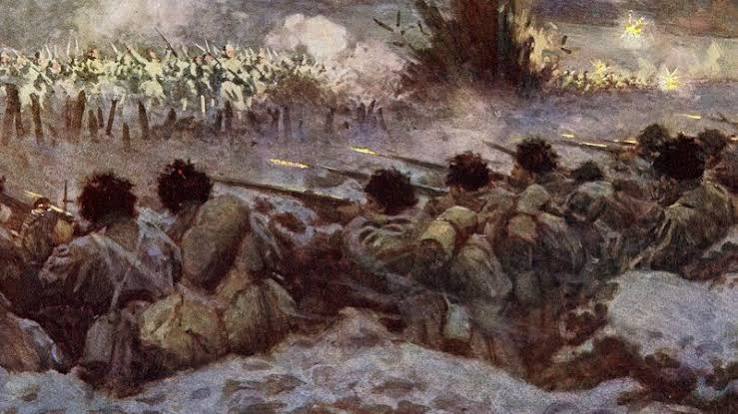
    The German Fourth and Sixth Armies, commanded by Albrecht, Duke of Württemberg, and directed by Chief of Staff Erich von Falkenhayn, launched repeated assaults against the Ypres salient—a bulge in the Allied line. The fighting was intense from the start. At Langemarck (October 21–24), the Germans threw in reserve corps made up of young, poorly trained volunteers and older reservists. These inexperienced troops advanced in dense formations, singing patriotic songs, and were mown down by the British rifles. The slaughter was so appalling that the battle became known in Germany as the ‘Kindermord bei Ypern’—the Massacre of the Innocents at Ypres.

    The Crisis at Gheluvelt

    The most critical moment came on October 31, at the village of Gheluvelt. The German assault had broken through the British line, and the situation was desperate. The British I Corps, commanded by Douglas Haig, was on the verge of collapse. In a famous counterattack, Haig threw in the 2nd Worcestershire Regiment, which recaptured the village and steadied the line. This action is often credited with saving the entire Ypres salient from being overrun.

    But the cost was staggering. By the end of the battle, the BEF had suffered approximately 54,000 to 58,000 casualties. The pre-war regular army was effectively destroyed. Many of its best officers and men were killed or wounded, replaced by reservists and raw recruits who would never match their skill. The term ‘Old Contemptibles’ became a badge of honor for those who survived, but also a reminder of what had been lost.

    The German Tragedy at Langemarck

    While the British remember Ypres as a heroic last stand, the German memory is darker. The battle became a national trauma, centered on the image of young, idealistic volunteers marching to their deaths. The ‘Kindermord’ was later used both to glorify sacrifice and to criticize the military leadership. Falkenhayn’s decision to commit these inexperienced reserve corps to frontal assaults was widely condemned as wasteful and tactically inept.

    German casualties at Ypres are harder to pin down, with estimates ranging from 20,000 to 46,000, but the psychological impact was immense. The loss of so many young men, many of them students and graduates who had volunteered with patriotic fervor, left a scar on German society. The battle also revealed that the German army, despite its numerical superiority, could not break the Allied line. The offensive was called off in mid-November, and both sides, exhausted and soaked by autumn rains, began to dig in for the winter.

    The Birth of Trench Warfare

    The First Battle of Ypres was a transitional battle. Armies still used Napoleonic-era tactics—massed infantry assaults, cavalry in reserve—against modern weapons like machine guns, rapid-fire artillery, and magazine rifles. The result was catastrophic casualties. The battle proved, in blood, that frontal infantry attacks against prepared positions were suicidal. Yet the lesson would have to be relearned painfully over the next four years.

    By the end of November, the front line had stabilized. The Ypres Salient, a bulge in the Allied line around the city, would remain a focal point of fighting for the rest of the war. The trenches that began as shallow ditches would grow into vast networks of earthworks, barbed wire, and bunkers, stretching from the North Sea to the Swiss border. The war of movement was over; the war of attrition had begun.

    The Role of the French and the Wider Picture

    The French played a significant role in the battle, particularly in the southern part of the salient. General Ferdinand Foch, coordinating Allied efforts in the north, launched aggressive counterattacks that were crucial in holding the line. However, French casualties—estimated between 10,000 and 50,000—are often overshadowed in English-language accounts. The French were also focused on their own offensives in Artois and Champagne, which limited their support at Ypres.

    The battle’s strategic significance cannot be overstated. The Germans failed to reach the Channel ports, and the Allies maintained a foothold in Belgium. But the cost was immense. The BEF, once a small but elite force, was never the same. The war would go on for four more years, and the trenches of Ypres would witness some of the bloodiest battles in history, including the Second and Third Battles of Ypres (Passchendaele). The First Battle of Ypres was not just a battle; it was the birth of a new kind of warfare, one that would consume a generation.

    The First Battle of Ypres ended in mud and exhaustion, with no clear winner. But its legacy is profound. It marked the end of the war of movement and the beginning of trench warfare, a brutal stalemate that would define the Western Front for years to come. The ‘Old Contemptibles’ held the line, but at a terrible price, and the German ‘Kindermord’ left a scar that would haunt Germany. As the guns fell silent in November 1914, the soldiers on both sides could not have known that they were digging the graves of millions, and that the trenches they carved into the Flanders mud would become the symbol of a generation lost.

    Summary

    • The First Battle of Ypres (Oct 19–Nov 22, 1914) was the final battle of the ‘Race to the Sea’ and the beginning of trench warfare.
    • The British Expeditionary Force, despite being outnumbered, held the Ypres salient against German assaults, but suffered ~54,000–58,000 casualties, effectively destroying the pre-war regular army.
    • Key engagements included Langemarck, Gheluvelt, and Nonne Bosschen, where German reserve corps of young volunteers were decimated, leading to the ‘Kindermord’ myth.
    • The battle ended in a stalemate, with both sides digging in for the winter, creating the trenches that would define the war.
    • The French played a crucial role, but their efforts are often overlooked in English-language accounts.

    FAQ

    Q: Why is it called the ‘Race to the Sea’?
    A: After the Battle of the Marne, both the Allies and Germans tried to outflank each other to the north, racing toward the North Sea. Each attempt extended the front line, until it reached the coast. The ‘race’ ended at Ypres, where the last gap was closed.

    Q: Who were the ‘Old Contemptibles’?
    A: The British Expeditionary Force, a small professional army, was reportedly called a ‘contemptible little army’ by Kaiser Wilhelm II. The soldiers adopted the name proudly. They were highly skilled regulars who suffered devastating losses at Ypres.

    Q: What was the ‘Kindermord bei Ypern’?
    A: It means ‘Massacre of the Innocents at Ypres.’ It refers to the slaughter of young, inexperienced German volunteer soldiers at Langemarck, who advanced in dense formations and were mown down by British rifle fire. The event became a tragic national myth in Germany.

    Q: How many casualties were there?
    A: British casualties were approximately 54,000–58,000. German casualties are estimated between 20,000 and 46,000, and French casualties between 10,000 and 50,000, though figures vary widely.

    Q: Why was the battle important?
    A: It marked the end of mobile warfare and the beginning of trench warfare on the Western Front. The failure of frontal attacks against modern weapons at Ypres foreshadowed the costly tactics of the rest of the war.