Tag: Naval History

  • The Secret Life of the U-Boat: How Submarine Technology Revolutionized Naval Warfare and Undersea Exploration

    The Secret Life of the U-Boat: How Submarine Technology Revolutionized Naval Warfare and Undersea Exploration

    Imagine a vessel that can vanish beneath the waves, strike without warning, and then slip away into the deep. That’s the submarine, and its story is one of radical innovation born from the crucible of war. The German U-boat, in particular, pushed the limits of what was possible underwater, transforming naval combat and, eventually, our ability to explore the ocean’s darkest depths.

    This isn’t just a tale of military might. The same engineering breakthroughs that allowed U-boats to hunt Allied convoys also laid the groundwork for the research submersibles that later visited the Titanic and the deepest point on Earth. By tracing the U-boat’s development from a primitive submersible to a sleek hunter-killer, we can see how a weapon of war became a tool for discovery.

    From Submersible to Submarine: The Early Years

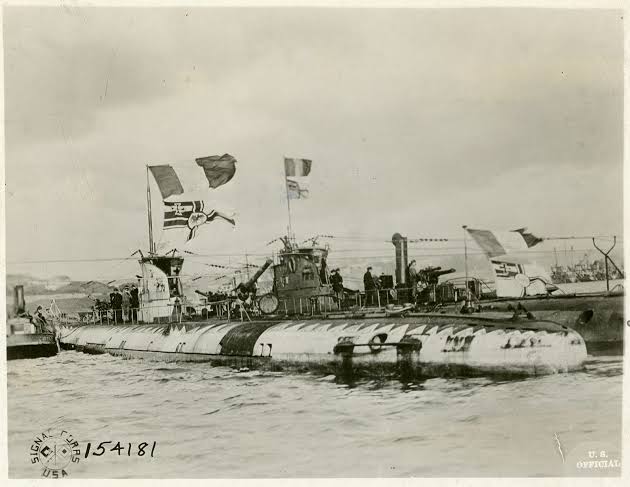
    The first submarines were more like underwater boats that could dive for short periods, not true submarines capable of long submerged cruises. The USS Holland, launched in 1900, was a breakthrough: it used a gasoline engine on the surface and electric motors below, a hybrid design that became the standard for decades. Germany quickly adopted this concept, commissioning its first U-boat, U-1, in 1906. These early boats were cramped, dangerous, and limited in range, but they hinted at a new kind of naval warfare.

    World War I: The U-Boat as a Commerce Raider

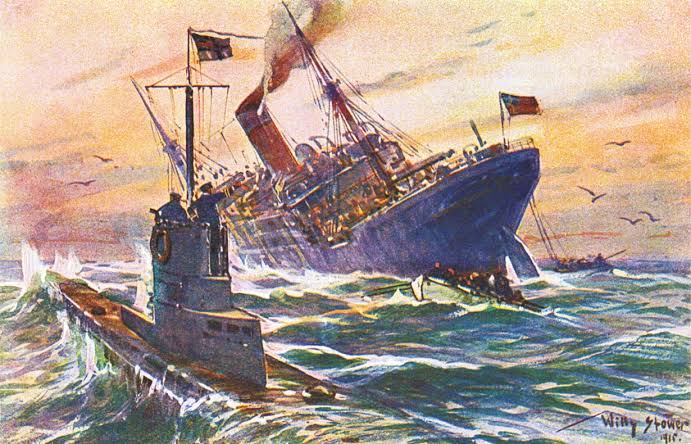
    Germany’s gamble on unrestricted submarine warfare in World War I was a game-changer. U-boats could sink merchant ships without warning, choking off supply lines. By 1917, they had sent over 5,000 Allied ships to the bottom. This policy was so effective that it helped drag the United States into the war, but it also demonstrated the submarine’s strategic power: a small crew could threaten an entire navy’s logistics.

    The U-boats of WWI were primitive by modern standards, but they forced the development of countermeasures like convoys and depth charges. The lesson was clear: control of the sea was no longer just about battleships.

    World War II: The Wolf Packs and the “Happy Time”

    Between the wars, submarine technology improved steadily. By WWII, German U-boats like the Type VII were faster, more reliable, and carried better torpedoes. Their most infamous tactic was the “wolf pack”: groups of U-boats coordinated by radio to overwhelm convoys. During the “First Happy Time” (1940-41), these packs wreaked havoc in the Atlantic, sinking hundreds of ships.

    But the Allies adapted. Radar, sonar (called ASDIC), long-range aircraft, and codebreaking (Ultra) turned the tide by mid-1943. The Battle of the Atlantic was a brutal technological arms race, and the U-boat fleet paid a horrific price: over 700 boats lost and roughly 30,000 of 40,000 crewmen killed—a casualty rate of 75%, the highest of any military branch in the war.

    Innovations That Changed Everything

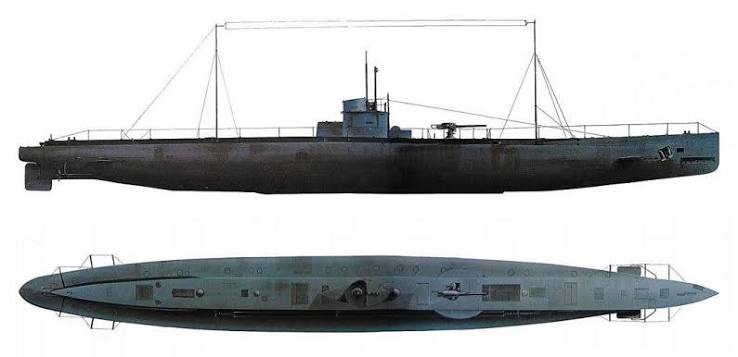
    Out of this desperate struggle came innovations that would shape the future of underwater travel. The snorkel was a simple but vital addition: a retractable tube that allowed diesel engines to run while submerged at periscope depth, so U-boats no longer had to surface to recharge batteries. Even more revolutionary was the Type XXI, the first true submarine. Its streamlined hull and huge battery banks allowed it to cruise submerged at high speed for days. Though too late to affect the war, the Type XXI was the blueprint for post-war Soviet and US submarines.

    Torpedoes also evolved. The acoustic homing torpedo, like the G7es, could lock onto a ship’s propeller noise, making them far more deadly. These advances were driven by pure necessity, but they had lasting impact.

    The Post-War Legacy: From War to Exploration

    After Germany’s surrender, over 150 U-boats were captured or scuttled. The Allies eagerly studied them, and the Type XXI’s design directly influenced American and Soviet submarine programs. This lineage led to nuclear submarines like the USS Nautilus, which could stay submerged for months, and to ballistic missile submarines that became the backbone of Cold War deterrence.

    The same engineering principles—pressure hulls, life support systems, and propulsion—were adapted for scientific submersibles. The bathyscaphe Trieste reached the Challenger Deep in 1960 using a pressure sphere reminiscent of submarine design. The research submersible Alvin, which explored the Titanic wreck, was built with technology derived from naval submarines. Without the U-boat’s innovations, our ability to explore the deep ocean would be decades behind.

    The U-boat was a weapon of war, born from German ingenuity and desperation. Its legacy, however, extends far beyond the battlefield. The same pressure hulls that protected crews from depth charges now carry scientists to hydrothermal vents. The life support systems that kept sailors alive for months enable astronauts in training to simulate spaceflight. The U-boat’s story is a powerful reminder that even the most destructive technologies can seed peaceful discoveries.

    Summary

    • The U-boat evolved from a simple submersible to the first true submarine, the Type XXI, which set the standard for post-war nuclear submarines.
    • Unrestricted submarine warfare in WWI and WWII changed naval strategy, forcing the development of convoys, sonar, and radar.
    • The U-boat’s innovations—snorkel, streamlined hulls, acoustic torpedoes—were directly copied or adapted by Allied and Soviet navies.
    • Post-war, submarine technology was repurposed for deep-sea exploration, enabling trips to the Titanic and the Challenger Deep.
    • The human cost was staggering, with a 75% casualty rate among U-boat crews, underscoring the harsh realities of undersea warfare.

    FAQ

    Q: What was the first modern submarine?
    A: The USS Holland, launched in 1900, is often considered the first modern submarine. It combined a gasoline engine for surface travel with electric motors for submerged operation, a design that became the standard for decades.

    Q: How did U-boats change naval warfare?
    A: U-boats shifted naval strategy from surface fleet battles to economic warfare, targeting merchant shipping. They forced the development of convoys, depth charges, sonar, and radar, and demonstrated that a small crew could threaten a navy’s supply lines.

    Q: What was the Type XXI U-boat?
    A: The Type XXI was a German submarine introduced late in WWII. It was the first true submarine, designed to run submerged at high speed for extended periods, thanks to a streamlined hull and large battery banks. It became the blueprint for post-war Soviet and US submarines.

    Q: How did submarine technology help deep-sea exploration?
    A: The pressure hulls, life support systems, and propulsion technologies developed for military submarines were adapted for research submersibles like Alvin and the bathyscaphe Trieste. These vessels have explored shipwrecks and the deepest ocean trenches.

    Q: What was the “First Happy Time”?
    A: It was a period from 1940 to 1941 when German U-boats enjoyed great success against Allied shipping in the Atlantic, sinking hundreds of ships with relatively few losses. The term refers to the ease with which U-boats found and attacked targets.
  • Five Minutes Over Midway: How Codebreakers and Courage Turned the Tide in the Pacific

    Five Minutes Over Midway: How Codebreakers and Courage Turned the Tide in the Pacific

    How Codebreakers Helped Secure U.S. Victory in the Battle of Midway | HISTORYAt 10:22 on the morning of June 4, 1942, the fate of the Pacific War hung on a sliver of sky above a pair of coral islands. Below, four Japanese aircraft carriers the vanguard of an empire that had swept across Asia and the Pacific in six monthswere turning into the wind to launch a second strike against Midway Atoll. Their decks were crammed with fueled planes, armed bombs, and torpedoes. Then, from 20,000 feet, three squadrons of American dive bombers plunged out of the sun. In five minutes, they turned the tide of World War II.

    This was no accident of luck. It was the product of a secret intelligence coup, a commander’s calculated gamble, and the desperate sacrifice of young pilots who flew straight into death to buy those five minutes. The Battle of Midway, fought June 4–7, 1942, was the moment Japan’s offensive momentum broke—when the U.S. Navy, outnumbered and battle-worn, struck a blow from which the Imperial Japanese Navy never recovered.

    The Road to the Reef

    Midway Atoll sits at the northwestern edge of the Hawaiian chain, 1,300 miles from Oahu. It is a speck of sand and reef, but by 1942 it was an unsinkable American aircraft carrier—a forward base for bombers and submarines that could threaten Japanese operations. For Admiral Isoroku Yamamoto, commander of Japan’s Combined Fleet, Midway was a lure. He planned to seize the island and, in the process, draw out the U.S. carriers he had failed to sink at Pearl Harbor on December 7, 1941.

    Yamamoto’s plan was grandiose and complicated. He would send a diversionary force to attack the Aleutians in the north, a main carrier strike force under Vice Admiral Chuichi Nagumo to soften Midway, an invasion force to land troops, and a massive battleship fleet lurking hundreds of miles behind—ready to crush the American carriers once they surfaced. It was a plan built on the assumption that the U.S. carriers would react predictably, steaming from Pearl Harbor only after Midway was attacked. It was a fatal assumption.

    The Codebreakers’ Secret

    While Yamamoto planned, a cramped basement at Pearl Harbor—Station HYPO—was quietly unraveling his strategy. Commander Joseph Rochefort and his team of cryptanalysts had been working on the Japanese JN-25 naval code for months. By May 1942, they had pieced together that a major operation was aimed at a target designated “AF.” But what was AF?

    Rochefort had a hunch it was Midway. To prove it, he devised a simple ruse. He ordered Midway to send an uncoded radio message stating that its freshwater distillation plant had broken down. Two days later, Japanese intelligence intercepted a message reporting that “AF” was short of fresh water. The trap was sprung. Nimitz knew exactly where the enemy was going.

    This intelligence gave the U.S. Pacific Fleet a priceless advantage. Nimitz could position his three carriers—Enterprise, Hornet, and the hastily repaired Yorktown—northeast of Midway, out of Japanese reconnaissance range, ready to spring an ambush. The Yorktown, which had been severely damaged at the Battle of the Coral Sea a month earlier, was patched in just 72 hours at Pearl Harbor. Shipyard workers, working around the clock, made her seaworthy enough to fight. She would sail into history.

    The Morning of June 4

    Nagumo’s four carriers—Akagi, Kaga, Soryu, and Hiryu—launched their first strike on Midway at dawn on June 4. The attack was successful but not decisive; Midway’s airfield remained operational, and its bombers were already in the air, searching for the Japanese fleet. Meanwhile, Nagumo’s scout planes were searching for the U.S. carriers. They found nothing.

    At 7:10 AM, Midway-based aircraft began attacking the Japanese carriers. Torpedo bombers, dive bombers, and B-17s came in waves, but they were slow, vulnerable, and poorly coordinated. Japanese Zero fighters and anti-aircraft fire cut them down. Not a single bomb hit a Japanese ship. But the attacks had a profound effect: they convinced Nagumo that Midway posed a greater threat than expected, and they delayed his decision on whether to strike again.

    At 8:20 AM, a scout plane from the cruiser Tone finally reported the presence of a U.S. carrier force. Nagumo was caught in a dilemma. His planes were armed with bombs for a second strike on Midway. To attack the carriers, they needed torpedoes. The process of rearming would take time—precious time. He ordered the rearming to begin, and then, at 8:37, he changed his mind and ordered the planes to be rearmed again. The decks of his carriers became a chaotic jumble of bombs, torpedoes, and fueled aircraft.

    The Sacrifice of the Torpedo Squadrons

    While Nagumo dithered, U.S. carrier aircraft were closing in. The first to arrive were the torpedo bombers—slow, low-flying TBD Devastators. They came in at wave height, without fighter cover, their torpedoes outdated and often malfunctioning. They flew straight into the teeth of the Japanese defenses.

    Torpedo Squadron 8 from the Hornet, led by Lieutenant Commander John Waldron, was the first to attack. All fifteen of its aircraft were shot down. Only one pilot, Ensign George Gay, survived—he floated in the water, watching the battle unfold, as his comrades died around him. Torpedo Squadrons from Enterprise and Yorktown followed, and they too were massacred. Of the 41 torpedo bombers that attacked, only six returned. They scored no hits. But they did something more important: they drew the Japanese Zero fighters down to sea level, leaving the sky above clear.

    The Five Minutes That Changed the War

    At 10:22 AM, the Japanese carriers were at their most vulnerable. Their decks were full of aircraft being rearmed, with bombs and torpedoes stacked carelessly, fuel lines snaking across the flight deck. Zeroes that had been scrambled to shoot down the torpedo bombers were low on fuel and ammunition, circling at low altitude. No one was looking up.

    Then, from 20,000 feet, the dive bombers arrived. They were from Enterprise and Yorktown—two squadrons of SBD Dauntlesses, about 50 aircraft total. They had arrived late, having missed the initial contact, but their timing was perfect. Led by Lieutenant Commander Wade McClusky, who had made a critical navigation decision to continue searching rather than turn back, they found the Japanese fleet by following a single destroyer’s wake.

    They pushed over into their dives. In the next five minutes, bombs struck Akagi, Kaga, and Soryu. The explosions ignited the fuel and ordnance on their decks. Fires raged out of control. The three carriers were doomed. Only Hiryu, further north, escaped the initial attack.

    The Final Act

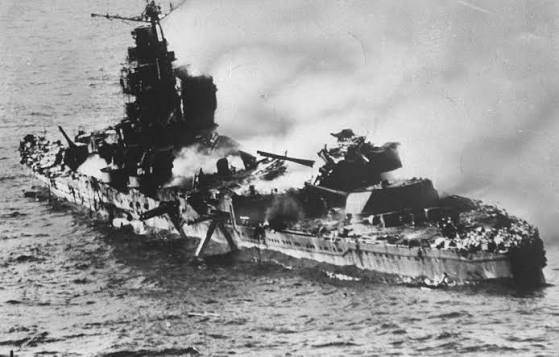
    Hiryu launched a counterstrike that afternoon. Her bombers found Yorktown and hit her with three bombs and two torpedoes. The Yorktown was crippled, and she was later sunk by a Japanese submarine, along with the destroyer Hammann, which was alongside her during salvage efforts. But Hiryu’s victory was short-lived. U.S. scout planes located her, and a strike from Enterprise and Hornet found her in the late afternoon. Four bombs hit Hiryu’s flight deck, turning her into an inferno. She sank the next morning.

    By June 7, the battle was over. The U.S. had lost the Yorktown and the Hammann, but all four of Japan’s fleet carriers—the core of its naval air power—lay at the bottom of the Pacific. More than 250 carrier aircraft and their experienced pilots had gone down with them, a blow from which Japan’s air arm would never recover. The U.S. lost about 150 aircraft, but most of its aircrew survived to fight again.

    The Aftermath

    Midway was a turning point. Japan lost not only ships and men but the strategic initiative. Admiral Yamamoto’s dream of a decisive battle had ended in disaster. The U.S. went on the offensive, landing at Guadalcanal in August 1942, the first step in a long island-hopping campaign that would end at Tokyo Bay. The battle also vindicated the U.S. intelligence community and the carrier-centric naval doctrine that would dominate the rest of the war.

    For the men who fought there, the memory was stark. Ensign George Gay, floating in the Pacific, watched his squadron die and then watched the Japanese carriers burn. He was rescued the next day, his body burned and his spirit forever marked. A generation of American pilots had been sacrificed to buy those five minutes, but the sacrifice bought victory.

    Midway was not a battle that was won by a single genius or a single lucky break. It was won by intelligence, by risk-taking, and by the raw courage of men who flew into the face of death. The codebreakers who cracked JN-25, the commanders who gambled on a flanking position, and the torpedo pilots who gave their lives to set up the dive bombers—all of them were necessary. The Battle of Midway remains a testament to the fact that, in war, information and sacrifice can overcome superior numbers and brute force. It was the moment the Pacific War truly turned, and it has never been forgotten.

    Summary

    • The U.S. Navy’s codebreakers confirmed Midway as the Japanese target by faking a water shortage, enabling Admiral Nimitz to set an ambush.
    • The Japanese plan was overcomplicated and dispersed, violating the principle of concentration of force.
    • The sacrifice of U.S. torpedo squadrons, which suffered near-total losses, drew Japanese fighters down and left the sky clear for dive bombers.
    • At 10:22 AM on June 4, 1942, U.S. dive bombers struck three Japanese carriers in five minutes, turning the tide of the battle.
    • All four Japanese fleet carriers were sunk; Japan lost ~3,000 men and the initiative in the Pacific, while the U.S. lost one carrier and ~360 men.

    FAQ

    Q: Why did the Japanese attack Midway?
    A: Admiral Yamamoto wanted to draw out and destroy the U.S. carrier fleet in a decisive battle, and also to seize Midway as a forward airbase to threaten Hawaii and force a favorable peace.

    Q: How did the U.S. know the Japanese were coming?
    A: U.S. Navy cryptanalysts, led by Commander Joseph Rochefort, had partially broken the Japanese JN-25 code. They confirmed Midway as the target by having Midway send a false message about a broken water distillation plant, and then intercepting a Japanese report that ‘AF’ was short of water.

    Q: What was the ‘five minutes’ that changed the war?
    A: On June 4, 1942, at 10:22 AM, U.S. dive bombers from Enterprise and Yorktown attacked the Japanese carriers Akagi, Kaga, and Soryu while their decks were full of fueled and armed aircraft. In five minutes, they hit all three, causing catastrophic fires that doomed the carriers.

    Q: How many ships were lost on each side?
    A: Japan lost all four fleet carriers (Akagi, Kaga, Soryu, Hiryu) and a heavy cruiser. The U.S. lost the carrier Yorktown and the destroyer Hammann.

    Q: Why was the Battle of Midway a turning point?
    A: It was Japan’s first decisive defeat in 350 years. The loss of four fleet carriers and their irreplaceable aircrews ended Japan’s offensive capability, and the U.S. went on the strategic offensive, starting with the Guadalcanal campaign in August 1942.

  • The Lost U-Boats: Unraveling the Fate of Germany’s Missing Submarines

    The Lost U-Boats: Unraveling the Fate of Germany’s Missing Submarines

    In the cold, dark waters of the Atlantic, hundreds of German U-boats met their end during World War II. Yet for decades, the fate of dozens remained a mystery boats that simply vanished, their crews never heard from again. Families waited in anguish, navies puzzled over enemy reports, and historians searched archives for answers. Only with the advent of modern underwater technology have many of these lost submarines been found, each discovery rewriting the stories of those who served beneath the waves.

    This is the tale of the missing U-boats: how they disappeared, what happened to them, and why some still remain unaccounted for.

    The Vanishing Act: When U-Boats Went Missing

    During World War II, Germany commissioned roughly 1,170 U-boats. Of those, about 785 were lost sunk, scuttled, or destroyed. But not every loss was immediately understood. Around 50 to 60 boats were officially listed as “overdue, presumed lost,” meaning they failed to report within a set window and no one knew why. In the vastness of the ocean, a submarine could disappear without a trace, leaving only questions.

    One such case was U-47, commanded by the celebrated Günther Prien, who had sunk the British battleship Royal Oak in Scapa Flow. In March 1941, U-47 vanished during a patrol in the North Atlantic. No distress signal, no wreckage, no survivors. The British later claimed depth charges sank it, but the exact location and cause remained unclear for years. It wasn’t until 2002 that a wreck discovered by a research vessel was tentatively identified as U-47, though the identification is still debated.

    Similarly, U-122 disappeared in June 1940, and U-196 vanished in the Indian Ocean in 1942. These boats simply stopped communicating. In wartime, such losses were common, but the uncertainty was agonizing. For the families of the 40 to 60 men on board each boat, there was no grave to visit, no closure. German authorities would eventually declare the crews dead, but the precise fate of many men remained unknown for decades.

    Why Did U-Boats Disappear?

    The causes of U-boat losses were numerous. Depth charges from escort ships were the most common, especially before 1943. Aircraft attacks became increasingly deadly after mid-1943, when Allied planes equipped with radar could locate surfaced submarines even at night. Mines claimed many boats in coastal waters and the Bay of Biscay, where U-boats transited to and from their bases. Mechanical failures, battery explosions, and accidental flooding also took their toll. In some cases, crews scuttled their own boats to avoid capture.

    But why did some losses go unexplained? Often, a submarine sank in deep water, beyond the reach of wartime sonar. No survivors meant no testimony. Even when Allied records, including Ultra decrypts, later revealed likely causes, some cases remained ambiguous. The ocean kept its secrets.

    The Hunt for Wrecks: Modern Discoveries

    The end of the war brought a massive cleanup operation. Over 200 U-boats were scuttled by their crews under Operation Regenbogen to prevent capture. The Allies raised many of these for scrapping or sank them in Operation Deadlight, which disposed of 116 captured U-boats in late 1945. But some wrecks were left to rust on the seabed, forgotten.

    It took decades for technology to catch up with history. Underwater archaeologists began using side-scan sonar, remotely operated vehicles (ROVs), and historical records to locate the missing boats. In 1991, off the coast of New Jersey, divers found the wreck of U-869, a boat that had been presumed lost with all hands in 1945. The discovery, chronicled in the book Shadow Divers, revealed that the U-boat had been sunk by depth charges from an American destroyer escort—a fate that had been recorded, but the wreck site was never confirmed.

    In 2014, U-576 was found off Cape Hatteras, North Carolina. It had been sunk in 1942 during a convoy battle, but its exact location was unknown. The wreck lay in 240 feet of water, remarkably intact. Similarly, U-166, which had been reported lost in the Gulf of Mexico, was discovered in 2001 during an oil pipeline survey, lying just a few miles from where it had attacked a passenger ship.

    Each discovery adds a piece to the puzzle. For example, U-20, the submarine that sank the Lusitania in 1915, was found off Denmark in 1984. Its wreck helped historians understand the final moments of a boat that had been a symbol of German naval power in World War I.

    The Still-Unaccounted-For

    Despite these finds, as of recent estimates, roughly 30 to 40 World War II U-boats remain officially unlocated. The number shrinks as new wrecks are identified, but some will likely never be found. In the North Sea and the Mediterranean, dozens of World War I U-boats also remain missing. The deep ocean, especially the Atlantic, is a vast and unforgiving place. Some wrecks lie in waters too deep for exploration, or have been buried by sediment over the decades.

    The uncertainty has fueled legends. The most persistent myth is that Hitler escaped to Argentina aboard a U-boat, often linked to U-977 and U-530, which surrendered in Argentina in 1945. Historians have debunked these claims, but they persist in popular culture. Another case, U-234, was carrying uranium oxide and advanced technology when it surrendered in 1945, sparking rumors of a secret Nazi mission. The reality, while less sensational, is still remarkable: U-234’s cargo was a precursor to the Cold War’s nuclear race.

    The Human Cost

    Behind every missing U-boat was a crew of men, many of them young. For their families, the word “missing” meant years of uncertainty. Some families never learned what happened. Even today, when a wreck is found, it often becomes a war grave, protected by law. Divers and archaeologists treat these sites with respect, knowing that they are the tombs of hundreds of sailors.

    In 2022, a sonar survey off the coast of Belgium identified the wreck of U-103, a World War I U-boat that had been missing for over a century. The discovery brought closure to a historical mystery, but it also served as a reminder of the enduring human cost of the submarine war.

    The Legacy of the Lost

    The missing U-boats are more than just historical puzzles. They are a testament to the brutal realities of naval warfare and the limits of human knowledge. The Battle of the Atlantic was a turning point in World War II, and the U-boat fleet’s defeat by mid-1943 marked a strategic shift. The lost submarines symbolize that defeat, but they also represent the lives of the men who served and died beneath the waves.

    As technology improves, more wrecks will likely be found. Each discovery adds to our understanding of the past, but it also reminds us that some questions may never be answered. The ocean is vast, and its secrets are not easily surrendered.

    The lost U-boats are a haunting reminder of the Second World War’s maritime battles. Of the hundreds that vanished, many have been found, but dozens remain hidden beneath the waves. Their stories are not just about warfare; they are about the men who served, the families who waited, and the enduring mystery of the deep. As underwater archaeology advances, some mysteries may finally be solved, but the memory of the missing will persist—a silent tribute to those who never came home.

    Summary

    • During WWII, around 50-60 U-boats were listed as ‘overdue, presumed lost,’ with no confirmed cause of destruction at the time.
    • Causes of loss included depth charges, aircraft attacks, mines, mechanical failures, and scuttling, but some losses remained unexplained due to deep water or lack of survivors.
    • Modern sonar and ROVs have located many wrecks, such as U-869 (found in 1991), U-576 (2014), and U-166 (2001).
    • Roughly 30-40 WWII U-boats remain unlocated, along with dozens from WWI.
    • Myths, like Hitler’s escape to Argentina, persist despite historical debunking, but the human cost of missing U-boats remains a somber legacy.

    FAQ

    Q: How many U-boats are still missing?
    A: As of recent estimates, roughly 30-40 WWII U-boats remain officially unlocated, though the number shrinks as new wrecks are identified. Dozens of WWI U-boats are also still missing.

    Q: What happened to U-869?
    A: U-869 was presumed lost in 1945, but its wreck was found off New Jersey in 1991. It was later determined to have been sunk by depth charges from an American destroyer escort.

    Q: Why did U-boats go missing without a trace?
    A: Many sank in deep water, beyond the reach of wartime sonar. With no survivors or wreckage, their fate remained unknown until modern technology could locate the wrecks.

    Q: Did Hitler escape via U-boat?
    A: No. Claims that Hitler escaped to Argentina aboard U-977 or U-530 have been widely debunked by historians. Both boats surrendered in Argentina in 1945, but there is no evidence Hitler was aboard.

    Q: Are U-boat wrecks protected?
    A: Yes, many are considered war graves and are protected by international law. Divers and archaeologists treat them with respect, and disturbing them is often illegal.

  • The Battle of the Coral Sea: When the World’s Navies Fought Without Seeing Each Other

    The Battle of the Coral Sea: When the World’s Navies Fought Without Seeing Each Other

    On May 8, 1942, in the waters northeast of Australia, two naval forces fought a battle unlike any before. They never saw each other. No ship fired a shot at an enemy vessel. Instead, aircraft from four carriers two American, two Japanese located and struck their targets from over a hundred miles away. By the end of the day, one American carrier lay sinking, and a Japanese carrier was crippled. The Battle of the Coral Sea was the world’s first carrier-versus-carrier battle, and it changed naval warfare forever.

    The fight was not a clear-cut victory for either side. The Americans lost the fleet carrier USS Lexington, while the Japanese lost the light carrier Shōhō and saw Shōkaku heavily damaged. Yet strategically, the outcome favored the United States: Japan’s invasion of Port Moresby was called off, marking the first time a Japanese amphibious operation was turned back. More importantly, the battle blunted Japanese airpower at a critical moment, setting the stage for the decisive Battle of Midway one month later.

    The Strategic Chessboard

    In the spring of 1942, Japan’s expansion across the Pacific seemed unstoppable. After Pearl Harbor, they had swept through the Philippines, Malaya, and the Dutch East Indies. Their next target was Port Moresby on the southern coast of Papua New Guinea, a stepping stone for threatening Australia. Operation MO, as it was called, aimed to seize Port Moresby and establish a seaplane base at Tulagi in the Solomon Islands.

    But the United States had a secret weapon: codebreakers. They had cracked parts of the Japanese naval code, JN-25, and learned of the operation. This allowed Admiral Chester Nimitz to send carriers to intercept, even though his forces were still recovering from the devastating raid on Pearl Harbor.

    The Forces Converge

    The American side was built around two fleet carriers: USS Yorktown and USS Lexington. Rear Admiral Frank Jack Fletcher commanded the combined Task Force 17. The Japanese side, under Vice Admiral Takeo Takagi, had the fleet carriers Shōkaku and Zuikaku, plus the light carrier Shōhō, which was assigned to support the invasion force.

    Both sides had strengths and weaknesses. The Japanese pilots were battle-hardened from victories across the Pacific. The Americans were less experienced but had the advantage of better intelligence and a more concentrated force. The Japanese plan, by contrast, was complex and dispersed, splitting their carriers into separate groups with different missions.

    The First Strikes

    The battle began on May 3 when Japanese forces occupied Tulagi. The next day, American aircraft from Yorktown launched strikes on the invasion force, sinking a few small ships but failing to find the main carriers. For the next two days, both sides searched for each other, their scouts crisscrossing the Coral Sea.

    On May 7, the search paid off in a chaotic series of strikes. American aircraft spotted what they thought was the main Japanese carrier force—it turned out to be the light carrier Shōhō. They attacked with devastating effect, sinking her in minutes. Lieutenant Commander Robert Dixon radioed the famous message: “Scratch one flat-top!” It was the first Japanese carrier sunk in the war.

    Meanwhile, Japanese aircraft also found targets—but they were the wrong ones. They bombed and sank the destroyer USS Sims and the oiler USS Neosho, mistaking the latter for a carrier. It was a costly error for both sides: the Americans lost valuable ships, and the Japanese wasted bombs on a tanker.

    The Main Event

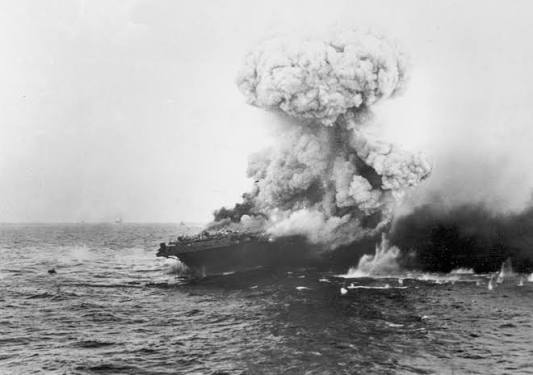
    On May 8, both carrier forces finally located each other almost simultaneously. Each launched full strikes. The American aircraft found Shōkaku and hit her with three bombs, putting her flight deck out of action. But Zuikaku, hidden in a rain squall, escaped undamaged. The Japanese strike found both American carriers. Yorktown took a bomb hit but remained operational. Lexington, however, was struck by two torpedoes and two bombs. At first, she seemed to be in stable condition, and her crew began damage control.

    Then, hours later, a massive explosion rocked Lexington. Fuel vapors had ignited, setting off a chain of internal blasts. The fires quickly became uncontrollable. By evening, the order was given to abandon ship. American destroyers scuttled her with torpedoes, sending the great carrier to the bottom.

    Aftermath and Consequences

    The battle ended with both sides withdrawing. The Japanese had lost Shōhō, and Shōkaku was so damaged she had to return to Japan for repairs. Zuikaku still had her flight deck, but she had lost so many aircraft and pilots that she was effectively out of action. The invasion of Port Moresby was postponed and then canceled.

    For the United States, the loss of Lexington was a bitter blow. But the battle had achieved its strategic goal: the Japanese advance on Australia was halted. More importantly, the battle severely weakened Japanese carrier airpower. The experienced pilots lost at Coral Sea were irreplaceable—Japan had no training program to quickly produce new ones. This proved decisive at Midway, where the Japanese would face the Americans with fewer veteran airmen and only three operational fleet carriers.

    The Battle of the Coral Sea also validated the new doctrine of carrier-centric warfare. It showed that ships could fight each other without ever coming into visual range, and that airpower was now the dominant factor at sea. For the first time in naval history, the surface fleet had taken a back seat to the aircraft carrier.

    The lessons learned were costly. The loss of Lexington highlighted the dangers of fuel vapor and the need for better damage control. The confusion of the searches showed the importance of effective scouting and coordination. These lessons would be applied just weeks later at Midway, where the United States would turn the tide of the Pacific War.

    The Battle of the Coral Sea was a turning point, even though neither side could claim a clear tactical victory. It stopped Japan’s expansion and set the stage for Midway. It also marked the beginning of a new era in naval warfare, where the carrier reigned supreme and the battleship became obsolete. In the annals of history, it stands as the first battle where the enemy was only a distant speck on a radar screen, a harbinger of how wars would be fought in the future.

    Summary

    • The Battle of the Coral Sea (May 4–8, 1942) was the first naval battle where opposing ships never sighted each other.
    • The U.S. lost the carrier Lexington, but stopped the Japanese invasion of Port Moresby, achieving a strategic victory.
    • The Japanese lost the light carrier Shōhō and suffered heavy aircraft and pilot losses, weakening their carrier force for the Battle of Midway.
    • The battle demonstrated the dominance of carrier aviation and the importance of intelligence and scouting.

    FAQ

    Q: Why is the Battle of the Coral Sea considered a turning point?
    A: It was the first time Japan’s expansion was halted, and the first carrier-versus-carrier battle, showing that airpower would decide future naval engagements.

    Q: What was the strategic significance of the battle?
    A: The U.S. prevented Japan from capturing Port Moresby, which would have threatened Australia, and the attrition of Japanese aircrews contributed to their defeat at Midway.

    Q: How did the loss of Lexington affect the U.S. Navy?
    A: It was a heavy blow, but it led to improvements in damage control and validated the carrier as the primary offensive weapon.

    Q: Did the Japanese achieve their objective?
    A: No, they failed to take Port Moresby and had to call off the invasion, marking their first strategic setback in the Pacific.

    Q: What happened to the Japanese carriers after the battle?
    A: Shōkaku was damaged and out of action for months, while Zuikaku lost so many aircraft and pilots that she could not participate in the Battle of Midway.

  • The Arctic Convoys: The Deadliest Supply Route to the Soviet Union

    The Arctic Convoys: The Deadliest Supply Route to the Soviet Union

    These dangerous Arctic convoys saved Russia during World War II

    In the summer of 1941, as German forces surged into the Soviet Union, a new kind of naval operation was born. The Arctic convoys slow, vulnerable columns of merchant ships began threading their way through the icy waters north of Norway, carrying tanks, aircraft, and fuel to the beleaguered Red Army. The route was the shortest sea link between the Western Allies and the Soviet Union, but it was also the most lethal. Over the next four years, these convoys would become a crucible of courage and catastrophe, claiming the lives of thousands of seamen and testing the limits of Allied endurance.

    This is the story of how a few hundred merchant ships, escorted by the Royal Navy, braved polar darkness, German battleships, and relentless air attacks to keep the Soviet Union in the war and at what cost.

    A Route Carved by War

    The Arctic convoys began in August 1941, just two months after Germany invaded the Soviet Union. The first convoy, codenamed Dervish, sailed from Iceland to Arkhangelsk with a modest cargo of raw materials and aircraft. It was a test run, and it succeeded. But the stakes were immense. The Soviet Union was reeling from Operation Barbarossa, losing men and territory at a staggering rate. Stalin demanded supplies tanks, planes, guns, food and the Western Allies, still reeling from their own setbacks, had to find a way to deliver them.

    The shortest sea route ran from Iceland, around the North Cape of Norway, and into the Barents Sea to the ports of Murmansk and Arkhangelsk. It was a passage of extraordinary danger. In winter, the polar night plunged the region into total darkness for months, with temperatures dropping to -40°F and storms that could capsize a ship. In summer, the midnight sun meant 24-hour daylight, offering German aircraft and U-boats no respite. Sea spray froze on decks and guns, and ice accretion could make a ship top-heavy and roll it over.

    Yet the route was also a strategic necessity. The alternative the Persian Corridor or the Pacific route was longer and less direct, and the Soviet Union was in desperate need. So the convoys sailed, and the losses began to mount.

    The Ordeal of PQ-17

    The most infamous convoy of the war was PQ-17, which sailed from Iceland in late June 1942. It consisted of 35 merchant ships, escorted by a close escort of destroyers and corvettes, with a distant covering force of cruisers and battleships to guard against German surface raiders. Among the German threats was the battleship Tirpitz, a massive and feared vessel that lurked in Norwegian fjords.

    On July 4, 1942, the Admiralty received intelligence that Tirpitz had sortied. Fearing that the convoy would be annihilated, First Sea Lord Dudley Pound made a controversial decision: he ordered the convoy to scatter, dispersing the merchant ships so that the covering force could engage the German ships. But the intelligence was wrong—Tirpitz had not sailed, and the convoy was left without protection.

    The result was a massacre. German U-boats and aircraft attacked the scattered ships, sinking 24 of 35 merchant vessels. More than 150 seamen died, and thousands of tons of tanks and aircraft went to the bottom of the Barents Sea. The decision to scatter remains one of the most debated command choices of the war, and it highlighted the brutal calculus of the Arctic convoys: sometimes, the risk of losing the cargo was deemed worse than the risk of losing the men.

    Endurance and Valor: PQ-18 and the Battle of the Barents Sea

    Despite the disaster of PQ-17, the convoys resumed. Convoy PQ-18, in September 1942, was the largest yet, with 40 merchant ships. It faced a determined German assault from aircraft and U-boats, losing 13 ships, but it delivered vital cargo to Arkhangelsk. The escorting aircraft carrier HMS Avenger provided air cover, a lesson learned from PQ-17’s losses.

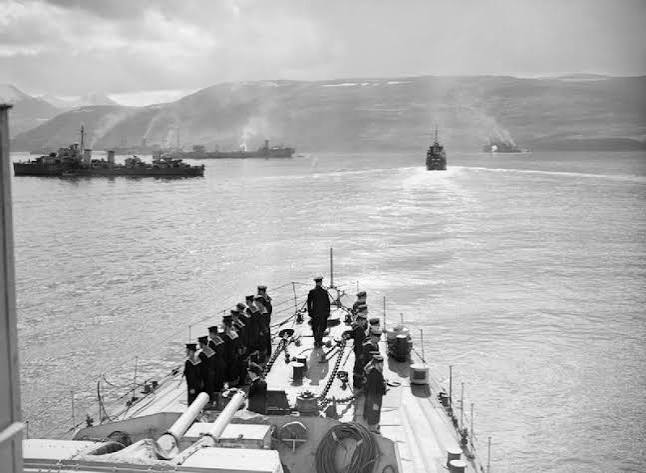
    The most dramatic surface engagement came in December 1942, when a German force led by the heavy cruiser Admiral Hipper and the pocket battleship Lützow attacked convoy JW-51B in the Barents Sea. The escort, commanded by Captain Robert Sherbrooke in the destroyer HMS Onslow, fought a brilliant defensive action. Despite being outgunned and outmatched, the destroyers laid smoke screens and launched torpedo attacks, forcing the German ships to withdraw. Rear Admiral Robert Burnett’s cruisers arrived to drive them off. The battle was a strategic humiliation for the Kriegsmarine—a convoy had been saved, and Hitler, furious, threatened to scrap the entire surface fleet.

    The Toll and the Forgotten

    The Arctic convoys continued until the end of the war, but they exacted a terrible price. Roughly 85 merchant ships and 16 Royal Navy warships were sunk, and over 3,000 British and Allied seamen lost their lives. The merchant crews—many of them civilian volunteers from Britain, the United States, Norway, and the Soviet Union—suffered the highest casualty rates of any Allied service branch. They endured freezing cold, constant danger, and the psychological strain of knowing that every voyage could be their last.

    Yet their sacrifice was often overlooked. After the war, the Soviet Union became an adversary, and the Arctic convoys were relegated to a footnote in the larger narrative of the Second World War. Many veterans returned to civilian life with no recognition, suffering from frostbite, trauma, and the indifference of a world eager to move on.

    A Legacy of Courage

    The Arctic convoys delivered roughly 4 million tons of cargo to the Soviet Union, including about 5,000 tanks, 7,000 aircraft, and 14,000 vehicles. This material helped sustain the Red Army during the darkest days of the war, but the cost was immense. The convoys were a testament to the endurance of ordinary men in extraordinary circumstances—men who faced not only the enemy but also the brutal indifference of the Arctic itself.

    Today, their story is remembered in museums and memorials, and in the words of veterans who finally received recognition in their later years. The Arctic convoys remain a stark reminder of the price of alliance and the courage of those who sailed into the frozen unknown.

    The Arctic convoys were more than a supply route; they were a lifeline that helped turn the tide on the Eastern Front. They were also a human tragedy of staggering proportions, where ordinary sailors faced extraordinary perils. Their story is one of courage, sacrifice, and the enduring bond between allies—even as the cold war that followed threatened to erase it. The men who sailed those icy waters deserve to be remembered not just as statistics, but as heroes who braved the worst that war and nature could throw at them.

    Summary

    • The Arctic convoys (1941–1945) delivered ~4 million tons of supplies to the Soviet Union, including ~5,000 tanks and ~7,000 aircraft.
    • The route was the most dangerous of the war, with polar night, midnight sun, and constant German attacks.
    • Convoy PQ-17 lost 24 of 35 ships after an order to scatter based on false intelligence.
    • The Battle of the Barents Sea (December 1942) saw a German surface force repelled, saving convoy JW-51B.
    • Over 3,000 Allied seamen died, and many survivors faced post-war neglect.

    FAQ

    Q: How many ships were lost on the Arctic convoys?
    A: Approximately 85 merchant ships and 16 Royal Navy warships were sunk during the Arctic convoys.

    Q: What was the most infamous convoy?
    A: Convoy PQ-17, which was ordered to scatter in July 1942 after a false fear of the German battleship Tirpitz, resulting in the loss of 24 of 35 merchant ships.

    Q: Why were the convoys so dangerous?
    A: The route passed within range of German air and naval forces in Norway, and the environment itself was lethal—polar darkness in winter, 24-hour daylight in summer, extreme cold, and ice accretion that could capsize ships.

    Q: What role did the Soviet Union play in the convoys?
    A: The Soviets provided local escort and port facilities, but did not commit major naval forces to protect the convoys at sea. Stalin repeatedly demanded faster deliveries, often downplaying the risks.

    Q: What was the outcome of the Battle of the Barents Sea?
    A: In December 1942, a German surface force attacked convoy JW-51B but was repelled by escorting destroyers, a strategic humiliation for the Kriegsmarine that led Hitler to threaten to scrap the surface fleet.

  • The Submarine War: How U-Boats Nearly Strangled Britain

    The Submarine War: How U-Boats Nearly Strangled Britain

    In the spring of 1941, a convoy of 42 merchant ships lumbered across the North Atlantic, their holds stuffed with food, fuel, and aircraft parts. They were the lifeline of an island nation that imported 70% of its food and nearly all of its oil. But in the dark waters around them, a pack of German U-boats was closing in. Over three nights, they sank 21 ships, sending over 100,000 tons of cargo to the bottom. The convoy’s escorts a handful of corvettes and destroyers could only watch as their charges exploded and burned.

    This was the Battle of the Atlantic, the longest continuous campaign of World War II, and it nearly killed Britain. Between 1939 and 1945, German submarines waged a war of attrition against the ships that kept Britain alive, sinking over 14 million tons of Allied shipping and killing tens of thousands of merchant seamen. Winston Churchill later admitted, “The only thing that ever really frightened me during the war was the U-boat peril.”

    The Lifeline That Had to Be Cut

    Britain’s vulnerability was not a secret. Before the war, the nation imported roughly 55 million tons of goods annually everything from wheat to tungsten. Once the fighting began, that flow became a matter of survival. The British war economy required about 1 million tons of imports per week to sustain itself. By 1942, imports had fallen to just 23 million tons. The country was bleeding out, slowly.

    Germany knew this. Admiral Karl Dönitz, commander of the U-boat fleet, had studied Britain’s dependence on the sea and concluded that if his submarines could cut the transatlantic lifeline, they could starve the island into submission. His strategy was simple: sink more ships than the Allies could build.

    The U-Boat Armada and the Wolf Packs

    The U-boats that prowled the Atlantic were not the sleek nuclear submarines of the Cold War. They were cramped, diesel-electric boats mostly Type VIIs of about 770 tons that spent most of their time on the surface, diving only to attack or evade. They carried about 14 torpedoes and a crew of 44 men who lived in conditions that were, by any measure, appalling.

    Dönitz’s innovation was the wolf pack tactic. Instead of hunting alone, U-boats would spread out in a patrol line across the likely convoy routes. When one boat spotted a convoy, it would shadow it, sending position reports via radio to call in other boats. At night, they would attack on the surface, where their small silhouettes made them almost invisible to escort lookouts. In 1940 and 1941, this tactic worked devastatingly well. The “Happy Time,” as German crews called it, saw U-boats sinking ships faster than Allied yards could replace them. In 1942 alone, they sank more than 1,000 ships in the Atlantic.

    The Merchant Navy: Civilians Under Fire

    The men who bore the brunt of this onslaught were not soldiers. They were merchant seamen—civilian volunteers who signed on to crew the cargo ships, tankers, and transports that carried the goods. They had no combat training, and their ships were often unarmed. Their casualty rate was among the highest of any service branch: roughly one in four merchant seamen who served in the Atlantic did not survive.

    A torpedo strike was a sudden, violent end. A 500-ton freighter could break apart and sink in minutes. Survivors often found themselves in lifeboats or clinging to wreckage, adrift for days or weeks in the freezing North Atlantic. Some were picked up by the same U-boats that had sunk them; others were never found. The psychological toll was immense—many men refused to go back to sea after a single attack, while others returned again and again, knowing the odds.

    The Allies Fight Back: Convoys and Technology

    The first line of defense was the convoy system, revived from World War I. Grouping merchant ships into columns, protected by escorts, dramatically reduced losses. Independent sailers were easy prey; convoyed ships were not. In 1940, the loss rate for independent ships was about 10%; for convoyed ships, it was less than 1%.

    The escorts improved over time. Flower-class corvettes—small, rugged ships built on merchant hulls—were joined by frigates and destroyers equipped with ASDIC (sonar), radar, and depth charges. The introduction of high-frequency direction finding (Huff-Duff) allowed escorts to pinpoint a U-boat’s position the moment it transmitted a radio message, forcing them to stay silent and breaking up wolf pack coordination.

    Air power was the final piece. For the first three years, a “Mid-Atlantic Gap”—a stretch of ocean beyond the range of land-based aircraft—provided a safe hunting ground for U-boats. In 1943, long-range B-24 Liberators and escort carriers closed that gap, and the U-boats lost their sanctuary.

    The Secret Weapon: Ultra

    The most decisive advantage, though, was invisible. At Bletchley Park, a team of codebreakers—many of them women—had cracked the German Enigma cipher. The intelligence, codenamed Ultra, allowed Allied commanders to read U-boat signals and reroute convoys around wolf packs. This was not a perfect system; the Germans periodically changed their codes, and there were times when the Allies were blind. But overall, Ultra gave the Allies an enormous edge.

    Some historians argue that Ultra’s contribution has been overstated, pointing out that convoys and air cover were the primary defensive measures. But even the skeptics concede that knowing where the U-boats were—or at least where they weren’t—saved thousands of lives and millions of tons of shipping.

    Black May: The Turning Point

    The campaign reached its climax in May 1943. The Allies had finally assembled enough escorts, enough aircraft, and enough intelligence to take the offensive. In a single month, they sank 41 U-boats—more than one per day—while losing only 34 merchant ships. It was a massacre. The Kriegsmarine’s wolf packs were forced to withdraw from the North Atlantic, and they never returned in strength.

    Dönitz later admitted that the battle was lost. The U-boat arm continued to fight, but it was a losing struggle against overwhelming Allied industrial might. The United States was launching Liberty ships in as little as 42 days, while Germany’s shipyards could not replace U-boats fast enough. In the end, of the roughly 1,170 U-boats that served, about 785 were sunk. Of the 40,000 men who served in the U-boat arm, some 28,000 died—a casualty rate of 70%, the highest of any German service branch.

    The Human Cost and the Legacy

    The Battle of the Atlantic was not a clean, heroic struggle. It was a brutal war of logistics, fought by men in cold, dark, dangerous places. On the German side, U-boat crews were romanticized as “iron coffins”—a grim nickname that proved all too accurate. On the Allied side, merchant seamen were often forgotten, their sacrifices overshadowed by the more glamorous battles of the war.

    But Britain survived. The imports kept flowing, the convoys got through, and the island became the launching pad for the liberation of Europe. The U-boat war was a close-run thing, but in the end, the Allies’ combination of intelligence, technology, and sheer industrial capacity won out. As Churchill put it, the U-boat peril was the only thing that truly frightened him. It was a fear that proved justified—and a fight that was won against the odds.

    The submarine war was a test of endurance, a struggle between a nation that needed to import 1 million tons of supplies every week and an enemy determined to stop it. For nearly four years, the outcome hung in the balance. But the Allies adapted, innovated, and out-produced their enemy. By May 1943, the U-boats had been driven from the Atlantic, and Britain’s lifeline was secure. The cost was enormous—in ships, in cargo, and above all in lives—but the lesson of the Battle of the Atlantic is clear: even a near-fatal blow can be survived if you have the will, the technology, and the industrial might to keep fighting.

    Summary

    • The Battle of the Atlantic was the longest continuous campaign of WWII, lasting from 1939 to 1945, and was a close-run struggle for Britain’s survival.
    • Germany’s U-boats sank over 14 million tons of Allied shipping and killed thousands of merchant seamen, nearly cutting off Britain’s vital imports.
    • The turning point came in May 1943 when Allied forces sank 41 U-boats in a single month, forcing the Germans to abandon the North Atlantic.
    • Key Allied advantages included the convoy system, new technologies like Huff-Duff and radar, and the breaking of the Enigma code (Ultra).
    • The human cost was staggering: 28,000 of 40,000 U-boat crewmen died, and one in four Allied merchant seamen perished.

    FAQ

    Q: What was the ‘Happy Time’ for U-boats?
    A: The ‘Happy Time’ (1940-1941) was a period when German U-boats sank Allied ships faster than they could be replaced, thanks to wolf pack tactics and the lack of effective Allied countermeasures.

    Q: How did the Allies close the Mid-Atlantic Gap?
    A: The gap was closed in 1943 by using long-range B-24 Liberator bombers and escort carriers that could provide air cover for convoys across the entire Atlantic.

    Q: What was the role of Ultra intelligence?
    A: Ultra was the Allied codebreaking effort that decrypted German Enigma messages, allowing convoys to be rerouted around U-boat wolf packs and saving countless ships and lives.

    Q: Why was Britain so dependent on imports?
    A: Britain imported about 70% of its food and nearly all of its oil and strategic materials, requiring roughly 1 million tons of imports per week to sustain its war economy.

    Q: What was the casualty rate for U-boat crews?
    A: U-boat crews suffered a casualty rate of about 70%—28,000 out of 40,000 men died—the highest of any German service branch.

  • The Sussex Incident: The Sinking That Forced Germany to Change Its U-Boat Rules

    The Sussex Incident: The Sinking That Forced Germany to Change Its U-Boat Rules

    On March 24, 1916, the French cross-Channel ferry SS Sussex was steaming from Folkestone to Dieppe with roughly 380 passengers and crew aboard. About 15 miles off the French coast, a German U-boat fired a single torpedo without warning. The bow blew off, and the ship began to sink rapidly. Within minutes, the lives of dozens of civilians hung in the balance—and the course of World War I was about to shift.

    The attack killed between 50 and 80 people, and while no Americans died, several were injured. That fact set off a diplomatic firestorm. The Sussex sinking became the second major U-boat crisis for the United States, following the Lusitania disaster just ten months earlier. But this time, President Woodrow Wilson drew a harder line, issuing an ultimatum that forced Germany to back down—temporarily. The result was the Sussex Pledge, a promise that changed U-boat tactics for nearly a year and revealed the fragile balance between military necessity and international pressure.

    The Sinking of the Sussex

    The SS Sussex was a 1,530-ton steam ferry operated by the London, Brighton and South Coast Railway, a workhorse of cross-Channel travel. On that March day, it carried a mix of military personnel and civilians, including women and children. The German submarine SM U-29, commanded by Kapitänleutnant Herbert Pustkuchen, stalked the ferry and launched a single torpedo. The explosion tore off the bow, yet the aft section stayed afloat long enough for French and British vessels to rescue survivors and tow the wreck to Boulogne.

    Casualty figures vary by source—between 50 and 80 dead or missing. Among the passengers were several Americans, and although none were killed, the injuries they suffered would have outsized political consequences.

    The Strategic Backdrop: Unrestricted Submarine Warfare

    Germany had declared the waters around the British Isles a war zone in February 1915, ordering U-boats to sink enemy merchant ships without warning. This was a direct response to the British naval blockade that was strangling German imports. Submarines were fragile, slow, and vulnerable when surfaced; stopping to inspect a merchant ship exposed them to attack from Q-ships—armed decoy vessels. Unrestricted warfare wasn’t just a policy choice; it was a tactical necessity for the U-boat arm.

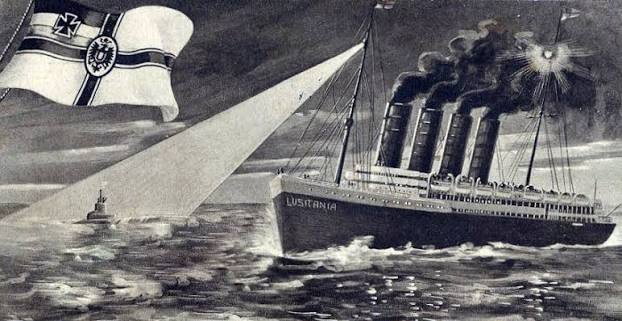
    The Lusitania sinking in May 1915, which killed 1,198 people including 128 Americans, had already created a major crisis. Germany, fearing U.S. entry into the war, issued the Arabic Pledge in September 1915, promising not to sink passenger liners without warning and to ensure the safety of non-combatants. The Sussex attack, coming just six months later, broke that promise.

    Wilson’s Ultimatum and the Sussex Pledge

    President Wilson responded with a high-stakes gamble. In April 1916, he threatened to sever diplomatic relations with Germany unless it abandoned unrestricted submarine warfare against passenger and merchant ships. The ultimatum was a test of his policy of “strict accountability,” and it risked war if Germany refused. Domestic pressure from pacifists and pro-German immigrant communities made the gamble even riskier.

    Germany, not yet ready for a war with the United States, capitulated. On May 4, 1916, it issued the Sussex Pledge: U-boats would no longer sink merchant ships without warning, would follow prize rules (visit and search), and would ensure the safety of passengers and crew.

    The pledge was a diplomatic victory for Wilson, but it was temporary. Germany’s naval command, led by Admiral Henning von Holtzendorff, viewed it as a tactical concession, not a moral one. They argued that unrestricted warfare was the only way to break Britain and that U.S. entry into the war was inevitable anyway. That view would prevail within eight months.

    The German Perspective: Denial and Justification

    Germany initially denied the attack, then claimed it was a mistake—that the submarine had mistaken the ferry for a minelayer. They also argued that the Sussex was a legitimate target because it carried troops. Eventually, Germany offered an indemnity, but the damage was done.

    The incident highlighted a key tactical reality: controlling U-boats from shore was difficult. Pustkuchen may have acted against standing orders, or the orders themselves were ambiguous. Either way, the attack showed how easily a single commander could trigger an international crisis.

    The Short Life of the Pledge

    The Sussex Pledge held for roughly eight months. On February 1, 1917, Germany rescinded it, resuming unrestricted submarine warfare. That decision directly led to the U.S. declaration of war in April 1917. In hindsight, the pledge was a delaying tactic, not a genuine change of heart.

    The Humanitarian Toll and Shifting Public Opinion

    The Sussex carried civilians, and the attack violated the then-existing rules of naval warfare, such as the 1909 London Declaration. It was part of a broader pattern of civilian casualties at sea that shaped public opinion in neutral countries, especially the United States. The sinking of the Sussex—coming after the Lusitania—convinced many Americans that Germany was willing to kill innocents to win the war. That perception, more than any single event, prepared the U.S. public for eventual entry into the conflict.

    The Sussex incident was a pivotal moment in World War I, not because of the death toll, but because it forced Germany to make a public promise that it couldn’t keep. The Sussex Pledge delayed U.S. entry into the war, but it also revealed the fundamental tension in submarine warfare: a weapon that relies on stealth and surprise cannot easily follow rules designed for surface ships. When Germany broke the pledge in 1917, the U.S. had a clear casus belli. The sinking of a small ferry had, in the end, helped bring the world’s most powerful neutral nation into the war.

    Summary

    • On March 24, 1916, the French ferry SS Sussex was torpedoed without warning by German submarine U-29, killing 50-80 people, including some Americans injured.
    • The attack violated Germany’s earlier Arabic Pledge and prompted President Woodrow Wilson to issue an ultimatum.
    • On May 4, 1916, Germany issued the Sussex Pledge, promising to stop sinking merchant ships without warning and to follow prize rules.
    • The pledge was a tactical concession, not a moral change, and Germany rescinded it on February 1, 1917, leading to U.S. entry into the war.
    • The incident highlighted the tactical impossibility of submarines following prize rules and shaped American public opinion against Germany.

    FAQ

    Q: How many Americans were killed in the Sussex sinking?
    A: No Americans were killed, but several were injured. This fact was politically significant because it allowed Wilson to issue an ultimatum without inflaming public opinion further.

    Q: What was the Sussex Pledge?
    A: The Sussex Pledge was a promise by Germany, made on May 4, 1916, to stop sinking merchant ships without warning, to follow prize rules (visit and search), and to ensure the safety of passengers and crew. It was a response to a U.S. ultimatum after the Sussex sinking.

    Q: Why did Germany break the Sussex Pledge?
    A: Germany’s naval command believed unrestricted submarine warfare was the only way to break the British blockade and win the war. They saw U.S. entry into the war as inevitable, so they rescinded the pledge on February 1, 1917.

    Q: How did the Sussex incident differ from the Lusitania sinking?
    A: The Lusitania (May 1915) killed 1,198 people, including 128 Americans, and caused a major crisis. The Sussex (March 1916) killed fewer people and no Americans, but it showed Germany had not changed its tactics, leading to a stronger U.S. ultimatum and the Sussex Pledge.

    Q: What was the tactical reason for unrestricted submarine warfare?
    A: Submarines were fragile, slow, and vulnerable when surfaced. Stopping to inspect a merchant ship exposed them to attack from Q-ships or armed merchantmen. Unrestricted warfare allowed U-boats to attack without surfacing, which was safer and more effective.