Tag: journalism

  • The Great Moon Hoax of 1835: When a Newspaper Sold the Moon

    The Great Moon Hoax of 1835: When a Newspaper Sold the Moon

    How the Sun Conned the World With "The Great Moon Hoax" - JSTOR Daily

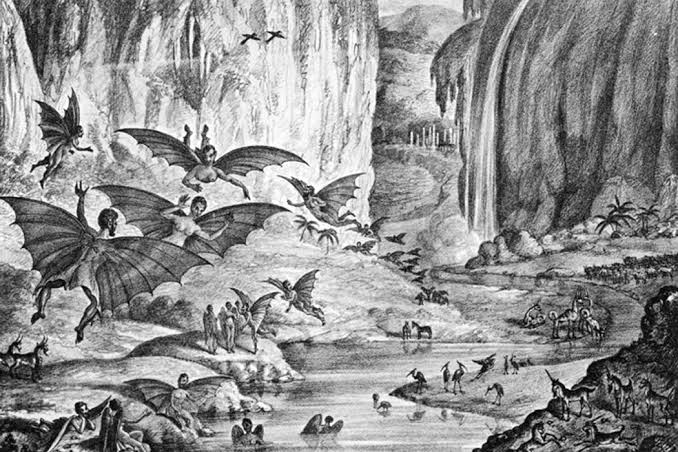
    In late August 1835, readers of the New York Sun opened their papers to an astonishing story. Sir John Herschel, the most respected astronomer of his day, had reportedly built a telescope so powerful it could see the Moon’s surface in detail. And there, he had found life: bison, unicorns, and even winged human-like creatures. The public devoured the story, and the Sun’s circulation skyrocketed. There was just one problem: none of it was true.

    The series ran for six days, from August 21 to August 31, 1835, and became one of the most famous hoaxes in journalism history. It showed how a fabricated story, wrapped in the authority of science, could fool thousands. But it also revealed something deeper about the era: a public hungry for wonder, a press willing to sell it, and the birth of mass media’s complicated relationship with the truth.

    The Penny Press and the Hunger for Sensation

    To understand the Moon Hoax, you have to understand the media landscape of 1830s New York. Before the penny press, newspapers were expensive—six cents or more—and aimed at merchants and elites. They were dense with shipping news and political debates. But in 1833, Benjamin Day launched the New York Sun, selling papers for just one cent. The price made it affordable to the working class, and Day filled it with crime stories, human-interest tales, and anything that would grab attention.

    The Sun was a pioneer of what we now call sensationalism. Its goal was simple: sell more copies. And nothing sold copies like a good story, even if it wasn’t true. The Moon Hoax was the ultimate expression of that philosophy.

    The Fabricated Telescope and Its ‘Discoveries’

    The articles, attributed to a fictional supplement to the Edinburgh Journal of Science, described a colossal telescope built by Herschel with a 24-foot mirror, capable of magnifying objects up to 42,000 times. Through this telescope, Herschel had supposedly observed the Moon’s surface in exquisite detail: lush vegetation, seas, and forests. Then came the creatures.

    First, there were bison, similar to those on Earth. Then, strange unicorns, with ‘a silvery hair, and a horn like a bright crystal.’ But the most sensational discovery was a race of winged beings, which the articles called ‘Vespertilio-homo’—bat-men. These creatures were described as ‘four feet high,’ with faces like those of humans, and wings that they used to fly. The descriptions were vivid, specific, and utterly invented.

    The writing was so detailed, so matter-of-fact, that it carried the ring of truth. The Sun’s readers, many of whom had no scientific training, had no reason to doubt it.

    Why Did People Believe It?

    To modern eyes, it seems incredible that thousands of people believed in bat-men on the Moon. But in 1835, the public’s understanding of science was very different. Astronomy was a popular science, but telescopes were limited. The Moon’s surface had been mapped, but no one had seen any signs of life. The question of whether the Moon was inhabited was widely discussed, not just by scientists, but by theologians and the public.

    One influential figure was the Reverend Thomas Dick, who had written popular books estimating the population of the solar system based on theological reasoning. He suggested that the Moon might be home to millions of inhabitants. Locke’s hoax was partly a parody of Dick’s speculative style—but the parody was too subtle. The public was already primed to believe in lunar life, and Herschel’s name gave the story unimpeachable authority.

    Sir John Herschel was a legitimate celebrity scientist. His father, William Herschel, had discovered Uranus. John himself had done groundbreaking work on nebulae and double stars. When the articles claimed he had made these discoveries, the public had no way to verify them. And the Sun’s rivals, caught off guard, initially republished the story without checking.

    The Aftermath: Exposure and Legacy

    Within a few weeks, other newspapers began to investigate. They contacted the Edinburgh Journal of Science—and found it did not exist. The story was a fabrication. But the Sun never printed a formal retraction. The paper’s editor, Richard Adams Locke, eventually admitted he had written the series, claiming it was intended as a satire. The Sun, meanwhile, had already reaped the rewards: its circulation had soared from about 8,000 to over 19,000 copies per day, making it one of the best-selling papers in the world.

    The hoax exposed the power of media to shape public belief, and the commercial incentives behind it. Sound familiar? The Moon Hoax is often cited as a precursor to modern ‘fake news’ and clickbait. In the 1830s, the Sun’s revenue depended on circulation, just as today’s digital media depend on clicks and ad views. The economic pressures are structurally similar: sensational stories, even false ones, sell.

    The Satire That Wasn’t

    Locke’s claim that the hoax was a satire is debated. The series was so detailed, so elaborate, that it seems unlikely it was purely a joke. But if it was satire, it failed spectacularly—because the public took it at face value. The line between satire and fraud is a thin one, and the Moon Hoax crossed it.

    What’s more, the hoax had a lasting impact on science communication. It showed how scientific authority could be weaponized. Herschel, who was actually in South Africa at the time, doing real astronomical observations, was embarrassed by the affair. He reportedly dismissed it as a ‘silly hoax,’ but his name had been used to sell newspapers.

    Lessons for Today

    The Great Moon Hoax offers a cautionary tale that remains relevant. It reminds us that the public’s trust can be exploited, and that the desire for wonder can override skepticism. But it also highlights the importance of fact-checking and verification—skills that are as vital today as they were in 1835.

    When you see a sensational claim, ask yourself: Who is making this claim? Can I verify it? The Sun’s readers didn’t ask those questions, and they were fooled. We can learn from their mistake.

    The Great Moon Hoax of 1835 was more than a funny footnote in history. It was a landmark in the relationship between media, science, and the public. It showed how a fabricated story, dressed in the language of science, could captivate the world. And it revealed the economic pressures that can tempt journalists to prioritize sensation over truth. The bat-men of the Moon are long gone, but the lessons of the hoax remain: skepticism, verification, and the need to question what we read.

    Summary

    • The New York Sun published a six-part series in August 1835 claiming astronomer Sir John Herschel had discovered life on the Moon, including bison, unicorns, and winged humanoids.
    • The story was entirely fabricated by Sun editor Richard Adams Locke, who later claimed it was intended as satire.
    • The hoax boosted the Sun’s circulation from about 8,000 to over 19,000 copies per day.
    • The public believed the story because of Herschel’s reputation, the plausibility of lunar life, and the lack of fact-checking in the era.
    • The hoax is a foundational case study in journalism ethics and the dangers of sensationalism.

    FAQ

    Q: Who wrote the Great Moon Hoax?
    A: The series was written by Richard Adams Locke, a British-born journalist and editor at the New York Sun. He later admitted authorship, though he claimed it was intended as a satire of astronomical speculation.

    Q: Did anyone ever admit the hoax was false?
    A: The Sun never printed a formal retraction. The hoax was exposed when other newspapers investigated and found that the Edinburgh Journal of Science, the supposed source, did not exist. Locke eventually admitted the fabrication.

    Q: How did the hoax affect the New York Sun’s circulation?
    A: The Sun’s circulation reportedly soared from about 8,000 to over 19,000 copies per day, making it one of the best-selling newspapers in the world at the time.

    Q: Why did so many people believe the hoax?
    A: People believed because Sir John Herschel was a trusted scientist, the claims seemed plausible given contemporary speculation about lunar life, and there was no infrastructure for fact-checking. The public’s desire for wonder also played a role.

    Q: Is the Great Moon Hoax considered the first example of fake news?
    A: It’s often cited as an early landmark in the history of fake news and tabloid journalism, demonstrating that sensational fabrication could drive circulation. However, it was not the first hoax, but it is one of the most famous.
  • The Great Moon Hoax of 1835: How a Newspaper Faked Lunar Life and Fooled a Nation

    The Great Moon Hoax of 1835: How a Newspaper Faked Lunar Life and Fooled a Nation

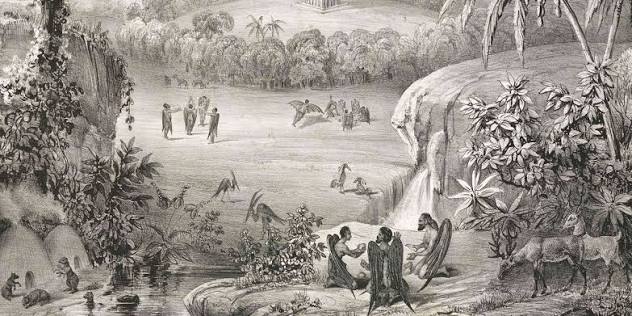
    In August 1835, the New York Sun published a series of articles claiming that the famous astronomer Sir John Herschel had discovered life on the Moon using a powerful new telescope. The articles described trees, oceans, and strange animals, including bison-like creatures and a ‘man-bat’ with bat-like wings. The story was a complete fabrication, but it fooled many readers and boosted the paper’s circulation from 8,000 to nearly 20,000 copies per day, making it the best-selling newspaper in the world at the time.

    This episode is a landmark in the history of journalism, illustrating the power of sensationalism and the tension between circulation and truth. It also reflects the scientific and cultural context of the 1830s, when the Moon was a subject of genuine curiosity and the idea of lunar life was not considered absurd by many. The hoax was revealed as a fabrication within two weeks, but its legacy endures as a cautionary tale about fake news and the importance of verification.

    The Penny Press and the Hunger for Sensation

    The 1830s saw the rise of the ‘penny press’—cheap, mass-circulation newspapers aimed at working-class readers. The New York Sun, founded in 1833 by Benjamin Day, was a pioneer of this model, selling papers for one cent instead of the traditional six cents. This created intense competition for readership, and editors quickly learned that sensational stories sold papers. The Moon hoax was a product of this environment, where the line between news and entertainment was often blurred.

    The Hoax Unfolds: A Six-Part Series

    The series ran from August 21 to August 31, 1835, as a supplement to the regular edition. It claimed that Sir John Herschel, a real and respected astronomer, had made incredible discoveries using a telescope with a 24-foot lens and magnification of 42,000x—technology far beyond anything that existed. The articles described:

    • Trees, oceans, and vegetation on the lunar surface
    • Strange animals, including bison-like creatures and a ‘man-bat’ (a humanoid creature with bat-like wings)
    • Blue-tinted, goat-like unicorns
    • A temple made of polished sapphire
    • The claim that Herschel had named the discovery the ‘Vespertilio-homo’ (bat-man)

    These details were presented with scientific precision, complete with technical descriptions and references to Herschel’s real work. The fact that Herschel was in South Africa at the time made it difficult for him to respond quickly, adding to the hoax’s credibility.

    The Scientific and Cultural Context

    Why did so many people believe the story? In the 1830s, the ‘plurality of worlds’ theory—that other celestial bodies might harbor life—was widely discussed. Some respected scientists, including William Herschel (John’s father), had speculated about life on the Moon. The concept of ‘selenites’ (lunar inhabitants) had appeared in earlier speculative works, such as those by the German astronomer Johann Schröter. So the idea of lunar life was not absurd to many readers.

    The hoax also touched on theological questions: If life existed on the Moon, did it have souls? Were they descended from Adam? These questions were debated in the press, and some religious publications initially took the story seriously, while others condemned it as blasphemous.

    The Author: Richard Adams Locke

    Richard Adams Locke, a British-born journalist and editor at the Sun, is widely credited as the author of the hoax. Some historians argue that Locke intended the story as a satire of contemporary scientific speculation and religious credulity, not a malicious deception. His targets may have included the astronomer John Herschel and the popular press’s tendency to sensationalize science. The Sun never formally retracted the story; when the hoax was exposed, the paper’s response was muted and defensive.

    The Public’s Reaction: Gullibility or Skepticism?

    Contemporary accounts suggest many readers were genuinely fooled, but some historians argue that the public was more skeptical than later retellings suggest. The hoax was exposed relatively quickly—within about two weeks—partly because readers and rival papers began questioning the details. Some evidence suggests that many readers understood it as entertainment or satire, not literal truth. Still, the circulation jump from 8,000 to nearly 20,000 copies per day indicates that the story captured the public’s imagination.

    The Scientific Community’s Response

    Real astronomers were initially puzzled and then outraged. Some wrote letters to other papers denouncing the claims. The hoax damaged public trust in scientific reporting, though it also sparked genuine public interest in astronomy. Some scientists used the hoax as a cautionary tale about the need for rigorous verification in scientific communication.

    The Herschel Family’s Perspective

    Sir John Herschel reportedly found the hoax amusing when he learned of it, though he was initially annoyed. His reputation was not permanently damaged; he continued his work and later became a respected figure in British science. The hoax has been called ‘The Great Moon Hoax’ only in retrospect; at the time it was sometimes called ‘The Lunar Hoax’ or ‘The Astronomical Hoax.’

    Legacy and Lessons

    The Great Moon Hoax remains a powerful example of ‘fake news’ long before the term existed. It highlights the ethical responsibilities of journalists and the dangers of prioritizing circulation over truth. It also shows how scientific ignorance and cultural beliefs can make people vulnerable to misinformation. In an era of rapid technological change and intense media competition, the lessons of 1835 are still relevant today.

    The Great Moon Hoax of 1835 was a pivotal moment in the history of journalism, demonstrating both the power of the press and its capacity for deception. While the hoax was short-lived, its impact on public trust and its role as a cautionary tale continue to resonate. As we navigate our own era of misinformation, the story of the New York Sun and its fabricated lunar life serves as a reminder of the importance of critical thinking and responsible reporting.

    Summary

    • In August 1835, the New York Sun published a six-part series falsely claiming that astronomer Sir John Herschel had discovered life on the Moon.
    • The hoax described bizarre creatures like man-bats and unicorns, and boosted the paper’s circulation from 8,000 to nearly 20,000 copies per day.
    • The story was likely written by Richard Adams Locke, possibly as a satire of scientific speculation and credulity.
    • The hoax was exposed within two weeks, but it damaged public trust in scientific reporting and remains a classic example of fake news.
    • The episode highlights the tension between sensationalism and truth in journalism, a lesson still relevant today.

    FAQ

    Q: Was the Great Moon Hoax a deliberate deception?
    A: Yes, the articles were fabricated, but some historians argue that the author, Richard Adams Locke, intended it as a satire of scientific speculation and religious credulity, not a malicious lie.

    Q: How did the public react when the hoax was revealed?
    A: Many readers were initially fooled, but within two weeks, rival papers and skeptical readers began questioning the details, leading to exposure. Some readers may have understood it as entertainment from the start.

    Q: Did the hoax damage Sir John Herschel’s reputation?
    A: No, Herschel reportedly found it amusing and his reputation was not permanently harmed. He continued his scientific work and remained respected.

    Q: Why did so many people believe the story?
    A: The idea of lunar life was not considered absurd in the 1830s, and Herschel’s real work in South Africa added credibility. The detailed, scientific tone of the articles also helped.

    Q: What is the legacy of the Great Moon Hoax?
    A: It is a landmark example of fake news and a cautionary tale about the dangers of sensationalism in journalism. It also sparked public interest in astronomy and highlighted the need for verification in science reporting.

  • The Quiet Disappearance of the Political Cartoonist – and Why Democracy Needs Them

    Cartooning for Peace deplores the disappearance of the press cartoon in the NY Times - Cartooning for Peace

    In the early 1980s, roughly 2,000 full-time editorial cartoonists worked at US newspapers. Today, that number has collapsed to fewer than 50. The New York Times, Washington Post, Los Angeles Times, and Chicago Tribune have all eliminated or drastically reduced their cartoonist positions since 2015. The syndicates that once spread a single cartoon to hundreds of papers have shrunk their rosters. The profession that helped bring down Boss Tweed and defined American political satire for over a century is now on life support.

    But the economic forces that killed the staff cartoonist don’t reflect the value these artists still provide. In an era of information overload and political polarization, a single, sharp image can cut through the noise in a way that a 2,000-word essay cannot. The cartoonist’s craft is not a luxury – it’s a civic necessity. As the space shrinks, we’re losing more than just a few drawings in the back pages; we’re losing a unique form of democratic accountability.

    The Numbers Tell a Stark Story

    The Association of American Editorial Cartoonists reports that the number of full-time editorial cartoonists at US newspapers has fallen from about 2,000 in the early 1980s to fewer than 50 today. That’s a 97.5% decline. The losses aren’t isolated to small papers – the biggest names in journalism have abandoned the craft. Since 2015, the New York Times, Washington Post, Los Angeles Times, and Chicago Tribune have either eliminated their staff cartoonist positions or drastically reduced their use of political cartoons.

    Syndication, the economic engine that once made cartooning viable, has also faltered. Major syndicates like Tribune Content Agency and Andrews McMeel have dramatically cut their political cartoon rosters, relying instead on a small stable of freelancers. As of 2024, only a handful of daily newspapers still employ a dedicated staff editorial cartoonist – The Boston Globe, The Philadelphia Inquirer, and The Austin American-Statesman are among the few.

    What Killed the Cartoonist?

    The primary culprit is money. Print advertising revenue has fallen by roughly 70% since 2005, and newspapers have responded by cutting what they view as non-essential positions. Cartoonists were often seen as a “luxury” – a nice-to-have rather than a necessity.

    The digital shift compounded the problem. Online readership doesn’t generate the same per-reader revenue as print subscriptions, and cartoons are easily shared – or stolen – online without payment. The syndication model, which once sold the same cartoon to hundreds of papers, collapsed as fewer papers remained in the market. With per-cartoon revenue plummeting, the profession became financially unsustainable for many artists.

    A Historical Role Worth Remembering

    Political cartoons have been a staple of democratic discourse since Benjamin Franklin’s “Join or Die” in 1754. They distill complex political issues into a single, visceral image that can be understood at a glance. In the late 19th century, Thomas Nast’s cartoons brought down Boss Tweed’s Tammany Hall – a feat that cemented the cartoonist’s role as a democratic watchdog.

    From the 1920s through the 1990s, nearly every major newspaper had a staff cartoonist. Cartoons were a point of identity and readership loyalty. People clipped them and passed them around, making them one of the most shareable formats in the pre-digital era. The economics worked because a successful cartoonist could be syndicated to 100+ papers, generating income that allowed newspapers to pay the artist a salary.

    The internet broke that scarcity model. Cartoons, once scarce and valuable, became infinitely reproducible and freely shareable. Newspapers lost the ability to monetize them. In the attention economy, cartoons now compete with memes, GIFs, and video clips – and the satirical function they once served has been partly absorbed by social media humor and late-night TV monologues.

    The Case for Keeping Cartoonists

    Newspaper executives argue that cartoons don’t drive subscriptions or ad revenue in the digital age. They’re a discretionary expense, not a necessity. But this view misses the bigger picture. Cartoons are a low-cost, high-engagement format. They generate social media shares and brand identity. Cutting them saves little but loses a distinctive voice.

    More importantly, cartoonists hold a unique position in journalism. They can say things in images that journalists cannot say in words. They are the court jesters who speak truth to power. When cartoonists lose staff positions, they become more vulnerable to pressure. A freelance cartoonist who depends on a single outlet for income is less likely to bite the hand that feeds them. The chilling effect is real.

    The craft itself is also under threat. Editorial cartooning requires a unique combination of drawing skill, political knowledge, and wit. It takes years to develop. The loss of staff positions means fewer young artists are entering the field, and the pipeline of talent is drying up.

    How Cartoonists Are Surviving

    Despite the grim numbers, cartooning isn’t dead – it’s adapting. Surviving cartoonists increasingly work freelance, rely on Patreon or Substack, sell original art, or combine cartooning with teaching, illustration, or other work. A new generation publishes primarily on social media platforms like Twitter/X and Instagram, or on digital outlets like Cartoon Movement. The Nib, a digital publication that championed political cartoons, shut down in 2023, but its legacy lives on in the work of its contributors.

    Internationally, the picture is more hopeful. In Europe – especially France, the Netherlands, and Scandinavia – political cartooning remains more robust, often supported by state subsidies or stronger newspaper subscription cultures. This contrast suggests that the decline isn’t inevitable; it’s a matter of priorities.

    What We Lose When Cartoonists Fade

    When a cartoonist is cut, we don’t just lose a drawing. We lose a form of public reasoning that is irreplaceable. Cartoons make complex issues accessible. They provoke laughter and thought in equal measure. They hold power to account in a way that words alone cannot.

    Consider the iconic cartoons that have defined eras: the “Join or Die” snake, Nast’s Tammany Tiger, Herblock’s depictions of McCarthyism. These images have outlasted the articles that accompanied them. They’ve become part of our collective memory. The shrinking space for political cartoons isn’t just an economic story – it’s a cultural and democratic loss.

    As the brief notes, when cartoonists lose staff positions, they become more vulnerable to pressure. A cartoonist who relies on a single outlet for income is less likely to criticize that outlet’s advertisers or owners. The independence that made the profession valuable is eroded.

    The Way Forward

    There’s no easy solution, but there are models to learn from. European countries demonstrate that public support can sustain the craft. Digital platforms show that audiences will follow cartoonists directly. Patreon and Substack offer a path for artists to earn a living without a newspaper’s blessing.

    Newspapers that still employ cartoonists – like The Boston Globe and The Philadelphia Inquirer – prove that the format still works. They’ve integrated cartoons into their digital strategy, using them to drive social engagement. The question is whether more outlets will follow their lead, or whether the staff cartoonist will become a relic of a bygone era.

    The Bottom Line

    Political cartoons are not a luxury. They are a form of democratic accountability that has served the public for centuries. The economic pressures that have decimated the profession are real, but so is the value these artists provide. As the space shrinks, we need to find new ways to support the craft – not just for the sake of tradition, but for the health of our democracy.

    The decline of the staff political cartoonist is a loss we can’t afford to ignore. These artists have been the court jesters of democracy, using humor and sharp lines to expose hypocrisy and hold the powerful to account. The economics have changed, but the need hasn’t. Whether through new funding models, digital platforms, or renewed commitment from newspapers, we need to ensure that the political cartoonist doesn’t become a footnote in history. The next Thomas Nast might be out there, but without a space to publish, we’ll never see their work.

    Summary

    • The number of full-time editorial cartoonists at US newspapers has fallen from ~2,000 in the early 1980s to fewer than 50 today.
    • Major papers like the NYT, WaPo, LA Times, and Chicago Tribune have cut cartoonist positions since 2015.
    • The primary drivers are declining print ad revenue and the collapse of syndication economics.
    • Cartoonists are adapting via freelance, Patreon, Substack, and social media, but the craft is threatened.
    • Political cartoons are a unique democratic check on power, and their loss is a civic concern, not just an economic one.

    FAQ

    Q: Why have newspapers cut political cartoonist positions?
    A: The main reason is financial. Print advertising revenue has dropped ~70% since 2005, and syndication income has collapsed as fewer papers buy cartoons. Executives see cartoonists as non-essential “luxury” staff.

    Q: Are there any staff cartoonists left at US newspapers?
    A: Yes, but very few. As of 2024, only a handful of daily papers employ a dedicated staff cartoonist, including The Boston Globe, The Philadelphia Inquirer, and The Austin American-Statesman.

    Q: How are political cartoonists making a living now?
    A: Many work freelance, rely on Patreon or Substack subscriptions, sell original art, or combine cartooning with teaching or illustration. Some publish directly on social media platforms.

    Q: Why are political cartoons considered important for democracy?
    A: Cartoons distill complex issues into a single, visceral image, making them accessible to a broad audience. They can say things in images that journalists can’t say in words, acting as a check on power and a voice for the public.

    Q: Is the decline of political cartooning happening in other countries too?
    A: The decline is more pronounced in the US. In Europe, especially France, the Netherlands, and Scandinavia, political cartooning remains more robust, often supported by state subsidies or stronger newspaper subscription cultures.