Tag: Greek mythology

  • The Eternal Flame: How Hestia, the Forgotten Goddess, Shaped Greek Life and Politics

    The Eternal Flame: How Hestia, the Forgotten Goddess, Shaped Greek Life and Politics

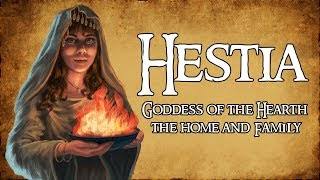
    When you picture the Greek gods, you likely think of Zeus’s thunderbolts, Athena’s wisdom, or Poseidon’s trident. But there was one goddess who received the first and last offering at every sacrifice, whose fire burned at the center of every home and every city, and who had virtually no myths at all. Her name was Hestia, and her quiet power held Greek society together.

    Hestia was the eldest Olympian, the first child of Cronus and Rhea, and yet she is often forgotten. She had no adventures, no love affairs, no battles just a flame. But that flame was the literal and symbolic heart of Greek life, bridging the private world of the household and the public world of the state.

    The First and Last: Hestia’s Unique Birth and Status

    Hestia’s story begins with a paradox. As the first-born of Cronus and Rhea, she was the first to be swallowed by her father, who feared his children would overthrow him. When Zeus eventually forced Cronus to disgorge his siblings, Hestia came out last. This made her both the eldest and the youngest a position that gave her a unique claim to honor. She was the alpha and the omega of the Olympian generation, and this duality was reflected in her role as the recipient of the first and last libations at every sacrifice.

    Her virginity was another defining feature. According to the Homeric Hymn to Aphrodite, Hestia swore an oath by the head of Zeus to remain a virgin, rejecting marriage offers from Poseidon and Apollo. This was not a rejection of the world, but a choice to stay rooted. While other gods ventured out to conquer, seduce, or battle, Hestia stayed put. She was the hearth, and the hearth does not move.

    The Hearth as the Center of the Home

    In an ancient Greek home, the hearth was more than a place to cook. It was the ritual and emotional center of the household, or oikos. The word for the goddess and the word for the hearth were the same: hestia. This was no coincidence. The hearth was where the family gathered for warmth, food, and stories. It was also where the most important moments of life unfolded.

    When a child was born, the family performed a ceremony called the amphidromia. The newborn was carried around the hearth, formally introducing the child to the household gods and the family. When a couple married, the bride was escorted from her father’s hearth to her husband’s, symbolizing her transition from one oikos to another. When someone died, the body was laid out near the hearth before burial, a final farewell in the presence of the sacred flame.

    The hearth was also a place of sanctuary. Those seeking refuge would sit at the hearth, and harming them was a grave offense against the gods. This custom underscored the hearth’s role as a sacred space, protected by Hestia herself.

    From Home to City: The Public Hearth

    Hestia’s influence extended far beyond the individual home. Every Greek city-state, or polis, maintained a public hearth in a building called the Prytaneion. Here, the prytaneis (chief magistrates) met, and the fire was kept burning continuously. This was the koinē hestia, the “common hearth,” and it represented the unity of the citizen body.

    The public hearth was not just a symbolic gesture. It was the literal center of civic life. Ambassadors and honored guests were entertained there, and it was considered the symbolic home of the city itself. When a colony was founded, settlers carried fire from the mother city’s hearth to the new settlement. This act transferred not just a flame, but the very identity of the city. The fire was a thread that connected the new colony to its origins, ensuring that the gods and the ancestors were present in the new land.

    The connection between Hestia and civic life was so strong that even the Delphic oracle began its rituals with an offering to her. The Prytaneion at Delphi housed a perpetual flame, and no consultation of the oracle could begin without first honoring the goddess of the hearth.

    The Silence of Myth: Stability Over Story

    One of the most striking things about Hestia is her absence from myth. Unlike Zeus, who has countless adventures, or Athena, who plays a central role in epic poems, Hestia has no stories. But this silence is not a lack—it is a feature. Myth requires movement, conflict, and change. Hestia is the fixed point around which all that movement occurs. She is the hearth that stays lit while heroes journey, wars rage, and gods scheme.

    Plato recognized this in his dialogue Phaedrus, where he places Hestia at the center of the cosmos as the unmoving hearth of the universe. This image of the axis mundi—the world axis—captures her essence. She is the still point in a turning world, the force that holds everything together.

    Contrasting Powers: Hestia and Athena

    To understand Hestia’s unique form of power, it helps to compare her to Athena. Both are virgin goddesses, but they embody very different kinds of authority. Athena is public, martial, and cerebral. She is the goddess of wisdom and strategy, always at the center of action, advising heroes and leading armies. Hestia, on the other hand, is private, pacific, and domestic. Her power is centripetal—she draws things inward and holds them together.

    This contrast is not a criticism of Hestia. Rather, it reveals how Greek culture valued different kinds of female-coded power. Athena’s power was outward, projecting influence through the state and its institutions. Hestia’s power was inward, creating the stability that made those institutions possible. Without the hearth, there would be no home; without the home, there would be no city; without the city, there would be no civilization.

    The Roman Echo: Vesta and the Vestal Virgins

    Hestia’s Roman counterpart, Vesta, carried this legacy even further. The Vestal Virgins, a college of priestesses dedicated to Vesta, maintained the sacred fire of Rome with strict discipline. If the fire went out, it was seen as a dire omen. The Vestals held unique privileges, such as the power to free condemned prisoners they encountered, which demonstrated the high status of their office. This direct continuation of Hestia’s cult shows how deeply the Greeks’ reverence for the hearth had shaped the wider ancient world.

    Why It Matters Today

    Hestia’s story challenges our assumptions about power and significance. We tend to celebrate the loud, the visible, and the disruptive. But Hestia reminds us that quiet, steady forces are just as important. The flame that never goes out is the one that holds a community together, whether it is a family gathered around a kitchen table or a nation united by shared symbols.

    In a world obsessed with motion and novelty, Hestia offers a counterpoint. She is the reminder that some things must remain constant—the home, the city, the sacred bond between them. Her flame may be forgotten in our textbooks, but it never went out in the ancient world, and its legacy still warms us today.

    Hestia is often the last goddess we think of when we remember Greek mythology. But she was the first-born, the first honored, and the last to receive her due. Her flame was the thread that connected the private hearth to the public state, the individual to the community, and the mortal to the divine. In her silence, she spoke volumes about the importance of stability, continuity, and the quiet power that holds the world together.

    Summary

    • Hestia was the eldest Olympian, first-born of Cronus and Rhea, yet she has virtually no myths, reflecting her role as a stable, unmoving force.
    • Her symbol was the hearth fire, which was central to both the home (oikos) and the city-state (polis), where a public hearth burned in the Prytaneion.
    • Life-cycle rituals such as birth (amphidromia), marriage, and death all took place around the hearth, making Hestia the guardian of family transitions.
    • Colonies carried fire from their mother city’s hearth to their new home, symbolically transferring civic identity and divine protection.
    • Plato placed Hestia at the center of the cosmos, reinforcing her as the axis mundi, and her Roman counterpart Vesta continued her cult with the Vestal Virgins.

    FAQ

    Q: Why doesn’t Hestia appear in any myths?
    A: Hestia’s absence from myth is intentional. Myth relies on narrative movement—adventures, conflicts, and changes. Hestia represents the opposite: stability and continuity. She is the fixed point that allows other stories to unfold, which is why she has no tales of her own.

    Q: What was the role of the public hearth in Greek cities?
    A: The public hearth, or koinē hestia, was housed in the Prytaneion, the civic hall where magistrates met. Its fire was kept burning continuously and symbolized the unity and continuity of the city. It was also a place of hospitality for ambassadors and honored guests.

    Q: How did Hestia’s cult connect the home and the state?
    A: The hearth was the center of both the private household and the public city. Rituals at the hearth marked key events in family life, while the public hearth represented the city’s identity. When colonies were founded, fire from the mother city’s hearth was carried to the new colony, linking the two through Hestia’s flame.

    Q: What was the significance of Hestia receiving the first and last libations?
    A: This practice honored Hestia as both the first-born and last-released of Cronus’s children. It acknowledged her as the beginning and end of all offerings, symbolizing her role as the foundational and enduring presence in Greek religious practice.

    Q: How does Hestia compare to Athena?
    A: Both are virgin goddesses, but Athena is public, martial, and intellectual, while Hestia is private, pacific, and domestic. Athena’s power projects outward, while Hestia’s draws inward and holds things together. Together, they show the different ways Greek culture valued female authority.
  • The Thread of Life: How the Moirai Wove Greek Destiny and Still Shape Our Stories

    The Thread of Life: How the Moirai Wove Greek Destiny and Still Shape Our Stories

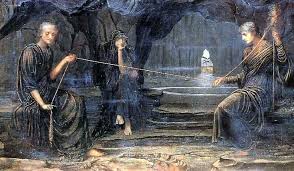
    In a corner of Greek myth, three old women sit at a cosmic loom. One spins a thread, another measures it, and the third waits with shears. They are the Moirai—Clotho, Lachesis, and Atropos—and the thread they tend is a human life. The image is so familiar that we barely notice its power: the idea that our days are a finite strand, spun, measured, and cut, has haunted Western thought for millennia.

    But the Fates were more than a grim metaphor. They were a way of asking the hardest question there is: If the future is fixed, what good is trying? The Greeks never settled on a single answer—sometimes the Fates bowed to Zeus, sometimes they outranked him—and that very ambiguity made them endlessly useful. From Homer’s heroes to modern films, the Fates have shaped how we tell stories about destiny, choice, and the limits of control.

    Who Were the Moirai?

    The Moirai were the personified allotment of life. Their names tell the story: Clotho, “the Spinner,” twists the thread of existence; Lachesis, “the Allotter,” measures its length; Atropos, “the Inflexible,” snips it with her shears. In art they appear as stern old women, though earlier depictions sometimes showed them as maidens—a reminder that fate’s cruelty doesn’t always announce itself.

    Their parentage was as tangled as their threads. Hesiod’s Theogony offers two versions: they are daughters of Nyx (Night), born without a father, or daughters of Zeus and Themis, the goddess of divine order. The first makes them primordial forces; the second makes them enforcers of cosmic law. Both ideas coexisted, and the tension was never resolved.

    The word “moira” itself originally meant “portion” or “share”—not a goddess but the simple fact that everyone gets a cut. In Homer, heroes speak of “my moira” as an impersonal fate, not a trio of spinners. Only later did the three sisters emerge as characters.

    The Fates and the Gods: Who’s Really in Charge?

    The Fates occupied a paradoxical place in the divine hierarchy. Zeus was sometimes called Moiragetes, “Leader of the Fates,” suggesting he directed them. Yet other myths show them binding even Zeus. In the Iliad, Zeus mourns that his son Sarpedon is fated to die—he cannot save him, only honor the body. The Fates are not capricious; they administer what has been allotted, and not even the king of the gods can rewrite that ledger.

    This ambiguity was a feature, not a bug. It allowed the Greeks to hold two truths at once: that the world runs on order, and that power has limits. The Fates were the visible edge of that order, the point where even divine will met a wall.

    Spinning at Birth, Cutting at Death

    The Fates showed up at the two great thresholds of life. At a child’s birth, they appeared within three days to decree its destiny—so the myths say. At death, Atropos cut the thread. But their influence wasn’t just about beginnings and endings. They also oversaw the fates of gods and mortals in between, often in surprising ways.

    Take the birth of Heracles. Zeus boasted that a descendant of Perseus would rule, so Hera delayed Alcmene’s labor, letting Eurystheus be born first and claim the throne. The Fates sealed the outcome, turning a boast into a binding decree. Or consider Meleager, whose life was tied to a brand on the hearth—as long as it burned, he lived. When his mother threw it into the fire, he died. The Fates declared the condition, but human action fulfilled it.

    They could even be bargained with, though only within strict rules. When Apollo asked them to spare Admetus, they agreed—if someone would die in his place. His wife Alcestis volunteered, and the deal held. The myth, dramatized by Euripides, shows the Fates as administrators of a contract, not blind executioners.

    From Goddesses to Philosophy

    As Greek thought matured, the Fates drifted from myth into philosophy. The Pre-Socratics wrestled with fate (heimarmenē) as a cosmic principle. Plato gave them a starring role in the Myth of Er in the Republic: Lachesis sings the past, Clotho the present, Atropos the future. But here, souls choose their own lots—the Fates merely ratify the choice. It’s a crucial move, linking fate to moral responsibility.

    The Stoics went further, equating fate with divine reason (logos). For them, the Moirai symbolized the causal chain of the universe. Chrysippus argued that fate doesn’t eliminate free will—a compatibilist position that still animates debates today. Aristotle, meanwhile, puzzled over future contingents. His “sea battle” thought experiment—will there be a sea battle tomorrow?—remains a classic in free will discussions.

    The Fates also had a religious side. They were worshipped at crossroads, in caves, and near oracles. At Delphi, they were said to have preceded Apollo. They were sometimes conflated with Eileithyia, goddess of childbirth, and with the Erinyes, the Furies, both of whom dealt with fate and justice. In Orphic cults, they became daughters of Ananke, Necessity—emphasizing cosmic compulsion.

    The Moirai in Modern Storytelling

    The Fates didn’t stay in antiquity. They migrated into Western culture, reappearing whenever storytellers needed to dramatize destiny. In Shakespeare’s Macbeth, the three witches spin prophecies that drive the plot—their “double, double toil and trouble” echoes the Fates’ spinning. In Neil Gaiman’s The Sandman, the Fates appear as a trio of old women who embody the same roles, now woven into a larger tapestry of myth. The 2012 film Cloud Atlas uses the image of a thread and a knife to explore reincarnation and consequence.

    Even when the Fates aren’t named, their logic shapes narratives. The “prophecy” trope—a hero learns their future and tries to avoid it, only to fulfill it—runs from Oedipus Rex to Harry Potter. The idea of a fixed timeline, popular in time-travel stories, is a secularized fate. The Fates’ power to bind even gods echoes in modern fiction where cosmic orders are immutable, from the laws of thermodynamics to the prime directives of science fiction.

    The Moirai endure because they answer a need: they give form to the feeling that some things are out of our hands. They let us explore the tension between destiny and choice, not by resolving it, but by making it visible. Every time a story asks whether the hero could have done otherwise, the Fates are in the room.

    The Fates’ Legacy

    What’s left of the Moirai today? The word “fate” itself derives from the Latin fatum, “that which has been spoken,” the Roman equivalent of the Fates’ decrees. We still say someone’s “thread was cut short” or that they “spun out” a story. The image of spinning, measuring, cutting is baked into our language.

    But the deeper legacy is philosophical. The Moirai embody the oldest puzzle: if the future is already written, why act? The Greeks offered no single answer. They left the question open, and that openness is the Fates’ greatest gift. They are not a solution; they are a mirror, reflecting our own uncertainty about how much control we really have.

    The Moirai were never just mythological characters. They were a way of thinking about the shape of a life—the portion we’re given, the length we’re measured, the moment we’re cut. Their myth asks us to consider what we can change and what we can’t, a question that remains as pressing now as it was in ancient Greece. The next time you watch a hero struggle against prophecy, or wonder why your own plans keep derailing, remember the three sisters at the loom. They’ve been there all along.

    Summary

    • The Moirai—Clotho, Lachesis, and Atropos—personified destiny in Greek myth, spinning, measuring, and cutting the thread of life.
    • Their parentage was ambiguous: daughters of Night or of Zeus and Themis, reflecting a tension between primordial force and cosmic law.
    • They could bind even Zeus, yet were sometimes subordinate to him, embodying the paradox of fate and divine power.
    • Philosophers from Plato to the Stoics used the Fates to explore free will and determinism, a debate that continues today.
    • Modern storytelling, from Shakespeare to Harry Potter, still relies on the Fates’ logic of prophecy and fixed destiny.

    FAQ

    Q: What are the names of the three Fates and what did they do?
    A: Clotho spun the thread of life, Lachesis measured its length, and Atropos cut it, ending life. Together they determined each person’s destiny.

    Q: Were the Fates more powerful than Zeus?
    A: It depends on the source. Sometimes Zeus was called their leader, but in other myths they bound even him—he couldn’t save his son Sarpedon once fate was set.

    Q: Did the Greeks believe in fate or free will?
    A: Both, in a way. They held that fate set limits, but within those limits humans made choices. Plato’s Myth of Er even shows souls choosing their own lots before the Fates ratify them.

    Q: How are the Fates different from the Norse Norns?
    A: The Norns—Urd, Verdandi, and Skuld—are similar spinning goddesses, but they have their own mythology and are tied to the Norse cosmos, not the Greek. They’re a parallel, not a copy.

    Q: Why do the Fates still appear in modern stories?
    A: Because they dramatize the tension between destiny and choice. The prophecy trope—where trying to avoid fate actually fulfills it—is a direct descendant of the Moirai, and it remains a powerful storytelling device.

  • The Myth of the Minotaur: From Ancient Crete to Modern Metaphor

    The Myth of the Minotaur: From Ancient Crete to Modern Metaphor

    In the heart of the Mediterranean, on the island of Crete, lies the ruins of a palace so complex that it gave birth to one of the most enduring myths of Western civilization. Here, according to legend, a monstrous creature—half man, half bull—lurked in a labyrinth, devouring sacrificial youths. But the Minotaur is more than a monster; it’s a cultural cipher, a symbol that has evolved from a Bronze Age ritual to a modern metaphor for the darkest corners of the human mind.

    The story of the Minotaur is a tale of gods and kings, of curses and courage, but it’s also a story deeply rooted in history. The palace of Knossos, excavated by Sir Arthur Evans in the early 20th century, revealed a sophisticated civilization that flourished around 2700–1450 BCE. With running water, vibrant frescoes, and a bull-leaping ritual that defies gravity, the Minoans were not the barbaric backdrop of myth, but a advanced culture that left an indelible mark on the Greek imagination.

    Today, the Minotaur has escaped its ancient stone maze to roam freely in our collective psyche. It appears in psychology, in feminist retellings, and in philosophical debates about monstrosity. This article explores how a mythical beast, born of divine punishment and human ingenuity, became one of the most versatile metaphors in our cultural toolkit.

    The Myth: A Story of Gods, Curses, and Heroism

    The classical version of the myth is well-known. King Minos of Crete, in a bid to secure his throne, prayed to Poseidon for a sign. The god sent a magnificent white bull, intended for sacrifice. But Minos, entranced by the beast’s beauty, kept it for himself. This act of defiance provoked Poseidon’s wrath, and the god cursed Minos’ wife, Pasiphaë, with an unnatural desire for the bull.

    Daedalus, the legendary craftsman, built a hollow wooden cow for Pasiphaë to hide inside, enabling her to mate with the bull. The offspring was the Minotaur—a being with the body of a man and the head of a bull. To contain this monstrous embarrassment, Minos commissioned Daedalus to construct an inescapable labyrinth beneath his palace.

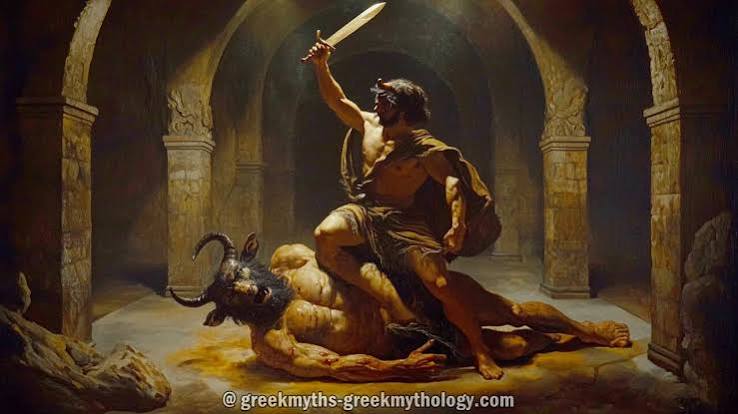
    Meanwhile, Athens, after a war with Crete, was forced to send a tribute of seven youths and seven maidens every nine years to be devoured by the Minotaur. The hero Theseus, son of King Aegeus, volunteered to be among the tributes. With the help of Ariadne, Minos’ daughter, who gave him a ball of thread to trace his path, Theseus navigated the labyrinth, killed the Minotaur, and escaped with Ariadne and the other tributes.

    The story has a tragic coda. Theseus abandoned Ariadne on the island of Naxos, and in his haste to return home, forgot to change his ship’s sails from black to white—the signal of his success. His father Aegeus, seeing the black sails, threw himself into the sea, giving the Aegean Sea its name.

    The Labyrinth: Memory or Myth?

    The word “labyrinth” may derive from the labrys, the double-headed axe, a sacred symbol of Minoan religion. Carvings of the labrys are found throughout the palace of Knossos, which is appropriately maze-like, with hundreds of rooms, staircases, and light wells. Sir Arthur Evans, who excavated the site from 1900 to 1935, believed this complex structure was the historical Labyrinth. But was it?

    Some scholars propose a different origin. The labyrinth might not have been a building at all, but a dance floor—a spiral pattern traced on the ground for ritual dances. Homer’s Iliad describes a dance floor on Achilles’ shield that resembles a labyrinth, and Roman sources mention the “Troy Game,” a labyrinthine dance. Alternatively, a cave at Gortyn, Crete, with a natural maze of tunnels, could have inspired the myth.

    Whatever its physical reality, the labyrinth has become a powerful symbol of confusion and entrapment. But for the Minoans, it might have been a place of ritual and transformation, not a prison. The famous bull-leaping fresco at Knossos, which shows acrobats vaulting over a bull’s horns, suggests that bulls were central to Minoan culture—perhaps as objects of worship rather than fear.

    The Minotaur as History: A Coded Memory of Minoan Crete

    Historians see the Minotaur myth as a distorted memory of Minoan civilization. The Minoans, a sophisticated Bronze Age culture, dominated the Aegean for centuries. Their religion centered on a mother goddess and involved bull worship. The Mycenaean Greeks, who eventually conquered Crete, may have reinterpreted Minoan rituals they no longer understood, turning a sacred bull into a monster.

    The name “Minos” might have been a title, like “Pharaoh,” rather than a single king’s name. This explains inconsistencies in the myth, such as Minos’ death in Sicily in some versions. The myth, therefore, may encode political history: the tribute of Athenian youths could reflect Minoan dominance over mainland Greece, and Theseus’ victory could symbolize the Mycenaean takeover.

    The Minotaur as Metaphor: From Freud to Feminism

    In the modern era, the Minotaur has become a potent metaphor, particularly in psychology and literature. Sigmund Freud saw the labyrinth as the unconscious mind, and the Minotaur as the repressed id—primal desires that must be confronted. Carl Jung interpreted the Minotaur as the shadow archetype, the dark, animalistic side of the human psyche that we must integrate to become whole.

    Feminist retellings have also reclaimed the myth. In Jennifer Saint’s novel Ariadne, Pasiphaë is not a monstrous figure but a victim of divine cruelty, and Ariadne is a betrayed heroine, not a mere plot device. The Minotaur, given the name Asterion, is portrayed as a child born of rape and imprisonment, a victim of the gods and of Minos’ pride. These reinterpretations challenge the traditional reading of the myth, asking who the real monsters are.

    The Minotaur Today: A Symbol of Otherness and the Human Condition

    Today, the Minotaur appears in countless films, books, and artworks, often representing the “other”—the beast within, the outsider, the misunderstood. It questions what it means to be human, blurring the line between civilization and savagery. The myth’s endurance lies in its flexibility: it can be a story about political power, about the human psyche, or about the nature of monstrosity.

    The Minotaur is more than a monster from a bygone era. It is a mirror that reflects our anxieties, our hidden desires, and our capacity for both cruelty and compassion. As long as we struggle with these questions, the Minotaur will continue to roam our collective imagination.

    The Minotaur has traveled a long path from the stone corridors of Knossos to the abstract corridors of the mind. It began as a religious symbol, became a political metaphor, and now serves as a psychological and feminist icon. Yet at its core, the myth remains a story about the human condition—our struggles with power, desire, and identity. Perhaps that is why it endures: the Minotaur is not just a monster we fear, but a part of ourselves we must confront.

    Summary

    • The Minotaur myth originates from ancient Crete, where a bull was central to Minoan religion and power.
    • The historical palace at Knossos, with its maze-like structure, may have inspired the labyrinth legend.
    • The myth served political purposes, symbolizing Athenian superiority over Crete.
    • Modern interpretations view the Minotaur as a metaphor for the unconscious, the shadow, or societal otherness.
    • Feminist retellings reframe Pasiphaë and Ariadne as complex victims, not villains.

    FAQ

    Q: Was the Minotaur real?
    A: No, the Minotaur is a mythological creature. However, the myth likely has historical roots in Minoan bull worship and the palace of Knossos.

    Q: Why did Athens send tribute to Crete?
    A: According to the myth, Athens sent seven youths and seven maidens as tribute to be devoured by the Minotaur, either as a result of a lost war or as punishment for the death of Minos’ son.

    Q: What does the labyrinth symbolize?
    A: Symbolically, the labyrinth represents confusion, complexity, and the journey of self-discovery. In psychology, it can represent the unconscious mind.

    Q: Who was Ariadne?
    A: Ariadne was the daughter of King Minos. She helped Theseus navigate the labyrinth by giving him a ball of thread. She was later abandoned by Theseus on Naxos.

    Q: What is the significance of the Minotaur in modern culture?
    A: The Minotaur is often used as a metaphor for the ‘other’—the beast within, the outsider, or the repressed aspects of the human psyche.