Tag: Germany

  • The 1516 Beer Purity Law: How a Bavarian Edict Still Shapes Your Pint

    The 1516 Beer Purity Law: How a Bavarian Edict Still Shapes Your Pint

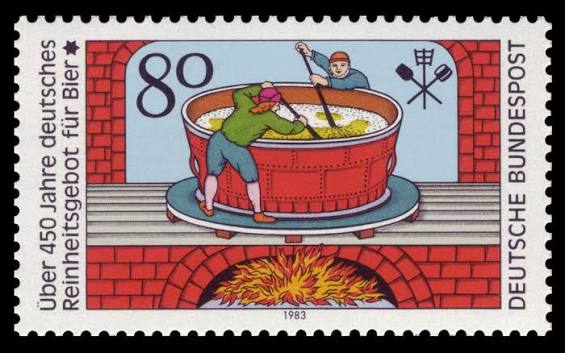
    On April 23, 1516, in the Bavarian town of Ingolstadt, Duke Wilhelm IV issued a decree that would outlive his dynasty by centuries. The Reinheitsgebot, or Beer Purity Law, limited beer ingredients to water, barley, and hops. It was a practical measure to prevent price gouging and protect bread grain, but it became a cornerstone of brewing identity.

    Today, that 500-year-old regulation still influences what you drink—from the crisp lagers of Munich to the hazy IPAs in a Brooklyn taproom. It sparked legal battles, inspired craft brewers, and even earned a spot on Germany’s cultural heritage list. Understanding its origins and legacy helps explain why beer tastes the way it does and why some styles are harder to find in Germany than elsewhere.

    A Law Born of Chaos and Famine

    In the early 1500s, brewing was a messy business. Without refrigeration or microbiology, beer spoiled quickly, and brewers often resorted to questionable additives to mask off-flavors: soot, henbane, mushrooms, even animal byproducts. Some of these could cause hallucinations or worse. Meanwhile, bad harvests meant wheat and rye were precious for bread. The dukes wanted to ensure that barley—which made poor bread but good beer—was used for brewing, leaving wheat and rye for bakers.

    The 1516 law set maximum prices too: one to two Pfennigs per Maß (about a liter), depending on the season and quality. Brewers caught selling impure beer faced confiscation and fines. Repeat offenders could lose their livelihood. It was a consumer-protection measure, but also a power grab: brewing was a major tax source, and the dukes wanted strict control.

    Why Hops? Why Not Yeast?

    Hops were a newfangled addition, arriving in Bavaria from Bohemia in the 14th–15th centuries. They provided natural preservation and bitterness, replacing gruit—a blend of herbs like yarrow and juniper, often controlled by the Church. By mandating hops, the law inadvertently killed the gruit trade and clipped the Church’s economic wings.

    The law’s silence on yeast is often misunderstood. Fermentation was a mystery—Louis Pasteur wouldn’t identify yeast’s role until the 19th century. Brewers relied on wild yeast or back-sloping (adding sediment from a previous batch). So yeast was omitted because it was unknown, not because it was unimportant.

    From Bavarian Rule to German Law

    The Reinheitsgebot initially applied only to Bavaria. When the German Empire formed in 1871, it remained a Bavarian peculiarity. In 1906, it was extended to the whole empire, with allowances for bottom-fermented beers. Wheat beer, long a royal monopoly, wasn’t formally permitted until 1918.

    The law began to crack under European pressure. In 1987, the European Court of Justice ruled that the Reinheitsgebot violated EU free-trade principles, forcing Germany to allow foreign beers with additives. Germany responded in 1993 with the Provisional Beer Law, which kept the purity rules for domestic brewers but allowed imports to use other ingredients.

    Today, the Reinheitsgebot is voluntary for German brewers. They can brew with fruit, spices, or lactose, but they can’t call the result “Bier”—it must be labeled a “mixed beer beverage” or similar. Bavaria enforces this more strictly than other states. In 2016, UNESCO recognized the law as part of Germany’s intangible cultural heritage.

    The Traditionalist Case

    The Reinheitsgebot is the world’s oldest food-safety law still in effect. German brewers, especially Bavarians, wear it as a badge of honor. They argue that it guarantees quality, protects consumers, and preserves a heritage that dates back five centuries. The German Brewers’ Federation maintains that the law is a mark of purity that no other beer can claim.

    Many German brewers follow it voluntarily even when exporting, because international drinkers associate “German beer” with this purity. It’s a marketing advantage as much as a legal one.

    The Critics’ Rebuttal

    Detractors see the law as protectionist and stifling. It blocks innovation and excludes modern ingredients like lactose, fruit, and alternative grains. The 1987 EU ruling exposed this: foreign beers with additives were kept out for decades, not because they were unsafe, but because they competed with domestic products.

    Historically, the law was never about quality—it was about price control and grain allocation. And in the craft beer era, its limits are glaring. Styles like milkshake IPAs, fruit sours, and pastry stouts can’t legally be called “beer” in Germany. That’s why many German craft brewers choose to label their experimental products as “mixed beverages,” which feels like a semantic workaround rather than a badge of honor.

    Some argue this legal straitjacket has slowed Germany’s craft beer scene compared to the US, UK, or Scandinavia, where brewers freely experiment with adjuncts and flavors.

    Global Echoes

    Despite its critics, the Reinheitsgebot has shaped brewing standards worldwide. It influenced purity laws in other countries, including the US Reinheitsgebot-inspired campaigns by some brewers who tout all-malt recipes. The law’s legacy is visible in the global dominance of lager—a style that relies on the barley, water, and hops that the law enshrined.

    Even in countries without such laws, the Reinheitsgebot frames debates about beer ingredients and authenticity. Craft brewers often invoke it ironically, celebrating their freedom to add vanilla or coffee while acknowledging the Bavarian rule that made beer what it is.

    A Living Anachronism

    The Reinheitsgebot survives because it’s more than a regulation—it’s a cultural symbol. For Bavarians, it represents pride in their brewing tradition. For critics, it’s a reminder that laws can outlive their original purpose. And for brewers everywhere, it’s a benchmark: a simple rule that defined beer for centuries, and against which every new style must measure.

    As you sip a crisp German pilsner or a bold American IPA, consider the 500-year-old edict that still shapes your glass. The law may have been born of famine and fraud, but it became the foundation of a global industry—and a testament to how a single decree can echo through history.

    The Beer Purity Law of 1516 was a pragmatic response to its time, but its influence reached far beyond Bavarian borders. It shaped the ingredients, styles, and regulations of beer worldwide, and it continues to provoke debate about purity, innovation, and tradition. Whether you view it as a guardian of quality or a barrier to creativity, there’s no denying its lasting impact on the world’s favorite fermented beverage.

    Summary

    • The Reinheitsgebot, issued in 1516, restricted beer to water, barley, and hops.
    • It was a public health, food security, and price control measure, not a quality standard.
    • Yeast was omitted because it was unknown, not because it was unimportant.
    • The law became German-wide in 1906, but the EU forced changes in 1987, making it voluntary for German brewers.
    • Today, it still influences German brewing, but critics say it stifles craft innovation.

    FAQ

    Q: What exactly does the Reinheitsgebot allow?
    A: It allows only water, barley, and hops in beer. Yeast was not included because it wasn’t discovered as a fermentation agent until the 19th century.

    Q: Is the Reinheitsgebot still in force?
    A: Yes, but it’s now voluntary for German brewers. They can use other ingredients, but they must label such products as “mixed beer beverages” rather than “beer.” Bavaria enforces it more strictly than other states.

    Q: Why was the law issued?
    A: To prevent brewers from using harmful additives like soot or henbane, to preserve wheat and rye for bread, and to regulate prices. It also gave the dukes more control over brewing, a major economic activity.

    Q: How did the law affect craft beer?
    A: It restricts styles like fruit sours or milkshake IPAs that use additional ingredients. German craft brewers often label these as “mixed beverages” to comply, which some see as a hindrance to innovation.

    Q: Did the law apply to all of Germany?
    A: No, it was Bavarian-only until 1906, when it was extended to the German Empire. Bavaria still enforces it more strictly than other states.
  • The Battle of Kursk: How 6,000 Tanks Crushed Hitler’s Last Blitzkrieg

    The Battle of Kursk: How 6,000 Tanks Crushed Hitler’s Last Blitzkrieg

    In the summer of 1943, the German army had a plan. Operation Citadel called for a double-pronged assault to slice through the Kursk salient, a 150-mile-wide bulge in the front line, and trap over a million Soviet soldiers. It was to be a rerun of the great encirclements of 1941 only faster, sharper, and deadlier, powered by a new generation of tanks: the Panther, the Tiger, and the Ferdinand.

    But the Soviets knew. Through spy rings in Switzerland and intercepted radio traffic, they had the German plan in hand, down to the day of the attack. So instead of rushing to meet the enemy, they dug. Over months, they carved the earth into a fortress of minefields, anti-tank ditches, and artillery strongpoints, stretching up to 100 miles deep. When the Germans finally struck on July 5, they drove straight into a meat grinder.

    Over the next seven weeks, more than two million soldiers and six thousand tanks would clash in a battle that broke the Wehrmacht’s back. By the time the guns fell silent on August 23, the strategic initiative in the East had passed to the Red Army forever. This is the story of how the largest tank battle in history unfolded—and why it sealed Nazi Germany’s fate.

    A Salient in the Steppe

    The front line in the spring of 1943 was a scar across western Russia. After Stalingrad, the Red Army had pushed westward, only to overextend. The result was a bulge centered on the city of Kursk—a finger of Soviet territory jutting 100 miles into German lines. To Hitler, it was an invitation. A pincer attack from the north and south could cut off the salient, bag a million prisoners, and shorten the line. It would also restore German prestige and, Hitler hoped, buy time for the new wonder weapons rolling off the assembly lines.

    The plan was audacious, but it had a fatal flaw: delay. Originally scheduled for May, Citadel was postponed to July to wait for the Panther tanks and Ferdinand assault guns. Every week of waiting gave the Soviets more time. And the Soviets used it.

    By July, the salient had become a fortress. Defensive belts ran in layers, each studded with anti-tank guns, mortars, and dense minefields—up to 4,000 mines per mile in the most critical sectors. Entire villages were fortified, and tank units were held in reserve to counterattack. The Steppe Front, a massive reserve army, waited behind the lines, ready to plug any breach.

    The Soviet plan was not to hold forever. It was to bleed the German army white, then unleash their own offensives. Marshal Georgy Zhukov, who had learned the art of defensive warfare at Stalingrad, put it bluntly: “We will exhaust the enemy in defensive battles, destroy his tanks, and then, by introducing fresh reserves, go over to a general offensive.”

    The Northern Face: Stalled in the Mud

    The German attack began at dawn on July 5, 1943. In the north, Field Marshal Walter Model’s 9th Army hurled itself at the Soviet Central Front, led by Konstantin Rokossovsky. The Germans had massed nearly 2,000 tanks and assault guns for the assault, but they had already lost the element of surprise. Soviet artillery had opened fire on their assembly areas the night before, and the infantry was waiting.

    Model’s tanks advanced into a killing zone. The minefields were so dense that sappers had to clear paths under fire, and the Soviet anti-tank guns were dug into reverse slopes, firing from hidden positions. In the first six days, the Germans gained only 6 to 9 miles—a fraction of their objective. By July 10, the northern pincer had ground to a halt. The 9th Army had lost over 50,000 men and hundreds of tanks, and it had failed to break through.

    The Southern Face: Prokhorovka and the Tank Clash

    In the south, the spearhead was Army Group South, led by Field Marshal Erich von Manstein, the Wehrmacht’s most brilliant tactician. His 4th Panzer Army, under General Hermann Hoth, pushed harder. By July 12, the Germans had advanced 20 to 25 miles, threatening the town of Prokhorovka, a key rail junction. If they took it, they could break into the operational depths.

    Soviet intelligence had foreseen this, and the Steppe Front’s 5th Guards Tank Army, under Pavel Rotmistrov, was rushed to the area. On the morning of July 12, the two armored masses collided near Prokhorovka. What followed was chaos at close range.

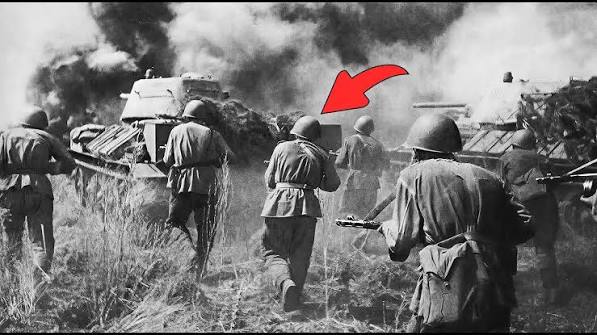
    Accounts of the battle describe hundreds of tanks swirling in a dust-choked plain, so close that German tank guns could not depress enough to hit the lower-hulled T-34s. The Luftwaffe and Soviet air force fought overhead, and the ground shook with the detonation of thousands of shells. For a full day, the two sides hammered each other. German Tiger tanks proved nearly invulnerable to Soviet 76mm guns at long range, but the sheer numbers of T-34s, many closing to point-blank range, took a toll.

    The outcome was not the German breakthrough Manstein needed. His forces had taken heavy losses, and the 5th Guards Tank Army, though badly battered, had held the line. The southern pincer had exhausted itself.

    The Counter-Offensives: Turning the Tide

    Even as the tank battle raged at Prokhorovka, the Soviets launched their own offensives. On July 12, Operation Kutuzov struck the German-held city of Orel, north of the salient, threatening the rear of the 9th Army. On August 3, Operation Rumyantsev hit the Belgorod–Kharkov axis in the south.

    Hitler had already begun to lose his nerve. The Allied invasion of Sicily on July 10 had forced him to divert troops to Italy, and on July 13 he ordered a halt to Citadel. Manstein protested, arguing that his forces were on the verge of a breakthrough, but the Führer was done. The German army would now go over to the defensive for the rest of the war in the East.

    The Soviet counter-offensives rolled forward, exploiting the gaps the German pincers had left. By August 23, the Red Army had recaptured Kharkov, the third-largest city in the Soviet Union. The German front had been pushed back over 100 miles in places, and the initiative had passed to the Soviets.

    The Cost of the Largest Tank Battle in History

    The numbers are staggering. The Soviet Union lost between 180,000 and 250,000 dead and missing, with over 600,000 wounded. Germany lost between 50,000 and 75,000 dead and missing. Tank losses are even harder to pin down. Soviet losses ranged from 1,600 to over 6,000 tanks; German losses from 700 to over 1,200. The exact figures remain contested, but the strategic result is not.

    The Battle of Kursk was the last time the Wehrmacht launched a major offensive in the East. After Kursk, the German army never regained the operational initiative. The Red Army, despite its staggering losses, went on the march westward, and nothing would stop it until Berlin.

    Why Kursk Matters

    The battle is often described as the turning point of the Second World War, and for good reason. It was the moment when the German war machine, which had seemed invincible in 1941 and 1942, was permanently broken. The Soviet defense-in-depth doctrine, learned at the cost of millions of lives, proved devastatingly effective. The industrial might of the Soviet Union, aided by Lend-Lease supplies, overwhelmed German production.

    But Kursk also matters for what it reveals about war itself. The battle was a clash of systems—German precision and tactical brilliance against Soviet mass and strategic patience. It was a battle of metal and flesh, of hundreds of thousands of men and machines grinding each other into dust. And it was a battle that decided the fate of Europe.

    The Battle of Kursk ended on August 23, 1943, with the recapture of Kharkov. The German army had been dealt a defeat from which it would never recover. The myth of German invincibility lay shattered in the mud and smoke of the Kursk salient. For the Red Army, it was the beginning of the end of a war that would take them to Berlin. For the world, it was the moment the tide of history turned decisively against Nazi Germany.

    Summary

    • The Battle of Kursk (July 5–August 23, 1943) was the largest tank battle in history, involving over 2 million troops and 6,000 tanks.
    • Operation Citadel, the German offensive, was delayed to wait for new tanks, giving the Soviets time to build massive defenses.
    • The Soviets’ defense-in-depth strategy blunted the German attack, culminating in the tank clash at Prokhorovka on July 12.
    • Soviet counter-offensives (Kutuzov and Rumyantsev) threw the Germans back, recapturing Kharkov by August 23.
    • Kursk was a decisive Soviet victory and the last major German offensive on the Eastern Front, permanently shifting the initiative to the Red Army.

    FAQ

    Q: Was the Battle of Prokhorovka the largest tank battle in history?
    A: It is often described as the largest tank battle, but the exact claim is debated. Some historians argue that it was a series of smaller engagements rather than a single, massive clash. The overall Battle of Kursk, however, is unquestionably the largest tank battle of the war, with over 6,000 tanks committed.

    Q: Why did the Germans delay the attack?
    A: Hitler postponed Operation Citadel from May to July to wait for new tanks, including the Panther, Tiger, and Ferdinand heavy assault guns. This delay gave the Soviets more time to build their defenses, which contributed to the German failure.

    Q: How did the Soviets know about the German plan?
    A: The Soviets had extensive intelligence from spy rings, including the “Lucy” ring in Switzerland, and from intercepted German communications. They learned the timing and scope of the offensive, allowing them to prepare their defenses in depth.

    Q: What was the impact of the Allied invasion of Sicily?
    A: The invasion of Sicily on July 10, 1943, forced Hitler to divert resources to Italy and contributed to his decision to halt Operation Citadel on July 13. It was a factor, but the main reason was the Soviet resistance and the need to conserve forces.

    Q: How many casualties were there?
    A: Estimates vary. Soviet casualties were around 180,000–250,000 killed/missing and over 600,000 wounded. German casualties were about 50,000–75,000 killed/missing and around 200,000 wounded. Tank losses were also heavy on both sides.

  • Hitler’s Fatal Gamble: Why Germany Declared War on America After Pearl Harbor

    Hitler’s Fatal Gamble: Why Germany Declared War on America After Pearl Harbor

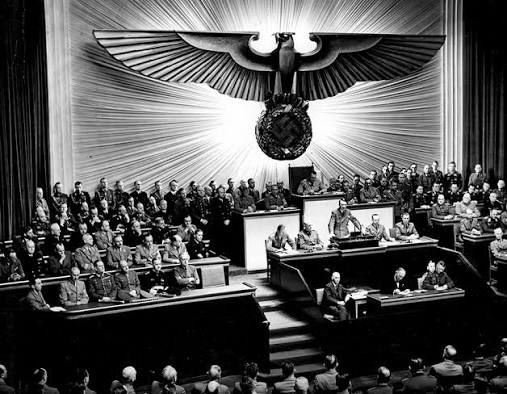
    On December 11, 1941, four days after Japanese bombers devastated the U.S. Pacific Fleet at Pearl Harbor, Adolf Hitler stood before the Reichstag in Berlin and declared war on the United States. It was a decision that would seal the fate of the Third Reich, yet at the time, it seemed to many including Hitler himself like a calculated, even inevitable, move. But why did Hitler, already bogged down in a brutal war against the Soviet Union and Britain, willingly add the industrial might of America to his list of enemies? The answer lies in a toxic mix of ideology, miscalculation, and strategic desperation.

    To understand Hitler’s decision, one must look beyond the formal texts of treaties and into the Führer’s own racial fantasies and geopolitical delusions. He saw America as a weak, mongrelized nation, incapable of fighting a real war. He believed that war with the U.S. was coming anyway, so why not seize the moment? Yet his gamble backfired catastrophically, uniting the world’s greatest powers against Germany and ensuring its ultimate defeat. This is the story of how Hitler’s hubris turned a tactical opportunity into a strategic disaster.

    The Pact That Didn’t Bind

    When Japan attacked Pearl Harbor on December 7, 1941, Hitler had no legal obligation to join the war. The Tripartite Pact, signed in September 1940, committed Germany, Italy, and Japan to defend one another only if one of them was attacked. Japan was the aggressor, not the victim. Germany’s ambassador to Japan, Eugen Ott, had even been instructed to urge Japan to avoid war with the U.S. unless absolutely necessary. Yet within hours of the attack, Hitler’s Foreign Minister, Joachim von Ribbentrop, began pressing for a declaration of war, and Hitler was eager to comply.

    Why? For Hitler, the pact was never just a legal instrument; it was a declaration of solidarity among the “have-not” nations against the Anglo-American world order. In his December 11 speech, he framed the war as a cosmic struggle between the “Jewish-capitalist” world, led by Roosevelt, and National Socialist Germany. He listed grievances: U.S. violations of neutrality, the Lend-Lease program, and Roosevelt’s “warmongering.” He wanted to show that Germany stood by its Axis partners, even at the cost of plunging into a two-front war.

    But there was more than ideology at play. Hitler and his generals genuinely believed that the United States was a paper tiger. They thought the U.S. was militarily weak, politically divided, and would take years to mobilize its industrial might. In Hitler’s racial worldview, America was a “mongrel” nation, dominated by Jews and incapable of true military greatness. He once told his generals, “The American is like a child—he needs to be led, and he has no idea what he wants.” Such contempt blinded him to the reality of American production capacity.

    The Atlantic Undeclared War

    The formal declaration was, in many ways, just a formality. The U.S. and Germany had been fighting an undeclared naval war in the Atlantic for months. U.S. destroyers were escorting convoys to Britain, and they had exchanged fire with German U-boats. In September 1941, the USS Greer was attacked by a German submarine after being tracked by a British plane. In October, the USS Reuben James was torpedoed and sunk with the loss of 100 American sailors. Hitler had ordered his U-boats to avoid provoking the U.S., but Roosevelt was pushing the envelope, ordering the Navy to “shoot on sight” any German warships in U.S. defensive zones.

    Hitler’s restraint was a strategic choice. He hoped to keep America out of the war until the Soviet Union was conquered. But by late 1941, Operation Barbarossa had stalled before Moscow, and the Wehrmacht was suffering massive casualties. The war in the East was not going as planned, and Hitler needed a victory somewhere. Declaring war on America gave him the chance to unleash unrestricted submarine warfare in the Atlantic, cutting Britain’s lifeline before the U.S. could intervene effectively. He also hoped that tying down American forces in the Pacific would relieve pressure on Germany.

    The Great Miscalculation

    Hitler’s decision was based on a profound misreading of the situation. He believed that the U.S. could not project meaningful military power into Europe before 1944 or 1945, by which time he expected to have conquered the USSR and secured Europe. He was convinced that Roosevelt would have entered the war eventually anyway, so why not act first and appear decisive? In his mind, the declaration was a preemptive strike, not a gamble.

    But Hitler underestimated the U.S. in every way. He failed to grasp the speed and scale of American mobilization. Within months, U.S. factories were producing more war materiel than Germany, Japan, and Italy combined. He also misjudged the political will of the American people. While isolationism had been strong before Pearl Harbor, the attack—and Germany’s declaration—united the country behind the war effort. Roosevelt and Churchill were relieved; Churchill later wrote that he “slept the sleep of the saved” upon hearing the news. The German declaration solved the political problem of how to bring the U.S. into the European war when public opinion was focused on revenge against Japan.

    The Aftermath: A United Enemy

    The declaration on December 11, 1941, formally merged the European and Pacific theaters into one global conflict. The U.S. Congress reciprocated with a declaration of war against Germany on the same day. For Hitler, the move was meant to solidify the Axis and encourage Japan to tie down British and American forces. But it had the opposite effect: it ensured that the U.S., Britain, and the Soviet Union would fight as allies against Germany, with the full weight of American industrial power committed to Europe.

    Historians have long viewed Hitler’s declaration as one of the greatest strategic blunders of the war. It was a miscalculation so profound that it turned a difficult war into an impossible one. Hitler’s racial ideology and his contempt for American democracy blinded him to the facts. He saw the U.S. as a weak, divided nation, but in reality, it was a sleeping giant. When it awakened, it destroyed the Third Reich.

    Hitler’s declaration of war on America was not a rational act of statecraft but a product of his ideological delusions and strategic desperation. He believed he was being decisive, but he was actually signing his own death warrant. The decision unified the Allies, unleashed American industrial might against Germany, and ultimately ensured the fall of the Third Reich. It remains a chilling example of how hubris and miscalculation can turn a moment of opportunity into a catastrophe.

    Summary

    • Germany was not obligated by the Tripartite Pact to declare war on the U.S., as Japan was the aggressor at Pearl Harbor.
    • Hitler viewed war with America as inevitable and wanted to appear decisive, while also seeking to unleash unrestricted submarine warfare.
    • Hitler’s racial ideology led him to underestimate American military capability and resolve.
    • The U.S. and Germany were already engaged in an undeclared naval war in the Atlantic before the formal declaration.
    • The declaration backfired strategically, uniting the U.S., Britain, and the USSR against Germany and ensuring American industrial might was turned against the Third Reich.

    FAQ

    Q: Was Germany forced to declare war on the U.S. by the Tripartite Pact?
    A: No. The pact required mutual assistance only if a member was attacked. Japan was the aggressor at Pearl Harbor, so Germany had no legal obligation to declare war.

    Q: Why did Hitler believe the U.S. was weak?
    A: Hitler held a racialized view of America, seeing it as a ‘mongrel nation’ dominated by Jews and incapable of true military greatness. He also believed the U.S. would take years to mobilize and was politically divided by isolationism.

    Q: What was the immediate impact of Hitler’s declaration?
    A: The U.S. Congress declared war on Germany on the same day, formally merging the European and Pacific theaters into one global conflict. It also relieved Roosevelt and Churchill, who saw it as a solution to bringing the U.S. into the European war.

    Q: Did the U.S. and Germany have any prior hostilities before Pearl Harbor?
    A: Yes. The U.S. and Germany were engaged in an undeclared naval war in the Atlantic, with U.S. destroyers escorting convoys and exchanging fire with German U-boats, including incidents like the USS Greer and the sinking of the USS Reuben James.

    Q: How do historians view Hitler’s decision?
    A: Most historians view it as one of the greatest strategic blunders of the war, as it united the U.S., Britain, and the USSR against Germany and ensured the full weight of American industrial power would be brought to bear on the Third Reich.

  • Wind and Solar Overtake Fossil Fuels in Germany: A Historic First

    Wind and Solar Overtake Fossil Fuels in Germany: A Historic First

    In the first half of 2025, Germany achieved a historic milestone: wind and solar power together generated more electricity than fossil fuels for the first time ever. This marks a turning point in the country’s energy transition, known as the Energiewende, and offers a glimpse into a future powered by renewables. But what does this really mean for Germany’s climate goals, its economy, and the reliability of its power grid? Let’s break it down.

    The Numbers Behind the Milestone

    According to data from the Fraunhofer Institute for Solar Energy Systems (ISE), wind and solar accounted for approximately 45% of Germany’s gross electricity generation from January to June 2025. Fossil fuels—coal, gas, and oil—fell to about 40%. The remaining 15% came from other sources like biomass, hydro, and a small residual from nuclear (which was fully phased out in April 2023).

    Wind was the workhorse, contributing around 30% of total generation, while solar added roughly 15%. Coal (both lignite and hard coal) made up about 20%, and natural gas around 15%. This is the first time that variable renewables have outpaced all fossil fuels combined over a sustained multi-month period, not just a single day or week.

    Why This Matters: The Energiewende in Action

    Germany has been pursuing an aggressive energy transition since the early 2000s, with the Renewable Energy Sources Act (EEG) of 2000 introducing feed-in tariffs that kickstarted the solar and wind industries. The country has legally binding targets under the Climate Protection Act: 80% renewable electricity by 2030 and climate neutrality by 2045. This milestone suggests that the transition is not only on track but possibly ahead of schedule.

    But the achievement is even more significant because it comes after the shutdown of Germany’s last three nuclear power plants in April 2023. Previously, nuclear provided carbon-free baseload power. Now, renewables are filling that gap, and they’re doing it faster than many expected.

    The Role of Weather and Grid Dynamics

    It’s important to note that the first half of 2025 was exceptionally windy and sunny. This favorable weather boosted renewable output, so the milestone is a snapshot of a particularly good period. In a less favorable year, the numbers could shift. However, the trend is clear: renewables are becoming the backbone of Germany’s electricity system.

    Germany is also part of the European internal electricity market, frequently exporting power to neighbors like France and the Netherlands. The milestone refers to gross generation within Germany, not consumption. When cross-border flows are considered, the picture can differ slightly, but the domestic achievement remains significant.

    The Skeptical View: Challenges Remain

    While the news is encouraging, there are caveats. Germany still relies on fossil fuels for about 40% of its electricity, and these are essential for grid stability during “Dunkelflauten”—periods of low wind and low sun. Gas plants, in particular, are crucial as backup. The fossil share, though lower, is still substantial.

    There are also cost concerns. Germany has some of the highest electricity prices in Europe for households and industry, partly due to grid expansion costs and renewable levies. Critics argue that the transition is being paid for by consumers and is hurting industrial competitiveness. Energy-intensive industries like chemicals, steel, and automotive are under pressure to remain competitive globally while decarbonizing.

    Geopolitical and Energy Security Implications

    Reducing fossil fuel dependence enhances Germany’s energy security, especially after the 2022 gas crisis exposed vulnerabilities to Russian supply. Germany now imports gas from Norway, the Netherlands, and other sources, but the shift to renewables reduces that reliance. This milestone is a positive step toward energy independence.

    What’s Next?

    Germany has legislated a coal phase-out by 2038, with a preferred target of 2030. The 2025 data suggests the coal exit may happen faster than the legal deadline. However, grid infrastructure expansion is lagging behind renewable build-out, creating bottlenecks and curtailment costs. Upgrading transmission lines from the windy north to the industrial south is a critical next step.

    In summary, this milestone is a testament to what consistent policy and market forces can achieve. It’s not the end of the story, but it’s a powerful signal that a renewable-powered future is within reach.

    Germany’s first-half 2025 achievement of wind and solar overtaking fossil fuels is a landmark moment in the global energy transition. It shows that with the right policies and technological advances, renewables can become the dominant source of electricity. While challenges like grid stability, costs, and weather dependence remain, the trend is unmistakable. This is a story of progress that offers hope and lessons for other nations.

    Summary

    • In H1 2025, wind and solar generated 45% of Germany’s electricity, surpassing fossil fuels at 40% for the first time.
    • Wind was the largest source at ~30%, followed by solar at ~15%; coal and gas made up ~20% and ~15% respectively.
    • The milestone was achieved without nuclear power, which was fully phased out in April 2023.
    • Favorable weather boosted renewables, but the long-term trend is clear: renewables are becoming the backbone of Germany’s grid.
    • Challenges remain, including grid infrastructure bottlenecks, high electricity prices, and the need for gas backup during low-wind periods.

    FAQ

    Q: What does ‘gross electricity generation’ mean?nA: It refers to the total amount of electricity produced within Germany’s borders, before accounting for exports or imports. It’s a measure of domestic production, not consumption.nnQ: Why is this milestone significant if it’s just one half-year?nA: It’s the first time that wind and solar have outpaced fossil fuels over a sustained period (six months), not just a single day or week. It indicates a structural shift in the energy mix, even though weather can cause yearly fluctuations.nnQ: What are ‘Dunkelflauten’?nA: A German term for ‘dark doldrums’—periods when there is little wind and little sun, so renewable output drops. During these times, fossil fuels or storage are needed to keep the grid stable.nnQ: How does this affect German electricity prices?nA: Germany has high electricity prices partly due to grid expansion costs and renewable levies. The transition is costly, but renewables themselves are now the cheapest form of new generation. The net effect on consumer prices is complex and debated.nnQ: What role does nuclear play now?nA: None. Germany shut down its last three nuclear plants in April 2023. This milestone was achieved without nuclear power, showing that renewables can fill the gap.