Tag: extinction

  • The Dodo’s Last Stand: How a Flightless Pigeon Vanished in 60 Years

    The Dodo’s Last Stand: How a Flightless Pigeon Vanished in 60 Years

    In 1598, Dutch sailors stumbled upon an island in the Indian Ocean and found a bird so unafraid that they could walk right up and grab it. The bird stood a meter tall, weighed as much as a large turkey, and had wings too small to fly. Within six decades, it was gone. The dodo’s extinction is often blamed on hungry sailors, but the real story is more complex—and its lessons echo into modern conservation efforts.

    A Giant Pigeon on a Predator-Free Island

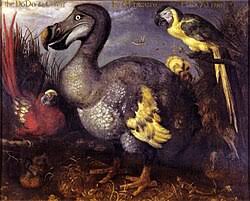
    The dodo (Raphus cucullatus) was not a clumsy, overweight oddity as often depicted. It was a giant pigeon, a member of the Columbidae family, that evolved on Mauritius, an island formed by volcanic activity about 8 million years ago. Critically, Mauritius had no native land mammals. With no predators, the dodo lost its need to fly, evolving vestigial wings and a stout body. It nested on the ground, laid perhaps one egg per clutch, and showed no fear of the newcomers.

    The island’s isolation also meant that the dodo’s ecosystem was delicate. When humans arrived, they brought more than just themselves: rats hidden in ships, pigs, goats, monkeys, cats, and dogs. These invaders feasted on dodo eggs and chicks, while settlers cleared forests for agriculture. The dodo’s slow reproduction and limited range sealed its fate.

    The Real Causes: More Than Just Hunting

    Popular accounts often claim sailors ate dodos into extinction. But contemporary reports suggest dodo meat was tough and not particularly tasty. The primary drivers were likely the introduced predators and habitat destruction. Rats and pigs devoured ground nests; monkeys and cats attacked adults. Deforestation removed the dodo’s food sources and nesting areas.

    A timeline reveals the speed of the collapse: the first recorded sighting was in 1598, and the last credible sighting occurred in 1662, when shipwrecked sailor Volkert Evertsz saw one on a nearby islet. By the 1680s, the dodo was likely extinct, just 60 to 90 years after contact.

    The Dodo in Culture and Science

    The dodo entered popular culture long after its demise. In 1865, Lewis Carroll featured a Dodo in Alice’s Adventures in Wonderland, a character often read as a satirical self-portrait (Carroll had a stutter and pronounced his name “Do-Do”) or as a commentary on absurdity. The phrase “as dead as a dodo” soon followed.

    Scientifically, the dodo became a case study in island biogeography. Its extinction demonstrated how isolated ecosystems are uniquely vulnerable to invasive species. It is often cited as the first documented human-caused extinction, predating the modern conservation movement.

    Modern Rediscovery and Conservation Lessons

    For centuries, scientists had only fragments of dodo skeletons. In the 19th century, the Oxford specimen—a head and foot—was the most complete. It wasn’t until 2005 that excavations at the Mare aux Songes swamp in Mauritius yielded thousands of bones, allowing detailed study of dodo biology. These findings challenged earlier assumptions: the dodo was likely leaner and faster than the bloated bird of lore.

    The dodo’s story is a cautionary tale for conservation. It highlights the dangers of introducing non-native species and the irreversible loss of biodiversity. Today, Mauritius still faces challenges with invasive species, but the dodo serves as a powerful emblem for extinction awareness, appearing in environmental campaigns and even sparking speculative discussions about de-extinction using its closest living relative, the Nicobar pigeon.

    The dodo’s fall was not inevitable. It was a consequence of human action and ecological naivety. As we confront a global biodiversity crisis, the dodo reminds us that extinction is forever—and that prevention is far better than resurrection.

    The dodo’s extinction is not just a historical footnote but a stark warning. It shows how quickly a species can vanish when its environment is altered by human activity. The lessons from Mauritius—about invasive species, habitat loss, and the fragility of island ecosystems—apply to conservation efforts worldwide. In remembering the dodo, we are reminded of our responsibility to protect the species that still share our planet.

    Summary

    • The dodo was a giant flightless pigeon endemic to Mauritius, evolving without natural predators.
    • It went extinct ~60-90 years after human contact, primarily due to introduced predators (rats, pigs, monkeys) and habitat loss, not just hunting.
    • Its ground nesting and slow reproduction made it highly vulnerable.
    • The dodo became a cultural symbol of extinction, popularized by Lewis Carroll’s ‘Alice in Wonderland’ and the phrase ‘as dead as a dodo’.
    • Modern excavations (2005-present) have revealed new insights, and the dodo remains a cautionary case for conservation.

    FAQ

    Q: What did the dodo actually look like?
    A: The dodo stood about 1 meter tall and weighed roughly 10-18 kg. It had a large hooked beak, small vestigial wings, a stout body, and a tuft of curly feathers on its rear. Its plumage was likely grey-brown, though no confirmed living color images exist.

    Q: Why did the dodo become extinct?
    A: The primary causes were predation by introduced species (rats, pigs, monkeys, cats, dogs) on eggs and chicks, and habitat destruction by settlers. Hunting by humans was a contributing factor but not the main cause.

    Q: When did the dodo go extinct?
    A: The last credible sighting was in 1662, though some reports suggest possible sightings into the 1680s. The estimated extinction date is between 1662 and 1690.

    Q: Is there any chance of bringing the dodo back?
    A: Some scientists have discussed de-extinction using the Nicobar pigeon as a surrogate, but this remains highly speculative and controversial. No concrete plans are in place.

    Q: What lessons does the dodo teach us today?
    A: The dodo illustrates the vulnerability of island ecosystems to invasive species and the irreversible nature of human-caused extinction. It underscores the importance of proactive conservation measures.

  • The Vanishing Act of the Passenger Pigeon: How a Billion Birds Became Extinct in a Century


    On September 1, 1914, a pigeon named Martha died alone in her cage at the Cincinnati Zoo. She was about 29 years old, and she was the last of her kind. A century earlier, her species had numbered in the billions—possibly the most abundant bird on Earth. How did a population that once darkened the sky for days vanish so completely? The story is a cautionary tale about human ingenuity, short-sightedness, and the hidden fragility of even the most numerous species.

    The Bird That Blotted Out the Sun

    Imagine standing in a forest in 1813, and the sky grows dim as if a storm is rolling in. But it’s not clouds—it’s birds. The flock of passenger pigeons overhead is so vast that it takes three days to pass completely. John James Audubon, the famous naturalist, witnessed this and wrote that the air was ‘literally filled with Pigeons.’ The sound was deafening, and the droppings fell like snow.

    These weren’t just any birds. Passenger pigeons (Ectopistes migratorius) were sleek, fast, and built for endurance. Males had slate-blue heads and backs, with iridescent copper throats and reddish breasts. Females were duller, more brownish-gray. They were about the size of a mourning dove, their closest living relative—not the common city pigeon you see today.

    At their peak, there were an estimated 3 to 5 billion passenger pigeons in North America. That’s more than all the birds in the United States today, combined. To put it in perspective: if you lined up 5 billion pigeons, they’d circle the Earth more than 30 times. They were perhaps the most numerous vertebrate on the planet, after humans and maybe rats.

    Why So Many? The Secret of Their Success

    Passenger pigeons were successful because they were nomads. They didn’t stay in one place. Instead, they roamed across the vast eastern forests of North America, following the mast—the acorns, beechnuts, and chestnuts that fell from trees. These food sources weren’t consistent; some years produced bumper crops, others produced almost nothing. By moving constantly, the pigeons could find the good years wherever they occurred.

    Their social behavior was extreme. They nested in massive ‘cities’ that could cover hundreds of square miles. In 1871, a nesting colony in Wisconsin spanned 850 square miles and housed an estimated 136 million birds. In such numbers, they could overwhelm predators. A hawk might pick off a few, but with millions of birds, the loss was nothing. This strategy—called predator swamping—worked beautifully for millennia.

    But it also made them incredibly vulnerable to a new predator: humans with guns, nets, and a hunger for cheap meat.

    The Killing Machine: How We Wiped Them Out

    The passenger pigeon didn’t go extinct because of a natural disaster or a disease. It was exterminated by people, and the process was shockingly efficient.

    In the early 1800s, hunting was local. Farmers might shoot a few pigeons for food, but it didn’t make a dent. Then came the railroads and the telegraph. Suddenly, hunters could reach remote nesting grounds and send word back to cities about where the pigeons were. And they could ship the dead birds back by the trainload.

    Commercial hunters used every method imaginable. They shot them, of course, but they also netted them. The ‘stool pigeon’ trick involved tying a live pigeon to a perch with its eyes sewn shut. Its frantic fluttering attracted wild birds, which were then captured in huge nets. They used ‘net guns’—cannon-like devices that could trap hundreds of birds at once. They even burned sulfur under roosts to suffocate the birds, then knocked them from the trees with poles.

    The pigeons were sold as cheap protein. A barrel of them sold for about a dollar. Millions were shipped to New York, Boston, and other cities, where they were eaten by the poor and by slaves. It was fast food, 19th-century style.

    One hunter described a single netting operation that captured 3,000 birds at once. Another boasted of killing 500 in a day. The scale was industrial, and the pigeons had no defense.

    The One-Egg Problem

    Here’s a crucial detail: passenger pigeons laid only one egg per nesting attempt. Most pigeons lay two. This might not seem like a big deal, but it meant the population couldn’t recover quickly. If you killed millions of adult birds year after year, the species couldn’t replace them fast enough.

    Combine that with their habit of nesting in dense, predictable colonies. If you found one nesting city, you could slaughter hundreds of thousands of birds and their chicks in a single season. The chicks, called squabs, were considered a delicacy and were harvested by the thousands.

    And then there was the habitat destruction. As settlers moved west, they logged the eastern forests for timber and cleared land for farms. The mast trees—oaks, beeches, chestnuts—disappeared. The pigeons lost their food supply and their nesting sites. It was a double blow: they were being shot at the same time their home was being torn down.

    Too Little, Too Late: The Failure to Protect

    People did notice the decline. As early as the 1850s, some states passed laws to protect pigeons, but they were rarely enforced. In 1857, a bill to protect the passenger pigeon passed the Ohio legislature but was vetoed. The committee report infamously stated: ‘The passenger pigeon needs no protection. Wonderfully prolific, having the vast forests of the North as its breeding grounds, it can never be exterminated. Man is not the one to accomplish its destruction.’

    They were wrong.

    By the 1870s, the massive nesting colonies were failing. The pigeons weren’t reproducing successfully. In the 1880s, only scattered nests were found. Zoos tried to breed them in captivity, but the birds rarely bred in small groups. They seemed to need the crush of millions to trigger their breeding behavior.

    In 1900, the last confirmed wild passenger pigeon was shot by a boy in Ohio, who didn’t even know what he was killing. By then, the only remaining pigeons were in captivity. Martha, the last one, lived out her days in the Cincinnati Zoo, where she died alone.

    Why Did They Stop Breeding? The Allee Effect

    One of the most puzzling questions is why the last few hundred pigeons didn’t recover. There were still enough birds to breed, you’d think. But they didn’t. Modern scientists explain this with a concept called the Allee effect.

    In simple terms, some species need a certain population size to thrive. For passenger pigeons, that threshold was enormous. They evolved to breed in massive colonies, where the sheer number of birds stimulated reproduction. In small groups, they just didn’t breed. Maybe they needed the social stimulation of thousands of other birds. Maybe they needed the safety of numbers to feel secure enough to raise young. Whatever the reason, once the population dropped below a critical mass, the species was doomed even if hunting had stopped.

    This is a chilling lesson for conservation today. You can’t always save a species by saving a few individuals. Some species need large populations to survive.

    The Legacy: What We Learned

    The passenger pigeon’s extinction was a wake-up call. It helped spur the conservation movement in the United States. The Lacey Act of 1900, which banned the interstate shipment of illegally killed wildlife, was passed the same year the last wild pigeon was shot. The Migratory Bird Treaty Act of 1918 protected many other species from a similar fate.

    But the passenger pigeon itself is gone. We’ll never see a sky darkened by billions of birds again. The lesson is stark: no species is too numerous to go extinct. Even the most abundant bird on Earth couldn’t survive the combination of overhunting and habitat loss.

    Today, scientists are even talking about ‘de-extinction’—bringing the passenger pigeon back using DNA from museum specimens. It’s a fascinating idea, but it’s also a reminder of what we lost. And it raises the question: should we bring back a bird that may not have a place to live, since its forests are gone?

    For now, Martha’s story stands as a monument to human shortsightedness. We thought the passenger pigeon was infinite. It wasn’t. And neither is anything else.

    The passenger pigeon’s story is not just a history lesson; it’s a warning. It shows how quickly a species can collapse when we assume abundance is permanent. The birds were killed by a combination of technology, greed, and ignorance. The only good news is that we learned something from the tragedy. Today, we have laws to protect endangered species, and we understand the importance of preserving habitats and population sizes. But the passenger pigeon remains a haunting symbol of what we lose when we act too late.

    Summary

    • Passenger pigeons once numbered 3–5 billion, making them possibly the most abundant bird on Earth.
    • Their extreme flocking behavior and nomadic lifestyle made them successful but also vulnerable to industrial-scale hunting.
    • Commercial hunters used nets, guns, and even sulfur to kill millions of birds for cheap meat.
    • The species laid only one egg per nesting attempt and nested in dense colonies, making them easy to overexploit.
    • By 1914, the last passenger pigeon, Martha, died in captivity. Their extinction helped spark conservation laws but remains a cautionary tale about human impact.

    FAQ

    Q: What did the passenger pigeon look like?
    A: It was a sleek, streamlined pigeon about 15–16 inches long. Males had slate-blue heads and backs, iridescent copper throats, and reddish breasts. Females were duller brownish-gray. They had long, pointed tails and were built for fast, endurance flight.

    Q: How could so many birds go extinct so quickly?
    A: A combination of industrial-scale hunting, habitat destruction, and the species’ own biology. They laid only one egg per nesting attempt, nested in dense colonies that were easy to exploit, and required huge flocks to breed successfully.

    Q: When was the last passenger pigeon seen?
    A: The last confirmed wild bird was shot in Ohio on March 24, 1900. The last captive bird, Martha, died at the Cincinnati Zoo on September 1, 1914.

    Q: Could the passenger pigeon be brought back?
    A: Scientists are exploring de-extinction using DNA from museum specimens, but it’s controversial. Even if we could resurrect the bird, its forest habitat is largely gone, and it may not survive without the massive flocks it needed to breed.

    Q: What was the ‘stool pigeon’?
    A: It was a hunting technique where a live pigeon was tied to a perch with its eyes sewn shut. Its fluttering attracted wild pigeons into nets set by hunters. This is where the term ‘stool pigeon’ comes from, meaning a person who betrays others.

  • The Vanishing Act of the Yangtze River Dolphin: A Cautionary Tale of Extinction

    The Vanishing Act of the Yangtze River Dolphin: A Cautionary Tale of Extinction

    In December 2006, a team of scientists concluded a 45-day search along 3,500 kilometers of the Yangtze River. They saw zero Yangtze river dolphins, known locally as baiji. The species was declared functionally extinct, making it the first large aquatic mammal driven to extinction by human activity in modern times.

    The baiji, once numbering around 6,000 in the 1950s, had dwindled to a handful by the late 1990s. Its disappearance is not just a tragedy but a warning. Understanding why it vanished can help prevent similar losses elsewhere, especially for other river dolphins and freshwater species facing comparable threats.

    A Unique Creature of the Yangtze

    The baiji (Lipotes vexillifer) was no ordinary dolphin. It belonged to an ancient lineage that diverged from other dolphins about 20–25 million years ago. With no close living relatives, it was a living fossil. Adults grew up to 2.5 meters long and weighed up to 160 kilograms. Their pale blue-gray bodies and long, upturned beaks earned them the nickname “Goddess of the Yangtze” in Chinese folklore, where they were seen as protectors of river travelers.

    Unlike marine dolphins, baiji lived exclusively in freshwater. They were nearly blind, relying on echolocation emitting sounds and listening for echoes to navigate and find prey. This adaptation worked well for millions of years, but it became a fatal flaw in the modern Yangtze.

    The Rapid Decline: A Timeline of Loss

    The baiji’s fall was swift and steep. In the 1950s, an estimated 6,000 individuals swam the Yangtze. By the 1990s, that number had plummeted to around 300. A 1997 survey found only about 13. In 2006, an intensive survey covering the entire historical range found none.

    The last confirmed individual was a captive dolphin named Qi Qi, who died in 2002 after 22 years in an aquarium. A possible wild sighting was reported in 2007, but subsequent surveys found no trace. In 2017, the IUCN updated its status to Critically Endangered (Possibly Extinct), a grim acknowledgment that the species is likely gone forever.

    Why Did the Baiji Disappear? Multiple Threats, No Single Cause

    No single factor killed the baiji. Instead, a combination of human pressures stacked against it, each worsening the others.

    Bycatch: The Silent Killer

    The biggest threat was accidental capture in fishing gear. Baiji often got entangled in gillnets and rolling-hook longlines—lines with many hooks that dragged along the riverbed. Their echolocation struggled to detect the thin, static nylon nets, so they swam straight into them. Once tangled, they drowned. Bycatch is estimated to have killed many baiji each year, decimating an already small population.

    Dams: Reshaping the River

    The construction of the Gezhouba Dam in 1981 and the Three Gorges Dam (completed in 2003) dramatically altered the Yangtze’s flow. Dams changed water levels, temperatures, and the availability of prey fish. They also fragmented the river, isolating baiji populations and reducing genetic diversity. The dams effectively destroyed large stretches of the dolphin’s habitat.

    Ship Traffic and Noise

    The Yangtze is one of the world’s busiest waterways. Ships posed two dangers: propeller strikes that could injure or kill dolphins, and noise pollution that interfered with echolocation. A baiji trying to “see” with sound in a river full of engine noise was like a person trying to listen to a whisper in a crowded stadium.

    Pollution and Overfishing

    Industrial and agricultural runoff introduced heavy metals and chemicals into the water, poisoning the dolphins and their prey. Overfishing depleted the fish stocks baiji depended on, leaving them hungry and weak. Sand mining and dredging further degraded the riverbed, destroying their feeding grounds.

    Conservation Efforts: Too Little, Too Late

    China did make attempts to save the baiji, but they were insufficient and poorly coordinated. In 1978, the first research group was established. In the 1980s and 1990s, there were multiple efforts to capture baiji for a captive breeding program, but only one dolphin—Qi Qi—survived long-term in captivity. Reserves were set up, including a semi-natural oxbow lake in 1986, but they never successfully housed a breeding population. In 1996, the government banned the most deadly fishing gear, but enforcement was lax. A national conservation action plan was drafted in 2001 but never fully implemented.

    By the time a comprehensive international survey was launched in 2006, it was already too late. The survey itself set a new standard for assessing rare aquatic species, using both visual observation and acoustic monitoring, but it only confirmed what many feared: the baiji was gone.

    Lessons from the Baiji’s Extinction

    The baiji’s story offers several hard lessons for conservation.

    First, it illustrates the concept of “extinction debt.” The baiji’s decline began long before its final disappearance. Habitat degradation and overfishing set in motion a chain of events that eventually overwhelmed the species, even after some threats were reduced. Conservation must act before a species reaches critical lows.

    Second, single-species protection is not enough when multiple threats are at play. Protecting the baiji required addressing bycatch, dam impacts, shipping, pollution, and overfishing simultaneously. Focusing on one threat while ignoring others is like trying to fix a leaky boat by plugging one hole while water pours in from many others.

    Third, the baiji’s extinction is a benchmark for the “living dead” concept—species that still exist but are functionally extinct, unable to sustain a viable population. This highlights the urgency of early intervention.

    The Broader Implications for River Dolphins

    The baiji was one of four species of obligate river dolphins. The others—the Amazon, Ganges, and Indus river dolphins—are all endangered or vulnerable. They face similar threats: bycatch, dams, pollution, and habitat loss. The baiji’s loss serves as a stark warning that these species could follow the same path if conservation efforts are not scaled up.

    Moreover, the baiji’s extinction is the first documented loss of a cetacean species directly attributed to human activity. It is a sobering reminder that our actions can erase entire branches of the tree of life.

    A Cautionary Tale for the Future

    The baiji’s vanishing act is not just a historical footnote; it is a cautionary tale for the future. As we continue to develop rivers worldwide, we must weigh the costs to biodiversity. The baiji could have been saved if action had been taken earlier and more comprehensively. Its loss should inspire us to do better for the species that remain.

    The Yangtze River is now quieter, but not in a peaceful way. The absence of the baiji is a silence that speaks volumes about the consequences of neglect.

    The Yangtze River dolphin’s extinction is a tragic, preventable loss. Its story underscores the importance of early, comprehensive conservation action and the dangers of ignoring the compounding effects of human activities. As we face a global biodiversity crisis, the baiji serves as a reminder that once a species is gone, it is gone forever. We must learn from this mistake to protect the remaining river dolphins and countless other species teetering on the brink.

    Summary

    • The baiji, or Yangtze River dolphin, was declared functionally extinct in 2006 after a survey found zero individuals.
    • Its decline was caused by multiple human pressures: bycatch in fishing gear, dam construction, ship traffic, pollution, and overfishing.
    • Conservation efforts were too little, too late, and the species is now considered possibly extinct.
    • The baiji’s extinction is the first documented loss of a cetacean species directly caused by humans.
    • It serves as a cautionary tale for the conservation of other endangered river dolphins and freshwater species.

    FAQ

    Q: What is a baiji?
    A: The baiji (Lipotes vexillifer) was a species of freshwater dolphin native to the Yangtze River in China. It had a long, slightly upturned beak, pale blue-gray coloring, and was nearly blind, relying on echolocation to navigate and hunt.

    Q: When did the baiji go extinct?
    A: The baiji was declared functionally extinct in December 2006 after an extensive survey found no individuals. The last confirmed sighting was of a captive dolphin named Qi Qi, who died in 2002. A possible wild sighting was reported in 2007, but it was not confirmed.

    Q: What caused the baiji’s extinction?
    A: Multiple factors contributed, including bycatch in fishing nets, habitat degradation from dam construction (like the Three Gorges Dam), ship traffic and noise pollution, water pollution, overfishing of prey, and sand mining. These threats compounded over decades, overwhelming the species.

    Q: Could the baiji have been saved?
    A: Possibly, if conservation efforts had been more timely and comprehensive. Early attempts at captive breeding failed, reserves were inadequate, and key threats were not addressed until it was too late. The 2006 survey came after the species had already collapsed.

    Q: Why does the baiji’s extinction matter?
    A: It is the first documented extinction of a cetacean species directly caused by human activity. It highlights the dangers of multiple, compounding threats and serves as a warning for other river dolphins and freshwater species facing similar pressures.