Tag: Ypres

  • The Day the Wind Turned Deadly: Poison Gas at Ypres

    The Day the Wind Turned Deadly: Poison Gas at Ypres

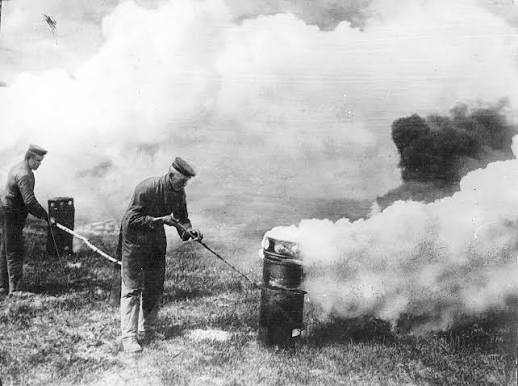
    At 5:00 PM on April 22, 1915, a strange greenish-yellow cloud began to roll across no-man’s-land near Ypres, Belgium. It wasn’t smoke from artillery or a weather phenomenon—it was chlorine gas, released from thousands of cylinders by German troops. Within minutes, French colonial soldiers were choking, coughing up blood, and collapsing in the trenches. The first large-scale chemical attack in history had begun, and it would change the nature of warfare forever.

    The attack was a desperate attempt to break the deadlock of trench warfare, where millions of soldiers faced each other across a wasteland of mud and barbed wire. For months, both sides had tried frontal assaults, artillery barrages, and even the first use of tear gas, but nothing had moved the front line more than a few miles. The German High Command, facing a shortage of conventional explosives and a naval blockade, turned to science for a solution. The result was a weapon so terrifying that it would later be banned by international treaty, but not before it had killed and maimed thousands.

    The Weapon: Chlorine Gas

    Chlorine gas is a simple chemical—a yellow-green gas with a pungent, suffocating odor. When inhaled, it reacts with water in the lungs to form hydrochloric acid, which burns and destroys lung tissue. Even at low concentrations, it causes violent coughing, chest pain, and shortness of breath. At higher concentrations, it can cause death by asphyxiation. The gas is heavier than air, so it tends to settle in trenches and dugouts, making them death traps.

    The German military had been experimenting with chemical agents since the beginning of 1915. On January 31, they tried using xylyl bromide (a type of tear gas) in shells at the Battle of Bolimov, but the cold weather caused the liquid to freeze, and the gas failed to vaporize. The commander of the 4th Army, Albrecht von Württemberg, then suggested using chlorine gas from pressurized cylinders, a method that had been tested at the German Army’s chemical weapons facility. The plan was ambitious: dig in thousands of cylinders along the front line, wait for a favorable wind, and release the gas in a massive cloud that would drift toward the Allied trenches.

    The man behind the weapon was Fritz Haber, a brilliant chemist who would later win the Nobel Prize for his work on nitrogen fixation. Haber was a fervent patriot who believed that science could win the war. He personally oversaw the placement of the cylinders and the training of the troops who would release them. His wife, Clara Immerwahr, also a chemist, was so horrified by his work that she committed suicide in May 1915, reportedly in protest.

    The Attack: Chaos at Ypres

    The Ypres Salient was a bulge in the Allied line that had been held since the First Battle of Ypres in November 1914. It was a vulnerable position, surrounded on three sides by German-held high ground, and the Allies had been reinforcing it with troops from France and the British Empire. On April 22, the German 4th Army faced French colonial troops from Algeria and Morocco, as well as the Canadian Division, which had recently arrived from training in England.

    At 5:00 PM, the Germans opened the valves on 5,730 cylinders, releasing 168 tons of chlorine gas. The cloud, about 6 kilometers wide, drifted slowly toward the Allied lines, carried by a light wind. The effect was instantaneous. The French colonial troops, who had no protection, began to choke and panic. Many fled, leaving a gap of about 4 miles in the Allied line. The Canadians, on the left flank, were also hit, but they managed to hold on, partly because some soldiers improvised by urinating on handkerchiefs and holding them over their mouths—the ammonia in urine neutralized the chlorine.

    Within the first hour, an estimated 6,000 Allied soldiers were affected, and between 800 and 1,000 died, many from asphyxiation. The greenish-yellow cloud was followed by German infantry, but they advanced cautiously, wearing gas masks or holding cloths over their faces, and they were slowed by the fear of the gas and the need to wait for it to dissipate. This hesitation gave the Allies time to seal the breach with counterattacks, and the German breakthrough was contained.

    The Aftermath: A New Era of Warfare

    The attack at Ypres was a tactical failure for the Germans—they did not achieve the strategic breakthrough they had hoped for. But it was a strategic turning point in the war. The Allies were outraged by the use of poison gas, which they saw as a barbaric violation of the Hague Conventions of 1899 and 1907, which prohibited the use of “poison or poisoned weapons.” The Germans argued that the conventions did not explicitly ban chemical clouds or shells, but the international community was not convinced. The British and French governments used the attack as a propaganda tool, describing the suffering of the victims in lurid detail to galvanize public opinion against Germany.

    The attack also sparked a chemical weapons arms race. By the end of 1915, the Allies had developed their own gas masks and were producing chlorine gas. In September 1915, the British launched their own gas attack at the Battle of Loos, with mixed results due to wind shifts. Throughout the war, both sides developed more potent agents, including phosgene and mustard gas, which caused even more horrific injuries. By the end of the war, chemical weapons had killed an estimated 90,000 soldiers and injured over a million more.

    The legacy of Ypres is a cautionary tale about the intersection of science and warfare. Fritz Haber, who was later awarded the Nobel Prize in Chemistry in 1918, would become a controversial figure, condemned by some for his role in developing chemical weapons and admired by others for his contributions to agriculture. His wife’s suicide, in protest of his work, remains a poignant symbol of the moral dilemmas posed by scientific progress in wartime.

    The use of poison gas at Ypres also led to the Geneva Protocol of 1925, which banned the use of chemical and biological weapons in war. The protocol was a step forward, but it did not prevent the use of chemical weapons in later conflicts, such as the Iran-Iraq War in the 1980s and the Syrian Civil War in the 2010s. The ghost of Ypres still haunts the modern battlefield.

    The first use of poison gas at Ypres was a watershed moment in military history. It demonstrated that science could create weapons of mass destruction, and it set a precedent for the use of chemical agents in warfare. The attack was a tactical failure, but it had a profound strategic impact, galvanizing the Allies and leading to an arms race in chemical warfare. The suffering of the soldiers at Ypres, many of whom died gasping for air in the trenches, remains a powerful reminder of the human cost of technological innovation in war.

    Summary

    • On April 22, 1915, Germany launched the first large-scale poison gas attack in history at Ypres, using 168 tons of chlorine gas from 5,730 cylinders.
    • The attack created a 4-mile gap in the Allied lines, but German infantry were slow to advance, allowing the Allies to seal the breach.
    • Around 6,000 Allied soldiers were affected within the first hour, with 800–1,000 deaths, mostly among French colonial troops.
    • The attack was planned by General Erich von Falkenhayn and developed by chemist Fritz Haber, whose wife later committed suicide in protest.
    • The use of gas was condemned as a violation of the Hague Conventions, leading to the development of gas masks and an arms race in chemical weapons, culminating in the Geneva Protocol of 1925.

    FAQ

    Q: What was the first poison gas used in World War I?
    A: Chlorine gas, released from pressurized cylinders by German forces at the Second Battle of Ypres on April 22, 1915.

    Q: How did soldiers protect themselves from the gas?
    A: Initially, soldiers had no protection. Some improvised by urinating on handkerchiefs and holding them over their mouths, as the ammonia in urine neutralized the chlorine. Later, both sides developed effective gas masks.

    Q: Why did the Germans use poison gas?
    A: Germany was facing a stalemate on the Western Front and a shortage of conventional explosives. The German High Command saw chemical weapons as a potential war-winning technology and believed it would shorten the war.

    Q: Was the use of poison gas a violation of international law?
    A: The Hague Conventions of 1899 and 1907 prohibited the use of “poison or poisoned weapons,” but the language was ambiguous regarding gas. Germany argued that it was not explicitly banned, but the Allies condemned it as a violation of international law.

    Q: What was the long-term impact of the gas attack at Ypres?
    A: The attack led to the development of more lethal chemical agents, such as phosgene and mustard gas, and the eventual ban on chemical weapons in the Geneva Protocol of 1925. It also highlighted the moral and ethical dilemmas of scientific research in wartime.
  • First Battle of Ypres: How the ‘Race to the Sea’ Forged the Trenches

    First Battle of Ypres: How the ‘Race to the Sea’ Forged the Trenches

    In the autumn of 1914, the Great War was still a war of movement. Armies marched, cavalry charged, and generals dreamed of decisive victories. But by the time the leaves fell in Flanders, that dream was dying. The First Battle of Ypres, fought from October 19 to November 22, 1914, was the last great open-field battle of the war—and the one that slammed the door on mobility. It marked the end of the ‘Race to the Sea’ and the beginning of the trenches that would define the next four years.

    This battle was not just another clash. It was a brutal lesson in the cost of outdated tactics against modern firepower, a fight that bled the British Expeditionary Force white, and a German failure that turned into a national tragedy. Understanding Ypres means understanding how the Western Front froze into stalemate, and why the names of places like Langemarck and Gheluvelt still echo in military history.

    The Race That Ended at the Coast

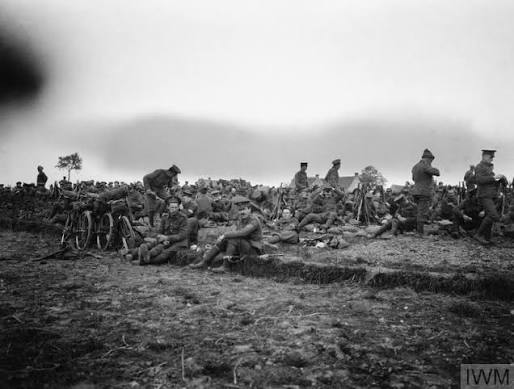
    After the Battle of the Marne in September 1914, the German advance on Paris was halted. Both sides then tried to outflank each other to the north, in a series of maneuvers that became known as the ‘Race to the Sea.’ Each attempt simply extended the front line westward, until by mid-October it ran from the Swiss border to the North Sea. The only gap left was around the Belgian city of Ypres.

    The Germans wanted to break through to the Channel ports—Calais and Dunkirk—to cut off British supply lines and potentially knock Britain out of the war. The British, with their small but professional expeditionary force, were determined to hold Ypres and keep those ports safe. Both sides rushed troops to the area, and by October 19, the stage was set for a collision.

    The Old Contemptibles’ Last Stand

    The British Expeditionary Force (BEF) was a force unlike any other. It was small—roughly 100,000 to 160,000 men—but it was a professional army, with well-trained regulars who could fire an astonishing 15 aimed shots per minute, a skill known as the ‘mad minute.’ These veterans, later nicknamed the ‘Old Contemptibles’ after a (likely apocryphal) order from Kaiser Wilhelm II calling them a ‘contemptible little army,’ were about to face a German force that vastly outnumbered them.

    The German Fourth and Sixth Armies, commanded by Albrecht, Duke of Württemberg, and directed by Chief of Staff Erich von Falkenhayn, launched repeated assaults against the Ypres salient—a bulge in the Allied line. The fighting was intense from the start. At Langemarck (October 21–24), the Germans threw in reserve corps made up of young, poorly trained volunteers and older reservists. These inexperienced troops advanced in dense formations, singing patriotic songs, and were mown down by the British rifles. The slaughter was so appalling that the battle became known in Germany as the ‘Kindermord bei Ypern’—the Massacre of the Innocents at Ypres.

    The Crisis at Gheluvelt

    The most critical moment came on October 31, at the village of Gheluvelt. The German assault had broken through the British line, and the situation was desperate. The British I Corps, commanded by Douglas Haig, was on the verge of collapse. In a famous counterattack, Haig threw in the 2nd Worcestershire Regiment, which recaptured the village and steadied the line. This action is often credited with saving the entire Ypres salient from being overrun.

    But the cost was staggering. By the end of the battle, the BEF had suffered approximately 54,000 to 58,000 casualties. The pre-war regular army was effectively destroyed. Many of its best officers and men were killed or wounded, replaced by reservists and raw recruits who would never match their skill. The term ‘Old Contemptibles’ became a badge of honor for those who survived, but also a reminder of what had been lost.

    The German Tragedy at Langemarck

    While the British remember Ypres as a heroic last stand, the German memory is darker. The battle became a national trauma, centered on the image of young, idealistic volunteers marching to their deaths. The ‘Kindermord’ was later used both to glorify sacrifice and to criticize the military leadership. Falkenhayn’s decision to commit these inexperienced reserve corps to frontal assaults was widely condemned as wasteful and tactically inept.

    German casualties at Ypres are harder to pin down, with estimates ranging from 20,000 to 46,000, but the psychological impact was immense. The loss of so many young men, many of them students and graduates who had volunteered with patriotic fervor, left a scar on German society. The battle also revealed that the German army, despite its numerical superiority, could not break the Allied line. The offensive was called off in mid-November, and both sides, exhausted and soaked by autumn rains, began to dig in for the winter.

    The Birth of Trench Warfare

    The First Battle of Ypres was a transitional battle. Armies still used Napoleonic-era tactics—massed infantry assaults, cavalry in reserve—against modern weapons like machine guns, rapid-fire artillery, and magazine rifles. The result was catastrophic casualties. The battle proved, in blood, that frontal infantry attacks against prepared positions were suicidal. Yet the lesson would have to be relearned painfully over the next four years.

    By the end of November, the front line had stabilized. The Ypres Salient, a bulge in the Allied line around the city, would remain a focal point of fighting for the rest of the war. The trenches that began as shallow ditches would grow into vast networks of earthworks, barbed wire, and bunkers, stretching from the North Sea to the Swiss border. The war of movement was over; the war of attrition had begun.

    The Role of the French and the Wider Picture

    The French played a significant role in the battle, particularly in the southern part of the salient. General Ferdinand Foch, coordinating Allied efforts in the north, launched aggressive counterattacks that were crucial in holding the line. However, French casualties—estimated between 10,000 and 50,000—are often overshadowed in English-language accounts. The French were also focused on their own offensives in Artois and Champagne, which limited their support at Ypres.

    The battle’s strategic significance cannot be overstated. The Germans failed to reach the Channel ports, and the Allies maintained a foothold in Belgium. But the cost was immense. The BEF, once a small but elite force, was never the same. The war would go on for four more years, and the trenches of Ypres would witness some of the bloodiest battles in history, including the Second and Third Battles of Ypres (Passchendaele). The First Battle of Ypres was not just a battle; it was the birth of a new kind of warfare, one that would consume a generation.

    The First Battle of Ypres ended in mud and exhaustion, with no clear winner. But its legacy is profound. It marked the end of the war of movement and the beginning of trench warfare, a brutal stalemate that would define the Western Front for years to come. The ‘Old Contemptibles’ held the line, but at a terrible price, and the German ‘Kindermord’ left a scar that would haunt Germany. As the guns fell silent in November 1914, the soldiers on both sides could not have known that they were digging the graves of millions, and that the trenches they carved into the Flanders mud would become the symbol of a generation lost.

    Summary

    • The First Battle of Ypres (Oct 19–Nov 22, 1914) was the final battle of the ‘Race to the Sea’ and the beginning of trench warfare.
    • The British Expeditionary Force, despite being outnumbered, held the Ypres salient against German assaults, but suffered ~54,000–58,000 casualties, effectively destroying the pre-war regular army.
    • Key engagements included Langemarck, Gheluvelt, and Nonne Bosschen, where German reserve corps of young volunteers were decimated, leading to the ‘Kindermord’ myth.
    • The battle ended in a stalemate, with both sides digging in for the winter, creating the trenches that would define the war.
    • The French played a crucial role, but their efforts are often overlooked in English-language accounts.

    FAQ

    Q: Why is it called the ‘Race to the Sea’?
    A: After the Battle of the Marne, both the Allies and Germans tried to outflank each other to the north, racing toward the North Sea. Each attempt extended the front line, until it reached the coast. The ‘race’ ended at Ypres, where the last gap was closed.

    Q: Who were the ‘Old Contemptibles’?
    A: The British Expeditionary Force, a small professional army, was reportedly called a ‘contemptible little army’ by Kaiser Wilhelm II. The soldiers adopted the name proudly. They were highly skilled regulars who suffered devastating losses at Ypres.

    Q: What was the ‘Kindermord bei Ypern’?
    A: It means ‘Massacre of the Innocents at Ypres.’ It refers to the slaughter of young, inexperienced German volunteer soldiers at Langemarck, who advanced in dense formations and were mown down by British rifle fire. The event became a tragic national myth in Germany.

    Q: How many casualties were there?
    A: British casualties were approximately 54,000–58,000. German casualties are estimated between 20,000 and 46,000, and French casualties between 10,000 and 50,000, though figures vary widely.

    Q: Why was the battle important?
    A: It marked the end of mobile warfare and the beginning of trench warfare on the Western Front. The failure of frontal attacks against modern weapons at Ypres foreshadowed the costly tactics of the rest of the war.