Tag: women’s rights

  • Melinda French Gates Doubles Olivia Rodrigo’s Daisy Chain Fields Donation, Bringing Total to $20 Million


    When Olivia Rodrigo announced her Daisy Chain Fields festival had raised $10 million for women-focused organizations, it was already a landmark achievement for a first-time festival. Then Melinda French Gates stepped in to double it.

    The matching gift brings the total to $20 million a sum that will flow to groups working on issues from reproductive rights to maternal health. It’s a striking example of how a seasoned philanthropist can amplify the energy of a young artist’s fanbase, and a signal that women’s issues are attracting serious money at a moment when they’re under political pressure.

    A Festival With a Mission

    Daisy Chain Fields wasn’t just another music festival. Curated by Rodrigo, the lineup featured female and non-binary artists, and the event’s stated mission was to raise funds and awareness for women’s causes. The $10 million raised is a significant milestone for a single festival—especially one in its first year.

    Rodrigo’s involvement in philanthropy isn’t new. In 2024, she launched the Fund 4 Good, a global initiative supporting girls’ education, reproductive rights, and the prevention of gender-based violence. She’s partnered with the National Network of Abortion Funds and other reproductive justice organizations. Her GUTS World Tour included partnerships with local women’s groups in each city, donating a portion of ticket proceeds.

    The Power of a Match

    Matching donations are a proven strategy in fundraising. They incentivize grassroots giving and double the impact of every dollar. French Gates’ move does more than just add money—it validates Rodrigo’s ability to mobilize young donors and signals institutional confidence in youth-led philanthropy.

    For French Gates, this fits squarely into her stated goals. She stepped down from the Bill & Melinda Gates Foundation in 2024 to focus on her own philanthropy through Pivotal Ventures, where she’s committed $1 billion to gender equality initiatives globally. Her giving has increasingly targeted reproductive rights, maternal health, and women’s economic empowerment. She’s previously matched donations and partnered with celebrities, including MacKenzie Scott.

    What the Money Supports

    The $20 million will go to organizations working on women’s issues, though the specific grantees haven’t been fully detailed. It’s important to note that “women’s issues” or “reproductive rights” isn’t limited to abortion. Groups funded may address a broader spectrum, including maternal health, contraception access, paid leave, and gender-based violence. The scope is wide, reflecting the complexity of gender equity.

    A Political Backdrop

    This donation lands in a politically charged climate. The Supreme Court’s 2022 Dobbs decision overturned Roe v. Wade, leading to state-level restrictions and ballot initiatives across the U.S. Organizations like abortion funds and reproductive justice groups have seen increased demand and, in some states, decreased institutional funding. The timing of this gift is notable—it’s a direct response to a crisis.

    Why It Matters

    This isn’t just a celebrity feel-good story. It’s a case study in strategic philanthropy. French Gates’ match doubles the impact of Rodrigo’s festival and sets a precedent for how established donors can partner with younger activists. It also highlights the growing trend of women funding women’s causes—a shift in a philanthropic sector historically dominated by male donors.

    There are critiques, of course. Some question whether celebrity philanthropy substitutes for systemic change, or whether a billionaire’s match merely masks deeper wealth inequality. But the $20 million will fund real services for real people, and that’s hard to dismiss.

    The partnership between Olivia Rodrigo and Melinda French Gates is a powerful reminder that philanthropy can be both strategic and intergenerational. By doubling the festival’s proceeds, French Gates has not only amplified Rodrigo’s impact but also sent a message: youth-led activism, when matched with institutional wealth, can move mountains. For the organizations on the front lines of gender equity, that $20 million isn’t abstract—it’s the difference between keeping doors open and closing them.

    Summary

    • Melinda French Gates will match the $10 million raised by Olivia Rodrigo’s Daisy Chain Fields festival, bringing the total to $20 million for women-focused organizations.
    • Rodrigo’s festival and Fund 4 Good initiative support girls’ education, reproductive rights, and prevention of gender-based violence.
    • French Gates’ match is part of her $1 billion commitment to gender equality through Pivotal Ventures.
    • The donation comes amid a politically charged climate for reproductive rights in the U.S., following the Dobbs decision.
    • The funds support a broad range of women’s issues, not just abortion access, including maternal health and contraception.

    FAQ

    Q: What is Daisy Chain Fields?
    A: Daisy Chain Fields is a music festival curated by Olivia Rodrigo, featuring female and non-binary artists, with a mission to raise funds and awareness for women’s causes.

    Q: How much did the festival raise, and what is Melinda French Gates’ role?
    A: The festival raised $10 million. Melinda French Gates will match that amount, bringing the total contribution to $20 million.

    Q: What organizations will receive the funds?
    A: The funds will support organizations working on women’s issues, which may include reproductive rights, maternal health, contraception access, paid leave, and gender-based violence. Specific grantees haven’t been fully detailed.

    Q: Why is this donation significant?
    A: It demonstrates the power of matching donations to double impact, highlights youth-led philanthropy, and comes at a critical time for reproductive rights in the U.S.

    Q: Is “reproductive rights” only about abortion?
    A: No, it encompasses a broader range of issues, including maternal health, contraception access, and gender-based violence prevention.
  • Freyja, Frigg, and Skaði: The Norse Goddesses Who Shaped Viking Society

    Freyja, Frigg, and Skaði: The Norse Goddesses Who Shaped Viking Society

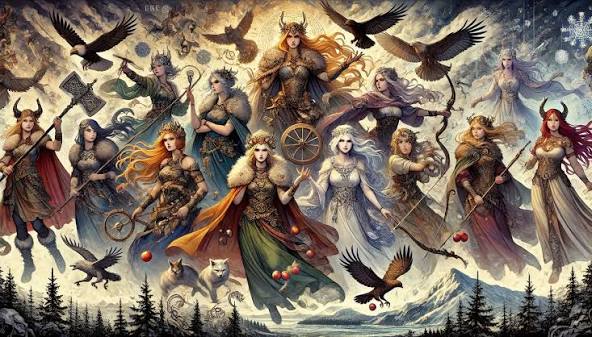
    When most people picture Norse mythology, they see Odin, Thor, and a pantheon of warrior gods. But the Viking cosmos was not a boys’ club. Three goddesses Freyja, Frigg, and Skaði held power that rivaled the gods, and their myths reveal a society where women could own land, initiate divorce, and even choose their own husbands. Their stories were not just entertainment; they were blueprints for Viking social structures, legal practices, and cultural values.

    Yet these goddesses are often overlooked in popular retellings, buried under the thunder of Thor’s hammer. This article brings them into the light, showing how Freyja’s magic, Frigg’s foresight, and Skaði’s fierce independence shaped everything from marriage customs to legal compensation. In a world where women’s rights were surprisingly advanced for the era, these deities were both mirrors and models.

    The Problem with the Sources

    Before we meet the goddesses, a warning: our knowledge of Norse myth comes almost entirely from medieval Icelandic manuscripts written after Christianization. The Poetic Edda and the Prose Edda, compiled in the 13th century, were set down by Christian scribes like Snorri Sturluson, a politician and historian. These texts are priceless, but they reflect the biases of their time. Snorri may have shaped stories to fit Christian ideas about gender and authority.

    Still, the myths preserve older oral traditions, and they align remarkably well with other evidence. Roman historian Tacitus, writing in 98 CE, described Germanic women as influential and respected. Archaeological finds—such as the ‘Freyja’ pendant from Aska, Sweden, and weaving implements in graves—support the idea that women held significant status. The legal codes of Viking-age Iceland, like the Grágás, gave women property rights, the right to divorce, and inheritance rights. So, when we see goddesses with power, we are likely seeing a reflection of real-world female agency.

    Freyja: The Goddess Who Got Half the Fallen

    Freyja was a powerhouse. A Vanir goddess, she ruled over love, fertility, war, and magic. She owned the necklace Brísingamen, rode in a chariot pulled by cats, and had a boar named Hildisvíni. But her most striking role was in the afterlife: she received half of all warriors slain in battle into her hall Fólkvangr. Odin got the other half for Valhalla. This was no small honor—it meant Freyja was as important as Odin in the eyes of warriors.

    She was also the patroness of seiðr, a form of shamanic magic. This was considered a woman’s art; for a man to practice it was seen as unmanly. Freyja’s command of seiðr gave her a power that even Odin coveted—he learned it from her. In one myth, she wept tears of gold when her husband was away, and she bargained with dwarves for her necklace, showing her agency and desire.

    Her cult was practical: people invoked her for love, childbirth, and fertility. Her wagon traveled the countryside for fertility rites, similar to how her brother Freyr’s statue was paraded. This connection to the land and its prosperity made her central to everyday life, not just myth.

    Frigg: The Queen Who Held the Fate of the Gods

    Frigg, Odin’s wife, was the goddess of marriage, motherhood, and domestic order. But her power was subtle. She had the gift of prophecy—she knew the future—but she rarely spoke it. This silence was a form of control. In the myth of Baldr’s death, she extracted oaths from all things not to harm her son, but she overlooked mistletoe. When Loki used mistletoe to kill Baldr, Frigg’s attempt to change fate failed. Yet her grief was so profound that she tried to bargain with Hel for his return, showing her determination.

    Frigg’s domain was the household, but in Viking society, the household was the center of power. Women ran farms while men were away at sea, and they managed textile production—a major export. Frigg was invoked for marriage, childbirth, and household prosperity. Her hall, Fensalir, meaning ‘hall of the marshes,’ suggests a connection to the earth and water.

    The name of the day Friday might come from her or Freyja, showing her lasting cultural footprint. Frigg’s role as queen was not passive; she was a political actor in the divine realm, just as Viking queens and noblewomen could influence decisions.

    Skaði: The Giantess Who Demanded Justice

    Skaði is perhaps the most surprising of the three. She was a giantess, but she was counted among the gods. Her name may be linked to Skáney, an old name for Scandinavia, and skaði, meaning ‘harm.’ She was the goddess of winter, hunting, and skiing, but also of justice.

    Her story begins with vengeance. When the gods killed her father, the giant Þjazi, she armed herself and marched to Asgard to demand compensation. The gods offered her a choice: she could pick a husband from among them, but she could only see their feet. She chose the most beautiful feet, thinking they belonged to Baldr, but they were Njörðr’s. The gods also had to make her laugh, which Loki did, and they gave her a gift: the tears of the gods. But Skaði was not satisfied until she placed a venomous serpent over Loki’s face, binding him in punishment for his role in Baldr’s death.

    Her marriage to Njörðr failed because she wanted to live in her father’s mountain home, Þrymheimr, while he preferred the sea shore. They compromised by spending nine days in each, but neither was happy. This story illustrates the tension between different ways of life, but it also shows Skaði’s independence—she chose a husband and later left him.

    Skaði’s status as a giantess among gods is unusual. It reflects the fluid boundaries between gods and giants in Norse myth, but it also highlights the respect for female assertiveness. She was a huntress and a ski runner, skills that would have been practical in Scandinavia’s snowy landscapes.

    Goddesses and the Real Status of Women

    The prominence of these goddesses corresponds with the relatively high status of women in Viking society. Women could own property, initiate divorce, and inherit land if there were no male heirs. The Grágás law code records these rights. They could also serve as priestesses (gyðja) or seers (völva). The völva held considerable power, as her prophecies were sought after by communities.

    But there were limits. Women could not participate in the þing, the public assembly, and marriage was often arranged for alliances. The gods themselves had arranged marriages—Njörðr and Skaði’s union was a settlement. Yet, the myths also celebrate female choice: Freyja is often sought after by giants, but she refuses. She is not a passive prize.

    In a world where men could be labeled unmanly for practicing seiðr, women’s association with magic gave them a unique kind of power. The norns, who wove the fates of all beings, even the gods, were female. This cosmic authority placed women at the very heart of destiny.

    Why These Goddesses Matter Today

    Popular culture, from Marvel movies to video games, has focused on Thor and Odin, leaving Freyja, Frigg, and Skaði in the shadows. But to understand Viking society, we must look at its goddesses. They show that gender roles were not as rigid as we might assume. Women could be warriors, but they were also farmers, weavers, and sorceresses. The goddesses embodied all these aspects.

    Freyja’s dual nature as a fertility goddess and a war goddess mirrors the reality that women were both life-givers and, in some cases, fighters. Frigg’s foresight and silence reflect the strategic wisdom of queens. Skaði’s independence and demand for justice resonate with the legal rights Viking women actually had.

    These goddesses are not ‘forgotten’ because they were unimportant; they were forgotten because later retellings favored male heroes. But their stories have survived in the Eddas, waiting to be rediscovered. They remind us that the Viking world was complex, and so was its view of women.

    Freyja, Frigg, and Skaði were not minor figures. They were central to Norse cosmology and to the daily lives of Viking people. Their myths encoded the values of a society that, while patriarchal, offered women unprecedented freedoms compared to their European contemporaries. By remembering these goddesses, we correct the record and gain a fuller picture of Viking society—one that honored female power in all its forms.

    Summary

    • Freyja, a Vanir goddess, received half of all warriors slain in battle into her hall Fólkvangr, making her equal to Odin in the afterlife.
    • Frigg, Odin’s wife, had the power of prophecy but rarely spoke, using silence as a form of control in the divine realm.
    • Skaði, a giantess counted among the gods, demanded compensation after her father’s death, showing the legal rights women had in Viking society.
    • Women in Viking Scandinavia could own property, initiate divorce, and serve as priestesses or seers, aligning with the goddesses’ power.
    • The myths of these goddesses reflect and reinforced women’s status, challenging the misconception that Norse mythology was solely male-dominated.

    FAQ

    Q: Was Freyja more important than Odin?
    A: In some ways, yes. She received half of all warriors slain in battle, making her a major deity of war and death. Her association with seiðr gave her a unique power that even Odin sought to learn.

    Q: How did Viking women actually use the rights these goddesses represent?
    A: Historical records, such as the Grágás law code, show that Viking women could own property, initiate divorce, and inherit land, especially if they had no male heirs. Some also held religious roles as priestesses or seers.

    Q: Why are these goddesses often overlooked?
    A: Popular culture and later Christian scribes, who wrote down the myths, often focused on male gods. The stories of goddesses were preserved but not emphasized, leading to their underrepresentation in modern retellings.

    Q: Did Skaði choose her own husband?
    A: Yes, Skaði was allowed to choose her husband from the gods, but she could only see their feet. She picked the most beautiful feet, thinking they were Baldr’s, but they belonged to Njörðr.

    Q: What is seiðr and why was it associated with women?
    A: Seiðr was a form of Norse shamanic magic used for prophecy and shaping the future. It was considered a woman’s art, and for a man to practice it was seen as unmanly, so it became a source of female power in Viking culture.

  • How the First World War Redrew the Boundaries of Gender

    How the First World War Redrew the Boundaries of Gender

    In 1914, a British woman’s place was presumed to be the home. By 1918, over a million of them were making artillery shells, driving trams, and serving in uniform. The war did not just empty the factories of men—it filled them with women, and in doing so, it cracked the ideological foundation of separate spheres. But the story of gender after the war is not a simple tale of progress. It is a story of temporary disruption, political reward, and stubborn continuity.

    The Manpower Crisis That Opened the Doors

    In 1915, Britain’s army was bleeding. By the end of that year, over half a million soldiers had been killed or wounded. The Somme, in 1916, would add another 400,000 casualties in a single battle. With conscription introduced in 1916, nearly six million men were eventually mobilized. The factories, farms, and offices they left behind needed workers. The government, which had initially resisted women’s labor, began actively recruiting them.

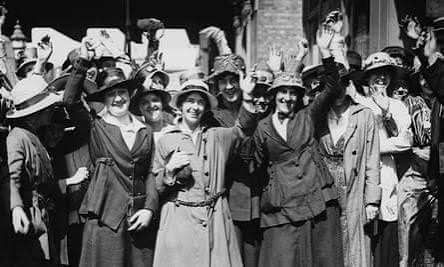
    The numbers are stark. In 1914, about 5.9 million women were employed in Britain. By 1918, that figure had risen to 7.3 million. But the nature of the work mattered more than the count. Women moved into jobs that had been coded as masculine: heavy engineering, transport, and munitions. In the munitions factories alone, over one million women worked, producing 80% of the UK’s artillery shells. They were nicknamed ‘canary girls’ because TNT exposure turned their skin yellow. It was dangerous, dirty, and essential work.

    The Uniformed Woman: Auxiliary Forces and the Eastern Front

    Women also served closer to the front lines, though not in combat roles. Britain’s Women’s Army Auxiliary Corps (WAAC), Women’s Royal Naval Service (WRNS), and Women’s Royal Air Force (WRAF) attracted over 80,000 women. They worked as clerks, cooks, and drivers, freeing men for the trenches. Russia went further, fielding the Women’s Battalion of Death in 1917, a combat unit that fought in the chaos of the Revolution. These uniformed women were visible symbols of a world turned upside down.

    The war also created a demographic catastrophe. Britain ended the conflict with an estimated 1.7 to 2 million more women than men—the ‘surplus women’ problem. Millions of women became widows, and many more became sole breadwinners with no state support. The ‘lost generation’ was not a metaphor; it was a statistical reality that reshaped marriage patterns and public discourse.

    The Vote: A Reward or a Limited Concession?

    The most famous political change came with the Representation of the People Act in 1918. It gave the vote to women over 30 who met property qualifications—about 8.5 million women. Prime Minister Lloyd George framed it as gratitude for women’s war work. But the act was deliberately restrictive. It excluded women under 30 and most working-class women. Full equal suffrage did not arrive until 1928. In the United States, the 19th Amendment followed in 1920, and Germany granted women the vote in 1919. But France and Italy, despite their own massive wars, did not. France waited until 1944, Italy until 1945.

    The war also broke down legal barriers. Britain’s Sex Disqualification (Removal) Act of 1919 opened professions like law, civil service, and accountancy to women. But these were symbolic victories for a minority.

    The Backlash: Restoration of Pre-War Practices

    The revisionist view holds that the war’s impact was temporary. In 1919, the Restoration of Pre-War Practices Act forced women out of ‘men’s jobs’ in munitions and transport. By 1921, women’s employment rates had largely returned to pre-war levels. The interwar years saw a glorification of domesticity, a ‘cult of motherhood,’ and a cultural push for women to return home. The gender division of labor was reasserted, but the justification was weakened. Women had proven they could do the work; the argument that they were biologically incapable no longer held.

    The Cultural Shift: Fashion, Freedom, and the Flapper

    What did change irreversibly was culture. The war demanded practicality. Women wore shorter skirts and shed corsets for factory work. They bobbed their hair. They smoked, drank, and dated unchaperoned. The ‘flapper’ of the 1920s was a direct descendant of the munitionette. The war did not overturn the structures of patriarchy, but it undermined the myths that supported it. The separate spheres ideology—that women belonged in the home—was never fully restored. Even as women were pushed back into domestic roles, the memory of their wartime service lingered. It became a reference point for future feminist movements.

    The Verdict: A Disruption, Not a Revolution

    The First World War was not a clean break. It was a violent rupture that opened new possibilities and then slammed many doors shut. Women gained the vote in some countries, but not others. They entered new professions, but were pushed out after the war. They proved their capability, but were told to go home. The most lasting change was cognitive: the idea that women’s place was solely in the home was dealt a blow from which it never fully recovered. The war changed perceptions more than structures, but perceptions matter. They set the stage for the slow, grinding progress of the twentieth century.

    The First World War did not ‘give’ women equality, nor did it permanently erase gender divisions. It was a cataclysm that forced societies to reconsider what women could do. The vote came, but it was limited. Jobs opened, but they closed again. The war’s greatest legacy was not a law or a policy, but a shift in the collective imagination. Once women had built shells and driven trains, the old arguments about their fragility rang hollow. The door did not swing fully open, but it was never again locked shut.

    Summary

    • Women’s employment in Britain rose from 5.9 million (1914) to 7.3 million (1918), with over a million in munitions.
    • Over 80,000 women served in British auxiliary forces; Russia fielded an all-female combat unit.
    • Suffrage breakthroughs came in Britain (1918, partial), the US (1920), and Germany (1919), but France and Italy held out for decades.
    • The Restoration of Pre-War Practices Act (1919) pushed women out of wartime jobs, but cultural shifts—like shorter skirts and bobbed hair—persisted.
    • The war changed perceptions of women’s capabilities more than it changed economic structures, laying groundwork for future feminist advances.

    FAQ

    Q: Did all women get the vote in Britain after WWI?
    A: No. The 1918 Representation of the People Act gave the vote only to women over 30 who met property qualifications—about 8.5 million women. Full equal suffrage came in 1928.

    Q: Why didn’t France and Italy grant women the vote after WWI?
    A: Despite women’s significant war contributions, both countries delayed suffrage—France until 1944, Italy until 1945. The reasons varied, including fears of conservative women’s voting patterns and political instability.

    Q: What were ‘canary girls’?
    A: Women munitions workers whose skin turned yellow from TNT exposure. They produced 80% of the UK’s artillery shells during the war.

    Q: Did women’s employment remain high after the war?
    A: No. The Restoration of Pre-War Practices Act (1919) forced women out of ‘men’s jobs,’ and by 1921 employment rates had largely returned to pre-war levels.

    Q: What was the ‘surplus women’ problem?
    A: Britain had 1.7–2 million more women than men after the war, leading to public debate about unmarried women and their societal role.