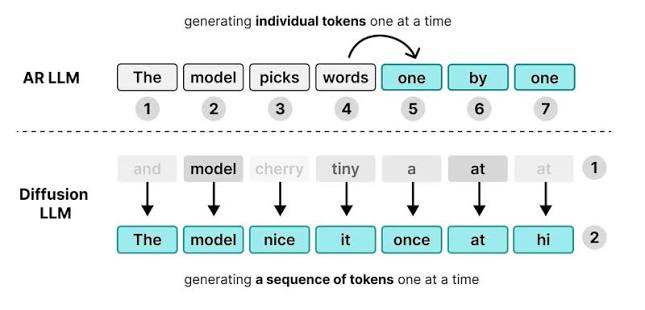
You type a question, hit enter, and within seconds a coherent, often insightful answer appears. It feels like magic or like talking to a very knowledgeable friend. But under the hood, ChatGPT is not retrieving facts from a database, nor does it truly ‘understand’ your words in the human sense. It’s a pattern-completion engine, built on a complex neural network, that has learned to mimic human language from vast amounts of text.
This guide unpacks the core mechanics of ChatGPT tokenization, the transformer architecture, autoregressive generation, and the role of parameters like temperature in plain English. Whether you’re a developer building on top of the API, a power user trying to get better responses, or just curious about the buzz, understanding these fundamentals will help you use ChatGPT more effectively and set realistic expectations.
It’s All About Tokens
Before ChatGPT can process your text, it breaks it down into small chunks called tokens. A token isn’t the same as a word. It’s a subword unit—sometimes a whole word, sometimes a part of a word, sometimes even a single character. For example, the word “unbelievable” might be split into “un,” “believ,” and “able.” Why do this? Because it allows the model to handle a vast vocabulary without needing a separate representation for every possible word. It also helps with rare or misspelled words.
The tokenization process is invisible to you, but it matters for two practical reasons. First, the model’s context window—the maximum amount of text it can process at once—is measured in tokens, not words. A context window of 8,000 tokens might sound like a lot, but it’s roughly equivalent to 6,000 words, depending on the language. Second, API costs are calculated per token. So, being mindful of token usage can save you money.
The Transformer: The Brain Behind the Operation
ChatGPT is built on a transformer architecture, a type of neural network introduced in 2017. Transformers are particularly good at handling sequential data like text because they use a mechanism called self-attention. In simple terms, self-attention allows the model to weigh the importance of every word in the input relative to every other word. When processing the sentence “The cat sat on the mat because it was tired,” the model can link “it” to “cat” by paying attention to the relationship between those tokens.
But here’s the kicker: the model doesn’t process text one word at a time in order. Instead, it looks at the entire input sequence simultaneously, computing attention scores for all pairs of tokens. This parallel processing is what makes transformers so powerful—and so fast compared to earlier models that processed sequentially.
The transformer has multiple layers, each with its own attention heads. Lower layers might capture simple patterns like word order, while higher layers capture more abstract relationships like grammar and even some reasoning. The final output is a probability distribution over the entire vocabulary for what the next token should be.
Autoregressive Generation: One Token at a Time
The core of ChatGPT’s text generation is autoregressive: it predicts one token at a time, then feeds that token back into the input to predict the next one. It’s like a very fast, sophisticated version of the autocomplete on your phone. When you ask “What’s the capital of France?”, the model doesn’t immediately know the answer. It starts generating the most likely first token, say “The,” then based on that, predicts the next token, “capital,” and so on, until it produces a stopping token that signals the end of the response.
This process is inherently probabilistic. At each step, the model calculates probabilities for all possible next tokens. The way it picks from those probabilities is controlled by temperature and sampling parameters.
- Temperature (ranging from 0 to 2) controls randomness. A lower temperature (e.g., 0.2) makes the model more deterministic, always choosing the highest-probability token. This is good for factual questions or code. A higher temperature (e.g., 1.0) allows more random choices, leading to more creative or varied outputs, but also increasing the chance of errors or incoherence.
- Top-p (nucleus sampling) is another parameter that limits the pool of tokens considered. Instead of considering all possible tokens, it only considers the smallest set whose cumulative probability exceeds a threshold (e.g., 0.9). This can produce more focused responses.
Even at temperature 0, the model isn’t guaranteed to be deterministic due to floating-point arithmetic variations across hardware. So don’t be surprised if you get slightly different answers on different occasions.
The Context Window: How Much the Model Can “See”
Every ChatGPT conversation has a context window—the total number of tokens the model can process at once. For example, GPT-4 might have an 8K or 32K token limit, while newer models like GPT-4 Turbo support up to 128K tokens. This includes your prompts, the model’s previous responses, and any system instructions—all of it must fit within the window.
If you exceed the limit, the model won’t just crash; it will truncate the conversation, often dropping the oldest messages. This is why ChatGPT can “forget” earlier parts of a long conversation. Even within the window, the model’s attention can dilute. As the sequence grows, the model may pay less attention to tokens at the beginning, leading to inconsistencies. So, for complex tasks, it’s often better to keep conversations concise or summarize earlier points.
The Role of Prompts: System, User, and Assistant
When you interact with ChatGPT, there are actually three types of messages in the conversation:
- System prompt: A set of instructions given to the model before the conversation starts. It sets the overall behavior, like “You are a helpful assistant” or “You are a pirate who always speaks in sea shanties.” The system prompt is a strong influence, but not an absolute constraint. The model can deviate if the user messages conflict.
- User messages: Your inputs.
- Assistant messages: The model’s responses. These are also fed back into the model on each turn, so the model has the full history.
Crafting effective prompts is about being clear and specific. The better the model understands your intent, the better the output. But remember, the model isn’t reading between the lines—it’s pattern-matching on the text it’s seen in training. So, providing examples (few-shot prompting) or giving step-by-step instructions can dramatically improve results.
How the Model Was Trained: From Base Model to Chatbot
The ChatGPT you interact with today didn’t emerge fully formed. It started as a base model trained on a massive corpus of text from the internet, books, and other sources. This training taught the model grammar, facts, reasoning patterns, and biases present in the data. But a base model is not necessarily helpful or safe—it might generate harmful text or answer questions with random tangents.
To make it conversational, the model went through fine-tuning and Reinforcement Learning from Human Feedback (RLHF). In RLHF, human AI trainers rank different responses to the same prompt. The model then learns to favor responses that humans consider better—more helpful, accurate, and harmless. This is why ChatGPT often declines to answer harmful questions or says “I’m sorry, but I can’t help with that.” It’s a learned behavior, not a hard-coded rule.
This training process also introduces limitations. The model’s knowledge is frozen at its training cutoff, so it has no awareness of events after that date. It also can hallucinate—generate plausible-sounding but incorrect information—because it’s not recalling facts but predicting sequences based on patterns.
Tool Use and Memory: Extending the Model’s Capabilities
Recent versions of ChatGPT have added features that go beyond pure text generation. Tool use (also called function calling) allows the model to request specific actions, like running a calculation or fetching data from an API. The model doesn’t execute the tool itself; it outputs a structured request, and the system performs the action and returns the result. This extends the model’s abilities beyond its training data.
Memory is another feature that lets the model remember facts across conversations. It’s implemented by storing information in a separate memory system and injecting it into the context window as needed. This isn’t true long-term learning; it’s more like a note-taking system. The model’s weights remain unchanged.
Why Understanding This Matters
Knowing how ChatGPT works isn’t just academic. It helps you:
- Debug: If the model gives a wrong answer, you can spot if it’s due to hallucination, context truncation, or a poorly designed prompt.
- Plan prompts: You can craft prompts that stay within the context window and provide the necessary information.
- Estimate costs: Since API billing is per token, being aware of token usage helps you budget.
- Set expectations: You’ll know that ChatGPT is not a sentient being, but a statistical text generator. It can be incredibly useful, but it’s not a reliable source of truth for critical decisions.
So the next time you interact with ChatGPT, remember: you’re not talking to a brain; you’re engaging with a highly sophisticated pattern-matching machine that has learned to play with words. And that’s quite remarkable in itself.
Understanding the inner workings of ChatGPT demystifies the technology and helps you use it more effectively. It’s not magic—it’s a complex interplay of tokenization, attention mechanisms, and probabilistic generation, all trained on human language. While it has limitations, grasping these fundamentals empowers you to craft better prompts, interpret outputs critically, and appreciate the engineering marvel that it is.
Summary
- ChatGPT breaks text into tokens (subword units), not words, which impacts context limits and costs.
- The transformer architecture uses self-attention to process entire sequences in parallel, enabling sophisticated language patterns.
- Generation is autoregressive: one token at a time, based on probabilities influenced by temperature and sampling.
- The context window is the model’s working memory; exceeding it truncates history, causing “forgetfulness.”
- Fine-tuning and RLHF align the model to be helpful and safe, but it remains a pattern-matching system, not a knowledge database.
FAQ
Q: Is ChatGPT deterministic?
A: Not always. Even at temperature 0, floating-point variations can cause different outputs across runs. Higher temperatures introduce more randomness.
Q: Does ChatGPT have internet access?
A: Not by default. It doesn’t browse the web unless a tool is enabled. Its knowledge is limited to its training data cutoff.
Q: Why does ChatGPT sometimes give wrong answers?
A: It’s not retrieving facts; it’s predicting text based on patterns. If the pattern is misleading or the context is ambiguous, it can hallucinate plausible but incorrect information.
Q: How long is the context window?
A: It depends on the model version. GPT-4 typically has 8K or 32K tokens, while some newer models support up to 128K tokens. Check the specific model’s documentation.
Q: Can I control the creativity of ChatGPT?
A: Yes, via the temperature parameter. Lower values (e.g., 0.2) produce more focused, deterministic responses; higher values (e.g., 1.0) yield more creative and varied output.