Tag: trade routes

  • The Viking Silk Road: How Norse Traders Reached Baghdad and Reshaped European Fashion


    When you picture a Viking, you probably imagine a horned helmet and a raid on a monastery. But thousands of Norsemen never swung an axe in anger. They rowed east, down rivers through Russia, to trade furs for silver in the markets of the Abbasid Caliphate. Their journeys, spanning over 1,000 miles, connected the Baltic to Baghdad and funneled Islamic silver, silk, and style into the heart of Scandinavia.

    This eastern trade, known as the Austrvegr, wasn’t a footnote to Viking history. It was a major engine of their economy. Between the 9th and 11th centuries, tens of millions of silver dirhams flowed north, and with them came fabrics and fashions that would transform what Europeans wore. The Vikings didn’t just raid their way into history—they traded their way across a continent.

    The Eastward Expansion

    While western Vikings were pillaging monasteries, their eastern counterparts were establishing trade networks that would eventually span from Sweden to the Caspian Sea. The primary route began in the Baltic, wound through the Gulf of Finland, and followed rivers like the Neva and Volkhov to reach lake systems and portages that connected to the Volga and Dnieper rivers.

    These waterways became the highways of a vast commercial enterprise. The Volga route led to the Caspian Sea and then to Baghdad, while the Dnieper route reached the Black Sea and Constantinople, which the Norse called Miklagard. The whole network was often dubbed the ‘Route from the Varangians to the Greeks.’

    Silver: The Fuel of the Trade

    What drove these arduous journeys? Silver. Islamic dirhams, minted in the Abbasid Caliphate, were the currency that made the entire enterprise worthwhile. Over 100,000 such coins have been unearthed in Scandinavia, with the vast majority found on the island of Gotland, Sweden—the epicenter of this eastern commerce.

    The sheer volume was staggering. Estimates suggest tens of millions of dirhams flowed north over the course of the 9th to 11th centuries. In exchange, the Norse offered goods that were highly prized in the Islamic world: furs from sable, marten, beaver, and squirrel; honey and wax for lighting; walrus ivory; and slaves captured from Baltic tribes.

    The Rus: Norse Traders in the East

    The Norse who settled and traded in these eastern lands became known as the Rus—a term likely derived from the Finnish word ‘Ruotsi,’ meaning ‘rowers.’ They were the ones who gave Russia and Belarus their names. Their leaders, like the legendary Rurik and his successor Oleg of Novgorod, established dynasties and moved their capital to Kyiv, creating a political entity that would define the region for centuries.

    One of the most vivid accounts of the Rus comes from Ahmad ibn Fadlan, a Persian diplomat who encountered them on the Volga in 921–922 AD. His writings describe their customs, including a ship burial that involved human sacrifice, offering a rare glimpse into their world.

    Key Trading Hubs Along the Way

    The trade route was punctuated by bustling centers that served as meeting points for different cultures. Staraya Ladoga, founded around 750 AD, was the earliest known Scandinavian settlement in Russia. Novgorod later became a major commercial city where Norse, Slavic, and Finnic peoples mingled.

    Further east, the city of Bulgar on the Volga served as a crucial intermediary market. Here, Norse traders met Muslim merchants from the south. The capital of the Khazar Khaganate, Itil, at the Volga delta, was another key stop. The Khazars, a semi-nomadic Turkic people who converted to Judaism, controlled the lower Volga and levied tolls on passing traders. Volga Bulgaria, a Muslim state, was often the primary meeting point, as most Norse traders didn’t travel all the way to Baghdad—they exchanged goods with Muslim merchants who carried them south.

    The Silk Road’s Northernmost Branch

    The traditional ‘Silk Road’ isn’t a single route but a network of overlapping paths. The Viking route was its northernmost branch, connecting the Baltic to the Caspian and Black Seas, and thereby linking into a trade network that extended to China, India, and Central Asia.

    This connection brought more than silver. Silk fragments have been discovered in Viking graves in Sweden and Norway, likely arriving via this eastern path. The Vikings didn’t just bring back coins; they brought back luxury goods that would influence European tastes.

    Changing European Fashion

    The influx of eastern goods had a tangible impact on what Europeans wore. Before this era, Scandinavian clothing was primarily made of local materials like wool and linen. The arrival of silk and other fine fabrics introduced new textures and colors to the Norse wardrobe.

    Silk was a status symbol, reserved for the elite. Its presence in graves indicates that high-ranking individuals wore it, possibly as trim or decorative elements on otherwise woolen garments. This adoption of eastern styles was a clear sign of wealth and connection to the wider world. The flow of silver also fueled a taste for luxury, leading to an increase in the production of intricate jewelry and fine textiles across Scandinavia.

    The Decline of the Eastern Route

    The golden age of the eastern trade began to wane in the late 10th century. Several factors contributed to its decline. The silver mines in Central Asia, such as the Panjshir mines, became depleted, reducing the supply of dirhams. The Abbasid Caliphate weakened, and the Khazar Khaganate—which had provided stability—was defeated by the Rus under Svyatoslav in the 960s. This destabilized the route, and by the 1000s, trade had shifted westward, towards the emerging economies of Western Europe.

    Though the route faded, its legacy endured. The Rus they left behind became the foundation of modern Russia and Belarus. The genetic and cultural imprints of the Norse were left in the East, while the silver and silk they brought home had already reshaped European fashion and economy.

    The Viking Silk Road was more than a footnote to the age of raids. It was a complex network that connected the Norse to the wealth of the Islamic world, driven by silver and furs. In the process, it brought silk and style to Europe, transformed local economies, and left a lasting mark on the political map of the East. The Vikings didn’t just sail west to pillage; they rowed east to trade—and in doing so, they changed the course of European history.

    Summary

    • Vikings traveled east along river routes to reach the Caspian and Black Seas, connecting the Baltic to Baghdad and Constantinople.
    • The trade was fueled by Islamic silver dirhams, with over 100,000 coins found in Scandinavia, primarily on Gotland.
    • Norse traders, known as the Rus, exchanged furs, honey, wax, and slaves for silver and luxury goods.
    • The route functioned as the northernmost branch of the Silk Road, bringing silk and other eastern fabrics that influenced European fashion.
    • The decline of the route in the late 10th century was due to depleted silver mines and the collapse of the Khazar Khaganate, shifting trade westward.

    FAQ

    Q: Did Vikings really reach Baghdad?
    A: Most Norse traders did not travel all the way to Baghdad themselves. They typically traded at intermediary stops like Volga Bulgaria or Itil, where Muslim merchants carried goods south. However, some Norse did travel further, and the route certainly connected them to the Abbasid Caliphate’s markets.

    Q: What did Vikings trade for silver?
    A: They traded furs (sable, marten, beaver, squirrel), honey, wax, walrus ivory, and slaves. These goods were highly valued in the Islamic world.

    Q: How did the eastern trade influence European fashion?
    A: The influx of silk and other eastern fabrics introduced new materials to Scandinavia. Silk became a status symbol for the elite, and its use in clothing and decorative elements reflected a broader adoption of eastern styles.

    Q: Why is the Viking trade route considered part of the Silk Road?
    A: The Silk Road was a network of overlapping routes, not a single path. The Viking route connected the Baltic to the Caspian and Black Seas, linking to the broader Islamic trade network that reached China and India, making it the northernmost branch of this network.

    Q: What caused the decline of the eastern Viking trade?
    A: The depletion of silver mines in Central Asia, the weakening of the Abbasid Caliphate, and the fall of the Khazar Khaganate all contributed to the decline. By the 11th century, trade had shifted westward.
  • The Silk Road’s Unsung Traders: How the Sogdians Shaped Eurasian History

    The Silk Road’s Unsung Traders: How the Sogdians Shaped Eurasian History

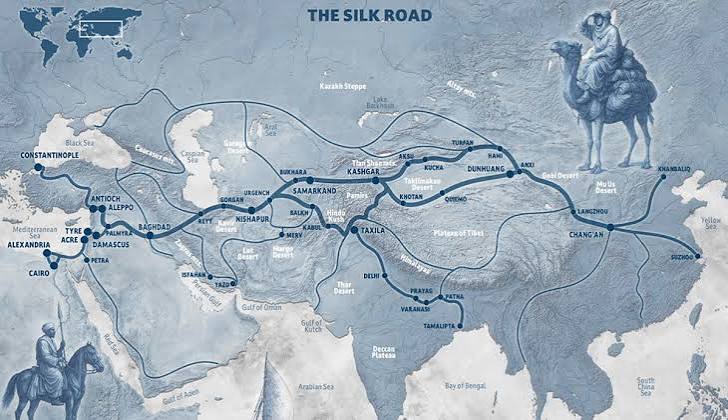
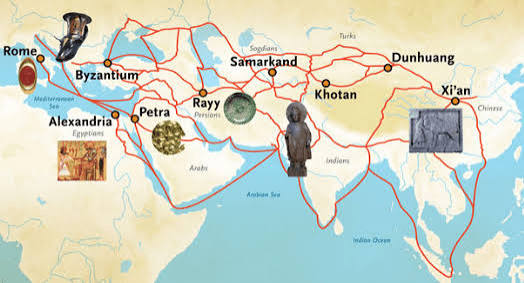
    When we think of the Silk Road, images of camel caravans laden with Chinese silk and Roman glass often come to mind. But who actually drove these caravans? The answer, for centuries, was the Sogdians a people from Central Asia who were the ultimate middlemen of the ancient world. They were not just traders; they were diplomats, translators, and cultural catalysts who linked the great empires of China, Persia, and Byzantium.

    Yet today, their name is barely known outside specialist circles. This article uncovers the story of these unsung traders, from their bustling city-states on the Zeravshan River to their far-flung colonies in China, revealing how they helped shape the course of Eurasian history.

    Who Were the Sogdians?

    The Sogdians were an Eastern Iranian people who inhabited Sogdiana, a region centered on the fertile Zeravshan River valley in what is now Uzbekistan and Tajikistan. Their heartland was a patchwork of independent city-states, including Samarkand, Bukhara, and Panjakent. Unlike their neighbors, the Sogdians never formed a unified empire. Instead, they built a network of commercially driven cities, each governed by local lords known as afshins. This decentralized structure proved to be an advantage: it allowed them to act as neutral intermediaries between rival powers, trusted by all sides.

    Their language, Sogdian, was an Eastern Iranian tongue written in a script derived from Aramaic. Remarkably, this script later influenced the development of the Uyghur and Mongolian alphabets, a lasting legacy of their cultural reach. From the 6th century BCE to the 10th century CE, the Sogdians rose and fell, with their golden age spanning the 4th to 8th centuries CE.

    Masters of the Silk Road

    The Sogdians dominated the central section of the Silk Road, controlling trade routes that linked China, India, Persia, and the Byzantine Empire. Their caravans carried a vast array of goods: silk, spices, glassware, precious metals, horses, and even slaves. They established merchant colonies, known as karvansarai networks, along the routes, with significant communities in Dunhuang, Turfan, and Chang’an (modern Xi’an). Some even ventured as far as the Korean Peninsula.

    But their trade was not limited to luxury goods. They were instrumental in the exchange of ideas and technologies. For instance, they helped transmit papermaking technology westward, a revolutionary development that would transform the Islamic world and Europe. They also dealt in horses, which were crucial for the Tang military, and jade from Khotan, prized in China.

    The Sogdians’ rise to prominence began under the Kushan Empire (1st–3rd centuries CE) and peaked during the early Tang Dynasty (7th–8th centuries CE). The Tang’s expansion into Central Asia created a stable political environment that fostered long-distance trade. The Sogdians also forged a vital alliance with the Turkic Khaganates, serving as administrators, scribes, and diplomats. In effect, they managed the political economy of the steppe, bridging the nomadic and sedentary worlds.

    The Cultural Intermediaries

    The Sogdians were more than just merchants; they were the primary translators and cultural brokers between the Indian, Persian, Chinese, and Turkic worlds. Their religious tolerance was remarkable—they practiced Zoroastrianism, Buddhism, Manichaeism, and Nestorian Christianity, often simultaneously. This openness made them uniquely suited to bridge diverse cultures.

    One of their most significant contributions was the transmission of Buddhism from India to China. Sogdian monks, such as Kang Senghui in the 3rd century CE, traveled to China and helped translate numerous Sanskrit texts into Chinese. They played a similar role for Manichaeism and Nestorian Christianity, spreading these faiths along the Silk Road.

    Their artistic legacy is equally rich. The murals of Panjakent and Afrasiab (near Samarkand) provide some of the most vivid visual records of Silk Road life, depicting scenes of trade, feasting, and mythology. These paintings offer a window into the cosmopolitan world the Sogdians inhabited.

    Sogdians in Chinese Courts

    Sogdians wielded significant political power in China, serving as military generals, court advisors, and even imperial consorts. The most dramatic example is An Lushan, a Sogdian-Turkic general who led a massive rebellion against the Tang Dynasty in 755 CE. The An Lushan Rebellion nearly toppled the dynasty and caused millions of deaths, fundamentally weakening Tang authority and disrupting the very trade networks the Sogdians had built.

    The rebellion also marked a turning point for the Sogdians in China. After its suppression, anti-Sogdian sentiment grew, and many Sogdians assimilated into Chinese society, losing their distinct identity over time.

    The Fall of the Sogdians

    The decline of the Sogdians was a gradual process, driven by two major forces. First, the Arab conquest of Transoxiana in the early 8th century CE eroded their political independence. The last ruler of Panjakent, Divashtich, resisted the invasion but was defeated and killed in 722 CE. Many Sogdians converted to Islam and were assimilated into Persian and Turkic cultures.

    Second, the collapse of Tang authority after the An Lushan Rebellion disrupted their trade networks in China. By the 10th century, the Sogdian language had largely died out, replaced by Persian and Turkic dialects. The Samanid Empire (819–999 CE) absorbed the remnants of Sogdian culture, and the once-thriving merchant communities faded into history.

    Yet their legacy endured. The Sogdians left an indelible mark on the regions they touched, from the scripts of Central Asia to the spread of Buddhism and the artistic traditions of the Silk Road. They were the connective tissue of the ancient world, and their story is a testament to the power of trade and cultural exchange.

    The Sogdians may not have built grand empires or left behind monumental architecture, but their impact on Eurasian history is undeniable. As the unsung traders of the Silk Road, they facilitated the exchange of goods, ideas, and beliefs that shaped the development of entire civilizations. Their story reminds us that history is often driven not by kings and conquerors, but by the merchants and middlemen who connect the world.

    Summary

    • The Sogdians were an Eastern Iranian people from Central Asia who dominated Silk Road trade between the 4th and 8th centuries CE.
    • They acted as cultural brokers, transmitting Buddhism, Manichaeism, and Nestorian Christianity, as well as artistic and literary traditions, between East and West.
    • Their decentralized city-states allowed them to remain neutral intermediaries among powerful empires like the Tang, Sassanian Persia, and the Byzantine Empire.
    • Sogdians held significant political power in China, exemplified by An Lushan, whose rebellion in 755 CE nearly toppled the Tang Dynasty.
    • The Arab conquest and the collapse of Tang authority led to their decline, but their legacy persists in scripts, art, and the flow of ideas across Eurasia.

    FAQ

    Q: Why are the Sogdians considered “unsung” traders?
    A: Despite their crucial role as the main middlemen of the Silk Road, the Sogdians are not as well-known as the Romans, Chinese, or Persians. Their decentralized political structure and eventual assimilation into other cultures meant they left no single dominant empire to preserve their fame.

    Q: What did the Sogdians trade besides silk?
    A: They traded a wide variety of goods, including horses, jade, glassware, spices, precious metals, and slaves. They also helped transmit technologies like papermaking.

    Q: How did the Sogdians influence the spread of Buddhism?
    A: Sogdian monks and translators, such as Kang Senghui, played a key role in translating Buddhist texts from Sanskrit into Chinese, making the religion accessible to Chinese audiences. They also facilitated cultural exchange along the trade routes.

    Q: What was the An Lushan Rebellion and why is it significant?
    A: The An Lushan Rebellion (755–763 CE) was a massive uprising led by An Lushan, a Sogdian-Turkic general, against the Tang Dynasty. It nearly toppled the dynasty, caused millions of deaths, and weakened Tang control over Central Asia, disrupting Silk Road trade.

    Q: When did the Sogdian civilization decline?
    A: The Sogdians began to decline in the early 8th century with the Arab conquest of Transoxiana. Their language and culture gradually disappeared over the following centuries, assimilating into Persian and Turkic populations by the 10th century.

  • The Incense Route: The Ancient Highway That Built Kingdoms and Fueled Empires

    The Incense Route: The Ancient Highway That Built Kingdoms and Fueled Empires

    Before the Silk Road ever connected China to Rome, another trade network was already shaping the ancient world. The Incense Route a web of desert caravan tracks stretching from the southern coast of Arabia to the Mediterranean carried frankincense and myrrh that were worth more than gold. It built wealthy kingdoms, sparked cultural exchange, and even influenced the stories we tell today.

    Yet this route is often overshadowed by its more famous eastern counterpart. While the Silk Road gets the documentaries and the museum exhibits, the Incense Route was just as transformative arguably more so for the Middle East. It funded grand engineering projects, created legendary cities like Petra, and made Arabian merchants so rich that they controlled the supply of luxury goods for centuries.

    This is the story of that forgotten highway and the kingdoms it built.

    The Scent of Power: What Was the Incense Route?

    The Incense Route was a network of land and sea routes that connected the southern Arabian Peninsula modern-day Oman and Yemen to the Mediterranean world. It operated from roughly the 7th century BCE to the 2nd century CE, with some use continuing into the Islamic period. The primary commodities were frankincense (from the Boswellia sacra tree) and myrrh (from Commiphora myrrha), along with spices, gold, pearls, and textiles.

    The overland route ran about 2,000 to 3,000 kilometers from Dhofar and Hadhramaut through the Hejaz, passing through Petra and ending at ports like Gaza and Alexandria. It wasn’t a single road but a network of seasonal tracks dictated by water sources and political alliances. Camels, domesticated around 1300-1000 BCE, could carry 200-300 kilograms and travel about 40 kilometers a day, making the one-way journey from Yemen to Gaza take 60 to 90 days.

    The Kingdoms That Rose on Aromatics

    The trade didn’t just move goods it built entire civilizations.

    The Sabaeans: Sheba’s Wealth

    The Sabaeans, based in modern Yemen with their capital at Marib, dominated the southern end of the route from around 1000 BCE. They are famous for the legendary Queen of Sheba and the Marib Dam, an engineering marvel that irrigated over 10,000 acres, supporting a population wealthy enough to field armies and build grand temples. Their wealth came from taxing caravans and controlling the source of frankincense.

    The Nabataeans: Desert Masters

    Further north, the Nabataeans a nomadic Arab people built Petra, the rock-carved city in modern Jordan. From the 4th century BCE to 106 CE, they controlled the northern terminus of the route. They mastered water conservation with cisterns and aqueducts, allowing them to thrive in the desert. As middlemen, they bought frankincense from South Arabian caravans and resold it to Greeks and Romans at a markup. Their unique script evolved into modern Arabic.

    The Mineans and Hadramites

    Lesser-known South Arabian kingdoms like the Mineans and Hadramites also controlled segments of the trade. The Hadramite capital at Shabwa was a key stop. These kingdoms, along with the Sabaeans, guarded the secret of frankincense’s source, spreading myths of winged serpents to deter competitors a strategy that kept prices high.

    The Economic Engine: Frankincense Worth Its Weight in Gold

    The scale of wealth generated was staggering. Pliny the Elder complained that Rome spent 100 million sesterces annually on Arabian luxuries, including spices and perfumes. Frankincense was sometimes valued as highly as gold by weight. This demand was driven by religious use: the resin was burned in temples across Egypt, Greece, and Rome, and later in Christian and Jewish rituals. The biblical Magi brought frankincense and myrrh to Jesus a nod to their immense value.

    The trade supported entire industries: harvesting, processing, transport, taxation, and temple rituals. It created a web of economic interdependence that stretched from the Arabian Peninsula to the Mediterranean.

    Cultural Exchange and the Spread of Ideas

    The Incense Route was more than a commercial corridor—it was a conduit for culture. South Arabian polytheism influenced pre-Islamic Arabian religion. Nabataean art blended Greek, Egyptian, and Mesopotamian styles, visible in Petra’s tombs and temples. The route also facilitated the spread of Aramaic as a lingua franca, enabling communication across different peoples.

    These exchanges were not one-way. The Greeks and Romans brought their own goods and ideas back, creating a multicultural milieu along the route. Palmyra, a later oasis city in Syria (1st–3rd century CE), profited from the northern extension, blending Roman and Persian influences.

    Why the Route Declined

    The Incense Route’s dominance didn’t last forever. By the 2nd century CE, the Romans began using Red Sea shipping, bypassing the overland caravans. The rise of the Aksumite kingdom in Ethiopia created competition from the south. And the South Arabian kingdoms, weakened by internal conflicts and the collapse of the Marib Dam, lost their grip on the trade.

    By around 400 CE, the overland route had largely declined, though its legacy persisted. In the Islamic era, trade routes shifted, but the memory of the incense kingdoms lived on in stories and records. The “Year of the Elephant” (c. 570 CE) marked the end of South Arabian dominance, but the route’s impact on the region was permanent.

    The Legacy: More Than a Road

    The Incense Route built kingdoms, funded engineering marvels, and shaped cultural identities. Its decline was not a disappearance but a transformation. The skills in water management, trade, and diplomacy developed along the route were passed down. Petra remained a symbol of Nabataean ingenuity, and the Sabaean legacy echoed in Ethiopian and Arabian traditions.

    Today, the route is a UNESCO World Heritage site, recognized for its role in human history. But it deserves more than a footnote—it was a highway of scent that carried more than perfume; it carried power, ideas, and the seeds of civilizations.

    The Incense Route may lack the fame of the Silk Road, but its impact was no less profound. It turned desert tribes into empires, made a resin worth its weight in gold, and connected worlds that seemed impossibly far apart. As we remember the ancient trade networks that shaped our modern world, it’s time to give this forgotten sister her due.

    Summary

    • The Incense Route predated the Silk Road by centuries, connecting southern Arabia to the Mediterranean from the 7th century BCE.
    • It was driven by demand for frankincense and myrrh, used in religious rituals across ancient civilizations.
    • The Sabaeans and Nabataeans built wealthy kingdoms by controlling the trade and guarding its secrets.
    • The route facilitated cultural exchange, spreading languages, art, and religious ideas.
    • Its decline came from Roman shipping, Aksumite competition, and internal instability, but its legacy endured in the region’s culture and heritage.

    FAQ

    Q: What was the Incense Route?
    A: The Incense Route was a network of land and sea trade routes connecting the southern Arabian Peninsula to the Mediterranean, active from roughly the 7th century BCE to the 2nd century CE. It primarily carried frankincense and myrrh, along with other luxury goods.

    Q: Why was frankincense so valuable?
    A: Frankincense was used in religious rituals across Egypt, Greece, Rome, and later Christian and Jewish traditions. Its supply was limited to specific regions in southern Arabia, and the source was kept secret, making it as valuable as gold by weight.

    Q: What kingdoms were built on the Incense Route?
    A: The Sabaeans (Sheba), Nabataeans (Petra), Mineans, Hadramites, and later Palmyra all rose to power by controlling segments of the route. Their wealth funded monumental architecture and engineering projects.

    Q: How did the Incense Route decline?
    A: The route declined due to Roman use of Red Sea shipping, competition from the Aksumite kingdom, and the weakening of South Arabian states. By the 4th–5th century CE, overland trade had largely shifted to other routes.

    Q: Why is the Incense Route less famous than the Silk Road?
    A: The Silk Road has received more attention in modern popular culture, but the Incense Route was equally important, predating it and shaping the Middle East. Its legacy is now recognized by UNESCO, but it remains less studied in mainstream narratives.