Tag: solar power

  • Wind and Solar Overtake Fossil Fuels in Germany: A Historic First

    Analysis: Wind and solar power overtake fossil fuels in Germany for first time ever - Carbon Brief

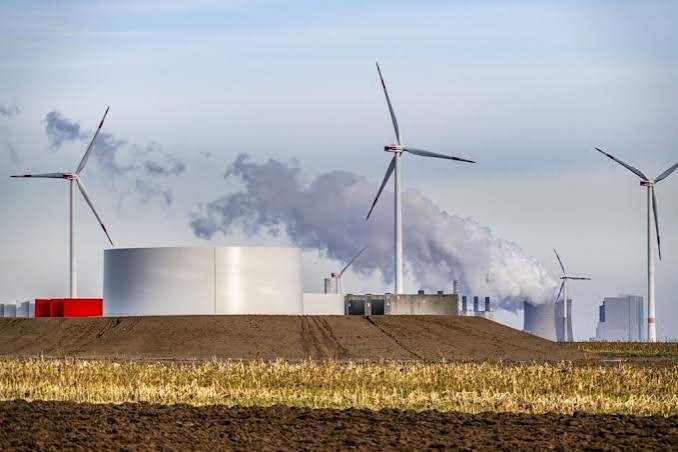
    In the first half of 2025, Germany achieved a historic milestone: wind and solar power together generated more electricity than fossil fuels for the first time ever. This marks a turning point in the country’s energy transition, known as the Energiewende, and offers a glimpse into a future powered by renewables. But what does this really mean for Germany’s climate goals, its economy, and the reliability of its power grid? Let’s break it down.

    The Numbers Behind the Milestone

    According to data from the Fraunhofer Institute for Solar Energy Systems (ISE), wind and solar accounted for approximately 45% of Germany’s gross electricity generation from January to June 2025. Fossil fuels—coal, gas, and oil—fell to about 40%. The remaining 15% came from other sources like biomass, hydro, and a small residual from nuclear (which was fully phased out in April 2023).

    Wind was the workhorse, contributing around 30% of total generation, while solar added roughly 15%. Coal (both lignite and hard coal) made up about 20%, and natural gas around 15%. This is the first time that variable renewables have outpaced all fossil fuels combined over a sustained multi-month period, not just a single day or week.

    Why This Matters: The Energiewende in Action

    Germany has been pursuing an aggressive energy transition since the early 2000s, with the Renewable Energy Sources Act (EEG) of 2000 introducing feed-in tariffs that kickstarted the solar and wind industries. The country has legally binding targets under the Climate Protection Act: 80% renewable electricity by 2030 and climate neutrality by 2045. This milestone suggests that the transition is not only on track but possibly ahead of schedule.

    But the achievement is even more significant because it comes after the shutdown of Germany’s last three nuclear power plants in April 2023. Previously, nuclear provided carbon-free baseload power. Now, renewables are filling that gap, and they’re doing it faster than many expected.

    The Role of Weather and Grid Dynamics

    It’s important to note that the first half of 2025 was exceptionally windy and sunny. This favorable weather boosted renewable output, so the milestone is a snapshot of a particularly good period. In a less favorable year, the numbers could shift. However, the trend is clear: renewables are becoming the backbone of Germany’s electricity system.

    Germany is also part of the European internal electricity market, frequently exporting power to neighbors like France and the Netherlands. The milestone refers to gross generation within Germany, not consumption. When cross-border flows are considered, the picture can differ slightly, but the domestic achievement remains significant.

    The Skeptical View: Challenges Remain

    While the news is encouraging, there are caveats. Germany still relies on fossil fuels for about 40% of its electricity, and these are essential for grid stability during “Dunkelflauten”—periods of low wind and low sun. Gas plants, in particular, are crucial as backup. The fossil share, though lower, is still substantial.

    There are also cost concerns. Germany has some of the highest electricity prices in Europe for households and industry, partly due to grid expansion costs and renewable levies. Critics argue that the transition is being paid for by consumers and is hurting industrial competitiveness. Energy-intensive industries like chemicals, steel, and automotive are under pressure to remain competitive globally while decarbonizing.

    Geopolitical and Energy Security Implications

    Reducing fossil fuel dependence enhances Germany’s energy security, especially after the 2022 gas crisis exposed vulnerabilities to Russian supply. Germany now imports gas from Norway, the Netherlands, and other sources, but the shift to renewables reduces that reliance. This milestone is a positive step toward energy independence.

    What’s Next?

    Germany has legislated a coal phase-out by 2038, with a preferred target of 2030. The 2025 data suggests the coal exit may happen faster than the legal deadline. However, grid infrastructure expansion is lagging behind renewable build-out, creating bottlenecks and curtailment costs. Upgrading transmission lines from the windy north to the industrial south is a critical next step.

    In summary, this milestone is a testament to what consistent policy and market forces can achieve. It’s not the end of the story, but it’s a powerful signal that a renewable-powered future is within reach.

    Germany’s first-half 2025 achievement of wind and solar overtaking fossil fuels is a landmark moment in the global energy transition. It shows that with the right policies and technological advances, renewables can become the dominant source of electricity. While challenges like grid stability, costs, and weather dependence remain, the trend is unmistakable. This is a story of progress that offers hope and lessons for other nations.

    Summary

    • In H1 2025, wind and solar generated 45% of Germany’s electricity, surpassing fossil fuels at 40% for the first time.
    • Wind was the largest source at ~30%, followed by solar at ~15%; coal and gas made up ~20% and ~15% respectively.
    • The milestone was achieved without nuclear power, which was fully phased out in April 2023.
    • Favorable weather boosted renewables, but the long-term trend is clear: renewables are becoming the backbone of Germany’s grid.
    • Challenges remain, including grid infrastructure bottlenecks, high electricity prices, and the need for gas backup during low-wind periods.

    FAQ

    Q: What does ‘gross electricity generation’ mean?\nA: It refers to the total amount of electricity produced within Germany’s borders, before accounting for exports or imports. It’s a measure of domestic production, not consumption.\n\nQ: Why is this milestone significant if it’s just one half-year?\nA: It’s the first time that wind and solar have outpaced fossil fuels over a sustained period (six months), not just a single day or week. It indicates a structural shift in the energy mix, even though weather can cause yearly fluctuations.\n\nQ: What are ‘Dunkelflauten’?\nA: A German term for ‘dark doldrums’—periods when there is little wind and little sun, so renewable output drops. During these times, fossil fuels or storage are needed to keep the grid stable.\n\nQ: How does this affect German electricity prices?\nA: Germany has high electricity prices partly due to grid expansion costs and renewable levies. The transition is costly, but renewables themselves are now the cheapest form of new generation. The net effect on consumer prices is complex and debated.\n\nQ: What role does nuclear play now?\nA: None. Germany shut down its last three nuclear plants in April 2023. This milestone was achieved without nuclear power, showing that renewables can fill the gap.
  • Solar Panels: The Complete Guide to Pros, Cons, and What They Mean for Your Home

    Solar panel - Wikipedia

    Solar panels have moved from a niche eco-statement to a mainstream home improvement. With prices dropping 90% since 2010 and a federal tax credit covering 30% of costs, more homeowners than ever are considering making the switch. But is solar right for you? The answer isn’t a simple yes or no—it depends on where you live, how much you pay for electricity, and what your roof looks like.

    This guide breaks down the real-world pros and cons of solar panels, from financial payback periods to environmental impact, so you can make an informed decision. We’ll look at the numbers, the policy landscape, and the different perspectives—from homeowners to utility companies—to give you a complete picture.

    How Solar Panels Work: A Quick Refresher

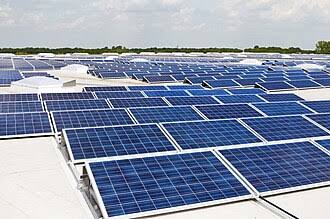
    Before diving into pros and cons, it helps to understand the basics. Photovoltaic (PV) panels—the kind you see on rooftops—convert sunlight directly into electricity using semiconductor materials like silicon. When sunlight hits the panel, photons knock electrons loose, creating direct current (DC) electricity. An inverter then converts that DC into alternating current (AC) for your home.

    Most residential systems are 5–10 kilowatts (kW) in size, with panel efficiencies ranging from 15–22%. That means a typical panel converts about one-fifth of the sunlight it receives into usable electricity. Panels are built to last: most come with 25–30 year warranties and degrade at a slow rate of about 0.5% per year.

    The Pros: Why People Love Solar

    1. Significant Long-Term Savings

    The most obvious benefit is financial. While the upfront cost is substantial—a typical 6 kW system runs $15,000–$21,000 before incentives—the federal Investment Tax Credit (ITC) knocks 30% off that price through 2032. After that, the credit steps down. Many homeowners see a payback period of 6–12 years, depending on electricity rates and sun exposure. In sunny states like Arizona, a 6 kW system can generate 9,000–10,000 kWh per year, which could cover most of a household’s electricity needs.

    2. Environmental Impact

    Solar is clean and renewable. A typical residential system offsets 3–4 tons of CO₂ per year—equivalent to planting about 150 trees annually. Over a 25-year lifespan, that’s a significant reduction in your carbon footprint. As the grid continues to incorporate more renewables, solar helps reduce reliance on fossil fuels.

    3. Energy Independence

    Solar gives you a degree of control over your energy costs. When utility rates rise—and they often do—your solar system keeps producing power at a fixed cost. With battery storage (like a Tesla Powerwall), you can store excess daytime power for nighttime use, providing resilience against grid outages. This is especially valuable in areas prone to blackouts or with time-of-use electricity rates.

    4. Increasing Home Value

    Studies show that homes with solar panels sell for more than comparable homes without them. While the exact premium varies, many buyers see solar as a desirable feature that reduces future utility bills.

    The Cons: What to Consider Before Going Solar

    1. High Upfront Cost

    Despite falling prices, solar remains a significant investment. A 6 kW system costs $15,000–$21,000 before incentives. Even with the 30% federal tax credit, you’re looking at $10,500–$14,700 out of pocket. For many households, that’s a barrier, especially if you don’t have cash on hand and need to finance.

    2. Payback Depends on Your Situation

    Solar isn’t universally worthwhile. If you live in a cloudy state like Washington, a 6 kW system might only produce 6,000–7,000 kWh per year—less than half of what it would in Arizona. If your electricity rates are low, the savings are smaller, extending the payback period. And if you plan to move in a few years, you might not recoup your investment.

    3. Maintenance and Repairs

    Solar panels are low-maintenance but not zero-maintenance. You’ll need to clean them periodically (especially in dusty areas), and the inverter—a critical component—typically needs replacement every 10–15 years, costing $1,000–$2,000. While panels are warrantied for 25–30 years, the inverter often isn’t.

    4. Roof Suitability

    Not every roof is a good candidate. Shading from trees or nearby buildings can drastically reduce output. Roof orientation matters—south-facing roofs in the Northern Hemisphere are ideal. And if your roof is old, you may need to replace it before installing panels, adding to the cost.

    5. Environmental Costs of Manufacturing

    While solar is clean in operation, manufacturing panels has an environmental footprint. Mining silicon and rare metals, plus the energy-intensive production process, creates emissions and waste. However, studies show that panels typically offset their manufacturing footprint within 1–3 years of operation.

    The Changing Policy Landscape

    Government incentives and net metering policies play a huge role in solar’s economics. Net metering allows you to sell excess electricity back to the grid at retail rates, effectively spinning your meter backward. But these policies are shifting. California’s NEM 3.0 (2023) reduced export credits by about 75%, making batteries more important for payback. Other states are also reevaluating net metering, which could affect future savings.

    On the flip side, some states offer additional incentives like rebates or Solar Renewable Energy Certificates (SRECs), which provide extra income per megawatt-hour generated. It’s essential to check your state’s policies before committing.

    Different Perspectives: Who Wins and Who Loses?

    The Homeowner’s View

    For many, solar is a win: lower bills, environmental benefits, and energy independence. But for others—especially those with shaded roofs, low electricity rates, or plans to move—the math doesn’t work.

    The Utility’s View

    Utilities are less enthusiastic. Rooftop solar reduces their revenue, and they argue that non-solar customers end up paying more for grid maintenance—a phenomenon called the “utility death spiral.” They also point to the intermittency problem: solar only produces when the sun shines, requiring backup generation or storage to meet demand at night.

    The Equity Perspective

    Solar adoption skews toward wealthier, home-owning households. Renters and low-income families are often left out, though community solar programs aim to change that. Net metering, some argue, is a regressive subsidy that shifts costs from solar to non-solar customers. On the other hand, solar reduces air pollution, which disproportionately benefits low-income communities near fossil fuel plants.

    The Industry View

    Solar is a booming industry, but it’s not without challenges. Thin margins, fierce competition, and trade tensions (like U.S. tariffs on Chinese panels) create price volatility. Technological advances, such as perovskite cells, promise higher efficiencies but are still in development.

    Making the Decision: Is Solar Right for You?

    To decide, ask yourself a few questions:

    • What are your electricity rates? Higher rates mean greater savings.
    • How much sun does your roof get? South-facing, unshaded roofs are ideal.
    • How long do you plan to stay in your home? If you’ll move within 5 years, solar may not pay off.
    • What incentives are available in your state? Federal ITC is a given, but state and local incentives vary widely.

    If you’re a good candidate, solar can be a smart financial and environmental investment. If not, you might consider community solar or simply wait until prices drop further.

    Solar panels are not a one-size-fits-all solution. They offer real financial and environmental benefits, but the upfront cost and dependence on location and policy mean they’re not right for everyone. By understanding the pros and cons—and how they apply to your specific situation—you can make a decision that’s good for your wallet and the planet.

    Summary

    • Pros: Long-term savings on electricity, reduced carbon footprint, energy independence, and increased home value.
    • Cons: High upfront cost, payback varies by location and electricity rates, maintenance needs, and roof suitability issues.
    • Policy matters: Federal ITC (30% through 2032) and state incentives can significantly affect payback; net metering changes like California’s NEM 3.0 are shifting the economics.
    • Not for everyone: Renters, low-income households, and those with shaded or unsuitable roofs may not benefit; community solar is an alternative.
    • Environmental trade-offs: Manufacturing has a footprint, but panels offset it within 1–3 years of operation.

    FAQ

    Q: How much do solar panels cost in 2024?
    A: The average installed cost is $2.50–$3.50 per watt before incentives. A typical 6 kW system costs $15,000–$21,000, but the 30% federal tax credit reduces that to $10,500–$14,700.

    Q: How long do solar panels last?
    A: Most panels are warrantied for 25–30 years and degrade at about 0.5% per year, meaning they still produce around 85–90% of their original output after 25 years.

    Q: What is net metering and why does it matter?
    A: Net metering credits homeowners for excess electricity sent to the grid at retail rates. It’s a key financial incentive, but some states are reducing these credits, which can affect payback.

    Q: Do I need a battery with solar panels?
    A: Not necessarily, but batteries allow you to store excess daytime power for nighttime use, increasing energy independence. They add $10,000–$15,000 to the cost, so weigh the benefits.

    Q: Can I get solar panels if I rent?
    A: Typically no, unless you have a landlord willing to install them. Community solar programs allow renters to subscribe to a shared solar array and receive credits on their electricity bill.