Every generation gets accused of killing reading. Radio was supposed to doom novels. Television was going to turn us all into passive zombies. Video games were the final nail in the coffin. Now it’s Gen Z’s turn, with TikTok and short-form video blamed for allegedly destroying their attention spans and reading habits.
The panic is loud, but the evidence tells a more complicated story. Yes, traditional book reading has declined among teens and young adults. But Gen Z reads a lot. Just not in the ways that old surveys measure. They read fan fiction, web novels, social media threads, long-form journalism, subtitles, and interactive fiction. They buy print books at record rates when a title trends on BookTok. They listen to audiobooks. The real problem isn’t that Gen Z doesn’t read; it’s that we’re using a 20th-century yardstick to measure 21st-century reading.
The Decline of Book Reading Is Real, But It’s Only Part of the Picture
National Endowment for the Arts (NEA) surveys and Pew Research data show a clear decline in book reading among teens and young adults over the past two decades, particularly for literary fiction and print books. That’s a fact. But here’s what those surveys don’t capture: the explosion of reading happening on digital platforms.
Wattpad has over 90 million users. Archive of Our Own (AO3) hosts more than 6 million works of fan fiction. Webtoon and Tapas have millions of readers for serialized comics and fiction. Apps like Radish and Yonder have carved out a niche for serialized stories designed for mobile reading. These aren’t niche hobbies—they’re major reading ecosystems.
A 2022 survey from the National Literacy Trust found that children and young people who read digitally are actually more likely to enjoy reading and read more frequently than those who only read print. The issue isn’t motivation; it’s format.
BookTok: The Print Sales Machine
One of the most counterintuitive developments is TikTok’s role in driving print book sales. The #BookTok community has become a powerhouse for publishers. When a book trends on BookTok—like Madeline Miller’s The Song of Achilles, Colleen Hoover’s It Ends with Us, or Donna Tartt’s The Secret History—sales spike dramatically.
Nielsen BookData reported that BookTok was a major driver of print sales growth among younger demographics in 2022–2023. Publishers have noticed, actively courting BookTok influencers, releasing special edition covers, and even adapting marketing strategies to cater to the platform’s aesthetics. This isn’t a generation abandoning books; it’s a generation discovering them through a social media algorithm.
The Audiobook Boom
The Audio Publishers Association reports that audiobook revenue has grown by double digits annually for over a decade, and Gen Z is a key demographic. Listening to a book isn’t the same as reading print, but it’s still deep engagement with narrative and ideas. The rise of audiobooks suggests that Gen Z isn’t rejecting long-form content—they’re just consuming it in a way that fits their always-on-the-go lifestyle.
E-book usage also remains steady among younger readers. The format is more flexible, allowing for highlighting, searching, and adjusting font size—features that appeal to digital natives.
The Attention Span Myth
One of the most persistent claims in the panic is that Gen Z has an attention span of eight seconds, supposedly shorter than a goldfish. This statistic is cited everywhere, but it’s not backed by peer-reviewed research. It traces back to a 2015 Microsoft report based on a small, non-representative sample. The goldfish comparison is pure nonsense—goldfish don’t have attention spans in the human sense.
What we do know is that attention is context-dependent. Scrolling through TikTok for an hour requires sustained attention, just of a different kind. The issue isn’t that Gen Z can’t focus; it’s that they can focus intensely on things that interest them, and they’ve developed strategies to quickly filter out content that doesn’t.
Reading Comprehension: A Complex Story
NAEP reading scores have declined since 2019, and that’s concerning. But experts debate what this actually means. Some argue it reflects a real decline in reading ability. Others point out that the test format—long passages followed by multiple-choice questions—may not align with how students now consume text. They’re used to skimming, hyperlinking, and navigating non-linear digital content, which requires a different set of skills.
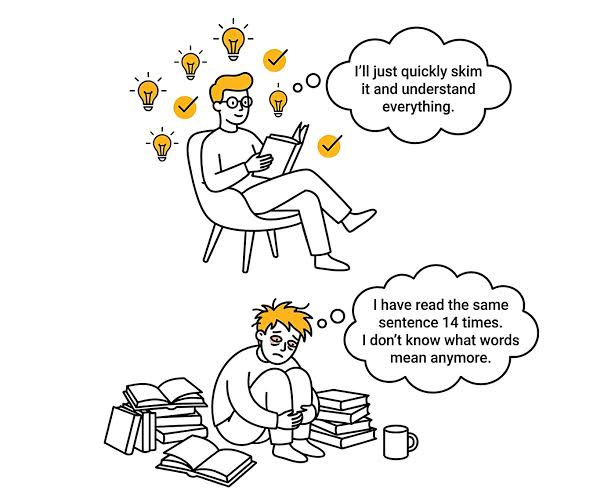
Cognitive scientists have found that screen reading can lead to shallower comprehension for expository texts, but for narrative texts, the difference often disappears. The problem may not be that Gen Z reads less, but that deep, uninterrupted reading of complex texts is being crowded out by fragmented, interruption-heavy habits.
The Moral Panic Tradition
This isn’t the first time a generation has been accused of killing reading. In the 1980s, it was video games. In the 2000s, it was the internet. The pattern is always the same: a new technology emerges, older generations panic, and then the technology becomes just another medium for storytelling and information.
What’s different about Gen Z is that their reading is often social and participatory. They don’t just read—they annotate, discuss, remix, and write responses. Platforms like AO3 and Wattpad blur the line between reader and writer. This is a fundamental shift from the solitary, linear model of reading that older surveys assume.
The Publishing Industry’s Adaptation
The publishing industry isn’t acting like the sky is falling. Instead, it’s adapting. Publishers now actively court BookTok influencers, release special edition covers designed for social media aesthetics, and serialize content for apps. They recognize that Gen Z reads differently, and they’re willing to meet them where they are.
Schools are also shifting toward teaching “digital literacy” and “multimodal literacy.” Critics argue this dilutes rigorous reading; supporters say it reflects reality. The truth is probably in the middle: both skills—deep reading and digital navigation—are valuable, and the challenge is to cultivate both.
What the Panic Gets Wrong
The panic over Gen Z’s reading habits is based on a misunderstanding of what reading means. If reading is defined narrowly as sitting down with a print novel for an hour, then yes, Gen Z does less of that. But if reading includes engaging with complex narratives on a screen, participating in online literary communities, and listening to audiobooks, then Gen Z reads more than any previous generation.
The real question isn’t whether Gen Z reads, but whether they’re developing the ability to read deeply when it matters. That’s a more nuanced discussion than the panic allows for. It’s a challenge for educators, parents, and publishers to help young people develop both the speed of digital scanning and the depth of sustained attention.
The panic over Gen Z’s reading habits is a classic moral panic, echoed by every generation before. The evidence shows that Gen Z reads extensively, just in new formats. Instead of lamenting the decline of the book, we should be asking how to cultivate deep reading skills in a digital age. The conversation needs to move from “they’re not reading” to “how can we support the reading they’re doing?”
Summary
- Traditional book reading has declined among Gen Z, but reading overall has not—it’s shifted to digital platforms like Wattpad, AO3, and Webtoon.
- BookTok has driven significant print sales, showing that Gen Z reads books when they’re discovered through social media.
- Audiobook and e-book usage are growing, indicating continued engagement with long-form content.
- The “8-second attention span” statistic is not scientifically supported; attention is context-dependent.
- Reading comprehension declines may reflect a mismatch between test formats and digital reading habits, not a loss of ability.
- The panic mirrors historical moral panics about new media; the publishing industry and schools are adapting.
FAQ
Q: Is Gen Z really reading less than previous generations?
A: It depends on how you define reading. Book reading has declined, but digital reading on platforms like Wattpad and AO3 has exploded. When you include all forms of reading, Gen Z reads extensively.
Q: What is BookTok and why does it matter?
A: BookTok is a community on TikTok where users share book recommendations and reviews. It has become a major driver of print book sales, with titles like The Song of Achilles seeing huge spikes in popularity after trending on the platform.
Q: Are Gen Z’s attention spans actually shorter?
A: The claim that Gen Z has an 8-second attention span is not scientifically supported. It originates from a non-representative Microsoft study. Attention is context-dependent, and Gen Z can focus intensely when engaged.
Q: Does reading on screens lead to worse comprehension?
A: Some studies show shallower comprehension for expository texts on screens, but for narrative texts, the difference often disappears. The format matters, but Gen Z is capable of deep reading when the content warrants it.
Q: What can parents and educators do to encourage deep reading in Gen Z?
A: Instead of banning screens, encourage a balance. Let them read what they enjoy—even if it’s fan fiction—and provide opportunities for uninterrupted reading of longer texts. Discuss what they read to build critical thinking.