Tag: Polish history

  • The Warsaw Ghetto Uprising: Defiance in the Face of Annihilation

    The Warsaw Ghetto Uprising: Defiance in the Face of Annihilation

    On the eve of Hitler’s birthday, April 19, 1943, the streets of Warsaw’s Jewish ghetto erupted in gunfire. For nearly a month, a few hundred poorly armed Jewish fighters held off thousands of German troops, turning a symbol of Nazi oppression into a beacon of resistance. This is the story of life in the ghetto and the desperate, heroic stand that followed.

    The Ghetto: A City Within a City

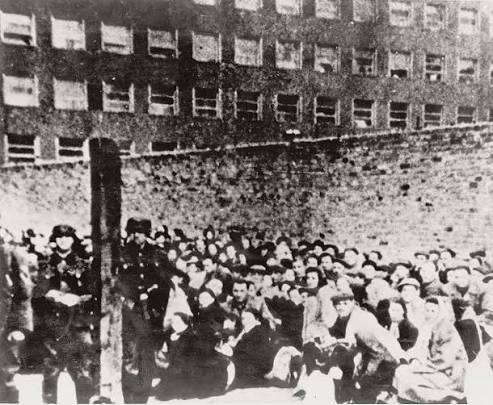
    In October 1940, the German occupiers sealed off a 3.3-square-kilometer area of Warsaw, confining over 400,000 Jews behind brick walls and barbed wire. At its peak, the ghetto held about 460,000 people roughly 30% of the city’s population in just 2.4% of its area. Families crowded into rooms with seven to nine people, sometimes thirteen. The official food ration provided a mere 184 calories per day, a death sentence in slow motion.

    Daily Survival: Smuggling, Soup Kitchens, and the Black Market

    To survive, the ghetto developed a clandestine economy. Smuggling was not a crime but a necessity. Children, small and nimble, crawled through sewers or slipped over walls to bring in food. The black market thrived, with the wealthy eating well while the poor starved in the streets. Soup kitchens run by charitable organizations offered meager meals, but they could not stem the tide of hunger. By mid-1942, over 83,000 Jews had died from starvation, typhus, and exposure.

    Culture and Resistance: The Spirit Endures

    Despite the misery, life persisted. Underground theaters staged plays, orchestras performed in secret, and schools operated in basements. Religious services continued, and political parties met covertly. Historian Emanuel Ringelblum organized the Oneg Shabbat archive, burying documents in milk cans to ensure the truth would survive even if they did not. This cultural defiance was a precursor to armed rebellion.

    The Great Action: Deportations to Treblinka

    From July to September 1942, the Germans conducted the “Great Action,” deporting approximately 265,000 Jews to the Treblinka extermination camp. The Judenrat, led by Adam Czerniaków, faced an impossible choice. When ordered to sign deportation orders for children, Czerniaków committed suicide. The deportations shattered the illusion that labor would save them. Those who remained about 50,000 to 70,000 knew the end was near.

    The Birth of the Resistance

    In October 1942, a coalition of Jewish youth movements and political factions formed the Jewish Combat Organization (ŻOB), with Mordechai Anielewicz as commander. A separate right-wing group, the Jewish Military Union (ŻZW), led by Pavel Frenkel, also prepared for battle. They acquired a handful of pistols, grenades, and Molotov cocktails, and built a network of bunkers and tunnels. When the Germans returned for another round of deportations in January 1943, ŻOB fighters ambushed them, forcing a four-day retreat. It was a small but crucial victory.

    The Uprising: April 19 – May 16, 1943

    On April 19, 1943, German forces entered the ghetto to liquidate it, expecting little resistance. They were met with gunfire and homemade bombs. The fighters, numbering about 750 to 1,000, used hit-and-run tactics, disappearing into bunkers and rooftops. The Germans, initially 2,000 strong, brought in tanks, artillery, and flame throwers. The fighting was brutal and unequal. The Germans systematically burned buildings, forcing fighters into the open. By May 8, the ŻOB command bunker at 18 Miła Street fell; Anielewicz and many of his comrades died there. The uprising was finally suppressed on May 16, when SS General Jürgen Stroop declared, “The Warsaw Ghetto is no more.”

    Aftermath and Legacy

    Over 13,000 Jews were killed during the uprising, and about 7,000 were deported to Treblinka. The remaining survivors, some 42,000, were captured and sent to labor and death camps. German casualties were light around 300 to 400. But the uprising had profound significance. It was the largest single act of Jewish resistance during the Holocaust, proving that even in the face of annihilation, defiance was possible. The fighters chose how to die, and in doing so, they inspired future revolts in other ghettos and camps.

    Conclusion

    The Warsaw Ghetto Uprising was not a military victory, but a moral one. It demonstrated that the human spirit could resist even the most systematic dehumanization. The courage of the fighters, and the resilience of the ghetto’s inhabitants, remains a testament to the will to live and the refusal to surrender. Their story is a reminder that even in the darkest times, hope and resistance can emerge.

    Summary

    • The Warsaw Ghetto confined over 460,000 Jews in 3.3 square kilometers, with deadly overcrowding and starvation.
    • Daily life involved smuggling, black markets, and a vibrant clandestine culture, including the Oneg Shabbat archive.
    • The “Great Action” of 1942 deported 265,000 to Treblinka, leading to the formation of the ŻOB and ŻZW resistance groups.
    • The uprising began April 19, 1943, and lasted nearly a month, with 750–1,000 fighters against 2,000–4,000 German troops.
    • Though suppressed, the uprising became a symbol of Jewish resistance, inspiring future revolts.

    FAQ

    Q: What was the Warsaw Ghetto?
    A: A sealed district in Warsaw where over 400,000 Jews were forced to live in overcrowded, unsanitary conditions, with minimal food and constant threat of deportation.

    Q: How did Jews resist before the uprising?
    A: Through smuggling, cultural activities, underground schools, and the secret Oneg Shabbat archive, which documented life and preserved evidence for posterity.

    Q: Who led the uprising?
    A: The Jewish Combat Organization (ŻOB), commanded by Mordechai Anielewicz, and the Jewish Military Union (ŻZW), led by Pavel Frenkel.

    Q: Why did the uprising happen?
    A: After mass deportations to Treblinka, it became clear that the Germans intended to exterminate all Jews. The remaining residents chose to fight rather than go passively to their deaths.

    Q: What was the outcome?
    A: The uprising was crushed, with most fighters killed or deported, but it became a powerful symbol of resistance and a moral victory against Nazi tyranny.
  • The Man Who Walked Into Hell: Witold Pilecki’s Voluntary Mission to Auschwitz

    The Man Who Walked Into Hell: Witold Pilecki’s Voluntary Mission to Auschwitz

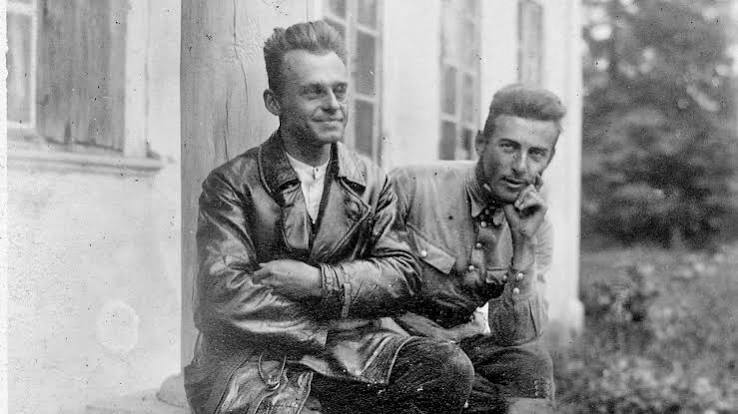
    In September 1940, a Polish cavalry officer named Witold Pilecki made a decision that defies easy comprehension. He walked into the heart of Nazi terror not as a prisoner, but as a volunteer. His mission: to infiltrate Auschwitz, gather intelligence, and organize resistance from within. For nearly two and a half years, he lived among the horrors he had come to document, sending out reports that would later be dismissed by Allied leaders who couldn’t believe the truth.

    Pilecki’s story is not just a tale of extraordinary courage. It is a stark reminder of how easily truth can be ignored when it is inconvenient. This is the account of a man who risked everything to bear witness—and who paid the ultimate price not at the hands of the Nazis, but his own country’s post-war communist regime.

    The Man Behind the Mission

    Witold Pilecki was born on May 13, 1901, in Olonets, Russia, into a Polish noble family. Raised in the eastern borderlands, he grew up with a deep sense of patriotism and duty. He fought in the Polish-Soviet War of 1919–1921, then settled as a cavalry officer and landowner. When Germany invaded Poland in September 1939, Pilecki was already involved in underground resistance. He helped organize networks that would become the foundation of the Polish Underground State.

    By 1940, the Nazis had established Auschwitz as a concentration camp for Polish political prisoners. Pilecki saw an opportunity. If he could get inside, he could gather firsthand intelligence on the camp’s operations and atrocities—and perhaps even spark an uprising. In September 1940, he deliberately allowed himself to be caught in a Warsaw street roundup, using the cover name “Tomasz Serafiński.” On September 22, he arrived at Auschwitz as prisoner number 4859.

    Inside the Camp

    The conditions Pilecki encountered were beyond anything he had imagined. Prisoners were beaten, starved, and worked to death. Executions were routine. Yet Pilecki’s resolve did not waver. He began quietly recruiting fellow prisoners who shared his commitment to resistance. Within months, they formed the ZOW (Związek Organizacji Wojskowej—Union of Military Organization), a secret cell dedicated to gathering intelligence and preparing for a possible uprising.

    The ZOW operated under the constant threat of betrayal. Any slip could mean torture and death. Despite this, they managed to smuggle out detailed reports on camp conditions, including the gas chambers and medical experiments. Pilecki’s reports were among the earliest firsthand accounts of the Holocaust to reach the outside world.

    The Uprising That Never Came

    Pilecki and his comrades hoped that if the Allies knew the truth, they would act—perhaps by bombing the camp or supporting an armed uprising. They prepared plans, cached weapons, and waited for a signal that never came. The Allies received Pilecki’s reports but were skeptical. Many officials simply could not believe the scale of the atrocities. Others argued that bombing the camp was not feasible or strategically justified.

    By 1943, Pilecki realized that an uprising without outside support would be suicidal. He also knew that his continued presence endangered the ZOW network. On the night of April 26–27, 1943, he escaped with two comrades, using a diversion and bribed guards. He had spent nearly two and a half years inside Auschwitz.

    The Report and Its Fate

    After his escape, Pilecki wrote a detailed account of his experiences—known as the Pilecki Report. He delivered it to the Polish Underground, who passed it to the British government. The report described the camp’s layout, the daily brutality, the mass murder of Jews, and the possibility of an uprising. It was a treasure trove of intelligence.

    Yet the Allies did little with it. The report was filed away, and Auschwitz remained a target that was never bombed. The British government later acknowledged receiving the information but said it was “not considered to be of great importance.” Pilecki’s mission had succeeded in gathering the truth, but the world was not ready to act on it.

    War After Auschwitz

    Pilecki did not stop fighting after his escape. In 1944, he participated in the Warsaw Uprising against the Germans. When the uprising was crushed, he was captured and sent to POW camps in Lamsdorf and Murnau. He survived the war, but his ordeal was far from over.

    In 1945, Poland fell under Soviet influence, and the new communist government viewed former resistance fighters as enemies. Pilecki returned to Poland in 1947, hoping to resume a normal life. Instead, he was arrested and accused of espionage and plotting to overthrow the government. After a show trial, he was executed by firing squad on May 25, 1948, in Warsaw’s Mokotów Prison. His body was buried in a secret location.

    Legacy

    For over four decades, Pilecki’s name was erased from Polish history. It was only after the fall of communism in 1990 that he was officially rehabilitated. In 2006, he was posthumously awarded the Order of the White Eagle, Poland’s highest state decoration. Today, he is remembered as a national hero—a man who voluntarily entered hell to bear witness and who paid for his courage with his life.

    Witold Pilecki’s story is a reminder that courage is not always rewarded, and that truth does not always prevail. He gave up his freedom, risked his life, and ultimately lost it—all in the hope that his reports would move the world to action. They did not. But his legacy endures as a testament to the power of individual conscience in the face of unimaginable evil. In a world that often looks away, Pilecki chose to look directly into the abyss and tell us what he saw.

    Summary

    • Witold Pilecki voluntarily infiltrated Auschwitz in September 1940, becoming prisoner number 4859.
    • Inside the camp, he organized a resistance network called ZOW and smuggled out detailed reports on atrocities.
    • His reports were largely ignored by Allied leaders, who doubted their accuracy or deemed them not actionable.
    • Pilecki escaped in April 1943, fought in the Warsaw Uprising, and was later executed by Poland’s communist regime in 1948.
    • He was rehabilitated in 1990 and posthumously awarded the Order of the White Eagle in 2006.

    FAQ

    Q: Why did Witold Pilecki volunteer to enter Auschwitz?
    A: Pilecki’s mission was to gather intelligence on the camp’s conditions and atrocities, organize a resistance network inside, and prepare for a potential uprising or Allied liberation. He believed that if the Allies knew the truth, they would act.

    Q: How did he escape from Auschwitz?
    A: In April 1943, Pilecki escaped with two comrades after being assigned to the camp bakery, which gave him access to the outer perimeter. The escape was aided by a planned diversion and bribed guards.

    Q: What was the Pilecki Report?
    A: The Pilecki Report was a detailed firsthand account of Auschwitz, including the gas chambers, medical experiments, and daily life in the camp. It was delivered to the Polish Underground and then to the British government, but was largely ignored.

    Q: Why didn’t the Allies bomb Auschwitz?
    A: The decision not to bomb Auschwitz remains debated. Some argue it was not strategically feasible, while others believe the Allies were skeptical of the reports or prioritized other military objectives.

    Q: How was Pilecki treated after the war?
    A: Pilecki returned to Poland in 1947, where the Soviet-backed communist government arrested him on false charges of espionage. He was executed in 1948, and his name was cleared only after the fall of communism in 1990.

  • The Katyn Massacre: How Stalin’s Secret Police Murdered 21,857 Poles and Blamed Hitler

    The Katyn Massacre: How Stalin’s Secret Police Murdered 21,857 Poles and Blamed Hitler

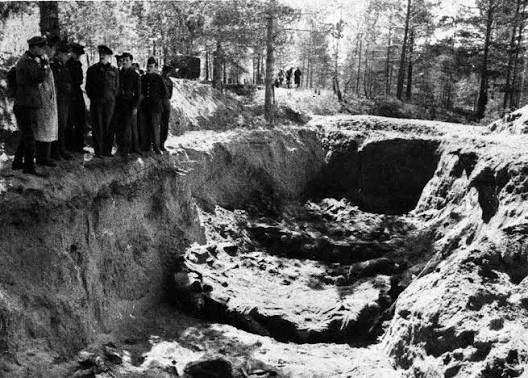
    In April 1943, German soldiers advancing through the Smolensk region stumbled upon a horror that would haunt the twentieth century. In the Katyn Forest, they found mass graves filled with the bodies of Polish officers, their hands bound, each shot in the back of the head. The discovery set off a propaganda war between two totalitarian regimes, each eager to pin the atrocity on the other. But the truth, buried for fifty years, pointed to a crime ordered by Joseph Stalin himself.

    The Forest and the Graves

    The Katyn Forest, a quiet expanse of birch and pine near the Russian city of Smolensk, became the silent witness to one of the largest single massacres of World War II. In the spring of 1940, Soviet secret police—the NKVD—executed nearly 22,000 Polish prisoners of war and civilians. Most were military officers, but the dead also included intellectuals, police officers, and clergy. They were shot in the back of the head in soundproofed rooms, loaded onto trucks, and buried in layered pits, their bodies stacked like cordwood.

    The victims came from three main POW camps: Kozelsk, Starobelsk, and Ostashkov. The largest group, about 8,000 to 8,500 officers, was held at Kozelsk. Families back in Poland received no word of their fate; they were simply told the men had been moved to unknown locations. Many assumed their loved ones were still alive in Soviet camps, unaware that the NKVD had already carried out the executions.

    The Order and Its Rationale

    The decision to murder these men was not the act of a rogue commander but a deliberate policy approved at the highest level of the Soviet state. On March 5, 1940, NKVD chief Lavrentiy Beria submitted a formal note to the Politburo, recommending the execution of the Polish prisoners. He described them as “hardened and uncompromising enemies of Soviet power” who posed a permanent threat—potential leaders of a future Polish resistance or an Allied-backed army. The Politburo approved unanimously, and Stalin signed the order.

    The executions took place over several weeks in April and May 1940. In Katyn, and at two other sites—Kalinin (now Tver) and Kharkiv—the NKVD carried out the killings with brutal efficiency. The selection of Katyn was deliberate: the forest’s remoteness made it easy to conceal the crime.

    The Nazi Discovery and the Propaganda War

    For three years, the massacre remained a secret. Then, in April 1943, German forces occupying the region discovered the graves. They immediately announced the find, inviting international forensic experts, including a delegation from the Polish Red Cross, to examine the site. The Germans used the discovery as a propaganda weapon against the Soviet Union, broadcasting details to the world.

    The Soviet response was swift and indignant. They accused the Germans of committing the atrocity themselves, claiming the Nazis had occupied the area in 1941 and killed the prisoners then. To bolster their case, the Soviets broke diplomatic relations with the Polish government-in-exile in London when it requested an investigation by the International Red Cross—a move that only deepened Polish suspicions.

    In 1944, after Soviet forces recaptured the region, a Soviet-led commission headed by Nikolai Burdenko concluded that the Germans were guilty. This version—the “Burdenko Commission” report—became the official Soviet narrative, taught in schools and repeated in histories for decades. The Nazis, for their part, were no less cynical; Joseph Goebbels used the massacre to stoke anti-Soviet sentiment, but his propaganda machine had no interest in the truth.

    The Cover-Up That Lasted Half a Century

    The lie held for nearly fifty years. During World War II, the Western Allies, knowing the Soviets were guilty, chose to suppress the issue to maintain unity against Germany. Winston Churchill privately admitted Soviet responsibility but publicly avoided the topic. At the Nuremberg Trials in 1945-46, the Soviets included Katyn in their indictment against German defendants, but the prosecution’s case collapsed when the defense produced evidence pointing to Soviet guilt. The tribunal never ruled on the matter.

    For Poles, Katyn became a symbol of Soviet oppression—a wound that festered through the Cold War. The Polish government-in-exile and later the anti-communist opposition kept the memory alive, but the official Soviet line remained unchanged.

    Acknowledgment and Its Limits

    The truth finally emerged with the collapse of the Soviet Union. In April 1990, Soviet President Mikhail Gorbachev formally admitted Soviet responsibility and handed over documents to Polish President Wojciech Jaruzelski. Two years later, Russian President Boris Yeltsin released the key archival documents, including the Beria note, confirming Stalin’s personal involvement.

    In 2010, the Russian State Duma officially recognized the massacre as a Stalinist crime. But the acknowledgment has been partial and fraught. In 2015, Russia’s Investigative Committee closed the case without naming any perpetrators as defendants. And in 2022, Russia’s Supreme Court refused to recognize the massacre as a crime against humanity, citing the “rehabilitation” of its perpetrators. The echoes of the Katyn lie persist in Russia’s official memory.

    The Weight of the Dead

    The Katyn massacre remains one of the most brutal chapters of World War II—a crime that was not only hidden but deliberately blamed on the enemy. For Poland, the massacre and its cover-up shaped national identity and memory. The 2010 Smolensk air disaster, which killed Polish President Lech Kaczyński and 95 others en route to a Katyn memorial ceremony, deepened the trauma. The forest at Katyn, once a place of death, now stands as a cemetery and a reminder of what happens when power is wielded without accountability.

    The Katyn massacre is a case study in the mechanics of denial. For fifty years, a lie was maintained by a superpower, and the truth was sacrificed for political expediency. The dead, however, could not be silenced forever. Their memory, kept alive by families and historians, finally forced the world to confront the crime. Yet the recent rulings in Russia show that the battle over history is never truly over. Katyn stands as a permanent warning: when a state commits atrocity and blames another, the truth may be delayed, but it cannot be buried forever.

    Summary

    • In spring 1940, the Soviet NKVD executed approximately 21,857 Polish prisoners of war and civilians, including officers, intelligentsia, police, and clergy, at Katyn and other sites.
    • The executions were authorized by the Soviet Politburo on March 5, 1940, on the recommendation of NKVD chief Lavrentiy Beria, and signed by Stalin.
    • The massacre was discovered by German forces in April 1943, who used it for propaganda; the Soviets blamed the Nazis, a lie maintained until 1990.
    • The Soviet cover-up collapsed with Gorbachev’s 1990 admission and Yeltsin’s 1992 release of key documents.
    • Russia’s recent legal rulings have refused to recognize the massacre as a crime against humanity, leaving the legacy of the crime contested.

    FAQ

    Q: Who ordered the Katyn massacre?
    A: The executions were ordered by the Soviet Politburo on March 5, 1940, on the recommendation of NKVD chief Lavrentiy Beria, and signed by Joseph Stalin.

    Q: How many people were killed?
    A: Approximately 21,857 Polish prisoners of war and civilians were executed, with the largest group—around 8,000 to 8,500 officers—killed at Katyn.

    Q: Why did the Soviets blame the Nazis?
    A: The Soviet government denied responsibility for decades, claiming the Germans committed the massacre in 1941. This false narrative was maintained officially to avoid political fallout and was reinforced by the 1944 Burdenko Commission.

    Q: When did the Soviet Union admit guilt?
    A: In April 1990, Soviet President Mikhail Gorbachev formally admitted Soviet responsibility and handed over documents to Polish President Wojciech Jaruzelski.

    Q: What is Russia’s current position on Katyn?
    A: In 2010, the Russian State Duma recognized the massacre as a Stalinist crime, but in 2015 the Investigative Committee closed the case without naming perpetrators, and in 2022 the Supreme Court refused to recognize it as a crime against humanity.