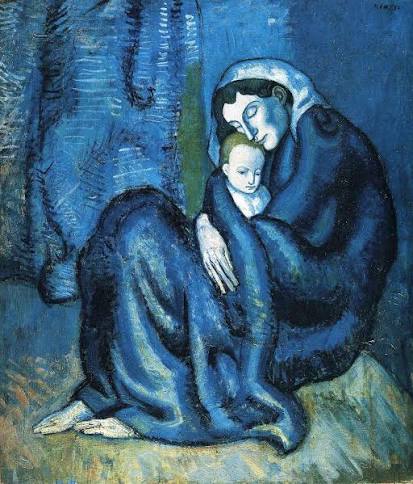
When you stand before a Van Gogh or a Renaissance altar piece, you’re not just seeing an artist’s vision you’re seeing chemistry in action. Every brushstroke is a cocktail of colored particles suspended in a medium that dries, hardens, or evaporates. The choice of pigment and binder has always been a matter of science as much as art, and those choices have quietly steered the course of art history.
For centuries, painters were limited by what they could grind, mix, and afford. The blue of lapis lazuli was more precious than gold, so it was reserved for the Virgin Mary’s robe. Oil paint’s slow drying allowed Renaissance masters to blend and glaze, creating realism that egg tempera could never achieve. The accidental discovery of a synthetic blue in 1706 democratized color, and the arrival of acrylics in the mid-20th century freed artists from the constraints of oil’s long drying time.
This is the story of how the materials of paint—pigments and binders—have shaped what we see on museum walls. It’s a tale of trial, error, and innovation, where chemistry and creativity are inseparable.
What Paint Is Made Of
Paint seems simple: a colored liquid you brush onto a surface. But on a microscopic level, it’s a carefully balanced mixture of three components. The pigment provides the color. These are fine, insoluble powders that don’t dissolve in the liquid but stay suspended. The binder is the glue that holds pigment particles together and sticks them to the canvas or wall. The solvent thins the paint and evaporates or cures, leaving a solid film.
Color itself is a matter of physics. When light hits a pigment, some wavelengths are absorbed, and others are reflected back to your eye. That reflected light is the color you see. A red pigment, for instance, absorbs most wavelengths and reflects the red ones. The exact chemical structure of the pigment determines which wavelengths are absorbed.
Binders also affect appearance. Oil, egg yolk, wax, gum arabic, and acrylic resins each have different optical properties. They control whether paint looks glossy or matte, transparent or opaque, and how light interacts with the pigment particles resting within them.
The First Synthetic Pigment: Egyptian Blue
Around 3000 BCE, ancient Egyptians invented the first synthetic pigment. They heated sand, copper compounds, and natron (a naturally occurring sodium carbonate) to create calcium copper silicate, now known as Egyptian blue. This was no accident—they refined the process over centuries to produce a vivid blue that adorned tombs and statues. It’s a milestone in chemical manufacturing, predating modern chemistry by millennia.
Egyptian blue wasn’t just a color; it was a technology. It spread across the Mediterranean, used by Greeks and Romans. Its recipe was lost after the fall of Rome, and the brilliant blue of Egypt faded from memory until its rediscovery in the 19th century.
The Toxic White That Dominated for Centuries
For over two thousand years, if you wanted a good white paint, you used lead white. Chemically, it’s basic lead carbonate. The Romans made it by the “Dutch stack” method: they placed lead strips over vinegar in pots and buried them under animal dung. The vinegar fumes corroded the lead, and the dung released carbon dioxide, gradually forming the white pigment. It was toxic—lead poisoning was an occupational hazard for painters—but its opacity and smooth texture were unmatched.
Lead white was the standard until the 19th century. It gave the luminous highlights in Dutch still lifes and the creamy whites in Renaissance frescoes. But its toxicity was known even then. Some artists, like Goya, suffered from lead poisoning. It wasn’t until the 1920s that titanium dioxide (titanium white) came along, offering an even brighter, non-toxic alternative. By mid-century, titanium white had replaced lead white, changing the look of modern painting forever.
The Blue More Expensive Than Gold
Ultramarine, ground from the semi-precious stone lapis lazuli, was the most coveted pigment in Renaissance Europe. The stone came from a single mine in Afghanistan, and the process of extracting the blue was laborious. The result was a deep, luminous blue that cost more than gold by weight. Painters used it sparingly, often reserving it for the robe of the Virgin Mary, the most precious figure in Christian art. This wasn’t just religious devotion; it was economic logic. The most expensive color went to the most important subject.
The chemistry of ultramarine is fascinating. The blue comes not from a metal like copper, but from sulfur atoms trapped inside the crystal lattice of the mineral lazurite. When light hits these sulfur radicals, they absorb certain wavelengths and reflect blue. It’s a color that seems to glow from within.
Naturally, artists wanted a cheaper substitute. In 1706, a Berlin color maker named Diesbach accidentally created one. He was trying to make a red lake pigment, but his batch of potash was contaminated with animal blood. The result was Prussian blue, a deep blue that was cheap, stable, and easy to make. Prussian blue opened the door to affordable blue paint for everyone. It appeared in Hokusai’s Great Wave and Van Gogh’s Starry Night. It was also the first modern synthetic pigment, paving the way for a rainbow of new colors.
Red from Roots and Mercury
Red pigments have their own history. Vermilion, a mercuric sulfide, was synthesized by combining mercury and sulfur. It was used from Roman times onward, but it has a problem: it can darken when exposed to light, turning a dull gray as it degrades to metallic mercury. Many old paintings have lost their bright reds over time.
A different red came from the madder plant. The dye alizarin was extracted from its roots and then precipitated onto an inert substrate like alumina to form a “lake” pigment. Madder lake gave a translucent red that was perfect for glazes. It was the first natural dye to be synthesized artificially in 1868, making it cheaper and more consistent.
The Binder Revolution: From Egg to Oil to Acrylic
Pigments are only half the story. The binder determines how artists handle paint and what they can achieve. Ancient Greeks and Romans used encaustic, where pigment was mixed into hot beeswax. It produced a durable, matte surface, but it needed to be kept warm while painting.
In the Middle Ages, egg tempera became the standard for panel painting. Egg yolk dries by polymerization, forming a tough film. Tempera dries quickly, so artists had to work in small strokes, building up layers. This technique produced the crisp, luminous details of Gothic and early Renaissance art, but it didn’t allow for the smooth blending that oil would later offer.
Oil paint changed everything. It was known in Northern Europe by the early 15th century, and Jan van Eyck refined its use. Linseed oil dries slowly through a process of oxidative cross-linking—the oil molecules react with oxygen in the air to form a durable, flexible film. This slow drying allowed artists to blend colors on the canvas, create subtle gradients, and apply thin glazes for realism. The Renaissance’s luminous effects were made possible by oil’s chemistry.
Watercolor and gouache use gum arabic, a natural gum from acacia trees. The pigment is suspended in water, and the gum binds it to paper. Watercolor is transparent; gouache is opaque. Both have been favored by artists for their portability and immediacy.
Acrylics, developed in the 1940s and 50s, are a modern marvel. They consist of acrylic resin (a synthetic polymer) emulsified in water. When the water evaporates, the resin particles fuse into a flexible plastic film. Acrylics dry quickly, are water-resistant once dry, and can mimic oil or watercolor depending on how they’re used. They enabled the flat, hard-edged look of Pop Art and Color Field painting, and they became the go-to for artists who wanted bright, bold colors without waiting days for oil to dry.
How Chemistry Shaped Art Movements
Every major art movement has a material story. The Impressionists in the late 19th century had access to new synthetic pigments like chromium green, cobalt blue, and cadmium yellow. These bright, stable colors allowed them to paint outdoor scenes with a brilliant palette that was previously impossible. Claude Monet’s water lilies and Pierre-Auguste Renoir’s dancing figures owe their vibrancy to these pigments.
In the 20th century, acrylics freed artists from the constraints of oil. Jackson Pollock could create his drip paintings with fast-drying, cheap house paint and acrylics. Mark Rothko’s luminous color blocks rely on acrylics’ even, matte finish. The scale and gesture of Abstract Expressionism were made possible by materials that dried quickly and didn’t crack.
The Economics of Color
Pigment costs influenced more than just subject matter. Ultramarine’s price meant that artists had to plan compositions around its use. When cheaper synthetic blues like Prussian blue and later cobalt blue arrived, the visual hierarchy of painting shifted. Blue was no longer reserved for the holy; it became available to depict skies, oceans, and ordinary clothing. The democratization of color changed what artists could paint and how they painted it.
Even today, a pigment’s cost can affect an artist’s choices. Some modern pigments are incredibly expensive—cobalt blue, for instance, can cost hundreds of dollars per pound. The choice of color is always a practical decision, balancing aesthetics with economy.
The next time you admire a painting, take a moment to think about its ingredients. The blue in the sky, the white of a collar, the red of a robe—each tells a story of chemistry and commerce. From Egyptian blue to titanium white, pigments have been shaped by what the earth offers and what human ingenuity can synthesize. And binders—from egg yolk to acrylic—have determined how artists can express themselves. Science and art are not separate; they are partners in creation. The secret science of paint is that it’s all chemistry, and that chemistry has given us the colors of civilization.
Summary
- Paint consists of pigment (color), binder (glue), and solvent (thinner).
- Egyptian blue, the first synthetic pigment, was made around 3000 BCE by heating sand, copper, and natron.
- Lead white was the standard for centuries but was toxic; titanium white replaced it in the 20th century.
- Ultramarine (lapis lazuli) was more expensive than gold, so it was reserved for the Virgin Mary’s robe.
- Prussian blue, discovered by accident in 1706, was the first modern synthetic pigment and made blue affordable.
- Binders have evolved from egg tempera to oil to acrylics, each enabling different artistic techniques and movements.
FAQ
Q: What is the difference between a pigment and a dye?
A: Pigments are insoluble particles that stay suspended in a binder, whereas dyes are soluble and dissolve in a liquid. Pigments provide opaque or translucent color, while dyes are typically transparent.
Q: Why was oil paint such a breakthrough?
A: Oil paint dries slowly, allowing artists to blend colors on the canvas and build up layers with glazes. This enabled a level of realism and luminosity that was impossible with faster-drying tempera.
Q: How did the cost of pigments affect art?
A: Expensive pigments like ultramarine were used sparingly, often for important subjects like the Virgin Mary. When cheaper synthetic pigments were invented, artists could use a wider range of colors freely, changing the look of art.
Q: Are there health risks with old pigments?
A: Yes, many historical pigments were toxic, such as lead white and vermilion (mercury). Some can still be hazardous if disturbed during restoration, so conservators take precautions.
Q: What is a ‘lake’ pigment?
A: A lake pigment is made by precipitating a dye onto an inert substrate like alumina, making it insoluble. This allows natural dyes to be used as pigments.