Tag: mythology

  • Coyote and Raven: The Sacred Fools Who Shaped Indigenous Creation Myths


    In the beginning, there was chaos—and then a greedy, lustful, clumsy animal came along and made the world. That’s not a punchline; it’s the backbone of countless Indigenous creation stories across North America. Meet Coyote and Raven, the sacred fools who stole fire, scattered stars, and tripped their way into creating the world as we know it.

    These aren’t your typical gods. They don’t sit on thrones or hurl thunderbolts. They’re hungry, horny, and often hilariously incompetent. Yet, without their mischief, there would be no sun, no moon, no humans—and perhaps no death. Their stories are messy, contradictory, and deeply sacred, defying the neat categories Western mythology often imposes.

    The Trickster Label: A Western Convenience

    The term “trickster” was popularized by anthropologist Paul Radin in his 1956 book The Trickster, but it’s a Western academic umbrella. Many Indigenous communities have their own terms and categories that don’t map neatly onto this label. For the Navajo, Coyote is Mąʼii—a being who is both creator and clown, sacred and profane. For the Haida, Raven is Yáahl, a transformer who shaped the world, yet is also a slave to his appetites.

    What unites these figures is not their cleverness—often, they’re anything but clever—but their role as agents of change. They disrupt the status quo, and their failures are just as world-shaping as their successes. They are not “good” or “evil”; they are amoral forces that reveal the messy, chaotic nature of existence.

    Coyote: The Bungling Creator

    Coyote appears in the oral traditions of dozens of nations, from the Navajo in the Southwest to the Nez Perce in the Plateau to various California tribes like the Maidu and Pomo. His roles are as varied as his forms: he can be a creator, a culture hero, a buffoon, and a cautionary tale—often all in the same story.

    The Star-Scatterer

    In Navajo tradition, Coyote famously disrupts cosmic order by scattering the stars. One version has it that the Holy People had carefully placed the stars in patterns to guide humanity, but Coyote grew impatient. He grabbed the blanket of stars and flung them across the sky, creating the chaotic, unpredictable night sky we see today. Some say he did it out of spite; others say he wanted to create a little chaos to remind humans that not everything is orderly. Either way, the stars are a testament to his disruptive power.

    The Fire Thief

    Among the Maidu of California, Coyote is a central figure in the theft of fire. In the beginning, the world was cold and dark, and fire belonged to a group of beings who hoarded it. Coyote, ever the schemer (and ever hungry for warm food), devised a plan to steal it. He recruited a series of animals—each with a specific skill—to help him. The plan involved a relay race, with Coyote eventually grabbing the fire and racing across the landscape, setting the trees ablaze with his tail. His success brought warmth and light to humanity, but his greed also scorched the land, explaining why certain trees are blackened or why some animals have dark patches.

    The Monster Slayer

    In Nez Perce tradition, Coyote is a culture hero who defeats monsters to make the world safe for humans. In the story of “Coyote and the Monster,” a great monster is swallowing all the animals and people. Coyote, using trickery and bravery, allows himself to be swallowed, then uses his wits to cut his way out, freeing everyone and killing the monster. The monster’s body becomes the landscape—its bones become mountains, its blood becomes rivers. Coyote’s victory is not without cost, though; he emerges singed and scruffy, explaining why coyotes look the way they do.

    The Foolish Sacred

    What makes Coyote so compelling is his contradiction. In one story, he’s a wise creator who shapes the land; in the next, he’s a lecherous fool who tries to marry a porcupine and gets his tail full of quills. His failures often create beneficial outcomes—a bungled hunt might accidentally carve a river, or a failed attempt to fly might leave him with a permanent scar that explains a natural feature. He is not a role model; he is a mirror, reflecting human flaws and the unpredictable nature of the world.

    Raven: The Transformer of the Northwest Coast

    On the Northwest Coast and in the Arctic, Raven takes center stage. For the Tlingit, Haida, Tsimshian, and Kwakwaka’wakw, Raven is a transformer and trickster-creator, often associated with bringing light to the world. Unlike Coyote, who often works on the ground, Raven is a sky figure, a shape-shifter who can become a pine needle, a leaf, or a human to achieve his ends.

    Stealing the Sun

    The most famous Raven story comes from the Haida: Raven steals the sun, moon, and stars from a chief who kept them locked in boxes. Raven, clever and persistent, transforms himself into a pine needle and gets swallowed by the chief’s daughter. He is born as a human child, beloved by the chief, who eventually lets him play with the boxes. One by one, Raven opens them and releases the celestial bodies, flying out the smoke hole with the sun in his beak. The sun scorches his feathers black, which is why ravens are black today. This story explains the origin of light, and also why ravens look the way they do—a common etiological theme.

    The Gluttonous Raven

    In Inuit tradition, Raven (often called Tulugaq) is less a creator and more a gluttonous, amoral figure whose appetites drive the plot. In one story, Raven is so hungry that he tricks a hunter into giving him his catch, only to lose it when he opens his beak to gloat. In another, he tries to steal a whale from some villagers, but his greed causes him to fail spectacularly. These tales are told for entertainment, but they also carry moral lessons about greed and humility.

    A Visual Icon

    Raven is not just a story character; he’s a visual one. He appears on totem poles, masks, and regalia throughout the Northwest Coast. In these depictions, he’s often shown with a straight beak—unlike the curved beak of the eagle—and sometimes mid-transformation, part bird, part human. This visual fluidity mirrors his narrative shape-shifting, reminding viewers that boundaries between forms are porous.

    Other Tricksters Across the Americas

    Coyote and Raven are the most famous, but they’re not alone. The Americas are full of trickster figures, each with their own flavor:

    • Iktomi (Lakota/Dakota): A spider trickster who is both wise and foolish, often teaching lessons through his failures.
    • Nanabozho (Ojibwe/Anishinaabe): A hare-spirit trickster and culture hero, credited with creating the world anew after a great flood.
    • Wakdjunkaga (Winnebago/Ho-Chunk): A figure whose name translates to “the foolish one”—a fitting title for a being who often acts without thinking.
    • Kokopelli (Southwest): A humpbacked flute player, sometimes a fertility figure, sometimes a trickster.
    • Rabbit (Mesoamerica): In Maya and Huastec traditions, the rabbit is a trickster, often linked to the moon and its cycles.
    • Tezcatlipoca (Aztec): A major god with trickster attributes—deceptive, shape-shifting, and unpredictable, a force of chaos in the pantheon.
    • Konex (Keres Pueblo): A spider grandmother figure who can be a trickster, weaving webs of both creation and deceit.

    These figures share structural features: shape-shifting, appetite-driven motives, and a moral ambiguity that makes them neither heroes nor villains. They are, as many scholars note, “sacred and profane simultaneously.”

    The Role of Stories in Community

    These myths were (and are) told orally, often with seasonal restrictions. Among some nations, trickster stories are only told in winter, when the snow is on the ground and the animals are dormant. This isn’t arbitrary; it’s a way of honoring the stories and the beings they describe. There are also protocols about who can tell them—often elders or those with specific ceremonial roles.

    Stories are not fixed; they vary by community, family, and teller. There is no single canonical Coyote or Raven story. Each telling is a performance, a re-creation, an act of tradition that is also an act of innovation. The trickster is a teaching figure: his failures instruct listeners about proper behavior, humility, and the consequences of greed or arrogance.

    Misunderstandings and Misinterpretations

    Early European ethnographers often misinterpreted trickster figures as “devils” or “demons”—a result of viewing them through a Christian framework. In the late 19th and early 20th centuries, anthropologists like Franz Boas and his students collected and published many Raven and Coyote stories, but often with the bias of their own cultural assumptions. They saw the trickster as a primitive precursor to more “evolved” religious ideas, rather than as a complex figure in their own right.

    Contemporary Indigenous scholars and storytellers are reclaiming these narratives, emphasizing their depth and sophistication. The trickster is not a joke; he is a sacred being who embodies the contradictions of existence. To understand him, you must embrace ambiguity—something Western thought often struggles with.

    The Trickster’s Legacy

    Today, Coyote and Raven have leapt from oral tradition into popular culture, appearing in cartoons, literature, and New Age spirituality. But these modern adaptations often strip away the cultural context, reducing profound figures to mere mischief-makers. The real Coyote and Raven are more than that. They are creators, destroyers, teachers, and fools. They remind us that the world is not neat, that chaos is a necessary part of creation, and that even our greatest failures can shape the world in unexpected ways.

    As the Navajo say, “Coyote is always doing something wrong, but he always teaches us something.” That’s the trickster’s gift—and his curse.

    Coyote and Raven, the sacred fools of the Americas, are not easily categorized. They are creators and buffoons, heroes and villains, sacred and profane. Their stories explain the world’s quirks, teach moral lessons, and celebrate the chaotic, creative power of the universe. In a world that often demands clear answers and tidy categories, the trickster reminds us that messiness is not a flaw—it’s the point.

    Summary

    • Coyote and Raven are central trickster figures in Indigenous North American mythologies, appearing across dozens of nations.
    • They are simultaneously creators, culture heroes, and buffoons, often driving the plot with their greed, lust, or foolishness.
    • Their stories are etiological, explaining natural features like the sun’s origin or why coyotes are gray.
    • These figures are not “good” or “evil” but amoral forces that reveal the chaotic nature of existence.
    • Modern adaptations often strip away cultural context, but the original stories are rich, complex, and deeply sacred.

    FAQ

    Q: What is a trickster in Indigenous mythology?
    A: A trickster is a figure who appears in many Indigenous cultures as a creator, culture hero, and fool all at once. They are often greedy, lustful, and foolish, yet their actions shape the world and teach moral lessons.

    Q: Why is Coyote considered a creator if he’s so foolish?
    A: Coyote’s foolishness often leads to beneficial outcomes. For example, his bungled attempts might carve rivers or scatter stars, creating the world’s features—even if he didn’t intend to. His failures are as world-shaping as his successes.

    Q: How are Raven and Coyote different?
    A: While both are tricksters, Raven is more of a transformer and sky figure, often associated with bringing light, while Coyote is more of a bungling, earthbound creator. Their stories also reflect different cultural contexts—Raven is central to Northwest Coast and Arctic peoples, Coyote to the Plateau, Plains, and California.

    Q: Are these stories still told today?
    A: Yes, many Indigenous communities continue to tell these stories orally, often with seasonal restrictions and protocols. Contemporary Indigenous scholars and storytellers are also reclaiming and reinterpreting them.

    Q: Why do these stories matter beyond Indigenous cultures?
    A: They offer a profound perspective on creation, chaos, and morality that challenges Western binaries of good and evil. They remind us that the world is messy and that even our failures can have creative power.
  • The Thread of Life: How the Moirai Wove Greek Destiny and Still Shape Our Stories

    The Thread of Life: How the Moirai Wove Greek Destiny and Still Shape Our Stories

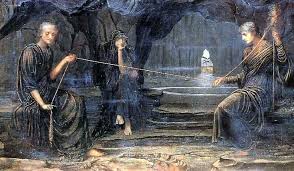
    In a corner of Greek myth, three old women sit at a cosmic loom. One spins a thread, another measures it, and the third waits with shears. They are the Moirai—Clotho, Lachesis, and Atropos—and the thread they tend is a human life. The image is so familiar that we barely notice its power: the idea that our days are a finite strand, spun, measured, and cut, has haunted Western thought for millennia.

    But the Fates were more than a grim metaphor. They were a way of asking the hardest question there is: If the future is fixed, what good is trying? The Greeks never settled on a single answer—sometimes the Fates bowed to Zeus, sometimes they outranked him—and that very ambiguity made them endlessly useful. From Homer’s heroes to modern films, the Fates have shaped how we tell stories about destiny, choice, and the limits of control.

    Who Were the Moirai?

    The Moirai were the personified allotment of life. Their names tell the story: Clotho, “the Spinner,” twists the thread of existence; Lachesis, “the Allotter,” measures its length; Atropos, “the Inflexible,” snips it with her shears. In art they appear as stern old women, though earlier depictions sometimes showed them as maidens—a reminder that fate’s cruelty doesn’t always announce itself.

    Their parentage was as tangled as their threads. Hesiod’s Theogony offers two versions: they are daughters of Nyx (Night), born without a father, or daughters of Zeus and Themis, the goddess of divine order. The first makes them primordial forces; the second makes them enforcers of cosmic law. Both ideas coexisted, and the tension was never resolved.

    The word “moira” itself originally meant “portion” or “share”—not a goddess but the simple fact that everyone gets a cut. In Homer, heroes speak of “my moira” as an impersonal fate, not a trio of spinners. Only later did the three sisters emerge as characters.

    The Fates and the Gods: Who’s Really in Charge?

    The Fates occupied a paradoxical place in the divine hierarchy. Zeus was sometimes called Moiragetes, “Leader of the Fates,” suggesting he directed them. Yet other myths show them binding even Zeus. In the Iliad, Zeus mourns that his son Sarpedon is fated to die—he cannot save him, only honor the body. The Fates are not capricious; they administer what has been allotted, and not even the king of the gods can rewrite that ledger.

    This ambiguity was a feature, not a bug. It allowed the Greeks to hold two truths at once: that the world runs on order, and that power has limits. The Fates were the visible edge of that order, the point where even divine will met a wall.

    Spinning at Birth, Cutting at Death

    The Fates showed up at the two great thresholds of life. At a child’s birth, they appeared within three days to decree its destiny—so the myths say. At death, Atropos cut the thread. But their influence wasn’t just about beginnings and endings. They also oversaw the fates of gods and mortals in between, often in surprising ways.

    Take the birth of Heracles. Zeus boasted that a descendant of Perseus would rule, so Hera delayed Alcmene’s labor, letting Eurystheus be born first and claim the throne. The Fates sealed the outcome, turning a boast into a binding decree. Or consider Meleager, whose life was tied to a brand on the hearth—as long as it burned, he lived. When his mother threw it into the fire, he died. The Fates declared the condition, but human action fulfilled it.

    They could even be bargained with, though only within strict rules. When Apollo asked them to spare Admetus, they agreed—if someone would die in his place. His wife Alcestis volunteered, and the deal held. The myth, dramatized by Euripides, shows the Fates as administrators of a contract, not blind executioners.

    From Goddesses to Philosophy

    As Greek thought matured, the Fates drifted from myth into philosophy. The Pre-Socratics wrestled with fate (heimarmenē) as a cosmic principle. Plato gave them a starring role in the Myth of Er in the Republic: Lachesis sings the past, Clotho the present, Atropos the future. But here, souls choose their own lots—the Fates merely ratify the choice. It’s a crucial move, linking fate to moral responsibility.

    The Stoics went further, equating fate with divine reason (logos). For them, the Moirai symbolized the causal chain of the universe. Chrysippus argued that fate doesn’t eliminate free will—a compatibilist position that still animates debates today. Aristotle, meanwhile, puzzled over future contingents. His “sea battle” thought experiment—will there be a sea battle tomorrow?—remains a classic in free will discussions.

    The Fates also had a religious side. They were worshipped at crossroads, in caves, and near oracles. At Delphi, they were said to have preceded Apollo. They were sometimes conflated with Eileithyia, goddess of childbirth, and with the Erinyes, the Furies, both of whom dealt with fate and justice. In Orphic cults, they became daughters of Ananke, Necessity—emphasizing cosmic compulsion.

    The Moirai in Modern Storytelling

    The Fates didn’t stay in antiquity. They migrated into Western culture, reappearing whenever storytellers needed to dramatize destiny. In Shakespeare’s Macbeth, the three witches spin prophecies that drive the plot—their “double, double toil and trouble” echoes the Fates’ spinning. In Neil Gaiman’s The Sandman, the Fates appear as a trio of old women who embody the same roles, now woven into a larger tapestry of myth. The 2012 film Cloud Atlas uses the image of a thread and a knife to explore reincarnation and consequence.

    Even when the Fates aren’t named, their logic shapes narratives. The “prophecy” trope—a hero learns their future and tries to avoid it, only to fulfill it—runs from Oedipus Rex to Harry Potter. The idea of a fixed timeline, popular in time-travel stories, is a secularized fate. The Fates’ power to bind even gods echoes in modern fiction where cosmic orders are immutable, from the laws of thermodynamics to the prime directives of science fiction.

    The Moirai endure because they answer a need: they give form to the feeling that some things are out of our hands. They let us explore the tension between destiny and choice, not by resolving it, but by making it visible. Every time a story asks whether the hero could have done otherwise, the Fates are in the room.

    The Fates’ Legacy

    What’s left of the Moirai today? The word “fate” itself derives from the Latin fatum, “that which has been spoken,” the Roman equivalent of the Fates’ decrees. We still say someone’s “thread was cut short” or that they “spun out” a story. The image of spinning, measuring, cutting is baked into our language.

    But the deeper legacy is philosophical. The Moirai embody the oldest puzzle: if the future is already written, why act? The Greeks offered no single answer. They left the question open, and that openness is the Fates’ greatest gift. They are not a solution; they are a mirror, reflecting our own uncertainty about how much control we really have.

    The Moirai were never just mythological characters. They were a way of thinking about the shape of a life—the portion we’re given, the length we’re measured, the moment we’re cut. Their myth asks us to consider what we can change and what we can’t, a question that remains as pressing now as it was in ancient Greece. The next time you watch a hero struggle against prophecy, or wonder why your own plans keep derailing, remember the three sisters at the loom. They’ve been there all along.

    Summary

    • The Moirai—Clotho, Lachesis, and Atropos—personified destiny in Greek myth, spinning, measuring, and cutting the thread of life.
    • Their parentage was ambiguous: daughters of Night or of Zeus and Themis, reflecting a tension between primordial force and cosmic law.
    • They could bind even Zeus, yet were sometimes subordinate to him, embodying the paradox of fate and divine power.
    • Philosophers from Plato to the Stoics used the Fates to explore free will and determinism, a debate that continues today.
    • Modern storytelling, from Shakespeare to Harry Potter, still relies on the Fates’ logic of prophecy and fixed destiny.

    FAQ

    Q: What are the names of the three Fates and what did they do?
    A: Clotho spun the thread of life, Lachesis measured its length, and Atropos cut it, ending life. Together they determined each person’s destiny.

    Q: Were the Fates more powerful than Zeus?
    A: It depends on the source. Sometimes Zeus was called their leader, but in other myths they bound even him—he couldn’t save his son Sarpedon once fate was set.

    Q: Did the Greeks believe in fate or free will?
    A: Both, in a way. They held that fate set limits, but within those limits humans made choices. Plato’s Myth of Er even shows souls choosing their own lots before the Fates ratify them.

    Q: How are the Fates different from the Norse Norns?
    A: The Norns—Urd, Verdandi, and Skuld—are similar spinning goddesses, but they have their own mythology and are tied to the Norse cosmos, not the Greek. They’re a parallel, not a copy.

    Q: Why do the Fates still appear in modern stories?
    A: Because they dramatize the tension between destiny and choice. The prophecy trope—where trying to avoid fate actually fulfills it—is a direct descendant of the Moirai, and it remains a powerful storytelling device.

  • The Werewolf Myth: How Cultures Around the World Shaped the Legend

    The Werewolf Myth: How Cultures Around the World Shaped the Legend

    The werewolf is one of the most enduring monsters in human storytelling. Today, we imagine a person transforming under a full moon, howling at the night, vulnerable only to silver bullets. But that version is a recent invention, polished by Hollywood. The real history of the werewolf is far stranger and more varied, spanning thousands of years and every continent. From ancient Mesopotamian gods to Navajo witches, from French noblemen cursed for sins to Argentine seventh sons, the werewolf myth has been shaped by local fears, beliefs, and environments. Understanding these different versions reveals not just how cultures imagine monsters, but what they value, fear, and punish.

    The Ancient Roots: Gods and Kings

    The earliest known werewolf story comes from the Epic of Gilgamesh, written around 2100 BCE. In it, the goddess Ishtar transforms a shepherd who spurns her advances into a wolf his own dogs turn on him, and he is doomed to roam the wild. This is not a curse of the full moon; it’s divine punishment, a theme that recurs in Greek mythology.

    King Lycaon of Arcadia served human flesh to Zeus to test his divinity. Zeus, disgusted, turned him into a wolf. This myth gave us the word “lycanthropy” and set a pattern: werewolves as symbols of divine retribution or moral corruption. The Greek historian Herodotus later wrote of the Neuri, a tribe who supposedly became wolves for a few days each year a claim that blends geography with folklore.

    The Romans added their own layer. They associated wolves with Mars, the god of war, and with the founding myth of Romulus and Remus, who were suckled by a she-wolf. But rural Romans also feared the versipellis the “skin-turner,” a person who could change form at will. Pliny the Elder and Petronius both recorded werewolf tales, cementing the motif in classical literature.

    Medieval Europe: From Curse to Conspiracy

    In Norse mythology, the ulfhednar were warriors who wore wolf pelts and fought with berserker fury, believing they channeled wolf spirits. The Völsunga saga tells of a father and son who don enchanted wolf skins and become wolves for ten days. Here, transformation is voluntary and tied to clothing a far cry from the modern involuntary victim.

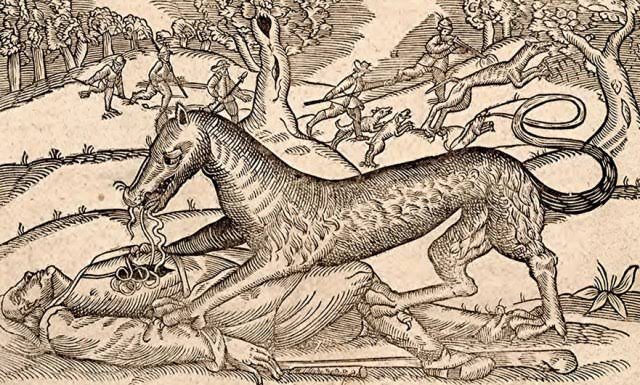
    With the spread of Christianity, the werewolf’s meaning shifted. The Church reframed these shapeshifters as servants of the Devil, linking them to witchcraft and heresy. This was not just a theological debate; it had deadly consequences. In the 16th and 17th centuries, werewolf trials swept Europe, often alongside witch trials. In France, Gilles Garnier was burned alive in 1573 for allegedly attacking children as a wolf. Peter Stumpp, the “Werewolf of Bedburg,” was executed in 1589 for similar crimes, along with his family. Estimates suggest hundreds of executions across the continent.

    Why this sudden hysteria? Crop failures, livestock losses to real wolves, and social upheaval created a climate of fear. Confessions were often extracted under torture, and accused “werewolves” described using salves, belts, or ointments to transform. Some of these substances—like belladonna or henbane—contain hallucinogenic compounds that could induce the sensation of becoming an animal. In this way, the myth became self-perpetuating: people believed they were wolves, confessed to it, and the belief spread.

    But not all European werewolves were demonic. In France, the loup-garou was often seen as a penitential curse. A person might be doomed to roam as a wolf for seven to ten years before being released. In Slavic regions, the vukodlak blurred the line between werewolf and vampire—a corpse that rises to harm the living, needing decapitation or a stake. These regional variations show how local folklore absorbed the werewolf into pre-existing beliefs about the dead, the soul, and the supernatural.

    The Global Werewolf: Skin-Walkers, Werehyenas, and Weretigers

    While Europe developed its own werewolf traditions, similar figures exist worldwide, often with distinct mechanics. In Navajo culture, the yee naaldlooshii—or skin-walker—is an evil witch who can shapeshift into any animal, not just a wolf. Unlike European werewolves, skin-walkers are not victims of a curse; they are malevolent practitioners who choose their power.

    In West Africa, particularly Ethiopia, the bouda is a werehyena. Hyenas are scavengers associated with sorcery, so the creature mirrors the werewolf but reflects local ecology and symbolism. In South Asia, the rakshasa and vetal are shapeshifting demons, while Bengal has a weretiger tradition. East Asia, meanwhile, favored foxes: China’s huli jing and Japan’s kitsune are shapeshifters, but they transform into foxes, not wolves—a reminder that the animal of choice depends on which predators loom largest in the cultural imagination.

    South America offers a striking variant: the lobisón. This creature is said to be the seventh son in a family, cursed to become a wolf-like beast. The belief was so strong that Argentine law once required the president to serve as godfather to seventh sons, a symbolic act meant to break the curse. Here, the werewolf is not a random victim or a sinner, but a specific birth order—a twist that shows how deeply the myth can be woven into social structures.

    Hollywood and the Modern Werewolf

    The werewolf we know today—full-moon transformation, silver bullets, contagion through bites—is largely a cinematic invention. The Wolf Man (1941) codified the tragic, involuntary werewolf, while An American Werewolf in London (1981) added graphic horror and dark humor. These films distilled centuries of folklore into a single, marketable archetype. The full moon, for instance, was rarely central to older myths; it became a plot device in the 20th century.

    This modern version has also been shaped by medicine. Clinical lycanthropy is a rare psychiatric delusion in which patients believe they are transforming into an animal. Hypertrichosis, a condition of excessive body hair, has been retroactively suggested as a possible origin for some historical accusations. These scientific perspectives offer a rational lens, but they don’t diminish the myth’s power—they simply add another layer.

    Gender and the Werewolf

    One striking pattern in European lore is the werewolf’s overwhelming maleness. Female werewolves are rare; Marie de France’s 12th-century lai Bisclavret features a nobleman who becomes a wolf, but women are more often victims or witnesses than shapeshifters. This gender imbalance may reflect cultural anxieties about male aggression and the beast within, or it may mirror the male-dominated world of medieval law and folklore. In contrast, some non-European shapeshifters, like the fox spirits of East Asia, are frequently female. The gender of the monster, it seems, says as much about the culture as the monster itself.

    The werewolf is not a single myth but a family of stories, each shaped by its environment. From divine punishment in Mesopotamia to demonic servants in medieval Europe, from skin-walkers in the American Southwest to weretigers in Bengal, the werewolf adapts to local fears and beliefs. The Hollywood version is just the latest iteration—a simplification that hides a rich, global tapestry. By exploring these variations, we see that the werewolf is less a monster than a mirror, reflecting what different cultures dread, desire, and seek to control.

    Summary

    • The werewolf myth dates back to ancient Mesopotamia and Greece, where it was often a divine punishment, not a lunar curse.
    • Medieval Europe transformed werewolves into devil-worshippers, leading to hundreds of executions during the 16th–17th centuries.
    • Non-European cultures have their own shapeshifters, like Navajo skin-walkers, Ethiopian werehyenas, and Argentine lobisón, each reflecting local ecology and beliefs.
    • Hollywood’s werewolf—full-moon transformations and silver bullets—is a modern invention, not rooted in ancient folklore.
    • The werewolf myth has been used to explain mental illness, social fears, and even posthumous threats, showing its adaptability across time and place.

    FAQ

    Q: When was the first werewolf story recorded?
    A: The earliest known reference is in the Epic of Gilgamesh (c. 2100 BCE), where Ishtar transforms a shepherd into a wolf.

    Q: Why did medieval Europeans accuse people of being werewolves?
    A: Werewolf trials often occurred during periods of social stress, and confessions were frequently extracted under torture. The Church linked werewolves to witchcraft, making them heretics.

    Q: Are there werewolf myths outside Europe?
    A: Yes, many cultures have shapeshifters, but they often involve different animals, like hyenas in Africa or tigers in India, and have different rules (e.g., skin-walkers are evil witches, not cursed victims).

    Q: How did the full moon become associated with werewolves?
    A: The full moon connection is largely a Hollywood invention, first popularized in the 1941 film The Wolf Man.

    Q: Is there a medical explanation for werewolf beliefs?
    A: Clinical lycanthropy is a rare psychiatric delusion where patients believe they are transforming into animals. Hypertrichosis (excessive hair growth) may have also contributed to historical accusations.

  • The Myth of the Dragon: From Serpent Deities to Fire-Breathing Villains – A Cross-Cultural Journey

    Dragon - Wikipedia

    In the beginning, the dragon was a snake. It slithered out of the primordial ooze of human imagination, shedding its skin and gaining wings, fire, and cosmic significance. From the benevolent lung of China to the demonic drakon of Revelation, dragons have haunted every culture on Earth. But why does this creature—part reptile, part nightmare—appear in myths separated by oceans and millennia? The answer lies in the serpent’s shadow, a universal symbol of death and rebirth, and in the very different stories each civilization told about it.

    This is not a simple tale of good versus evil. The dragon is a mirror, reflecting a culture’s deepest fears and highest hopes. In the East, it is a bringer of rain and a symbol of imperial power. In the West, it is a hoarder of gold and a stand-in for Satan. Yet both traditions spring from the same reptilian root, a creature that has evolved to embody everything from chaos to wisdom. Let’s trace that evolution, from the salt-water goddess Tiamat to the fire-breathing Smaug, and see why the dragon still captivates us.

    The Serpent’s Shadow: Why It All Starts with Snakes

    Dragons are, at their core, super-serpents. Snakes have been slithering through human consciousness since before we had language. They shed their skin, appearing to be reborn; they vanish into the earth and water, realms of mystery and the dead; and their venom can kill in an instant. Small wonder they inspired both awe and terror.

    The English word “dragon” itself comes from the Greek drakon, meaning “serpent” or “giant sea fish,” which in turn derives from derkomai—”to see clearly” or “to flash.” That etymology links dragons to sharp vision and watchfulness, traits that would later make them perfect guardians of treasure. But in the beginning, they were simply snakes, writ large.

    Every major dragon tradition carries this serpentine DNA. The Chinese lóng is a composite of nine animals—deer horns, camel head, rabbit eyes, snake neck, clam belly, carp scales, eagle claws, tiger paws, cow ears—but the snake neck is central. The Indian nāga are literally cobra-hooded serpents. The Mesoamerican Quetzalcoatl is a feathered serpent. Even the fire-breathing dragons of Europe often coil like serpents, as with the Norse Níðhöggr, who gnaws at the roots of the world tree Yggdrasil.

    The East-West Divide: Benevolent Gods vs. Demonic Foes

    Here is the great fork in the dragon’s road. In East Asia, dragons are largely benevolent. They control rain, rivers, and storms, and their wisdom is legendary. The Chinese dragon is a symbol of yang energy, good fortune, and cosmic harmony. The Emperor of China claimed the five-clawed dragon as his personal emblem, and even today, dragons appear in festivals to bring luck.

    Contrast that with the Western dragon, which is almost uniformly malevolent. It hoards gold, abducts maidens, and breathes fire—a literal catastrophe waiting to happen. The hero’s job is to slay it. This divergence is largely the work of Christianity. The serpent of Genesis, the Leviathan of Job, and the dragon of Revelation are all conflated into a single demonic figure, the embodiment of Satan himself.

    The dragon-slayer motif is central to Western myth: St. George, Beowulf, Sigurd, Apollo, Marduk—all prove their worth by killing a dragon. This act symbolizes the triumph of order over chaos, good over evil, civilization over wilderness. In the East, there is no such motif because there is no such villain.

    But the Indian nāga tradition offers a middle path. These semi-divine serpents are guardians of treasures and wisdom, associated with water and fertility. They are not wholly good or evil but powerful, ambivalent forces. The Buddha himself was sheltered from a storm by the nāga king Mucalinda. This nuanced view suggests that the dragon’s moral character is not fixed but culturally constructed.

    Monsters of the Ancient World: From Tiamat to Typhon

    Long before the Christian dragon, the ancient Near East and Mediterranean were crawling with dragon-like monsters. The Mesopotamian Enuma Elish (c. 18th century BCE) features Tiamat, a primordial salt-water dragon-goddess, who is slain by the hero-god Marduk. Her body is split to create the heavens and the earth—a cosmic act of dragon-slaying.

    In Greece, Hesiod’s Theogony (c. 700 BCE) describes Typhon, a monstrous storm giant with a hundred dragon heads, who challenged Zeus for supremacy. Apollo slew the Python at Delphi, and Heracles fought the multi-headed Hydra. These battles were not just heroics; they were foundational myths that established the order of the cosmos.

    Even the Bible contains such monsters. Leviathan, described in Job 41 as a fire-breathing sea serpent, is a chaos creature that only God can tame. In Revelation 12, a “great red dragon” with seven heads appears, identified with Satan. These texts cemented the dragon’s role as the ultimate adversary in Western consciousness.

    The Feathered Serpent: Quetzalcoatl and the New World

    Across the Atlantic, the Maya and Aztecs worshipped a very different kind of dragon. Quetzalcoatl (Aztec) and Kukulkan (Maya) are feathered serpents, combining the earthly serpent with the celestial bird. They represent wind, knowledge, creation, and the union of opposites.

    Quetzalcoatl is not a monster to be slain but a god to be revered. He brings civilization, arts, and agriculture. His mythology is complex, involving exile and a prophesied return, but he is never a villain. This tradition shows that the serpent-dragon morphology can encode entirely different values—cosmic harmony rather than chaos.

    The Modern Dragon Renaissance: From Smaug to Toothless

    For centuries, the Western dragon was stuck in a villainous rut. Then came the 20th century, and the dragon began to change. J.R.R. Tolkien’s Smaug in The Hobbit (1937) is still a classic treasure-hoarding villain, but he is also intelligent, vain, and strangely compelling. Ursula K. Le Guin’s Earthsea dragons are ancient, wise, and not inherently evil. Anne McCaffrey’s Pern dragons are genetically engineered protectors of humanity.

    George R.R. Martin’s A Song of Ice and Fire made dragons morally ambiguous—weapons of conquest, yes, but also objects of awe and wonder. And How to Train Your Dragon turned the dragon-slayer paradigm on its head, making a boy and his dragon the heroes. Even Dungeons & Dragons, the tabletop game that has shaped modern fantasy since 1974, presents dragons as intelligent beings with their own alignments, from lawful good to chaotic evil.

    This rehabilitation reflects a broader cultural shift. We are no longer content with simple good-versus-evil tales. We want our monsters to have depth, to be more than just obstacles for heroes to overcome. The dragon, once the ultimate villain, has become a canvas for exploring complexity.

    Why Dragons Endure: Psychology and Anthropology

    Why do dragons appear in every culture? Carl Jung would say they are archetypes of the shadow—the chaotic, unconscious forces that heroes must confront and integrate. The dragon’s hoard represents hidden psychic treasure, and slaying it is a metaphor for self-realization.

    Joseph Campbell saw dragon-slaying as a universal stage in the hero’s journey—the threshold guardian that the hero must overcome to enter the adventure. Claude Lévi-Strauss, the structuralist anthropologist, might parse dragons as a way to mediate binary oppositions: good and evil, chaos and order, earth and sky.

    These explanations are not mutually exclusive. The dragon’s persistence suggests it taps into something fundamental about the human psyche. We need monsters to define ourselves against, but we also need them to embody our own potential for wisdom and power. The dragon does both.

    The dragon is not a single creature but a shape-shifting idea, as fluid as the water it often guards. It can be a god or a demon, a friend or a foe, a symbol of chaos or of cosmic order. As our cultures evolve, so does the dragon, adapting to reflect our changing fears and aspirations. Whether it soars over the battlefields of Westeros or coils around a treasure hoard in a fantasy novel, the dragon remains the most versatile myth in our collective imagination. And that is no myth—it’s a fact.

    Summary

    • The word “dragon” comes from Greek drakon, meaning “serpent,” and dragons are essentially amplified snakes, inheriting their symbolic associations with rebirth, death, and the unknown.
    • East Asian dragons are benevolent, water-controlling symbols of imperial power and good fortune, while Western dragons are malevolent, fire-breathing villains—a divergence largely due to Christianity’s conflation of serpent and Satan.
    • Ancient texts like the Enuma Elish and Hesiod’s Theogony feature dragon-like monsters as embodiments of primordial chaos, slain by gods and heroes to establish order.
    • The Indian nāga and Mesoamerican feathered serpents (Quetzalcoatl) offer alternative, more ambivalent or positive views of serpent deities.
    • Modern fantasy, from Tolkien to How to Train Your Dragon, has rehabilitated the Western dragon, making it complex, sympathetic, and morally ambiguous, ensuring its enduring popularity.

    FAQ

    Q: Are dragons real?
    A: No, dragons are mythical creatures. However, their ubiquity across cultures may be inspired by real animals like snakes, crocodiles, or large monitor lizards, or by human encounters with dinosaur fossils in ancient times.

    Q: What is the difference between a dragon and a serpent?
    A: A dragon is essentially a super-serpent—an amplified, often mythological version of a snake, with additional features like wings, legs, breath weapons, or multiple heads. All dragons are serpents in origin, but not all serpents are dragons.

    Q: Why are Chinese dragons considered lucky while Western dragons are evil?
    A: This difference stems from cultural and religious history. In China, dragons are associated with water, rain, and cosmic harmony, and were symbols of imperial authority. In the West, Christianity conflated the serpent of Genesis, the Leviathan, and the dragon of Revelation into a demonic figure, making dragons the embodiment of Satan and chaos.

    Q: What is the oldest dragon myth?
    A: The oldest known dragon myth is likely the Mesopotamian Enuma Elish (c. 18th century BCE), which features Tiamat, a primordial dragon-goddess of salt water. However, serpent worship and symbolism go back even further, possibly to the Stone Age.

    Q: Why are dragons so popular in modern fantasy?
    A: Dragons are versatile symbols that can be used to explore themes of power, chaos, wisdom, and redemption. Modern fantasy has moved away from simple good-vs-evil portrayals, allowing dragons to be complex characters, from Smaug’s intellect to Toothless’s friendship.

  • The Cosmic Hunt: How Ancient Cultures Saw the Same Stars Differently

    The Cosmic Hunt: How Ancient Cultures Saw the Same Stars Differently

    Look up on a clear night, and you’ll see the same stars that ancient Greeks, Norse seafarers, Lakota hunters, and Aboriginal Australians saw. Yet each culture told completely different stories about those patterns. The Big Dipper was a bear to some, a wagon to others, and a stretcher carrying a wounded man to the Lakota. Orion, the mighty hunter of Greek myth, was a chief’s arm to the Lakota and the three gods of fortune in China.

    This isn’t just a curiosity of history. It shows how human brains are wired to find patterns, and how our environment shapes what we see. The stars themselves don’t change, but the stories we attach to them reveal what each culture valued, feared, and needed to remember.

    The Same Sky, Different Stories

    Imagine a group of ancient Greeks and a group of Lakota Sioux both looking at the same cluster of seven stars. The Greeks saw a bear, Ursa Major, and told stories of Zeus turning a nymph into a bear to save her from his jealous wife. The Lakota saw not a bear, but a stretcher carrying a wounded man, with four stars forming the poles and three forming the man himself. Both groups looked at the same pattern, but their interpretations were shaped by their environments: bears were common in both Greece and North America, but the Lakota’s story reflects a nomadic lifestyle where carrying the wounded was a daily reality.

    This diversity is the heart of the “Cosmic Hunt,” a term anthropologists use for a widespread myth pattern where a hunter (often with dogs) chases an animal across the sky. The pattern appears in cultures from Siberia to Australia, from Scandinavia to Africa. But the details change: the hunter might be Orion, the animal might be a bear, a deer, or an emu, and the chase might take place across the Milky Way, which many cultures saw as a river or a road.

    Why Do We See Shapes in the Sky?

    Humans are pattern-seeking creatures. Our brains are wired to recognize faces and shapes, a phenomenon called pareidolia. When we look at a random scatter of stars, we can’t help but impose order. This is why every culture has constellations, even though the stars themselves have no inherent shape. The patterns we see are often those that matter to us: a hunter sees a hunter, a farmer sees a plow, a sailor sees a canoe.

    Consider the Polynesians, who navigated vast stretches of the Pacific by canoe. They saw the stars as a great canoe, with the hull formed by the Milky Way and the oars by bright stars. The Mongols, living on the steppes, saw herds of animals and hunters in the sky. The Inuit, in the Arctic, saw bears and caribou. The same stars, different lives, different stories.

    The Cosmic Hunt Across Cultures

    Let’s take a closer look at how three very different cultures interpreted the same star groupings.

    Orion: Hunter, Hand, or Three Gods?

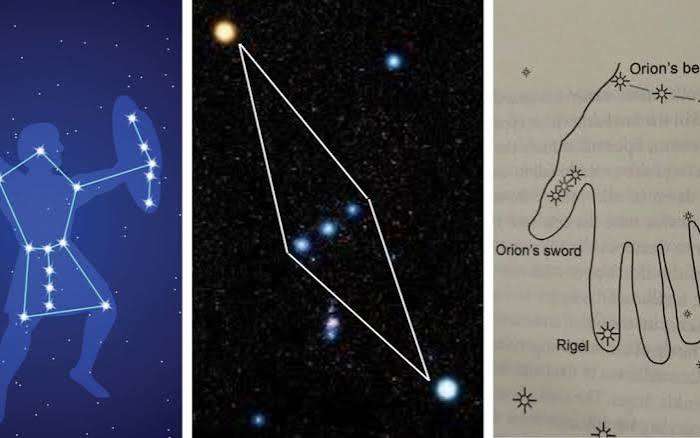
    To the ancient Greeks, Orion was a giant huntsman, placed in the sky by Zeus after his death. He forever chases the Pleiades (the Seven Sisters) across the heavens, accompanied by his faithful dog, Canis Major. The constellation is easy to spot: three bright stars form his belt, and his shoulders and feet are marked by other bright stars.

    The Lakota people of North America saw something entirely different. They called this group of stars “The Hand,” representing the arm of a chief. The three stars of Orion’s belt were the wrist, and the stars above and below were the fingers and thumb. This wasn’t a hunter but a symbol of authority and strength.

    In China, the three stars of Orion’s belt were known as “Fu, Lu, Shou” — the gods of fortune, prosperity, and longevity. These were not mythic characters in a hunt but objects of veneration, representing wishes for a good life. Each culture took the same pattern and wove it into their own values and beliefs.

    The Big Dipper: Bear, Wagon, or Stretcher?

    In Western astronomy, the Big Dipper is not a constellation but an asterism — a recognizable pattern within the larger constellation Ursa Major. But many cultures treat these seven stars as a distinct and meaningful grouping.

    The Greeks saw a bear, and the name Ursa Major reflects that. The Norse, however, saw Odin’s wagon, and they called it Karlavagnen. The wagon was a practical vehicle for a god who traveled the sky, and the stars were the wheels and the shaft.

    The Lakota again had a different story. They saw the four stars of the bowl as a stretcher, and the three stars of the handle as the wounded man being carried. This story served a practical purpose: it reminded the Lakota of the importance of caring for the injured, a lesson essential for survival on the plains.

    The Pleiades: Sisters, Hens, or Maidens?

    The Pleiades, a tight cluster of seven stars, are one of the most universally recognized star patterns. In Greek myth, they were the Seven Sisters, daughters of Atlas, who were pursued by Orion. In Norse tradition, they were hens with their chicks. The Lakota saw them as the Seven Maidens, often associated with the buffalo.

    In Australian Aboriginal cultures, the Pleiades are the Seven Sisters, and they are pursued by a man, often identified with Orion. This story is part of a larger epic that spans the sky, and it teaches lessons about proper behavior and the dangers of obsession.

    The Milky Way: A River, a Road, or a Hunt

    The Milky Way, that band of light stretching across the sky, is not a constellation but a collection of billions of stars. Yet it plays a central role in many cultures’ sky stories. To the Greeks, it was the Milky Way, the spilled milk of the goddess Hera. To the Norse, it was the path of the dead, leading to Valhalla. To many Aboriginal Australian peoples, it is the river in the sky, and the dark patches within it form the “Emu in the Sky.”

    This emu is not made of stars but of dark nebulas — clouds of dust that block the light behind them. For Aboriginal Australians, the emu’s position in the sky signaled when to hunt emu eggs. When the emu’s head appeared on the horizon, it was time to look for eggs on the ground. This is a perfect example of how practical knowledge was encoded in myth.

    The Cosmic Hunt is often set along the Milky Way. The hunter chases the animal across the celestial river, and the chase explains the changing positions of the constellations throughout the year. For cultures that depended on hunting, this story made the sky a map and a calendar.

    Why So Many Similarities?

    Given that the stars are the same for everyone, it’s not surprising that many cultures developed similar motifs. But the Cosmic Hunt is so widespread that some scholars wonder if it originated from a single ancient source. Anthropologist Yuri Berezkin has catalogued hundreds of versions of the Cosmic Hunt, and he notes that they appear in cultures that had no known contact.

    There are two main explanations. First, cultural diffusion: the story spread through ancient migrations and trade routes, changing as it moved. Second, independent invention: human minds, facing similar environments and similar skies, came up with similar stories on their own. The truth likely lies in a combination of both. The Cosmic Hunt may have been invented many times, but it also traveled, and each culture adapted it to their local fauna and flora.

    The Sky Changes, Too

    One thing that complicates the story is that the sky itself changes over time. The Earth wobbles on its axis, a slow process called precession, which shifts the positions of constellations relative to the horizon over thousands of years. A star pattern that marked the spring equinox in 3000 BCE no longer does so. This means that the same constellation had different seasonal meanings for different cultures at different times.

    For example, the Big Dipper is circumpolar in northern latitudes, meaning it never sets. But in ancient Egypt, it was not always visible, and its position changed over the centuries. This would have affected how different cultures used it for timekeeping and navigation.

    The Stars as Mnemonics

    Why did cultures go to the trouble of inventing such elaborate stories? One practical reason is that stories are easier to remember than star charts. If you need to know when to plant crops or when to migrate, a story about a hunter chasing a bear is more memorable than a list of coordinates.

    The Cosmic Hunt served as a mnemonic device. The hunter, the animal, and the chase encoded information about the seasons. When Orion disappeared from the evening sky, the Greeks knew that winter was coming. When the Emu in the Sky appeared, Aboriginal Australians knew it was time to collect eggs. The stories were not just entertainment; they were survival tools.

    The Modern Sky

    Today, we still look at the same stars, but our stories have changed. We see Orion as a hunter, but we also know it as a region of star formation. The Big Dipper is a pointer to the North Star, but it’s also a constellation in the International Astronomical Union’s official list. Our culture has its own myths, from the stories we tell about the zodiac to the names we give to exoplanets.

    But the ancient stories remind us that the sky is a canvas on which we project our hopes, fears, and daily realities. The stars themselves are indifferent, but we are not. And that is what makes the Cosmic Hunt so fascinating: it shows us that the universe is not just out there, but also in here, in our minds.

    The Cosmic Hunt is a reminder that the night sky is a shared human heritage, yet each culture has painted it with its own colors. The stars are constant, but our stories are not. By looking at how others have seen the same patterns, we gain a deeper appreciation for the diversity of human imagination and the common threads that connect us all.

    Summary

    • The same star patterns, like Orion and the Big Dipper, have radically different myths across cultures, from Greek hunters to Lakota stretchers.
    • Cultural and environmental factors shape what we see in the stars: sailors see canoes, hunters see game, farmers see plows.
    • The Cosmic Hunt is a global motif, possibly spread by cultural diffusion, independent invention, or both.
    • The Milky Way often serves as a celestial river or road, and in Aboriginal Australian culture, its dark patches form the Emu in the Sky, a seasonal indicator.
    • Constellations served as mnemonic devices, encoding practical knowledge about seasons and navigation in memorable stories.

    FAQ

    Q: Why do different cultures see different things in the same stars?
    A: Because humans are pattern-seeking animals, and we tend to project our own environment and experiences onto random arrangements of stars. A culture that relies on hunting sees hunters; a seafaring culture sees canoes.

    Q: Is the Cosmic Hunt a single myth or many independent ones?
    A: It’s a recurring motif that appears in many cultures. Some scholars argue it spread from a common source, while others think it was invented independently in different places. The truth likely involves both.

    Q: How did ancient cultures use constellations practically?
    A: They used them as calendars and navigation aids. The stories attached to star patterns served as mnemonic devices, making it easier to remember when to plant crops, when to migrate, or how to find directions.

    Q: What is the Emu in the Sky?
    A: It’s a constellation made of dark patches in the Milky Way, not stars. Aboriginal Australians used its position to time the collection of emu eggs.

    Q: Do the stars change over time?
    A: Yes, due to precession, the Earth’s axis wobbles over thousands of years, shifting the positions of constellations relative to the horizon. This means the same star pattern had different meanings for different cultures at different times.