Imagine a vessel that can vanish beneath the waves, strike without warning, and then slip away into the deep. That’s the submarine, and its story is one of radical innovation born from the crucible of war. The German U-boat, in particular, pushed the limits of what was possible underwater, transforming naval combat and, eventually, our ability to explore the ocean’s darkest depths.
This isn’t just a tale of military might. The same engineering breakthroughs that allowed U-boats to hunt Allied convoys also laid the groundwork for the research submersibles that later visited the Titanic and the deepest point on Earth. By tracing the U-boat’s development from a primitive submersible to a sleek hunter-killer, we can see how a weapon of war became a tool for discovery.
From Submersible to Submarine: The Early Years
The first submarines were more like underwater boats that could dive for short periods, not true submarines capable of long submerged cruises. The USS Holland, launched in 1900, was a breakthrough: it used a gasoline engine on the surface and electric motors below, a hybrid design that became the standard for decades. Germany quickly adopted this concept, commissioning its first U-boat, U-1, in 1906. These early boats were cramped, dangerous, and limited in range, but they hinted at a new kind of naval warfare.
World War I: The U-Boat as a Commerce Raider
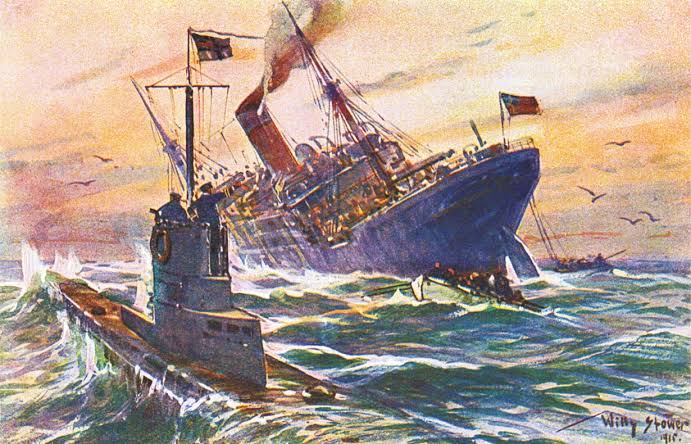
Germany’s gamble on unrestricted submarine warfare in World War I was a game-changer. U-boats could sink merchant ships without warning, choking off supply lines. By 1917, they had sent over 5,000 Allied ships to the bottom. This policy was so effective that it helped drag the United States into the war, but it also demonstrated the submarine’s strategic power: a small crew could threaten an entire navy’s logistics.
The U-boats of WWI were primitive by modern standards, but they forced the development of countermeasures like convoys and depth charges. The lesson was clear: control of the sea was no longer just about battleships.
World War II: The Wolf Packs and the “Happy Time”
Between the wars, submarine technology improved steadily. By WWII, German U-boats like the Type VII were faster, more reliable, and carried better torpedoes. Their most infamous tactic was the “wolf pack”: groups of U-boats coordinated by radio to overwhelm convoys. During the “First Happy Time” (1940-41), these packs wreaked havoc in the Atlantic, sinking hundreds of ships.
But the Allies adapted. Radar, sonar (called ASDIC), long-range aircraft, and codebreaking (Ultra) turned the tide by mid-1943. The Battle of the Atlantic was a brutal technological arms race, and the U-boat fleet paid a horrific price: over 700 boats lost and roughly 30,000 of 40,000 crewmen killed—a casualty rate of 75%, the highest of any military branch in the war.
Innovations That Changed Everything
Out of this desperate struggle came innovations that would shape the future of underwater travel. The snorkel was a simple but vital addition: a retractable tube that allowed diesel engines to run while submerged at periscope depth, so U-boats no longer had to surface to recharge batteries. Even more revolutionary was the Type XXI, the first true submarine. Its streamlined hull and huge battery banks allowed it to cruise submerged at high speed for days. Though too late to affect the war, the Type XXI was the blueprint for post-war Soviet and US submarines.
Torpedoes also evolved. The acoustic homing torpedo, like the G7es, could lock onto a ship’s propeller noise, making them far more deadly. These advances were driven by pure necessity, but they had lasting impact.
The Post-War Legacy: From War to Exploration
After Germany’s surrender, over 150 U-boats were captured or scuttled. The Allies eagerly studied them, and the Type XXI’s design directly influenced American and Soviet submarine programs. This lineage led to nuclear submarines like the USS Nautilus, which could stay submerged for months, and to ballistic missile submarines that became the backbone of Cold War deterrence.
The same engineering principles—pressure hulls, life support systems, and propulsion—were adapted for scientific submersibles. The bathyscaphe Trieste reached the Challenger Deep in 1960 using a pressure sphere reminiscent of submarine design. The research submersible Alvin, which explored the Titanic wreck, was built with technology derived from naval submarines. Without the U-boat’s innovations, our ability to explore the deep ocean would be decades behind.
The U-boat was a weapon of war, born from German ingenuity and desperation. Its legacy, however, extends far beyond the battlefield. The same pressure hulls that protected crews from depth charges now carry scientists to hydrothermal vents. The life support systems that kept sailors alive for months enable astronauts in training to simulate spaceflight. The U-boat’s story is a powerful reminder that even the most destructive technologies can seed peaceful discoveries.
Summary
- The U-boat evolved from a simple submersible to the first true submarine, the Type XXI, which set the standard for post-war nuclear submarines.
- Unrestricted submarine warfare in WWI and WWII changed naval strategy, forcing the development of convoys, sonar, and radar.
- The U-boat’s innovations—snorkel, streamlined hulls, acoustic torpedoes—were directly copied or adapted by Allied and Soviet navies.
- Post-war, submarine technology was repurposed for deep-sea exploration, enabling trips to the Titanic and the Challenger Deep.
- The human cost was staggering, with a 75% casualty rate among U-boat crews, underscoring the harsh realities of undersea warfare.
FAQ
Q: What was the first modern submarine?
A: The USS Holland, launched in 1900, is often considered the first modern submarine. It combined a gasoline engine for surface travel with electric motors for submerged operation, a design that became the standard for decades.
Q: How did U-boats change naval warfare?
A: U-boats shifted naval strategy from surface fleet battles to economic warfare, targeting merchant shipping. They forced the development of convoys, depth charges, sonar, and radar, and demonstrated that a small crew could threaten a navy’s supply lines.
Q: What was the Type XXI U-boat?
A: The Type XXI was a German submarine introduced late in WWII. It was the first true submarine, designed to run submerged at high speed for extended periods, thanks to a streamlined hull and large battery banks. It became the blueprint for post-war Soviet and US submarines.
Q: How did submarine technology help deep-sea exploration?
A: The pressure hulls, life support systems, and propulsion technologies developed for military submarines were adapted for research submersibles like Alvin and the bathyscaphe Trieste. These vessels have explored shipwrecks and the deepest ocean trenches.
Q: What was the “First Happy Time”?
A: It was a period from 1940 to 1941 when German U-boats enjoyed great success against Allied shipping in the Atlantic, sinking hundreds of ships with relatively few losses. The term refers to the ease with which U-boats found and attacked targets.