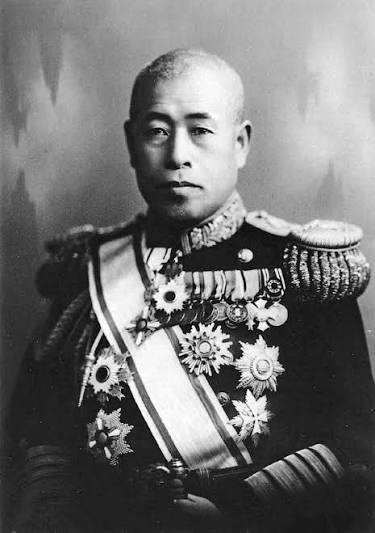
Tag: Japanese history

  • Isoroku Yamamoto: The Admiral Who Warned Japan Against War

    Isoroku Yamamoto: The Admiral Who Warned Japan Against War

    On December 7, 1941, Japanese carrier aircraft devastated the U.S. Pacific Fleet at Pearl Harbor. The man who planned that attack, Admiral Isoroku Yamamoto, had spent years warning his own government that such a war would end in disaster. He knew America’s industrial might firsthand—he had studied at Harvard and served as a naval attaché in Washington. Yet he followed orders, launching a war he believed Japan could not win.

    Yamamoto’s life is a study in contradictions. He was a gambler who calculated odds with cold precision, a samurai descendant who embraced modern aviation, and a reluctant warrior who became his nation’s most famous naval commander. His story offers a window into how Japan hurtled toward war, and why one of its most brilliant military minds couldn’t stop it.

    The Making of a Naval Strategist

    Isoroku Yamamoto was born in 1884 into a low-ranking samurai family in Nagaoka, Japan. His birth name was Isoroku Takano, but he was later adopted into the Yamamoto clan—a traditional practice to preserve a family name. From an early age, he was shaped by the strict values of the samurai class: discipline, honor, and loyalty to the emperor.

    He entered the Imperial Japanese Naval Academy in 1901, graduating in the midst of the Russo-Japanese War. At the Battle of Tsushima in 1905, he lost two fingers on his left hand—a wound that earned him the nickname “Eighty Sen” from geisha and gamblers, mocking the cost of a manicure. But the battle also taught him a lesson that would define his career: modern naval warfare was changing, and those who adapted would prevail.

    After the war, Yamamoto rose through the ranks, attending the Naval War College and then serving as a naval attaché in Washington, D.C., from 1919 to 1921. He even took courses at Harvard University. This American experience left a lasting impression. He traveled widely, studied the country’s industries and shipyards, and understood that the United States had vast resources Japan simply couldn’t match.

    The Reluctant Advocate for Aviation

    Back in Japan, Yamamoto became a vocal proponent of naval aviation. In the 1920s and 1930s, most senior officers still worshipped the battleship, seeing it as the ultimate weapon. Yamamoto argued otherwise. He pushed for the development of aircraft carriers and long-range bombers, insisting that airpower would dominate future conflicts.

    His advocacy put him at odds with the navy’s traditionalists. But Yamamoto’s record and intellect earned him respect. By 1939, he was appointed Commander-in-Chief of the Combined Fleet, Japan’s main battle force.

    He also opposed the Tripartite Pact with Nazi Germany and fascist Italy, signed in 1940. Yamamoto believed that aligning with these powers would inevitably drag Japan into a war with the United States and Britain—a conflict he was convinced Japan would lose. His opposition made him enemies among ultranationalist military officers and civilians. He received death threats and required a personal bodyguard.

    The Plan for Pearl Harbor

    Despite his misgivings, when the decision to go to war was made, Yamamoto threw his skill behind it. He conceived the attack on Pearl Harbor as a preemptive strike to cripple the U.S. Pacific Fleet. His goal wasn’t to conquer America—it was to buy Japan six months to a year of free rein in Southeast Asia, time to fortify its conquests and hopefully negotiate a favorable peace.

    He reportedly told Prime Minister Fumimaro Konoe, “If I am told to fight regardless of the consequences, I shall run wild for the first six months or a year, but I have utterly no confidence for the second or third year.”

    On December 7, 1941, the plan unfolded with devastating precision. Japanese carrier aircraft sank or damaged eight battleships, destroyed nearly 200 aircraft, and killed over 2,400 Americans. The attack achieved its immediate objective, but it also galvanized the United States. Instead of negotiating, America declared war and entered World War II with a fury Yamamoto had feared.

    The Turning Point: Midway

    Yamamoto’s next major operation was the Battle of Midway in June 1942. His plan was complex, designed to lure the U.S. carriers into a trap. It backfired catastrophically. On June 4, 1942, American dive bombers found the Japanese fleet with its aircraft rearming and refueling. In a single day, Japan lost four aircraft carriers—the heart of its naval aviation.

    The defeat at Midway is often cited as the turning point of the Pacific War. Yamamoto was not solely responsible; the plan was a product of the naval staff’s overconfidence. But his reputation as a flawless strategist suffered. From then on, Japan was on the defensive, fighting a grinding war of attrition in the Solomon Islands.

    The Final Mission

    By April 1943, Yamamoto was directing operations around Guadalcanal. He decided to make an inspection tour of forward bases to boost morale. American intelligence intercepted and decrypted his travel schedule. President Franklin D. Roosevelt reportedly approved a mission to shoot him down—Operation Vengeance.

    On April 18, 1943, a squadron of U.S. Army P-38 Lightning fighters ambushed Yamamoto’s transport aircraft near Bougainville Island. The plane was shot down, killing Yamamoto and several others. He was 59 years old.

    His death was a significant blow to Japanese morale. Ironically, some Japanese hardliners who had once threatened his life saw his demise as a blessing. They had considered him too moderate, too willing to compromise with the West.

    Admiral Chester Nimitz, commander of the U.S. Pacific Fleet, later paid tribute to his fallen adversary: “He was one of the ablest officers in the Japanese Navy.” Nimitz understood that Yamamoto’s death was more than a tactical victory—it was the removal of a brilliant mind from an enemy that could ill afford to lose him.

    A Contradictory Legacy

    Isoroku Yamamoto remains one of the most enigmatic figures of World War II. He was a man who loved gambling but faced the ultimate stakes of war. He warned against a conflict he knew was unwinnable, yet he fought with uncompromising resolve. He embraced modern aviation while honoring ancient samurai traditions.

    His story is not just a military biography. It’s a lesson in how individuals can be caught in the machinery of history, forced to choose between their conscience and their duty. Yamamoto chose duty, and in doing so, he helped write one of the most tragic chapters of the 20th century.

    Yamamoto’s prediction proved tragically accurate. Japan ran wild for six months, but after two years, the industrial might of America overwhelmed it. His death in 1943 spared him from witnessing his nation’s ruin, but it also robbed him of the chance to see his warnings fully vindicated. Today, he is remembered not only as a brilliant tactician but as a man who saw the abyss clearly—and was powerless to pull his country back from its edge.

    Summary

    • Isoroku Yamamoto was the Japanese admiral who planned the attack on Pearl Harbor, despite warning that Japan couldn’t win a long war against the U.S.
    • He was a visionary advocate for naval aviation, pushing for carrier-based airpower when battleships still dominated naval thinking.
    • He opposed Japan’s alliance with Germany and Italy, leading to death threats from ultranationalists.
    • The Battle of Midway in 1942 was a decisive Japanese defeat, often blamed in part on Yamamoto’s overly complex plan.
    • He was killed in 1943 when American fighters shot down his transport plane, a mission code-named Operation Vengeance.

    FAQ

    Q: Why did Yamamoto plan the attack on Pearl Harbor if he opposed war with the U.S.?
    A: Yamamoto believed that if Japan went to war, it had to strike first and hard to disable the U.S. Pacific Fleet. He hoped a surprise attack would buy time for Japan to secure its conquests and negotiate a favorable peace. Despite his personal opposition, he followed orders and executed the plan with full commitment.

    Q: How did Yamamoto lose his fingers?
    A: He lost two fingers on his left hand during the Battle of Tsushima in 1905, a major naval victory against Russia. The injury was a badge of honor and also gave him the nickname “Eighty Sen,” referring to the cost of a manicure at the time.

    Q: What was Operation Vengeance?
    A: Operation Vengeance was the American mission to shoot down Yamamoto’s aircraft. U.S. intelligence intercepted and decoded his travel plans, and on April 18, 1943, P-38 Lightning fighters ambushed and killed him near Bougainville Island.

    Q: How did Yamamoto’s death affect the war?
    A: Yamamoto’s death was a major morale blow to Japan. He was highly respected as a brilliant strategist, and his loss weakened the Imperial Japanese Navy’s leadership. Some historians also argue it deprived Japan of one of its most capable commanders during a critical phase of the war.

    Q: What was Yamamoto’s view on the Tripartite Pact?
    A: Yamamoto strongly opposed Japan’s alliance with Germany and Italy in 1940. He believed it would inevitably lead to war with the United States and Britain, a conflict he thought Japan could not win. His opposition made him a target for ultranationalist extremists.
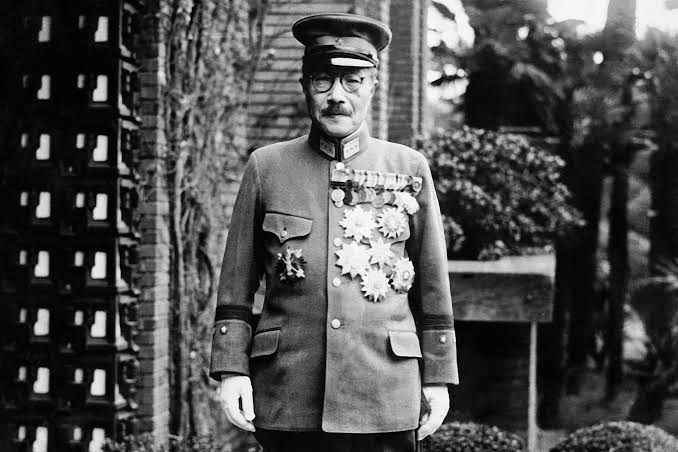
  • Hideki Tojo: The General Who Led Japan into Pearl Harbor and Paid the Ultimate Price

    Hideki Tojo: The General Who Led Japan into Pearl Harbor and Paid the Ultimate Price

    On December 7, 1941, Japanese carrier aircraft devastated the U.S. Pacific Fleet at Pearl Harbor, killing over 2,400 Americans and dragging the United States into World War II. The man who authorized that attack was Hideki Tojo, Japan’s Prime Minister and a general whose name became synonymous with wartime atrocities. But Tojo was not simply a cartoon villain; he was a product of a militarized state, a dogged bureaucrat who rose through the ranks by embracing expansionism, and a leader whose legacy remains fiercely contested in Japan today.

    Tojo’s story is not just about one man’s ambition. It’s about how a nation’s political system can be hijacked by military hardliners, how a single decision can reshape the global order, and how the aftermath of war forces us to confront questions of guilt, responsibility, and justice. From his samurai lineage to his execution by hanging in 1948, Tojo’s life offers a stark lens into the darkest chapters of the 20th century.

    From Samurai Son to Military Hardliner

    Hideki Tojo was born on December 30, 1884, in Tokyo’s Kōjimachi district, into a family with deep military roots. His father, Hidenori Tojo, was a lieutenant general in the Imperial Japanese Army, and young Hideki was groomed for a martial career from the start. He graduated from the Imperial Japanese Army Academy in 1915 and later the Army War College, quickly distinguishing himself as a disciplined, no-nonsense officer.

    Tojo’s early career included a stint in the Siberian Intervention (1918–1922), where Japanese forces joined an international effort to topple the Bolsheviks. But it was his time as a military attaché in Germany in the early 1920s that left a lasting impression. He observed firsthand the rise of Nazi militarism its discipline, its aggression, and its ideological fervor. These lessons would later shape his own worldview.

    Back in Japan, Tojo aligned himself with the Kōdōha, or Imperial Way faction, a group of ultranationalist officers who believed in aggressive expansionism and spiritual discipline over the more cautious, pragmatic approach of the rival Tōseiha (Control) faction. The Imperial Way saw Japan as destined to lead Asia, by force if necessary. Tojo’s rise was steady: he became Chief of the Kempeitai (military police) in Manchuria in 1935, where he ruthlessly suppressed dissent and oversaw harsh occupation policies. By 1938, he was Vice-Minister of War, and in 1940, he became Army Minister under Prime Minister Fumimaro Konoe.

    The Road to Pearl Harbor

    As Army Minister, Tojo was a driving force behind Japan’s aggressive foreign policy. He pushed for the Tripartite Pact with Nazi Germany and Fascist Italy in September 1940, formally aligning Japan with the Axis powers. He also championed the “Greater East Asia Co-Prosperity Sphere,” a propaganda slogan that masked Japanese imperial domination over Southeast Asia and the Pacific.

    But the critical issue was China. Japan had been bogged down in a brutal war there since 1937, and the United States, alarmed by Japanese expansion, imposed oil and steel embargoes in 1941. Tojo saw these embargoes as a threat to Japan’s very survival. Negotiations with Washington stalled, and the Japanese military leadership including Tojo concluded that war with the West was inevitable.

    In October 1941, Tojo replaced Konoe as Prime Minister, largely because he was seen as the strongest advocate for war. He also held the portfolios of Army Minister and Home Minister, accumulating unprecedented power. On December 7, 1941, he authorized the attack on Pearl Harbor, along with simultaneous strikes on Malaya, Singapore, Hong Kong, and the Philippines. The goal was to cripple the U.S. Pacific Fleet and give Japan a free hand to conquer resource-rich territories.

    Wartime Dictator and Brutal Policies

    In the first six months after Pearl Harbor, Japanese forces swept across the Pacific, achieving a string of stunning victories. Tojo wielded more power than any civilian leader in modern Japanese history, effectively becoming a dictator. He also authorized some of the most brutal policies of the war.

    The Bataan Death March in the Philippines, where thousands of American and Filipino POWs died from abuse and starvation, happened under his watch. He implemented the sankō sakusen, or “kill-all, burn-all, loot-all” policy in China, which caused the deaths of countless civilians. He also oversaw the forced labor of POWs and Asian civilians on projects like the Burma Railway, and he failed to apply the Geneva Conventions to POWs, leading to widespread mistreatment.

    But Tojo’s military fortunes turned after the Battle of Midway in June 1942, when the U.S. Navy dealt a devastating blow to Japanese carrier forces. The subsequent Allied island-hopping campaign, culminating in the fall of Saipan in July 1944, made Japan’s defeat inevitable. Tojo resigned on July 22, 1944, taking responsibility for the war’s failures, but he remained a powerful figure until Japan’s surrender in August 1945.

    The Attempted Suicide and the Tokyo Trials

    After Japan surrendered, Tojo knew his fate was sealed. On September 11, 1945, as U.S. military police approached his home, he shot himself in the chest with a pistol. The bullet missed his heart, and he survived—only to be arrested, tried, and convicted.

    The International Military Tribunal for the Far East, known as the Tokyo Trials, began in 1946. Tojo was charged with war crimes, crimes against peace, and crimes against humanity. He accepted responsibility for Japan’s wartime actions but argued that he was following orders from Emperor Hirohito and acting in Japan’s self-defense. The court rejected his defense, and he was convicted on seven of 55 counts, including waging aggressive war.

    On December 23, 1948, Tojo was hanged at Sugamo Prison in Tokyo. His ashes were scattered at sea, though some remains were reportedly taken by supporters and enshrined at Yasukuni Shrine, Japan’s controversial war memorial.

    Three Perspectives on Tojo’s Legacy

    Tojo’s legacy is not monolithic. In the West, he is almost universally condemned as the architect of the Pacific War—a militaristic, expansionist leader who personally ordered Pearl Harbor and authorized atrocities. This perspective sees his execution as justice.

    Some historians, however, offer a more structuralist view. They argue that Tojo was not a lone madman but a product of a militarized state. The decision for war was collective—the Emperor, the Privy Council, and the military leadership all shared responsibility. Tojo was more of an administrator than a strategic genius, and he inherited a war machine already in motion. This perspective doesn’t excuse his actions but complicates the simple villain narrative.

    In Japan, a vocal minority of nationalists and revisionists, associated with groups like Nippon Kaigi, portray Tojo as a tragic patriot who defended Japan against Western imperialism. They argue that his actions, while misguided, were motivated by a desire to protect Japan’s interests. This view is deeply contested, and many Japanese and international observers reject it as a whitewash of war crimes.

    Why Tojo Still Matters

    The story of Hideki Tojo is a reminder of how quickly a nation can descend into militarism and how individual leaders can bear immense responsibility for catastrophic decisions. It also highlights the ongoing struggle over historical memory—how we remember wartime leaders and their actions shapes national identity and international relations.

    Today, visits by Japanese politicians to Yasukuni Shrine, where Tojo is enshrined, continue to provoke diplomatic tensions with China and South Korea. The question of whether Tojo was a criminal or a patriot remains unresolved in some quarters, but the historical record is clear: his decisions led to the deaths of millions and the suffering of countless others. That is not a matter of interpretation; it is a fact.

    Hideki Tojo was neither a genius nor a madman—he was a product of a militarized system that he helped to strengthen, and he made choices that had devastating consequences. His execution in 1948 marked the end of an era, but his legacy continues to shape debates about war, responsibility, and justice. As we reflect on Tojo’s life, we are reminded that leadership carries a heavy weight, and that the decisions made in times of crisis can echo for generations.

    Summary

    • Hideki Tojo was Prime Minister of Japan from 1941 to 1944 and ordered the attack on Pearl Harbor.
    • He held multiple portfolios simultaneously, effectively becoming a dictator during wartime.
    • Tojo authorized brutal policies, including the Bataan Death March and the ‘kill-all, burn-all, loot-all’ strategy in China.
    • After Japan’s surrender, he attempted suicide but survived and was tried by the International Military Tribunal for the Far East.
    • He was convicted of war crimes and executed on December 23, 1948.
    • His legacy remains contested: condemned internationally, but viewed by some Japanese nationalists as a tragic patriot.

    FAQ

    Q: What was Hideki Tojo’s role in the attack on Pearl Harbor?
    A: As Prime Minister of Japan, Tojo authorized the attack on Pearl Harbor on December 7, 1941, which brought the United States into World War II.

    Q: Why did Tojo attempt suicide after the war?
    A: Tojo attempted suicide on September 11, 1945, to avoid capture and trial by the Allied forces. He shot himself in the chest but survived and was later arrested.

    Q: What crimes was Tojo convicted of?
    A: Tojo was convicted on seven of 55 counts at the Tokyo Trials, including waging aggressive war and crimes against humanity, and was sentenced to death.

    Q: How is Tojo viewed in Japan today?
    A: In Japan, Tojo’s legacy is contested. Some nationalists view him as a patriot who defended Japan against Western imperialism, while others and the international community condemn him as a war criminal.

    Q: Why is Tojo enshrined at Yasukuni Shrine?
    A: Tojo’s remains were reportedly taken by supporters and enshrined at Yasukuni Shrine, a war memorial that has become a source of diplomatic tension because it honors convicted war criminals.