Tag: history of medicine

  • The Truth Behind the Beak: What 17th-Century Plague Doctors Really Wore and Did

    The Truth Behind the Beak: What 17th-Century Plague Doctors Really Wore and Did

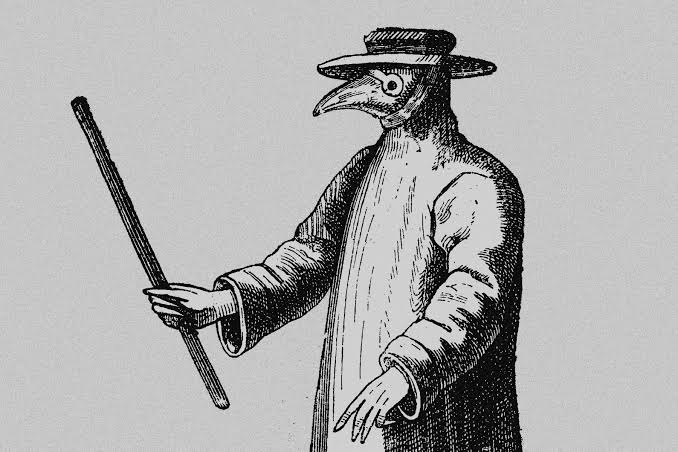
    The image is instantly recognizable: a figure cloaked in black, face hidden behind a haunting bird-like mask, carrying a cane through plague-ridden streets. Pop culture has turned the plague doctor into a symbol of medieval dread, but the real story is far more nuanced and surprisingly practical.

    This wasn’t a uniform worn across Europe for centuries. It was a specific, short-lived experiment in protective gear, mostly used in 17th-century France and Italy. And the people who wore it weren’t the heroic physicians of legend—they were often desperate, underqualified, or simply doing a municipal job that no one else wanted.

    The Costume Wasn’t Standard Issue

    The full regalia—waxed leather coat, beaked mask, wide-brimmed hat, gloves, boots, and cane—is most often credited to Charles de L’Orme, physician to French kings Louis XIII and Louis XIV, around 1619. It was primarily used in Paris and Rome, not across all of Europe. English plague doctors, for instance, are not depicted in such outfits in contemporary records.

    Why the elaborate getup? At the time, medicine was ruled by the miasma theory: the belief that disease spread through foul, poisonous air. The beak was a crude respirator, stuffed with aromatic herbs and spices like camphor, mint, cloves, myrrh, laudanum, or rose petals. The theory was that these strong scents would purify the air before it entered the body. Vinegar-soaked sponges were also a common addition.

    The glass eye openings and waxed leather were meant to block physical contact with the sick. The cane wasn’t a fashion statement—it was a tool to examine patients without touching them, take pulses, and lift clothing to check for buboes.

    Who Became a Plague Doctor?

    Many were not trained physicians. Qualified doctors often fled cities during outbreaks, leaving the work to second-rate practitioners, young physicians seeking experience, or barber-surgeons and apothecaries with minimal formal training. They were hired by city councils as public employees, tasked with recording deaths, performing autopsies, and enforcing quarantine protocols.

    The job was dangerous. Plague doctors were often quarantined themselves for 40 days—the origin of the word “quarantine”—and many died from the very disease they were hired to fight. Pay could be good, but survival was far from guaranteed.

    The plague doctor’s beak mask is not a symbol of medieval ignorance but of early, desperate attempts at infection control. It reflects a time when medicine had no germ theory, no antibiotics, and no real understanding of how disease spread. The costume was a practical, if flawed, response to an invisible threat. Next time you see that iconic image, remember: it wasn’t a uniform of terror, but a suit of hope, worn by people trying to do a job no one else wanted.

    Summary

    • The plague doctor costume was not standard across Europe; it was mainly used in 17th-century France and Italy.
    • The beak was a makeshift respirator filled with aromatic herbs and spices to ward off ‘miasma’ or bad air.
    • Many plague doctors were not trained physicians but barber-surgeons, apothecaries, or young doctors hired by cities.
    • The cane was a practical tool for examining patients without touching them.
    • The costume is documented in 1656 engravings by artists like Paulus Fürst, which are the primary visual evidence.

    FAQ

    Q: Did all plague doctors wear the beaked mask?
    A: No. The costume was mainly used in 17th-century France and Italy. In England, for example, contemporary records do not show plague doctors in such gear.

    Q: Why did they stuff the beak with herbs?
    A: They believed plague spread through ‘miasma’—foul air. The herbs and spices were meant to purify the air before breathing it in, based on the idea that strong scents could counteract the bad vapors.

    Q: Was the plague doctor a respected profession?
    A: Not usually. Most were not fully trained physicians; they were often second-rate doctors, barber-surgeons, or apothecaries who took the job because qualified doctors had fled the city.

    Q: Did plague doctors ever get sick?
    A: Yes, many died from the plague. Despite the protective gear, it wasn’t effective against fleas or the bacterium, and the job required close contact with the sick.

    Q: Where does the image of the plague doctor come from?
    A: The most famous images come from 1656 engravings, such as one by Paulus Fürst depicting a plague doctor in Rome. These are the primary visual evidence for the costume’s existence.

  • The Cook Who Changed Public Health: Mary Mallon’s Cautionary Tale

    The Cook Who Changed Public Health: Mary Mallon’s Cautionary Tale

    In the summer of 1906, a mysterious typhoid outbreak struck a rented mansion in Oyster Bay, New York. Six of the eleven people in the house fell ill with high fevers and debilitating symptoms. The owner, desperate to find the source, hired a sanitation engineer named George Soper. His investigation would uncover a medical mystery that challenged everything scientists thought about infectious disease and it centered on a seemingly healthy Irish cook named Mary Mallon.

    Mallon’s story is not just a historical footnote; it’s a pivotal moment that shaped modern public health. Her case forced scientists to recognize that carriers of disease could be asymptomatic, transforming how we track and control outbreaks. But her story also raises profound ethical questions about individual rights versus public safety questions we still grapple with today during pandemics and vaccine mandates.

    A Disease That Followed a Cook

    Typhoid fever in the early 1900s was a terrifying scourge. In 1906, the United States reported around 25,000 to 35,000 cases annually, with a mortality rate of about 10%. The disease, caused by the bacterium Salmonella typhi, spreads through contaminated food and water. Once ingested, the bacteria invade the intestines, causing sustained fever, weakness, abdominal pain, and sometimes death. Without antibiotics, treatment was largely supportive—bed rest, fluids, and hope.

    George Soper, a sanitary engineer, was a pioneer in the new field of epidemiology. When he investigated the Oyster Bay outbreak, he noticed a pattern: the only person who had left the household before the outbreak was the cook, Mary Mallon. Soper traced Mallon’s employment history and found a trail of typhoid cases. Between 1900 and 1907, she had worked for eight families, and 22 cases of typhoid were linked to her, including one death. The evidence pointed to Mallon as a carrier, but she appeared perfectly healthy.

    Soper needed proof. In March 1907, he visited Mallon to request stool samples for testing. His approach was, by all accounts, aggressive and lacking in tact. He later admitted, “I had a rather bad half hour with her.” Mallon, who felt fine and had never been sick, was understandably confused and angry. She refused to believe she could spread a disease without being ill herself. When she refused to cooperate, Soper left, but he returned with police and health officials. Mallon was forcibly apprehended and taken to Riverside Hospital on North Brother Island, a quarantine facility in the East River.

    The Birth of the Carrier Concept

    At the hospital, laboratory tests confirmed Soper’s suspicion: Mallon’s stool samples tested positive for Salmonella typhi. This was a groundbreaking discovery. Before Mallon, scientists believed that only sick individuals could transmit typhoid. The idea that a healthy person could carry and spread the bacteria was revolutionary. Mallon was among the first documented cases of an asymptomatic carrier in the United States.

    The medical explanation is both fascinating and a bit unsettling. In some people infected with typhoid, the bacteria take up residence in the gallbladder, where they can survive for years without causing symptoms. These carriers shed the bacteria in their feces, which can contaminate food if they don’t practice rigorous hand hygiene. For a cook like Mallon, who prepared meals for others, the risk was significant.

    Mallon’s case proved that carriers were a real threat, but it also created a public health dilemma. How do you protect the public from someone who doesn’t look or feel sick? In the early 1900s, quarantine laws were designed for visibly ill patients, not healthy carriers. There was no legal precedent for indefinitely detaining someone who showed no symptoms. Yet, the health department, fearing further outbreaks, decided to keep Mallon isolated.

    A Life Interrupted

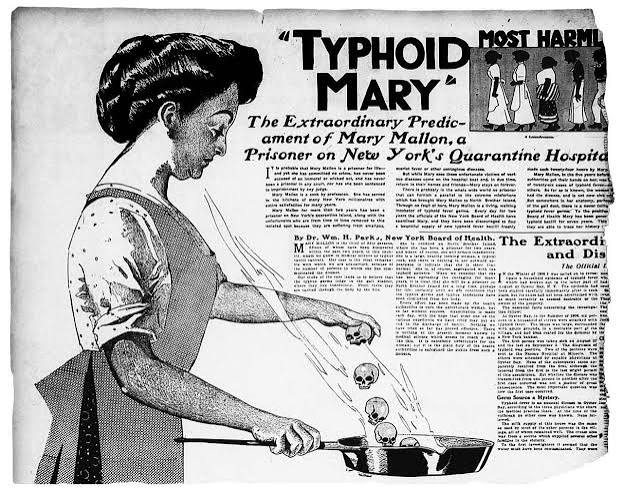
    Mallon spent three years on North Brother Island from 1907 to 1910. She lived in a small cottage, away from other patients, and was subjected to repeated medical tests. She never accepted her diagnosis, believing that she was being persecuted because of her Irish immigrant background. In 1909, she sued the New York City Health Department for wrongful imprisonment. The case drew significant media attention, and Mallon became a public figure—not sympathetically, but as a menace. Newspapers dubbed her “Typhoid Mary,” a label that stuck and demonized her.

    In 1910, a new health commissioner offered Mallon her freedom on one condition: she must never work as a cook again. Mallon agreed, but she struggled to find other employment. Her only skill was cooking, and she was illiterate, making it hard to secure other work. For a time, she took a job as a laundress, but the pay was poor. Eventually, she returned to cooking under the alias “Mrs. Brown,” a decision that would seal her fate.

    In 1915, an outbreak of typhoid struck Sloane Maternity Hospital in Manhattan. Twenty-five people fell ill, and two died. Health officials traced the source to a cook known as “Mrs. Brown.” It was Mary Mallon. She had been working there for several months, unaware that she was still contagious. The second outbreak destroyed any remaining public sympathy. Mallon was arrested again and confined permanently to North Brother Island.

    The Ethics of Isolation

    Mallon’s story is a cautionary tale about the tension between individual rights and public health. On one hand, her isolation protected countless people from a deadly disease. On the other hand, she was detained without due process, based on the fear of what she might do, not what she had done. She never received a trial; the health department simply kept her confined.

    Soper’s role is also troubling. He was a scientist, not a physician, and his approach was heavy-handed. He didn’t explain the science to Mallon in a way she could understand, and he didn’t offer alternatives like regular testing or education. Instead, he treated her as a problem to be solved, not a person to be helped.

    Mallon’s case also highlights the social prejudices of the time. Irish immigrants in New York faced rampant discrimination. They were often stereotyped as unclean and disease-prone. Mallon’s refusal to cooperate was seen as evidence of her ignorance and stubbornness, rather than a reasonable response to an unbelievable accusation.

    Legacy and Lessons

    Despite the ethical failures, Mallon’s case changed public health for the better. It led to the development of carrier surveillance programs, where health departments tracked individuals known to carry infectious diseases. It also prompted regulations for food handlers, requiring testing and vaccination in some cases. Today, we have a robust system for monitoring and managing carriers of diseases like typhoid, hepatitis A, and even COVID-19.

    The term “Typhoid Mary” has entered the lexicon as a metaphor for someone who spreads disease or misfortune. But it’s a loaded term that obscures Mallon’s humanity. She was a victim of circumstance, trapped by a medical condition she couldn’t control and a system that had no good answers.

    Mary Mallon died on November 11, 1938, at Riverside Hospital, after spending nearly 26 years in isolation. An autopsy revealed live typhoid bacteria still in her gallbladder—a poignant reminder that she was never cured, only contained. Her story remains a powerful case study in public health ethics, a reminder that protecting the community must not come at the cost of basic human dignity.

    Mary Mallon’s life is a complex legacy. She was both a vector of disease and a victim of a nascent public health system. Her case accelerated scientific understanding of asymptomatic carriers, leading to better surveillance and prevention strategies. But it also serves as a warning about the dangers of stigmatization and the importance of treating individuals with respect, even when they pose a risk to others. As we continue to face new infectious threats, Mallon’s story reminds us that public health measures must balance the needs of the many with the rights of the few.

    Summary

    • Mary Mallon, an Irish immigrant cook in early 1900s New York, was the first documented asymptomatic carrier of typhoid fever in the U.S.
    • Her employment history traced 22 cases of typhoid to her, and she was linked to a total of about 50 cases and 3 deaths over her lifetime.
    • George Soper’s investigation in 1906 proved that healthy carriers could spread disease, a revolutionary concept at the time.
    • Mallon was forcibly quarantined twice, spending nearly 26 years in isolation on North Brother Island, despite never showing symptoms herself.
    • Her case led to carrier surveillance programs and food-handler regulations, but also raised ethical questions about civil liberties vs. public safety.

    FAQ

    Q: Who was Mary Mallon?
    A: Mary Mallon, also known as “Typhoid Mary,” was an Irish immigrant cook in New York City who was the first documented healthy carrier of typhoid fever in the United States. She unknowingly spread the disease to dozens of people while showing no symptoms herself.

    Q: What is an asymptomatic carrier?
    A: An asymptomatic carrier is a person who is infected with a pathogen but does not exhibit any symptoms. They can still transmit the disease to others. Mary Mallon carried Salmonella typhi in her gallbladder and shed it in her feces, contaminating food she prepared.

    Q: Why was Mary Mallon quarantined?
    A: Mary Mallon was quarantined because she was a carrier of typhoid fever and worked as a cook, putting others at risk. Public health officials believed that isolating her was necessary to prevent further outbreaks, even though she was healthy herself.

    Q: How long was Mary Mallon isolated?
    A: Mary Mallon was isolated for a total of about 26 years. She was first quarantined from 1907 to 1910, then released on the condition she stop cooking. After causing another outbreak in 1915, she was re-quarantined and remained on North Brother Island until her death in 1938.

    Q: Did Mary Mallon ever accept that she was a carrier?
    A: No, Mary Mallon never fully accepted that she was a carrier. She believed she was being unfairly targeted, possibly due to her immigrant status. Even after laboratory tests confirmed she carried the bacteria, she remained skeptical and resentful of her treatment.
  • The Mold That Won the War: How Penicillin Beat Infection and Saved Millions

    The Mold That Won the War: How Penicillin Beat Infection and Saved Millions

    In the summer of 1944, as Allied troops stormed the beaches of Normandy, each medic carried a small tin box containing a yellow powder that would redefine battlefield medicine. That powder penicillin had been discovered sixteen years earlier in a cluttered London laboratory, but it took a world war to turn it into the miracle that saved an estimated 200,000 soldiers on D-Day alone.

    This is not just a story of a lucky accident. It’s a story of desperate improvisation, a rotting cantaloupe, and an industrial push that rivaled the Manhattan Project. It’s the story of how a fragile mold became the most sought-after substance on Earth, and how it changed medicine forever.

    A Petri Dish and a Stroke of Luck

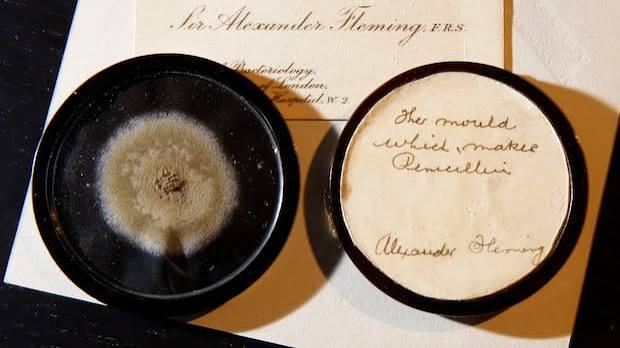
    On a September morning in 1928, Alexander Fleming returned from vacation to his cluttered lab at St. Mary’s Hospital in London. Before leaving, he had stacked a pile of Petri dishes inoculated with staphylococcus bacteria. Now, one dish was contaminated with mold. But instead of tossing it, Fleming noticed something odd: around the mold, the bacteria had been destroyed.

    The mold was Penicillium notatum, a common airborne fungus. Fleming published his findings in 1929, but he couldn’t isolate the active compound. The mold produced penicillin in such tiny amounts that purifying it seemed impossible. For a decade, the discovery languished as a lab curiosity.

    Oxford’s Improvised Assembly Line

    In 1939, a team at Oxford University pathologist Howard Florey, biochemist Ernst Chain, and biochemist Norman Heatley took up the challenge. They had a hunch that Fleming’s mold could be the key to fighting bacterial infections that killed millions. But they faced a brutal problem: how to produce enough penicillin to test it in humans.

    Heatley’s solution was ingenious in its simplicity. He grew the mold in a broth of nutrients, using whatever vessels he could find bedpans, milk churns, even old bookshelves lined with glass jars. The “surface culture” method was laborious: each container yielded only a few drops of the precious liquid. But it worked.

    By 1941, the team had enough penicillin to treat their first patient, a British policeman named Albert Alexander. Alexander had scratched his face on a rose bush, and the wound had become infected with a deadly mix of staphylococci and streptococci. He was near death when the Oxford team administered penicillin. Within days, his fever broke, and the infection began to clear. But the supply ran out before he was cured. Alexander relapsed and died. The lesson was stark: penicillin worked, but producing it at scale was a matter of life and death.

    The American Solution

    Britain, battered by the Blitz and stretched thin by war, couldn’t build the production facilities penicillin demanded. So Florey crossed the Atlantic in 1941, carrying a precious sample of mold in his coat pocket. He appealed to the U.S. government, and the Office of Scientific Research and Development (OSRD) launched a crash program—secret, urgent, and massive.

    The USDA’s Northern Regional Research Laboratory in Peoria, Illinois, became the epicenter of the search for a better mold. Scientists scoured the globe for samples, testing hundreds of strains. The winner came from a rotting cantaloupe in a Peoria grocery store. This strain, Penicillium chrysogenum, produced 200 times more penicillin than Fleming’s original.

    The next breakthrough was engineering. Instead of shallow trays, Pfizer, a Brooklyn chemical company, developed deep-tank fermentation—giant vats where the mold grew in a constantly stirred, aerated broth. Corn steep liquor, a byproduct of corn processing, proved to be the perfect nutrient. By 1944, Pfizer’s plant in Brooklyn was producing penicillin around the clock.

    Triage and Triumph on the Battlefield

    Penicillin was so scarce that doctors had to make agonizing choices about who would receive it. In North Africa and Sicily in 1943, early trials showed dramatic results: soldiers with infected wounds, gangrene, and pneumonia recovered in days. But there wasn’t enough for everyone. Some doctors reserved penicillin for soldiers with battle wounds, while those with venereal disease had to wait—a moral calculus that haunted many physicians.

    By D-Day, June 6, 1944, the supply had caught up with the need. Allied forces carried enough penicillin to treat an estimated 200,000 casualties. Field medics applied it as a powder to wounds, and penicillin became standard in every medical kit. The results were staggering: mortality from bacterial pneumonia in military hospitals fell from about 18% to just 1% in some studies. Gangrene and sepsis, the scourges of WWI, became treatable.

    A Nobel Prize and a New Era

    In 1945, Fleming, Florey, and Chain shared the Nobel Prize in Physiology or Medicine. By the end of the war, U.S. production had reached over 600 billion units per month—enough to treat every wounded soldier and still have surplus for civilians.

    Penicillin’s success didn’t just save lives; it transformed medicine. It proved that government, industry, and academia could collaborate on a scale never before attempted. It sparked a golden age of antibiotics—streptomycin, tetracyclines, and beyond—and set the mold for how modern drugs are developed and mass-produced.

    But the story also has a cautionary edge. The scarcity that forced doctors to choose who lived and who died is a reminder of the ethics of triage. And the patents and production disputes between the U.S. and Britain foreshadowed today’s global battles over drug access. Penicillin was a miracle, but it was a human-made miracle—fraught with the same ambitions, conflicts, and inequalities that shape all human endeavors.

    The story of penicillin is not just about a mold that happened to kill bacteria. It’s about the power of collaboration, the urgency of war, and the audacity to scale a fragile discovery into a global lifesaver. Fleming noticed the mold, but it took the Oxford team’s ingenuity, the Peoria cantaloupe, and the industrial might of American companies to turn it into a weapon against death. As we face new infectious threats, the lesson of penicillin endures: a breakthrough in the lab means nothing until it can be produced, distributed, and used—often in the chaos of a battlefield or a pandemic.

    Summary

    • Alexander Fleming discovered penicillin in 1928, but it took over a decade to purify and produce it.
    • The Oxford team (Florey, Chain, Heatley) developed methods for extraction and testing, including the first human trial in 1941.
    • The U.S. led mass production during WWII, with a crucial breakthrough from a cantaloupe mold and deep-tank fermentation.
    • Penicillin reduced mortality from infections dramatically, saving an estimated 200,000 soldiers on D-Day alone.
    • The drug’s success established models for government-industry-academic collaboration and sparked the antibiotic era.

    FAQ

    Q: Why did it take so long to develop penicillin after Fleming’s discovery?
    A: Fleming couldn’t isolate or stabilize the active compound, and the mold produced it in tiny amounts. It wasn’t until the Oxford team in 1939 developed methods to extract and concentrate penicillin that it became viable for testing in humans.

    Q: What was the ‘surface culture’ method?
    A: Norman Heatley’s technique involved growing penicillin mold in shallow layers of broth in improvised vessels like bedpans and milk churns. It was laborious but allowed the Oxford team to produce enough penicillin for early experiments and the first human trial.

    Q: How did a cantaloupe contribute to penicillin production?
    A: In 1943, the USDA lab in Peoria, Illinois, found a mold strain (Penicillium chrysogenum) on a rotting cantaloupe from a local market. This strain produced 200 times more penicillin than Fleming’s original, making mass production feasible.

    Q: Was penicillin used on D-Day?
    A: Yes, Allied forces carried enough penicillin to treat an estimated 200,000 casualties, and it was standard in field medical kits, dramatically reducing infection deaths.

    Q: Why is Norman Heatley often called ‘the forgotten man’?
    A: Heatley developed the extraction and purification methods and the surface culture technique, but he was not included in the Nobel Prize, which went to Fleming, Florey, and Chain. His contributions were vital to making penicillin practical.