Tag: genocide

  • They Knew: The Allies’ Early Intelligence on the Holocaust

    They Knew: The Allies’ Early Intelligence on the Holocaust

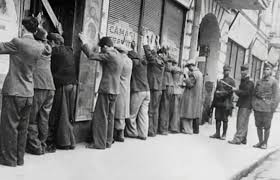
    In the summer of 1941, as German forces swept into Soviet territory, a different kind of battle was being fought in the quiet corridors of Bletchley Park, England. There, codebreakers intercepted and decrypted German police radio messages that described, in chilling detail, the mass shooting of Jewish men, women, and children. By December 1941, the Polish government-in-exile in London was issuing formal reports of mass executions in occupied Poland. The Allies knew. The question is not whether they knew, but how much they knew, when they knew it, and what they did with that knowledge.

    This article examines the timeline of Allied awareness, the channels through which information flowed, and the choices made by Allied governments in the face of an unfolding genocide. It is a story of intelligence, bureaucracy, and moral failure—a story that challenges the comfortable assumption that the horrors of the Holocaust were unknown until the liberation of the camps.

    The Earliest Warnings: 1941-1942

    The first concrete evidence reached Allied leaders through signals intelligence. In August 1941, British codebreakers at Bletchley Park decrypted German police messages that explicitly described the mass murder of Jews in the Soviet Union. These were not vague rumors; they included numbers, locations, and details of execution methods. The information was classified as “Ultra,” the highest level of secrecy, and its use was restricted to prevent the Germans from realizing their codes were broken.

    Human intelligence soon followed. The Polish underground, one of the most extensive resistance networks in occupied Europe, provided eyewitness accounts. In 1942, Jan Karski, a Polish courier, smuggled himself into the Belzec death camp and later reported to Allied leaders, including President Franklin D. Roosevelt. His testimony was detailed and unequivocal.

    The most significant single document was the Bund Report, delivered in June 1942, which described the extermination of Jews in Poland using gas vans. That same month, the BBC reported that over 700,000 Jews had already been killed in Poland.

    The Riegner Cable and Its Suppression

    In August 1942, Gerhart Riegner, a representative of the World Jewish Congress in Geneva, sent a cable to the U.S. State Department and the British Foreign Office. He reported that the Germans were planning the systematic extermination of European Jews, using Zyklon B gas. The cable was based on information from a German industrialist—a rare and credible source.

    The U.S. State Department, however, suppressed the cable. It was not passed on to Jewish leaders or the American public until months later. Assistant Secretary of State Breckinridge Long, who controlled visa issuance, was known for his anti-Semitic views and actively obstructed Jewish immigration. The suppression was a bureaucratic decision, but it had moral consequences.

    Public Condemnation: December 1942

    By late 1942, the evidence was overwhelming. On December 17, 1942, the Allies issued a joint declaration condemning the “bestial policy of cold-blooded extermination” of Jews. The declaration was widely reported in the press. The New York Times ran the story on its front page, though not as the lead. The information was public knowledge.

    Yet public knowledge did not translate into action. The declaration was a statement of condemnation, not a plan for rescue. The Allies issued no threat of reprisal, no offer of refuge, no commitment to intervene.

    The Auschwitz Protocols: 1944

    In 1944, the Allies received the most detailed intelligence about the Holocaust yet: the Auschwitz Protocols, also known as the Vrba-Wetzler Report. This 32-page document, compiled by two escapees from Auschwitz, included maps, descriptions of the gas chambers and crematoria, and the number of people killed. It reached Allied officials in June 1944.

    Aerial reconnaissance flights over the camp in 1944 took photographs that showed the camp’s layout, but interpreters did not initially recognize the gas chambers or crematoria. The photos were taken for military purposes, not for humanitarian intelligence.

    The Allies did not bomb Auschwitz or its railway lines. The U.S. War Department formally rejected a request for such a bombing in August 1944, stating it was “impracticable.” The arguments were practical: risk to aircrews, accuracy concerns, and the possibility that bombing would kill prisoners without stopping the killings. But there was also a deeper reason: the Allies’ military strategy was focused on defeating Germany, not on humanitarian intervention.

    The Moral Calculus: Knowledge and Inaction

    The Allies’ response was shaped by several factors. The “Germany First” strategy prioritized military victory over rescue operations. Resources were stretched, and any diversion was seen as a risk to the war effort. The restrictive immigration policies of the U.S. and Britain, rooted in anti-Semitism and political calculation, closed doors to Jewish refugees. The Évian Conference of 1938, called by Roosevelt, had produced no increase in admissions; the Bermuda Conference of 1943 was similarly ineffective.

    But the core issue was a failure of imagination and will. Intelligence was fragmented and compartmentalized. Some officials dismissed early reports as propaganda, remembering the exaggerated atrocity stories of World War I. Others knew but chose not to act, either out of indifference or because they believed that winning the war was the only way to stop the killings.

    What the Allies Knew and When

    • 1941: British intelligence intercepts German police messages describing mass shootings.
    • 1942: The Bund Report and the Riegner cable provide detailed accounts of systematic extermination.
    • 1942: The Allies issue a public declaration condemning the extermination.
    • 1944: The Auschwitz Protocols reach the Allies, including maps and descriptions of gas chambers.
    • 1944–1945: Liberation of camps brings undeniable public knowledge.

    The question is not whether the Allies knew. They knew. The question is what they did with that knowledge—and the answer is that they did far too little.

    The Allies knew about the Holocaust years before the liberation of the camps. They had intelligence from codebreakers, underground couriers, and escapees. They issued condemnations, but they did not act to save lives. The reasons were complex—military strategy, bureaucratic inertia, anti-Semitism, and a failure to fully grasp the scale of the horror. But the result was a moral failure that continues to haunt us. Understanding this history is not about assigning blame for the sake of judgment; it is about recognizing the consequences of knowing and not acting. The next time we hear of atrocities, we must ask not only what we know, but what we will do.

    Summary

    • The Allies received credible intelligence about the Holocaust as early as 1941, including decrypted German messages and eyewitness reports from the Polish underground.
    • The Riegner cable of August 1942, detailing plans for systematic extermination, was suppressed by the U.S. State Department.
    • The Allies issued a public declaration condemning the extermination in December 1942, but took no significant action to rescue Jews.
    • The Auschwitz Protocols of 1944 provided detailed information about the camp, yet the Allies did not bomb it.
    • Knowledge was fragmented, and Allied governments prioritized military victory over humanitarian intervention, leading to a moral failure.

    FAQ

    Q: Did the Allies know about the Holocaust before it happened?
    A: Yes. The Allies had credible intelligence about systematic mass killings as early as 1941. This included decrypted German police messages and reports from the Polish underground and Jewish escapees.

    Q: When did the Allies learn about Auschwitz specifically?
    A: Detailed reports on Auschwitz, including the Vrba-Wetzler Report, reached the Allies in 1944. Aerial reconnaissance photos were also taken but not fully interpreted until later.

    Q: Why didn’t the Allies bomb Auschwitz?
    A: The U.S. War Department rejected the request in 1944, citing practical concerns such as risk to aircrews and accuracy, as well as a belief that bombing would not stop the killings.

    Q: What was the Riegner cable?
    A: It was a telegram sent in August 1942 by World Jewish Congress representative Gerhart Riegner, reporting that the Germans were planning to exterminate European Jews using Zyklon B gas. The U.S. State Department initially suppressed it.

    Q: Did the Allies issue any public statement about the Holocaust?
    A: Yes, on December 17, 1942, the Allies issued a joint declaration condemning the “bestial policy of cold-blooded extermination” of Jews. It was widely reported in the press.
  • The Holocaust: The Systematic Extermination of Six Million Jews

    The Holocaust: The Systematic Extermination of Six Million Jews

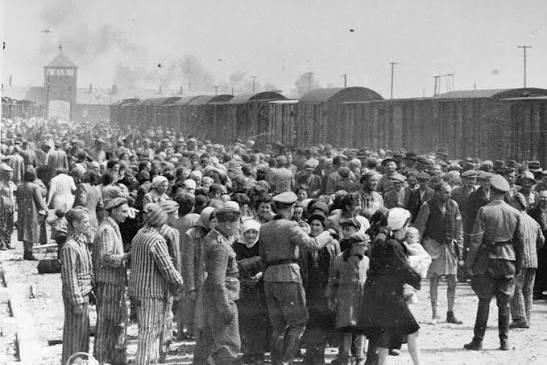
    In the winter of 1942, a train pulled into the ramp at Auschwitz-Birkenau. The doors slid open to reveal hundreds of men, women, and children, bewildered and exhausted after days without food or water. Within hours, most would be dead, their bodies consumed by the chimneys of the crematoria. This scene repeated itself thousands of times across occupied Europe, part of a machinery of murder that claimed the lives of six million Jews.

    The Holocaust, known in Hebrew as the Shoah, was not a spontaneous eruption of violence but a state-sponsored, meticulously organized campaign of annihilation. It unfolded over twelve years, from the Nazi seizure of power in 1933 to the final death marches in 1945, and it touched nearly every corner of the European continent. Understanding the Holocaust means confronting the darkest capabilities of human bureaucracy and ideology, and it demands a reckoning with how ordinary people became complicit in genocide.

    From Discrimination to Destruction: The Legal Persecution (1933–1939)

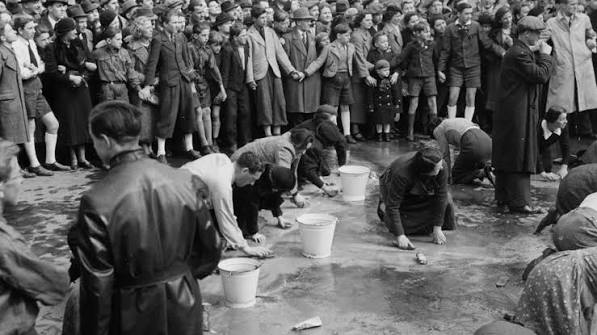
    The Nazi rise to power in January 1933 did not begin with mass murder. It began with a systematic legal assault on Jewish life. Within months, Jews were purged from the civil service, universities, and the arts. The Nuremberg Laws of 1935 stripped Jews of German citizenship and prohibited marriage or sexual relations between Jews and non-Jews. These laws, which defined Jewishness by blood rather than faith, were a crucial step in dehumanizing a whole population.

    Emigration was initially encouraged, but as Germany expanded, the doors began to close. By 1939, hundreds of thousands of Jews had fled, but many remained, trapped in a country that had declared them enemies of the state. The violence escalated on Kristallnacht, November 9–10, 1938, when synagogues were burned, homes and businesses were ransacked, and at least 91 Jews were killed. Yet even this pogrom seemed a prelude to something worse not a departure from policy but a radicalization of it.

    Ghettos and Einsatzgruppen: The War in the East (1939–1941)

    World War II provided the cover for genocide. Following the invasion of Poland in September 1939, the Nazis forced Jews into overcrowded ghettos. In Warsaw alone, over 400,000 Jews were crammed into an area of just over one square mile, with an average of seven people per room. Disease and starvation killed thousands each month, but this was only a holding pattern.

    The turning point came with Operation Barbarossa, the invasion of the Soviet Union in June 1941. Behind the advancing German army came the Einsatzgruppen mobile killing squads whose task was to eliminate Jews, Roma, and Soviet officials. They conducted mass shootings in open fields, ravines, and forests. At Babi Yar, near Kyiv, 33,771 Jews were murdered in two days in September 1941. Across the Baltic states and Ukraine, an estimated 1.5 million Jews were killed by these units and their local collaborators. The shooting was inefficient, psychologically taxing for the killers, and increasingly public. The Nazis sought a more industrialized method.

    The Final Solution: Industrialized Murder (1941–1945)

    On January 20, 1942, senior Nazi officials gathered at a villa in Wannsee, a Berlin suburb, to coordinate the deportation of Jews from across Europe to the East. The Wannsee Conference did not decide on the Holocaust that decision had evolved through a series of incremental steps but it formalized the logistics. The “Final Solution to the Jewish Question” was a euphemism for genocide.

    The Nazis constructed dedicated extermination camps in occupied Poland: Chelmno, Belzec, Sobibor, Treblinka, and Auschwitz-Birkenau. At Treblinka, between 800,000 and 900,000 people were killed in under a year, mostly by carbon monoxide gas in stationary chambers. At Auschwitz-Birkenau, the largest of the camps, over 1.1 million people perished, about 90% of them Jews, many killed with the pesticide Zyklon B.

    The process was chillingly efficient. Victims were selected on arrival those deemed unfit for labor, usually the elderly, the sick, and children, were sent directly to the gas chambers. Their belongings were sorted and shipped to Germany. Gold teeth were extracted from corpses. The camps were designed to maximize death while minimizing cost and psychological strain on the perpetrators.

    Perpetrators and Collaborators: A Continent-Wide Effort

    The Holocaust was not solely a German project. Across occupied Europe, local regimes and police forces participated in roundups and deportations. Vichy France, the Netherlands, Hungary, and Romania all collaborated to varying degrees. Romania’s wartime regime, acting independently of direct German orders, murdered an estimated 280,000 to 380,000 Jews in territories it controlled. In many cases, local antisemitism was stoked and exploited by the Nazis to ensure cooperation.

    The perpetrators were not just fanatical Nazis. They included ordinary soldiers, policemen, and bureaucrats who followed orders or seized opportunities for career advancement. The Holocaust was a bureaucratic crime, facilitated by railway timetables, punch-card machines, and the administrative routines of modern states. This is one of its most troubling legacies: genocide was not the act of deranged monsters, but of a society’s institutions and individuals who chose to participate.

    Resistance and Rescue: Light in the Darkness

    Even in the face of annihilation, there was resistance. The Warsaw Ghetto Uprising of April–May 1943 saw a few hundred lightly armed Jewish fighters hold out for nearly a month against the German army. At Sobibor and Treblinka, prisoners staged revolts that briefly shut down the death camps. These acts did not stop the Holocaust, but they affirmed the humanity of the victims.

    Rescuers also emerged, often at great personal risk. The Righteous Among the Nations, a designation given by Yad Vashem, honors over 28,000 individuals who saved Jews. Among them are Oskar Schindler, who protected over a thousand Jewish workers in his factory, and Raoul Wallenberg, the Swedish diplomat who issued protective passports to tens of thousands of Hungarian Jews. The villagers of Le Chambon-sur-Lignon in France sheltered thousands of Jewish refugees, an act of collective courage that shows how ordinary people could defy the machinery of death.

    The End and Its Legacy

    The Holocaust ended only with the military defeat of Nazi Germany in 1945. In the final months, as Soviet forces advanced, the Nazis forced concentration camp prisoners on death marches in freezing conditions, killing tens of thousands. When the camps were liberated, soldiers found emaciated survivors, piles of corpses, and evidence of an unimaginable crime.

    The number — six million — is a statistical abstraction. Among them were 1.5 million children, the vast majority of Jewish children in occupied Europe. The Holocaust destroyed vibrant communities that had existed for centuries, leaving a void that still resonates.

    Historians continue to debate whether the Holocaust was a pre-planned master plan or an incremental process that radicalized over time. Most now accept that ideology set the goal — the destruction of the Jewish people — but the methods evolved through bureaucratic competition, wartime pressures, and local initiatives. What is indisputable is the centrality of the Holocaust to Nazi aims. It was not a side effect of war; it was a war aim, pursued even when it diverted resources from the military effort.

    The Holocaust forces us to ask uncomfortable questions about the nature of evil, the role of bureaucracy, and the fragility of civilization. It is a warning of what happens when prejudice is enshrined in law, when state power is used to dehumanize a group, and when ordinary people look away. Remembering six million dead is an act of defiance against those who sought to erase them.

    The Holocaust was not a remote event confined to the past; it is a rupture in human history that continues to shape our understanding of morality, law, and the limits of human cruelty. To study it is to engage with the darkest recesses of the human soul and the societal structures that enable mass murder. Yet the stories of resistance, rescue, and survival remind us that even in the abyss, there were sparks of humanity. The legacy of the six million is not just a number — it is a call to vigilance against hatred, a demand for remembrance, and a pledge that “never again” must be more than a slogan.

    Summary

    • The Holocaust was the state-sponsored, systematic persecution and annihilation of European Jewry by Nazi Germany and its collaborators between 1933 and 1945.
    • Approximately six million Jews, including 1.5 million children, were murdered, roughly two-thirds of the pre-war European Jewish population.
    • The genocide evolved from legal persecution (Nuremberg Laws) to ghettoization and mass shootings (Einsatzgruppen) to industrialized murder in extermination camps like Auschwitz-Birkenau and Treblinka.
    • The Wannsee Conference in January 1942 coordinated the deportations, marking the formal implementation of the “Final Solution.”
    • Resistance and rescue occurred, as seen in the Warsaw Ghetto Uprising and the actions of the Righteous Among the Nations, but they could not prevent the scale of the catastrophe.

    FAQ

    Q: What is the difference between the Holocaust and the Shoah?
    A: The Holocaust is the term commonly used in English, derived from the Greek for “burnt whole,” while Shoah, a Hebrew word meaning “catastrophe,” is preferred by many scholars and survivors because it avoids religious connotations of sacrifice.

    Q: How many Jews were killed in the Holocaust?
    A: Approximately six million Jews were murdered, a figure widely accepted by historians based on Nazi records, postwar investigations, and demographic studies. This included about 1.5 million children.

    Q: Were there other victims besides Jews?
    A: Yes, the Nazis also murdered millions of others, including Roma, Soviet prisoners of war, disabled people, Polish elites, and political opponents. However, the Holocaust specifically refers to the genocide of the Jews, which was unique in its totality and industrial scale.

    Q: What were the main methods of murder used?
    A: The Nazis used poison gas (Zyklon B and carbon monoxide), mass shootings, starvation, disease, and death marches. Extermination camps like Auschwitz-Birkenau employed gas chambers, while Einsatzgruppen carried out open-air executions.

    Q: Did anyone resist the Nazis?
    A: Yes, there was armed resistance, such as the Warsaw Ghetto Uprising and revolts at Sobibor and Treblinka. Many individuals also rescued Jews, with over 28,000 recognized as Righteous Among the Nations by Yad Vashem.

  • The Silence of the Crowd: How the Bystander Effect Shaped the Holocaust

    The Silence of the Crowd: How the Bystander Effect Shaped the Holocaust

    In the summer of 1941, as Einsatzgruppen squads moved through Eastern Europe conducting mass shootings, they often did so in broad daylight, in open pits, sometimes with hundreds of local residents watching. These onlookers were not SS members, not collaborators, not active participants in the killing. They were ordinary people farmers, shopkeepers, mothers who stood by and did nothing. Their inaction, multiplied across millions of moments across occupied Europe, became a defining feature of the Holocaust: not the brutality of the perpetrators alone, but the silence of the many who allowed it to happen.

    Why did so many do nothing? The answer lies not in simple cowardice or indifference, but in a complex web of social-psychological mechanisms that have been studied for decades. The same forces that keep a crowd passive during a street emergency diffusion of responsibility, pluralistic ignorance, fear of standing out operated on a catastrophic scale during the Holocaust. Understanding these mechanisms does not excuse the silence, but it helps explain how a genocide of six million Jews could unfold with the passive compliance of the vast majority of the population.

    This article examines the bystander effect as it applied to the Holocaust, from the psychological experiments that defined it to the historical realities that gave it such devastating power. It challenges the simple narrative of ‘good’ versus ‘evil,’ and instead looks at the situational pressures that turned ordinary people into silent witnesses—and the rare few who broke that silence.

    The Birth of a Concept: Kitty Genovese and the 38 Witnesses

    The term ‘bystander effect’ entered the psychological lexicon in 1968, following the murder of Kitty Genovese in New York City. According to initial reports, 38 people witnessed the attack from their apartment windows over a 30-minute period, yet no one called the police. Social psychologists John Darley and Bibb Latané were disturbed by this apparent apathy and conducted experiments that revealed a counterintuitive truth: the more witnesses present, the less likely any one of them is to help.

    Darley and Latané identified two key mechanisms. The first is diffusion of responsibility—when a crowd is present, individuals feel less personal accountability, assuming that ‘someone else’ will act. The second is pluralistic ignorance—in ambiguous situations, people look to others to interpret what is happening. If no one else is reacting, they conclude the event is not an emergency.

    These findings, originally observed in controlled laboratory settings, would later be applied to far larger and darker historical events. The Genovese case itself has been revisited and the story partially disputed, but the psychological principles it inspired remain foundational to understanding group behavior in crises.

    From Street Corner to Genocide: How the Bystander Effect Operates on a Mass Scale

    The Holocaust was not a single emergency but a gradual, state-sponsored campaign of persecution that unfolded over years. It began with legal discrimination—the Nuremberg Laws of 1935 stripped Jews of citizenship—and escalated through social ostracism, ghettoization, and finally mass murder. This incremental nature made it particularly conducive to bystander passivity.

    When persecution arrives step by step, each stage normalizes the previous one. People adapt to the status quo, and what might have once seemed outrageous becomes acceptable. By the time the killing began, the groundwork of social compliance had already been laid. It was not a sudden crisis but a creeping horror, and the bystander effect thrives in such ambiguity.

    Consider the Evian Conference of 1938. Thirty-two nations gathered in France to discuss the growing crisis of Jewish refugees fleeing Nazi Germany. Most countries, including the United States and Britain, refused to significantly increase their immigration quotas. They were, in effect, international bystanders. Their inaction was not a single dramatic failure but a collective decision to look away, each nation assuming that others would take in the refugees or that the problem would somehow resolve itself.

    The Five Steps to Intervention (and Where They Failed)

    Darley and Latané proposed that intervention requires five steps: notice the event, interpret it as an emergency, assume responsibility, decide how to help, and act. Failure at any step results in inaction.

    During the Holocaust, each step presented its own barriers. Noticing the persecution was impossible to avoid—Jews were forced to wear yellow stars, ghettos were visible, and mass shootings occurred in open areas. But interpreting it as an emergency was harder. Nazi propaganda dehumanized Jews, labeling them Untermenschen (subhumans), which made it easier for people to rationalize that the victims were not fully human and thus not deserving of help.

    Assuming responsibility was perhaps the most difficult step. The Nazi state was totalitarian, with pervasive surveillance by the Gestapo, SS, and a network of informants. Hiding a Jew was punishable by death—not merely for the rescuer but often for their entire family. This fear of reprisal created a powerful disincentive to act. The risk was not abstract; it was immediate and lethal.

    Deciding how to help was also complex. Even those who felt compassion for the victims often had no idea what to do. Could they hide a family in their home? Forge documents? Bribe officials? The logistics of rescue were daunting, especially for ordinary people with limited resources.

    Finally, acting required overcoming the psychological numbing that prolonged exposure to atrocity produces. As historian Raul Hilberg noted, many Europeans became desensitized to the violence around them, a coping mechanism that made daily life bearable but also eroded the moral urgency to intervene.

    The Historical Reality: Who Were the Bystanders?

    The vast majority of Europeans under Nazi occupation were neither active perpetrators nor active rescuers. Historians estimate that rescuers—those who hid or helped Jews at great personal risk—numbered well under 1% of the population in most occupied countries. Yad Vashem, Israel’s official Holocaust memorial, has recognized over 28,000 individuals as ‘Righteous Among the Nations,’ a significant number but a tiny fraction of the population.

    Take the Warsaw Ghetto Uprising of 1943. For nearly a month, Jewish fighters held out against the German army in one of the most heroic acts of resistance in the Holocaust. But the surrounding Polish population largely did not intervene. Some were hostile, some were indifferent, and some were paralyzed by fear. The uprising was brutally suppressed, and the ghetto was burned to the ground.

    Similarly, the Einsatzgruppen massacres in Eastern Europe occurred in open areas, often witnessed by local populations. In many cases, the killers were assisted by local collaborators, but many more simply stood by. The sheer scale of the killing—over a million Jews shot in mass graves—made individual intervention seem futile. What could one person do against a firing squad?

    These examples illustrate a critical point: the bystander effect in the Holocaust was not merely a matter of individual psychology but of overwhelming power dynamics. The Nazi state had a monopoly on violence, and any act of rescue could be met with swift and brutal reprisal. The bystander effect, in this context, was amplified by terror.

    The Psychology of Obedience and Dehumanization

    Stanley Milgram’s experiments in the early 1960s provided another key insight into bystander behavior. In his now-famous study, ordinary people were willing to administer what they believed were painful electric shocks to another person when instructed by an authority figure. Even when the ‘victim’ screamed and begged to stop, many participants continued, driven by a sense of obedience to authority.

    Milgram’s findings suggest that the bystander effect is not simply about apathy but about the power of authority to override individual conscience. During the Holocaust, the authority of the Nazi state was absolute. People were conditioned to obey orders, and the propaganda machine reinforced the idea that Jews were enemies of the state. This combination of obedience and dehumanization made it psychologically possible for ordinary people to stand by while their neighbors were dragged away.

    Dehumanization played a crucial role. By labeling Jews as subhuman, the Nazi regime reduced the moral inhibition against harming them. For bystanders, this meant that the victims were not seen as fully human, making it easier to look away. The psychological distance created by propaganda was reinforced by physical distance—Jews were segregated into ghettos and camps, making them less visible and easier to ignore.

    The Exception: The Righteous Among the Nations

    Despite the overwhelming pressures to do nothing, a small minority did act. The Righteous Among the Nations are a testament to the fact that the bystander effect is not inevitable. These individuals—some 28,000 recognized by Yad Vashem—risked their lives to hide Jews, forge documents, and provide food and shelter. They came from all walks of life: farmers, diplomats, clergy, and ordinary housewives.

    What made them different? Research suggests that rescuers often had a strong moral compass, a personal connection to a Jewish friend or neighbor, or a deep religious conviction. Some simply acted on impulse, driven by a sense of outrage that overcame their fear. They were not immune to the bystander effect; they were able to override it through individual agency.

    One example is Oskar Schindler, a German industrialist who saved over 1,000 Jews by employing them in his factory. Schindler was not a saint; he was a flawed man who initially profited from the war. Yet he underwent a transformation, using his wealth and influence to protect his workers. His story, immortalized in the film ‘Schindler’s List,’ illustrates that the decision to act can come from the most unexpected places.

    Another example is Irena Sendler, a Polish social worker who smuggled over 2,500 Jewish children out of the Warsaw Ghetto. She was arrested and tortured by the Gestapo but refused to reveal the children’s names. Sendler’s courage shows that even in the face of extreme danger, individuals can choose to act.

    These rescuers are the exception, but they prove that the bystander effect, while powerful, is not deterministic. The circumstances of the Holocaust were extremely adverse, but some people still found the strength to resist the forces of diffusion and pluralistic ignorance.

    The Moral Question: Is Inaction Ever Neutral?

    The bystander effect is a descriptive concept—it explains why people do nothing, but it does not justify their inaction. Philosophers like Hannah Arendt, who coined the term ‘the banality of evil,’ argued that the greatest moral failure of the Holocaust was not the actions of the perpetrators alone but the passivity of the many. Arendt observed that evil could be committed by ordinary people who simply went along with the system, never thinking critically about what they were doing.

    Emmanuel Levinas, a philosopher who lost his family in the Holocaust, argued that we have an infinite responsibility to the other person. Inaction, in his view, is never morally neutral. When we see suffering and do nothing, we become complicit in it.

    These philosophical perspectives challenge us to consider the bystander effect not as an excuse but as a warning. If we understand the psychological mechanisms that lead to inaction, we can work to counteract them. Education, moral courage, and a willingness to question authority are antidotes to the bystander effect.

    Conclusion: Lessons from the Silence

    The Holocaust stands as the darkest example of the bystander effect in human history. It shows how ordinary people, under the right conditions, can become silent witnesses to genocide. The mechanisms of diffusion of responsibility, pluralistic ignorance, obedience to authority, and dehumanization did not operate in isolation; they combined with terror and totalitarian control to create a society where inaction was the norm.

    But the story of the Righteous Among the Nations reminds us that the bystander effect is not an iron law. It can be overcome. The choice to act lies within each individual, even in the most dire circumstances. The lesson of the Holocaust is not that people are inherently passive but that we must be vigilant against the forces that lead to inaction. We must train ourselves to notice, to interpret, to take responsibility, and to act.

    As we reflect on this history, we face a moral imperative: to ensure that we are not bystanders in our own time. The silence of the crowd during the Holocaust was a collective failure of humanity. We honor the memory of the victims by working to ensure that we, and future generations, are never silent again.

    The bystander effect, as it manifested during the Holocaust, reveals a terrifying truth about human nature: under extreme pressure, most people will do nothing. Yet it also reveals that some will act, often at great personal cost. The difference between the two is not always clear-cut, but it is shaped by individual conscience, moral clarity, and the courage to defy authority. The silence of the many was a tragedy; the actions of the few were a beacon of hope. We must choose which example to follow.

    Summary

    • The bystander effect, coined by Darley and Latané after the Kitty Genovese murder, explains why people are less likely to help in emergencies when others are present.
    • Mechanisms include diffusion of responsibility and pluralistic ignorance, which were amplified during the Holocaust by totalitarian terror and dehumanization.
    • The vast majority of Europeans were neither perpetrators nor rescuers; rescuers numbered less than 1% of the population, with 28,000 recognized as Righteous Among the Nations.
    • Key examples of mass inaction include the Warsaw Ghetto Uprising, Einsatzgruppen massacres, and the Evian Conference.
    • Despite overwhelming pressure to do nothing, individuals like Oskar Schindler and Irena Sendler acted, proving the bystander effect can be overcome.
    • Philosophical perspectives, such as those of Arendt and Levinas, argue that inaction is never morally neutral and that we have a responsibility to act against injustice.

    FAQ

    Q: What is the bystander effect?
    A: The bystander effect is a social-psychological phenomenon where individuals are less likely to offer help in an emergency when other people are present. The more bystanders, the less likely any one person is to intervene, due to mechanisms like diffusion of responsibility and pluralistic ignorance.

    Q: How did the bystander effect apply to the Holocaust?
    A: The Holocaust was a state-sponsored genocide with overwhelming power dynamics. The gradual escalation of persecution, combined with terror and dehumanization, made it difficult for people to recognize a single moment requiring intervention. The risk of helping was death, and the Nazi regime’s surveillance created a climate of fear that amplified passivity.

    Q: Who were the Righteous Among the Nations?
    A: The Righteous Among the Nations are non-Jews who risked their lives to save Jews during the Holocaust. Yad Vashem has recognized over 28,000 individuals, though this represents a tiny fraction of the population. They are honored for their courage and moral integrity.

    Q: Why did some people choose to help while others did not?
    A: Rescuers often had a strong moral compass, personal connections to Jewish friends or neighbors, or deep religious convictions. They were able to override the bystander effect through individual agency, despite the extreme danger. Their actions show that even in the worst circumstances, some people choose to act.

    Q: What can we learn from the bystander effect in the Holocaust?
    A: The Holocaust teaches us that inaction in the face of atrocity is not morally neutral. Understanding the psychological mechanisms that lead to passivity can help us counteract them. We must train ourselves to notice, interpret, take responsibility, and act, so that we do not become bystanders in our own time.

  • Genocost: The New Word for Congo’s Forgotten Genocide

    Genocost: The New Word for Congo’s Forgotten Genocide

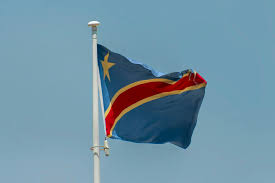
    For decades, the world has struggled to name the catastrophe in eastern Democratic Republic of Congo. Millions dead, yet no single term captured the horror—until now. ‘Genocost’—a fusion of ‘genocide’ and ‘cost’—is more than a word; it’s a movement demanding recognition, reparations, and justice. This explainer unpacks what Genocost means, why it matters, and how it’s reshaping the global conversation about Congo’s long war.

    The Birth of a Word

    In the hills and cities of eastern Congo, a new word is taking root: Genocost. Coined by Congolese activists, scholars, and diaspora communities, it fuses ‘genocide’ with ‘cost’ to name a crime that has long gone unnamed. The term is deliberately provocative, aiming to capture both the human toll and the economic greed that drives the violence.

    Every year on August 2, Congolese communities worldwide observe Genocost Remembrance Day, marking the start of the Second Congo War in 1998. This day is not just about mourning; it’s about demanding that the world finally acknowledge what happened—and what continues to happen.

    A War Over Minerals

    The eastern DRC sits atop some of the world’s richest deposits of coltan, gold, tin, and cobalt—minerals essential to our smartphones, laptops, and electric vehicles. For over two decades, armed groups, foreign armies, and multinational corporations have fought to control these resources, often through brutal violence against civilians.

    Genocost argues that this violence is not a byproduct of conflict but its very purpose. The killings, rapes, and displacements are instrumental—a means to depopulate resource-rich areas and secure control. The ‘cost’ in Genocost is twofold: the cost in human lives and the cost of the minerals that fuel the killing.

    The Scale of Suffering

    Estimates of the death toll range from 3 to 6 million—mostly from disease and starvation caused by displacement. Hundreds of thousands have been directly killed, and sexual violence has been used systematically as a weapon of war. Yet, this suffering has largely been ignored by the international community.

    One reason for this silence is the lack of a name. The Holocaust, Rwanda, Srebrenica—these names evoke immediate recognition and moral outrage. Congo’s tragedy has no such name, and Genocost aims to fill that void. As one activist put it, ‘What is unnamed is unseen; what is unseen is unpunished.’

    The Legal Debate

    Under international law, ‘genocide’ has a strict definition: the intent to destroy, in whole or in part, a national, ethnic, racial, or religious group. Some legal scholars argue that the DRC’s violence may not meet this threshold for all victims, as the primary motive appears economic rather than ethnic.

    However, supporters of Genocost counter that economic motives do not preclude genocidal intent. They point to specific ethnic groups, such as the Banyamulenge, who have faced targeted attacks. Moreover, they argue that the term is morally and politically justified, even if legally contested. The goal is not to win a courtroom argument but to break the cycle of indifference.

    A Movement for Justice

    Genocost is more than a label; it’s a call to action. The movement demands:

    • Recognition: Official acknowledgment of the genocide by national and international bodies.
    • Reparations: Financial, ecological, and psychological reparations for survivors and communities.
    • Justice: Accountability for foreign actors and corporations implicated in the violence.

    These demands are echoed in memorial events, academic conferences, and advocacy campaigns held in DRC cities like Goma and Kinshasa, as well as in diaspora hubs like Brussels, Paris, and Washington D.C.

    Challenges and Controversies

    The Genocost movement faces significant pushback. Rwanda, a key regional actor, strongly rejects the genocide framing, insisting its military interventions were security operations, not economic exploitation. Western governments and mining companies have been reluctant to acknowledge complicity, despite UN reports documenting their role in the mineral trade.

    Even within the DRC, the government has at times embraced the narrative to rally national unity, while critics accuse it of using Genocost to deflect from its own governance failures. These tensions highlight the complex politics of memory and justice.

    Why It Matters

    Genocost matters because it gives voice to the voiceless. It challenges the world to see the Congo not as a place of endless chaos, but as a site of deliberate, resource-driven violence. By naming the crime, the movement hopes to force a reckoning—not just with the past, but with the ongoing exploitation that continues to fuel conflict today.

    As the world increasingly depends on Congo’s minerals for green technologies, the question of Genocost becomes even more urgent. Will we continue to turn a blind eye, or will we finally acknowledge the true cost of our convenience?

    Genocost is a powerful new lens through which to understand Congo’s tragedy. It names the unnameable, links the violence to our own consumption, and demands a response. Whether or not it gains official legal recognition, it has already succeeded in sparking a global conversation about remembrance, justice, and accountability. The word is out, and it will not be silenced.

    Summary

    • Genocost is a portmanteau of ‘genocide’ and ‘cost,’ coined to describe the genocide in eastern DRC driven by economic exploitation of minerals.
    • August 2 is the annual day of remembrance, marking the start of the Second Congo War (1998–2003).
    • The movement seeks recognition, reparations, and justice, including accountability for foreign actors and corporations.
    • The term challenges the international community’s silence and aims to create a memorial vocabulary akin to ‘Holocaust’ or ‘Rwanda.’
    • Legal debates persist over the strict definition of genocide, but supporters argue the term is morally and politically justified.

    FAQ

    Q: What does ‘Genocost’ mean?
    A: Genocost is a portmanteau of ‘genocide’ and ‘cost,’ referring to the genocide in eastern Democratic Republic of Congo driven by economic exploitation of mineral wealth.

    Q: When is Genocost Remembrance Day?
    A: It is observed annually on August 2, marking the start of the Second Congo War in 1998.

    Q: Why is the term ‘genocide’ controversial in this context?
    A: Under international law, genocide requires intent to destroy a specific group. Some argue the DRC’s violence is primarily economic, not ethnic, though supporters counter that economic motives can coexist with genocidal intent.

    Q: What are the main demands of the Genocost movement?
    A: The movement demands official recognition, reparations (financial, ecological, psychological), and justice, including accountability for foreign actors and corporations.

    Q: How can I learn more or get involved?
    A: Look for Genocost events in your city, follow Congolese activist organizations, and educate yourself about the mineral supply chain and its impact on Congo.