Tag: food science

  • The Fifth Taste: How Umami Was Discovered and Rewired Global Cuisine

    The Fifth Taste: How Umami Was Discovered and Rewired Global Cuisine

    In 1908, a Japanese chemist named Kikunae Ikeda sat down to a bowl of kombu broth and noticed something that didn’t fit the four accepted tastes of sweet, sour, salty, and bitter. He called it umami roughly ‘deliciousness’ and spent the next year isolating the compound responsible. But it took nearly a century for the rest of the world to catch up.

    Today, umami is recognized as the fifth basic taste, with dedicated receptors on our tongues and a chemistry that explains why a sprinkle of Parmesan transforms a tomato sauce or why mushrooms and meat taste so good together. The story of umami is a tale of scientific stubbornness, cultural bias, and a flavor synergy that chefs had exploited for centuries without knowing why.

    A Taste That Was Always There

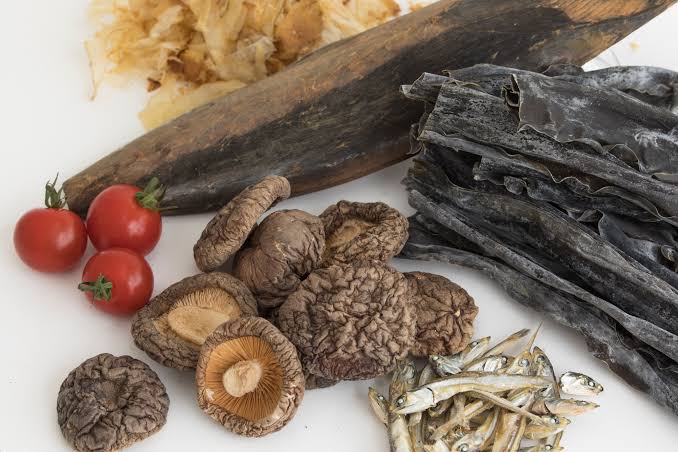
    Long before Ikeda named it, cooks across the globe were layering umami-rich ingredients without a scientific label. Japanese cuisine paired kombu and dried bonito flakes to make dashi, the foundational broth. Italian kitchens relied on tomatoes, anchovies, and aged Parmesan—think Caesar dressing or puttanesca sauce—to create deep savoriness. Fermented soybean pastes in China and Korea, dried mushrooms in Mexico, and fermented locust beans in West Africa all delivered the same underlying sensation.

    What these foods share is a high concentration of glutamate, an amino acid that exists in both protein-bound and free forms. When foods are aged, fermented, or cooked, some proteins break down, freeing glutamate and making it available to our taste buds. Tomatoes, Parmesan, soy sauce, and seaweed are all glutamate powerhouses.

    But glutamate alone doesn’t explain the intensity of many traditional combinations. There’s a second layer: certain nucleotides—inosinate in meat and fish, guanylate in mushrooms—amplify the glutamate signal several-fold. This is why a dish with both tomato (glutamate) and anchovy (inosinate) tastes more savory than either ingredient alone. The effect is so pronounced that food scientists call it the synergy of umami compounds.

    The Scientist Who Defied the Four-Taste Orthodoxy

    Kikunae Ikeda was a physical chemist at Tokyo Imperial University who wasn’t satisfied with the taste vocabulary of his time. He suspected that the flavor of kombu broth couldn’t be explained by the four basic tastes alone. In 1908, he extracted glutamate from kelp and proved that its taste was distinct from sweet, sour, salty, and bitter. He named the sensation umami, from the Japanese word umai, meaning ‘delicious’.

    His 1909 paper, ‘New Seasonings,’ laid out the evidence. By 1909, he had patented a method to produce monosodium glutamate (MSG), and the company Ajinomoto was soon manufacturing it. Ikeda’s student Shintaro Kodama added inosinate from dried bonito flakes in 1913, and in 1957, Akira Kuninaka identified guanylate in shiitake mushrooms—completing the trio of major umami compounds.

    Why the West Resisted for Decades

    Despite this solid chemical foundation, Western science largely dismissed umami. The four-taste model, rooted in Aristotle and formalized by 19th-century physiologists, was deeply entrenched. Skeptics argued that umami was just a combination of saltiness and sweetness, or a mere flavor enhancer rather than a fundamental taste.

    Cultural bias played a role. The concept emerged from Japanese cuisine, which wasn’t widely studied in Western food science until much later. But the biggest obstacle was the lack of a dedicated receptor. Without a physical receptor, skeptics could claim umami had no biological basis—it was just a learned preference, not a true taste.

    This scientific stalemate persisted into the late 20th century. The term ‘umami’ was formally accepted at the first Umami International Symposium in Hawaii in 1985, but it wasn’t until 2000 that Charles Zuker’s team at UC San Diego and a Japanese group independently identified the T1R1 + T1R3 receptor, a heterodimer that specifically responds to glutamate. Nirupa Chaudhari at the University of Miami also identified a variant of the mGluR4 receptor as an additional pathway. With the receptor in hand, umami was impossible to deny.

    The MSG Stigma and Its Legacy

    Umami’s association with monosodium glutamate became a double-edged sword. MSG was embraced in Asia as a convenient way to add savory flavor, but in the late 1960s, a letter to the New England Journal of Medicine coined the term ‘Chinese Restaurant Syndrome,’ blaming MSG for a range of symptoms. Subsequent studies have largely failed to confirm these effects in controlled trials, but the stigma persisted for decades, tainting public perception of umami itself.

    This stigma also slowed Western acceptance of umami as a legitimate taste. Even today, many people associate MSG with headaches or other discomforts, despite the FDA classifying it as generally recognized as safe. Modern research suggests that most people can consume MSG without issue, and the compound occurs naturally in many foods we eat daily.

    Umami Across Global Cuisines

    Once Western chefs and scientists embraced umami, they realized they’d been cooking with it all along. Italian cuisine is a masterclass in umami pairing: tomatoes, Parmesan, and anchovies create a synergistic burst that’s hard to replicate with any single ingredient. In Japanese cooking, dashi made from kombu and katsuobushi is the backbone of miso soup and countless other dishes—a perfect example of glutamate and inosinate working together.

    Other cultures have their own umami staples. Korea’s doenjang and gochujang are fermented soybean pastes rich in glutamate. West African iru or dawadawa—fermented locust beans—add an intense savory note to stews. Mexican moles combine dried chilies and tomatoes, both high in free glutamate. Even the humble combination of a beef burger with a slice of cheddar cheese exploits umami synergy, as beef provides inosinate and cheese provides glutamate.

    The Science of Synergy: Why It Works

    When you eat a food containing glutamate, it binds to the T1R1 + T1R3 receptors on your tongue. But when inosinate or guanylate is also present, it binds to a different site on the same receptor, causing a conformational change that makes the receptor more sensitive to glutamate. The result is a dramatic amplification of the umami signal—some studies suggest a synergistic increase of up to eight times the response to glutamate alone.

    This synergy is why a pinch of MSG in a meat dish works so well, and why tomatoes and mushrooms—both glutamate-rich—benefit from the addition of meat or fish. It also explains why many umami-rich foods are aged or fermented: the breakdown of proteins over time releases free glutamate and nucleotides that are ready to trigger the receptor.

    Umami’s Impact on Modern Cuisine

    Recognition of umami has transformed how chefs approach flavor. The term ‘umami bomb’ entered the culinary lexicon, describing dishes that pile on ingredients like soy sauce, miso, Parmesan, mushrooms, and cured meats to create intense savoriness. In fine dining, chefs use umami to enhance flavor without adding salt or fat, aligning with health trends.

    Food manufacturers have also capitalized on umami. Reduced-sodium products often add MSG or yeast extract to compensate for lost saltiness, because glutamate enhances the perception of saltiness. This makes umami a key player in efforts to reduce sodium intake without sacrificing taste.

    A Paradigm Shift in Taste Science

    Umami’s journey from a Japanese chemist’s intuition to a globally accepted fifth taste is a case study in how science advances—slowly, with resistance, and often against cultural biases. It took nearly a century for the receptor to be found, but once it was, the evidence became undeniable. The next time you savor a bowl of dashi, a slice of aged Parmesan, or a spoonful of miso soup, you’re experiencing a taste that was always there, waiting to be named.

    Umami’s story is a reminder that our senses are more complex than the models we build to describe them. What began as one chemist’s curiosity about a broth became a scientific revolution that changed how we understand flavor and how chefs around the world compose their dishes. The fifth taste wasn’t discovered so much as recognized—it had been on our plates all along.

    Summary

    • Umami is the fifth basic taste, triggered by free glutamate and enhanced by nucleotides inosinate and guanylate.
    • Kikunae Ikeda isolated MSG from kelp in 1908, naming the taste umami, but Western science rejected it for decades.
    • Cultural bias and lack of a receptor delayed acceptance until 2000, when T1R1 + T1R3 was identified.
    • Umami synergy is real: combining glutamate and inosinate or guanylate amplifies savory flavor several-fold.
    • Traditional cuisines worldwide—Italian, Japanese, Chinese, African, and more—had used umami pairings for centuries before science caught up.

    FAQ

    Q: What exactly is umami?
    A: Umami is the fifth basic taste, described as savory, meaty, or brothy. It is primarily triggered by free glutamate, an amino acid, and enhanced by nucleotides like inosinate and guanylate.

    Q: Why was umami not recognized as a taste until recently?
    A: Western science held a four-taste model for centuries, and umami lacked a clear receptor until 2000. Cultural bias and the MSG stigma also contributed to its rejection.

    Q: Is MSG the same as umami?
    A: No, MSG (monosodium glutamate) is a salt form of glutamate that provides umami flavor. Umami is the taste itself, while MSG is one way to add it to food.

    Q: How does umami synergy work?
    A: When glutamate and inosinate (or guanylate) are present together, they bind to different sites on the umami receptor, amplifying the signal several-fold. This is why combining foods like tomatoes and anchovies creates a stronger savory flavor.

    Q: Are there natural sources of umami?
    A: Yes, many foods are naturally rich in umami, including tomatoes, Parmesan cheese, mushrooms, soy sauce, seaweed, and fermented fish products like anchovies and fish sauce.
  • The Unexpected Science of Ice Cream: Why It Melts, How It Freezes, and the Physics of the Perfect Scoop

    The Unexpected Science of Ice Cream: Why It Melts, How It Freezes, and the Physics of the Perfect Scoop

    Ice cream is more than a dessert it’s a physics playground. Every scoop is a delicate balance of ice, air, fat, and sugar, all dancing at temperatures far below freezing. But have you ever wondered why ice cream melts so quickly on a hot day, or why it turns rock-hard in your freezer? The answers lie in the surprising science of colloids, freezing point depression, and the relentless march of ice crystals.

    This isn’t just about satisfying your sweet tooth. Understanding the science can help you make better ice cream at home, choose the best pint at the store, and even appreciate the engineering that goes into every scoop. So, let’s pull back the lid and explore the unexpected science of ice cream.

    What Is Ice Cream, Really?

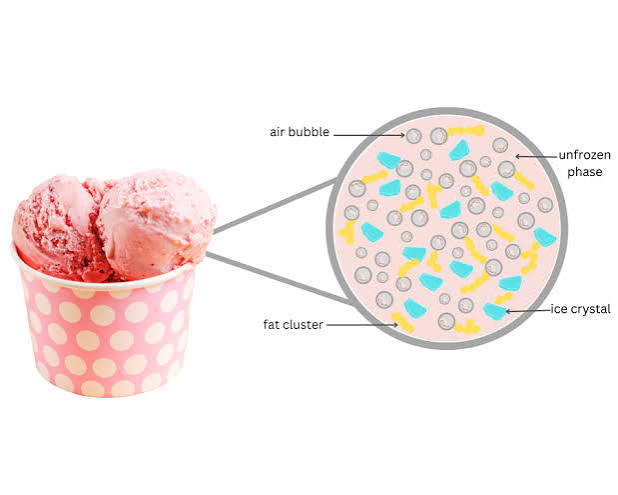
    At its core, ice cream is a complex colloidal foam. That’s a fancy way of saying it’s a mixture of four phases: ice crystals, air bubbles, fat globules, and an unfrozen sugar solution. Each plays a critical role in texture, flavor, and melting behavior.

    To be called “ice cream” in the U.S., the FDA requires at least 10% milkfat and 20% total milk solids. Premium brands often push fat content to 14–16%, which makes them creamier and slower to melt. But fat alone doesn’t tell the whole story. The amount of air whipped in—called overrun—ranges from 30% in dense, premium ice creams to 100% in economy brands. Air isn’t just a filler; it’s structurally essential. Without it, ice cream would be a hard, icy block.

    Stabilizers like guar gum and carrageenan, along with egg yolks (which contain lecithin), help bind water and prevent ice crystals from growing. These ingredients are the unsung heroes that keep your ice cream smooth.

    The Freezing Process: Churn and Freeze

    Ice cream is made by churning and freezing the mix simultaneously in a barrel freezer at about −5°C to −10°C (23°F to 14°F). Rapid freezing and agitation are crucial because they prevent large ice crystals from forming. After churning, the ice cream is hardened at −25°C to −30°C (−13°F to −22°F) for 12–24 hours.

    The ideal serving temperature is around −12°C to −10°C (10°F–14°F). At this range, the fats soften enough to release flavor, but the structure still holds. Home freezers at −18°C (0°F) are much colder, which is why ice cream straight from your freezer is often too hard to scoop. You need to let it warm up a bit.

    Why Ice Cream Melts: A Heat-Transfer Puzzle

    Melting isn’t just ice turning to water. It’s a heat-transfer problem involving fat networks, air cells, and sugar solutions. The unfrozen sugar solution has a lower freezing point than pure water—a phenomenon called freezing point depression. This is why ice cream is scoopable at temperatures where pure ice is rock-hard.

    Fat globules form a network that traps air and slows the drainage of the liquid phase. Higher fat content means slower melting and a creamier mouthfeel. Stabilizers increase the viscosity of the liquid phase, slowing melt and preventing “whey-off”—that watery puddle you sometimes see.

    The Physics of the Perfect Scoop

    If you’ve ever had icy, gritty ice cream, you know the importance of ice crystal size. Crystals above about 50 micrometers are perceived as gritty. Rapid freezing and agitation keep crystals small, which is why churning is essential.

    But even after you buy it, ice cream is under attack. Recrystallization, or Ostwald ripening, is the enemy: small crystals melt and redeposit onto larger ones during temperature fluctuations. Every time your freezer door opens, you’re promoting this process. That’s why ice cream gets icy over time.

    Air cells, typically 20–100 micrometers, act as insulation and provide “chew.” Too little air makes ice cream dense and hard; too much makes it foamy and flavorless. Fat globules, about 1–2 micrometers, partially coalesce during churning, forming a network that stabilizes air and slows melt. This is why low-fat ice cream melts faster and feels watery.

    Sugar: More Than Just Sweetness

    Sugar does more than sweeten; it depresses the freezing point, meaning more sugar results in softer ice cream at a given temperature. Different sugars depress freezing points differently: fructose more than sucrose, glucose less. That’s why “no sugar added” ice creams often use sugar alcohols like erythritol to mimic texture.

    The total solids content determines how much water remains unfrozen at serving temperature—typically 30–50% stays liquid. This unfrozen liquid is what keeps ice cream scoopable.

    A Brief History of Frozen Desserts

    Frozen desserts date back to ancient Persia and China, around 200 BCE–200 CE. Modern ice cream emerged in 17th-century Europe when salt and ice were discovered to lower freezing points below 0°C, enabling the freezing of cream mixtures.

    The hand-cranked churn was invented in 1843 by Nancy Johnson, and commercial continuous freezers followed in the 1920s. Food scientists like W.S. Arbuckle later formalized the physics of freezing and aeration, turning ice cream making into a science.

    The Food Scientist’s View: Formulation and Glass Transition

    Food scientists focus on formulation: balancing fat, sugar, stabilizers, and overrun to hit target texture and melt resistance. They track the freezing curve and draw temperature—how quickly the mix cools and how much ice forms at each stage.

    A key concept is the glass transition temperature, around −30°C to −40°C. Below this, the unfrozen phase becomes a glassy solid, halting recrystallization. This is why commercial ice cream is stored very cold.

    The Artisan Maker’s View: Custard vs. Philadelphia Style

    Artisan makers often use higher fat, lower overrun, and fresh ingredients, but they still must manage the same physics. Custard-based ice creams (with egg yolks) have a richer mouthfeel and different melt properties compared to Philadelphia-style (no eggs).

    Liquid nitrogen ice cream freezes in seconds, creating ultra-small crystals—a dramatic demonstration of rapid freezing. But nitro ice cream melts faster because the fat network hasn’t had time to form a stable structure.

    The Consumer’s View: Why Cold Suppresses Flavor

    Flavor perception is tied to temperature: cold suppresses sweetness and aroma. That’s why ice cream tastes less sweet when frozen and why you might notice more flavor as it melts. This is also why some brands add extra sugar or flavorings to compensate for the cold.

    Next time you enjoy a scoop, you’ll know it’s not just a treat—it’s a triumph of chemistry and physics.

    Ice cream is a marvel of science, balancing ice, air, fat, and sugar in a delicate dance. From the freezing point depression that keeps it scoopable to the glass transition that halts recrystallization, every spoonful is a lesson in physics. Whether you’re a home cook or a curious eater, understanding these principles can help you choose better ice cream, store it properly, and even craft your own perfect scoop. So, the next time you indulge, take a moment to appreciate the science that makes it possible.

    Summary

    • Ice cream is a colloidal foam with four phases: ice crystals, air, fat, and unfrozen sugar solution.
    • Overrun (air content) ranges from 30% to 100%, affecting texture and melt rate.
    • Ice crystal size is crucial; crystals above 50 micrometers feel gritty.
    • Recrystallization causes iciness over time due to temperature fluctuations.
    • Sugar depresses freezing point, making ice cream scoopable at freezer temperatures.
    • Fat networks and stabilizers slow melting and improve mouthfeel.

    FAQ

    Q: Why does ice cream melt so quickly on a hot day?
    A: Melting is a heat-transfer problem. The ice crystals absorb heat from the environment, and the unfrozen sugar solution has a lower freezing point, so it melts faster than pure ice. Fat and stabilizers slow this process by creating a network that holds the structure.

    Q: Why does ice cream get icy in the freezer?
    A: This is due to recrystallization, or Ostwald ripening. Small ice crystals melt during temperature fluctuations and redeposit onto larger ones, making them grow. Over time, the ice cream becomes icy and gritty.

    Q: What is overrun and why does it matter?
    A: Overrun is the amount of air whipped into ice cream, expressed as a percentage. It ranges from 30% (dense, premium) to 100% (economy). Air is essential for texture, but too much makes it foamy and flavorless.

    Q: Why is low-fat ice cream less creamy?
    A: Fat globules form a network that stabilizes air and slows melting. Low-fat ice cream lacks this network, so it melts faster and feels watery.

    Q: Why does ice cream taste less sweet when frozen?
    A: Cold suppresses sweetness and aroma perception. That’s why ice cream often needs extra sugar or flavorings to taste right when served cold.

  • The Living Chemistry of Fermented Foods: Science Behind Ancient Staples

    The Living Chemistry of Fermented Foods: Science Behind Ancient Staples

    Before refrigerators, before canning, humans relied on invisible allies to keep food from spoiling. Caravans crossed deserts with yogurt in goatskins. Sailors staved off scurvy with sauerkraut. Korean households buried earthenware pots of spiced cabbage each autumn. These practices weren’t just clever storage tricks they were masterclasses in microbial chemistry, conducted long before anyone knew microbes existed.

    Today, fermentation is experiencing a renaissance, driven by a $540 billion global market and kombucha sales that exploded from $600 million in 2015 to over $2 billion by 2023. But the real surprise is how much modern science is still unraveling: from the precise metabolic pathways that create umami to the emerging understanding of postbiotics—beneficial compounds produced by microbes that survive even when the live cultures don’t.

    What Fermentation Actually Does

    At its core, fermentation is a metabolic process where microorganisms—yeast, bacteria, or molds—convert carbohydrates into alcohols, acids, or gases, all without oxygen. This anaerobic transformation isn’t just a curiosity; it’s a preservation mechanism. When Lactobacillus bacteria feast on sugars in cabbage, they produce lactic acid, dropping the pH to levels where spoilage organisms can’t survive. The result: sauerkraut that lasts for months without refrigeration.

    Different microbes produce different results. Yeast like Saccharomyces cerevisiae turn sugars into ethanol and carbon dioxide—the basis of beer, wine, and bread. Acetobacter bacteria convert ethanol into acetic acid, giving vinegar and kombucha their tang. And Bacillus species break down proteins in soybeans to create the pungent, ammonia-rich natto popular in Japan. Each process is a carefully orchestrated chemical dance that preserves, but also transforms flavor, texture, and aroma.

    From Ancient Accidents to Intentional Craft

    Fermentation is among humanity’s oldest food technologies. Archaeologists have found evidence of fermented beverages at the Jiahu site in China dating to 9,000 BCE. In Mesopotamia, brewers and bakers held high social status because their work provided dietary staples. Across cultures, the same pattern emerged: something went wrong—or right—with stored food, and someone realized the result was delicious and long-lasting.

    Early fermentation was accidental, driven by wild microbes in the environment. Only later did humans learn to “back-slop”: reserving a portion of a successful batch to seed the next. This practice, still used by artisanal producers, essentially domesticated microbial communities over millennia.

    The Science Milestones: From Pasteur to the Microbiome

    The scientific understanding of fermentation began in earnest in 1857, when Louis Pasteur demonstrated that living microorganisms cause fermentation, overturning prevailing chemical theories. Pasteur’s work led to pasteurization, initially developed to control unwanted fermentation in wine and beer.

    In 1905, Elie Metchnikoff proposed that lactic acid bacteria in yogurt contributed to the remarkable longevity of Bulgarian peasants, giving birth to the probiotic concept. But it took another century for technology to catch up with his observations. Modern metagenomics and 16S rRNA sequencing have revealed that fermented foods contain vastly more complex microbial communities than previously imagined—each with its own metabolic contributions.

    Health Benefits: Probiotics, Postbiotics, and Bioavailability

    The health halo around fermented foods is supported by real science, though with important nuances. Probiotics—live microorganisms that confer health benefits when consumed in adequate amounts—are the most famous component. Common strains include Lactobacillus, Bifidobacterium, and Saccharomyces boulardii.

    But not all fermented foods retain live cultures. Most commercial sourdough bread, canned sauerkraut, and pasteurized beer are heat-treated after fermentation, killing the microbes. That’s where postbiotics come in: heat-killed microbes and their metabolites—short-chain fatty acids, enzymes, and peptides—also offer benefits. This matters because you can still get health advantages from fermented foods that have been processed.

    Fermentation also increases the bioavailability of certain nutrients. The process reduces phytates and other antinutrients that block mineral absorption, making iron and zinc more accessible. Some fermented foods synthesize vitamins: natto produces vitamin K2, and many fermented vegetables generate B-group vitamins.

    The gut microbiome is another frontier. Fermented foods can modulate gut microbiota composition, though research is still emerging on whether these effects are lasting or require ongoing consumption. The science is young, but the potential is substantial.

    The Global Flavor Revolution

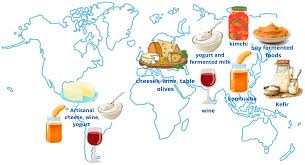
    Fermentation isn’t just about preservation—it’s a flavor engine. The sourness of kimchi, the effervescence of kombucha, the deep umami of miso, and the complex esters in aged cheese all arise from microbial metabolism. Each culture has its signature fermented foods: Japan’s miso and soy sauce, Korea’s kimchi, Germany’s sauerkraut, Ethiopia’s injera, India’s idli and dosa, and Southeast Asia’s fish sauces.

    These foods are so central to national identities that they’ve shaped culinary traditions for millennia. Kimchi, for instance, traces back to the Three Kingdoms period (37 BCE–7th century CE). Injera, the spongy Ethiopian flatbread, is made from fermented teff and is a daily staple for millions.

    Modern Market: From Niche to Mainstream

    The fermented foods market was valued at roughly $540 billion in 2023 and is projected to grow at 5–7% annually through 2030. This growth is driven by kombucha, kefir, kimchi, and plant-based fermented alternatives. The “functional foods” trend has pushed fermented products into mainstream supermarkets.

    Yet there’s a paradox: many commercial products are pasteurized after fermentation, killing live cultures to extend shelf life. This means the probiotic label on a product doesn’t guarantee live microbes. Consumers seeking live cultures must look for unpasteurized products, often refrigerated, or ferment at home.

    The Craft Revival: Home Fermentation

    A grassroots movement has embraced home fermentation, from sourdough starters nurtured during lockdowns to small-batch kimchi made in urban kitchens. This revival connects to ancient practices and empowers individuals to control their food’s microbial content. It also underscores that fermentation is accessible—it requires only time, salt, and the right environment.

    Artisanal producers are also driving quality: naturally fermented pickles, traditionally brewed soy sauce, and raw kombucha are sought after for their complex flavors and potential health benefits. This craft approach mirrors the back-slopping methods of our ancestors, but with modern quality control.

    The Future: Fermentation Meets Biotechnology

    As scientific understanding deepens, fermentation is poised to play a larger role in sustainable food production. Fermentation can create protein-rich foods from plant sources, reduce waste by preserving surplus produce, and even produce novel flavors and textures.

    Metagenomic studies are uncovering the intricate networks within fermented food microbiomes, potentially allowing us to tailor fermentations for specific health outcomes. The intersection of traditional knowledge and modern science is fertile ground for innovation.

    Fermentation is not a relic of the past but a living technology—one that connected ancient civilizations and now connects us to our food in ways that are both surprising and profound.

    Fermented foods embody a dual legacy: they are ancient preservation techniques that shaped human survival and modern cuisines, and they are also a cutting-edge field of microbial science with implications for health and sustainability. The next time you enjoy a tangy bite of kimchi or sip a fizzy kombucha, remember that you’re tasting the work of billions of microscopic organisms—a collaboration that spans millennia and continues to evolve.

    Summary

    • Fermentation is an anaerobic metabolic process where microbes convert carbohydrates into alcohols, acids, or gases, preserving food and creating unique flavors.
    • Major types include lactic acid (sauerkraut, yogurt), alcohol (beer, bread), acetic acid (vinegar, kombucha), and alkaline fermentation (natto).
    • Evidence of fermented beverages dates to 9,000 BCE in China, with independent development across ancient civilizations.
    • Health benefits include probiotics (live microbes), postbiotics (metabolites from dead microbes), and increased nutrient bioavailability.
    • The global fermented foods market was ~$540 billion in 2023, growing at 5–7% annually, yet many commercial products are pasteurized, killing live cultures.

    FAQ

    Q: What is the difference between probiotics and postbiotics?
    A: Probiotics are live microorganisms that provide health benefits when consumed in adequate amounts. Postbiotics are heat-killed microbes and their metabolites, such as short-chain fatty acids and enzymes, which also offer benefits. This means even pasteurized fermented foods may have health effects.

    Q: Are all fermented foods good for gut health?
    A: Many fermented foods can modulate gut microbiota composition, but research is still emerging. The effects may depend on the specific strains present and whether the food retains live cultures. Not all fermented foods have proven probiotic effects.

    Q: Why do some commercial products label themselves as fermented but are pasteurized?
    A: Pasteurization extends shelf life and ensures safety by killing microbes, including pathogens. However, it also kills beneficial live cultures. Consumers seeking live probiotics should look for unpasteurized, often refrigerated, products.

    Q: Can I get vitamin K2 from fermented foods?
    A: Yes, natto, a fermented soybean product, is a rich source of vitamin K2. Other fermented foods may produce K2 in smaller amounts, but natto is the most notable.

    Q: What are the main types of fermentation used in food?
    A: The main types are lactic acid fermentation (e.g., sauerkraut, kimchi, yogurt), alcohol fermentation (e.g., beer, wine, bread), acetic acid fermentation (e.g., vinegar, kombucha), and alkaline fermentation (e.g., natto).

  • The Fermentation Revolution: How Wild Yeast and Bacteria Are Redefining Modern Cuisine


    In a sleek Copenhagen kitchen, chef René Redzepi once served a dish featuring a sauce made from fermented grasshoppers. It wasn’t a stunt it was the culmination of a decade-long obsession with the microbes that have quietly shaped human food for millennia. Today, that obsession has exploded into a global movement, from sourdough starters bubbling on home counters to multi-million-dollar precision fermentation startups.

    Fermentation, the metabolic process by which microorganisms transform sugars into acids, alcohols, and gases, is hardly new. Humans have used it for at least 8,000 years to preserve food and create staples like beer, cheese, and kimchi. But after a century of industrial pasteurization and standardized flavors, we’re witnessing a dramatic reversal. Chefs, home cooks, and food scientists are embracing wild yeast and bacteria not just for preservation, but for flavor, nutrition, and sustainability. This is the fermentation revolution—and it’s redefining what we eat and why.

    The Science of Wild Fermentation

    At its core, fermentation is a microbial food chain. Lactic acid bacteria like Lactobacillus consume sugars and produce acids that lower pH, creating an environment hostile to spoilage organisms. Yeasts like Saccharomyces cerevisiae churn out alcohol and carbon dioxide, giving us beer and bread. Meanwhile, molds such as Aspergillus oryzae break down starches to produce miso and soy sauce. These processes not only preserve food but also enhance its nutritional profile—fermentation can increase the bioavailability of certain nutrients and generate B vitamins.

    Wild fermentation takes this a step further by relying on the microbes naturally present on ingredients and in the environment, rather than on commercial strains. This introduces a level of unpredictability and local character that industrial processes stripped away. A sourdough starter in San Francisco captures different airborne yeast than one in Tokyo, imparting a unique “terroir” to each loaf—a concept long celebrated in wine but now applied to bread, vegetables, and even meats.

    A Market on the Rise

    The numbers tell a compelling story. The global fermented foods and ingredients market was valued at approximately $575 billion in 2023, with projections of steady growth through 2030. Consumer interest has surged, particularly since the COVID-19 pandemic, when home baking and gut-health concerns sent searches for “sourdough” and “kombucha” skyrocketing. In the U.S., kombucha sales jumped from $400 million in 2015 to over $1.8 billion in 2023, cementing its place as a mainstream grocery staple.

    Restaurants have also joined the movement. Michelin-starred establishments like Noma in Copenhagen, Alinea in Chicago, and Blue Hill at Stone Barns in New York have established dedicated “fermentation labs,” turning live cultures into centerpiece dishes and sauces. This isn’t just a trend; it’s a testament to the culinary depth that fermentation offers—from umami-rich garums to tangy, effervescent drinks.

    The People Behind the Revolution

    A handful of figures have championed this revival. René Redzepi, co-author of The Noma Guide to Fermentation (2018), has been instrumental in legitimizing fermentation as a high-art culinary technique. David Zilber, who led Noma’s fermentation lab, now works at the startup Chr. Hansen (acquired by Novonesis in 2024) to explore sustainable fermentation solutions. Meanwhile, Sandor Katz has been the grassroots evangelist, authoring Wild Fermentation (2003) and The Art of Fermentation (2012), which have inspired countless home fermenters.

    These pioneers have shifted the conversation from “microbes as enemies” to “microbes as partners.” For over a century, industrialization promoted a purity paradigm—pasteurization, refrigeration, and commercial strains—to eliminate the risk of spoilage and disease. But that came at a cost: the loss of microbial diversity and, with it, complex flavors and potential health benefits.

    A Culinary Renaissance and a Sustainability Tool

    Today, chefs are exploiting fermentation to express a sense of place. Sourdough starters, vegetable ferments, and even fermented meats capture local microbial ecology, offering diners a taste of the environment itself. This craft approach has trickled down to home kitchens, where a post-pandemic wave of hobbyists now nurture their own starters and crocks.

    Fermentation also aligns with sustainability goals. It offers a way to upcycle food waste—spent grains from brewing, whey from cheesemaking, overripe produce—into new, flavorful products. Restaurants like Blue Hill have embraced this zero-waste ethos, fermenting scraps into sauces and condiments that might otherwise be discarded.

    Furthermore, fermentation is driving plant-based innovation. Mycoprotein from Fusarium venenatum (as in Quorn) and animal-free proteins produced via precision fermentation (like those from Perfect Day) are expanding the possibilities for meat and dairy alternatives. This isn’t just about mimicking animal products; it’s about creating new foods that are sustainable and nutritious.

    The Gut Health Connection

    The rise of fermentation is inextricably linked to growing awareness of the gut microbiome. Research has highlighted the role of beneficial bacteria in digestion, immunity, and even mental health. Fermented foods are often marketed as probiotic-rich, though it’s important to note that not all contain live cultures at the point of consumption—pasteurized sauerkraut or canned beer, for example, have been heat-treated or filtered. Still, the association has fueled demand for “live” and “active” products, from kefir to kimchi.

    This health halo has its nuances. Dr. Robert Hutkins and the International Scientific Association for Probiotics and Prebiotics (ISAPP) have worked to establish clear definitions, distinguishing between foods that contain live microbes and those that simply undergo fermentation. As the market grows, such clarity will help consumers make informed choices.

    The DIY Movement and Community

    The pandemic lockdowns sparked a home fermentation boom. Searches for sourdough baking increased by 450% in early 2020, and social media filled with images of bubbling jars and crusty loaves. This wasn’t just a passing fad; it created a new generation of fermenters who trade starters, share tips, and experiment with everything from kombucha to fermented hot sauce.

    Organizations like “Fermentation on Wheels,” a traveling workshop, and countless small-batch producers have capitalized on this interest, turning a niche hobby into a community-driven movement. The result is a vibrant ecosystem of home cooks and entrepreneurs who are reconnecting with traditional foodways while pushing the boundaries of flavor.

    Challenges and the Road Ahead

    Despite its promise, the fermentation revolution faces challenges. Scaling up wild fermentation from kitchen to commercial production is difficult—maintaining consistency while preserving microbial diversity requires careful management. Regulatory frameworks, often designed for pasteurized or sterile products, can also hinder small producers who want to sell live-culture foods.

    Yet the momentum is undeniable. As chefs continue to innovate and scientists deepen our understanding of microbial ecology, fermentation is poised to remain a cornerstone of modern cuisine. It offers a way to create delicious, nutritious, and sustainable food—while reminding us that some of the best flavors come from the tiniest of collaborators.

    The fermentation revolution is more than a culinary trend; it’s a fundamental shift in how we relate to food and the microbes that shape it. By embracing wild yeast and bacteria, we’re not only rediscovering ancient techniques but also forging a more sustainable, flavorful, and health-conscious future. Whether you’re a home baker nurturing a sourdough starter or a chef fermenting grasshoppers, you’re part of a movement that’s redefining the boundaries of taste.

    Summary

    • Fermentation is a metabolic process used for millennia to preserve food and create complex flavors, from yogurt to beer.
    • The global fermented foods market was worth ~$575 billion in 2023, with rising consumer interest in gut health and artisanal crafts.
    • Chefs like René Redzepi and authors like Sandor Katz have popularized wild fermentation, emphasizing local microbial “terroir.”
    • Fermentation supports sustainability by upcycling food waste and enabling plant-based protein alternatives.
    • Not all fermented foods contain live probiotics at consumption; understanding this distinction is key for consumers.

    FAQ

    Q: What is wild fermentation?
    A: Wild fermentation uses naturally occurring microbes from the environment and ingredients, rather than commercial strains, to ferment food. This can result in unique flavors specific to a locale.

    Q: Are all fermented foods probiotic?
    A: No. While fermentation often produces beneficial bacteria, processes like pasteurization or filtration can kill them. Check labels for “live cultures” to ensure probiotic content.

    Q: What are some easy fermentation projects for beginners?
    A: Sauerkraut, kimchi, and sourdough bread are classic starting points. They require minimal equipment and rely on salt and time to encourage beneficial bacteria.

    Q: How does fermentation contribute to sustainability?
    A: Fermentation can transform food waste into edible products, extend shelf life without refrigeration, and create alternatives to resource-intensive animal proteins.

    Q: Why did fermentation become popular during the pandemic?
    A: Lockdowns gave people time to experiment at home, and interest in gut health and self-sufficiency increased. Sourdough baking, in particular, saw a surge as people sought comforting, hands-on activities.

  • The Sourdough Microbiome: How Wild Yeast and Bacteria Shape Your Bread’s Flavor


    When you bite into a slice of sourdough, you’re tasting the work of a hidden ecosystem. Unlike commercial bread, which relies on a single strain of yeast, sourdough is leavened by a dynamic community of wild yeast and lactic acid bacteria. These microbes don’t just make the bread rise—they produce a complex array of acids and aromatic compounds that give sourdough its signature tang, chew, and crust.

    At the heart of this process is a simple mixture of flour and water. Leave it out, feed it regularly, and within days you’ll have a bubbling starter teeming with life. But what exactly is living in there, and how does it shape the bread you bake? The answers reveal a delicate balance of chemistry and ecology that bakers have been manipulating for thousands of years.

    Meet the Microbes: A 100-to-1 Ratio

    A healthy sourdough starter is a crowded place. For every yeast cell, there are roughly 100 bacteria. The yeast—species like Saccharomyces cerevisiae, Candida milleri, and Pichia—are the primary gas producers, generating carbon dioxide that makes the dough rise. The bacteria, mainly Lactobacillus sanfranciscensis, L. plantarum, and L. brevis, are the flavor workhorses. They produce lactic acid (a smooth, yogurt-like tang) and acetic acid (a sharper, vinegar-like bite). The ratio of these two acids—typically 2:1 to 4:1 lactic to acetic—defines the overall sourness.

    But these microbes don’t work alone. In a well-established starter, they form a stable community. L. sanfranciscensis and the yeast Candida milleri are a classic example: the yeast provides fructose, which the bacteria use as an energy source, while the bacteria produce amino acids that the yeast needs. This symbiosis is so effective that it’s found in starters worldwide, not just in San Francisco, despite the name.

    The Flavor Chemistry: More Than Just Sour

    Sourdough’s flavor isn’t just about acidity. Over 50 volatile organic compounds (VOCs) have been identified in sourdough bread, including alcohols, esters, and aldehydes. These compounds contribute subtle notes of butter, fruit, nuts, and even flowers. The exact mix depends on the microbial community and fermentation conditions.

    Temperature is the single most influential variable. Ferment at 25–30°C (77–86°F), and the bacteria produce more lactic acid, yielding a mild, round sourness. Drop the temperature to 15–20°C (59–68°F), and acetic acid production increases, giving a more pronounced tang. Hydration also plays a role: stiffer doughs (lower hydration) favor acetic acid, while wetter doughs lean toward lactic acid.

    The Great Starter Debate: Geography vs. Practice

    For years, bakers believed that local microbes—the air, the water, the flour—gave regional sourdoughs their unique character. The ‘San Francisco sourdough’ was thought to be a product of the city’s fog and flora. But recent research, including a 2020 citizen-science project led by the Rob Dunn lab at NC State, analyzed over 500 starters from around the world and found a different story: starter maintenance conditions matter more than geography.

    The microbes that colonize a starter come primarily from the flour itself, not the air. Whole-grain flours, especially rye, carry a richer and more diverse microbial community than refined white flour. So your choice of flour, feeding schedule, and temperature are the real determinants of your starter’s personality. That means you can cultivate a specific flavor profile—not by moving to San Francisco, but by adjusting your methods.

    Health Claims: What the Science Says

    Sourdough fermentation offers some genuine nutritional benefits. It reduces phytic acid, an antinutrient that blocks mineral absorption, by 50–90%. This means your body can better absorb iron, zinc, and magnesium from sourdough bread. The fermentation also partially breaks down gluten proteins, making the bread easier to digest for some people—but it does not make it safe for those with celiac disease.

    Several studies show sourdough bread has a lower glycemic index than conventional bread. The organic acids produced during fermentation slow starch digestion, leading to a more gradual rise in blood sugar. However, the live bacteria do not survive baking temperatures, so sourdough bread is not a probiotic food. Some research suggests the process creates prebiotic-like compounds that could benefit gut health, but more studies are needed.

    A Living Tradition, Revived

    Sourdough is the oldest form of leavened bread, with evidence of fermented bread dating back to ancient Egypt around 1500 BCE. It sustained miners during the California Gold Rush and prospectors in Alaska, who earned the nickname ‘sourdoughs.’ The late 19th century brought commercial yeast, making bread faster and more uniform, and sourdough fell out of favor for home bakers. The COVID-19 pandemic sparked a revival, as people sought a slow, tactile project during lockdowns.

    Today, sourdough is more than a baking trend. It’s a window into microbial ecology—a simple, reproducible community that demonstrates cooperation, competition, and adaptation. Whether you’re a home baker nurturing your first starter or a scientist studying microbial assembly, the sourdough microbiome offers endless opportunities to explore.

    The sourdough microbiome is a living example of how tiny organisms can shape the food we eat. From the 100:1 bacteria-to-yeast ratio to the complex chemistry of acids and VOCs, every aspect of sourdough’s flavor is a product of microbial activity. By understanding and manipulating these microbes—through temperature, hydration, and flour choice—you can create a bread that is uniquely yours. So next time you bite into a tangy slice, remember: you’re not just eating bread, you’re tasting a community.

    Summary

    • A sourdough starter contains a 100:1 ratio of bacteria to yeast, with bacteria producing lactic and acetic acids that define sourness.
    • Flavor is shaped by fermentation temperature (warmer favors lactic acid, cooler favors acetic acid) and dough hydration.
    • A 2020 global study found that starter maintenance conditions (flour type, feeding schedule, temperature) matter more than geography in determining microbial communities.
    • Sourdough fermentation reduces phytic acid by 50–90%, improving mineral absorption, and results in a lower glycemic index, but it is not gluten-free.
    • Live bacteria do not survive baking, so sourdough is not probiotic, though it may produce prebiotic-like compounds.

    FAQ

    Q: Why is my sourdough not sour enough?
    A: If your bread is too mild, try fermenting at a cooler temperature (around 18°C/65°F) to boost acetic acid production, or use a stiffer dough. Increasing the amount of whole-grain flour can also add more flavor.

    Q: Can I make a sourdough starter from any flour?
    A: Yes, but whole-grain flours, especially rye, contain more diverse microbes and nutrients, making them ideal for starting a new culture. Refined white flour works too but may take longer to establish a stable community.

    Q: Does sourdough bread contain gluten?
    A: Yes, sourdough is not gluten-free. Fermentation partially breaks down gluten proteins, which may make it easier to digest for some, but it is not safe for people with celiac disease.

    Q: How long does it take to make a sourdough starter?
    A: With daily feedings, a starter typically becomes stable and ready for baking within 5–10 days. You’ll know it’s ready when it doubles in volume within a few hours of feeding and has a pleasant, tangy aroma.

    Q: What is the ‘San Francisco sourdough’?
    A: San Francisco sourdough is known for its tangy flavor, traditionally achieved through long, cool fermentations. The bacteria Lactobacillus sanfranciscensis thrives in this environment, but it is not unique to the city—it can be cultivated anywhere with the right conditions.

  • Umami: How a Japanese Chemist Discovered the Fifth Taste and Changed Global Cuisine

    Umami: How a Japanese Chemist Discovered the Fifth Taste and Changed Global Cuisine

    Imagine biting into a ripe tomato or savoring a spoonful of Parmesan cheese. There’s a deep, savory richness that lingers something beyond sweet, sour, salty, or bitter. For centuries, Western science recognized only those four tastes. But in 1908, a Japanese chemist named Kikunae Ikeda identified a fifth taste, which he called umami. This discovery not only reshaped culinary science but also sparked a global flavor revolution.

    Ikeda’s breakthrough came from a simple observation: why did kombu broth taste so uniquely satisfying? He isolated glutamate, an amino acid, as the key compound, and soon after, monosodium glutamate (MSG) was born. Yet, it took nearly a century for umami to gain acceptance in the West, with the discovery of specific taste receptors in 2000 finally cementing its status. Today, umami is a cornerstone of modern cooking, from fine dining to fast food, and understanding its science can transform how you cook and eat.

    The Discovery: A Chemist’s Curiosity

    Kikunae Ikeda was a professor at Tokyo Imperial University with a deep appreciation for Japanese cuisine. He was particularly intrigued by dashi, a broth made from kombu (kelp) and bonito flakes, which is fundamental to many Japanese dishes. Ikeda noticed that dashi had a taste that couldn’t be classified as sweet, sour, salty, or bitter it was savory and mouth-filling, almost meaty. He set out to identify the source of this sensation.

    In 1908, Ikeda successfully isolated glutamate from kombu and demonstrated that it produced this unique taste. He named it umami, from the Japanese word umai, meaning “delicious.” His discovery was published in a Japanese journal, but it remained largely unknown outside Japan for decades.

    Ikeda’s work wasn’t just academic. He partnered with businessman Saburosuke Suzuki to commercialize monosodium glutamate (MSG) as a seasoning, launching the brand Aji-no-moto (“essence of taste”) in 1909. This product made umami accessible to home cooks, and it quickly became a staple in Asian kitchens.

    The Science of Umami: Glutamate and Synergy

    Umami is triggered primarily by glutamate, an amino acid that occurs naturally in many foods. But glutamate doesn’t work alone. Two other compounds—inosinate, found in fish and meat, and guanylate, found in mushrooms—also elicit umami. What’s fascinating is their synergy: when glutamate and inosinate are combined, the umami intensity can be up to eight times greater than either alone.

    This synergy explains classic culinary pairings. For example, a tomato sauce (rich in glutamate) becomes profoundly more savory when you add anchovies (rich in inosinate) or a splash of fish sauce. Similarly, the Japanese combination of kombu and bonito flakes in dashi harnesses the same effect. This is why a pinch of MSG can boost a dish’s flavor without adding a distinct taste.

    For decades, scientists debated whether umami was truly a basic taste or just a combination of the other four. The turning point came in 2000, when researchers at the University of Miami identified specific taste receptors—T1R1 and T1R3—on the tongue that respond to glutamate. These are G-protein-coupled receptors that bind to glutamate and send signals to the brain, confirming umami as a distinct taste. Since then, research has also found umami receptors in the gut, where they play a role in digestion and satiety.

    Umami in Traditional Foods Around the World

    While Ikeda’s discovery was rooted in Japanese cuisine, umami-rich ingredients have been used for centuries across cultures. The Romans fermented fish into garum, a sauce that added savory depth to their dishes. In China, soy sauce and fermented bean pastes have been staples for millennia. Italian cuisine relies on aged cheeses like Parmesan, which are packed with glutamate, as well as cured meats and sun-ripened tomatoes. Mexican mole sauces combine chocolate and chilies, both of which contain compounds that amplify umami.

    These ingredients share a common thread: they’re often fermented, aged, or otherwise processed in ways that break down proteins into free amino acids, making glutamate more available. This is why a ripe tomato tastes more savory than a green one—the ripening process increases its free glutamate content.

    Human breast milk is also rich in glutamate, suggesting that our preference for umami is hardwired from birth. This may be an evolutionary adaptation, guiding us toward protein-rich foods essential for growth and survival.

    Why Umami Took So Long to Catch On in the West

    The four-taste model, rooted in Aristotle’s writings and later refined by European chemists, held sway in Western science for centuries. It wasn’t until Ikeda’s discovery that a fifth taste was proposed, but it faced skepticism. Some dismissed umami as merely a flavor enhancer rather than a basic taste, while others attributed its savory quality to salt or other known tastes.

    Cultural bias played a role too. French culinary tradition, which dominated Western gastronomy, emphasized the four tastes and didn’t have a prominent concept for “savory” until much later. As a result, umami remained a niche interest in the West for decades.

    The tide began to turn in the late 20th century. In the 1980s, sensory scientists started publishing studies on umami, and the 2000 receptor discovery put it on solid scientific footing. Since then, umami has become a buzzword in the culinary world, from fine dining menus to fast-food marketing.

    Umami in Modern Cooking: Chefs and Umami Bombs

    Today, chefs like Heston Blumenthal and David Chang use umami as a tool for flavor layering. Blumenthal is known for his scientific approach to cooking, pairing ingredients based on their umami content to create “umami bombs”—dishes that pack an intense savory punch. Chang’s Momofuku restaurants have popularized techniques like using fish sauce and miso to add depth to Western dishes.

    The food industry has also embraced umami. Products labeled “umami seasoning” or “umami burgers” are now common, and many processed foods use MSG or other umami-rich ingredients to enhance flavor. Even fast-food chains have gotten in on the trend, offering umami-flavored menu items.

    Umami can also help reduce sodium intake. Because MSG contains less sodium than table salt per unit of flavor, it can be used to season food with less total sodium. Studies suggest that replacing some salt with MSG can reduce sodium without sacrificing taste, which could have public health benefits.

    Debunking the MSG Myth

    Despite its widespread use, MSG has been the subject of controversy since the 1960s, when reports linked it to “Chinese Restaurant Syndrome”—a set of symptoms including headaches and flushing. However, extensive research, including reviews by the FDA, WHO, and EFSA, has found MSG safe for the general population. The original reports were anecdotal, and controlled studies have not consistently reproduced these symptoms. In fact, most people consume glutamate naturally in foods like tomatoes and cheese, which contain far more of it than a typical serving of MSG.

    The myth persists, but the scientific consensus is clear: MSG is safe. Understanding this can help consumers make informed choices and appreciate umami without fear.

    Umami’s journey from a Japanese chemist’s lab to a global culinary phenomenon is a story of science and culture intersecting. Ikeda’s discovery challenged a centuries-old framework and opened the door to a deeper understanding of flavor. Today, umami is not just a fifth taste; it’s a lens through which we can appreciate the complexity of food, from a simple broth to a gourmet dish. Whether you’re a home cook or a professional chef, embracing umami can elevate your cooking and enrich your palate.

    Summary

    • Umami is the fifth basic taste, identified by Japanese chemist Kikunae Ikeda in 1908.
    • The primary compound is glutamate, with inosinate and guanylate enhancing the effect synergistically.
    • Umami receptors (T1R1/T1R3) were discovered in 2000, confirming its status as a distinct taste.
    • Umami-rich foods are found across global cuisines, from soy sauce to Parmesan cheese.
    • MSG is safe and can help reduce sodium intake, debunking the myth of “Chinese Restaurant Syndrome.”

    FAQ

    Q: What exactly is umami?
    A: Umami is the fifth basic taste, described as savory, meaty, or brothy. It is primarily triggered by glutamate, an amino acid found in many foods.

    Q: How was umami discovered?
    A: Kikunae Ikeda, a Japanese chemist, isolated glutamate from kombu broth in 1908 and identified it as the source of a unique savory taste, which he named umami.

    Q: Is MSG safe to eat?
    A: Yes, MSG is safe for the general population, according to the FDA, WHO, and EFSA. The “Chinese Restaurant Syndrome” has not been consistently reproduced in controlled studies.

    Q: What are some examples of umami-rich foods?
    A: Tomatoes, Parmesan cheese, soy sauce, mushrooms, anchovies, cured ham, seaweed, and fermented products like miso and fish sauce are all rich in umami.

    Q: How can I use umami in cooking?
    A: Combine glutamate-rich foods (like tomatoes) with inosinate-rich foods (like fish or meat) to enhance savoriness. For example, add anchovies to a tomato sauce or use fish sauce in a meat marinade.

  • The Secret Lives of Professional Taste Testers: Precision, Palates, and Paychecks

    The Secret Lives of Professional Taste Testers: Precision, Palates, and Paychecks

    Imagine getting paid to sip coffee, taste chocolate, or swirl wine all day. For a select group of professionals, that’s not a fantasy—it’s a career. But the reality is far less glamorous than it sounds. Professional taste testers, also known as sensory panelists, operate in a world of strict protocols, random three-digit codes, and palate cleansers. Their work quietly shapes the flavors of the foods and drinks you consume daily, from your morning yogurt to your evening beer.

    This hidden workforce sits at the intersection of science and sensation, combining psychology, physiology, and statistics. They’re the reason your favorite snack tastes the same every time you buy it. And they’re the unsung heroes behind product reformulations that cut sugar or salt without losing flavor. But who are they, exactly? How do they train their palates? And can anyone do this job?

    Who Are the Taste Testers?

    Professional taste testers fall into two broad camps: trained sensory panelists and consumer panelists. Trained panelists are rigorously schooled to detect and quantify specific attributes like bitterness, astringency, or off-notes. They work with high consistency, often for years, in corporate labs or independent testing firms. Consumer panelists, on the other hand, are everyday people—untrained members of the public—who participate in preference tests, answering questions about liking and purchase intent.

    Within the trained group, there’s an elite tier: expert tasters like sommeliers, coffee cuppers, and tea tasters. These specialists possess deep domain knowledge and often decades of experience. They can identify a wine’s vineyard or a coffee’s altitude with remarkable accuracy. But they’re the exception. Most sensory panelists are part-time workers earning $15 to $50 an hour, not six-figure salaries.

    Where the Magic Happens: Sensory Labs and Beyond

    Taste testers work in a variety of settings. Corporate sensory labs at companies like PepsiCo, Nestlé, and Givaudan employ hundreds of panelists. Independent firms like Mérieux NutriSciences and Sensory Spectrum offer testing services to smaller brands. Regulatory bodies like the FDA and USDA use sensory panels for quality assurance. And commodity trading houses—think coffee, tea, cocoa, and wine—rely on graders whose assessments set prices.

    The environment is strictly controlled. Samples are served in identical containers, coded with random three-digit numbers, and presented in randomized order. This eliminates bias. Panelists use palate cleansers like water, plain crackers, or apples between samples. Some labs use diluted lemon water or unsalted bread. Spitting is common, especially for high-caffeine or high-volume products, to avoid sensory fatigue and overconsumption.

    The Science of Sensory Evaluation

    Sensory evaluation is a bona fide scientific discipline. It merges psychology, physiology, and statistics to measure human perception. Flavor perception involves taste (gustation), smell (olfaction), and trigeminal sensations like spiciness, cooling, or astringency. Panelists must be attuned to all these dimensions.

    Genetics play a role too. Some people are “supertasters”—they have more fungiform papillae on their tongues and heightened sensitivity to bitterness. Others are “non-tasters.” This is often determined using PROP (6-n-propylthiouracil) strips, which taste intensely bitter to supertasters but barely register for others. Knowing where you fall on this spectrum can influence your suitability for certain types of testing.

    Taste buds regenerate every ~10 days, but olfactory receptors are more fragile. Panelists must avoid strong-smelling environments and substances that could dull their senses. That means no coffee, garlic, or perfume before a session.

    Training and Protocols: The Rigorous Routine

    Trained panelists undergo extensive onboarding. They learn to recognize and quantify specific attributes using methods like Quantitative Descriptive Analysis (QDA) or the Spectrum method. In descriptive analysis, panelists rate the intensity of attributes on a scale—say, from 0 to 15—for characteristics like sweetness, sourness, or floral notes. This requires a shared vocabulary and constant calibration.

    Discrimination testing, like the triangle test or duo-trio, is another core skill. In a triangle test, panelists receive three samples—two identical and one different—and must identify the odd one out. This helps companies determine if a formulation change produces a noticeable difference. Hedonic testing, which measures liking and preference, is typically reserved for consumer panels.

    The work is repetitive by design. Panelists taste the same product dozens of times, under the same conditions, to ensure consistency. It’s meditative but demanding. Maintaining objectivity over years is a challenge, and sensory fatigue is a real occupational hazard.

    Why It Matters: The Industry Impact

    Sensory panels are the backbone of product development. When a company wants to reduce sugar or salt in a product, they rely on trained panels to ensure the flavor remains intact. Without them, reformulations could alienate consumers. Quality control depends on panels too—they verify that each batch matches the gold standard.

    Competitive intelligence is another driver. Companies benchmark their products against rivals to understand where they stand. And regulatory compliance can hinge on sensory standards. For example, extra virgin olive oil has legal definitions set by the International Olive Council (IOC), and trained panels are used to certify that a product meets the grade.

    The rise of AI and electronic noses and tongues has sparked debates about the future of human tasters. These tools can detect specific chemicals with precision, but they can’t replicate the holistic, subjective experience of flavor. Most sensory scientists agree: human panels remain irreplaceable for now.

    The Panelist Experience: From Meditative to Mundane

    Trained panelists often describe the job as a blend of focus and discipline. You must memorize flavor standards and recall them consistently. The physical constraints are real: no strong-smelling foods before work, no perfumes, no distractions. Some panelists thrive on the structure, finding it almost like a meditation. Others struggle with the monotony.

    Consumer panelists, by contrast, enjoy the novelty at first. Free products and a modest fee can be appealing. But the novelty fades when you’re tasting the twentieth variation of a tomato sauce. Still, many return because it’s easy money and a chance to influence products they might buy.

    Skeptics and the Subjectivity Question

    Critics point to the inherent subjectivity of taste testing. Even trained panelists vary in their responses, influenced by mood, time of day, or subtle environmental cues. The results can be noisy. And when it comes to expert tasters like wine critics, there’s ongoing debate about whether they can reliably distinguish between vintages or even identify a wine’s quality consistently. Some studies suggest that even experts are fallible.

    Yet the industry persists because, for all its imperfections, human perception is the gold standard. We eat and drink with our senses, not with a mass spectrometer. The trained panelist’s job is to make that perception as reliable and reproducible as possible.

    Professional taste testers are the silent architects of your gustatory world. They ensure that the chips you crave taste the same bag after bag, that the coffee you depend on hits the same notes, and that the olive oil you drizzle meets legal standards. It’s a job that demands precision, patience, and a well-trained palate. And while it may not be glamorous, it’s absolutely essential.

    Summary

    • Professional taste testers fall into two main groups: trained sensory panelists and consumer panelists, with expert tasters as a specialized subset.
    • They work in corporate labs, independent firms, regulatory bodies, and commodity trading houses.
    • Sensory evaluation uses strict protocols: coded samples, randomized order, and palate cleansers to ensure unbiased results.
    • Methods include descriptive analysis, discrimination testing (like triangle tests), and hedonic testing.
    • The field is scientific, merging psychology, physiology, and statistics; genetics (supertasters vs. non-tasters) play a role.
    • AI and electronic noses may supplement, but not replace, human tasters for complex flavor judgments.

    FAQ

    Q: How much do professional taste testers get paid?
    A: Trained panelists typically earn $15–$50 per hour, depending on the industry and location. Consumer panelists may be paid modestly or receive free products. Elite expert tasters can earn six-figure salaries, but that’s rare.

    Q: Do taste testers swallow the products they taste?
    A: Often, they spit. Spitting is common, especially for high-volume or high-caffeine products, to avoid sensory fatigue and overconsumption.

    Q: Can anyone become a professional taste tester?
    A: Consumer panelists can be anyone. Trained panelists, however, must pass screening and undergo rigorous training to detect and quantify specific attributes with consistency. Some tests, like PROP strips, may be used to assess genetic sensitivity.

    Q: What is a triangle test?
    A: It’s a discrimination test where panelists receive three samples—two identical and one different—and must identify the odd one out. It’s used to determine if a noticeable difference exists between products.

    Q: Is the job of a taste tester enjoyable?
    A: It varies. Some find it meditative and rewarding, while others find it repetitive and demanding. The key is a willingness to follow strict protocols and maintain focus.

  • The Fermentation Revival: From Ancient Preservation to Modern Obsession

    The Fermentation Revival: From Ancient Preservation to Modern Obsession

    In a Copenhagen laboratory, chefs ferment beef into a fish-sauce-like condiment called garum. In Brooklyn kitchens, jars of sauerkraut bubble on counters, and in Tokyo, a bakery’s sourdough starter has been alive for over a century. These scenes aren’t anomalies—they’re part of a global movement that has turned an ancient preservation technique into a culinary craze.

    Fermentation is a metabolic process in which microorganisms like yeast, bacteria, or molds convert carbohydrates into alcohols, acids, or gases. It’s the science behind beer, wine, yogurt, kimchi, and sourdough. But what was once a necessity for survival has become a cultural phenomenon, driven by chefs, health enthusiasts, and home cooks alike.

    The numbers are staggering. The global fermented foods market is valued at roughly $575 billion, with kombucha alone generating $2–3 billion annually. But this isn’t just about money—it’s about flavor, health, and a connection to our food that modern processing has erased.

    A Sustainable Future?

    Fermentation also offers environmental benefits. It reduces food waste by transforming scraps and overripe produce into delicious foods. It’s a low-energy preservation method compared to freezing or canning. And it supports local food systems by encouraging seasonal eating. As sustainability becomes a priority, fermentation aligns with a low-impact, circular approach to food.

    The fermentation revival is more than a trend—it’s a reconnection with an ancient wisdom that modern convenience nearly erased. Whether you’re savoring a tangy kimchi, a crusty sourdough, or a fizzy kombucha, you’re participating in a practice that has nourished humanity for millennia. As science uncovers more about the gut microbiome and chefs continue to push boundaries, fermentation will likely keep evolving. But its core promise remains: transforming the ordinary into the extraordinary, one microbe at a time.

    Summary

    • Fermentation is a metabolic process using microorganisms to preserve food and create flavor, with types like lactic, alcoholic, acetic, and alkaline.
    • It dates back at least 9,000 years, with early evidence in Georgia, China, and Mesopotamia.
    • The modern revival is driven by chef innovation (e.g., Noma), health trends, social media, and the COVID-19 home-cooking boom.
    • The global fermented foods market is worth ~$575 billion, with kombucha and kimchi growing rapidly.
    • Health benefits are real but nuanced: choose unpasteurized, low-sugar options to maximize probiotic intake.

    FAQ

    Q: What is fermentation in simple terms?
    A: Fermentation is a process where microorganisms like yeast or bacteria break down sugars into acids, alcohols, or gases. This preserves food and gives it tangy, fizzy, or complex flavors—think yogurt, beer, or sourdough.

    Q: Are fermented foods good for you?
    A: They can be, as they contain probiotics that may support digestion and immunity. However, some commercial versions are pasteurized (killing probiotics) or high in salt/sugar, so check labels and choose unpasteurized options when possible.

    Q: What’s the difference between fermented and pickled?
    A: Fermentation uses live microbes to create acids, while pickling typically involves adding vinegar (acetic acid) to preserve food. Some pickles are fermented, but many are just vinegar-based.

    Q: Why did fermentation become popular recently?
    A: The popularity surged due to chef-driven innovation, health trends focusing on gut health, social media exposure, and the COVID-19 lockdown baking boom. It also aligns with sustainability and food waste reduction.

    Q: Can I ferment at home?
    A: Absolutely! Starting with simple projects like sauerkraut or sourdough is easy. You just need salt, water, vegetables or flour, and time. Many resources and starter cultures are available online.