Tag: food culture

  • The Soul of the City: Untold Stories Behind the World’s Most Iconic Street Food Stalls

    10 of the world's best street food stalls: readers' travel tips | Food and drink | The Guardian

    Every city has that one stall—the one with the perpetual line, the one your taxi driver insists you must try, the one that’s been there since before your grandparents were born. These are the street food icons, the humble carts and counters that have quietly become cultural landmarks. But behind the sizzling griddles and fragrant steam lies a world of untold stories: of family feuds over secret recipes, of near-bankruptcies and health-code battles, of the delicate dance between authenticity and survival.

    In an age of viral food trends and Instagram-worthy dishes, these stalls represent something deeper—a living link to a city’s history, its migrations, and its soul. They are not just places to eat; they are repositories of memory, community, and craft. This is the story of how a pushcart becomes a pilgrimage site, and what it takes to stay iconic in a world that’s constantly changing.

    The Humble Origins: From Pushcarts to Pilgrimages

    Most iconic stalls didn’t start with a grand vision. They began as a means of survival. In the post-war decades of the 1950s and 70s, rural migrants flooded into cities like Bangkok, Mexico City, and Taipei, bringing with them regional recipes and a desperate need for income. A pushcart, a bicycle, or a simple wooden stall was the most accessible way to make a living.

    Take Joe’s Stone Crab in Miami Beach. In 1913, Joe Weiss opened a small lunch counter selling crabs he caught himself. Today, it’s a landmark restaurant, but its soul remains that of a humble cart. Similarly, Katz’s Delicatessen in New York began as a pushcart in 1888, peddling sausages and salami to Lower East Side immigrants. The pushcart is a recurring motif in these stories—a symbol of grit and resourcefulness that still echoes in the DNA of these establishments.

    The transition from cart to fixed stall often marked a turning point. It meant stability, but also new pressures: rent, licensing, and the need to maintain quality at scale. Yet, the best icons managed to preserve their original character. Din Tai Fung started as a cooking-oil shop in Taipei in 1958, but it was the family’s side business of selling xiao long bao (soup dumplings) that would eventually take over. The original stall still draws lines, even as the brand has become a global chain. The secret? They never forgot their roots.

    The Secret Sauce: Oral Traditions and Family Feuds

    Ask any iconic stall owner for their recipe, and you’ll likely get a smile and a shrug. That’s because many of these recipes are not written down—they’re passed down orally, from parent to child, or from master to apprentice. This oral tradition is both a strength and a vulnerability. It preserves a certain mystique, but it also means that the recipe can die with its keeper.

    Family dynamics often play a central role in these stories. There are tales of siblings who stopped speaking over who would inherit the family’s spice blend, or of eldest children who left to pursue ‘respectable’ careers, only to return when they realized the stall was more than just a business—it was a legacy. El Huequito in Mexico City, which claims to have invented the trompo method for tacos al pastor, has been run by the same family since 1959. Each generation has added its own touch, but the core recipe remains a closely guarded secret, known only to a few.

    These oral traditions also create a sense of intimacy and trust. When you eat at Khao Gaeng Jin Cheng in Bangkok, a 70-year-old rice curry stall with no menu, you’re not just eating food—you’re participating in a ritual that has been repeated thousands of times. The owner points to a pot, you nod, and a plate of curry appears. It’s a silent conversation that transcends language.

    The Icon-Making Machine: Media, Social Media, and the Line

    No stall becomes an icon in a vacuum. The rise of food media has been instrumental in transforming local favorites into global destinations. Anthony Bourdain’s ‘No Reservations’ famously put Bánh Mì Phượng in Hoi An on the map, turning a modest sandwich shop into a must-visit for food travelers. Netflix’s ‘Street Food’ series has done the same for countless vendors, from Bangkok to Osaka.

    But media attention is a double-edged sword. It brings crowds, but it also brings expectations. The ‘authenticity paradox’ emerges: when a stall becomes famous, it may simplify recipes to meet demand, shrink portions, or the founder retires and quality dips. Regulars lament that the bánh mì doesn’t taste the same as it did before the documentary aired. The stall becomes a victim of its own success.

    Social media has added a new layer: the line as ritual. In the age of Instagram, a long queue is not a deterrent—it’s a badge of honor. People will wait an hour for a taco or a dumpling, not just for the food, but for the story they’ll tell. The line becomes part of the experience, a shared pilgrimage. Some stalls have even embraced this, creating unofficial line etiquette and turning the wait into a social event.

    The Squeeze: Gentrification, Licensing, and the Fight to Survive

    Behind the glamour of being an icon lies a constant struggle for survival. The biggest threats are not competitors, but the forces of urban change. Gentrification is a silent killer: as neighborhoods become trendy, rents skyrocket, and the very stalls that gave the area its character are priced out. Many iconic vendors have been forced to relocate, often losing their customer base in the process. Others have closed permanently, leaving a void in the community.

    Licensing and health codes are another existential threat. Some stalls have operated for decades without proper permits, relying on the protection of their community. But as cities tighten regulations, these vendors are forced to comply or shut down. The irony is that the very authorities that celebrate street food as cultural heritage are often the ones that make it hardest for vendors to survive.

    Yet, there are stories of resilience. Some stalls have banded together to form associations, lobbying for fair licensing and rent control. Others have adapted, offering delivery or catering to stay afloat. The key is flexibility—the ability to evolve without losing the essence of what made them iconic.

    The Succession Crisis: Who Will Carry the Torch?

    The most pressing issue facing street food icons today is succession. The younger generation often sees little appeal in 14-hour days over hot oil, especially when they have other career options. The result is a looming crisis: many iconic stalls are one generation away from extinction.

    But there are also heartening stories of young people who choose to continue the family legacy, not out of obligation, but out of pride. They’ve grown up in the stall, learned the craft from their parents, and understand that they are custodians of something precious. Some have even modernized, introducing digital payments or social media marketing, while keeping the recipes intact. The challenge is to balance innovation with tradition—to attract new customers without alienating the old.

    The succession crisis is not just about individual stalls; it’s about the preservation of culinary heritage. When a stall closes, a piece of the city’s history disappears. The flavors, the techniques, the stories—all gone. That’s why the fight to keep these icons alive is so important.

    Street food icons are more than just places to grab a quick bite—they are living monuments to a city’s history, its people, and its palate. They remind us that food is not just fuel, but a vessel for memory and community. The next time you find yourself in front of a legendary stall, take a moment to appreciate the untold stories behind the steam: the generations of hands that have shaped the same dough, the secrets whispered in family kitchens, the battles fought against rent and regulation. These stalls are fragile treasures, and it’s up to us—as customers, as citizens, as storytellers—to ensure they endure for another generation.

    Summary

    • Iconic street food stalls often began as humble pushcarts or bicycles, driven by post-war migration and survival.
    • Recipes are typically oral traditions, passed down through generations, creating both mystique and vulnerability.
    • Media and social media have transformed local stalls into global pilgrimage sites, but also bring the ‘authenticity paradox.’
    • Gentrification, licensing, and health codes are the biggest threats to these cultural landmarks.
    • The succession crisis—younger generations choosing other careers—poses a serious risk to the survival of these icons.

    FAQ

    Q: What makes a street food stall ‘iconic’?
    A: A combination of longevity (often multiple generations), a signature dish that defines a city’s culinary identity, and outsized fame from media coverage, celebrity patronage, or social media buzz.

    Q: How do iconic stalls handle the pressure of fame?
    A: Many struggle with the ‘authenticity paradox’—simplifying recipes or shrinking portions to meet demand. Some manage to stay true to their roots by maintaining oral traditions and resisting over-commercialization.

    Q: Why are so many iconic stalls closing?
    A: The main reasons are gentrification (rising rents), strict licensing and health codes, and the succession crisis—younger generations often prefer other careers over the grueling work of running a stall.

    Q: Can street food icons survive in the modern world?
    A: Yes, but they need support from customers and policymakers. Some have adapted by forming associations, offering delivery, or modernizing operations while preserving their core recipes.

    Q: What can I do to support these stalls?
    A: Visit them, buy their food, and share their stories. Be mindful of the impact of your visit—respect the line, the staff, and the local community. And advocate for policies that protect small vendors from displacement.

  • The Hidden History of Street Food: How Vendors Built Global Culinary Traditions

    How to Build Cross-Cultural Connections Over Food This Holiday Season

    Street food is everywhere—from the sizzling woks of Bangkok’s night markets to the humble taco stands of Mexico City. But behind the steam and the sizzle lies a story that is as old as civilization itself. For millennia, street vendors have been the unsung architects of our culinary world, feeding the masses, preserving traditions, and sparking innovation.

    This is not just a story about food. It’s a story about survival, migration, and the relentless human drive to create something delicious out of nothing. From ancient Roman snack bars to the Michelin-starred hawker stalls of Singapore, street food has shaped cities, economies, and cultures in ways we often overlook. Let’s pull back the curtain on the hidden history of street food and meet the vendors who built our global palate.

    The Ancient Roots of Eating on the Go

    Street food is not a modern convenience—it’s a human instinct. In ancient Rome, the city’s bustling streets were lined with thermopolia, small shops with counters embedded with jars of hot food and wine. These were the fast-food joints of their day, serving the urban poor and slaves who lived in cramped apartments without kitchens. Similarly, in ancient China during the Tang Dynasty (618–907 CE), the capital Chang’an was a melting pot of cultures, and its streets buzzed with vendors selling noodles, dumplings, and grilled meats to a hungry populace.

    Medieval Cairo was no different. Historians note that vendors sold cooked legumes and fried foods on the streets, catering to workers and travelers. The pattern is clear: wherever cities grew dense and people lacked time or space to cook, street food appeared. It was a practical solution to an age-old problem—how to feed a crowd quickly and cheaply.

    The Industrial Revolution: Street Food Goes Mass Market

    The Industrial Revolution of the 18th and 19th centuries was a game-changer. As millions flooded into cities like London, Paris, and New York, they left behind their rural kitchens and agricultural self-sufficiency. Factory workers needed cheap, fast meals, and street vendors stepped up. In London, ‘pie men’ roamed the streets with trays of meat pies, while ‘hot eel’ sellers offered a warming snack. In Paris, vendors sold roasted chestnuts and crêpes. In New York, oyster carts and hot corn stands became iconic.

    This era also saw the birth of Mumbai’s street food scene, where the ancestors of the beloved vada pav—a spicy potato fritter in a bun—began feeding the city’s growing workforce. Street food was no longer just a convenience; it was a lifeline for the urban poor.

    Immigration: The Secret Sauce of Street Food

    Some of the world’s most beloved street foods are the result of immigrants adapting their culinary traditions to new environments. The Vietnamese banh mi is a perfect example: it’s a French baguette, a legacy of colonial rule, filled with Vietnamese ingredients like pickled carrots, cilantro, and chili. The result is a fusion that is uniquely Vietnamese, yet globally beloved.

    Similarly, Peruvian chifa—a fusion of Chinese and Peruvian cuisine—was born when Chinese immigrants arrived in Peru in the 19th century and adapted their stir-fry techniques to local ingredients. And the American hot dog? It’s a German sausage (frankfurter) served on an American bun, popularized by German immigrants in the late 1800s. Street food is a living testament to the power of migration and cultural exchange.

    The Economic Engine of the Informal Sector

    Today, street food feeds an estimated 2.5 billion people daily, according to the FAO. It’s a massive economic force, especially in developing countries, where it provides a low-barrier entry point for entrepreneurship. For many women, immigrants, and marginalized communities, street vending is a path to financial independence.

    In Bangkok, street food is not just a tourist attraction; it’s a major employer and a significant contributor to the local economy. The informal nature of street vending, however, is a double-edged sword. Vendors often operate outside formal taxation and labor protections, which can lead to exploitation. Yet, for many, it’s the only viable option. The challenge is to find a balance between regulation and preservation.

    The Fight for Legitimacy: From Crackdowns to Michelin Stars

    The 20th century was a turbulent time for street vendors. Many cities, concerned about sanitation and competition with restaurants, cracked down on them. In New York, the ‘pushcart wars’ of the 1920s saw the city attempting to regulate and evict vendors. In Singapore, the government took a different approach: in the 1970s, it relocated thousands of street hawkers into purpose-built hawker centers, complete with running water and waste disposal.

    This move transformed Singapore’s street food from a public health concern into a national treasure. In 2016, a hawker stall called Hawker Chan earned a Michelin star for its soy sauce chicken rice, becoming the first street food stall to achieve this honor. It was a watershed moment, elevating street food from cheap eats to culinary art.

    The Modern Food Truck Revolution

    In the United States, the post-2008 recession sparked a food truck renaissance. Chefs like Roy Choi, who launched Kogi BBQ in Los Angeles in 2008, used social media to build a following for gourmet Korean-Mexican tacos. The food truck movement turned street food into a cultural phenomenon, with trucks serving everything from artisanal grilled cheese to lobster rolls.

    This modern boom has also fueled food tourism. Cities now market their street food as a cultural heritage—think Mexico City’s tacos, Istanbul’s simit, or Marrakech’s snail soup. Street food has become a way to experience a city’s authentic soul, one bite at a time.

    The Cultural Heritage of the Streets

    Street food is more than just sustenance; it’s a living museum of culinary history. Recipes are passed down orally, often unchanged for generations. The taco al pastor in Mexico City, for instance, is a direct descendant of the shawarma brought by Lebanese immigrants—a delicious reminder of how food travels and transforms.

    But there’s a tension between authenticity and innovation. Is a gourmet taco truck still street food? Does fusion dilute tradition? These questions are at the heart of the street food debate. Yet, as history shows, street food has always been about adaptation. It’s a dynamic, ever-evolving tradition that thrives on change.

    The Future of Street Food

    As cities gentrify and regulations tighten, street vendors face new challenges. Rising permit costs, health codes, and real estate pressures are pushing vendors out of prime locations. Yet, the spirit of street food endures. In Singapore, hawker culture was recently inscribed on UNESCO’s Intangible Cultural Heritage list, recognizing its importance to the nation’s identity.

    Street food is not just a meal; it’s a story of resilience, creativity, and community. It’s the taste of a city’s history, served up on a paper plate. The next time you bite into a taco or a banh mi, remember the centuries of vendors who made it possible—and the millions more who will carry on this delicious tradition.

    Street food is a global phenomenon that has fed humanity for millennia, yet its history is often overlooked. From ancient Rome to modern-day Singapore, vendors have been the unsung heroes of our culinary world, preserving traditions, driving innovation, and feeding billions. As we celebrate the flavors of the streets, let’s also honor the vendors who keep these traditions alive—one delicious bite at a time.

    Summary

    • Street food has ancient origins, with vendors in Rome, China, and Cairo feeding urban populations for centuries.
    • The Industrial Revolution and urbanization fueled the growth of street food in cities like London, Paris, and Mumbai.
    • Immigration has been a key driver of street food innovation, creating fusions like banh mi and chifa.
    • Street food is a major economic force, feeding 2.5 billion people daily and providing livelihoods for millions.
    • Modern movements, from Singapore’s hawker centers to the food truck revolution, have elevated street food to a celebrated culinary art.

    FAQ

    Q: What is the definition of street food?
    A: Street food is ready-to-eat food or drink sold by a vendor in a public place, such as a street, market, or square, typically from a stall, cart, truck, or portable setup. It is distinct from restaurant food in its mobility, informality, and price point.

    Q: How old is street food?
    A: Street food is ancient. In ancient Rome, vendors at thermopolia sold hot food and wine. In Tang Dynasty China (618–907 CE), cities like Chang’an had thriving street food cultures. Medieval Cairo also had vendors selling cooked legumes and fried foods.

    Q: Why is street food important to a city’s culture?
    A: Street food is a living heritage that reflects a city’s history, migration patterns, and local ingredients. It offers an authentic taste of local culture and has become a major draw for food tourism.

    Q: What are some examples of street food influenced by immigration?
    A: The Vietnamese banh mi (French baguette with Vietnamese fillings), Peruvian chifa (Chinese-Peruvian fusion), and the American hot dog (German sausage on an American bun) are all products of immigrant communities adapting their culinary traditions.

    Q: How has street food been regulated over time?
    A: Many cities have cracked down on street vendors due to sanitation concerns and competition with restaurants. However, some, like Singapore, have formalized street food by building hawker centers, which has helped elevate its status and ensure hygiene.

  • Street Food Around the World: 15 Iconic Dishes You Must Try

    281,800+ Street Food Stock Photos, Pictures & Royalty-Free Images - iStock

    Street food is the world’s most democratic cuisine. From bustling Bangkok alleys to Mexico City’s vibrant plazas, vendors serve up flavor-packed dishes that tell stories of migration, history, and local ingenuity. An estimated 2.5 billion people eat street food daily, making it a global phenomenon that transcends borders and budgets.

    Yet, for many travelers, street food remains an intimidating mystery. Hygiene concerns and unfamiliarity often keep them at bay, causing them to miss out on some of the most authentic and delicious experiences a destination can offer. This guide will walk you through 15 iconic street foods that are not only must-tries but also gateways to understanding the cultures that created them.

    Why Street Food Matters

    Street food is more than just a quick bite; it’s a cultural institution. In cities like Bangkok, Mexico City, and Mumbai, street vendors number in the hundreds of thousands, forming the backbone of local economies. The Food and Agriculture Organization (FAO) estimates that 2.5 billion people eat street food daily, highlighting its role as a primary source of nourishment for a significant portion of the global population.

    Beyond economics, street food is a social equalizer. In many countries, a CEO and a construction worker might stand side by side at the same taco stand, enjoying the same flavors. This accessibility preserves culinary traditions that might otherwise be lost in formal restaurant settings. In fact, UNESCO has recognized several street food traditions as Intangible Cultural Heritage, including Mexican cuisine (think street tacos) and Singapore’s hawker culture, which was inscribed in 2020.

    The 15 Iconic Dishes

    1. Tacos al Pastor (Mexico)

    A symphony of flavors, tacos al pastor feature spit-roasted pork marinated in achiote and spices, topped with pineapple, cilantro, and onion, all nestled in a warm corn tortilla. This dish is a testament to cultural fusion—Lebanese immigrants brought shawarma to Mexico in the early 20th century, and locals adapted it with their own ingredients. The result is a sweet-savory masterpiece that’s a must-try in Mexico City.

    2. Pad Thai (Thailand)

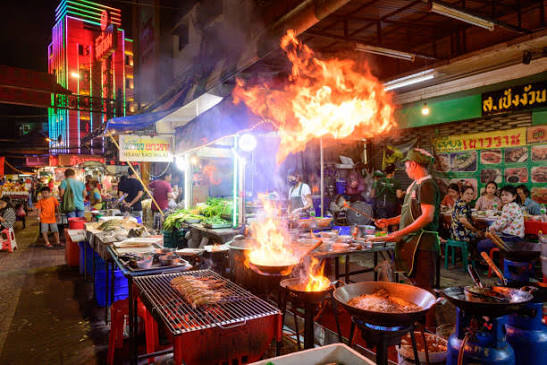
    Pad Thai is Thailand’s culinary ambassador. Stir-fried rice noodles with shrimp or tofu, egg, tamarind, and peanuts create a perfect balance of sweet, sour, and salty. While it’s popular worldwide, nothing beats eating it from a sizzling wok at a Bangkok street stall, where the flavors are bold and the experience is electric.

    3. Banh Mi (Vietnam)

    A legacy of French colonialism, banh mi is a crusty baguette filled with pâté, pickled vegetables, cilantro, and chili. The fusion of French bread with Vietnamese fillings creates a crunchy, savory, and tangy delight. It’s a breakfast staple and a lunchtime favorite, sold from carts across Vietnam.

    4. Ramen (Japan)

    While ramen is often associated with restaurants, street-style ramen is a beloved tradition, especially in Fukuoka, where yatai (mobile food stalls) serve steaming bowls of tonkotsu (pork bone) broth with noodles, chashu (braised pork), and a soft-boiled egg. The rich, umami-packed broth is a comfort food that warms the soul.

    5. Pani Puri / Golgappa (India)

    This iconic Indian street snack consists of hollow, crispy puri shells filled with spiced potatoes and chickpeas, then dunked into tangy, spicy water (pani). The trick is to pop the entire puri in your mouth in one bite to experience the explosion of flavors. Regional variations abound, but the joy of eating it is universal.

    6. Satay (Indonesia/Malaysia)

    Satay is skewered, grilled meat—often chicken, beef, or lamb—served with a rich, nutty peanut sauce and rice cakes (ketupat). The smoky char from grilling over open coals pairs perfectly with the creamy sauce. It’s a popular street food that’s both satisfying and portable.

    7. Falafel (Middle East)

    Falafel, deep-fried balls of ground chickpeas or fava beans mixed with herbs and spices, are a staple across the Middle East. Served in pita bread with tahini sauce, fresh vegetables, and pickles, they’re a flavorful and filling vegetarian option. Originating in Egypt, falafel has become a global favorite.

    8. Churros (Spain)

    Churros are fried dough pastries dusted with sugar, often served with a thick hot chocolate for dipping. In Spain, they’re a popular breakfast or late-night snack, sold from morning stalls and churrerías. The crispy exterior and soft interior make them irresistible.

    9. Döner Kebab (Turkey/Germany)

    Döner kebab features meat (usually lamb, chicken, or beef) cooked on a vertical rotisserie, then shaved thin and served in bread with salad and sauce. While it originated in Turkey, the German-Turkish variant, often served in a dürüm wrap, has become a global phenomenon. It’s the ultimate late-night street food in many European cities.

    10. Jerk Chicken (Jamaica)

    Jerk chicken is a Jamaican specialty, marinated in a fiery blend of scotch bonnet peppers, allspice, and other spices, then grilled over pimento wood. The result is smoky, spicy, and deeply flavorful. Street vendors across Jamaica serve it with festival (fried dough) or rice and peas.

    11. Pho (Vietnam)

    Pho, a fragrant noodle soup with beef or chicken, fresh herbs, and rice noodles, is Vietnam’s national dish. While often eaten at restaurants, street vendors serve it from carts, especially for breakfast. The broth, simmered for hours with spices like star anise and cinnamon, is the heart of this comforting dish.

    12. Arepas (Colombia/Venezuela)

    Arepas are corn flour cakes that are grilled, baked, or fried, then split and stuffed with cheese, meat, beans, or eggs. They’re a versatile street food, enjoyed at any time of day. In Colombia and Venezuela, arepas are a beloved staple that showcases the region’s love for corn.

    13. Bánh Xèo (Vietnam)

    Bánh xèo is a crispy, savory crepe made from rice flour and turmeric, filled with shrimp, bean sprouts, and pork. It’s cooked in a hot pan until golden and crispy, then eaten wrapped in lettuce with fresh herbs and dipped in nuoc cham (fish sauce dressing). The name means “sizzling cake,” referring to the sound it makes while cooking.

    14. Takoyaki (Japan)

    Takoyaki are ball-shaped snacks filled with octopus, pickled ginger, and green onion, cooked in a special griddle. They’re brushed with takoyaki sauce, drizzled with mayonnaise, and topped with bonito flakes that dance from the heat. These savory bites are a popular street food in Osaka and beyond.

    15. Bunny Chow (South Africa)

    Bunny chow is a hollowed-out loaf of bread filled with curry, originating from Durban’s Indian community. It’s a hearty, portable meal that’s eaten with your hands, tearing off pieces of bread to scoop up the spicy curry. It’s a unique fusion of Indian and South African flavors.

    The Modern Street Food Revolution

    Street food is no longer just a local affair; it’s a global trend. Cities are formalizing street food with designated zones and hawker centers, as seen in Singapore, improving hygiene while preserving tradition. Meanwhile, food tours, YouTube channels, and Netflix shows like Street Food have turned vendors into celebrities. Some hawker stalls in Singapore have even earned Michelin stars, proving that street food can rival fine dining.

    However, this popularity brings challenges. Gentrification can push out longtime vendors, and regulations can increase costs. Yet, street food remains resilient, adapting with technology—many vendors now accept QR codes and use delivery apps to reach more customers.

    Safety and Etiquette Tips

    While street food is generally safe, it’s wise to follow a few guidelines: choose stalls with high turnover, watch for fresh cooking, and avoid raw water or ice unless you’re sure it’s purified. Also, be adventurous but respectful—ask locals for recommendations and observe how they eat.

    Street food is a journey into the heart of a culture. Each dish tells a story of migration, adaptation, and community. So, the next time you travel, skip the fancy restaurant and head to the nearest street stall. Your taste buds—and your understanding of the world—will thank you.

    Street food is more than just a meal; it’s an experience that connects you to the soul of a place. From the spicy kick of jerk chicken to the comforting warmth of pho, these 15 iconic dishes offer a world of flavors waiting to be explored. So, embrace the adventure, follow your nose, and let the streets be your guide.

    Summary

    • Street food is a global phenomenon, with an estimated 2.5 billion people eating it daily.
    • It’s a cultural equalizer, preserving traditions and offering affordable, authentic meals.
    • Iconic dishes like tacos al pastor, pad thai, and banh mi reflect historical and cultural exchanges.
    • Modern trends include formalization, globalization, and fusion with fine dining.
    • Trying street food is a safe, rewarding way to experience local culture when following basic hygiene tips.

    FAQ

    Q: Is street food safe to eat?
    A: Yes, when proper handling practices are followed. Studies by the FAO and WHO show that street food can be as safe as restaurant food. Choose vendors with high turnover and freshly cooked items.

    Q: What is the most popular street food in the world?
    A: It’s hard to pick just one, but tacos, pad thai, and döner kebab are among the most globally recognized and loved.

    Q: How can I find the best street food when traveling?
    A: Ask locals, look for long lines, and follow your nose. Food tours and online reviews can also guide you to hidden gems.

    Q: Are there any street foods that are UNESCO-recognized?
    A: Yes, Mexican cuisine (including street tacos) and Singapore’s hawker culture are inscribed as Intangible Cultural Heritage.

    Q: Can street food be expensive?
    A: Generally, street food is the most affordable way to eat out, but prices can vary. In some cities, gourmet street food trends have raised prices, but it’s still often cheaper than restaurants.