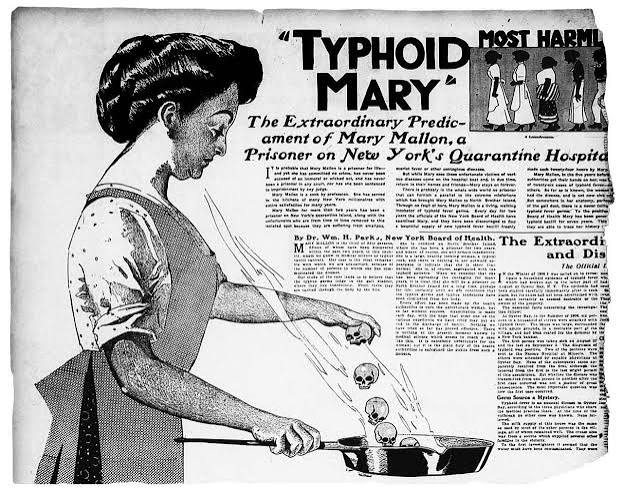
Tag: epidemiology

  • The Cook Who Changed Public Health: Mary Mallon’s Cautionary Tale

    The Cook Who Changed Public Health: Mary Mallon’s Cautionary Tale

    In the summer of 1906, a mysterious typhoid outbreak struck a rented mansion in Oyster Bay, New York. Six of the eleven people in the house fell ill with high fevers and debilitating symptoms. The owner, desperate to find the source, hired a sanitation engineer named George Soper. His investigation would uncover a medical mystery that challenged everything scientists thought about infectious disease and it centered on a seemingly healthy Irish cook named Mary Mallon.

    Mallon’s story is not just a historical footnote; it’s a pivotal moment that shaped modern public health. Her case forced scientists to recognize that carriers of disease could be asymptomatic, transforming how we track and control outbreaks. But her story also raises profound ethical questions about individual rights versus public safety questions we still grapple with today during pandemics and vaccine mandates.

    A Disease That Followed a Cook

    Typhoid fever in the early 1900s was a terrifying scourge. In 1906, the United States reported around 25,000 to 35,000 cases annually, with a mortality rate of about 10%. The disease, caused by the bacterium Salmonella typhi, spreads through contaminated food and water. Once ingested, the bacteria invade the intestines, causing sustained fever, weakness, abdominal pain, and sometimes death. Without antibiotics, treatment was largely supportive—bed rest, fluids, and hope.

    George Soper, a sanitary engineer, was a pioneer in the new field of epidemiology. When he investigated the Oyster Bay outbreak, he noticed a pattern: the only person who had left the household before the outbreak was the cook, Mary Mallon. Soper traced Mallon’s employment history and found a trail of typhoid cases. Between 1900 and 1907, she had worked for eight families, and 22 cases of typhoid were linked to her, including one death. The evidence pointed to Mallon as a carrier, but she appeared perfectly healthy.

    Soper needed proof. In March 1907, he visited Mallon to request stool samples for testing. His approach was, by all accounts, aggressive and lacking in tact. He later admitted, “I had a rather bad half hour with her.” Mallon, who felt fine and had never been sick, was understandably confused and angry. She refused to believe she could spread a disease without being ill herself. When she refused to cooperate, Soper left, but he returned with police and health officials. Mallon was forcibly apprehended and taken to Riverside Hospital on North Brother Island, a quarantine facility in the East River.

    The Birth of the Carrier Concept

    At the hospital, laboratory tests confirmed Soper’s suspicion: Mallon’s stool samples tested positive for Salmonella typhi. This was a groundbreaking discovery. Before Mallon, scientists believed that only sick individuals could transmit typhoid. The idea that a healthy person could carry and spread the bacteria was revolutionary. Mallon was among the first documented cases of an asymptomatic carrier in the United States.

    The medical explanation is both fascinating and a bit unsettling. In some people infected with typhoid, the bacteria take up residence in the gallbladder, where they can survive for years without causing symptoms. These carriers shed the bacteria in their feces, which can contaminate food if they don’t practice rigorous hand hygiene. For a cook like Mallon, who prepared meals for others, the risk was significant.

    Mallon’s case proved that carriers were a real threat, but it also created a public health dilemma. How do you protect the public from someone who doesn’t look or feel sick? In the early 1900s, quarantine laws were designed for visibly ill patients, not healthy carriers. There was no legal precedent for indefinitely detaining someone who showed no symptoms. Yet, the health department, fearing further outbreaks, decided to keep Mallon isolated.

    A Life Interrupted

    Mallon spent three years on North Brother Island from 1907 to 1910. She lived in a small cottage, away from other patients, and was subjected to repeated medical tests. She never accepted her diagnosis, believing that she was being persecuted because of her Irish immigrant background. In 1909, she sued the New York City Health Department for wrongful imprisonment. The case drew significant media attention, and Mallon became a public figure—not sympathetically, but as a menace. Newspapers dubbed her “Typhoid Mary,” a label that stuck and demonized her.

    In 1910, a new health commissioner offered Mallon her freedom on one condition: she must never work as a cook again. Mallon agreed, but she struggled to find other employment. Her only skill was cooking, and she was illiterate, making it hard to secure other work. For a time, she took a job as a laundress, but the pay was poor. Eventually, she returned to cooking under the alias “Mrs. Brown,” a decision that would seal her fate.

    In 1915, an outbreak of typhoid struck Sloane Maternity Hospital in Manhattan. Twenty-five people fell ill, and two died. Health officials traced the source to a cook known as “Mrs. Brown.” It was Mary Mallon. She had been working there for several months, unaware that she was still contagious. The second outbreak destroyed any remaining public sympathy. Mallon was arrested again and confined permanently to North Brother Island.

    The Ethics of Isolation

    Mallon’s story is a cautionary tale about the tension between individual rights and public health. On one hand, her isolation protected countless people from a deadly disease. On the other hand, she was detained without due process, based on the fear of what she might do, not what she had done. She never received a trial; the health department simply kept her confined.

    Soper’s role is also troubling. He was a scientist, not a physician, and his approach was heavy-handed. He didn’t explain the science to Mallon in a way she could understand, and he didn’t offer alternatives like regular testing or education. Instead, he treated her as a problem to be solved, not a person to be helped.

    Mallon’s case also highlights the social prejudices of the time. Irish immigrants in New York faced rampant discrimination. They were often stereotyped as unclean and disease-prone. Mallon’s refusal to cooperate was seen as evidence of her ignorance and stubbornness, rather than a reasonable response to an unbelievable accusation.

    Legacy and Lessons

    Despite the ethical failures, Mallon’s case changed public health for the better. It led to the development of carrier surveillance programs, where health departments tracked individuals known to carry infectious diseases. It also prompted regulations for food handlers, requiring testing and vaccination in some cases. Today, we have a robust system for monitoring and managing carriers of diseases like typhoid, hepatitis A, and even COVID-19.

    The term “Typhoid Mary” has entered the lexicon as a metaphor for someone who spreads disease or misfortune. But it’s a loaded term that obscures Mallon’s humanity. She was a victim of circumstance, trapped by a medical condition she couldn’t control and a system that had no good answers.

    Mary Mallon died on November 11, 1938, at Riverside Hospital, after spending nearly 26 years in isolation. An autopsy revealed live typhoid bacteria still in her gallbladder—a poignant reminder that she was never cured, only contained. Her story remains a powerful case study in public health ethics, a reminder that protecting the community must not come at the cost of basic human dignity.

    Mary Mallon’s life is a complex legacy. She was both a vector of disease and a victim of a nascent public health system. Her case accelerated scientific understanding of asymptomatic carriers, leading to better surveillance and prevention strategies. But it also serves as a warning about the dangers of stigmatization and the importance of treating individuals with respect, even when they pose a risk to others. As we continue to face new infectious threats, Mallon’s story reminds us that public health measures must balance the needs of the many with the rights of the few.

    Summary

    • Mary Mallon, an Irish immigrant cook in early 1900s New York, was the first documented asymptomatic carrier of typhoid fever in the U.S.
    • Her employment history traced 22 cases of typhoid to her, and she was linked to a total of about 50 cases and 3 deaths over her lifetime.
    • George Soper’s investigation in 1906 proved that healthy carriers could spread disease, a revolutionary concept at the time.
    • Mallon was forcibly quarantined twice, spending nearly 26 years in isolation on North Brother Island, despite never showing symptoms herself.
    • Her case led to carrier surveillance programs and food-handler regulations, but also raised ethical questions about civil liberties vs. public safety.

    FAQ

    Q: Who was Mary Mallon?
    A: Mary Mallon, also known as “Typhoid Mary,” was an Irish immigrant cook in New York City who was the first documented healthy carrier of typhoid fever in the United States. She unknowingly spread the disease to dozens of people while showing no symptoms herself.

    Q: What is an asymptomatic carrier?
    A: An asymptomatic carrier is a person who is infected with a pathogen but does not exhibit any symptoms. They can still transmit the disease to others. Mary Mallon carried Salmonella typhi in her gallbladder and shed it in her feces, contaminating food she prepared.

    Q: Why was Mary Mallon quarantined?
    A: Mary Mallon was quarantined because she was a carrier of typhoid fever and worked as a cook, putting others at risk. Public health officials believed that isolating her was necessary to prevent further outbreaks, even though she was healthy herself.

    Q: How long was Mary Mallon isolated?
    A: Mary Mallon was isolated for a total of about 26 years. She was first quarantined from 1907 to 1910, then released on the condition she stop cooking. After causing another outbreak in 1915, she was re-quarantined and remained on North Brother Island until her death in 1938.

    Q: Did Mary Mallon ever accept that she was a carrier?
    A: No, Mary Mallon never fully accepted that she was a carrier. She believed she was being unfairly targeted, possibly due to her immigrant status. Even after laboratory tests confirmed she carried the bacteria, she remained skeptical and resentful of her treatment.
  • The Forgotten Plague: How Typhoid Fever Shaped Modern Public Health

    The Forgotten Plague: How Typhoid Fever Shaped Modern Public Health

    In the 19th century, typhoid fever was a leading killer in crowded cities, striking down rich and poor alike with relentless fever and intestinal agony. Today, most people in developed countries have never seen a case, and the disease has faded from public memory. Yet typhoid is far from extinct: it still causes millions of infections each year in parts of Asia and Africa, and drug-resistant strains are spreading. More importantly, the fight against typhoid gave us the blueprint for modern public health from water chlorination to carrier tracing. Understanding this forgotten plague reveals how much of our daily safety rests on invisible infrastructure built to defeat it.

    A Fever That Changed the World

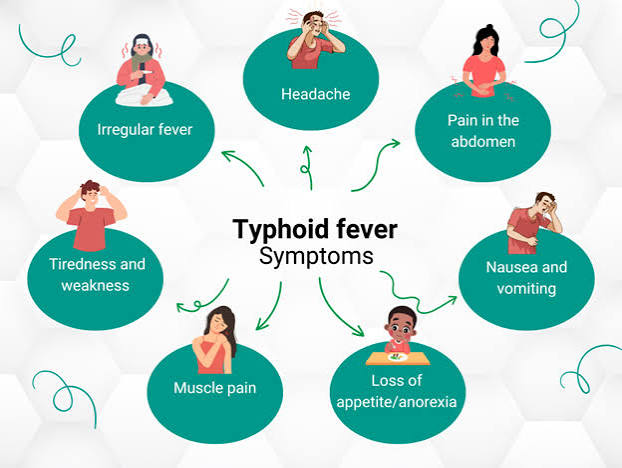
    Typhoid fever is caused by the bacterium Salmonella typhi, which spreads through contaminated food and water. In the 1800s, as cities industrialized, overcrowded tenements and poor sanitation created perfect conditions for outbreaks. The disease struck with a sustained high fever, often reaching 103-104°F, accompanied by headache, abdominal pain, and sometimes a rash of rose-colored spots. Before antibiotics, 10–30% of untreated cases were fatal. It was a scourge of urban life, killing thousands each year in cities like London, New York, and Philadelphia.

    Distinguishing Typhoid from Typhus

    A major breakthrough came in 1829 when Parisian physician Pierre-Charles-Alexandre Louis distinguished typhoid from typhus, a similar but distinct disease spread by lice. The names themselves hint at the confusion: ‘typhoid’ means ‘typhus-like.’ This clinical distinction was critical for accurate diagnosis and later for tracking outbreaks. In 1880, Karl Joseph Eberth identified the typhoid bacillus under a microscope, and in 1884, Georg Gaffky grew it in pure culture, proving it was the culprit.

    The Sanitary Awakening

    The mid-19th century saw a growing realization that filth and disease were linked. Edwin Chadwick’s 1842 report on sanitation in Britain sparked a movement to improve living conditions. John Snow’s investigation of cholera in 1854 demonstrated that water could carry disease, a principle soon applied to typhoid. The old miasma theory that disease came from ‘bad air’ gave way to germ theory as scientists like Pasteur and Koch established that microorganisms cause infections.

    Engineering Solutions

    Once the waterborne transmission was understood, cities began investing in infrastructure to protect their water supplies. Slow sand filtration plants, first used in London in 1852, removed pathogens and dramatically reduced typhoid rates. The next breakthrough came in 1908 when Jersey City, New Jersey, became the first U.S. city to continuously chlorinate its water supply. The result was staggering: within a decade, typhoid mortality in the U.S. fell by about 80%. Separate sewer systems and wastewater treatment removed sewage from the environment, and milk pasteurization mandated in many cities by the 1920s cut off another transmission route.

    The Birth of Field Epidemiology

    Typhoid forced the development of field epidemiology: the practice of tracing cases back to their sources. Investigators would interview patients, map outbreaks, and test water and food samples to identify the point of contamination. This approach proved essential when the first chronic carriers were discovered. About 1–5% of infected individuals continue to shed the bacteria for years, even without symptoms. The most famous was Mary Mallon, a cook in New York, who infected at least 47 people between 1900 and 1907. Dubbed ‘Typhoid Mary,’ she was forcibly quarantined twice, sparking debates about individual rights versus public health that still resonate today.

    Military Lessons

    Typhoid was a major military threat. During the Spanish-American War in 1898, more soldiers died from typhoid than from combat—about 1,600 deaths out of 20,000 cases. This disaster prompted the U.S. Army to mandate typhoid vaccination in 1911, using a vaccine developed by Almroth Wright. By World War I, improved sanitation and vaccination had reduced typhoid deaths among U.S. troops to near zero. Military medicine thus became a proving ground for public health measures.

    The Antibiotic Era and Its Limits

    In 1948, chloramphenicol became the first effective antibiotic against typhoid, reducing mortality to under 1%. For decades, antibiotics controlled the disease in countries with access to them. However, overuse and misuse have led to the emergence of drug-resistant strains. In 2016–2018, an extensively drug-resistant (XDR) outbreak in Pakistan resisted nearly all antibiotics, including chloramphenicol, ampicillin, and fluoroquinolones. This serves as a stark reminder that typhoid is not a disease of the past—it remains a serious threat where sanitation is poor and antibiotics are unreliable.

    The Modern Burden

    Today, typhoid still causes an estimated 11–21 million infections and 128,000–161,000 deaths each year, mostly in South Asia, sub-Saharan Africa, and Southeast Asia. The disease is a marker of inadequate water and sanitation infrastructure. Efforts to combat it include vaccination with modern vaccines like Vi-polysaccharide and Ty21a, and newer conjugate vaccines that can be given to infants as young as six months. But the ultimate solution remains the same as it was a century ago: clean water and proper sanitation.

    Why It Matters Now

    Typhoid’s legacy is everywhere. The water treatment plants, sewage systems, and food safety regulations that we take for granted were built in response to typhoid and other waterborne diseases. The practice of tracking and controlling carriers started with typhoid. The importance of vaccination campaigns was proven on the battlefield. As we face new infectious disease threats, we continue to rely on these same principles. Understanding how typhoid shaped public health helps us appreciate the fragile systems that keep us safe and the need to extend them to all parts of the world.

    Typhoid fever may be a forgotten plague in many countries, but its impact endures. The battle against it taught humanity how to build cities that do not sicken their inhabitants, how to trace and contain outbreaks, and how to protect populations through vaccination. As antibiotic resistance grows and the disease persists in the developing world, the lessons of typhoid remain as relevant as ever. The next time you turn on a tap, remember that the clean water flowing out is a triumph of public health—won through the struggle against a deadly fever.

    Summary

    • Typhoid fever, caused by Salmonella typhi, was a major killer in 19th-century cities due to poor sanitation.
    • The distinction from typhus and the germ theory paved the way for understanding waterborne transmission.
    • Sanitary engineering—filtration, chlorination, sewage systems, and pasteurization—dramatically reduced typhoid in developed countries.
    • The ‘Typhoid Mary’ case led to the concept of chronic carriers and the practice of field epidemiology.
    • Antibiotics reduced mortality, but drug-resistant strains, like the XDR outbreak in Pakistan, pose a modern threat, highlighting the need for continued vigilance and global sanitation efforts.

    FAQ

    Q: What is the difference between typhoid and typhus?
    A: Typhoid is caused by the bacterium Salmonella typhi and spreads through contaminated food and water. Typhus is caused by Rickettsia prowazekii and is transmitted by lice. They have similar symptoms—fever, headache, and rash—but are different diseases.

    Q: How is typhoid fever transmitted?
    A: It spreads via the fecal-oral route, meaning through ingestion of food or water contaminated with the feces of an infected person. It can also spread through direct contact with an infected person’s stool or urine.

    Q: What is a ‘chronic carrier’ of typhoid?
    A: A chronic carrier is a person who continues to shed the bacteria in their stool or urine for more than a year, even after recovering from symptoms. About 1–5% of infected individuals become chronic carriers, and they can unknowingly spread the disease.

    Q: Why is chlorination of water so important?
    A: Chlorination kills bacteria and other pathogens in water, making it safe to drink. The first continuous chlorination of a U.S. city water supply in Jersey City in 1908 led to a dramatic drop in typhoid cases, and it remains a crucial public health measure worldwide.

    Q: Is typhoid fever still a problem today?
    A: Yes, typhoid affects an estimated 11–21 million people annually, causing over 100,000 deaths, mostly in South Asia and sub-Saharan Africa. The emergence of drug-resistant strains, such as the XDR outbreak in Pakistan, underscores the ongoing threat.

  • 500-Year-Old Inca Mummies Reveal the Devastating Arrival of Smallpox in the Americas

    500-Year-Old Inca Mummies Reveal the Devastating Arrival of Smallpox in the Americas

    For centuries, the story of how smallpox ravaged the Americas has been told through the words of Spanish chroniclers and the silent testimony of population decline. But a groundbreaking 2024 study has finally provided the first physical proof: ancient DNA from two Inca mummies, buried around the time of European contact, contains the genetic signature of the smallpox virus. This discovery transforms our understanding of one of history’s greatest demographic catastrophes.

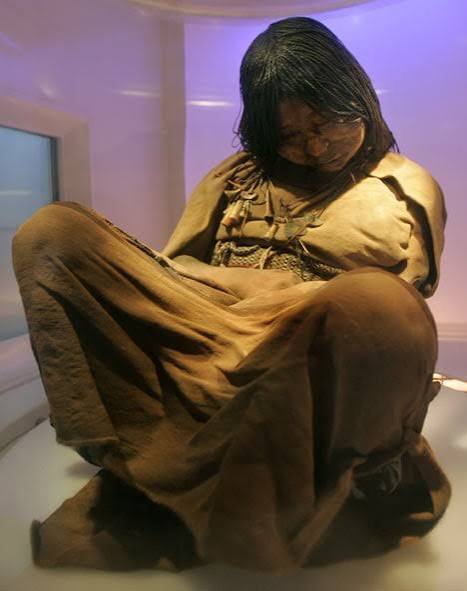
    The mummies, discovered near Cusco, Peru, and in a cave in the Chilean Andes, date to the early 16th century—a period when Spanish conquistadors were just beginning their conquest. The presence of Variola virus in their tissues confirms that smallpox was already spreading through the Inca Empire before Francisco Pizarro’s arrival in 1532. This finding not only validates historical accounts but also underscores the immense human cost of the Columbian Exchange, where invisible pathogens were as powerful as any army.

    The Discovery: Ancient DNA Tells a New Story

    In 2024, researchers published a landmark study in the journal Nature that analyzed ancient DNA extracted from two 500-year-old Inca mummies. One was found in a cemetery near the former Inca capital of Cusco, Peru, and the other in a cave in the Chilean Andes. The analysis identified the presence of Variola virus, the pathogen that causes smallpox. This is the first confirmed molecular evidence of smallpox in the pre-Columbian Americas, providing a direct, physical link to a disease that historians have long believed devastated Indigenous populations.

    The mummies date to approximately 1520–1530 CE, a period coinciding with the arrival of Spanish conquistadors and the early stages of European colonization. This timing is crucial: it places the virus in the Americas just as the Spanish were establishing their presence, supporting the theory that European colonists introduced the disease.

    The Columbian Exchange: A Two-Way Transfer of Devastation

    The arrival of Christopher Columbus in 1492 initiated the Columbian Exchange, a massive transfer of plants, animals, people, and pathogens between the Old World and the New World. Europeans brought with them diseases to which they had centuries of acquired immunity, but Indigenous Americans had no prior exposure. This made them immunologically “naïve” and devastatingly vulnerable.

    Smallpox, caused by the Variola major virus, was one of the deadliest of these diseases. Symptoms included high fever, severe rash, and pustules that often left permanent scars. Mortality rates ranged from 30% to 60% in naïve populations. It is estimated that smallpox and other Old World diseases—such as measles, influenza, and typhus—killed 50–90% of Indigenous American populations within a century of contact. This demographic catastrophe contributed to the collapse of the Inca and Aztec empires.

    The Inca Empire and Its Collapse

    At its peak (c. 1438–1533 CE), the Inca Empire, known as Tawantinsuyu, was the largest empire in the pre-Columbian Americas. It spanned modern-day Peru, Ecuador, Bolivia, Chile, and Argentina—over 2 million square kilometers with an estimated 12 million subjects. When Francisco Pizarro arrived in 1532 with fewer than 200 men, the empire was already weakened by a civil war between brothers Atahualpa and Huáscar, and by a devastating smallpox epidemic that had killed the previous emperor, Huayna Capac, around 1524–1527.

    The epidemic is widely believed to have been a decisive factor in the Spanish conquest. It decimated the Inca population and leadership, creating a power vacuum and chaos that Pizarro exploited. The new DNA evidence confirms that smallpox was indeed present in the Andes during this critical period, providing a tangible link between the disease and the empire’s downfall.

    Prior Evidence: Written Accounts and Indirect Clues

    Before this study, evidence for the introduction of smallpox was based primarily on written accounts and indirect clues. Spanish chroniclers like Bartolomé de las Casas and Bernabé Cobo described epidemics ravaging Indigenous communities. Indigenous records, such as the Quipu (knotted-string records) and oral histories, referenced mass death. Demographic estimates suggested catastrophic mortality, and the timing of the Inca civil war and the death of Huayna Capac strongly suggested an epidemic was already spreading before Pizarro’s arrival.

    However, no physical, molecular evidence of the virus had ever been found in pre-Columbian remains. Some scholars even questioned whether smallpox arrived earlier than 1518 (the first documented outbreak in Hispaniola) or whether other diseases were responsible. This study resolves those debates by providing direct evidence of the virus in the Americas at the time of European contact.

    The Significance: A Landmark in Paleomicrobiology

    This discovery is a landmark in paleomicrobiology—the study of ancient pathogens. It demonstrates that ancient DNA (aDNA) techniques can recover viral genomes from mummified tissue, opening doors for future research on other historical diseases such as typhus, measles, and tuberculosis. The study also highlights the importance of museum collections; the mummies had been stored in museums for decades before being analyzed, showing that valuable scientific information can be gleaned from existing specimens.

    A Stark Reminder of Colonial Impact

    The finding is a stark reminder of the human cost of colonization. The “Great Dying” of Indigenous Americans is one of the largest demographic catastrophes in history, and this study provides a tangible, physical link to that tragedy. It reframes the narrative of European conquest: the Spanish did not simply “outfight” the Inca; they were aided by invisible biological allies. This perspective is crucial for understanding the full scope of colonial impact.

    Ethical Considerations and Indigenous Perspectives

    Some Indigenous communities and scholars have raised concerns about the study of human remains without consent from descendant communities. The mummies are ancestors, not just specimens. Researchers must navigate these ethical considerations carefully, balancing scientific inquiry with respect for cultural heritage. This study underscores the need for collaborative approaches that involve Indigenous communities in research decisions.

    The discovery of smallpox DNA in 500-year-old Inca mummies is more than a scientific breakthrough; it is a poignant reminder of the devastating consequences of contact between worlds. It confirms what historians have long suspected and gives a face to the millions who perished. As we continue to uncover the secrets of the past, we must remember the human stories behind the data and the ethical responsibilities that come with studying them.

    Summary

    • First confirmed molecular evidence of smallpox in pre-Columbian Americas, found in 500-year-old Inca mummies.
    • Mummies date to c. 1520–1530 CE, coinciding with Spanish arrival, supporting introduction by European colonists.
    • Smallpox and other Old World diseases killed 50–90% of Indigenous populations, contributing to the collapse of the Inca Empire.
    • Study is a landmark in paleomicrobiology, showing ancient DNA can recover viral genomes from mummified tissue.
    • Raises ethical considerations about studying human remains without Indigenous community consent.

    FAQ

    Q: What exactly was found in the Inca mummies?
    A: Researchers extracted ancient DNA from two mummies and identified the presence of Variola virus, the pathogen that causes smallpox. This is the first confirmed molecular evidence of smallpox in the pre-Columbian Americas.

    Q: How old are the mummies, and where were they found?
    A: The mummies date to approximately 1520–1530 CE. One was found in a cemetery near Cusco, Peru, and the other in a cave in the Chilean Andes.

    Q: Why is this discovery significant?
    A: It provides direct physical proof that smallpox was introduced to the Americas by European colonists, confirming historical theories that were previously based only on written accounts and indirect evidence.

    Q: How did smallpox affect Indigenous populations?
    A: Smallpox and other Old World diseases killed an estimated 50–90% of Indigenous American populations within a century of contact, contributing to the collapse of the Inca and Aztec empires.

    Q: Are there ethical concerns about studying these mummies?
    A: Yes, some Indigenous communities and scholars have raised concerns about studying human remains without consent from descendant communities. Researchers must balance scientific inquiry with respect for cultural heritage.