In the summer of 1939, a few weeks before Germany invaded Poland, a small group of Polish mathematicians handed their British and French counterparts a gift that would change the course of the war: working replicas of the German Enigma machine, along with the techniques they had used to break its codes. That act of trust set in motion a secret war that would unfold in a Victorian mansion 50 miles northwest of London, where thousands of men and women would labor in silence to read the enemy’s most guarded thoughts. The intelligence they produced, codenamed Ultra, would help reroute convoys around U-boat wolfpacks, shape the timing of the Normandy invasion, and, by most estimates, shorten the war by years.
This is the story of that secret war how a machine designed to be unbreakable was cracked, how a team of eccentric geniuses and diligent clerks turned intercepted radio signals into actionable military intelligence, and how the Allies managed to keep it all hidden for nearly three decades after the war ended.
The Unbreakable Machine
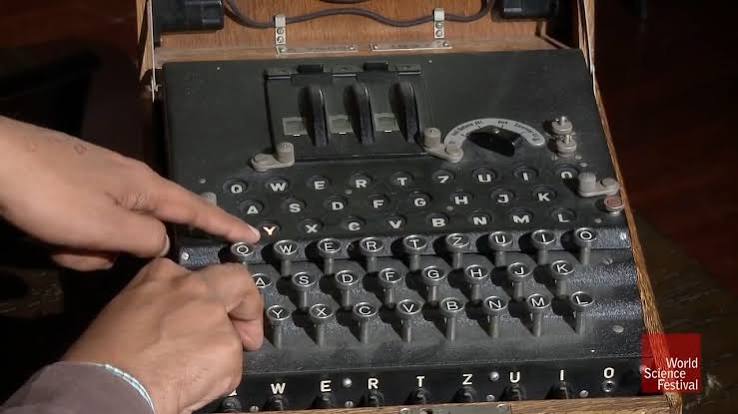
The Enigma machine was a marvel of engineering. About the size of a portable typewriter, it used a series of rotors and a plugboard to scramble plaintext into ciphertext. With roughly 10^23 possible settings for the three-rotor version, the Germans believed it was mathematically impossible to crack by hand. They changed the settings daily, and sometimes more often, so that even if one message was read, the next would be a fresh puzzle. German cryptographers had tested it and were confident: this was a cipher that would hold.
But confidence can be a weakness. The Poles, who had been intercepting German radio traffic since the 1920s, refused to accept that the machine was invulnerable. In 1932, Marian Rejewski, a young mathematician at the Polish Cipher Bureau, used group theory and a method of pattern-matching to reconstruct the wiring of the Enigma rotors. He didn’t have the machine itself; he worked from intercepts and a leaked German manual. By the late 1930s, the Poles had built a mechanical device called the Bomba that could test thousands of rotor settings automatically. But as the Germans upgraded their procedures, the Poles realized they were losing ground. In July 1939, just weeks before the outbreak of war, they made a decision that would prove pivotal: they shared everything they knew with British and French intelligence at a secret meeting in the Kabaty Woods near Pyry.
Bletchley Park: The Factory of Secrets
Bletchley Park, known as Station X, was a sprawling estate that had been purchased quietly by the Secret Intelligence Service in 1938. It was close to Oxford and Cambridge, which made it easy to recruit academics, and it was on the main telephone and telegraph lines between London and the north. By 1944, the site would house around 9,000 to 10,000 workers, three-quarters of them women, who lived in cramped huts and worked in shifts around the clock. The atmosphere was a curious mix of intense intellectual rigor and social informality, with senior codebreakers often wearing casual clothes and setting their own hours.
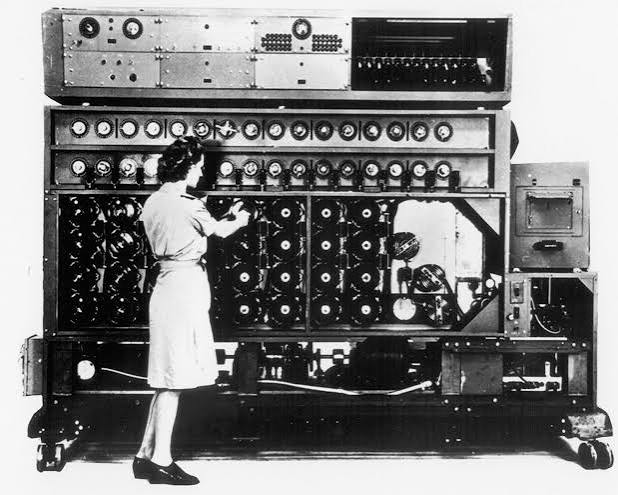
The work was divided into specialized huts. Hut 6 handled Army and Air Force Enigma; Hut 8 tackled Naval Enigma. Alan Turing, a mathematician from Cambridge, led Hut 8 from 1940. Turing was not the stereotypical military officer. He cycled to work in a gas mask to avoid hay fever, chained his mug to a radiator to prevent theft, and sometimes wore his pajamas under his clothes. But his mind was razor-sharp. Along with Gordon Welchman, who ran Hut 6, Turing designed the Bombe, an electromechanical machine that improved on the Polish Bomba. The Bombe worked by testing possible rotor settings, using a technique called a “crib”—a guessed plaintext phrase that was likely to appear in a message, such as a weather report or “Heil Hitler.” By 1944, around 200 Bombes were humming in outbuildings across the UK, each one capable of testing thousands of combinations per second.
Breaking the Codes
The first sustained British breaks came in 1940, when Hut 6 began reading German Air Force Enigma traffic, codenamed “Dolphin.” This was a breakthrough, but the most critical target was the Navy. U-boats were strangling Britain’s supply lines, and the Battle of the Atlantic was a grim arithmetic of tonnage sunk versus ships built. In March 1941, Naval Enigma, codenamed “Shark,” was finally broken. The intelligence allowed convoys to be rerouted around wolfpacks, saving millions of tons of shipping. But the Germans were not static. In February 1942, they introduced a fourth rotor for the U-boat Enigma, plunging Bletchley Park into what was called the “Shark blackout.” For nearly a year, the codebreakers could not read the U-boats’ messages, and shipping losses spiked. It was not until December 1942 that the new rotor was broken, thanks to a combination of captured key material, traffic analysis, and the sheer persistence of women like Joan Clarke, a cryptanalyst in Hut 8 who had been hired despite the military’s initial reluctance to employ women in such roles.
But Ultra was not just about breaking codes. Sometimes, even when messages could not be read, the mere volume and direction of radio traffic revealed German intentions. This was traffic analysis, and Gordon Welchman was its master. He developed the “diagonal board” for the Bombe, which allowed it to test more rotor combinations, and he pioneered the use of statistical methods to identify patterns in the intercepted traffic. Traffic analysis could reveal where a Panzer division was moving, even if the content of its orders remained encrypted.
From Intelligence to Action
Ultra was only useful if it reached the right people. The system that developed was elaborate and paranoid, for good reason. The Germans had to believe their codes were secure. If the Allies acted on Ultra intelligence in a way that revealed their source, the enemy would change their procedures, and the flow of information would dry up. So the intelligence was filtered through Special Liaison Units (SLUs) attached to Allied commanders. Only a handful of senior officers knew the full story; field commanders received sanitized reports, labeled “CX/MSS,” which did not reveal that they came from decrypted messages. The “Ultra rule” was simple: no operation could be launched or cancelled if doing so would tip off the enemy that their codes were broken. Sometimes, this meant allowing an attack to proceed or not acting on intelligence, even when it meant losses, to protect the secret.
This rule was tested during the D-Day invasion. Ultra provided detailed intelligence on German troop dispositions, the location of Panzer divisions, and the enemy’s defensive plans. But the Allies could not always act on it immediately, for fear of compromising the source. For example, when Ultra revealed that the German 21st Panzer Division was moving toward the Normandy beaches on the afternoon of June 6, 1944, the Allied commanders had to weigh the risk of responding too quickly against the risk of losing the beachhead. In the end, they used sanitized reports and timing to mask the source, and the invasion succeeded. Ultra was a decisive advantage, but it was one that had to be wielded with care.
The Debate Over the War’s Length
How much shorter did Ultra make the war? This is a question that historians have argued about for decades. Sir Harry Hinsley, the official historian of British intelligence, estimated that Ultra shortened the war by two to four years. He pointed to the Battle of the Atlantic, where Ultra allowed convoys to avoid U-boats, and to the North Africa campaign, where Ultra intelligence helped Montgomery outmaneuver Rommel. Other historians, like David Kahn, are more cautious. They note that the Soviet Union did most of the fighting and dying on the Eastern Front, and that Allied industrial and military superiority were probably decisive in the long run. They argue that Ultra was a force multiplier, not a silver bullet.
The truth is that Ultra was likely most decisive in the Atlantic. Without it, the U-boat campaign might have succeeded in cutting Britain’s supply lines, which would have made any invasion of Europe impossible. But even there, the advantage was not absolute. The Germans periodically changed their procedures, causing blackouts, and the balance of advantage shifted back and forth. The war’s outcome was probably not changed by Ultra—the Allies had the resources and the will to win—but the war’s length almost certainly was. Every month that the war was shortened meant fewer deaths, less destruction, and a faster return to peace.
The Secret Kept
After the war, the Ultra secret was buried. The codebreakers returned to their civilian lives, and many of them told no one, not even their spouses, what they had done. The equipment was dismantled, the files were classified, and the history of Bletchley Park was rewritten as a story of “operational research” or “administrative work.” The silence lasted for nearly 30 years. It was broken in 1974, when Group Captain F.W. Winterbotham, a former RAF intelligence officer, published The Ultra Secret. The book was a sensation, and it forced the British government to acknowledge what had happened. Slowly, the full story emerged: the Polish contribution, the role of Turing and Welchman, the thousands of women who worked in the huts, the sheer scale of the operation.
Today, Bletchley Park is a museum, and the story of Ultra is celebrated as one of the great achievements of the war. But the lessons are not just historical. The codebreakers showed that when a group of brilliant, determined people are given a hard problem, not even a mathematical impossibility can stand in their way. They also showed the importance of secrecy, and the moral compromises that come with it. The Ultra rule, which sometimes meant sacrificing lives to protect the secret, is a reminder that intelligence is not a neutral tool. It has a cost, and that cost is often paid in human terms. But in the end, the secret was kept, and it helped win the war.
The Ultra secret was one of the most closely guarded of the Second World War, and it remains one of the most consequential. It did not win the war by itself, but it shortened it, and in doing so, it saved lives that would otherwise have been lost. The codebreakers of Bletchley Park, from the genius of Turing to the diligence of the clerks, worked in obscurity and returned to obscurity, but their achievement is now part of the historical record. The war was a collective effort, and Ultra was one of its most effective weapons—a weapon made of mathematics, human ingenuity, and the will to win.
Summary
- Ultra was the codename for intelligence from breaking German Enigma communications, produced at Bletchley Park (Station X).
- The work built on the earlier breakthroughs of Polish mathematicians, notably Marian Rejewski, who first cracked Enigma in 1932.
- Key figures like Alan Turing and Gordon Welchman designed the Bombe, an electromechanical machine that accelerated codebreaking.
- Ultra provided critical intelligence for the Battle of the Atlantic, the North Africa campaign, and D-Day, but its use was constrained by the need to protect the source.
- Historians estimate Ultra shortened the war by 2-4 years, though the debate continues about its overall decisiveness.
FAQ
Q: What was the Enigma machine?
A: The Enigma was a portable rotor cipher machine used by German military and intelligence services. It encrypted messages by scrambling letters through a series of rotors and a plugboard, with an enormous number of possible settings (around 10^23 for the three-rotor version), which the Germans believed made it unbreakable.
Q: How did the Allies break Enigma?
A: The Poles first broke Enigma in 1932, using mathematics and a mechanical device called the Bomba. They shared their work with the British and French in 1939. At Bletchley Park, Alan Turing and Gordon Welchman refined the Polish design to create the Bombe, which used “cribs” (guessed plaintext phrases) to test rotor settings rapidly.
Q: Did Ultra actually shorten the war?
A: Most historians agree it did, with estimates ranging from two to four years. Ultra was especially decisive in the Battle of the Atlantic, where it allowed convoys to avoid U-boat wolfpacks. However, some historians argue that Allied industrial and military superiority were more important in the long run.
Q: Why was Ultra kept secret for so long?
A: The British wanted to protect the source of the intelligence, and they also had a legal obligation to keep wartime secrets classified. Additionally, the techniques used in codebreaking, such as statistical analysis, were valuable for postwar intelligence work. The first public revelation came in 1974 with Winterbotham’s book The Ultra Secret.
Q: What role did women play at Bletchley Park?
A: Women made up about 75% of Bletchley Park’s workforce, around 9,000 to 10,000 people at its peak. They worked as codebreakers, like Joan Clarke in Hut 8, as well as in support roles such as operating Bombes, intercepting radio traffic, and translating messages. Their contributions were essential to the success of Ultra.