Tag: engineering

  • Why Robotics Is So Hard: 14 Challenges That Make It Different From Software

    Why Robotics Is So Hard: 14 Challenges That Make It Different From Software

    Robotics is often compared to software development, but that comparison misses a crucial point: software runs in a controlled digital world, while robots operate in the messy, unpredictable physical world. This difference creates a set of unique challenges that make robotics fundamentally harder than writing an app or a website.

    In this article, we’ll break down 14 specific reasons why robotics is so difficult, from the embodiment problem to the long-tail of edge cases. Whether you’re a software engineer curious about the field or a robotics enthusiast looking for a clear overview, this guide will give you a concrete understanding of what makes robots so tricky to build and deploy.

    The Embodiment Problem: You Can’t Ctrl+Z the Real World

    When you write software, you can run it, test it, and fix bugs in milliseconds. If something goes wrong, you can hit ‘undo.’ Robots don’t have that luxury. They exist in physical space, subject to friction, inertia, and material deformation. You can’t perfectly model every physical interaction, and even if you could, the model would be too complex to compute in real time.

    Consider a simple task: grasping a cup. The cup’s shape, weight, and surface friction affect how your robot’s gripper should approach it. But the cup might be slightly different from what your sensor data shows, or the gripper might slip. These are not abstract problems—they’re physical ones that can’t be solved by writing more code alone.

    Sensor Noise: The World Is a Messy Place

    Robots rely on sensors like cameras, LiDAR, and inertial measurement units (IMUs). These sensors give noisy, incomplete, or even conflicting data. A camera might be blinded by sunlight, LiDAR might miss a transparent object, and an IMU might drift over time. Perception is never ‘clean’ in the real world.

    Software engineers often assume that you can just ‘read’ the environment, but in robotics, every piece of sensor data is uncertain. This uncertainty is a core problem in robotics, requiring sophisticated algorithms to filter and fuse data from multiple sources just to get a rough idea of what’s happening.

    The Moravec Paradox: Easy for Humans, Hard for Robots

    Hans Moravec observed that tasks that are easy for humans—like walking, grasping, or recognizing a face—are computationally hard for robots, while tasks that are hard for humans, like chess or calculus, are relatively easy for computers. This paradox highlights that our intuition about what’s ‘difficult’ is often wrong when it comes to robotics.

    Walking seems effortless, but it involves constant balance adjustments, coordination of dozens of muscles, and real-time feedback. Robots struggle with this because they lack the millions of years of evolution that perfected human locomotion. This paradox is why we have robots that can play chess but still can’t fold laundry.

    Actuation Limitations: Motors Can’t Do Everything

    Even if a robot knows exactly what to do, it still needs to physically do it. Motors and actuators have finite torque, speed, and precision. They wear out, break, and respond with delays. A motor might not be powerful enough to lift a heavy object, or it might be too imprecise to perform delicate surgery.

    These limitations are not just engineering inconveniences—they fundamentally constrain what tasks a robot can perform. You can’t code around a motor that can’t move fast enough. You have to design the hardware to match the task, and that’s a whole other engineering discipline.

    Real-Time Constraints: No Pause Button in the Physical World

    In software, you can take as long as you need to compute a solution. In robotics, decisions must be made in milliseconds. A self-driving car has to react to a pedestrian in a fraction of a second; a factory robot must adjust its grip before an object slips. There’s no ‘pause’ button in the physical world.

    This real-time constraint means that robots can’t use slow but accurate algorithms. They have to use fast approximations that might be less reliable. This trade-off between speed and accuracy is a constant battle in robotics.

    The Sim-to-Real Gap: Simulations Lie

    To train robots, researchers often use simulations because they’re cheaper and safer than real-world testing. But simulations never perfectly capture reality. There are always differences in physics, lighting, and material properties. This is known as the ‘sim-to-real gap,’ and it’s a major hurdle.

    A robot trained in simulation might learn to walk on a flat surface, but when deployed in the real world, it might fail on a slightly uneven floor. The gap means that even the best simulations can’t fully prepare a robot for the real world.

    Non-Stationary Environments: The World Is Always Changing

    Even if a robot perfectly models its environment at one moment, that model becomes outdated quickly. Lighting changes as the sun moves, people walk into the room, objects get shifted. The world is non-stationary, meaning it’s always in flux.

    Robots must constantly update their models of the world, but they can only sense a limited area and with limited accuracy. This means they always have an outdated or incomplete view of their surroundings. It’s like trying to navigate a city with a map that’s always one street behind.

    Safety and Robustness: Bugs Can Injure People

    A bug in a web app is an inconvenience; a bug in a robot can injure a person or destroy property. This makes safety a critical concern in robotics. Robots must be designed to fail gracefully, with multiple layers of safety checks. You can’t just ship a robot and hope it works—you have to prove it won’t hurt anyone.

    This requirement adds a huge overhead to development. Every feature has to be tested extensively, and even then, you can’t guarantee safety in all possible situations. The stakes are much higher than in software.

    The Long-Tail Problem: Infinite Edge Cases

    No matter how many scenarios you test, there will always be more edge cases. The real world is infinitely varied, and you can’t enumerate every possible situation. This is the ‘long-tail’ problem. A robot might handle 99% of cases perfectly, but the remaining 1% can be unpredictable and dangerous.

    For example, a robot vacuum might navigate around a chair, but what if the chair has a leg covered in a rope? What if the lighting is weird? What if there’s a puddle of water? These edge cases are impossible to fully anticipate, making robotic systems inherently fragile.

    Mechanical Complexity: Building the Body Is Half the Battle

    A robot’s physical body is as important as its brain. Building a robotic hand that can manipulate objects, for example, is a major engineering challenge. It requires precision actuators, flexible joints, and tactile sensors—all in a small, lightweight package.

    This mechanical complexity means that robotics is not just a software problem. It requires expertise in mechanical engineering, materials science, and electrical engineering. Each discipline adds its own set of challenges and constraints.

    Power and Thermal Constraints: Batteries Limit Everything

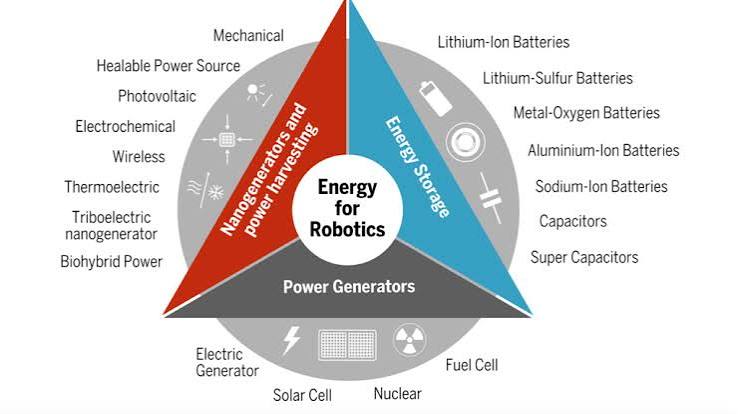
    Robots need power to move, sense, and compute. Batteries are heavy and have limited capacity, and motors and processors generate heat that must be dissipated. These power and thermal constraints limit how long a robot can operate and how much it can do.

    A robot might have a great algorithm, but if it requires too much power, it can’t run for long. Thermal issues can cause components to fail. These physical limitations are often overlooked by software-focused engineers.

    Cost of Iteration: Every Test Costs Money and Time

    In software, you can iterate millions of times for free. In robotics, every physical experiment costs time, money, and materials. If a robot breaks, you have to repair it. If a test fails, you have to set up again. This makes iteration slow and expensive.

    This cost of iteration means that roboticists can’t afford to try as many approaches as software developers. They have to be more careful and rely on simulations, which have their own limitations.

    Integration Complexity: Everything Must Work Together

    A robot is a system of systems: perception, planning, control, and hardware. Each component can work independently, but they must all work together in real time. A failure in any one subsystem can break the whole robot.

    Integration is a huge challenge because components are often developed by different teams or even different companies. They need to communicate flawlessly, handle errors, and coordinate complex actions. This is much harder than integrating software modules, because physical components have their own quirks and failures.

    Testing and Verification: Proving Safety Is Hard

    How do you prove that a robot will behave safely in all possible situations? This is a fundamental challenge in robotics. You can’t test every scenario, so you need formal methods, simulations, and rigorous analysis. But even then, you can’t guarantee absolute safety.

    This lack of verifiability makes it difficult to deploy robots in critical applications like healthcare or autonomous driving. Regulators and the public demand high levels of safety, but achieving that is an open research problem.

    The Bottom Line: Robotics Is a Full-Stack Problem

    Robotics is hard because it requires solving problems across multiple disciplines simultaneously. It’s not just about writing clever code; it’s about building a physical system that can interact with an unpredictable world. This complexity is why many impressive demos don’t translate to commercial success.

    But the challenges are also what make robotics exciting. Every breakthrough—whether in perception, control, or hardware—pushes the boundaries of what machines can do. Understanding these 14 challenges helps set realistic expectations and appreciate the hard work that roboticists do every day.

    Robotics is not just ‘hard software’—it’s a fundamentally different kind of challenge that blends hardware, physics, and real-time decision-making under uncertainty. The 14 reasons above show why robots still struggle with tasks humans find trivial. Yet, these challenges also drive innovation. As we continue to advance in AI, materials, and control theory, some of these hurdles will fall, but new ones will emerge. For now, the difficulty is what makes robotics a fascinating field: it’s a constant test of human ingenuity against the stubbornness of the physical world.

    Summary

    • Robotics is hard because robots must operate in the physical world, which is messy and unpredictable.
    • Key challenges include sensor noise, the Moravec paradox, and real-time constraints.
    • The sim-to-real gap means that training in simulation often doesn’t transfer to the real world.
    • Safety and verification are major concerns, as failures can cause physical harm.
    • The long-tail problem means robots will always encounter unexpected edge cases.

    FAQ

    Q: Why is walking so hard for robots if it’s easy for humans?
    A: This is the Moravec paradox. Tasks like walking require constant real-time adjustments and coordination of many muscles, which is computationally complex. Humans have evolved over millions of years to do this effortlessly, but robots lack that biological hardware.

    Q: Can’t we just use better simulations to train robots?
    A: Simulations are helpful but never perfect. The sim-to-real gap means that differences in physics, lighting, and materials cause robots to fail in the real world even if they succeed in simulation. Closing this gap is an active area of research.

    Q: Why can’t robots just use more sensors to get better data?
    A: More sensors can help, but they also add noise and complexity. Fusing data from many sensors is itself a hard problem, and even the best sensors have limitations. There’s no way to get perfect information about the world.

    Q: Is robotics harder than software engineering?
    A: Yes, in many ways. Robotics requires solving software problems plus hardware constraints, real-time demands, and physical uncertainty. A bug in software is an inconvenience; a bug in a robot can be dangerous.

    Q: Why aren’t robots more common in everyday life?
    A: The challenges listed in this article, like the long-tail problem and integration complexity, make it hard to build reliable, safe robots for unstructured environments. Most robots today work in controlled settings like factories, where the environment is predictable.


  • The Great Stink of 1858: How a Putrid River Forced London to Build the Sewer System That Still Works Today


    In the summer of 1858, London was engulfed by a stench so vile that Parliament considered relocating. The River Thames, the city’s longtime dumping ground, had become a festering open sewer, and a blistering heatwave turned it into a biological weapon. The crisis—dubbed the Great Stink by the press—was more than an olfactory assault. It was a public health emergency that exposed the fatal flaw of Victorian urban growth: a city of nearly 3 million people had no working sewage system.

    What happened next was a political and engineering marvel. In just 18 days, Parliament authorized millions of pounds for a solution. Chief engineer Joseph Bazalgette then built a sewer network of over 1,000 miles that not only ended the stench but also eradicated cholera from central London. Remarkably, that same system still operates today, handling 2 billion liters of waste daily. The Great Stink is a case study in how a short, sharp crisis can break through political inertia and lead to lasting, transformative change.

    A City Drowning in Its Own Waste

    By the mid-19th century, London had become the largest city in the world, but its sanitation was stuck in the Middle Ages. For centuries, human waste, animal carcasses, and slaughterhouse offal had been dumped into cesspits, streets, and directly into the Thames. The invention of the flush toilet—patented in 1778 and popularized in the 1840s—made things worse. Water closets flushed waste into overflowing cesspits or into street drains designed only for rainwater, which then emptied into the river.

    London’s population had exploded from 1 million in 1800 to 2.8 million by 1858, but infrastructure had not kept pace. The Thames, which served as both the city’s water source and its sewer, was a tidal river. That meant sewage didn’t wash out to sea; it sloshed back and forth with the tides, accumulating for decades. By the 1850s, the river was effectively dead—fish had vanished, and the banks were caked with black, putrefying sludge.

    Meanwhile, cholera outbreaks in 1831, 1848, and 1853 had killed tens of thousands. Dr. John Snow had demonstrated in 1854 that cholera was waterborne, but most officials still believed in the miasma theory—that disease spread through bad air. The smell of the Thames was considered a direct threat to public health, not just an aesthetic nuisance.

    The Summer Everything Boiled Over

    The summer of 1858 was unusually hot and dry. With little rain to dilute the filth, the Thames dropped to a sluggish trickle. The heat accelerated bacterial decomposition, releasing hydrogen sulfide and other noxious gases. The result was an odor so overpowering that it permeated every corner of the city. Sufferers described it as a mix of rotten eggs and putrefying flesh.

    The epicenter of the crisis was the Houses of Parliament, which had been rebuilt just six years earlier on the banks of the Thames. MPs found the stench unbearable. They tried hanging curtains soaked in chloride of lime in the windows, a desperate measure that did little to help. The situation became so dire that Parliament seriously considered relocating to Oxford or St. Albans.

    Newspapers, led by The Times, coined the term “Great Stink” and fanned public alarm. The crisis reached its peak in June, and the political pressure became irresistible.

    Parliament Acts with Unprecedented Speed

    On August 2, 1858, Parliament passed emergency legislation—informally known as the Great Stink Act—authorizing the Metropolitan Board of Works (MBW) to borrow £3 million (roughly £300 million today) to build a comprehensive sewer system. The bill passed in just 18 days, a lightning-fast pace for a body that had previously debated sanitation for decades with little action.

    The MBW had been created just three years earlier, in 1855, with limited powers. The Great Stink gave it the mandate and money to act decisively. The man tasked with solving the problem was Joseph Bazalgette, the MBW’s chief engineer.

    Bazalgette was a civil engineer who had worked on railway and drainage projects. He had been advocating for a modern sewer system for years, and now he finally had the green light. His plan was audacious, far-sighted, and, as it turned out, nearly perfect.

    Bazalgette’s Master Plan

    Bazalgette’s design was elegantly simple in concept but massive in scale. He proposed building a network of 1,100 miles of brick-lined sewers (1,770 km) that would feed into 82 miles (132 km) of intercepting sewers running parallel to the Thames. These interceptors would catch the sewage before it reached the river and divert it downstream, east of the city, where it could be discharged safely.

    The system required enormous engineering feats. At Crossness on the south bank and Abbey Mills on the north, Bazalgette built massive steam-powered pumping stations that lifted the sewage from the low-lying sewers into the interceptors. The project also created the Victoria, Albert, and Chelsea Embankments—reclaiming land from the river and constructing new roads that still exist today.

    Construction began in 1859 and was largely completed by 1865. The materials were staggering: 318 million bricks, 880,000 cubic yards of concrete, and 670,000 cubic yards of excavation. The final cost exceeded £4.6 million—more than £500 million in today’s money.

    Designing for the Future

    Perhaps Bazalgette’s most remarkable decision was to plan for a future he could not possibly predict. London’s population at the time was about 2.8 million. Bazalgette designed the sewers to handle a population of 4.2 million—and when critics questioned the excess capacity, he reportedly replied, “We’re bound to be wrong. We’re only doing this once, and there’s always a chance.”

    That single decision has paid dividends for over 160 years. Today, London’s population has surpassed 9 million, and the sewer system Bazalgette built still handles about 2 billion liters of sewage daily. It has been upgraded and augmented, but the core network remains in service—a testament to his foresight.

    The public health impact was immediate and profound. Cholera outbreaks in central London ceased after the system was completed. The Great Stink had forced a solution that not only eliminated the smell but also ended the cycle of waterborne disease that had plagued the city for generations.

    The Legacy of the Great Stink

    The Great Stink of 1858 is often overshadowed by other Victorian achievements, but it was a turning point in urban history. It demonstrated that a short, sharp crisis—one that directly inconvenienced the powerful—could break through political gridlock. In just 18 days, Parliament authorized a project that would take decades to complete and cost millions, because the alternative was unthinkable.

    It also marked a shift in how cities viewed infrastructure. Before 1858, sanitation was a private matter. After it, governments accepted responsibility for providing clean water and safe waste disposal. The Great Stink helped pave the way for modern public health policy, urban planning, and environmental regulation.

    Today, as cities around the world face their own infrastructure crises—from aging water systems to climate change—the Great Stink offers a powerful lesson. Sometimes it takes a crisis to force the long-term investments we should have made decades ago. The trick is to build not for the present, but for the future we can only guess at.

    The Great Stink was a revolting, deadly, and transformative event. It forced Victorian London to confront the consequences of unchecked urbanization and to build a solution that would serve millions of people for generations. Joseph Bazalgette’s sewers remain one of the greatest engineering achievements in history—not just because they worked, but because they were built to last. The crisis of 1858 reminds us that when the stench of neglect becomes unbearable, even the most stubborn governments can be moved to act.

    Summary

    • In the summer of 1858, a heatwave turned London’s River Thames into an open sewer, producing a stench so bad it disrupted Parliament.
    • Parliament passed the Great Stink Act in just 18 days, authorizing £3 million for a modern sewer system.
    • Joseph Bazalgette designed and built 1,100 miles of sewers, diverting waste downstream and ending cholera outbreaks in central London.
    • The project used 318 million bricks and cost over £4.6 million; Bazalgette deliberately over-engineered for future population growth.
    • London’s sewer system still operates today, handling 2 billion liters of sewage daily, a testament to Bazalgette’s foresight.

    FAQ

    Q: What caused the Great Stink of 1858?
    A: The Great Stink was caused by centuries of human and industrial waste being dumped into the River Thames, which served as London’s open sewer. An unusually hot, dry summer accelerated bacterial decomposition, releasing hydrogen sulfide and other noxious gases that created an overwhelming stench.

    Q: How did the Great Stink lead to the sewer system?
    A: The stench was so unbearable that Parliament, located beside the Thames, was forced to act. In August 1858, it passed emergency legislation authorizing the Metropolitan Board of Works to borrow £3 million to build a comprehensive sewer system, which was designed by Joseph Bazalgette.

    Q: How did Joseph Bazalgette’s sewer system work?
    A: Bazalgette built a network of 1,100 miles of sewers that fed into 82 miles of intercepting sewers running parallel to the Thames. These interceptors diverted sewage downstream, away from central London, and used steam-powered pumping stations to lift the waste for discharge.

    Q: Is Bazalgette’s sewer system still in use?
    A: Yes. The system still operates today, handling about 2 billion liters of sewage daily. Bazalgette intentionally over-sized the sewers to accommodate future population growth, which is why they remain functional more than 160 years later.

    Q: Did the Great Stink end cholera in London?
    A: Yes, cholera outbreaks in central London stopped after the sewer system was completed. The new system removed sewage from the Thames, which was the source of drinking water, thereby eliminating the waterborne transmission of cholera.

  • The Hidden Geometry of Gothic Cathedrals: How Medieval Masons Engineered Stone Skylines

    The Hidden Geometry of Gothic Cathedrals: How Medieval Masons Engineered Stone Skylines

    In 1144, the Abbey Church of Saint-Denis near Paris was consecrated, marking the birth of a new architectural style that would dominate Europe for centuries. But beneath the soaring vaults and luminous stained glass lay a secret language of squares, triangles, and ratios that medieval masons used to turn stone into prayer. This wasn’t just decoration—it was a sophisticated system of engineering that allowed builders to raise structures that still stand today, without steel beams or computer simulations.

    The geometry of Gothic cathedrals is often romanticized as mystical or esoteric, but the truth is both simpler and more impressive. Medieval masons were practical problem-solvers who used geometric principles to calculate load paths, scale designs, and achieve structural stability. They worked from oral traditions and secret craft knowledge, passing down rules of thumb that had been refined over generations. This article unpacks the real geometry behind these stone skylines, separating fact from myth.

    The Medieval Mason’s Toolkit: More Than Just a Compass

    Imagine designing a building that reaches 40 meters into the sky, with walls thin enough to hold vast windows of colored glass, using nothing but wooden compasses, squares, and knotted ropes. That was the challenge facing medieval masons. Their tools were simple, but their knowledge was profound.

    Masons didn’t think in terms of modern engineering equations. Instead, they used geometric constructions—shapes that could be drawn with a compass and straightedge—to determine proportions, angles, and structural relationships. The most common were ad quadratum (by the square) and ad triangulum (by the triangle), based on the ratios of a square’s diagonal (√2 ≈ 1.414) and an equilateral triangle’s height (√3 ≈ 1.732). These ratios aren’t arbitrary; they emerge naturally from the geometry itself, and they gave masons a way to scale designs up or down without losing proportion.

    A surviving sketchbook from the 1230s, by a Picard architect named Villard de Honnecourt, shows exactly this approach. His drawings are filled with instructions for constructing arches, pinnacles, and other elements using simple geometric shapes. Another key document is Matthias Roriczer’s Büchlein von der Fialen Gerechtigkeit (1486), the first known architectural geometry treatise, which details how to design a pinnacle using a series of squares and circles. These texts prove that geometry was a working method, not just a philosophical ideal.

    Sacred Numbers and the Great Architect

    But why were masons so invested in geometry? The answer lies in the medieval worldview. In Christian thought, God was the ‘Great Architect,’ a concept rooted in Plato’s Timaeus and filtered through Neoplatonic theology. The biblical verse ‘Thou hast ordered all things in measure, and number, and weight’ (Wisdom 11:20) was taken literally: if God created the universe according to geometric and numerical laws, then building a cathedral in the same way was an act of worship.

    Abbot Suger, the patron of Saint-Denis, was deeply influenced by Pseudo-Dionysius the Areopagite, a theologian who described light as divine emanation. Suger believed that beautiful, light-filled spaces could elevate the soul toward God. This theological drive pushed masons to thin the walls and enlarge the windows, which in turn demanded more sophisticated engineering—a perfect feedback loop between faith and function.

    Numerology also played a role. The number 3 echoed the Trinity; 4 represented the Gospels; 7 the days of creation; 12 the apostles. These numbers appear in column counts, window groupings, and bay divisions, embedding symbolic meaning into the structure. Chartres Cathedral, for example, has a labyrinth with 11 circuits, a number that some scholars link to the 11 intervals of the musical octave, though such interpretations remain speculative.

    The Engineering Breakthrough: Pointed Arches and Flying Buttresses

    Gothic architecture didn’t just change how buildings looked—it changed how they stood up. The Romanesque style that preceded it relied on thick walls and semicircular arches, which pushed outward with great force, limiting height and window size. Gothic masons made two crucial innovations: the pointed arch and the flying buttress.

    A pointed arch distributes weight more efficiently than a semicircular one. The sharper angle means less horizontal thrust, allowing walls to be thinner and taller. This wasn’t just a stylistic choice; it was a structural necessity for the vast stained-glass windows that Gothic cathedrals are famous for. The flying buttress, an external arched support, transferred the roof’s thrust outward and down to massive piers, freeing the interior from bulky walls.

    These innovations allowed builders to achieve unprecedented heights. Chartres Cathedral, rebuilt after a fire in 1194, reaches over 36 meters; Amiens, completed in just 50 years (1220–1270), rises even higher. Modern finite element modeling has shown that these structures are remarkably efficient, with some areas over-engineered—a testament to the masons’ empirical approach. They weren’t following abstract theories; they were refining rules of thumb through trial and error, generation after generation.

    The Geometry in Action: From Ground Plan to Soaring Vault

    So how did a mason actually use geometry to build a cathedral? The process started with the ground plan, often laid out using a module—typically the width of a bay or the spacing between columns. From this module, the entire building could be scaled proportionally, ensuring harmony between every part.

    Take the ad quadratum method: a mason might start with a square representing the crossing of the nave and transept. By drawing the square’s diagonal, he could establish the height of the vaults or the length of the nave. The diagonal of a square is √2 times its side, so this created a consistent ratio throughout the structure. Ad triangulum used equilateral triangles, whose height is √3 times the base, to produce different proportions.

    This wasn’t just about aesthetics; it was practical. By using geometric constructions, masons could calculate complex load paths without mathematics. They could also communicate designs across sites, as traveling masons carried these methods across Europe. The ‘lodge’—both a physical workshop and a social institution—was where this knowledge was shared and protected, often kept secret from outsiders. That secrecy later gave rise to the legend of the ‘freemasons,’ though the connection is more myth than history.

    The Golden Ratio: Fact or Fiction?

    No discussion of sacred geometry is complete without mentioning the golden ratio (φ ≈ 1.618). It appears in countless books on esoteric architecture, but its role in Gothic cathedrals is often overstated. While the golden ratio does emerge in some medieval designs, it was not the dominant system. Masons primarily used ad quadratum and ad triangulum, which are simpler and more directly tied to practical construction.

    Part of the confusion stems from modern scholars projecting their own mathematical interests onto historical buildings. The golden ratio is aesthetically pleasing, so it’s easy to find it where you look for it, but careful analysis shows that Gothic proportions are better explained by square and triangle geometry. This doesn’t diminish the cathedrals’ beauty—it just shows that the masons’ real genius was in adapting simple tools to solve complex problems.

    A Living Legacy

    The geometry of Gothic cathedrals isn’t just a historical curiosity; it influenced later architecture and continues to inform modern design. The principles of proportion and structural efficiency that medieval masons developed are still taught in architecture schools, and the cathedrals themselves remain engineering marvels. When you stand in Notre-Dame de Paris or Cologne Cathedral, you’re seeing the result of centuries of accumulated knowledge, passed down from master to apprentice in the shadow of the building site.

    But the cathedrals also remind us that geometry was more than a tool—it was a way of seeing the world. For the masons who built these stone skylines, every line they drew echoed the divine order they believed was written into the universe. That belief, combined with practical skill, created structures that still inspire awe almost a thousand years later.

    The hidden geometry of Gothic cathedrals is a story of both faith and function. Medieval masons used squares, triangles, and ratios not as abstract mysticism but as essential tools for engineering some of the tallest, most complex buildings of their time. Their legacy lives on in the stones of Chartres, Amiens, and countless other cathedrals, and in the methods that continue to shape architecture today.

    Summary

    • Gothic cathedrals were designed using geometric systems like ad quadratum (√2) and ad triangulum (√3), not just the golden ratio.
    • Geometry served practical engineering purposes, helping masons calculate load paths and scale designs without modern mathematics.
    • Pointed arches and flying buttresses were key innovations that allowed walls to be thinner and windows larger.
    • Knowledge was passed orally and through secret craft traditions, with documents like Villard de Honnecourt’s sketchbook and Roriczer’s treatise as rare written records.
    • The medieval worldview saw geometry as a divine language, with numbers like 3, 4, 7, and 12 carrying symbolic meaning.

    FAQ

    Q: Was the golden ratio used in Gothic cathedrals?
    A: Only sparingly, and not as the primary design system. The main geometric methods were ad quadratum (based on squares) and ad triangulum (based on equilateral triangles), which produced the √2 and √3 ratios respectively. The golden ratio is often cited in popular literature but is not well-supported by historical evidence.

    Q: How did masons learn geometry without written manuals?
    A: Most knowledge was passed from master to apprentice through oral instruction and hands-on practice. The lodge served as a school where apprentices learned the craft. A few written sources survive, such as Villard de Honnecourt’s sketchbook and Matthias Roriczer’s 1486 treatise, giving us rare glimpses into these methods.

    Q: Did sacred geometry have a practical purpose?
    A: Yes. Geometry wasn’t just symbolic; it was essential for structural engineering. By using geometric ratios, masons could ensure that a building’s proportions distributed weight safely, allowing them to build higher and with thinner walls than ever before.

    Q: Why are pointed arches and flying buttresses important?
    A: Pointed arches reduce horizontal thrust compared to round arches, allowing for taller, thinner walls. Flying buttresses transfer roof thrust to external piers, freeing the interior for large windows. Together, they enabled the airy, light-filled interiors characteristic of Gothic cathedrals.

    Q: Are Gothic cathedrals still structurally sound today?
    A: Yes, most are remarkably stable, thanks to their efficient design. Modern engineering analysis shows they are often over-engineered, meaning they have more capacity than needed. This is a tribute to the empirical knowledge accumulated by medieval masons over centuries of building.

  • AI Doesn’t Generate Working Products, That’s Still Your Job

    AI Doesn’t Generate Working Products, That’s Still Your Job

    It’s tempting to think that with AI, you can just type a prompt and get a finished app. But the reality is more nuanced: AI tools are excellent at producing prototypes, drafts, and approximations—but they don’t deliver working products. The gap between a demo and a shippable product is where the real engineering work happens, and that’s still your job.

    This isn’t a pessimistic view; it’s a clarifying one. Understanding what AI can and cannot do helps you use it effectively, avoid costly mistakes, and focus your energy where it matters most. In this article, we’ll explore why AI output is a starting point, not an endpoint, and what that means for developers, managers, and learners.

    The Prototype Isn’t the Product

    When you ask an AI to generate code, you get a prototype—a plausible-looking piece of code that might work in a simple scenario. But a product is more than that. It’s reliable, secure, scalable, maintainable, and documented. AI models are trained to produce output that looks competent, but they can’t run, test, or reason about their own output in a production environment. They lack the ability to understand the full context of your system, your users, or your business requirements.

    Consider a simple example: you ask an AI to write a function that calculates the total price of items in a shopping cart. The AI might produce a straightforward loop that sums up the prices. It compiles, and it passes a basic test. But what happens when a user applies a discount code? Or when a product is out of stock? Or when the cart contains a mix of currencies? The AI didn’t anticipate these edge cases because it doesn’t know your business rules. That’s where you come in.

    The Demo Effect: Why AI Output Looks So Good

    AI models are trained on vast amounts of code and text, so they’re great at pattern matching. They’ve seen thousands of similar functions, so they can generate something that looks like a competent solution. This is called the “demo effect”: the output is designed to be plausible, not verified. It’s like a magician’s trick—it looks impressive, but it’s not real magic.

    This effect can fool stakeholders. A manager sees a demo of an AI-generated feature and thinks it’s almost done. But the demo is just a thin slice of functionality, often with hardcoded data and no error handling. The real work—integrating with existing systems, handling edge cases, testing for security, and deploying to production—is invisible and still ahead.

    The Real Work: Integration, Testing, and Maintenance

    The gap between a prototype and a product is where the value of a skilled engineer lies. It’s not just about writing code; it’s about understanding requirements, designing for scale, ensuring security, and maintaining the system over time. AI can help with the initial scaffolding, but it can’t make the countless decisions that go into a production-ready system.

    For example, an AI might generate a REST API endpoint that works in isolation. But to make it a product, you need to add authentication, rate limiting, input validation, logging, and monitoring. You need to write tests that cover not just the happy path but also failure modes. You need to consider how it will perform under load and how it will be deployed. These are not tasks that an AI can do for you—they require judgment and experience.

    The Skeptic’s View: AI as a Liability

    Some developers are more skeptical of AI-generated code. They point out that AI can introduce security vulnerabilities, licensing issues, and technical debt. Because AI models are trained on public code, they may reproduce patterns that are insecure or outdated. And because AI output is often uncommented and unstructured, it can be hard to maintain.

    There’s also a risk of over-reliance. Junior developers who lean too heavily on AI may not develop the debugging and system design skills they need. They might not understand why a piece of code works, only that it does—until it breaks in production. This is a real concern for the industry’s future.

    The Optimist’s View: A Shrinking Gap

    On the other hand, AI tools are improving rapidly. The gap between prototype and product is shrinking. Some argue that the human role is shifting from writing code to specifying intent and reviewing output. That’s still a job, but it’s a different one. In the future, AI might handle more of the pipeline, but for now, it’s a powerful assistant, not a replacement.

    What This Means for You

    Whether you’re a developer, a manager, or a learner, the key takeaway is this: use AI as a tool, not a crutch. Let it help you explore ideas, generate boilerplate, and speed up your workflow. But don’t expect it to do your job for you. The responsibility for the final product—its quality, security, and reliability—rests with you.

    For developers, this means honing your skills in testing, debugging, and system design. For managers, it means setting realistic expectations and budgeting for the productionization work that AI can’t do. For learners, it means using AI to accelerate your learning, but not at the expense of understanding the fundamentals.

    AI is a powerful tool, but it doesn’t generate working products—it generates prototypes. The gap between a demo and a shippable product is where the real engineering work happens, and that’s still your job. Embrace AI as an accelerator, but remember that the responsibility for quality, security, and reliability lies with you. The future belongs to those who can use AI effectively while maintaining the judgment and skills that machines can’t replicate.

    Summary

    • AI tools produce prototypes, not finished products; the human must handle integration, testing, and deployment.
    • The “demo effect” makes AI output look competent, but it lacks verification and context.
    • The real value of an engineer is in judgment, not just writing code.
    • Over-reliance on AI can lead to security issues, technical debt, and skill erosion.
    • Use AI as an accelerator, but keep your skills sharp and your expectations realistic.

    FAQ

    Q: Can AI generate a working product if I give it enough detail?
    A: Even with detailed prompts, AI output is still a prototype. It may work in isolation, but it won’t account for all edge cases, integration issues, or production requirements. You’ll need to test, debug, and harden it.

    Q: Is it true that AI will replace programmers?
    A: No. AI can automate parts of coding, but software engineering involves much more—understanding requirements, designing systems, testing, and maintaining. These tasks require human judgment and are unlikely to be fully automated soon.

    Q: How can I avoid “AI slop” in my codebase?
    A: Review AI-generated code carefully, enforce coding standards, and require tests. Treat AI output as a draft that needs the same scrutiny as code written by a junior developer.

    Q: What skills should I focus on if I use AI tools?
    A: Focus on debugging, system design, and critical evaluation. These skills will help you turn prototypes into products and catch issues that AI misses.

    Q: Should I use AI for learning to code?
    A: Yes, but don’t rely on it exclusively. Use AI to get unstuck, but make sure you understand the underlying concepts. Otherwise, you’ll struggle when the AI isn’t there to help.