Tag: energy

  • Physicists Defy 160-Year-Old Law to Control Heat with a Memory

    Physicists Defy 160-Year-Old Law to Control Heat with a Memory

    For over 160 years, Kirchhoff’s law of thermal radiation stood as an unbreakable rule of physics: a material that absorbs heat well must also emit it well. This symmetry seemed as fundamental as gravity. But now, researchers have engineered a material that breaks this symmetry and remembers its new settings even after power is removed.

    The breakthrough isn’t just a neat trick. It opens the door to passive thermal switches, smarter energy harvesting, and even thermal camouflage that works without a battery. Here’s how they did it, and why it matters.

    The law that seemed unbreakable

    In 1859, German physicist Gustav Kirchhoff formulated a principle that became a cornerstone of thermal physics: at thermal equilibrium, a body’s absorptivity equals its emissivity at every wavelength and angle. In plain terms, a surface that soaks up heat is just as good at radiating it back out. This symmetry is why a black car gets hotter in the sun than a white one—both absorb and emit proportionally.

    For generations, engineers worked within this rule. If you wanted a material that emitted heat efficiently, you had to accept that it would absorb just as much. But a new study, published in a leading physics journal, demonstrates a material that breaks this symmetry on demand—and holds its new properties even after the power is switched off.

    Breaking the symmetry

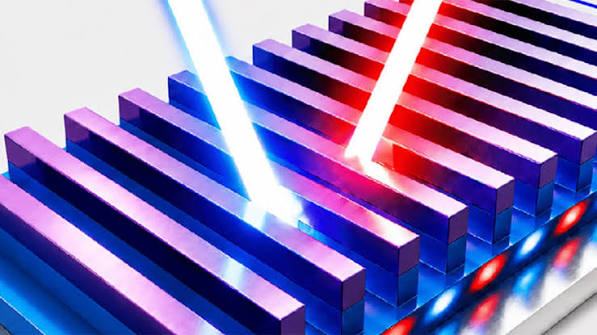
    The key is a thermal metamaterial—a structure engineered at the nanoscale—combined with a phase-change material like germanium-antimony-tellurium (GST). GST is already familiar from rewritable CDs and DVDs, where a laser flips it between crystalline and amorphous states. Each state has different optical and thermal properties.

    The researchers patterned a thin film of GST with a carefully designed photonic structure—essentially a grid of nanoscale features that interact with light in specific ways. By applying a brief electrical or optical pulse, they can switch the material into a state where its absorptivity and emissivity are no longer equal. The asymmetry is “frozen in” because the structural change is stable: once set, it stays that way without any ongoing power.

    This is a stark departure from earlier attempts to violate Kirchhoff’s law. Those required continuous external input—like a strong magnetic field or active pumping—to maintain non-reciprocal behavior. The new material needs no such crutch. It’s a passive, programmable thermal surface.

    Not a perpetual motion machine

    It’s important to be clear: this doesn’t violate thermodynamics. The material doesn’t create or destroy energy. It simply changes the way it exchanges heat with its surroundings. In a sense, it’s like a one-way mirror for heat—but one that you can reprogram.

    The trick relies on the fact that the system isn’t in true equilibrium. While the material’s overall temperature is uniform, the engineered structure creates an asymmetry in how radiation is absorbed versus emitted. Some physicists might argue that the law is “bypassed” rather than truly broken, but the practical effect is the same: independent control over absorption and emission.

    What this enables

    Thermal management with memory: Imagine a solid-state heat switch that can be set to ‘insulate’ or ‘conduct’ and then left alone, no power required. This could revolutionize building insulation, data center cooling, or even clothing that adapts to your body’s needs.

    Better thermophotovoltaics: These devices convert heat into electricity by capturing thermal radiation. By decoupling absorption and emission, engineers could design cells that absorb heat efficiently but emit very little, boosting conversion efficiency.

    Thermal camouflage: A material that absorbs radar or heat from one side but emits differently on the other could make objects invisible to thermal cameras. The fact that it’s programmable means you could change your thermal signature on the fly.

    Spacecraft thermal control: Satellites and probes need to manage heat in extreme environments. A passive, programmable radiator could be set once and left to work, saving power and weight.

    Challenges ahead

    The path to real-world applications isn’t smooth. Fabricating nanoscale metamaterials is expensive and difficult to scale. GST contains tellurium, a relatively rare element, and germanium, which raises cost and supply concerns. And the switching process itself—while energy-efficient—still requires a pulse to change states, so it’s not entirely passive.

    But the field is moving fast. Similar phase-change materials have already made the leap from labs to consumer products (rewritable discs). With continued investment in nanofabrication and materials science, these thermal metamaterials could follow the same trajectory.

    The bigger picture

    This work is a reminder that even the most established laws of physics can be bent with clever engineering. It’s not a violation of nature’s rules—it’s a workaround, a way to achieve a capability that was once thought impossible.

    The ability to program heat flow with memory opens a new frontier in thermal engineering. We’re not just controlling temperature anymore; we’re controlling the very way heat behaves at the nanoscale. And that’s a game-changer for energy, electronics, and beyond.

    By breaking Kirchhoff’s law in a way that sticks, researchers have turned a 160-year-old rule into a design tool. The material’s non-volatile memory means thermal devices could be set once and left to work, opening up applications from smarter energy harvesting to stealth technology. While practical challenges remain, the principle is proven: heat can now be controlled in ways once thought impossible.

    Summary

    • Researchers have demonstrated a material that can independently control absorption and emission of thermal radiation, breaking Kirchhoff’s law of thermal radiation.
    • The material uses a phase-change material (like GST) and a nanoscale photonic structure to create a stable, non-volatile asymmetry.
    • Unlike previous attempts, this doesn’t require continuous external power—the settings are ‘frozen in’.
    • Potential applications include passive thermal switches, improved thermophotovoltaics, thermal camouflage, and spacecraft thermal control.
    • Challenges include scalability, cost, and material scarcity, but the field is progressing rapidly.

    FAQ

    Q: Does this violate the laws of thermodynamics?
    A: No. It doesn’t create or destroy energy. It simply changes how a material exchanges heat with its surroundings, operating in a non-equilibrium state.

    Q: How is this different from previous violations of Kirchhoff’s law?
    A: Earlier approaches required continuous external input (like magnetic fields) to maintain asymmetry. This material retains its asymmetric properties even after power is removed, thanks to a structural phase change.

    Q: What is a phase-change material?
    A: It’s a material that can switch between different structural states (e.g., crystalline and amorphous) when heated or pulsed with electricity or light. GST (germanium-antimony-tellurium) is a common example used in rewritable discs.

    Q: What is a thermal metamaterial?
    A: It’s an engineered structure whose thermal properties come from its geometry (nanoscale patterning) rather than its chemistry alone. This allows properties not found in natural materials.

    Q: When will this be used in real products?
    A: It’s still early-stage research. Scaling up nanofabrication and reducing costs are major hurdles, but the underlying technology is similar to what’s used in optical data storage, so progress could be relatively rapid.
  • AI’s Growing Appetite: How Data Centers Are Reshaping Global Electricity Demand

    AI’s Growing Appetite: How Data Centers Are Reshaping Global Electricity Demand

    Every time you ask a chatbot a question or generate an image, a small army of servers whirs into action thousands of miles away. That interaction, part of the invisible infrastructure of modern AI, is quietly becoming one of the most significant new sources of electricity demand on the planet.

    Data centers already consume about 1–2% of global electricity—roughly 460 terawatt-hours in 2022. But that’s just the beginning. With AI workloads expanding rapidly, the International Energy Agency projects data center electricity use could double by 2026, reaching around 1,000 TWh. That’s equivalent to the annual consumption of Japan. The surge is not just a technical challenge; it’s a test of climate commitments, grid reliability, and energy equity.

    From Flat to Spiking: The Historical Shift

    For a decade, the data center industry seemed to defy physics. From 2010 to 2020, global compute demand soared, yet data center energy use stayed nearly flat. Virtualization, more efficient cooling, and better chips kept electricity consumption in check. It was a remarkable achievement.

    Then generative AI arrived. Unlike traditional cloud workloads, which often idle between requests, AI models demand dense, specialized hardware—GPUs and TPUs—that run hot and continuously. Training a single large model like GPT-3 consumes roughly 1,300 MWh, enough to power about 130 US homes for a year. And training is only the first step. Running these models—called inference—now makes up the larger and faster-growing share of AI energy use, as millions of users interact daily.

    The Numbers: How Big, How Fast

    The scale of growth is striking. McKinsey estimates global data center power demand will climb from about 60 gigawatts in 2023 to around 170 GW by 2030—a threefold increase. In the United States, data centers already consume 2–4% of electricity, with some projections seeing that rise to 6–8% by 2030. The hyperscalers—Microsoft, Google, Amazon, and Meta—all report double-digit annual growth in their data center energy usage.

    This growth is not evenly distributed. Regions like northern Virginia, known as “Data Center Alley,” are hitting grid capacity limits. Utilities in Virginia, Texas, and Ireland have issued warnings, and some areas have imposed moratoriums on new connections. The grid is struggling to keep pace with requests for 100+ megawatt connections that come with short lead times.

    Why AI Breaks the Efficiency Curve

    Chip manufacturers continue to deliver gains. NVIDIA’s H100 is several times more efficient per FLOP than its predecessor, the A100. Liquid cooling and even immersion cooling are being deployed to handle rack densities that now exceed 30–50 kW per rack, reducing cooling overhead.

    But these efficiency gains are being outpaced by sheer growth. The Jevons paradox is at work: as AI becomes cheaper and more efficient, it becomes more ubiquitous, driving total energy use upward. Each new capability—image generation, real-time translation, autonomous agents—multiplies the number of inference requests.

    The Climate Conundrum

    For years, tech giants positioned themselves as climate leaders. Google pledged to be carbon-free by 2030, Microsoft by 2030, Amazon by 2040. Yet the AI buildout is making those promises harder to keep. Microsoft’s Scope 3 emissions have risen about 30% since 2020, and Google’s greenhouse gas emissions are up roughly 48% since 2019—largely due to data center construction and energy use.

    Renewable procurement is part of the story. Hyperscalers are the largest corporate buyers of wind and solar power purchase agreements, and they fund new clean energy capacity. But renewable projects take time to permit and build, while data centers go online in a couple of years. In the interim, utilities are building new natural gas plants to ensure reliability—a move that conflicts with climate goals.

    Beyond Electricity: Water and Waste

    The environmental footprint extends beyond power. A 100-megawatt data center can use 1–3 million gallons of water per day for cooling, raising concerns in drought-prone regions. And the hardware itself has a carbon cost: GPU servers have lifespans of just 2–4 years, and manufacturing silicon is energy-intensive—emissions that often go unaccounted in operational energy statistics.

    Who Pays for the Grid? The Equity Question

    Upgrading the grid to handle data center demand is expensive. Utilities are proposing rate hikes and infrastructure investments, and there’s a growing debate over who should foot the bill. Some argue data centers should pay the full cost of their grid connections, while others fear that residential customers will end up subsidizing corporate energy use. In some regions, utilities are seeking to shift costs to ratepayers, sparking criticism.

    The Siting Game: Energy Drives AI Geography

    Energy availability is now a primary factor in where AI infrastructure gets built. Countries with cheap, abundant power—like Iceland, Norway, and parts of the Middle East—are attracting AI investment. China’s “East Data, West Computing” initiative moves data centers to renewable-rich western provinces. In the US, states with deregulated energy markets and low power prices are becoming hotspots.

    A Balanced Path Forward

    Is AI’s energy demand a crisis or an opportunity? The optimists argue that AI will accelerate breakthroughs in materials science, climate modeling, and energy efficiency that justify the near-term costs. The skeptics point to rising absolute emissions and the risk of locking in fossil fuel infrastructure.

    Both views have merit. The key is to ensure that the growth is managed responsibly: improving efficiency, accelerating renewable deployment, making water use sustainable, and ensuring that the benefits of AI are weighed against its environmental costs. The choices made now—from grid planning to efficiency standards—will shape the climate impact of AI for decades.

    AI’s power consumption is not an abstract problem; it’s a tangible force reshaping electricity grids, corporate climate pledges, and local communities. The challenge is to harness AI’s benefits without blowing past environmental limits. That will require innovation in chips and cooling, but also policy decisions about grid investments, rate structures, and efficiency standards. The future of AI is being written in megawatts.

    Summary

    • Data centers use about 1–2% of global electricity, and that could double by 2026, driven largely by AI.
    • Training a single large model like GPT-3 consumes ~1,300 MWh, but inference now is the bigger and faster-growing share.
    • Efficiency gains from chips (e.g., NVIDIA H100) are real but outweighed by the rapid expansion of AI use—a Jevons paradox.
    • Hyperscalers’ climate pledges are under strain: Microsoft’s Scope 3 emissions are up ~30% since 2020; Google’s GHG emissions up ~48% since 2019.
    • Grid planning, water use, and cost allocation are emerging as key policy battlegrounds.

    FAQ

    Q: How much electricity do data centers consume globally?
    A: Estimates vary, but the IEA puts it near 460 TWh in 2022, about 1.5% of global electricity. Some sources say 1–2%.

    Q: What portion of data center energy use is due to AI?
    A: AI is a fast-growing subset. While exact percentages are hard to pin down, inference (running models) is now the larger and faster-growing share compared to training.

    Q: Are efficiency improvements in AI chips helping?
    A: Yes, new chips like NVIDIA H100 are more efficient per FLOP, but total energy use is still rising because AI is being deployed more widely and more often.

    Q: How does data center water use factor into the environmental impact?
    A: Cooling can consume 1–3 million gallons per day for a 100 MW facility, which is a concern in water-stressed regions.

    Q: What are the regulatory responses so far?
    A: The EU’s Energy Efficiency Directive now requires data centers to report energy use. The US has no federal mandate, but some states are taking action. China is relocating data centers to renewable-rich regions.

  • How Fusion’s Next Big Step Burning Plasma Could Ignite a Power Plant

    How Fusion’s Next Big Step Burning Plasma Could Ignite a Power Plant

    Every fusion experiment so far has needed a hefty external push like a car that needs to be push-started. But a ‘burning plasma’ flips that: the fusion reactions themselves provide enough heat to keep going, like an engine that’s finally turned over. This isn’t just a physics curiosity; it’s the essential bridge between proving fusion works and building a power plant that could light our cities.

    In a deuterium-tritium (D-T) fusion reaction, two heavy forms of hydrogen merge to create a helium nucleus (an alpha particle) and a neutron. The alpha particle carries 3.5 MeV of energy, and the neutron takes 14.1 MeV. In a burning plasma, those alpha particles are trapped by the magnetic field and dump their energy into the surrounding fuel, becoming the dominant heat source. This self-heating is what could make fusion a practical, nearly limitless energy source. But we haven’t achieved it yet though ITER and private projects like SPARC are racing to be first.

    The Promise of Self-Heating

    Think of a campfire. You start with kindling and a match that’s your external heating, like the powerful antennas and particle beams used to heat fusion fuel. Once the logs catch, the fire sustains itself; the heat from burning wood keeps the fire going. A burning plasma is the fusion equivalent of the logs catching. The alpha particles—helium nuclei born from fusion—are the ‘burning wood.’ They collide with the plasma, transferring their energy and keeping the fuel at the 150-million-degree temperatures needed for fusion.

    The key measure is Q, the ratio of fusion power to external heating power. A burning plasma typically needs Q > 5, meaning the fusion reactions produce at least five times more power than we put in. Ignition, the theoretical limit, is Q = ∞, where external heating is turned off entirely. Even reaching Q ~ 10, as ITER aims to do, would be a monumental leap from current experiments, which have only managed Q around 0.67.

    Why We’ve Never Seen a Burning Plasma

    No experiment to date has achieved a burning plasma. The closest was JET in the UK, which in 2022 set a record by producing 59 megajoules of fusion energy in a five-second pulse, reaching Q ≈ 0.67. That means external heating still provided about 60% of the power. The plasma was self-heating, but not dominant.

    The challenge is meeting the Lawson criterion—a triple product of density, temperature, and energy confinement time. For D-T fusion, you need n·T·τ_E ≥ 3 × 10²¹ m⁻³·keV·s. This is like trying to hit a moving target: if you raise density, you risk instabilities; if you raise temperature, you lose energy faster; if you lengthen confinement, you must control turbulence. Every experiment so far has fallen short on at least one metric.

    The Alpha Particle Balancing Act

    Alpha particles are born with 3.5 MeV of energy—about a million times the thermal energy of the plasma. They must be confined long enough to slow down and heat the fuel. But they can also drive instabilities, like toroidal Alfvén eigenmodes (TAEs), which can kick them out prematurely. It’s like trying to keep a hot potato in your hands: if you hold it too tightly, you burn yourself; if you let go, you lose the heat. Researchers are studying these instabilities intensely, because they could make or break a burning plasma.

    ITER: The Big Test

    ITER, under construction in France, is designed to be the first burning plasma experiment. With a major radius of 6.2 meters, a plasma current of 15 million amperes, and a magnetic field of 5.3 tesla, it aims to produce 500 megawatts of fusion power from 50 megawatts of input—a Q of 10. That’s a tenfold return, a threshold that would prove self-heating can dominate.

    But ITER has faced decades of delays and cost overruns. First plasma is now expected around 2034–2035, and D-T operation in the late 2030s. Some critics worry about the timeline, but ITER’s mission is not just to hit Q = 10; it’s to study the physics of burning plasmas in a sustained way. How do alpha particles behave over long pulses? Can we control the burn rate? These answers are crucial for designing DEMO, the first fusion power plant.

    The Private Sector Sprint

    While ITER plods along, private companies are pushing for faster timelines. Commonwealth Fusion Systems and MIT are building SPARC, a compact tokamak using high-temperature superconducting magnets. SPARC is designed to achieve Q > 2 in its first campaign, and Q > 10 later. If successful, it could demonstrate a burning plasma in the mid-2020s to early 2030s—years before ITER.

    The private race isn’t just about speed; it’s about innovation. HTS magnets allow smaller, cheaper devices, which could accelerate the path to commercialization. But the physics remains the same. Even a compact device must tame the alpha particles.

    What a Burning Plasma Will Teach Us

    A burning plasma isn’t just a milestone; it’s a new regime. In sub-burning experiments, external heating dominates, and the plasma’s behavior is largely driven by those inputs. In a burning plasma, the fusion reactions themselves shape the plasma’s evolution. This could lead to self-organized states, where turbulence and instabilities adjust to maintain a stable burn. It might also enable ‘burn control’—adjusting fuel supply or injection to regulate fusion power in real time, like a throttle on a reactor.

    These are phenomena we can’t study in today’s devices. They require a plasma where alpha heating is the main player. That’s why scientists are so eager to get there, despite the challenges.

    A burning plasma is the moment when fusion stops being an expensive physics experiment and starts resembling a power source. It’s the difference between a prototype and a product. ITER and SPARC are racing to cross that line, but the journey is as important as the destination. Every instability they study, every alpha particle they track, brings us closer to a future where fusion could provide clean, abundant energy. The next decade will tell whether we finally light that fire.

    Summary

    • A burning plasma is one where alpha particles from fusion reactions provide the dominant heating, requiring Q > 5.
    • No experiment has achieved it yet; JET’s 2022 record was Q ≈ 0.67.
    • ITER aims for Q = 10 and will be the first burning plasma experiment, but faces delays.
    • Private projects like SPARC use high-temperature superconductors to accelerate timelines.
    • Understanding alpha particle confinement and instabilities is key to making burning plasmas work.

    FAQ

    Q: What is a burning plasma exactly?
    A: A burning plasma is a fusion plasma where the energy from fusion reactions (specifically alpha particles) provides more heating than all external sources combined. It’s self-sustaining, like a log fire that has caught.

    Q: Why hasn’t a burning plasma been achieved yet?
    A: Because it requires meeting the Lawson criterion—a precise combination of density, temperature, and confinement time—which has been elusive. Experiments like JET have come close (Q ≈ 0.67) but haven’t crossed the threshold where alpha heating dominates.

    Q: How does ITER plan to achieve a burning plasma?
    A: ITER is designed to produce 500 MW of fusion power from 50 MW of input, a Q of 10. Its large size and powerful magnetic field are intended to meet the Lawson criterion and sustain a burning plasma.

    Q: What is the significance of Q = 10?
    A: Q = 10 means fusion produces ten times more power than is put in. This demonstrates that self-heating is dominant, a necessary condition for a practical power plant.

    Q: What are the risks of alpha particles in a burning plasma?
    A: Alpha particles can drive instabilities like toroidal Alfvén eigenmodes, which cause them to escape and reduce self-heating. Managing these instabilities is a major research challenge.

  • The 5-Minute Morning Routine: Science-Backed Habits to Boost Your Energy Fast

    The 5-Minute Morning Routine: Science-Backed Habits to Boost Your Energy Fast

    Mornings can be brutal. The alarm blares, your body feels heavy, and the thought of tackling the day seems overwhelming. But what if a mere five minutes could set the tone for sustained energy and focus? The rise of micro-habits—small, easy actions that become automatic—has made the 5-minute morning routine a popular solution for time-poor individuals seeking a quick energy boost.

    This isn’t about adding more to your plate; it’s about strategically leveraging biology. By understanding how your body responds to light, hydration, movement, and breathing, you can design a brief ritual that works with your physiology, not against it. In this article, we’ll break down the core components of an effective 5-minute routine, backed by science, and show you how to customize it to your needs—without falling for common myths.

    Why 5 Minutes? The Power of Tiny Habits

    Behavioral psychologist BJ Fogg, creator of the ‘Tiny Habits’ method, argues that the smaller the behavior, the more likely it is to stick. A 5-minute routine is a gateway habit—it’s easy to start, requires minimal willpower, and can snowball into a more comprehensive wellness practice. Consistency trumps duration: a short routine done daily outperforms a lengthy one done sporadically. This aligns with research on habit formation, which shows that repetition and ease are key to automation.

    Moreover, a 5-minute routine addresses the immediate physiological needs of your waking body. After hours of sleep, you’re dehydrated, your blood sugar is low, and your circadian rhythm is waiting for cues to shift from sleep mode to alertness. A targeted sequence can jumpstart these processes efficiently.

    The Core Components: What Actually Works

    1. Hydration: Reboot Your System

    Your body loses water overnight through breathing and sweating, leaving you mildly dehydrated. Drinking a glass of water (about 8-12 ounces) within the first few minutes of waking helps rehydrate cells, improve blood flow, and kickstart metabolism. Adding a squeeze of lemon adds vitamin C and flavor, but the ‘detox’ claims are overstated—your liver and kidneys handle detoxification naturally. Electrolyte powders can be beneficial if you sweat heavily, but plain water is sufficient for most.

    2. Light Exposure: Set Your Circadian Clock

    Natural light is the strongest cue for your suprachiasmatic nucleus—the brain’s master clock. Getting sunlight within the first hour of waking helps regulate your circadian rhythm, increasing cortisol (the ‘wake-up’ hormone) and suppressing melatonin. A 2019 study in the Journal of Clinical Endocrinology & Metabolism found that morning light exposure improves alertness and mood. Even 5-10 minutes of outdoor light (or a lightbox in darker months) can make a difference. If you’re indoors, open curtains or step outside briefly.

    3. Movement: Get Blood Flowing

    Light stretching, yoga, or a burst of high-intensity exercise (like jumping jacks or squats) increases blood flow, delivering oxygen and nutrients to your brain and muscles. A 2019 study in the Journal of Physiology showed that brief morning exercise improves cognitive performance and metabolic health. You don’t need a full workout—just 2-3 minutes of movement can elevate your heart rate and boost energy. Even a brisk walk around the room counts.

    4. Breathing or Mindfulness: Calm the Chaos

    Deep breathing techniques, such as box breathing (inhale 4 seconds, hold 4, exhale 4, hold 4) or the 4-7-8 method, activate the parasympathetic nervous system, reducing stress and increasing alertness. A 2017 review in Frontiers in Psychology found that mindfulness practices improve attention and emotional regulation. Even 1-2 minutes of focused breathing can lower cortisol and set a calm, focused tone for the day.

    5. Cold Exposure: Optional but Potent

    A cold shower or a splash of cold water on your face can increase norepinephrine and dopamine, neurotransmitters linked to alertness and mood. Research by Dr. Rhonda Patrick and others suggests cold exposure may also improve resilience to stress. However, it’s not essential—and it’s not safe for everyone. If you have cardiovascular conditions, consult a doctor first. Start with a 30-second cold rinse at the end of your shower and gradually increase.

    Putting It Together: A Sample 5-Minute Sequence

    Here’s a practical sequence that incorporates all core elements:

    • 0:00-0:30 – Drink a glass of water (keep it by your bed).
    • 0:30-1:30 – Step outside or near a window for natural light. Do a few deep breaths.
    • 1:30-3:30 – Do 2 minutes of movement: jumping jacks, squats, or sun salutations.
    • 3:30-4:30 – Practice box breathing: 4 seconds in, 4 hold, 4 out, 4 hold.
    • 4:30-5:00 – Optional: splash cold water on your face or end your shower with a cold rinse.

    This sequence is flexible—you can swap order or omit components based on your preferences and schedule.

    Common Misconceptions: What to Avoid

    • ‘More is better’: Overcomplicating your routine defeats the purpose. Stick to 5 minutes; you can always add more later.
    • ‘Cold showers are essential’: They’re optional and can be risky for some. Listen to your body.
    • ‘Caffeine is part of the routine’: Many experts, including Dr. Andrew Huberman, recommend delaying caffeine 60-90 minutes after waking to avoid an afternoon crash. If you need coffee, wait until after your routine.
    • ‘It will fix poor sleep’: A morning routine cannot compensate for chronic sleep deprivation. Prioritize sleep hygiene first.
    • ‘Immediate energy’: Some benefits, like circadian alignment, take days to weeks. Instant energy is often just adrenaline from movement or cold water—still useful, but not a long-term fix.
    • ‘One-size-fits-all’: Your chronotype matters. Night owls may find a 5 a.m. wake-up counterproductive. Tailor your routine to your natural rhythm.

    Personalization: Adapt to Your Chronotype

    Your body’s internal clock influences when you feel most alert. If you’re a morning lark, you might naturally wake early and benefit from a vigorous routine. If you’re a night owl, forcing an early start can backfire. Instead, focus on the sequence that works for your wake time, and consider using a lightbox if you wake in darkness. Dr. Andrew Huberman suggests that light exposure is especially critical for night owls to shift their clocks earlier gradually.

    The Skeptical View: Is It All Hype?

    Some sleep researchers, like Dr. Matthew Walker, caution against over-structuring mornings. They argue that respecting natural waking patterns and sleep inertia—the grogginess you feel after waking—is more important than forcing a routine. A 5-minute routine can be beneficial, but it’s not a magic bullet. Energy management also depends on sleep quality, diet, and stress levels. Use the routine as a tool, not a cure-all.

    A 5-minute morning routine is a powerful, evidence-based way to boost energy and set a positive tone for the day. By focusing on hydration, light, movement, and breathing, you can address your body’s immediate needs without a significant time investment. Remember, consistency beats intensity—start small, personalize to your chronotype, and avoid the hype. Over time, these tiny habits can yield significant benefits for your physical and mental well-being.

    Summary

    • A 5-minute routine is effective because it’s a tiny habit that’s easy to maintain; consistency matters more than duration.
    • Key components: hydration, light exposure, movement, breathing/mindfulness, and optional cold exposure.
    • Science supports morning light for circadian rhythm, brief exercise for cognitive and metabolic benefits, and deep breathing for stress reduction.
    • Avoid common myths: cold showers aren’t essential, caffeine should be delayed, and a routine can’t fix poor sleep.
    • Personalize your routine based on your chronotype and health conditions; start small and adapt.

    FAQ

    Q: Can I do a 5-minute routine if I’m not a morning person?
    A: Yes, but tailor it to your wake time. If you’re a night owl, don’t force a 5 a.m. wake-up. Instead, do the routine when you naturally wake, and consider using a lightbox if it’s dark outside.

    Q: Is it better to do cardio or stretching in the morning?
    A: Both are beneficial. Cardio (like jumping jacks) boosts heart rate and energy quickly, while stretching improves flexibility and reduces stiffness. You can alternate days or combine both in a 2-minute block.

    Q: How long before I see benefits from a morning routine?
    A: Some effects, like increased alertness from movement or cold water, are immediate. Others, like circadian alignment, may take days to weeks. Consistency is key.

    Q: Can I drink coffee as part of my routine?
    A: Many experts recommend waiting 60-90 minutes after waking to drink caffeine to avoid an afternoon crash. If you need coffee, have it after your routine, not during.

    Q: What if I don’t have access to natural light?
    A: Use a lightbox that emits 10,000 lux for 10-20 minutes, or simply turn on bright indoor lights. Even artificial light can help, though natural light is most effective.