Tag: Easter Island

  • Islands of Isolation: How Geography Shapes Unique Cultures

    1 - Cultural Divides — Madeline James Writes

    Imagine a place where the nearest neighbor is thousands of miles away, where the language you speak is spoken by only a few hundred people, and where the rituals you practice have remained unchanged for centuries. This is the reality for the 10% of the world’s population that calls an island home. Islands are more than just vacation destinations; they are living laboratories of human adaptation, where isolation has forged some of the most distinctive cultures on Earth.

    From the towering moai of Easter Island to the ancient sagas of Iceland, the story of island cultures is a testament to human resilience and creativity. But isolation is a double-edged sword: it preserves traditions that might otherwise vanish, yet it also leaves communities vulnerable to external shocks. In this article, we’ll explore how geographic isolation has shaped the languages, social structures, and knowledge systems of island peoples, and why these cultures matter in our increasingly connected world.

    What Makes an Island an Island?

    Before diving into the cultural impacts, it’s worth clarifying what we mean by ‘island.’ Geologically, an island is any landmass smaller than a continent and surrounded by water. But the line between island and continent is blurry—Australia is a continent, while Greenland, though larger, is considered an island. The distinction is as much cultural as it is scientific.

    Isolation also exists on a spectrum. Oceanic islands like Hawaii and Easter Island are thousands of miles from any mainland, making them truly isolated. Continental islands like Japan and Madagascar were once connected to a continent and retain biological and cultural links to that mainland. This spectrum matters because it influences how much contact a culture has with the outside world.

    The Mechanisms of Cultural Isolation

    Isolation works in several ways to shape culture. Geographic distance limits gene flow, trade, and migration, allowing unique traits to develop without outside interference. This is why islands are hotspots of endemism—species found nowhere else—and the same applies to culture. Isolated languages, rituals, and technologies evolve in unique directions.

    Resource constraints also play a role. On small islands, populations must adapt to limited land and materials. The Polynesians developed sophisticated wayfinding techniques using stars, currents, and bird flight to navigate vast ocean expanses. Icelanders built turf houses that insulated against the harsh climate. Pacific islanders engineered complex water management systems to sustain their crops.

    Colonial contact often disrupted this isolation, creating syncretic cultures. Hawaii, for example, blends Polynesian traditions with Christianity and American influences. Madagascar’s culture is a mix of Austronesian and African Bantu elements, reflecting centuries of migration and trade.

    Case Studies in Isolation

    Easter Island (Rapa Nui)

    Easter Island is perhaps the most famous example of isolation’s consequences. Settled by Polynesians around 1200 CE, the island’s inhabitants carved the iconic moai statues, some weighing over 80 tons. The traditional narrative is one of ecological collapse: deforestation led to war and societal collapse. However, recent scholarship challenges this ‘ecocide’ story, pointing to rats, climate change, and European contact as contributing factors. What’s clear is that isolation made the island’s society uniquely vulnerable to environmental and external pressures.

    Iceland

    Iceland’s isolation has preserved its language remarkably well. Modern Icelanders can read the medieval sagas written in Old Norse with little difficulty. The island’s Norse-Gaelic heritage is a blend of Viking and Celtic influences, and its literary tradition is one of the richest in the world. Iceland’s small population—around 370,000—has maintained a strong cultural identity despite globalization.

    Vanuatu

    Vanuatu, an archipelago in the Pacific, is a linguistic treasure trove. With a population of about 300,000, it boasts over 100 distinct languages, giving it the highest language density per capita in the world. This diversity is a direct result of isolation: each island developed its own language and customs. Vanuatu is also home to the land-diving ritual on Pentecost Island, where men jump from tall wooden towers with vines tied to their ankles—a precursor to bungee jumping.

    Tristan da Cunha

    Tristan da Cunha, in the South Atlantic, is the most remote inhabited island on Earth. Its single settlement, Edinburgh of the Seven Seas, has a population of about 250. There is no airport; the only way to reach it is by a six-day boat trip from South Africa. This extreme isolation has created a tight-knit community with a unique dialect and traditions, but it also makes the island vulnerable to medical emergencies and economic challenges.

    The Double-Edged Sword of Isolation

    Isolation preserves, but it also exposes. Small populations are susceptible to disease—smallpox wiped out about 90% of Hawaii’s native population after European contact. Natural disasters like tsunamis and cyclones can devastate entire communities. And in the modern era, globalization and tourism threaten to erode cultural authenticity even as they bring economic benefits.

    Yet island cultures have shown remarkable resilience. Japan, an archipelago, has maintained a distinct identity despite periods of isolationism (sakoku) and later intense modernization. Fiji’s chiefdom systems and kava ceremonies persist alongside a significant Indo-Fijian diaspora. Sardinia’s ‘Blue Zone’—where people live exceptionally long lives—is partly attributed to its pastoral traditions and isolated lifestyle.

    Why Island Cultures Matter

    Island cultures are not just curiosities; they are repositories of human knowledge and adaptation. They demonstrate how societies can thrive in challenging environments, and they offer lessons in sustainability and community. As climate change threatens low-lying islands, many of these cultures are at risk of disappearing. Understanding and valuing them is more important than ever.

    In a world that is increasingly connected, the isolation that shaped these cultures is fading. But the legacies of island peoples—their languages, rituals, and ways of life—remain a testament to the diversity of human experience.

    Islands are more than just dots on a map; they are worlds unto themselves, shaped by the forces of isolation and adaptation. From the linguistic diversity of Vanuatu to the literary heritage of Iceland, these cultures offer a unique window into human resilience. As we face global challenges, the lessons from island societies—about sustainability, community, and preserving what matters—are more relevant than ever. The next time you see an island on a map, remember that it holds a story of isolation, survival, and extraordinary cultural richness.

    Summary

    • Islands are defined by their isolation, which exists on a spectrum from oceanic (e.g., Hawaii) to continental (e.g., Japan).
    • Isolation drives cultural endemism, leading to unique languages, rituals, and technologies, as seen in Vanuatu’s 100+ languages and Polynesian wayfinding.
    • Island cultures are vulnerable to external shocks like disease and climate change, but they also preserve traditions for centuries, as with Iceland’s language.
    • The ‘ecocide’ narrative of Easter Island is being revised; isolation’s effects are complex and not always catastrophic.
    • Modern tourism and globalization both threaten and sustain island cultures, making their preservation a delicate balance.

    FAQ

    Q: What defines an island vs. a continent?
    A: The distinction is partly geological and partly cultural. An island is a landmass smaller than a continent and surrounded by water, but Australia is considered a continent while Greenland is an island, despite being larger. The classification is based on historical and cultural conventions.

    Q: How does isolation affect language diversity?
    A: Isolation limits contact between communities, allowing languages to diverge independently. Vanuatu, with 100+ languages for 300,000 people, is a prime example. In contrast, mainland areas tend to have more language homogenization due to trade and migration.

    Q: Are island cultures always sustainable?
    A: No. The Easter Island ‘ecocide’ narrative, though debated, highlights how resource overexploitation can lead to collapse. However, many island societies have developed sustainable practices, such as Polynesian water management and Icelandic turf houses, that allowed them to thrive for centuries.

    Q: How has colonialism impacted island cultures?
    A: Colonialism often disrupted isolation, introducing diseases, Christianity, and cash economies, leading to depopulation and cultural erosion. But it also created syncretic cultures, blending indigenous and colonial elements, as seen in Hawaii and Madagascar.

    Q: What is the future of island cultures in a globalized world?
    A: Globalization and tourism bring economic opportunities but also threaten cultural authenticity. Climate change poses an existential risk to low-lying islands. However, many island communities are actively working to preserve their heritage, and increased connectivity can also help share and celebrate their cultures globally.
  • Life at the Edge: Inside the World’s Most Isolated Inhabited Islands

    About Tristan da Cunha - Atlantic Guardians

    Imagine living on an island so remote that your nearest neighbor is over 2,000 kilometers away, where supply ships arrive only a handful of times a year, and where the internet is a recent luxury. For the residents of Tristan da Cunha and Pitcairn Island, this is everyday life. These tiny communities, perched on the edge of civilization, offer a unique glimpse into human resilience, self-reliance, and the true meaning of isolation.

    While many of us complain about a delayed flight or a slow Wi-Fi connection, the people of these islands face challenges that put our modern inconveniences into perspective. From medical emergencies that require days of travel to the nearest hospital, to children leaving home at age 11 for boarding school, life here is a delicate balance between preserving a unique way of life and adapting to an ever-connected world. This article explores what it truly means to live at the world’s edge, examining the history, economy, and daily realities of the most isolated inhabited places on Earth.

    What Makes an Island Truly Isolated?

    Isolation isn’t just about distance on a map. While the distance to the nearest mainland is a key factor, accessibility and population size are equally important. The world’s most isolated islands share common traits: no airstrip, infrequent supply ships (often monthly or less), no permanent medical facilities, and small populations typically under 500. These factors combine to create a unique form of isolation that goes beyond mere geography.

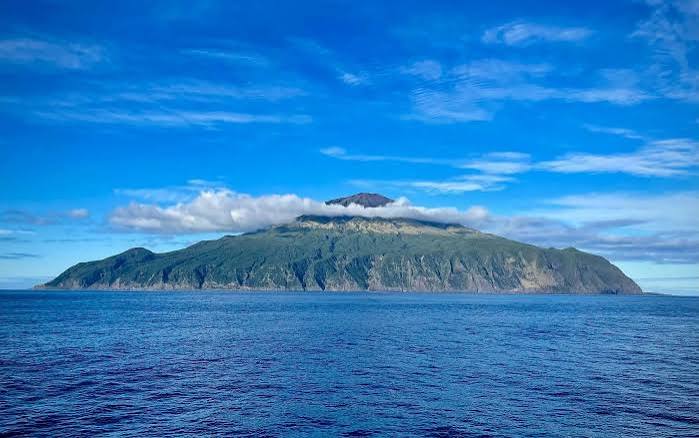
    Take Tristan da Cunha, for example. This British Overseas Territory in the South Atlantic is home to about 240 people, all living in the settlement of Edinburgh of the Seven Seas. The nearest inhabited land is 2,400 kilometers away in South Africa, and 2,800 kilometers to South America. Supply ships arrive only 8 to 9 times a year, making each delivery a major event. Pitcairn Island, another British territory in the South Pacific, is even more remote in terms of access: with a population of around 50, it has no airport and no harbor, and ships must anchor offshore while passengers transfer by longboat. Supply ships come just 2 to 3 times a year.

    These islands hold Guinness World Records for their remoteness. Edinburgh of the Seven Seas is recognized as the most remote permanent settlement, while Pitcairn is often cited as the most remote inhabited island. But what does that record actually mean for the people who call these places home?

    A History Forged by Isolation

    The stories of how these islands were settled are as remarkable as their geography. Tristan da Cunha was first inhabited in 1816 when a British garrison was stationed there to prevent the French from using it as a base to rescue Napoleon from St. Helena. When the garrison left, a few soldiers and civilians chose to stay, and the population grew through shipwreck survivors and intermarriage. In 1961, a volcanic eruption forced the entire population to evacuate to England, but most returned within two years, drawn back to their isolated home.

    Pitcairn’s history is even more famous: it was settled in 1790 by the mutineers of the HMS Bounty and their Tahitian companions. The population peaked at around 250 in the 1930s but has since declined as many descendants emigrated to New Zealand. Today, the island’s residents are direct descendants of those original mutineers, making it a living piece of maritime history.

    Easter Island, or Rapa Nui, offers a different perspective. Settled by Polynesians around 800–1200 CE, it was isolated for centuries, leading to the development of the iconic moai statues and a complex society. While the collapse narrative of Easter Island is now debated by scholars, its history of isolation and cultural achievement remains a powerful testament to human adaptability.

    Daily Life: Self-Reliance and Community

    Life on these islands is defined by self-reliance and a strong sense of community. On Tristan, residents describe a “village life” where everyone knows everyone, and crime is virtually nonexistent. The economy is centered on fishing, particularly crayfish, which is exported under the “Tristan da Cunha” brand to premium markets in the US and Japan. Stamp sales and limited tourism (around 1,000 visitors per year) provide additional income.

    Pitcairn’s economy is more subsistence-based, relying on farming, fishing, honey production, and handicrafts sold to passing cruise ships. With only 100–200 visitors per year, tourism is minimal. The small population means every adult wears multiple hats—one person might serve as mayor, postmaster, and radio operator simultaneously. This versatility is essential for survival.

    Infrastructure on these islands is minimal by modern standards. Tristan has no airport, and its small harbor is often unusable in winter swells. Internet is available via satellite but with limited bandwidth. There is one school, one hospital with a single doctor, and one shop. Pitcairn has no airport or harbor, and until recently, internet was virtually nonexistent—Starlink was added in 2023, bringing a new level of connectivity. The island has one school and a clinic staffed by a nurse-practitioner.

    The Challenges of Isolation

    While the romantic view of island life emphasizes freedom from modern stressors, the reality is far more complex. Isolation can feel like imprisonment, especially when it comes to education and healthcare. On both Tristan and Pitcairn, children are often sent to boarding schools in the UK or New Zealand at age 11, because local schools only offer primary education. This means families are separated for months at a time, a sacrifice made for the sake of their children’s futures.

    Healthcare is another major challenge. On Tristan, there is one hospital with one doctor, but for anything beyond basic care, patients must be evacuated—a journey that can take days by ship or a special medical flight. On Pitcairn, the situation is even more precarious, with only a nurse-practitioner on the island. A medical emergency can require a longboat transfer to a passing ship, followed by a flight to New Zealand, a process that can take days.

    Governance also presents unique challenges. Both Tristan da Cunha and Pitcairn are British Overseas Territories, meaning residents are British citizens but have no direct representation in the UK Parliament. They rely heavily on UK government aid; Pitcairn receives approximately £3–4 million annually from the UK’s Foreign, Commonwealth & Development Office. This financial dependency is a constant reminder of their isolation, even as they maintain a degree of self-governance.

    The Changing Face of Isolation

    Isolation is not static. Easter Island, once one of the most isolated places on Earth, now has daily flights to Santiago, Chile, and a full hospital. St. Helena, another South Atlantic island, gained weekly flights in 2017, transforming its accessibility. These changes bring economic opportunities but also threaten the unique cultures that developed in isolation.

    For Tristan and Pitcairn, the future remains uncertain. Climate change poses a direct threat to low-lying coastal communities, and the economic viability of such remote outposts is constantly questioned. Yet, the residents remain committed to their homes. They have chosen this life, with all its challenges, because it offers something invaluable: a close-knit community, a deep connection to nature, and a way of life that has largely disappeared elsewhere.

    As the world becomes increasingly connected, these islands stand as reminders of what it means to be truly isolated—and of the enduring human spirit that thrives in the most remote corners of the Earth.

    The world’s most isolated inhabited islands are more than just geographical curiosities; they are living laboratories of human resilience. From the descendants of the Bounty mutineers on Pitcairn to the volcanic survivors of Tristan da Cunha, these communities have adapted to extreme isolation in remarkable ways. As technology and climate change reshape our world, their future hangs in the balance. Yet, for now, they continue to thrive, offering a unique perspective on what it means to live at the edge of civilization.

    Summary

    • Tristan da Cunha (population ~240) holds the record for the most remote permanent settlement, with the nearest land 2,400 km away and only 8–9 supply ships per year.
    • Pitcairn Island (population ~50) is the most remote inhabited island, with no airport or harbor; ships anchor offshore and passengers transfer by longboat.
    • Both islands are British Overseas Territories, relying on UK aid and facing challenges in education and healthcare, with children often sent to boarding school at age 11.
    • Easter Island and St. Helena have become less isolated due to flights, while Tristan and Pitcairn remain accessible only by sea.
    • Life on these islands emphasizes self-reliance and community, but also involves significant sacrifices, including limited medical care and separation from family.

    FAQ

    Q: What is the most remote inhabited island in the world?
    A: Pitcairn Island is often cited as the most remote inhabited island, with no airport and only sea access. The nearest inhabited land is Mangareva in French Polynesia, 550 km away, but the nearest major landmass is New Zealand, over 5,000 km away.

    Q: How do residents of Tristan da Cunha get supplies?
    A: Supply ships arrive about 8–9 times a year, bringing food, fuel, and other essentials. The island has no airport, so sea travel is the only way in or out.

    Q: What do people do for work on these islands?
    A: On Tristan, the main industry is fishing, particularly crayfish, which is exported. Pitcairn relies on subsistence farming, fishing, honey production, and selling handicrafts to cruise ships. Both islands also earn income from stamp sales and limited tourism.

    Q: How do children on these islands get an education?
    A: Both Tristan and Pitcairn have primary schools, but for secondary education, children must leave the island at age 11 to attend boarding schools in the UK or New Zealand. This often means being separated from their families for months at a time.

    Q: What happens in a medical emergency on Pitcairn?
    A: Pitcairn has only a nurse-practitioner on the island. In a serious emergency, the patient must be transferred by longboat to a passing ship, which can then take them to a larger island with medical facilities, a journey that can take days.