Tag: communication

  • The Language of Whistles: How Silbo Gomero and Other Whistled Languages Work

    The Language of Whistles: How Silbo Gomero and Other Whistled Languages Work

    On the rugged island of La Gomera, a shepherd stands on one ridge and whistles a message across a ravine to a neighbor three kilometers away. To the untrained ear, it’s just a bird-like trill. But to a local, it’s a full sentence in Spanish words carried on a single pure tone, shaped by the tongue and lips into meaning.

    This is Silbo Gomero, the most famous whistled language in the world. It’s not a separate tongue but a clever acoustic trick: Spanish phonemes replaced by whistled pitches and glides. And it’s just one of dozens of whistled languages found from the Turkish Black Sea coast to the mountains of Mexico. They all solve the same problem how to communicate over distances where shouting fails and they do it with remarkable efficiency.

    What Exactly Is Silbo Gomero?

    Silbo Gomero (literally “Gomeran whistle”) is a whistled form of Spanish used on La Gomera, one of Spain’s Canary Islands. It’s a phonological replacement, not a separate language. Speakers “translate” Spanish words into whistles that mimic the vowels and consonants of spoken Spanish. The whistle itself is a single frequency carrier, modulated by the shape of the mouth, tongue, and lips the same articulatory gestures used in speech, but without vocal cord vibration.

    The result is a system that reduces Spanish’s roughly 24 phonemes to just 4 “vowel” pitches and 4 “consonant” shapes (some analyses say 2 vowels and 4 consonants). That makes it highly redundant and context-dependent. Listeners rely on word order, predictability, and the situation to fill in the gaps. Untrained ears hear only a whistle; trained ears hear sentences.

    Why Whistle at All?

    La Gomera is carved by deep barrancos (ravines) and steep valleys. Walking between them can take hours; shouting across them is useless. But a whistle cuts through the air. Whistles are pure tones with a narrow bandwidth, which carry much farther than the broad-frequency noise of shouting, especially in wind or across open valleys. The human ear is also most sensitive in the 2–4 kHz range, where most whistled languages operate. And whistling takes far less air than shouting, so you can sustain a long message.

    Distances of 3 to 5 kilometers (roughly 2 to 3 miles) are common in Silbo Gomero. That’s why the practice likely originated with the Guanche, the Berber-derived indigenous people of the Canary Islands, long before the Spanish arrived in the 15th century. Early chroniclers noted the Guanches whistling across ravines. After the conquest, the whistle was adapted to Spanish, and it survives today as a unique blend of ancient practice and modern language.

    How the Whistle Encodes Speech

    Whistled languages are not codes like Morse. They are speech surrogates that encode the phonology of the spoken language, not its spelling. They preserve prosody (rhythm, intonation) and syllable structure, so speakers of the base language can learn to hear the words.

    For vowels, Silbo Gomero uses distinct pitches: high, mid, low, and sometimes a glide. For consonants, it uses interruptions or transitions in the whistle—rising or falling glides, breaks, or changes in airflow. This is enough to distinguish, say, /p/ from /b/ in context, even if the acoustic signal is far simpler than full speech.

    Tonal languages take a different route. In Mazatec (Oaxaca, Mexico) or Hmong (Southeast Asia), whistlers encode the tones directly—the whistle pitch mimics the tone contour of each syllable. Non-tonal languages like Spanish, Greek, and Turkish instead whistle vowel quality and consonant articulation indirectly. Either way, the system works because the brain is remarkably good at filling in missing information when given a predictable context.

    Other Whistled Languages Around the World

    Silbo Gomero is the most famous, but it’s far from alone. Whistled languages exist on every inhabited continent, though they’re rare—fewer than 100 documented cases, with many extinct or endangered. They tend to arise in mountainous, forested, or island terrain where long-distance vocal communication is inefficient.

    • Turkish “kuş dili” (bird language): Used in the Black Sea region village of Kuşköy, this whistled Turkish was UNESCO-listed in 2017. It’s still used for everyday communication, from market prices to local news.
    • Whistled Greek: In the village of Antia on Evia island, a whistled form of Greek survives, though it’s now nearly extinct. Only a few elderly speakers remain.
    • Whistled French: In the Aas valley of the French Pyrenees, a whistled French once existed but is now gone.
    • Mazatec whistled speech: In Oaxaca, Mexico, the tonal Mazatec language is whistled for long-distance communication. Here, the whistle carries the tone, making it directly intelligible to speakers.
    • Pirahã: This Amazonian language is famously tonal and is also hummed and whistled by speakers, though it’s not a “whistled language” in the same sense—it’s a full language with multiple channels.
    • Chepang (Nepal) and Hmong (Southeast Asia): Both use whistled forms for courtship and long-distance calls.

    The fact that these languages arise independently on different continents suggests that whistling is a natural solution to a universal human problem: how to be heard across distance.

    The Cultural Life of Silbo Gomero

    Silbo Gomero is more than a communication tool—it’s a marker of local identity on La Gomera, a source of pride, and a living link to the island’s past. Shepherds, farmers, and older residents still use it daily. It’s also a tourist attraction, with demonstrations and classes for visitors.

    Since 1999, Silbo Gomero has been mandatory in local schools, taught as part of the curriculum to ensure its survival. UNESCO recognized it as a Masterpiece of the Oral and Intangible Heritage of Humanity in 2009 (proclaimed earlier in 2005). The listing brought funding and awareness, but also raised questions about authenticity: can a tradition survive when it becomes a school subject and a spectacle?

    So far, the answer seems to be yes. Annual competitions and demonstrations keep it alive, and a new generation of speakers is learning to whistle as naturally as they learn to speak. The UNESCO designation has also inspired other communities, like Kuşköy, to seek similar recognition for their own whistled languages.

    Why Whistled Languages Matter

    Whistled languages are not curiosities—they’re windows into how the human brain processes language. They show that the link between sound and meaning is flexible, and that the same linguistic structures can be carried by very different acoustic signals. They also remind us that language is a adaptive tool, shaped by the environment as much as by the mind.

    In a world of smartphones and instant messaging, whistled languages might seem obsolete. But on La Gomera, a shepherd still whistles across a ravine because it’s faster than texting and more reliable than a phone signal. And in Kuşköy, villagers whistle because it’s part of who they are. These languages are not just relics—they’re living proof that human communication is as varied as the landscapes we inhabit.

    The next time you hear a whistle in a quiet valley, listen closer. It might be a conversation—a sentence carried on a pure tone, shaped by the same tongue and lips that form words. Silbo Gomero and its cousins are a testament to human ingenuity: simple, elegant, and perfectly adapted to the places where they evolved. They remind us that language is not just what we speak, but how we make ourselves heard.

    Summary

    • Silbo Gomero is a whistled form of Spanish used on La Gomera, not a separate language, but a phonological replacement of speech sounds.
    • It works by using a single-frequency whistle modulated by mouth and tongue position to mimic vowels and consonants.
    • Whistles carry farther than shouting because they are pure tones in the 2–4 kHz range where hearing is most acute.
    • Whistled languages exist worldwide, including Turkish kuş dili, Mazatec, and whistled Greek, but many are endangered.
    • Silbo Gomero is taught in schools since 1999 and UNESCO-listed since 2009, ensuring its survival as a cultural heritage.

    FAQ

    Q: Is Silbo Gomero a separate language?
    A: No, it’s a whistled form of Spanish. Speakers “translate” Spanish words into whistles that mimic the phonology, so it’s intelligible to Spanish speakers who learn the system.

    Q: How far can a whistle carry?
    A: On La Gomera, whistled messages can travel 3–5 kilometers (2–3 miles) across ravines, thanks to the pure tone and the ear’s sensitivity to that frequency range.

    Q: Can anyone learn to whistle a language?
    A: Yes, with practice. Silbo Gomero is taught in schools on La Gomera, and courses are available for visitors. It requires learning to map speech sounds to whistle pitches and glides.

    Q: Why do whistled languages exist?
    A: They arise in terrain like mountains or islands where walking is slow and shouting doesn’t carry. Whistling is more efficient for long-distance communication.

    Q: Are whistled languages endangered?
    A: Many are. Only a few, like Silbo Gomero, have active revitalization efforts. Others, like whistled Greek, have only a handful of elderly speakers left.
  • How Wireless Won the Battlefield: The Birth of Military Radio

    How Wireless Won the Battlefield: The Birth of Military Radio

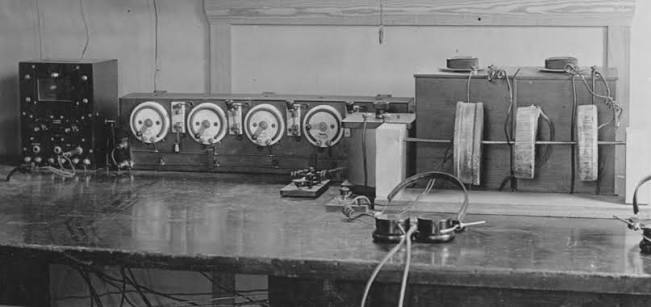
    In 1899, during the Boer War, British Army signals officers unpacked a strange new device: a spark-gap transmitter and coherer receiver, capable of sending Morse code across the veldt without a single wire. It was crude, prone to interference, and weighed over a hundred pounds, but it worked. For the first time, a commander could send orders to troops beyond the horizon in real time, without relying on telegraph lines that the enemy could cut or visual signals that darkness could hide.

    That moment marked the beginning of a revolution that would transform warfare. Within two decades, radio went from a laboratory curiosity to a standard military tool for every major power. The same technology that would one day carry the voice of a ‘walkie-talkie’ operator on D-Day had its roots in these early, crackling spark transmissions.

    This is the story of how radio was born, how the military seized on it, and how it changed the face of conflict forever.

    A World Wired for Failure

    Before radio, military communication was a patchwork of fragile methods. Visual signals—semaphore flags, heliographs, and Aldis lamps—required clear weather and line of sight. Audio signals like bugle calls and drums were short-range and easily drowned out by the noise of battle. Wired telegraphy, established during the Crimean War and perfected in the American Civil War, was a step forward, but it had a fatal weakness: the wires themselves. A single artillery shell could sever a line, and laying cable across hostile terrain was slow and dangerous.

    At sea, the problem was even worse. Once a fleet sailed over the horizon, it was effectively blind and mute to its commanders. Admirals had to rely on pre-arranged plans and visual signals that could be lost in smoke or fog. The ‘fog of war’ wasn’t just a metaphor—it was a literal, physical limitation.

    Into this void stepped a young Italian inventor with a box of spark coils and a dream.

    Marconi’s Spark: From Salisbury Plain to the Sea

    Guglielmo Marconi wasn’t the first to experiment with radio waves—Heinrich Hertz had confirmed their existence in 1887, and Nikola Tesla had filed patents on wireless apparatus as early as 1897. But Marconi was the first to turn radio into a practical communication system. In 1895, he demonstrated wireless telegraphy in Italy; two years later, he sent a signal across the Salisbury Plain in England, a distance of about four kilometers. The British military took notice.

    In 1899, the Royal Navy used Marconi sets in naval exercises, and the British Army deployed them during the Boer War. The sets were primitive by modern standards: spark-gap transmitters produced a crackling, broad-spectrum signal that was hard to tune, and the coherer receiver—a tube of metal filings that suddenly conducted when struck by radio waves—was finicky and slow. But they worked, and they gave military commanders something they’d never had before: instant, wireless communication over distance.

    The Russo-Japanese War of 1904–1905 was the first major conflict where both sides used wireless for naval communication and tactical coordination. Ships could now share intelligence, coordinate maneuvers, and report enemy positions in real time. The age of radio warfare had begun.

    The Voice Breaks Through: Fessenden, de Forest, and the Road to Clarity

    Early radio was all dots and dashes, but a Canadian inventor named Reginald Fessenden was determined to send the human voice. In 1900, he achieved the first voice transmission over radio, a feat that required a continuous-wave transmitter instead of the noisy spark-gap. Fessenden’s work, along with Lee de Forest’s invention of the Audion tube in 1906, made amplification and clearer signals possible. The Audion, a vacuum tube that could boost weak signals, was a game-changer—quite literally, for it enabled voice and long-range communication that was reliable enough for military use.

    The Titanic disaster in 1912 underscored radio’s life-saving potential. The ship’s wireless operator sent distress signals that brought rescue ships to the scene, but the tragedy also revealed the chaos of unregulated airwaves. This spurred international regulation and accelerated military adoption. By the time World War I broke out in 1914, radio was a standard tool for all major powers.

    Trench Warfare and the Push for Portability

    World War I was the crucible that forged modern military radio. Trench warfare demanded rugged, portable sets that could survive mud, shellfire, and constant movement. The early sets were heavy and fragile—the SCR-68, used by the U.S. Army after 1917, weighed over 100 pounds and was often transported by pack mule. But by the end of the war, the U.S. Signal Corps had developed lighter, more reliable sets like the SCR-77, and radio had become essential for coordinating artillery fire, directing reconnaissance, and maintaining contact between frontline units and headquarters.

    Radio also went airborne. Aircraft used wireless to report enemy positions and direct artillery fire, though early sets were heavy and unreliable. The war drove rapid innovation, including Edwin Armstrong’s invention of the superheterodyne receiver in 1918, which made tuning and reception far more precise.

    The interwar years saw further advances: FM radio, invented by Armstrong in 1933, offered clearer, more secure communication than AM, and miniaturization made possible the famous SCR-300 ‘walkie-talkie’ and SCR-536 ‘handie-talkie’ of World War II. These devices put radio in the hands of individual soldiers, transforming small-unit tactics.

    The Revolution in Command and Control

    The military adoption of radio was not just a technological shift—it was a revolution in command and control. At sea, it ended the isolation of ships, enabling coordinated fleet maneuvers and over-the-horizon intelligence. On land, it allowed artillery observers to direct fire in real time, a capability that would prove decisive in both world wars. In the air, it linked pilots to ground commanders, making close air support possible.

    But radio also brought new vulnerabilities. The signal was broadcast, meaning anyone with a receiver could listen in. Interception and jamming became immediate concerns, driving the development of encryption and spread-spectrum techniques that continue to this day.

    Strategically, radio fueled imperial competition. Britain, Germany, Russia, and Japan raced to develop and deploy wireless, recognizing its strategic value. The 1906 Berlin Radiotelegraphic Convention established international frequency allocation, driven partly by military concerns about interference. Radio had become a matter of national security, and it has remained so ever since.

    The birth of military radio was a story of unlikely heroes—inventors, engineers, and soldiers who saw the potential in crackling sparks and vacuum tubes. From the Boer War to the beaches of Normandy, radio transformed warfare from a series of isolated engagements into a coordinated, real-time enterprise. It was one of the fastest adoptions of a technology in military history, and its legacy is still with us in every encrypted frequency-hopping radio, every satellite uplink, and every drone pilot’s video feed. The spark-gap transmitter may be a museum piece, but the revolution it started is still unfolding.

    Summary

    • Radio went from a lab curiosity to a standard military tool in under two decades (1895–1914), driven by naval and imperial needs.
    • Early military radio used spark-gap transmitters and coherer receivers, which were crude but effective for Morse code.
    • Key inventors: Marconi (commercialization), Fessenden (voice), de Forest (amplification), and Armstrong (FM and superheterodyne receiver).
    • WWI drove the development of portable, rugged sets, leading to the SCR-series and eventually the walkie-talkie of WWII.
    • Radio revolutionized command and control—naval coordination, artillery direction, and air support—but also introduced vulnerabilities like interception and jamming.

    FAQ

    Q: What was the first military use of radio?
    A: The first documented military use was in 1899, when the British Royal Navy used Marconi sets in naval exercises, and the British Army used them during the Boer War.

    Q: Who invented the technology behind military radio?
    A: Guglielmo Marconi commercialized wireless telegraphy, but Nikola Tesla and Alexander Popov also filed early patents and demonstrations. Reginald Fessenden sent the first voice transmission, Lee de Forest invented the Audion tube for amplification, and Edwin Armstrong developed FM radio and the superheterodyne receiver.

    Q: How did radio change naval warfare?
    A: Radio allowed ships to communicate beyond visual range, enabling coordinated fleet maneuvers, real-time intelligence sharing, and over-the-horizon targeting. This ended the isolation of ships at sea and transformed naval tactics.

    Q: What was the impact of WWI on military radio?
    A: WWI drove the development of portable, rugged radio sets that could survive trench conditions. It also introduced radio to aircraft and artillery coordination, making it a standard tool for all major powers.

    Q: What were the limitations of early military radio?
    A: Early sets were heavy, fragile, and used spark-gap transmitters that produced noisy, hard-to-tune signals. They were also broadcast, so messages could be intercepted, leading to concerns about security and the development of encryption.

  • The One Word That Can Defuse Any Toxic Argument

    The One Word That Can Defuse Any Toxic Argument

    You’re in a heated argument. Voices rise, accusations fly, and your brain has already flooded with adrenaline, making rational thought nearly impossible. In these moments, everything you say seems to make things worse. But there is a single word that can break the cycle: “Ouch.”

    This isn’t a magic spell or a trick. It’s a pattern interrupt — a technique rooted in decades of psychology and conflict resolution. When used correctly, “ouch” can pause an escalating argument, giving both parties a chance to step back from the brink. But as simple as it sounds, it’s not as easy as just saying the word. Here’s how it works, why it works, and where it falls short.

    The Science of Escalation

    Toxic arguments follow a predictable pattern. Psychologist John Gottman identified four behaviors that predict divorce with over 90% accuracy: criticism, defensiveness, contempt, and stonewalling. These are the “Four Horsemen” of relationship apocalypse, and they feed off each other in a vicious loop.

    When you’re in that loop, your brain is in “amygdala hijack.” The amygdala, your threat-detection center, takes over and shuts down the prefrontal cortex — the part of your brain that handles logic and reasoning. You literally cannot think straight. Your heart rate spikes, cortisol floods your system, and you’re in fight-or-flight mode.

    In this state, long explanations are useless. The other person can’t process complex sentences. They’re just as flooded as you are. That’s why a single, short, unexpected word can be more effective than any well-reasoned argument.

    Enter “Ouch”

    “Ouch” comes from Marshall Rosenberg’s Nonviolent Communication (NVC), a framework developed in the 1960s and 70s. Rosenberg believed that behind every attack is an unmet need. The NVC model has four components: observation, feeling, need, and request. “Ouch” is a shorthand for the feeling component — it signals that something hit a nerve.

    The word works because it’s not an argument. It’s a self-disclosure. You’re not saying “You hurt me” (which invites defensiveness) or “Stop it” (which is a command). You’re simply expressing a felt experience. This makes it non-accusatory and disarming.

    For example, imagine a couple arguing about household chores. One says, “You never do anything around here!” The other feels attacked and responds defensively: “That’s not true! I did the dishes yesterday!” The escalation continues. But if the second person says, “Ouch,” it changes the dynamic. The first person might pause and think, “Did I go too far?” The emotional impact is acknowledged without a counterattack.

    Why It Works: The Pattern Interrupt

    “Ouch” is a pattern interrupt — a concept from Neuro-Linguistic Programming (NLP) and cognitive behavioral therapy. A pattern interrupt is any unexpected stimulus that disrupts a habitual behavioral loop. In the middle of an argument, both parties are on autopilot, repeating the same reactions. “Ouch” is so out of place that it forces a pause.

    That pause is crucial. It gives the amygdala a moment to stand down, allowing the prefrontal cortex to come back online. Research shows that it takes about 20 minutes for your brain to fully recover from an adrenaline surge, but even a few seconds can help regain some clarity.

    The word also models vulnerability. Brené Brown’s research on vulnerability shows that expressing vulnerability can disarm defensiveness and build trust. When you say “ouch,” you’re showing that you’re human, that you have feelings, and that the other person’s words have impact. This can trigger empathy in the other person, shifting the tone from attack to connection.

    Where “Ouch” Falls Short

    Let’s be clear: “Ouch” is not a cure-all. It won’t end every argument, and it doesn’t work on everyone. Critics point out that in abusive relationships, “ouch” may be ignored, mocked, or even used against you. If the other person is determined to escalate, no single word will stop them.

    Cultural and gender dynamics also play a role. In some cultures, expressing vulnerability is seen as weakness. A man might be ridiculed for saying “ouch” in a workplace argument, while a woman might be perceived as overly emotional. The technique is not universal.

    There’s also the risk of misuse. Some people might say “ouch” to shut down legitimate criticism. If every uncomfortable truth is met with “ouch,” it becomes a form of avoidance. The word is not a shield; it’s a signal. It says, “I’m hurting, and I need a moment.” But it doesn’t resolve the underlying issue. Without follow-up — like “Ouch. I need a moment to process this” — the argument will likely resume.

    How to Use “Ouch” Effectively

    If you want to try this technique, here are some guidelines:

    • Use it sincerely. “Ouch” only works if you mean it. If you use it as a manipulation tactic, it will backfire.
    • Pair it with a pause. After saying “ouch,” take a breath. You can say, “I need a moment.” This gives both of you time to de-escalate.
    • Follow up. After the pause, return to the conversation with a focus on finding a solution, not winning the argument.
    • Don’t overuse it. If you say “ouch” to everything, it loses its power. Save it for moments when you’re genuinely hurt.

    The Bigger Picture

    “Ouch” is not the magic word that will solve all your relationship problems. It’s a tool — one of many in your communication toolbox. The real work is in building trust, emotional regulation, and a willingness to repair. But in the heat of a toxic argument, “Ouch” can be the paddle that turns the boat around before it goes over the waterfall.

    The next time you feel an argument spiraling out of control, try saying “Ouch.” It’s not a sign of weakness; it’s a sign of strength. It shows that you’re aware of your emotions and willing to take a step back. And in a world where toxic arguments are all too common, a single word that can pause the madness is worth keeping in your pocket.

    Summary

    • “Ouch” is a pattern interrupt from Nonviolent Communication that can pause an escalating argument.
    • It works by signaling emotional impact without accusation, giving both parties a moment to de-escalate.
    • The technique is not a cure-all and may not work in abusive relationships or with determined escalators.
    • Use it sincerely, pair it with a pause, and follow up to address the underlying issue.
    • “Ouch” is most effective when trust and emotional regulation are already present.

    FAQ

    Q: Does “Ouch” work in every argument?
    A: No. It works best when both parties are willing to de-escalate. In abusive or manipulative relationships, it may be ignored or weaponized.

    Q: Is saying “Ouch” the same as saying “Stop”?
    A: No. “Stop” is a command that can feel like an attack. “Ouch” is a self-disclosure that expresses your feelings without blame.

    Q: Can I use “Ouch” in written communication?
    A: It can be effective in text or email, but it’s less immediate. You might say, “Ouch, that hurt. Let’s take a break and talk later.”

    Q: What if the other person doesn’t respond to “Ouch”?
    A: If they continue to escalate, you may need to remove yourself from the situation. “Ouch” is not a guarantee, but it’s a good first step.

    Q: Is “Ouch” a sign of weakness?
    A: No. In conflict resolution, expressing vulnerability is often a sign of strength and emotional intelligence. It takes courage to admit that you’re hurt.

  • 9 Networking Tips for Introverts (No Small Talk Required)

    9 Networking Tips for Introverts (No Small Talk Required)

    Networking often conjures images of crowded rooms, clammy handshakes, and the dreaded small talk. For introverts, this can feel like a nightmare. But here’s the thing: introverts are not shy, and they don’t need to become extroverts to network effectively. In fact, introverts possess unique strengths—deep listening, genuine curiosity, and a preference for meaningful conversation—that make them excellent networkers when they play to their own style.

    The key is to ditch the extrovert-centric playbook and embrace a quieter, more intentional approach. Research shows that 70–85% of jobs are found through networking, so avoiding it altogether isn’t an option. But you don’t have to ‘work the room’ to build a powerful network. Instead, focus on quality over quantity, leverage digital tools, and redefine what networking means to you. Here are nine practical tips to help you network authentically—without a single awkward small-talk exchange.

    1. Reframe Networking as Relationship Building

    The word “networking” often feels transactional—like you’re just collecting contacts for personal gain. No wonder it feels draining. Instead, think of it as building professional friendships or learning from interesting people. This mental shift reduces anxiety and makes interactions more genuine. When you approach networking with curiosity and a desire to connect, people respond positively. Ask yourself: “Who do I want to learn from?” rather than “Who can I get something from?” This simple reframe can make all the difference.

    2. Focus on Quality, Not Quantity

    Forget the advice to “work the room” and collect 20 business cards. Research on interpersonal communication shows that deep, substantive conversations create stronger feelings of connection than small talk. Introverts are naturally good at deep talk, so lean into it. Aim for two or three meaningful conversations per event, not twenty superficial ones. Follow up with those people afterward. A few well-nurtured connections are worth more than a pile of forgotten contacts.

    3. Use One-on-One Meetings

    Skip the big networking events if they overwhelm you. Instead, schedule one-on-one coffee meetings or virtual chats with people you admire. These settings allow for focused, meaningful conversation without the sensory overload of a crowd. You can prepare questions in advance, listen actively, and build a genuine rapport. Many successful introverted professionals swear by this method. It’s also easier to ask for a meeting via email or LinkedIn—and introverts excel at thoughtful written communication.

    4. Leverage Digital-First Networking

    The rise of remote work has made digital networking the norm, and that’s great news for introverts. Platforms like LinkedIn, email, and professional Slack communities allow you to craft thoughtful messages at your own pace, research the person beforehand, and avoid the pressure of real-time conversation. Send a personalized connection request, comment on someone’s post with a thoughtful question, or join a niche online community. These asynchronous methods let you shine without the spotlight.

    5. Attend Events with a Mission

    Walking into a networking event without a plan is a recipe for anxiety. Instead, give yourself a specific purpose. For example: “I want to meet three people who work in data science” or “I’ll learn about the challenges of being a product manager.” This focus reduces the overwhelm and gives you a clear direction. You can also arrive early—before the crowd builds—so you can ease into the environment. And if you’re really nervous, use the “buddy system”: attend with a friend or colleague. You can support each other and split the social load.

    6. Volunteer or Work at Events

    One of the easiest ways to network without small talk is to have a role. Volunteer at a conference, help at the registration desk, or offer to introduce speakers. When you’re working, you have a purpose, and conversations happen naturally around your task. You’re also seen as helpful and approachable, which can lead to more meaningful interactions. Plus, you’re too busy to feel awkward.

    7. Be a Great Listener

    Introverts are often exceptional listeners, and that’s a superpower in networking. Social psychology research shows that asking questions and showing genuine curiosity makes people like you more. So, instead of focusing on what to say next, focus on truly listening. Ask open-ended questions like, “What’s the most interesting part of your work?” or “How did you get started in this field?” People love talking about themselves, and your genuine interest will leave a lasting impression. You’ll also learn more than you would by talking.

    8. Follow Up with Thoughtful Messages

    The real value of networking often comes after the event. Send a personalized follow-up within 24–48 hours. Mention something specific from your conversation—a challenge they shared, a book they recommended, or a mutual interest. This shows you were listening and sets the stage for a deeper connection. You can also use a simple system to track your contacts, like a spreadsheet or CRM, to stay organized without feeling overwhelmed. Follow-up is where introverts can truly excel, because it’s done in writing, on your own time, and with care.

    9. Manage Your Energy

    Networking is not just about technique—it’s about energy. Introverts get drained by social interaction, so budget your energy wisely. Schedule recovery time after events, limit yourself to one or two networking activities per week, and choose events strategically. It’s okay to leave early if you’re exhausted. The goal is to build relationships over time, not to burn out in one night. Listen to your body and mind, and prioritize quality interactions over quantity.

    Networking doesn’t have to be a marathon of small talk and business cards. By redefining what networking means, focusing on meaningful one-on-one connections, and leveraging your natural strengths as an introvert, you can build a powerful professional network that feels authentic and sustainable. Remember, you don’t need to be the loudest person in the room—you just need to be genuinely interested in the people you meet. And that, as research shows, is often what leaves the most lasting impression.

    Summary

    • Reframe networking as relationship building, not transactional contact collection.
    • Focus on quality over quantity—aim for 2–3 meaningful conversations per event.
    • Use one-on-one meetings and digital-first methods like LinkedIn and email.
    • Attend events with a mission or volunteer to give yourself a role.
    • Be a great listener—ask questions and show genuine curiosity.
    • Follow up with personalized messages to deepen connections.
    • Manage your energy by scheduling recovery time and limiting events.

    FAQ

    Q: Does networking really matter for career success?
    A: Yes. Studies consistently show that 70–85% of jobs are found through networking, not just online applications. Building a strong network can open doors to opportunities you wouldn’t otherwise find.

    Q: I’m introverted, but I’m not shy. What’s the difference?
    A: Introversion is about energy preference—introverts feel drained by social interaction and need alone time to recharge. Shyness is fear of judgment or social anxiety. You can be an introvert who is confident and comfortable in conversations; you just prefer deeper, fewer interactions.

    Q: How can I network if I hate small talk?
    A: Skip the small talk! Focus on deep, meaningful conversations instead. Ask thoughtful questions, listen actively, and follow up with personalized messages. Research shows deep talk creates stronger connections than small talk, and introverts are often naturally good at it.

    Q: What are the best types of events for introverts?
    A: Look for workshops, classes, conferences with small breakout sessions, volunteer opportunities, or professional association meetings with structured icebreakers. These settings provide a built-in purpose and reduce the pressure of initiating conversation.

    Q: Is online networking effective for introverts?
    A: Absolutely. Online networking via LinkedIn, email, and professional communities allows you to craft thoughtful messages, research people in advance, and control the pace of interaction. Many introverts find it more comfortable and just as effective as in-person networking.

  • AI Translators Are More Fluent Than Ever—But Words Are Only Half the Story

    AI Translators Are More Fluent Than Ever—But Words Are Only Half the Story

    Open any browser, and you’ll find a translation tool that can render a French menu, a Japanese news article, or a Spanish email into flawless English in seconds. Neural machine translation has reached near-human fluency for many languages, handling idioms and slang that stumped earlier systems. But here’s the catch: fluency in words doesn’t equal success in communication. A grammatically perfect translation can still miss the point entirely—because meaning lives in tone, context, and culture, not just vocabulary.

    This gap between what AI translates and what people actually communicate is becoming more critical as these tools spread into medicine, law, and diplomacy. Understanding why a fluent translation can fail is essential for anyone who relies on AI to bridge language gaps—and for the developers building the next generation of translation technology.

    The Rise of Fluent Machines

    Just a decade ago, machine translation was clunky. Statistical models produced word-for-word approximations that often read like robotic garble. Then came neural machine translation (NMT) in 2014, followed by the Transformer architecture in 2017, and suddenly AI could grasp context, idioms, and even some slang. Today, systems like Google Translate, DeepL, and GPT-based models score within a few points of professional human translators on standard benchmarks like BLEU and COMET for high-resource language pairs such as English↔French or English↔Chinese.

    The speed and scale are staggering. Google Translate alone processes over 100 billion words daily across more than 100 languages. Real-time speech translation is now a feature on smartphones, and Meta is researching simultaneous interpretation. For travelers, students, and casual users, AI translation is a miracle—instant, free, and often impressively accurate.

    The Fluency Illusion

    But here’s the problem: fluency can be deceptive. When a translation reads smoothly, we naturally assume it’s correct. Researchers call this the “fluency illusion”—the tendency to over-trust output that looks polished, especially when you can’t verify it against the original. In human-computer interaction, this is a form of automation bias: we trust the machine because it sounds confident.

    Consider a real-world example from a medical consultation. A patient might say, “I’m feeling a bit off,” which in some cultures is a euphemism for severe pain. A literal translation—”I feel slightly unwell”—loses the urgency. The AI produces a fluent sentence, but the doctor misreads the severity. The words are right; the meaning is wrong.

    Communication Is More Than Words

    Linguists and anthropologists have long known that language is only one layer of communication. Meaning also comes from non-verbal cues like tone and gesture, shared background knowledge, cultural norms about directness and politeness, and the situational context—who is speaking, to whom, and why.

    For example, in high-context cultures (like Japan or Arab countries), much of the message is implicit, relying on the listener to read between the lines. In low-context cultures (like Germany or the U.S.), communication is more explicit. A literal translation from Japanese to English might strip away the indirectness that signals respect or hesitation, making a polite refusal sound like a hard “no.” In business negotiations, that can derail a deal.

    Speech act theory adds another layer: we use words not just to convey information but to perform actions—promising, warning, apologizing, flattering. A translation that gets the propositional content right but misses the intended speech act fails communicatively. Sarcasm, humor, and irony are notoriously hard for AI because they rely on shared context and cultural cues that aren’t in the text itself.

    Where AI Still Stumbles

    Despite progress, AI translation has documented weaknesses:

    • Low-resource languages: Languages with little training data still produce poor translations, perpetuating a digital divide.
    • Culturally embedded expressions: Proverbs, idioms, and metaphors often have no direct equivalent. “It’s raining cats and dogs” doesn’t translate literally into most languages.
    • Politeness registers: Many languages have formal vs. informal address (tu/vous, du/Sie). AI often defaults to one, which can sound rude or overly familiar.
    • Domain-specific jargon: Legal, medical, and literary texts require specialized knowledge that generic models lack.
    • Code-switching: Mixed-language input (common in multilingual communities) confuses systems trained on single-language corpora.

    These aren’t edge cases—they’re everyday communication. And in high-stakes settings like refugee intake or emergency response, a mistranslation can have life-or-death consequences.

    The Human Element: Translation vs. Localization

    Professional translators are trained to do more than convert words. They consider the purpose, audience, and cultural context—a process called localization. A marketing slogan might be adapted entirely to resonate with a new culture, not translated literally. Human translators also make judgment calls about ambiguity, something AI cannot do because it lacks lived experience.

    This is why many professionals argue that AI is a tool, not a replacement. The emerging skill is “post-editing”—humans refining AI output to ensure fidelity and cultural appropriateness. In fields like law and medicine, human oversight remains non-negotiable.

    The Trust Paradox

    Interestingly, user studies reveal a trust paradox. When people can’t tell if a translation is AI-generated, they may over-trust it (the fluency illusion). But when they know it’s AI, they may discount it even when it’s accurate. This inconsistency complicates how we integrate AI translation into our lives.

    There’s also an ethical dimension. AI translation can flatten linguistic diversity, favoring dominant languages and encoding biases from training data. For endangered languages, it might offer a lifeline—or it might standardize and erase dialects. The choice of how to use these tools is ours.

    Looking Ahead: Multimodal and Context-Aware AI

    The next frontier is multimodal AI that can process vision, audio, and text together. Imagine a translator that sees a speaker’s facial expression or hears their tone of voice—capturing some of the non-verbal cues that text alone misses. Researchers are also working on context-aware models that track conversation history and cultural norms.

    But even the most advanced AI will never fully replicate human understanding. Communication is a deeply human act, rooted in shared experience and empathy. As AI translators become more fluent, we must remember that words are just the surface. The real meaning lies beneath—in the pauses, the gestures, and the unspoken assumptions that machines cannot yet grasp.

    AI translation is a remarkable achievement, breaking down language barriers in ways that were unimaginable a generation ago. But fluency is not the same as understanding. As we rely more on these tools, we must stay aware of their limits—and complement them with human judgment, especially in high-stakes situations. The best translation isn’t always the most literal; it’s the one that truly communicates.

    Summary

    • AI translation has achieved near-human fluency in many languages, but fluency doesn’t guarantee communicative success.
    • The “fluency illusion” causes users to over-trust polished AI output, even when it misses cultural or contextual meaning.
    • Communication relies on non-verbal cues, shared knowledge, and cultural norms—elements AI cannot fully capture.
    • AI still struggles with low-resource languages, idioms, politeness registers, and domain-specific jargon.
    • Human oversight, especially in medicine, law, and diplomacy, remains essential; AI is a tool, not a replacement.

    FAQ

    Q: Can AI translation replace human translators?
    A: Not entirely. AI is excellent for everyday, low-stakes translation, but human translators are still needed for high-stakes domains like law and medicine, where cultural nuance and accuracy are critical. The role is shifting toward post-editing AI output.

    Q: Why does a fluent AI translation sometimes sound wrong?
    A: Because fluency is about grammar and word choice, not meaning. AI may miss sarcasm, politeness, or cultural references, producing text that reads well but conveys the wrong message.

    Q: What are the biggest limitations of AI translation today?
    A: Low-resource languages, culturally embedded expressions, sarcasm, humor, politeness registers, and domain-specific jargon are the main weak points.

    Q: How can I avoid miscommunication when using AI translation?
    A: Use it as a starting point, not a final answer. For important conversations, verify with a human who understands both languages and cultures.

    Q: Will AI translation improve to fully capture meaning?
    A: Multimodal models that process tone and visuals may help, but full understanding requires lived experience and empathy, which machines lack. It’s unlikely AI will ever fully replicate human communication.