Tag: classic Hollywood

  • The Forgotten Auteur: How Dorothy Arzner Broke Barriers in Classic Hollywood

    The Forgotten Auteur: How Dorothy Arzner Broke Barriers in Classic Hollywood

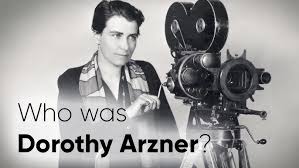
    In 1929, Hollywood was in the throes of a technological revolution: the transition to sound. Most directors struggled with the bulky, stationary microphones that limited actors to standing in one spot. Dorothy Arzner, a former editor who had just been handed her first sound film, reportedly solved the problem by mounting a microphone on a fishing rod and dangling it over the actors’ heads—an early version of the boom mic. Whether or not the story is entirely true, it captures the ingenuity of a woman who repeatedly found creative solutions to the obstacles placed in her path.

    Arzner directed about 20 feature films between 1927 and 1943, making her the only woman directing movies in Hollywood’s studio system during the 1930s. She was the first woman to join the Directors Guild of America, and she directed Katharine Hepburn, Lucille Ball, and Rosalind Russell in some of their most memorable roles. Then she vanished from the industry’s memory—until feminist film scholars in the 1970s rediscovered her work and re-established her as a pioneering filmmaker whose films still resonate today.

    From Typist to Director

    Arzner’s path to the director’s chair was anything but typical. She started at Paramount as a script typist, then moved up to script clerk, and then to editor. Her editing skills—she was known for her technical precision—earned her a promotion to director when the studio needed someone to take over a silent film, Fashions for Women (1927).

    She didn’t just survive in the male-dominated industry; she thrived. Arzner was known for delivering films on time and on budget, a reputation that kept her employed even as other women directors were pushed out. She worked primarily at Paramount, then at RKO and Columbia, navigating the rigid studio system where directors were essentially contract employees with little creative freedom.

    The Sound Innovation (and the Dispute)

    When Arzner directed The Wild Party (1929), starring Clara Bow, she faced a unique challenge: the technology for sound film was primitive. Microphones were fixed in place, often hidden in props, which meant actors had to stay close to them to be heard. This severely limited their movement and made scenes feel static.

    Arzner’s solution, according to legend, was to attach a microphone to a long pole—essentially inventing the boom microphone. This allowed actors to move more freely while still being recorded. Some film historians dispute this claim, pointing out that other crew members may have developed similar devices around the same time. But the story persists, and it illustrates Arzner’s willingness to think outside the box to get the best performance from her actors.

    A Body of Work with a Feminist Edge

    Arzner’s films often centered on women’s lives, and she approached them with a perspective that was rare for the era. In Christopher Strong (1933), Katharine Hepburn plays an aviator who has an affair with a married man and ultimately dies by suicide—a tragic ending that was typical for women in Hollywood films, but Arzner frames it with a sense of consequence and critique rather than simple moralizing.

    Her most studied film today is Dance, Girl, Dance (1940), starring Lucille Ball as a ballet dancer and Maureen O’Hara as a burlesque performer. The film includes a famous scene where O’Hara’s character, Judy, confronts the male audience that has been leering at her. She delivers a speech that directly challenges the male gaze: “You’re all of you—you’re all of you—wrong!” It’s a moment that feels decades ahead of its time and has made the film a cornerstone of feminist film theory.

    The Limitations of a “Compromised” Career

    For all her achievements, Arzner’s career was not without its constraints. She directed only about 20 films over 16 years—a modest output compared to her male peers. Many of her assignments were “women’s pictures,” a genre that was often dismissed by critics as melodrama. Some scholars argue that her legacy has been inflated by feminist critics who read subversion into every frame, and that her work is actually uneven in quality.

    The tension between the “barrier-breaker” and the “compromised career” narratives is real. Arzner did open doors, but she also worked within a system that limited what she could do. She often had to fight for projects, and she left studio directing in 1943 after a dispute with Columbia Pictures over The Man Who Wouldn’t Talk. Her retirement from features was not entirely voluntary.

    Leaving Hollywood, Shaping Future Filmmakers

    After leaving the studio system, Arzner directed training films for the Women’s Army Corps during World War II. Then, in the late 1940s, she became the first woman to teach film at UCLA. Her students included Francis Ford Coppola and Eleanor Coppola, among others. She passed on her knowledge to a new generation, even as her own contributions were being forgotten.

    Rediscovery and Legacy

    The 1970s brought a renewed interest in Arzner’s work, thanks to feminist film scholars like Claire Johnston, Pam Cook, and Judith Mayne. They argued that Arzner’s films offered a unique perspective on female subjectivity and gender performance, and they placed her in the canon of important directors. This revival was part of a broader movement to recover the contributions of women artists who had been marginalized by history.

    Today, Arzner is recognized as a trailblazer—not just for being a woman in a male-dominated field, but for making films that challenged gender norms in subtle and not-so-subtle ways. Her work is studied in film courses, and her influence can be seen in the work of contemporary women directors who, like her, have had to navigate a system that often doesn’t make room for them.

    Dorothy Arzner’s story is not a simple tale of triumph. She was a pioneering woman in a field that didn’t want her, and she made films that pushed back against the constraints of her time. Her legacy is complicated—she was both a barrier-breaker and a product of a system that limited her. But that complexity is precisely what makes her worth remembering. She didn’t just break through; she left a body of work that still has the power to challenge and inspire.

    Summary

    • Dorothy Arzner was the only woman directing films in Hollywood’s studio system during the 1930s, directing about 20 features from 1927 to 1943.
    • She started as a script typist and worked her way up through editing to become a director, a rare path in the studio era.
    • Arzner reportedly invented the boom microphone for her first sound film, The Wild Party (1929), though the claim is disputed.
    • Her films, especially Dance, Girl, Dance (1940), are now studied for their feminist critique of the male gaze.
    • After leaving Hollywood in 1943, she taught at UCLA, where her students included Francis Ford Coppola, and she was rediscovered by feminist scholars in the 1970s.

    FAQ

    Q: How many films did Dorothy Arzner direct?
    A: She directed approximately 20 feature films between 1927 and 1943, including The Wild Party, Christopher Strong, Dance, Girl, Dance, and Craig’s Wife.

    Q: Did Dorothy Arzner really invent the boom microphone?
    A: The story is that she mounted a microphone on a fishing rod to allow actors to move freely during the filming of The Wild Party (1929). While some film historians dispute this, the anecdote is widely cited.

    Q: What is Dorothy Arzner’s most famous film?
    A: Dance, Girl, Dance (1940) is her most studied film today, particularly for its feminist critique of the male gaze in a famous scene where the protagonist confronts the male audience.

    Q: Why did Dorothy Arzner leave Hollywood?
    A: She left feature directing in 1943 after a dispute with Columbia Pictures over the film The Man Who Wouldn’t Talk. She then directed training films for the Women’s Army Corps during WWII.

    Q: Where did Dorothy Arzner teach?
    A: She taught film at UCLA, where she was the first woman in the film department. Her students included Francis Ford Coppola and Eleanor Coppola.

  • How Technicolor’s Early Experiments Created the Language of Color in Film

    From Black-and-White to Technicolor Dreams: The Fascinating History of Color Grading in Cinema

    When audiences first saw color motion pictures, they weren’t watching a smooth, naturalistic image. They were seeing flickering red-and-green tints, or hand-painted frames that shifted hue with every jump cut. The journey from those crude beginnings to the saturated wonder of The Wizard of Oz took decades, and it was driven by a single company: Technicolor.

    Technicolor didn’t invent color film, but it perfected it—through a series of increasingly complex processes that forced filmmakers to rethink sets, costumes, lighting, and even acting. The story of that evolution is a tale of engineering stubbornness, creative friction, and a monopoly that shaped what we now call the ‘classic Hollywood look.’ Let’s trace how Technicolor’s early experiments—from a lost 1917 feature to the three-strip breakthrough—created the visual vocabulary of cinema.

    The First Color Films Were a Mess

    Before Technicolor, color in film was mostly decorative. Early pioneers like Georges Méliès had assistants hand-paint each frame of a print—a laborious process that resulted in colors that shifted and bled. Other films used tinting or toning, where the entire frame was dyed a single hue to suggest mood—blue for night, red for fire. These were not true color reproductions; they were theatrical shortcuts.

    The first commercially successful system to capture actual color was Kinemacolor, patented in 1906 by British inventor George Albert Smith. His camera shot through a rotating wheel of red and green filters, exposing alternating frames. When projected through a matching wheel, the eye merged the two colors into a semblance of natural hue. A Visit to the Seaside (1908) was the first public demonstration, and it amazed audiences—but the system had severe flaws. Colors fringed at the edges, and any movement caused a flickering rainbow. Still, it proved that color could be more than a gimmick.

    Technicolor entered the field in 1914, founded by Herbert Kalmus and two partners in Boston. Kalmus was a scientist-entrepreneur, and he approached color as an engineering problem rather than a magic trick. His first system, Process 1, used a beam-splitter camera to expose two frames side-by-side—one through a red filter, one through a green—then projected them through a special dual-lens projector. The single surviving feature, The Gulf Between (1917), is now lost, but accounts describe a fuzzy, heavy image that required the projector to be perfectly aligned. It was a dead end.

    The Subtractive Shift: Process 2 and the Birth of Dye Color

    The breakthrough came with Technicolor Process 2 in 1922. Instead of projecting two strips, Technicolor cemented a red-and-cyan dyed strip back-to-back onto a single film, creating a subtractive color image that could be shown on any standard projector. This eliminated the need for special equipment, making color practical for theaters.

    The first feature to use it was The Toll of the Sea (1922), starring Anna May Wong. The film’s palette was limited—mostly reds, greens, and skin tones—but it was a revelation. Blues and purples came out muted or teal, which forced set designers to work within a narrow range. For The Phantom of the Opera (1925), the famous masked ball scene was shot in Technicolor to show off the reds and golds, but the rest of the film stayed black-and-white because color wasn’t yet suitable for the whole story.

    Process 2 had another problem: the cemented double-strip was thick, and it could pop or separate over time. So Technicolor refined it into Process 3 (1928), which used a single strip with dye transfer—imbibition—to apply color. This was lighter and more stable, and it was used for films like The Viking (1928) and the horror classic Mystery of the Wax Museum (1933). But it still couldn’t capture the full spectrum.

    The Three-Strip Revolution

    In 1932, Technicolor unveiled its most ambitious system yet: Process 4, or three-strip Technicolor. Inside the camera, a beam-splitting prism split the light into three paths, each exposing a separate black-and-white negative—one for red, one for green, one for blue. These three negatives were then printed onto a single strip using dye transfer, layering the colors to produce a full, rich palette.

    The first short to use it was La Cucaracha (1934), a musical that showcased the saturated colors. The first feature was Becky Sharp (1935), an adaptation of Thackeray’s Vanity Fair. Audiences were stunned by the vibrancy—skin tones looked natural, and for the first time, blues and purples appeared correctly.

    This was the system that would define Hollywood’s golden age. Snow White and the Seven Dwarfs (1937) used it to animate a fairy tale in color, and The Wizard of Oz (1939) made the transition from sepia Kansas to a rainbow Munchkinland. Gone with the Wind (1939) used it to capture the burning of Atlanta in fiery reds.

    But the three-strip camera was a beast. It was enormous and heavy, requiring massive arc lamps to provide enough light for the slow film stocks. Actors had to endure intense heat on set, and the camera’s bulk limited movement. Technicolor enforced strict quality control: studios had to lease the cameras and hire Technicolor-approved technicians, including a ‘color consultant’ who had final say on every costume, set, and makeup choice.

    That consultant was often Natalie Kalmus, Herbert’s ex-wife, who supervised color design on hundreds of films. Her role was controversial—directors like Alfred Hitchcock chafed at her demands, feeling that a technician was overriding their artistic vision. Yet her insistence on color harmony is why classic Technicolor films have that distinctive, cohesive look—every element seems to belong to the same palette.

    Why Color Was a Hard Sell

    Despite these technical wonders, color didn’t dominate immediately. The cost was prohibitive: Technicolor was three to five times more expensive than black-and-white. The lighting requirements were brutal, and many cinematographers disliked the way color reduced their control over contrast and shadow. Some directors, like John Ford, considered color vulgar and only used it when the studio demanded.

    Audiences also needed convincing. Early color films were often spectacles—musicals, travelogues, historical epics—which reinforced the idea that color was for entertainment, not serious drama. It wasn’t until the 1940s that directors like Michael Powell and Emeric Pressburger (Black Narcissus, The Red Shoes) and Vincente Minnelli (Meet Me in St. Louis) proved that color could be an expressive, artistic tool.

    The Monopoly and Its Fall

    Technicolor’s dominance was a monopoly. Studios couldn’t shoot in high-quality color without leasing Technicolor equipment and personnel. That ended in the late 1940s with an antitrust suit, and cheaper single-strip processes like Eastmancolor (introduced in 1950) broke the stranglehold. Technicolor’s dye-transfer process survived into the 1970s, but the company eventually faded from the film industry, leaving behind a legacy that shapes every color film made today.

    The early Technicolor processes were imperfect, expensive, and complicated. But they solved the fundamental problem of capturing color reliably, and in doing so, they forced filmmakers to think in color—a discipline that now feels instinctive. The next time you watch a film with a deliberate palette, you’re seeing the echo of those first experiments.

    Technicolor’s early processes were not just technical stepping stones; they were the crucible that forged cinema’s visual language. The constraints of two-color reproduction and the weight of three-strip cameras pushed artists to be more inventive. And the strict control of Technicolor consultants created a look that still defines ‘classic Hollywood.’ When color became cheap and easy, it lost some of that magic—but the lessons of those early days remain embedded in every frame.

    Summary

    • The first color films used additive processes like Kinemacolor, which suffered from flicker and fringing.
    • Technicolor’s Process 1 (1916) was a dead end, but Process 2 (1922) made color practical with subtractive dye printing.
    • Three-strip Technicolor (1932) captured full color using a beam-splitting prism and three negatives, producing the saturated look of classic films.
    • The system was costly and required strict oversight, leading to a monopoly that ended with Eastmancolor’s cheaper alternative.
    • Technicolor’s color consultants, like Natalie Kalmus, shaped the aesthetic of Hollywood’s golden age.

    FAQ

    Q: What was the first color film ever made?
    A: The first publicly exhibited color film using a true color process was A Visit to the Seaside (1908), made with Kinemacolor. Earlier films used hand-painting or tinting, but those weren’t true color reproduction.

    Q: Why did early Technicolor films look so red and green?
    A: The two-color processes (Process 1 and 2) could only record red and green light. They couldn’t capture blue properly, so blues appeared muted or teal. This limited the palette that filmmakers could use.

    Q: Why was three-strip Technicolor so expensive?
    A: The cameras were massive, required huge lighting rigs, and used three separate negatives. Technicolor also enforced strict quality control, requiring studios to lease equipment and hire approved personnel, adding to the cost.

    Q: How did Technicolor’s monopoly end?
    A: The U.S. government filed an antitrust suit against Technicolor in the late 1940s, and the introduction of Eastmancolor in 1950 provided a cheaper, single-strip alternative that broke the monopoly.

    Q: Did directors like Technicolor’s color consultants?
    A: Many resented them, because consultants like Natalie Kalmus had final say over color design, overriding the director’s vision. However, their strict control also ensured a cohesive, harmonious look that became the hallmark of classic Technicolor films.