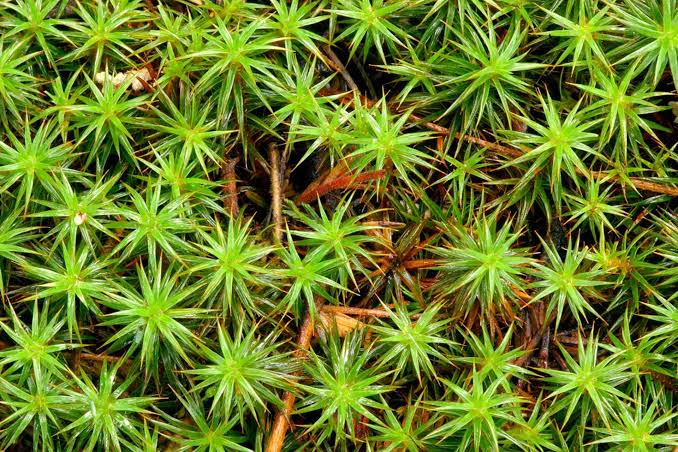
Mosses are everywhere on forest floors, sidewalk cracks, and even Antarctic rocks yet they are often overlooked as simple green fuzz. But these ancient plants are anything but ordinary. They are among the oldest land plants, having colonized terrestrial Earth nearly 500 million years ago, and they have developed extraordinary survival strategies that allow them to thrive where few other organisms can. From storing vast amounts of carbon to providing habitats for microscopic life, mosses are foundational to many ecosystems. This article explores their hidden lives, revealing how these humble plants punch far above their weight.
What Exactly Is a Moss?
To understand mosses, we need to clear up a common misconception: they are not flowering plants, nor do they have true roots, stems, or leaves. Instead, mosses belong to a group called bryophytes, which also includes liverworts and hornworts. What they have are simple structures: rhizoids (thin filaments that anchor them to surfaces, not absorb water like roots), a stem-like axis (caulidium), and leaf-like blades (phyllidia) that are usually only one cell thick. This simplicity is a key to their success.
Mosses reproduce through a two-stage life cycle called alternation of generations. The green, carpet-like plant we see is the gametophyte, which is haploid (having one set of chromosomes). It produces sperm and eggs. When water is present, sperm swim to the egg, and a diploid sporophyte grows on top of the gametophyte. This sporophyte is a stalk with a capsule that releases spores. These spores can travel far and wide, germinating into new gametophytes when conditions are right.
The Ancient Pioneers of Land
Mosses are not just old; they are among the very first plants to colonize land. Fossil evidence places them in the Ordovician period, around 470–475 million years ago, but some molecular estimates suggest they may have appeared even earlier, around 500 million years ago. At that time, the land was barren rock and soil had not yet formed. Mosses, along with algae and fungi, were the pioneers that began breaking down rock, trapping organic matter, and creating the first thin soils. This paved the way for more complex plants to evolve later. For about 100 million years, mosses and their bryophyte relatives dominated the terrestrial landscape before vascular plants—those with true roots and stems—rose to prominence in the Devonian.
Masters of Survival: How Mosses Brave Extreme Conditions
Mosses have evolved a set of astonishing survival mechanisms that allow them to endure conditions that would kill most other plants. The cornerstone is poikilohydry—the ability to tolerate losing most of their water content. Unlike vascular plants that maintain a constant internal water level, mosses simply dry out and enter a dormant state. They can lose up to 98% of their water and still revive within minutes or hours of being rehydrated.
How do they survive being dried out? When water becomes scarce, mosses produce protective compounds: late embryogenesis abundant (LEA) proteins, sucrose, and other sugars that stabilize cell membranes and proteins. They also shut down their metabolism to a near halt. When water returns, they quickly produce enzymes that mop up reactive oxygen species (ROS)—damaging molecules that accumulate during desiccation—to repair oxidative damage.
This desiccation tolerance has an incredible side effect: some mosses can remain viable for decades, even centuries. In a famous case, a moss sample frozen in Antarctic ice for about 100 years was regenerated in the lab, proving that mosses can essentially ‘wait out’ unfavorable periods indefinitely.
But survival isn’t just about drying out. Antarctic mosses also withstand temperatures below −40°C by producing cryoprotective sugars that prevent ice from damaging their cells. They also synthesize UV-absorbing pigments, such as flavonoids and sphagnorubin (in Sphagnum), which shield their DNA from intense solar radiation.
Ecosystem Engineers: The Hidden Role of Mosses
Mosses are not just survivors; they are ecosystem shapers. In boreal forests and tundra, mosses like Sphagnum (peat moss) dominate the ground, covering 25–50% of the surface. This moss carpet has profound effects:
- Carbon Storage: Peatlands, which are largely created by Sphagnum, cover only about 3% of Earth’s land surface, yet they store an estimated one-third of the world’s soil carbon—about 500 gigatons. That’s more carbon than all tropical rainforests combined on a per-area basis. Mosses achieve this because they slow decomposition; their acidic, waterlogged remains accumulate as peat, locking away carbon for millennia.
- Nutrient Cycling: Many mosses host cyanobacteria that fix nitrogen from the air. In boreal forests, these microscopic partners can contribute up to 2 kg of nitrogen per hectare per year—a critical input in nitrogen-poor ecosystems. Without mosses, many forests would be even more nutrient-starved.
- Microhabitats: Moss carpets are miniature worlds. They retain moisture, moderate soil temperature, and provide shelter for countless invertebrates, amphibians, and even germinating seedlings. They are foundation species, meaning their presence creates conditions that support a diverse community of other organisms.
In deserts, mosses are a key part of biological soil crusts—a community of mosses, lichens, and cyanobacteria that stabilize the soil, prevent erosion, and fix nitrogen. In urban areas, mosses colonize pavements and roofs, adding a touch of green and supporting biodiversity in otherwise sterile environments.
Mosses and Humans: A Long Relationship
Humans have used mosses for centuries. Peat, composed of partially decomposed Sphagnum, has been harvested for fuel in Europe and elsewhere. During World War I, Sphagnum was used as surgical dressing because it is highly absorbent and has mild antiseptic properties. Today, peat is a key ingredient in horticultural growing media, and mosses are used in floristry and traditional medicine. For instance, Polytrichum species have been used as diuretics.
Mosses also serve as biomonitors: they absorb heavy metals and pollutants from the air, making them excellent indicators of atmospheric deposition. Scientists can analyze moss samples to track pollution trends over time, providing valuable data for environmental monitoring.
Emerging research is exploring mosses for new applications, from biofuel production to pharmaceutical compounds. Their remarkable resilience and unique biochemistry hold untapped potential for biotechnology.
Conclusion
Mosses are far more than primitive plants; they are ancient, adaptable, and ecologically essential. They’ve survived cataclysmic changes over half a billion years, and they continue to shape the ecosystems we depend on. By understanding their secret life, we gain insight into the resilience of life itself and the intricate connections that sustain our planet. Next time you walk past a patch of moss, take a closer look—you’re witnessing a living link to Earth’s deep past and a guardian of its future.
Mosses may be small, but their impact is monumental. They are the unsung heroes of our planet, quietly building soil, storing carbon, and supporting life in the harshest environments. As we face global environmental changes, mosses offer lessons in resilience and adaptation that could inform our own strategies. So the next time you see a green cushion on a rock or tree, remember: you’re looking at one of Earth’s most successful and vital organisms.
Summary
- Mosses are among the oldest land plants, dating back ~470 million years, and were the first to colonize terrestrial Earth.
- They lack true roots, stems, and leaves, but use rhizoids for anchorage and have a unique two-stage life cycle.
- Mosses can survive extreme conditions, including desiccation (losing up to 98% water) and freezing (-40°C), using protective proteins and sugars.
- Sphagnum mosses cover 3% of Earth’s surface but store one-third of the world’s soil carbon (~500 gigatons).
- Mosses are foundation species in many ecosystems, providing habitat, retaining water, and fixing nitrogen via symbiotic cyanobacteria.
FAQ
Q: Are mosses and lichens the same?
A: No. Mosses are non-vascular plants (bryophytes), while lichens are a symbiotic partnership between a fungus and an alga or cyanobacterium. They look similar but are entirely different organisms.
Q: How do mosses reproduce?
A: Mosses reproduce via alternation of generations. The green plant (gametophyte) produces sperm and eggs; sperm swim through water to fertilize eggs, forming a sporophyte that releases spores.
Q: Can moss really survive after being completely dry?
A: Yes. Many mosses can lose 90-98% of their water and revive within minutes to hours when rehydrated. Some have revived after decades in frozen or dried states.
Q: Why are peatlands important?
A: Peatlands, dominated by Sphagnum mosses, store about one-third of the world’s soil carbon, helping regulate the climate. They also provide unique habitats for wildlife.
Q: How are mosses used by humans?
A: Historically, peat was used as fuel and surgical dressing. Today, mosses are used in horticulture, as biomonitors for air pollution, and in traditional medicine.