Tag: benefits

  • 500 Years of Disability Benefits: The Same Fights, Different Wigs

    500 Years of Disability Benefits: The Same Fights, Different Wigs

    When a Tudor official handed a license to beg to a disabled person in 1531, he was doing something revolutionary: drawing a line between the ‘genuinely’ disabled and the ‘sturdy beggar’ who just wouldn’t work. That line—and the arguments around it—has been redrawn ever since.

    Today, the line is drawn by a points-based assessment for Personal Independence Payment (PIP), and by Work Capability Assessments that decide if a claimant is ‘fit for work.’ The language has changed, but the core questions remain: Who is really disabled? How can we tell? And how do we stop fraud without punishing those in genuine need?

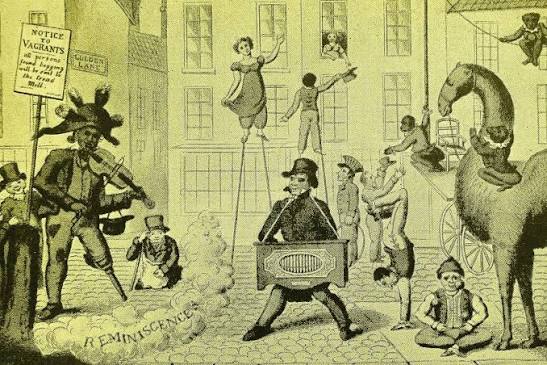
    The Tudor Invention of the ‘Deserving Poor’

    Before the 1530s, charity was mostly the Church’s job. Monasteries ran hospitals and handed out alms. But when Henry VIII dissolved the monasteries between 1536 and 1541, that safety net vanished. The state had to step in.

    The result was a series of Poor Laws that created the first state-administered welfare system. The 1531 Act made a crucial distinction: the ‘impotent poor’—the old, the sick, the disabled—could receive a license to beg. The ‘sturdy beggars,’ able-bodied vagrants, were to be whipped and punished.

    That distinction is the direct ancestor of today’s ‘fit for work’ assessments. The Elizabethan Poor Law of 1601 formalized it into three categories: the able-bodied poor (set to work), the impotent poor (relieved), and vagrants (punished). Each parish was responsible for its own poor, funded by a local property tax. That link between local taxation and welfare was born.

    The 19th-Century Hardening: ‘Less Eligibility’

    By the 1830s, many thought the old system was too generous. The Poor Law Amendment Act 1834 introduced the principle of ‘less eligibility’: relief for the able-bodied must be less desirable than the lowest-paid work. The workhouse system was deliberately harsh—a deterrent.

    But what about the disabled? Theoretically, they were still ‘deserving.’ In practice, cash relief (outdoor relief) was restricted, pushing many into workhouses. And a new gatekeeper emerged: the doctor. Medical certification became the way to prove you couldn’t work. That’s the direct ancestor of today’s PIP and WCA assessments, where a healthcare professional’s opinion can decide your benefits.

    The Modern Welfare State: A Different Route

    The Beveridge Report of 1942 and the post-war Labour government created a ‘cradle to grave’ welfare state. Disability benefits, however, were initially folded into sickness benefits. It wasn’t until the 1970s that specific disability benefits appeared—Attendance Allowance in 1971, Invalidity Benefit in 1971, and Disability Living Allowance (DLA) in 1992.

    DLA was different: it wasn’t means-tested, and it aimed to cover the extra costs of disability, not just lost income. It was also notoriously subjective. Claimants self-reported their difficulties, and awards were often based on a paper assessment that was hard to challenge.

    The Austerity Crackdown: PIP and the New Hostility

    From the 2010s, under austerity, the UK government focused on cutting disability benefit spending. The rhetoric often painted claimants as potential fraudsters. PIP was introduced in 2013 to replace DLA, with the explicit goal of cutting costs by 20%. The new system was points-based, designed to be ‘objective.’

    It hasn’t worked out that way. Over 60% of PIP appeals are decided in the claimant’s favor, suggesting the initial assessments are often wrong. The Work Capability Assessment for Employment and Support Allowance has been criticized by disability charities and the UN for being too harsh. Universal Credit’s ‘digital by default’ approach has been a nightmare for claimants with cognitive or learning disabilities.

    The Same Fight, 500 Years On

    Here’s the uncomfortable truth: the arguments today are remarkably similar to those of the 16th century. Who is ‘genuinely’ disabled? How do we prevent fraud without punishing the needy? How much should the state pay, and who should decide?

    The Tudor solution was a license to beg. The Victorian solution was the workhouse and medical certification. The modern solution is a points system and a fitness-for-work test. Each generation thinks it’s finally got the answer, and each generation is wrong.

    The cost is enormous—disability and incapacity benefits run to tens of billions of pounds a year in the UK. That makes them a permanent political target. But the human cost is also enormous. When over 60% of appeals succeed, that means thousands of disabled people are being wrongly denied support. The system is failing on both sides of the ledger.

    What We Can Learn

    The history doesn’t offer a magic solution. But it does offer a warning: every time a government tries to solve the problem with a more ‘objective’ test, it fails. The Tudor test was begging licenses; the 1834 test was the workhouse; the 2013 test is PIP. All have been criticized as harsh, bureaucratic, and error-prone.

    Maybe the problem isn’t the test. Maybe it’s the assumption that we can ever perfectly distinguish the ‘deserving’ from the ‘undeserving’ poor. As the 500-year record shows, we can’t. But we can make the system fairer, more humane, and more accurate—if we remember the lessons of history.

    The debate over disability benefits has been raging for five centuries, and it’s not going away. But we can stop pretending that any assessment system will get it right every time. The goal should be to minimize errors, to treat claimants with dignity, and to remember that behind every statistic is a person whose life depends on the outcome.

    Summary

    • The Tudor Poor Laws of the 16th century established the first state welfare system, drawing a line between the ‘deserving’ disabled and ‘sturdy beggars’.
    • The 1834 Poor Law introduced ‘less eligibility’ and medical certification, the ancestor of today’s ‘fit for work’ tests.
    • Modern UK benefits like PIP and WCA are points-based and often criticized—over 60% of PIP appeals succeed.
    • The same arguments about fraud, deservingness, and cost have persisted for 500 years.
    • History suggests that objective tests don’t solve the problem; they just change the language of exclusion.

    FAQ

    Q: What was the first disability benefit in England?
    A: The 1531 Act under Henry VIII allowed the ‘impotent poor’—the old, sick, and disabled—to receive a license to beg. This was the first state-sanctioned relief for disabled people.

    Q: How did the 1834 Poor Law change disability support?
    A: It introduced ‘less eligibility’—relief had to be less desirable than paid work—and pushed many disabled people into harsh workhouses. It also made medical certification a key gatekeeper for proving inability to work.

    Q: Why was PIP introduced in 2013?
    A: PIP replaced Disability Living Allowance with a points-based assessment, intended to cut costs by 20% and to focus on ‘objective’ criteria. It has been criticized for high error rates and appeals.

    Q: What is the ‘bedroom tax’?
    A: The under-occupancy penalty, introduced in 2013, reduces housing benefit for social tenants with spare bedrooms. It has disproportionately affected disabled claimants who need extra space for equipment or carers.

    Q: How many disability benefit appeals succeed?
    A: In recent years, over 60% of PIP appeals have been decided in the claimant’s favor, indicating systemic problems with initial assessments.
  • Social Security Benefits: Your Complete FAQ for 2025

    Social Security Benefits: Your Complete FAQ for 2025

    Social Security is one of the most important programs for American retirees, yet it’s also one of the most misunderstood. With the program facing a projected funding shortfall in the next decade, understanding how it works—and how to maximize your benefits—has never been more critical.

    Whether you’re decades from retirement or just a few years away, this FAQ covers the essentials: eligibility, benefit amounts, claiming strategies, and the financial outlook. We’ll break down the jargon and give you the facts you need to plan with confidence.

    What Is Social Security and How Is It Funded?

    Social Security is a federal program established in 1935 under President Franklin D. Roosevelt as part of the New Deal. Its purpose was to provide a safety net against poverty in old age, and it has since expanded to include disability and survivor benefits. The program is administered by the Social Security Administration (SSA), an independent agency of the U.S. government.

    The program is funded primarily through payroll taxes under the Federal Insurance Contributions Act (FICA) for employees and the Self-Employment Contributions Act (SECA) for the self-employed. Employees and employers each pay 6.2% of wages, for a total of 12.4%, while self-employed individuals pay the full 12.4%. An additional 1.45% (2.9% for self-employed) goes to Medicare, which is separate from Social Security retirement benefits.

    These taxes are paid into the Social Security Trust Funds, which are invested in U.S. Treasury securities. The system is “pay-as-you-go”: today’s workers pay for today’s beneficiaries, with any surplus accumulating in the trust funds.

    What Types of Benefits Does Social Security Provide?

    Social Security offers four main types of benefits:

    1. Retirement benefits – For workers aged 62 or older who have earned enough work credits.
    2. Disability benefits (SSDI) – For workers who become disabled before reaching retirement age.
    3. Survivors benefits – For spouses, children, and dependent parents of deceased workers.
    4. Supplemental Security Income (SSI) – A separate, needs-based program funded by general revenue, not payroll taxes.

    Each program has its own eligibility rules and benefit calculations.

    How Much Can You Expect to Receive?

    The amount you receive depends on your earnings history, the age you claim, and annual cost-of-living adjustments (COLAs). For 2025, the average monthly retirement benefit is approximately $1,976, while the maximum benefit at Full Retirement Age (FRA) is $4,018. The 2025 COLA is 2.5%, a decrease from 3.2% in 2024.

    Your benefit is based on your highest 35 years of earnings, adjusted for inflation. If you have fewer than 35 years, zeros are averaged in, which can significantly lower your benefit.

    When Can You Claim Benefits?

    You can claim retirement benefits as early as age 62, but doing so permanently reduces your monthly benefit by up to 30%. Your Full Retirement Age (FRA) depends on your birth year: it’s 66 for those born between 1943 and 1954, and it gradually rises to 67 for those born in 1960 or later.

    If you delay claiming past your FRA, you earn delayed retirement credits of 8% per year up to age 70, which can significantly increase your monthly check. For example, if your FRA is 67 and you wait until 70, your benefit could be 24% higher.

    How Do Work Credits Work?

    To qualify for retirement benefits, you need 40 work credits, which is roughly equivalent to 10 years of work. In 2025, you earn one credit for every $1,810 in earnings, up to a maximum of four credits per year. So, earning $7,240 or more in a year gets you the full four credits.

    Can You Work and Collect Benefits at the Same Time?

    Yes, but if you claim before your FRA, your benefits may be reduced under the earnings test. In 2025, if you’re under FRA for the entire year, $1 is withheld for every $2 you earn above $23,400. In the year you reach FRA, $1 is withheld for every $3 you earn above $62,160, but only for months before your FRA.

    Importantly, these withheld amounts are not lost. Once you reach FRA, your benefit is recalculated upward to account for the months in which benefits were withheld, giving you credit for claiming later.

    What About Spousal and Survivor Benefits?

    Spouses can receive up to 50% of the worker’s benefit at FRA. If you’re divorced, you may still qualify if the marriage lasted at least 10 years and you are currently unmarried. Survivor benefits can be up to 100% of the deceased worker’s benefit, and widows or widowers can claim reduced survivor benefits as early as age 60 (50 if disabled).

    What Is the Financial Outlook for Social Security?

    According to the 2024 Trustees Report, the combined trust funds are projected to be depleted by 2035 (the OASI fund alone by 2033). At that point, payroll taxes would cover only about 79–83% of scheduled benefits. This doesn’t mean the program goes bankrupt—benefits would continue, but at reduced levels unless Congress acts.

    Demographic pressures are driving this: baby boomers are retiring, life expectancy is increasing, and birth rates are lower. In 1960, there were about 5 workers per beneficiary; today, it’s about 2.8 to 1.

    Proposed fixes include raising the payroll tax cap (which is $176,100 for 2025), raising the retirement age, reducing benefits for high earners, changing the COLA formula, or a combination. Both political parties generally agree the program must be preserved, but they differ on how.

    How Can You Maximize Your Benefits?

    • Delay claiming: If you can afford to wait until age 70, your monthly benefit will be significantly higher.
    • Coordinate with your spouse: Consider how your claiming decisions affect spousal and survivor benefits.
    • Work at least 35 years: Replacing zero-earning years with higher-earning years can boost your average.
    • Understand the earnings test: Don’t be afraid to work while collecting; your benefits will be recalculated later.

    What Are the Common Misconceptions?

    • “Social Security is going bankrupt.” It’s not bankrupt, but it faces a funding shortfall that will reduce benefits if not addressed.
    • “I’ll get nothing if I claim early.” You’ll get a reduced benefit, but not zero.
    • “Working while collecting means I lose my benefits.” Withheld amounts are returned as higher benefits later.
    • “The program is only for retirees.” It also provides disability and survivor benefits.

    How Does Social Security Affect Different Groups?

    • Women: Lower lifetime earnings and more caregiving years often result in lower benefits, but longer life expectancy means they rely on benefits for more years.
    • People of color: Historical disparities in earnings and life expectancy can lead to lower lifetime benefits, and some argue the benefit formula is regressive in practice.
    • High earners: They receive higher benefits, but the payroll tax cap means they pay a smaller percentage of their income into the system.

    Conclusion

    Social Security is a vital program that millions of Americans rely on, but it’s also facing significant financial challenges. Understanding the basics—eligibility, benefit amounts, and claiming strategies—can help you make informed decisions and maximize your benefits. While the future of the program is uncertain, staying informed and planning ahead is your best defense.

    Social Security is a complex but essential part of retirement planning. By understanding how it works, you can make smarter choices about when to claim and how to coordinate with your spouse. Keep an eye on policy debates, but don’t let uncertainty prevent you from planning for your future.

    Summary

    • Social Security is funded by payroll taxes and provides retirement, disability, and survivor benefits.
    • For 2025, the average monthly retirement benefit is about $1,976, with a maximum of $4,018 at FRA.
    • Claiming early (age 62) reduces benefits by up to 30%; waiting until age 70 increases them by 8% per year past FRA.
    • The trust funds are projected to be depleted by 2035, which could lead to reduced benefits unless Congress acts.
    • Working while collecting before FRA may temporarily withhold benefits, but they are recalculated upward later.

    FAQ

    Q: What is the full retirement age for Social Security?
    A: It depends on your birth year. For those born between 1943 and 1954, it’s 66. It gradually increases to 67 for those born in 1960 or later.

    Q: Can I collect Social Security and work at the same time?
    A: Yes, but if you’re under FRA, your benefits may be reduced if you earn above certain limits. The withheld amounts are not lost; they’re recalculated into higher benefits later.

    Q: How much do I need to earn to get a work credit?
    A: In 2025, you earn one credit for every $1,810 in earnings, up to four credits per year. You need 40 credits total to qualify for retirement benefits.

    Q: What happens if the trust funds run out?
    A: If the trust funds are depleted, payroll taxes would still cover about 79–83% of scheduled benefits, so benefits would be reduced unless Congress changes the law.

    Q: Can I get spousal benefits if I’m divorced?
    A: Yes, if your marriage lasted at least 10 years and you are currently unmarried, you may qualify for benefits on your ex-spouse’s record.