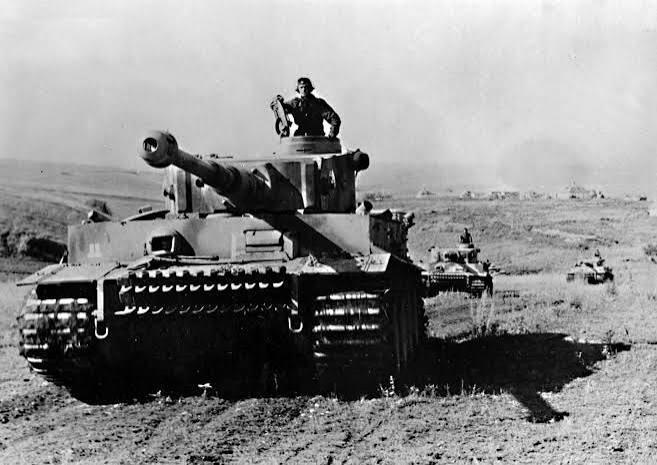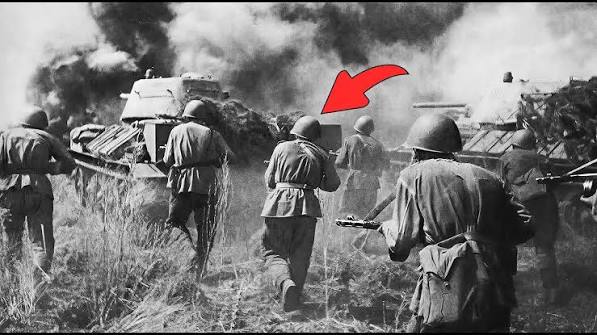
In the summer of 1943, the German army had a plan. Operation Citadel called for a double-pronged assault to slice through the Kursk salient, a 150-mile-wide bulge in the front line, and trap over a million Soviet soldiers. It was to be a rerun of the great encirclements of 1941 only faster, sharper, and deadlier, powered by a new generation of tanks: the Panther, the Tiger, and the Ferdinand.
But the Soviets knew. Through spy rings in Switzerland and intercepted radio traffic, they had the German plan in hand, down to the day of the attack. So instead of rushing to meet the enemy, they dug. Over months, they carved the earth into a fortress of minefields, anti-tank ditches, and artillery strongpoints, stretching up to 100 miles deep. When the Germans finally struck on July 5, they drove straight into a meat grinder.
Over the next seven weeks, more than two million soldiers and six thousand tanks would clash in a battle that broke the Wehrmacht’s back. By the time the guns fell silent on August 23, the strategic initiative in the East had passed to the Red Army forever. This is the story of how the largest tank battle in history unfolded—and why it sealed Nazi Germany’s fate.
A Salient in the Steppe
The front line in the spring of 1943 was a scar across western Russia. After Stalingrad, the Red Army had pushed westward, only to overextend. The result was a bulge centered on the city of Kursk—a finger of Soviet territory jutting 100 miles into German lines. To Hitler, it was an invitation. A pincer attack from the north and south could cut off the salient, bag a million prisoners, and shorten the line. It would also restore German prestige and, Hitler hoped, buy time for the new wonder weapons rolling off the assembly lines.
The plan was audacious, but it had a fatal flaw: delay. Originally scheduled for May, Citadel was postponed to July to wait for the Panther tanks and Ferdinand assault guns. Every week of waiting gave the Soviets more time. And the Soviets used it.
By July, the salient had become a fortress. Defensive belts ran in layers, each studded with anti-tank guns, mortars, and dense minefields—up to 4,000 mines per mile in the most critical sectors. Entire villages were fortified, and tank units were held in reserve to counterattack. The Steppe Front, a massive reserve army, waited behind the lines, ready to plug any breach.
The Soviet plan was not to hold forever. It was to bleed the German army white, then unleash their own offensives. Marshal Georgy Zhukov, who had learned the art of defensive warfare at Stalingrad, put it bluntly: “We will exhaust the enemy in defensive battles, destroy his tanks, and then, by introducing fresh reserves, go over to a general offensive.”
The Northern Face: Stalled in the Mud
The German attack began at dawn on July 5, 1943. In the north, Field Marshal Walter Model’s 9th Army hurled itself at the Soviet Central Front, led by Konstantin Rokossovsky. The Germans had massed nearly 2,000 tanks and assault guns for the assault, but they had already lost the element of surprise. Soviet artillery had opened fire on their assembly areas the night before, and the infantry was waiting.
Model’s tanks advanced into a killing zone. The minefields were so dense that sappers had to clear paths under fire, and the Soviet anti-tank guns were dug into reverse slopes, firing from hidden positions. In the first six days, the Germans gained only 6 to 9 miles—a fraction of their objective. By July 10, the northern pincer had ground to a halt. The 9th Army had lost over 50,000 men and hundreds of tanks, and it had failed to break through.
The Southern Face: Prokhorovka and the Tank Clash
In the south, the spearhead was Army Group South, led by Field Marshal Erich von Manstein, the Wehrmacht’s most brilliant tactician. His 4th Panzer Army, under General Hermann Hoth, pushed harder. By July 12, the Germans had advanced 20 to 25 miles, threatening the town of Prokhorovka, a key rail junction. If they took it, they could break into the operational depths.
Soviet intelligence had foreseen this, and the Steppe Front’s 5th Guards Tank Army, under Pavel Rotmistrov, was rushed to the area. On the morning of July 12, the two armored masses collided near Prokhorovka. What followed was chaos at close range.
Accounts of the battle describe hundreds of tanks swirling in a dust-choked plain, so close that German tank guns could not depress enough to hit the lower-hulled T-34s. The Luftwaffe and Soviet air force fought overhead, and the ground shook with the detonation of thousands of shells. For a full day, the two sides hammered each other. German Tiger tanks proved nearly invulnerable to Soviet 76mm guns at long range, but the sheer numbers of T-34s, many closing to point-blank range, took a toll.
The outcome was not the German breakthrough Manstein needed. His forces had taken heavy losses, and the 5th Guards Tank Army, though badly battered, had held the line. The southern pincer had exhausted itself.
The Counter-Offensives: Turning the Tide
Even as the tank battle raged at Prokhorovka, the Soviets launched their own offensives. On July 12, Operation Kutuzov struck the German-held city of Orel, north of the salient, threatening the rear of the 9th Army. On August 3, Operation Rumyantsev hit the Belgorod–Kharkov axis in the south.
Hitler had already begun to lose his nerve. The Allied invasion of Sicily on July 10 had forced him to divert troops to Italy, and on July 13 he ordered a halt to Citadel. Manstein protested, arguing that his forces were on the verge of a breakthrough, but the Führer was done. The German army would now go over to the defensive for the rest of the war in the East.
The Soviet counter-offensives rolled forward, exploiting the gaps the German pincers had left. By August 23, the Red Army had recaptured Kharkov, the third-largest city in the Soviet Union. The German front had been pushed back over 100 miles in places, and the initiative had passed to the Soviets.
The Cost of the Largest Tank Battle in History
The numbers are staggering. The Soviet Union lost between 180,000 and 250,000 dead and missing, with over 600,000 wounded. Germany lost between 50,000 and 75,000 dead and missing. Tank losses are even harder to pin down. Soviet losses ranged from 1,600 to over 6,000 tanks; German losses from 700 to over 1,200. The exact figures remain contested, but the strategic result is not.
The Battle of Kursk was the last time the Wehrmacht launched a major offensive in the East. After Kursk, the German army never regained the operational initiative. The Red Army, despite its staggering losses, went on the march westward, and nothing would stop it until Berlin.
Why Kursk Matters
The battle is often described as the turning point of the Second World War, and for good reason. It was the moment when the German war machine, which had seemed invincible in 1941 and 1942, was permanently broken. The Soviet defense-in-depth doctrine, learned at the cost of millions of lives, proved devastatingly effective. The industrial might of the Soviet Union, aided by Lend-Lease supplies, overwhelmed German production.
But Kursk also matters for what it reveals about war itself. The battle was a clash of systems—German precision and tactical brilliance against Soviet mass and strategic patience. It was a battle of metal and flesh, of hundreds of thousands of men and machines grinding each other into dust. And it was a battle that decided the fate of Europe.
The Battle of Kursk ended on August 23, 1943, with the recapture of Kharkov. The German army had been dealt a defeat from which it would never recover. The myth of German invincibility lay shattered in the mud and smoke of the Kursk salient. For the Red Army, it was the beginning of the end of a war that would take them to Berlin. For the world, it was the moment the tide of history turned decisively against Nazi Germany.
Summary
- The Battle of Kursk (July 5–August 23, 1943) was the largest tank battle in history, involving over 2 million troops and 6,000 tanks.
- Operation Citadel, the German offensive, was delayed to wait for new tanks, giving the Soviets time to build massive defenses.
- The Soviets’ defense-in-depth strategy blunted the German attack, culminating in the tank clash at Prokhorovka on July 12.
- Soviet counter-offensives (Kutuzov and Rumyantsev) threw the Germans back, recapturing Kharkov by August 23.
- Kursk was a decisive Soviet victory and the last major German offensive on the Eastern Front, permanently shifting the initiative to the Red Army.
FAQ
Q: Was the Battle of Prokhorovka the largest tank battle in history?
A: It is often described as the largest tank battle, but the exact claim is debated. Some historians argue that it was a series of smaller engagements rather than a single, massive clash. The overall Battle of Kursk, however, is unquestionably the largest tank battle of the war, with over 6,000 tanks committed.
Q: Why did the Germans delay the attack?
A: Hitler postponed Operation Citadel from May to July to wait for new tanks, including the Panther, Tiger, and Ferdinand heavy assault guns. This delay gave the Soviets more time to build their defenses, which contributed to the German failure.
Q: How did the Soviets know about the German plan?
A: The Soviets had extensive intelligence from spy rings, including the “Lucy” ring in Switzerland, and from intercepted German communications. They learned the timing and scope of the offensive, allowing them to prepare their defenses in depth.
Q: What was the impact of the Allied invasion of Sicily?
A: The invasion of Sicily on July 10, 1943, forced Hitler to divert resources to Italy and contributed to his decision to halt Operation Citadel on July 13. It was a factor, but the main reason was the Soviet resistance and the need to conserve forces.
Q: How many casualties were there?
A: Estimates vary. Soviet casualties were around 180,000–250,000 killed/missing and over 600,000 wounded. German casualties were about 50,000–75,000 killed/missing and around 200,000 wounded. Tank losses were also heavy on both sides.