Tag: astronomy

  • Hubble’s Epic Mosaic of Andromeda Reveals a Galaxy in Decline

    Hubble’s Epic Mosaic of Andromeda Reveals a Galaxy in Decline

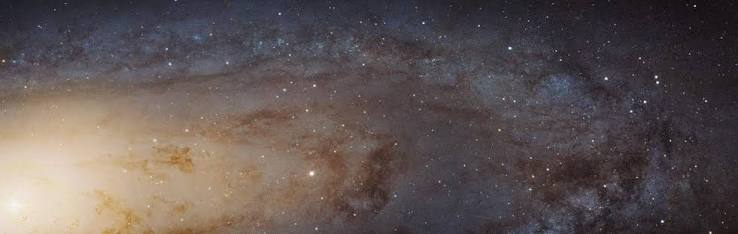
    When you look at the Andromeda Galaxy on a clear night, it appears as a faint, fuzzy smudge—a distant island of stars. But the Hubble Space Telescope has now peeled back that cosmic veil, delivering one of the most detailed portraits of our nearest large galactic neighbor ever captured. The new mosaic, composed of over 600 individual images, resolves more than 100 million individual stars in Andromeda, offering an unprecedented glimpse into the galaxy’s structure and history.

    Yet this stunning visual feast comes with a surprising twist: Andromeda is not the vibrant ‘star factory’ we once thought. The data reveal a galaxy whose star-forming glory days are largely over, with its stellar birthrate plummeting to about a tenth of its peak. This cosmic slowdown challenges our assumptions about spiral galaxies and sets the stage for the next generation of space telescopes.

    A Mosaic of Epic Proportions

    The new Andromeda image is a masterpiece of astronomical stitching. It combines roughly 600 separate Hubble fields of view into a seamless panorama spanning about 600 million pixels—one of the largest and most detailed images of a galaxy ever produced. To put that in perspective, you’d need a wall of high-definition TVs to display it at full resolution.

    This mosaic is the fruit of the Panchromatic Hubble Andromeda Treasury (PHAT) program, which imaged the galaxy in ultraviolet, visible, and near-infrared light. The survey focused on about one-third of Andromeda’s disk, zeroing in on regions of active star formation, dusty lanes, and the galaxy’s central bulge. The result is a treasure trove of data that astronomers will mine for years.

    A Galaxy’s Midlife Crisis

    One of the most striking findings from the PHAT survey is that Andromeda’s star formation has slowed dramatically. The galaxy is now producing stars at a rate roughly 10 times lower than its peak, which occurred about 4–5 billion years ago. In astronomical terms, Andromeda has become ‘quiescent’—a galaxy that has largely stopped making new stars.

    This decline may be linked to a major merger Andromeda experienced 2–3 billion years ago. Such a collision would have triggered a burst of star formation, followed by a long, slow fade as the galaxy consumed its available gas. The presence of a supermassive black hole and a massive central bulge may have also played a role, heating or expelling gas that would otherwise fuel new stars.

    This narrative stands in contrast to our own Milky Way, which continues to form stars at a moderate rate. By comparing the two galaxies, astronomers can better understand the diverse paths spiral galaxies can take over cosmic time.

    Why Hubble’s View Matters

    Hubble’s ability to resolve individual stars in a galaxy 2.5 million light-years away is a testament to the power of space-based observatories. From the ground, atmospheric blurring smears starlight, making such detailed resolution impossible. Hubble’s vantage point above the atmosphere allows it to capture crisp images across a wide range of wavelengths.

    The PHAT mosaic is not just a pretty picture; it’s a scientific goldmine. By cataloging over 100 million stars, astronomers can study Andromeda’s stellar populations, trace its star formation history, and even map the distribution of dark matter.

    The Next Giant Leap: Roman Space Telescope

    The release of this mosaic is timely, as NASA prepares for its next flagship astrophysics mission: the Nancy Grace Roman Space Telescope, set to launch in the mid-2020s. Roman’s field of view is 100 times larger than Hubble’s infrared camera, meaning it can survey the entire Andromeda disk in a fraction of the time Hubble took.

    Roman will provide a complete census of Andromeda’s stellar population, allowing astronomers to map the galaxy’s star formation history, stellar motions, and dark matter distribution in unprecedented detail. It will build on Hubble’s legacy, turning a painstaking mosaic into a wide-angle survey that could rewrite our understanding of galactic evolution.

    A Poetic Reminder

    For amateur astronomers, Andromeda is a beloved object—the most distant thing visible to the naked eye. The new imagery offers a profound connection: those faint smudges of light are actually billions of individual stars, each one now resolvable in Hubble’s view. But the story of a galaxy ‘slowing down’ also serves as a poetic reminder of cosmic timescales. Galaxies, like living things, have life cycles. Andromeda’s star-forming days may be waning, but its future is still bright—it’s on a collision course with the Milky Way, and in about 4.5 billion years, the two will merge, potentially sparking a new era of star birth.

    Hubble’s Andromeda mosaic is more than a technical achievement; it’s a window into the life of a galaxy. It shows us a neighbor that has passed its fiery youth and settled into a quieter middle age. As we await the Roman Space Telescope, this image stands as a testament to human curiosity and our relentless drive to understand the cosmos—and our place within it.

    Summary

    • Hubble has captured one of the most detailed images of the Andromeda Galaxy, a 600-million-pixel mosaic of over 600 individual images.
    • The survey, part of the PHAT program, resolves over 100 million individual stars in Andromeda.
    • Key finding: Andromeda’s star formation rate has declined dramatically, now 10 times lower than its peak 4–5 billion years ago.
    • The decline may be linked to a past merger and the influence of its central black hole and bulge.
    • The upcoming Nancy Grace Roman Space Telescope will build on this work, surveying the entire galaxy with a field of view 100 times larger than Hubble’s.

    FAQ

    Q: How many images were combined to create the Andromeda mosaic?
    A: The mosaic is composed of approximately 600 individual Hubble fields of view, stitched together into a panorama spanning roughly 600 million pixels.

    Q: What is the PHAT program?
    A: PHAT stands for Panchromatic Hubble Andromeda Treasury, a survey that imaged Andromeda in ultraviolet, visible, and near-infrared wavelengths to study its stellar populations and star formation history.

    Q: Why is Andromeda’s star formation declining?
    A: The decline is likely due to a major merger 2–3 billion years ago that triggered a burst of star formation, followed by a long decline as gas was consumed. The central black hole and bulge may also heat or expel gas, suppressing new star formation.

    Q: How does the upcoming Roman Space Telescope compare to Hubble?
    A: Roman has a field of view 100 times larger than Hubble’s infrared camera, allowing it to survey the entire Andromeda disk in a fraction of the time, providing a complete census of its stars.

    Q: When will Andromeda collide with the Milky Way?
    A: Andromeda is on a collision course with our galaxy, expected to merge in about 4.5 billion years, potentially triggering a new burst of star formation.
  • How to Watch the August 12 Total Solar Eclipse: NASA’s Live Coverage and What You’ll See

    How to Watch the August 12 Total Solar Eclipse: NASA’s Live Coverage and What You’ll See


    On Wednesday, August 12, a total solar eclipse will sweep across the Northern Hemisphere, offering a rare celestial spectacle for skywatchers in Greenland, Iceland, Spain, and beyond. While the path of totality—where the Moon completely hides the Sun—is narrow, NASA is bringing the experience to a global audience with live coverage and expert commentary. Whether you’re in the path or watching from afar, here’s everything you need to know about this awe-inspiring event and how to catch it.

    What Is a Total Solar Eclipse?

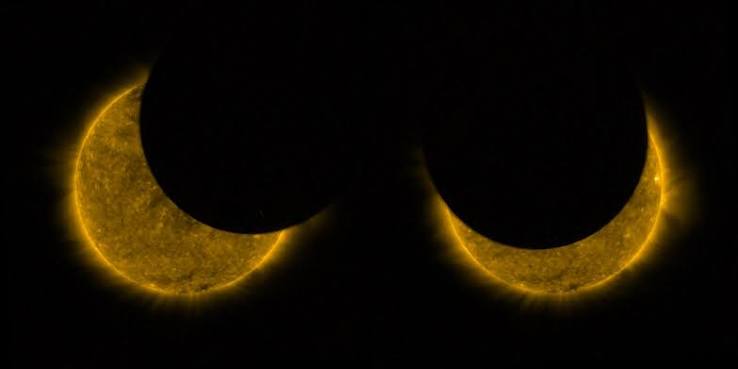
    A total solar eclipse happens when the Moon passes directly between Earth and the Sun, casting a shadow that completely blocks the Sun’s light. For a few precious minutes, the sky darkens, temperatures drop, and the Sun’s outer atmosphere—the corona—becomes visible to the naked eye. It’s a moment that has fascinated humans for millennia, and it’s one of nature’s most dramatic spectacles.

    The August 12 eclipse is particularly special because its path crosses remote Arctic regions and then sweeps into southern Europe. Totality will be visible in parts of Greenland, Iceland, northern Russia, the Atlantic Ocean, Spain, and a small corner of Portugal. For Spain, this is the first total solar eclipse since 1905, making it a historic event for the country and a major draw for eclipse chasers.

    NASA’s Live Coverage: How to Watch

    NASA will provide live streaming coverage of the eclipse, with views from multiple locations along the path of totality and interviews with subject matter experts. This means you don’t have to be in the path to experience the eclipse—you can watch it from anywhere with an internet connection.

    Coverage will be available on a variety of NASA platforms, including NASA+, YouTube, NASA TV, and social media channels. The broadcast will feature multiple camera feeds, expert commentary, and educational segments to help you understand what you’re seeing. NASA’s goal is to make the eclipse accessible to a global audience and to provide scientific context that enhances the experience.

    What to Expect During Totality

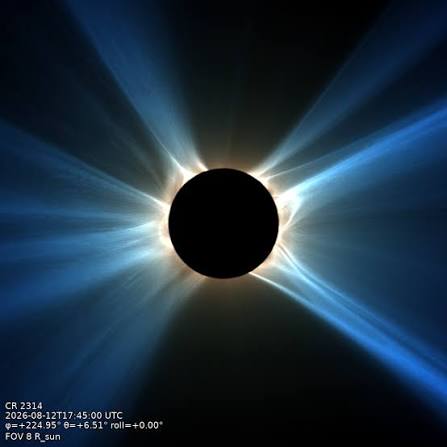
    During totality, the Sun’s corona—a halo of plasma that extends millions of miles into space—becomes visible. This is a rare opportunity to see the Sun’s outer atmosphere, which is usually hidden by the Sun’s bright surface. The 2026 eclipse occurs near solar maximum, a period of high solar activity, so you might see dramatic coronal structures, prominences, and even sunspots.

    For those in the path of totality, the experience is unforgettable: the sky darkens to a deep twilight, stars appear, and animals may behave as if it’s dusk. But for those watching online, NASA’s coverage will bring these sights to your screen, with experts explaining the science behind the spectacle.

    Safety First: Protecting Your Eyes

    If you’re lucky enough to be in the path of totality, you must use proper eye protection during the partial phases. Looking at the Sun without certified eclipse glasses can cause permanent eye damage. Only during the brief moment of totality—when the Moon completely covers the Sun—is it safe to look without glasses. If you’re watching online, you don’t need any special equipment, but if you’re outside, make sure you have ISO-certified eclipse glasses.

    The Science Behind the Eclipse

    Eclipses are more than just beautiful; they’re valuable scientific opportunities. They allow researchers to study the Sun’s corona, solar wind, and space weather. NASA and other institutions often conduct special observations during eclipses, using ground-based telescopes and even aircraft to get a closer look. The 2026 eclipse is particularly interesting because it occurs near solar maximum, when the Sun’s magnetic activity is at its peak, offering a chance to study dynamic features like prominences and coronal mass ejections.

    Why This Eclipse Matters

    The August 12 eclipse is a milestone for many reasons. For Spain, it’s the first total solar eclipse in over a century, drawing tourists and astronomers from around the world. For Iceland and Greenland, it’s a chance to see totality in some of the most remote and beautiful landscapes on Earth. And for everyone else, it’s a reminder of our place in the universe—a moment when the Moon and Sun align in a cosmic dance that has captivated humanity for ages.

    NASA’s coverage ensures that no matter where you are, you can be part of this global event. So mark your calendar, tune in, and get ready to witness one of nature’s most incredible shows.

    The August 12 total solar eclipse is a rare and exciting event, and NASA’s live coverage makes it accessible to everyone. Whether you’re in the path of totality or watching from home, you’ll have the chance to see the Sun’s corona and learn from experts. Remember to prioritize eye safety if you’re viewing in person, and enjoy the spectacle—it’s a reminder of the wonders of our universe.

    Summary

    • A total solar eclipse will occur on August 12, visible in parts of Greenland, Iceland, Russia, Spain, and Portugal.
    • NASA will provide live streaming coverage with expert commentary, available on NASA+, YouTube, and social media.
    • Totality offers a rare view of the Sun’s corona, especially dramatic near solar maximum.
    • Safety is crucial: use certified eclipse glasses during partial phases; only totality is safe to view without them.
    • This is Spain’s first total solar eclipse since 1905, making it a historic event.

    FAQ

    Q: When is the total solar eclipse?
    A: The eclipse occurs on Wednesday, August 12. The exact time of totality varies by location, so check local resources for precise times.

    Q: Where can I watch NASA’s live coverage?
    A: NASA will stream the eclipse on NASA+, YouTube, NASA TV, and social media channels. Check NASA’s website for links and schedule.

    Q: Is it safe to look at the eclipse without glasses?
    A: Only during totality—the brief period when the Moon completely covers the Sun—is it safe to look without special glasses. During partial phases, you must use ISO-certified eclipse glasses to protect your eyes.

    Q: What is the path of totality?
    A: The path includes parts of Greenland, Iceland, northern Russia, the Atlantic Ocean, Spain, and a small corner of Portugal. Only those within this narrow path will see totality; others will see a partial eclipse.

    Q: Why is this eclipse significant?
    A: It’s the first total solar eclipse in Spain since 1905, and it occurs near solar maximum, offering a chance to see dramatic solar activity. NASA’s coverage makes it accessible globally.

  • August 2026 Skywatching: A Rare Double Eclipse, the Perseids, and Venus at Its Best

    August 2026 Skywatching: A Rare Double Eclipse, the Perseids, and Venus at Its Best


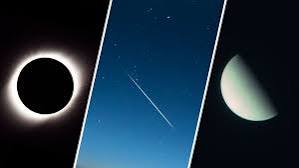
    August 2026 is shaping up to be a spectacular month for skywatchers, with not one but two eclipses, the reliable Perseid meteor shower, and brilliant Venus gracing the evening sky. Whether you’re a seasoned observer or just starting to look up, NASA’s monthly skywatching guide highlights the can’t-miss events and offers practical tips for enjoying them.

    This month is bookended by a total solar eclipse on August 12 and a deep partial lunar eclipse on August 28—a rare pairing that occurs when the Sun, Earth, and Moon align in what’s called an ‘eclipse season.’ Add to that the Perseid meteor shower peaking under ideal dark-sky conditions, and you have a month packed with celestial wonders.

    In this guide, we’ll break down each event, explain the science behind them in simple terms, and give you practical advice on when and where to look. No jargon, no complicated math—just clear explanations to help you make the most of August’s night sky.

    The Total Solar Eclipse: August 12, 2026

    A total solar eclipse occurs when the Moon passes directly between the Sun and Earth, completely blocking the Sun’s light for a few minutes. This August, the path of totality—where the eclipse is total—crosses Spain, Iceland, and Greenland. Observers in these areas will experience daytime turning into twilight as the Moon covers the Sun.

    For those outside the path, a partial eclipse will be visible across Europe, North Africa, and parts of North America, including eastern Canada and the northeastern United States. In these regions, the Moon will take a ‘bite’ out of the Sun, but it won’t fully cover it.

    Safety first: Never look directly at the Sun without proper eye protection. Regular sunglasses are not enough. You need eclipse glasses that meet the ISO 12312-2 international safety standard, or use a pinhole projector to view the eclipse indirectly. During totality, it’s safe to look with the naked eye, but only if you’re in the path of totality and the Sun is completely covered.

    The Perseid Meteor Shower: Peak August 11–13

    The Perseids are one of the most reliable meteor showers of the year, active from mid-July to late August. They occur when Earth passes through the debris trail left by Comet Swift-Tuttle. As these tiny particles—often no larger than a grain of sand—hit our atmosphere at high speed, they burn up, creating bright streaks of light.

    This year, the peak nights of August 11–13 coincide with a new moon on August 13, meaning the sky will be dark and moonless—perfect for meteor watching. Under clear, dark skies, you could see 50 to 100 meteors per hour.

    How to watch: Find a dark location away from city lights, lie back, and look up. No equipment needed—just your eyes. Give your eyes about 20 minutes to adapt to the dark, and be patient. The shower is best after midnight, when Earth’s rotation faces into the meteor stream.

    Venus at Greatest Eastern Elongation: August 17

    Venus, the brightest planet, reaches its greatest eastern elongation on August 17, meaning it will be at its maximum angular distance from the Sun (about 46 degrees). This makes it exceptionally prominent in the western evening sky after sunset, outshining every star and planet.

    Through a telescope, you’ll see Venus in a half-lit phase, similar to a first-quarter Moon. This is because Venus orbits the Sun inside Earth’s orbit, so we see different portions of its sunlit side as it moves around.

    When to look: About 30 minutes after sunset, look west. Venus will be the brightest object in that part of the sky, setting about three hours after the Sun. It’s visible to the naked eye, but binoculars or a small telescope will enhance the view.

    Saturn at Opposition: August 20

    On August 20, Saturn reaches opposition, meaning it’s directly opposite the Sun in our sky. It rises at sunset, is visible all night, and sets at sunrise. This is the best time to observe Saturn because it’s at its closest approach to Earth for the year.

    Even a small telescope will reveal Saturn’s magnificent rings, which are tilted favorably this year. You might also spot its largest moon, Titan, as a tiny point of light nearby.

    The Partial Lunar Eclipse: August 28

    A lunar eclipse occurs when Earth passes between the Sun and the Moon, casting its shadow on the Moon. On August 28, a deep partial lunar eclipse will take place, with about 93% of the Moon’s diameter entering Earth’s dark umbral shadow.

    This is not a total eclipse, so the Moon won’t turn the deep red ‘blood moon’ color of totality. Instead, the shadowed part will appear dark gray or brown, while the un-eclipsed portion remains bright. It’s still a striking sight and the deepest partial lunar eclipse until 2027.

    The eclipse will be visible in its entirety from the Americas, and in progress during moonrise or moonset for Europe and Africa. Check local times for when the eclipse begins and ends.

    Other Notable Events

    • Mercury: In early August (around August 5–10), Mercury is briefly visible low in the morning sky before sunrise. Look east about 30 minutes before sunrise.
    • Jupiter and Mars: Jupiter rises in the late evening, while Mars remains a morning object, moving through the constellation Taurus.

    Tips for Photographing the Sky

    • Perseids: Use a wide-angle lens, set your camera on a tripod, and use a long exposure (15–30 seconds) with a high ISO. Take many shots to increase your chances of catching a meteor.
    • Lunar eclipse: A telephoto lens (200mm or more) will capture the Moon’s details. Use a tripod and experiment with exposure settings.
    • Solar eclipse: You must use a solar filter on your camera lens, just as you would for your eyes. Never point an unfiltered camera at the Sun.

    Understanding Eclipses and Meteor Showers

    Eclipses happen because of the precise alignment of the Sun, Earth, and Moon. A solar eclipse occurs when the Moon is between the Sun and Earth; a lunar eclipse when Earth is between the Sun and the Moon. These alignments happen during ‘eclipse seasons,’ which occur roughly every six months.

    Meteor showers are predictable because Earth passes through the same debris streams at the same time each year. The Perseids, for example, are caused by Comet Swift-Tuttle’s debris, which has been spread along its orbit for centuries.

    August 2026 offers a rare celestial doubleheader: a total solar eclipse and a deep partial lunar eclipse in the same month, plus the ever-reliable Perseid meteor shower and brilliant Venus. Whether you’re traveling to the path of totality or simply stepping outside to catch a meteor, this is a month to look up. Mark your calendars, find a dark spot, and enjoy the show—no special equipment required for most events, just your curiosity.

    Summary

    • Total solar eclipse on August 12, visible in totality from Spain, Iceland, and Greenland; partial in Europe, North Africa, and parts of North America.
    • Perseid meteor shower peaks August 11–13, with up to 100 meteors per hour under dark, moonless skies.
    • Venus at greatest eastern elongation on August 17, shining brilliantly in the western evening sky.
    • Saturn at opposition on August 20, offering the best views of its rings all year.
    • Deep partial lunar eclipse on August 28, with 93% of the Moon entering Earth’s shadow, visible from the Americas, Europe, and Africa.

    FAQ

    Q: Do I need special equipment to see the Perseid meteor shower?
    A: No, the Perseids are best viewed with the naked eye. Find a dark location, lie back, and give your eyes time to adapt to the dark.

    Q: Can I see the total solar eclipse from North America?
    A: Only a partial eclipse will be visible from eastern Canada and the northeastern U.S. Totality is only in Spain, Iceland, and Greenland.

    Q: Why won’t the August 28 lunar eclipse be a ‘blood moon’?
    A: Because it’s a partial eclipse, not total. Only the part of the Moon in Earth’s umbral shadow will darken, and it won’t get the red color of a total eclipse.

    Q: How can I safely view the solar eclipse?
    A: Use eclipse glasses that meet the ISO 12312-2 standard, or make a pinhole projector. Never look directly at the Sun without protection.

    Q: When is the best time to view Venus in August?
    A: After sunset, look west. Venus will be the brightest object in that part of the sky, setting about three hours after the Sun.

  • How to Watch the August 12 Total Solar Eclipse: NASA’s Live Coverage and What You’ll See

    How to Watch the August 12 Total Solar Eclipse: NASA’s Live Coverage and What You’ll See


    On Wednesday, August 12, the Moon will slide directly between the Sun and Earth, casting a shadow that will sweep across the Arctic and parts of Europe. For those lucky enough to be in the narrow path of totality—stretching from Greenland to Spain—the sky will darken, stars will appear, and the Sun’s ghostly corona will shimmer into view. But if you’re not in that path, you don’t have to miss out. NASA is gearing up to bring this celestial spectacle to screens worldwide with live coverage, expert commentary, and stunning views from along the eclipse’s route.

    This isn’t just a pretty sight; it’s a rare scientific opportunity. The 2026 eclipse occurs near solar maximum, when the Sun is at its most active, meaning the corona could be especially dramatic. Plus, for Spain, this is the first total solar eclipse in over a century—a historic event that’s already generating excitement. Whether you’re a seasoned skywatcher or a curious newcomer, here’s everything you need to know about this eclipse and how to watch it safely, both in person and online.

    What Is a Total Solar Eclipse?

    A total solar eclipse happens when the Moon passes directly between the Sun and Earth, blocking the Sun’s light completely in a narrow corridor called the path of totality. During those precious minutes, the sky darkens, temperatures drop, and the Sun’s outer atmosphere—the corona—becomes visible to the naked eye. It’s a surreal experience that has captivated humans for millennia.

    Think of it like a cosmic game of shadow tag: the Moon is the player, and its shadow races across Earth’s surface at thousands of miles per hour. Only those standing in that shadow’s path get to see the full show. Everyone else sees a partial eclipse, where the Sun looks like a crescent or a bite has been taken out of it.

    Where Will the Eclipse Be Visible?

    The path of totality for the August 12 eclipse is a ribbon of land and sea that begins in the Arctic, crosses Greenland and Iceland, then dips down through the Atlantic Ocean, finally reaching Europe. The most accessible viewing spots are in Spain and a small corner of Portugal, where cities like Valencia and Zaragoza will experience totality. In Spain, this is the first total solar eclipse since 1905, making it a once-in-a-lifetime event for locals and tourists alike.

    But totality is a narrow path—only about 100-150 miles wide. For example, in Iceland, only the northernmost regions, like the island of Grímsey, will see totality; the rest of the country will get a partial eclipse. Similarly, in Russia, only parts of Siberia are in the path. So, if you’re planning to watch in person, you need to be exactly in that path. If you’re not, don’t worry—NASA’s got you covered.

    NASA’s Live Coverage: What to Expect

    NASA will provide live streaming coverage of the eclipse, with multiple camera feeds from different locations along the path of totality. You’ll see the Moon gradually creep across the Sun, the dramatic moment of totality, and then the Sun’s reappearance. Alongside the visuals, NASA experts will offer commentary, explaining the science behind the eclipse and what you’re seeing.

    The coverage will be available on a variety of NASA platforms, including NASA+, NASA TV, YouTube, and social media channels like Facebook and X (formerly Twitter). You can also check the NASA website for a direct link. The exact start time will be announced closer to the date, but typically, coverage begins about an hour before the first location reaches totality and continues until the last location’s totality ends.

    One of the highlights of NASA’s coverage is the expert interviews. You’ll hear from solar physicists, space weather scientists, and educators who can break down complex concepts into understandable terms. For instance, they might explain why the corona appears as a white halo—it’s the Sun’s outer atmosphere, which is normally hidden by the Sun’s bright surface but becomes visible when the Moon blocks that light.

    Why This Eclipse Matters to Science

    Eclipses are not just beautiful; they’re scientific goldmines. The corona is the source of the solar wind, a stream of charged particles that affects space weather and can disrupt satellites and power grids on Earth. By studying the corona during an eclipse, scientists can learn more about its structure and how it changes over time.

    The 2026 eclipse is particularly exciting because it occurs near solar maximum, the peak of the Sun’s 11-year activity cycle. That means the Sun is more likely to have sunspots, prominences, and dramatic coronal structures. You might see pinkish loops of plasma (prominences) around the edge of the Moon during totality—a sight that’s both beautiful and scientifically valuable.

    NASA has a history of using eclipses for research. In past eclipses, they’ve flown instruments on high-altitude aircraft to observe the corona from above the clouds. While specific missions for this eclipse haven’t been announced, you can bet that scientists will be taking advantage of this rare opportunity.

    How to Watch Safely

    If you’re lucky enough to be in the path of totality, you need to protect your eyes. Never look directly at the Sun without proper eye protection—except during the brief moments of totality when the Sun is completely covered. For the partial phases, you must use certified eclipse glasses that meet the ISO 12312-2 international safety standard. Regular sunglasses are not safe; they don’t block enough harmful radiation.

    If you’re watching online, you don’t need any special equipment—just a screen. But if you’re outside the path, you can still see a partial eclipse, and you’ll need eclipse glasses for that too. Remember, even a tiny sliver of the Sun’s surface can damage your eyes.

    What You’ll See During Totality

    During totality, the sky darkens to a deep twilight, and the Sun’s corona appears as a pearly white halo around the black disk of the Moon. You might also see bright planets like Venus and Jupiter pop into view, and the temperature can drop noticeably. Animals may behave strangely, thinking it’s dusk. It’s a multi-sensory experience that’s hard to describe—you have to see it for yourself.

    But remember, totality lasts only a few minutes—typically 2 to 4 minutes, depending on your location. So, if you’re in the path, make sure you’re ready. Have your glasses on for the partial phases, then take them off only when the Sun is completely covered, and put them back on as soon as the first bit of sunlight reappears.

    How to Make the Most of NASA’s Coverage

    NASA’s live stream is more than just a video feed. It’s an educational event. You can watch with your family, students, or friends, and use it as a springboard for learning about astronomy. NASA often provides educational resources, like activity guides and fact sheets, that you can download before the event.

    You can also participate in citizen science projects. For example, the Eclipse Soundscapes project collects audio recordings from eclipse viewers to study how animals react. Or you can use apps like Globe Observer to report temperature changes. These projects help scientists gather data from many locations, and they’re a great way to feel involved even if you’re not in the path.

    Follow NASA’s social media channels for updates, behind-the-scenes content, and live Q&A sessions. Use the official hashtag to join the global conversation and share your own photos (if you have the proper equipment to photograph the eclipse safely).

    A Historic Event for Europe

    For Spain, this eclipse is a big deal. The last total solar eclipse visible from mainland Spain was in 1905, so this is a once-in-a-century event. Expect crowds, festivals, and special viewing events in cities along the path. If you’re planning to travel, book early—hotels are likely to fill up fast.

    In Iceland, the eclipse is also significant, though totality is limited to a few northern islands. Still, the partial eclipse will be visible across the country, and many locals and tourists will gather to watch the sky darken.

    The Bottom Line

    Whether you’re in the path of totality or watching from afar, the August 12 total solar eclipse is a reminder of our place in the solar system. It’s a chance to witness the precise mechanics of celestial motion and to feel a sense of wonder that connects us all. NASA’s live coverage ensures that no one is left out, bringing the eclipse to your screen with expert insight and breathtaking views.

    So mark your calendar, set your alarm, and get ready to look up—or log on. This is one show you won’t want to miss.

    The August 12 total solar eclipse is a rare and thrilling event, and NASA’s comprehensive live coverage makes it accessible to everyone, regardless of location. Whether you’re in the path of totality or watching from home, you’ll have the opportunity to see the Sun’s corona, learn from experts, and join a global community of skywatchers. Don’t forget to protect your eyes if you’re viewing in person, and tune in to NASA’s platforms for an unforgettable experience.

    Summary

    • A total solar eclipse will occur on August 12, with the path of totality crossing Greenland, Iceland, northern Russia, the Atlantic, Spain, and Portugal.
    • NASA will provide live streaming coverage with multiple camera feeds, expert interviews, and educational commentary on platforms like NASA+, YouTube, and social media.
    • The eclipse is scientifically significant because it occurs near solar maximum, offering a chance to study the Sun’s corona and space weather.
    • Safety is crucial: use certified eclipse glasses for partial phases; only during totality can you look without protection.
    • For Spain, this is the first total solar eclipse in over a century, making it a historic and popular event.

    FAQ

    Q: When is the total solar eclipse?
    A: The eclipse occurs on Wednesday, August 12. The exact time of totality varies by location, so check local times for your area.

    Q: Where can I watch NASA’s live coverage?
    A: NASA will stream the eclipse on NASA+, NASA TV, YouTube, and its social media channels. A direct link will be available on the NASA website.

    Q: Do I need eclipse glasses to watch online?
    A: No, if you’re watching the live stream on a screen, you don’t need any eye protection. Glasses are only needed for direct viewing of the Sun.

    Q: What is the path of totality?
    A: It’s the narrow strip of Earth where the Moon completely covers the Sun. For this eclipse, it includes parts of Greenland, Iceland, Russia, Spain, and Portugal.

    Q: Why is this eclipse special for Spain?
    A: It’s the first total solar eclipse visible from mainland Spain since 1905, making it a historic event that’s drawing significant attention and tourism.

  • The Greatest Skywatching Day of the Decade: Eclipse, Perseids, Venus, and the Milky Way on August 12, 2026

    The Greatest Skywatching Day of the Decade: Eclipse, Perseids, Venus, and the Milky Way on August 12, 2026

    Mark your calendars: August 12, 2026, is shaping up to be the most spectacular day and night for skywatching in years. A total solar eclipse will sweep across Europe, the Perseid meteor shower will peak under a perfectly dark sky, Venus will reach a stunning half-lit phase, and the Milky Way will shine at its seasonal best—all within a single 24-hour period. This cosmic convergence is a rare gift for astronomers and casual stargazers alike.

    For the first time since 1999, a total solar eclipse will be visible from mainland Europe, and it just happens to coincide with the peak of one of the year’s most beloved meteor showers. Add a new moon (ensuring pitch-black skies) and Venus at dichotomy, and you have a once-in-a-generation opportunity to witness the universe’s greatest hits in one sitting. Here’s why this date is special and how you can make the most of it.

    The Total Solar Eclipse: Europe’s Long-Awaited Spectacle

    On August 12, 2026, the Moon will pass directly between the Sun and Earth, casting a shadow that will cross the Arctic, Greenland, Iceland, and northern and central Spain. For those in the path of totality, the sky will darken for up to 2 minutes and 18 seconds—a breathtaking moment when stars appear in the daytime and the Sun’s corona blazes around the Moon’s silhouette.

    This is the first total solar eclipse visible from mainland Europe since 1999, and Spain hasn’t experienced one since 1905. Cities like Madrid, Zaragoza, and Palma de Mallorca will be in the path, making it one of the most accessible total eclipses for travelers from North America and Europe. Even outside the path, most of Europe, northwestern Africa, and northeastern North America will see a partial eclipse, with the Sun taking a bite out of the sky.

    The Perseid Meteor Shower: A New Moon’s Gift

    That same night, the Perseid meteor shower will reach its peak, with up to 100 meteors per hour streaking across the sky. The Perseids are caused by debris from Comet Swift-Tuttle, and they’ve been observed for over 2,000 years. But what makes the 2026 peak exceptional is the new moon on August 12, which means no moonlight to wash out the fainter meteors. Under ideal dark skies, you could see a shooting star every minute or so.

    The radiant—the point from which the meteors appear to originate—is in the constellation Perseus, which rises in the northeast after midnight. So the best viewing will be in the early hours of August 13, just after the eclipse day ends. This is a rare alignment: the last time the Perseids peaked on a new moon was 2018, and the next comparable opportunity won’t come until 2033.

    Venus at Dichotomy: A Half-Lit Evening Star

    As if the eclipse and meteors weren’t enough, Venus will reach dichotomy on August 12, meaning it will appear exactly half-illuminated, like a quarter moon. This happens when Venus is at its maximum elongation from the Sun, about 46 degrees, making it a striking sight through a telescope. Venus will shine at magnitude −4.3, the brightest object in the night sky after the Moon, visible in the western sky after sunset.

    Dichotomy occurs twice in Venus’s 584-day synodic cycle, but this one is special because it coincides with the other events. Galileo first observed Venus’s phases in 1610, providing key evidence for heliocentrism, so you’ll be witnessing a phenomenon with deep historical significance.

    The Milky Way at Its Annual Best

    Finally, August is the best month to see the Milky Way in the Northern Hemisphere. The galactic center, in the constellation Sagittarius, reaches its highest point in the southern sky around 11 PM local time in mid-August. With the new moon ensuring no light pollution, and if you’re under a dark sky (Bortle class 3 or better), you’ll see the Milky Way’s core in all its glory, stretching from horizon to horizon.

    The Milky Way’s position is seasonal and predictable, but the combination with the other three events is what makes this night extraordinary. After the eclipse’s daytime drama, you can step outside at night and witness the galaxy’s heart, meteors, and Venus—all in one evening.

    A Rare Convergence of Cosmic Events

    What makes August 12, 2026, so special is the statistical rarity of these events coinciding. The eclipse and the Perseid peak are independent—their alignment is pure chance. The new moon, which darkens the sky for the meteors and Milky Way, is also the same moon that causes the eclipse. It’s a cosmic coincidence that won’t repeat for decades.

    For skywatchers, this is a golden opportunity. Whether you’re traveling to Spain or Iceland to see the eclipse, or simply stepping into your backyard for the meteor shower, you’ll be part of a global moment of wonder. As one astronomer put it, “It’s like the universe decided to throw a party, and we’re all invited.”

    How to Make the Most of It

    • For the eclipse: If you can, travel to the path of totality—Iceland or Spain are prime spots. Book early, as crowds are expected. If you’re outside the path, use eclipse glasses to view the partial phases.
    • For the Perseids: Find a dark location away from city lights. The best time is after midnight on August 13, when the radiant is high. Bring a reclining chair and give your eyes 20 minutes to adapt to the dark.
    • For Venus: Look west after sunset; a small telescope or binoculars will reveal its half-lit phase.
    • For the Milky Way: Wait until astronomical twilight ends (around 10:30–11 PM) and look south. Use a camera with a wide-angle lens for stunning photos.

    The Bigger Picture

    This date is more than just a checklist of celestial events—it’s a reminder of our place in the universe. The eclipse connects us to the mechanics of the solar system, the Perseids to the debris of comets, Venus to the history of astronomy, and the Milky Way to our galaxy’s vast structure. On August 12, 2026, you can experience all of it in a single day and night. Don’t miss it.

    August 12, 2026, is a once-in-a-lifetime day for skywatching. From the daytime drama of a total solar eclipse to the nighttime spectacle of the Perseids, Venus, and the Milky Way, it’s a cosmic alignment that won’t happen again for years. Whether you’re a seasoned astronomer or a curious observer, mark your calendar and look up—the universe is putting on a show just for you.

    Summary

    • A total solar eclipse will cross Europe on August 12, 2026, the first visible from mainland Europe since 1999.
    • The Perseid meteor shower peaks that night under a new moon, offering up to 100 meteors per hour.
    • Venus reaches dichotomy (half-lit phase) the same evening, visible as a brilliant evening star.
    • The Milky Way is at its seasonal best, with the galactic center high in the sky and no moonlight to interfere.
    • This rare convergence of four major skywatching events on a single date is a statistical anomaly not expected to repeat for decades.

    FAQ

    Q: Where can I see the total solar eclipse on August 12, 2026?
    A: The path of totality crosses the Arctic, Greenland, Iceland, and northern/central Spain, including Madrid, Zaragoza, and Palma de Mallorca. Partial phases will be visible from most of Europe, northwestern Africa, and northeastern North America.

    Q: What time is the Perseid meteor shower peak?
    A: The peak is on the night of August 12–13, 2026, with the best viewing after midnight when the radiant in Perseus is high in the sky. Expect 60–100 meteors per hour under dark skies.

    Q: Why is the new moon important for skywatching?
    A: A new moon means no moonlight, so the sky is darker, making faint meteors and the Milky Way much easier to see. It also causes the solar eclipse, as the Moon passes between the Sun and Earth.

    Q: What is Venus at dichotomy?
    A: Dichotomy is when Venus appears exactly half-illuminated, like a quarter moon. It occurs when Venus is at its maximum elongation from the Sun, making it a striking telescopic sight. On August 12, 2026, it will be visible in the western sky after sunset.

    Q: How can I photograph the Milky Way?
    A: Use a camera with manual settings, a wide-angle lens, and a tripod. Set a high ISO (1600–3200), a wide aperture (f/2.8 or lower), and a shutter speed of 15–30 seconds. Focus on a bright star, and shoot in a dark location away from city lights.

  • Astronomers Accidentally Discover Twin Supernovae from a Single Binary Star System

    Astronomers Accidentally Discover Twin Supernovae from a Single Binary Star System

    In a cosmic first, astronomers have stumbled upon a remarkable find: two supernova remnants that originated from the same binary star system. The discovery, made while studying the well-known Jellyfish Nebula, reveals that both stars in a massive binary system exploded as supernovae—a phenomenon long predicted but never before observed. This accidental finding not only reshapes our understanding of stellar evolution but also offers a rare glimpse into the violent lives and deaths of binary stars.

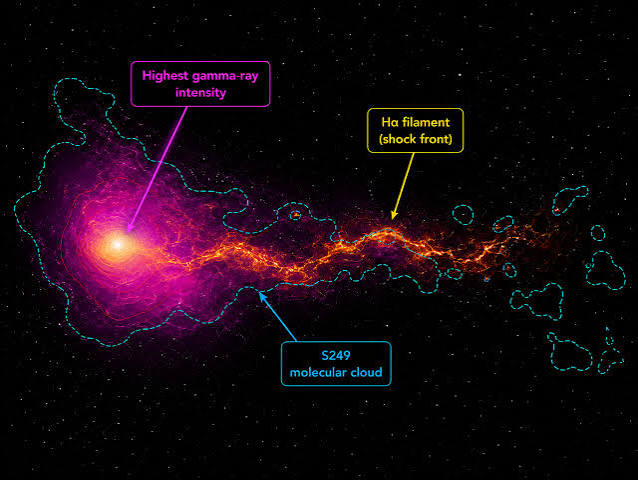
    The new remnant, located near the Jellyfish Nebula (IC 443) in the constellation Gemini, about 5,000 light-years from Earth, is the second supernova remnant from the same system. The explosions occurred at different times, separated by hundreds of thousands to millions of years, making the detection a fortuitous alignment of timing and observation. As astronomers continue to probe the cosmos, this discovery underscores the serendipitous nature of scientific exploration and the hidden treasures that await in well-studied regions of the sky.

    A Cosmic Coincidence: The Accidental Discovery

    The research team was not searching for a second supernova remnant. They were focused on IC 443, one of the most studied supernova remnants in the Milky Way, known for its jellyfish-like shape and bright filaments. While examining the region in detail, they noticed an adjacent structure that didn’t fit the expected pattern. Further analysis revealed it to be a separate supernova remnant, and the evidence pointed to a stunning conclusion: both remnants originated from two stars that once orbited each other in a binary system.

    This accidental discovery highlights the role of serendipity in astronomy. Even in well-mapped regions, new instruments and techniques can reveal hidden features. The team’s initial goal was to study IC 443, but their careful observations led to a groundbreaking find that had been overlooked for decades.

    The Life and Death of Binary Stars

    Most massive stars—perhaps 50 to 70%—exist in binary or multiple-star systems. When two massive stars orbit each other, their life cycles are intertwined. Both stars eventually exhaust their nuclear fuel and explode as supernovae, but the timing is crucial. The first explosion can strip material from the companion, alter its orbit, and even accelerate its evolution. The second explosion may occur millions of years later, by which time the first remnant has often faded into the interstellar medium.

    This discovery provides a rare observational anchor for theoretical models of binary star evolution. It confirms that both members of a massive binary system can indeed explode as supernovae, a prediction that had never been directly observed. The existence of two remnants from the same system offers a unique laboratory to study the effects of one supernova on its companion star.

    What This Means for Gravitational Wave Research

    If both stars exploded as core-collapse supernovae, they likely left behind neutron stars or black holes. The system could eventually evolve into a neutron star–neutron star or neutron star–black hole binary, which are prime sources for gravitational wave detectors like LIGO and Virgo. This discovery could help refine predictions about the formation of such systems, providing valuable insights into the progenitors of gravitational wave events.

    By studying the remnants, astronomers can infer the masses and explosion mechanisms of the original stars, which in turn informs models of how compact object binaries form. This accidental find may have far-reaching implications for our understanding of the universe’s most violent phenomena.

    Cosmic Recycling: Heavy Elements and Star Formation

    Supernovae are cosmic recyclers, enriching the interstellar medium with heavy elements like carbon, oxygen, iron, and gold. Two supernovae in the same region would have injected a double dose of these elements into the surrounding gas, potentially influencing star formation in that area. This discovery connects to broader questions about galactic chemical evolution and how elements are distributed across the cosmos.

    The presence of two remnants so close together suggests that the region has undergone significant chemical enrichment, which could trigger the formation of new stars with higher metallicity. This, in turn, affects the evolution of subsequent stellar generations, creating a complex feedback loop that shapes galaxies over time.

    Observational Techniques: Uncovering Hidden Remnants

    The discovery likely relied on multi-wavelength observations, combining data from X-ray, radio, and optical telescopes. Archival data from observatories like Chandra and XMM-Newton may have been crucial in identifying the second remnant. By comparing images across different wavelengths, astronomers can distinguish between overlapping structures and identify distinct remnants.

    The fact that this remnant was hidden in plain sight for so long underscores the importance of re-examining known objects with new tools and techniques. As telescopes become more sensitive and surveys cover more of the sky, we can expect more accidental discoveries that challenge our current understanding of the cosmos.

    The accidental discovery of twin supernovae from a single binary star system is a testament to the unpredictable nature of scientific exploration. It not only confirms a long-standing prediction about binary star evolution but also opens new avenues for research in gravitational wave astronomy and galactic chemical evolution. As we continue to scan the skies, this find reminds us that the universe is full of surprises, waiting to be uncovered by curious minds.

    Summary

    • Astronomers accidentally discovered a second supernova remnant near the Jellyfish Nebula (IC 443), revealing that both stars in a binary system exploded as supernovae.
    • This is the first confirmed case of a ‘double supernova’ from the same binary star system, a phenomenon predicted but never observed.
    • The explosions occurred at different times, separated by hundreds of thousands to millions of years, making the detection a rare cosmic coincidence.
    • The discovery provides insights into binary star evolution, gravitational wave progenitors, and the chemical enrichment of galaxies.
    • The find highlights the role of serendipity in astronomy and the value of re-examining known objects with advanced instruments.

    FAQ

    Q: What is a supernova remnant?
    A: A supernova remnant is the glowing shell of gas and dust that expands outward after a star explodes as a supernova. It remains visible for tens of thousands to hundreds of thousands of years.

    Q: How common are binary star systems?
    A: Most massive stars (50-70%) are in binary or multiple-star systems, making it likely that many supernovae occur in such systems, but detecting two remnants from the same system is extremely rare.

    Q: Why is this discovery significant?
    A: It is the first confirmed case of two supernovae from the same binary system, providing direct evidence for a long-standing prediction and offering insights into stellar evolution and gravitational wave sources.

    Q: Could this system produce gravitational waves?
    A: If the supernovae left behind neutron stars or black holes, the system could eventually become a binary compact object, which would be a source of gravitational waves detectable by LIGO and Virgo.

    Q: How was the second remnant discovered?
    A: The team was studying IC 443 and noticed an adjacent structure that turned out to be a separate remnant. Multi-wavelength observations and archival data helped confirm its origin.