Tag: Artificial Intelligence

  • Can AI Really Do That? A Clear-Eyed Look at What AI Can and Can’t Do in 2025

    Can AI Really Do That? A Clear-Eyed Look at What AI Can and Can’t Do in 2025

    Every day, millions of people type a simple question into a search bar: “Can AI do [X]?” The [X] might be “write my essay,” “fall in love,” or “take my job.” Since ChatGPT burst onto the scene in November 2022, these queries have exploded—by some estimates, they’ve jumped 400–600% year-over-year. We’re all trying to map the shifting boundary between human and machine capability in real time.

    But here’s the catch: the answer to “Can AI do X?” is almost never a simple yes or no. It’s a moving target, and it’s full of nuance. AI can write a convincing poem, but it doesn’t feel the emotion behind the words. It can pass a bar exam, yet stumble on a basic commonsense question a child would get right. It can generate a photorealistic image of a person who doesn’t exist, but it can’t reliably tie its own shoelaces.

    This article cuts through the hype to give you a grounded, practical understanding of what AI can genuinely do today, where it falls short, and why the question itself might be the wrong one to ask.

    The Short Answer: It Depends on How You Define “Do”

    When someone asks “Can AI do X?” they usually mean one of two things:

    1. Can AI produce a result that looks like a human did it? (e.g., write a story, draw a picture, diagnose an illness)
    2. Can AI understand what it’s doing and do it reliably every time? (e.g., drive a car safely, manage a project, be a friend)

    The distinction matters more than any specific capability. Current AI systems—the ones powering ChatGPT, Midjourney, and their peers—are remarkably good at the first. They can generate text, images, and audio that often fool people in blind tests. But they are far from the second. They don’t “understand” in any human sense, and their reliability is patchy at best.

    Think of it like a parrot that has learned to say “I love you.” The parrot produces the right sounds, but it doesn’t feel love. It’s simulating, not experiencing. That’s the single most important fact about AI today: it can simulate creativity, empathy, and reasoning without having any of those things.

    A Quick History: From “No” to “Maybe” to “Sometimes”

    The question “Can AI do X?” isn’t new. It’s been asked since the 1950s. But for most of that time, the answer was a resounding “no” for almost everything. Early AI like ELIZA could only follow rigid rules—it was a chatbot that mimicked a therapist, but it didn’t understand a word you said. Expert systems in the 1980s could diagnose diseases within narrow parameters, but they crashed if you strayed outside their script.

    Then came a series of narrow breakthroughs. In 1997, Deep Blue beat world chess champion Garry Kasparov—a stunning feat, but Deep Blue couldn’t do anything else. In 2011, IBM Watson won Jeopardy! but struggled to move beyond trivia. In 2012, AlexNet revolutionized computer vision, but it couldn’t write a sentence.

    Everything shifted in 2017 with the invention of the Transformer architecture—the foundation of modern AI. Combined with massive amounts of data and computing power, this led to GPT-3 in 2020, DALL-E in 2021, and ChatGPT in 2022. That’s when the public’s question changed from “Can AI do X?” to “Can AI do my X?”

    What AI Can Do Today (The Honest List)

    Let’s get specific. As of 2025, here’s a realistic snapshot of AI’s capabilities across different domains.

    Text: Yes, but Read the Fine Print

    AI can write essays, poetry, code, legal drafts, and even screenplays. In blind tests, human judges often can’t tell the difference between AI-generated text and human-written text. A study from 2023 found that participants rated AI-generated poetry as more human than actual human poetry—partly because the AI imitated the style so well.

    But there’s a catch. AI can produce text that looks coherent, but it doesn’t know what it’s talking about. It’s a “stochastic parrot,” a term coined by researchers Emily Bender and Timnit Gebru to describe how AI patterns-match without grounding in reality. It can generate a legal contract that sounds perfect, but it might cite a fake case law or miss a crucial clause. It can write a news article, but it might hallucinate facts.

    So, can AI write? Yes. Can it write reliably and accurately? Not yet.

    Images: Impressive, but with Quirks

    DALL-E, Midjourney, and Stable Diffusion can generate photorealistic and artistic images from text prompts. You can type “a portrait of a cat in the style of Van Gogh” and get a convincing result. These models have won art contests and created viral memes. But they still struggle with hands (a classic fail), text rendering, and consistent details across multiple images.

    More importantly, the AI doesn’t have an intention. It’s not trying to express something. It’s just predicting pixels based on patterns from its training data. That’s why you can get a beautiful image, but you can’t have a meaningful conversation with the AI about why it made certain choices.

    Audio: Cloning and Composition

    AI can clone a person’s voice with just a few seconds of audio—a capability that has raised serious ethical concerns, from fake Biden robocalls to unauthorized Drake songs. It can also compose music in various genres, from classical to EDM. The technology is genuinely impressive. But again, the AI doesn’t feel the music. It’s not expressing emotion; it’s mimicking patterns.

    Voice cloning is so good that it’s become a tool for both good (helping people with speech disabilities) and bad (scams and misinformation). The reliability is high, but the ethical implications are huge.

    Video: The Next Frontier

    Text-to-video models like Sora, Runway, and Pika can generate short clips—sometimes up to a minute—that are visually coherent. You can type “a dog skateboarding through a city” and get a video that looks almost real. But longer narratives fall apart. Characters change appearance, physics break, and the AI loses track of what happened earlier. It’s impressive for a demo, but not yet ready for feature films.

    Reasoning: Brilliant and Dumb at the Same Time

    Frontier models like GPT-5-class, Claude 3.5, and Gemini can solve complex math problems, pass the bar exam, and debug code. They’ve scored in the 90th percentile on standardized tests. But they also fail on simple commonsense tasks. Ask one “If I have 10 apples and give away 3, how many do I have?” and it’ll get it right. Ask “If a chicken and a half lays an egg and a half in a day and a half, how many eggs will 3 chickens lay in 3 days?” and it might stumble.

    This inconsistency is a hallmark of current AI. It’s not that AI is dumb—it’s that it doesn’t have a stable understanding of the world. It’s a savant in some areas and a novice in others, with no obvious rhyme or reason.

    Physical World: Way Behind

    Robotics is where AI’s limits are most visible. Companies like Figure, Tesla, and Boston Dynamics are making progress, but robots still struggle with tasks that humans find trivial: folding laundry, opening doors, navigating a cluttered room. The gap between digital intelligence (huge) and physical intelligence (tiny) is one of the most important things to understand about AI.

    Why? Because our digital world is made of text and images, which AI can learn from. But the physical world requires real-world experience, which AI doesn’t have. A robot can’t learn to grasp a fragile object by reading about it; it needs to practice. And practice is slow and expensive.

    The Capability Illusion: Why AI Seems Smarter Than It Is

    You’ve probably seen viral demos of AI doing amazing things—generating a movie trailer, writing a novel, passing a medical exam. But those demos are cherry-picked. For every success, there are dozens of failures that don’t go viral. This is what researchers call the “capability illusion.”

    Benchmarks like MMLU (a massive multitask test) show AI passing professional exams, but these tests don’t capture real-world context. An AI can answer multiple-choice questions about law, but it can’t manage a case from start to finish. It can write code that passes unit tests, but it can’t architect a software system.

    The illusion is reinforced by the fact that AI is generative—it produces fluent, confident-sounding output even when it’s wrong. This is especially dangerous because humans naturally trust confident sources. So when an AI confidently tells you that the capital of Australia is Sydney (it’s actually Canberra), you might believe it.

    Why the Question Matters More Than Ever

    The surge in “Can AI do X?” queries isn’t just idle curiosity. It’s driven by three forces:

    1. Consumer accessibility: Anyone can test AI for free or cheaply. You don’t need a PhD to ask ChatGPT to write a poem or generate an image.
    2. Rapid release cadence: New models come out every 6–12 months, and each one shifts the answer to “Can AI do X?”
    3. Economic anxiety: People are asking about their jobs, their creative work, their relationships. The question is personal.

    This is why it’s not enough to say “Yes, AI can do that.” We need to ask: “Can it do it reliably, safely, and cost-effectively?” That’s the pragmatic question for anyone using AI in the real world.

    The Three Perspectives: Optimist, Skeptic, Pragmatist

    If you read about AI, you’ll find three broad camps:

    The Optimists: People like Sam Altman and Demis Hassabis believe AI is on an exponential curve. They point to “emergent abilities”—skills that appear suddenly at scale, like the ability to solve problems the model wasn’t explicitly trained on. For them, “Can AI do X?” will soon be “Yes” for nearly any cognitive task. They envision a future of human-AI collaboration, not replacement.

    The Skeptics: Researchers like Gary Marcus and Emily Bender argue that current AI is just pattern-matching. They point to persistent failures: hallucination, lack of causal understanding, no ability to self-correct, and no long-term memory. They predict a plateau, or even an “AI winter,” where progress stalls because we’ve hit the limits of scaling. For them, “Can AI do X?” is often answered “Yes” in demos but “No” in production.

    The Pragmatists: Business analysts at McKinsey and Gartner focus on ROI. They ask: “Can AI do X well enough to save time or money?” For many tasks, the answer is “Yes, but with human oversight.” AI can draft a contract, but a lawyer must review it. AI can generate marketing copy, but a human must approve the brand voice. The pragmatists don’t care about philosophical debates; they care about whether AI improves the bottom line.

    All three perspectives have merit. The optimists see the potential; the skeptics see the flaws; the pragmatists see the practical use. The truth is somewhere in the middle: AI is incredibly capable, but it’s not reliable, and it doesn’t understand what it’s doing.

    Practical Takeaways: How to Use AI Without Getting Burned

    So, can AI do [X]? Here’s a practical framework to answer it for yourself:

    1. Define X clearly: Be specific. “Can AI write?” is too vague. “Can AI write a 500-word blog post about gardening that is accurate and engaging?” is better. The more specific you are, the better you can evaluate the output.
    2. Test it yourself: Don’t rely on viral demos. Try AI tools on your own tasks. See where they fall short.
    3. Treat AI as a junior colleague, not a miracle worker: AI can give you a first draft, but you need to check the facts, tone, and quality. It’s like having a smart intern who is enthusiastic but occasionally hallucinates.
    4. Know the limits: If the task requires real-world experience, empathy, or long-term planning, AI will likely disappoint. If it’s a pattern-matching task (like summarizing text or generating images), AI will likely excel.
    5. Stay informed: The field is moving fast. What’s true today might change in six months. Keep reading, keep testing, and keep asking the question.

    The Future: Will the Question Ever Be Fully Answered?

    Probably not. As long as AI keeps evolving, “Can AI do X?” will remain a moving target. In the 1950s, the answer was “no” for everything. In the 1990s, it was “maybe” for chess. In 2025, it’s “sometimes” for many tasks. In 2035, it might be “yes” for most cognitive tasks—or it might have hit a wall.

    What’s certain is that the question will persist, because it touches on something deeply human: our desire to understand what makes us unique. As AI gets better at mimicking us, the question becomes more urgent. But the answer is not just about AI’s capabilities—it’s about ours. What do we value that AI can’t replicate? What makes us human? That’s a question AI can’t answer for us.

    So, can AI do [X]? The honest answer is: maybe, sometimes, with caveats. AI has crossed remarkable thresholds in text, image, audio, and video generation. It can pass exams, create art, and write code. But it doesn’t understand what it’s doing, and it’s often unreliable. The question isn’t just “Can AI do it?” but “Can it do it well, safely, and consistently?” For now, the best approach is to use AI as a powerful tool—one that amplifies human ability but doesn’t replace it. And keep asking the question, because the answer will keep changing.

    Summary

    • AI can generate impressive text, images, audio, and video, but it does so by pattern-matching, not by understanding. It’s a simulation, not genuine intelligence.
    • Reliability is a major issue: AI can do many tasks sometimes, but not consistently. It may pass a bar exam but fail a commonsense question.
    • The “capability illusion” means that viral demos often overstate AI’s real-world usefulness. Benchmarks don’t capture context or judgment.
    • The physical world is where AI lags most: robots and physical AI are far behind digital capabilities.
    • The pragmatic question is not “Can AI do X?” but “Can AI do X reliably, safely, and cost-effectively?” For most tasks, the answer is “with human oversight.”

    FAQ

    Q: Can AI write a novel?
    A: Yes, AI can generate a novel-length text, and some have even been published. But the AI doesn’t have a story to tell—it’s predicting what words come next based on patterns. The result may be coherent, but it often lacks the emotional depth and intentional structure of human-written fiction.

    Q: Can AI fall in love?
    A: No. AI can simulate romantic language and even remember details you tell it, but it doesn’t have feelings. It’s a parrot, not a person. When you say “I love you” to an AI, it’s not experiencing love—it’s generating a response based on training data.

    Q: Can AI take my job?
    A: For some jobs, yes, AI can automate parts of the work. But most experts agree that full replacement is rare in the near term. More likely, AI will change the nature of work, making some tasks easier and creating new roles. The key is to learn to work with AI, not against it.

    Q: Can AI be creative?
    A: AI can generate novel combinations of existing ideas, which we might call “creativity.” But it doesn’t have original intent or the ability to judge what’s good. Human creativity involves experience, emotion, and a sense of purpose—things AI lacks.

    Q: Can AI be trusted?
    A: Not fully. AI is known to “hallucinate”—confidently state false information. It’s also biased by its training data. So, you should always verify AI outputs, especially for important decisions. Treat AI as a tool that needs supervision, not as an infallible oracle.

  • Can You Really Tell If Text Was Written by AI? The Truth About Detectors

    Can You Really Tell If Text Was Written by AI? The Truth About Detectors

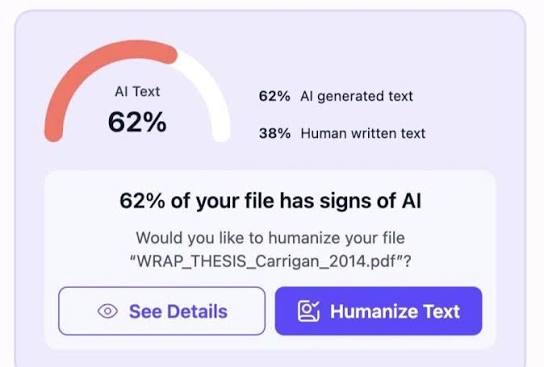
    Since ChatGPT launched in November 2022, a new question has crept into our digital lives: “Is this AI-written?” Whether you’re a teacher grading essays, a recruiter reading cover letters, or just someone scrolling through social media, you’ve probably wondered which parts of the internet were crafted by a human and which were generated by a machine. Google searches for “AI detector” and “how to tell if text is AI-generated” have skyrocketed, and a whole industry of detection tools has sprung up to answer the call. But here’s the uncomfortable truth: these detectors are far from perfect, and the race to catch AI-generated text is more complicated than it seems.

    The Surge in AI Detection Searches

    Interest in AI detection exploded right after ChatGPT went public. Before November 2022, almost nobody was searching for “AI detector.” Now, millions of people are trying to figure out if the text they’re reading or writing is machine-made. This interest has stayed high, with spikes whenever a new AI model like GPT-4 or Gemini hits the market.

    Why the sudden concern? Because AI-generated content has flooded the internet. From blog posts and product reviews to academic papers and news articles, machines are now writing at scale. This has created what some call an “authenticity crisis”: we can no longer assume that words were written by a human. That matters for trust in journalism, fairness in education, and even personal communication like dating profiles and emails.

    How Do AI Detectors Actually Work?

    Most detectors rely on two main signals: perplexity and burstiness. Perplexity measures how “surprised” a language model is by a piece of text. AI-generated text tends to be more predictable, so it has lower perplexity. Burstiness looks at variation in sentence length and structure. Humans naturally mix long and short sentences, while AI text tends to be more uniform.

    Some newer tools use watermarking, which involves embedding invisible statistical patterns in AI output. But that only works if the AI provider cooperates, and it’s not widely deployed yet.

    The Problem: Detectors Are Not Reliable

    Here’s the catch: no AI detector is definitively reliable. OpenAI itself shut down its AI Classifier in July 2023, admitting it had a “low rate of accuracy.” Independent studies have found that detectors frequently misclassify non-native English writing as AI-generated. This has real consequences. Students have been falsely accused of cheating, and freelance writers have lost clients because a detector flagged their human-written work.

    The tools claim accuracy rates of 80–99%, but those numbers are contested. In practice, the results can be wildly inconsistent. A text that one detector flags as AI-written might be cleared by another. And as AI models improve, they get better at mimicking human quirks, making detection even harder.

    The Arms Race Between Detectors and AI

    This is a cat-and-mouse game. As detectors get better, AI models are trained to produce more “human-like” text. Users also use paraphrasing tools to evade detection. It’s a continuous loop: one side builds a better trap, the other side finds a way around it.

    Some researchers argue that reliable detection is fundamentally impossible in the long run. As models improve, AI text will become indistinguishable from human text. They advocate for a shift from detection to provenance—cryptographic signing of human-authored content. That way, you could verify a human wrote something, rather than trying to guess if a machine did.

    Who’s Searching, and Why?

    Different groups search for AI detection for different reasons:

    • Students and educators: Teachers want to catch AI-generated essays; students want to avoid false accusations.
    • Employers and recruiters: They check whether cover letters or resumes were AI-written.
    • Content consumers: People want to know if news articles, reviews, or social media posts are machine-made.
    • Writers and creators: They self-check their own work to make sure it passes filters, especially for SEO or academic submission.

    The Educator’s Dilemma

    Teachers and professors are on the front lines. Many see AI detection as a necessary tool to preserve academic integrity. But false positives are a major frustration. Students who write in a straightforward, formulaic style—especially non-native English speakers—are often flagged as AI, even when their work is entirely human.

    Some educators argue that detection is the wrong approach entirely. They say education should adapt to an AI world by emphasizing the process over the product: in-class writing, oral defenses, and project-based assessments. This might be a more sustainable solution than an endless technological arms race.

    The Student’s Double Bind

    Students face a tough situation. Many use AI as a legitimate learning tool—for brainstorming, outlining, or grammar checking. But they fear being falsely accused of cheating. Some report being forced to “prove” their humanity, which is an absurd burden to place on a student.

    Non-native English speakers are disproportionately affected. Their natural writing style often triggers false positives, which is deeply unfair. Imagine writing an essay in a second language, only to be told it’s too “robot-like” to be human.

    The Writer’s Burden of Proof

    Freelance writers and journalists are also caught in the crossfire. Clients increasingly ask them to run their work through AI detectors, even when the work is entirely human-written. This creates a burden of proof and can lead to lost income if a detector falsely flags their work. It’s a strange world where a human has to prove they’re not a machine.

    Platform Responses: Labeling and Enforcement

    Major platforms like Google, Meta, and TikTok have started requiring or encouraging AI-content labeling. But enforcement and detection remain inconsistent. Google has said it will penalize “scaled content abuse,” meaning mass-produced AI content that manipulates search rankings. But distinguishing between helpful AI-assisted writing and spam is tricky.

    As AI-generated content becomes more common, platforms will need clearer policies. But given the unreliability of detectors, any automated enforcement will likely have false positives and negatives.

    What Should You Do?

    If you’re trying to decide whether a piece of text is AI-written, here’s some practical advice:

    • Don’t rely solely on detectors. Use them as one signal, not the final word.
    • Look for context clues. Is the text unusually uniform in tone? Does it lack personal anecdotes or specific examples? These can be hints, but they’re not definitive.
    • Consider the source. If the content comes from a known AI-heavy site, it’s more likely AI-written.
    • When in doubt, ask. If you’re an educator, have a conversation with the student. If you’re a recruiter, talk to the candidate. A human conversation can reveal authenticity better than any algorithm.

    The Future: Detection vs. Provenance

    The AI detection industry is booming, but its future is uncertain. As AI models get better, detectors will struggle to keep up. The most promising long-term solution might be provenance: a way to cryptographically sign human-authored content, so we can verify origin rather than guess.

    For now, the honest answer to “Can you tell if text was written by AI?” is: sometimes, but not reliably. The tools are improving, but they’re not perfect. And as the arms race continues, the question itself might become obsolete.

    The surge in searches for “is this AI-written” reflects a real shift in how we consume and produce text. AI detectors are helpful tools, but they’re not infallible. The best approach is to use them with caution, combine them with human judgment, and push for broader solutions like provenance. As AI becomes even more integrated into our lives, the ability to navigate this new landscape with critical thinking will matter more than any single detection tool.

    Summary

    • Google searches for AI detection terms have surged since ChatGPT’s release, with interest remaining high.
    • Detectors use perplexity and burstiness to identify AI text, but these methods are unreliable and often produce false positives.
    • OpenAI shut down its own AI Classifier due to low accuracy, and studies show detectors disproportionately flag non-native English writing.
    • Different groups—educators, students, employers, writers—use detectors for various reasons, but many face unfair consequences from false positives.
    • The long-term solution may be provenance (cryptographic signing) rather than detection, but for now, we must use detectors with caution.

    FAQ

    Q: How accurate are AI detectors?
    A: Most detectors claim 80–99% accuracy, but these claims are contested. Independent studies have found significant error rates, especially for non-native English speakers. OpenAI’s own classifier was shut down due to low accuracy.

    Q: Can I get falsely accused of using AI?
    A: Yes. Many students and writers have been falsely flagged by detectors. False positives are a known issue, particularly for text that is clear, formulaic, or written by non-native speakers.

    Q: What’s the difference between perplexity and burstiness?
    A: Perplexity measures how predictable the text is to a language model. Burstiness measures variation in sentence length and structure. AI text tends to have lower perplexity and burstiness than human writing.

    Q: Will AI detectors ever be perfect?
    A: Many researchers doubt it. As AI models improve, they become better at mimicking human writing. Some argue that reliable detection is impossible in the long run, and we should focus on provenance instead.

    Q: What should I do if my work is flagged as AI?
    A: If you wrote the text yourself, you can explain the context, show drafts or notes, and discuss your process. Tools like history logs or timestamps can also help prove authorship.

  • Will AI Take Your Job? What the Data Really Shows

    Will AI Take Your Job? What the Data Really Shows

    The question “Can AI replace my job?” has become a persistent search query since ChatGPT launched in November 2022. Every new model release GPT-4, Claude 3, Gemini—triggers another wave of anxiety. But the answer is more nuanced than a simple yes or no.

    Economists, research firms like McKinsey and Goldman Sachs, and institutions like MIT and the OECD have studied this question extensively. Their consensus might surprise you: AI will transform far more jobs than it will outright eliminate. This article breaks down what the data actually shows, how automation works in practice, and what it means for your career.

    The Persistent Question

    The search volume for “Can AI replace my job?” doesn’t spike once—it surges repeatedly. Google Trends shows sustained high interest, not a one-time blip. Each major AI release reignites the fear. This isn’t just about technology; it’s about economic anxiety. When layoffs hit the tech sector in 2023 and 2024, searches went up. When inflation worries people, they look for threats to their livelihood.

    But here’s the key insight from current research: AI automates tasks, not occupations. Most jobs are bundles of tasks, and typically only 20–40% of those tasks are automatable. Rarely is the entire job automatable.

    The ATM and the Bank Teller: A Helpful Analogy

    When ATMs were introduced in the 1970s, everyone predicted bank tellers would vanish. Instead, the opposite happened. Teller numbers actually rose for a decade after ATMs became common. Why? Because ATMs handled cash dispensing, tellers shifted to customer service, opening accounts, and solving problems. The job changed, but it didn’t disappear.

    Similarly, spreadsheet software didn’t eliminate accountants. It freed them from manual calculation and shifted their work toward analysis and strategic advice. The pattern is consistent: technology removes drudgery, and humans move to more complex, interpersonal, or creative work.

    The Numbers: How Many Jobs Are Actually at Risk?

    A widely cited 2013 Oxford study claimed 47% of US jobs were at “high risk” of automation. That study created a lasting narrative of fear. But later research by the OECD and MIT found that figure overstated the risk. The study conflated “automation possible” with “automation likely.” In reality, even in high-exposure occupations, only a fraction of tasks are fully automatable with current technology.

    Goldman Sachs estimated that generative AI could affect 300 million full-time jobs globally—but “affected” is not “eliminated.” Most roles will see partial automation of tasks, not wholesale replacement. For example, a lawyer might use AI to draft initial contracts, but they still review, negotiate, and advise. A copywriter might use AI for first drafts, but they still provide strategy, voice, and final polish.

    What the Actual Data Shows So Far

    As of 2024–2025, AI-driven layoffs remain modest. There are a few notable examples—some customer service and translation roles, certain content production jobs—but mass displacement hasn’t materialized. Companies report using AI to augment workers, not replace them. A McKinsey survey found that most organizations using generative AI expect it to change job roles rather than eliminate them.

    This is not to dismiss the anxiety. The impact is real, and it’s concentrated in white-collar work. Unlike previous automation waves that hit manufacturing, generative AI targets office, clerical, legal, and creative tasks. Data entry, basic copywriting, first-draft legal work, and translation are most exposed. If your job consists largely of routine cognitive tasks, you’re on the front line.

    The Two Camps: Augmentation vs. Replacement

    Economists largely fall into two camps. The augmentation camp—the majority—sees AI as a productivity tool. Like the calculator for mathematicians, it makes workers more valuable, not less. The replacement camp—some technologists and labor economists—argues that this time is different. AI can reason and create, and the pace of improvement is unprecedented. Entry-level writing, basic coding, and routine customer service may genuinely shrink.

    Both camps have valid points. The question is not whether AI will change jobs—it will—but whether the pace of change gives workers time to adapt. Historically, transitions took decades. The internet created new roles like social media manager and SEO specialist, but that took years. AI is moving faster, and some workers may not have time to reskill.

    What Actually Happens to Your Job

    Let’s look at a concrete example. A customer service representative spends their day answering common questions, resolving issues, and escalating complex problems. AI chatbots can handle the first two tasks. But the tricky issues—angry customers, nuanced problems, emotional conversations—still need a human. The job shifts from repetitive answering to more complex problem-solving. It doesn’t disappear; it gets harder and more valuable.

    Similarly, a translator might use AI for a first draft, then refine it. A junior lawyer might use AI to review documents, then focus on strategy. A graphic designer might use AI to generate concepts, then polish and customize. In each case, the worker becomes more productive, not obsolete.

    The Psychological Question

    The question “Will AI replace my job?” is often less about economics and more about identity. People define themselves by their work. “Will I still matter?” is the real fear. This is a legitimate concern, but it’s also part of a historical pattern. Every major technological shift—mechanization, electricity, computers—triggered the same anxiety. Yet humans have always adapted.

    What You Can Do About It

    If your job involves routine cognitive tasks, the smart move is to learn how to use AI tools to augment your work. This is the “augmentation” strategy. Instead of fearing the technology, become the person who knows how to use it well. That’s the new skill set: AI literacy, prompt engineering, and knowing when to trust AI output.

    Also, focus on skills that AI struggles with: emotional intelligence, complex problem-solving, creativity, and human judgment. These are the hardest to automate. And consider that AI will create new jobs—prompt engineering, AI ethics, model fine-tuning, data curation—just as the internet created social media managers and SEO specialists.

    The data is clear: AI will transform your job, but it’s unlikely to replace it entirely. The ATM didn’t kill bank tellers, and spreadsheets didn’t kill accountants. AI is the next tool in that line. The workers who thrive will be those who use it to become more productive, not those who fear it. The question isn’t “Will AI replace my job?” but “Will you adapt?”

    Summary

    • AI automates tasks, not entire jobs. Most occupations have only 20–40% automatable tasks.
    • Historical precedents (ATMs, spreadsheets) show that technology transforms jobs rather than eliminating them.
    • Actual AI-driven layoffs remain modest; companies mostly use AI to augment workers.
    • White-collar roles with routine cognitive tasks (data entry, basic writing, translation) are most exposed.
    • The best strategy is to learn AI tools and focus on skills that AI can’t replicate: emotional intelligence, complex problem-solving, and creativity.

    FAQ

    Q: Will AI replace my job completely?
    A: Research indicates that AI automates tasks, not whole occupations. Most jobs are bundles of tasks, and typically only 20–40% are automatable. So while your job will change, it’s unlikely to disappear entirely.

    Q: Which jobs are most at risk?
    A: Jobs with high routine cognitive tasks are most exposed: data entry, basic copywriting, first-draft legal work, translation, and routine customer service. However, even in these roles, only parts of the job are automatable.

    Q: How can I make my job safe from AI?
    A: Focus on skills AI struggles with: emotional intelligence, complex problem-solving, creativity, and human judgment. Also, learn to use AI tools to augment your work—that makes you more valuable, not less.

    Q: Are AI-driven layoffs happening now?
    A: There are a few cases, but mass displacement hasn’t materialized. Most companies report using AI to augment workers, not replace them. The impact so far is modest.

    Q: Will AI create new jobs?
    A: Yes, historically technology creates new roles. With AI, we’re seeing new jobs like prompt engineering, AI ethics, model fine-tuning, and data curation. The number may be fewer than displaced jobs, but they exist.

  • What Is AI? A Beginner’s Guide to Artificial Intelligence

    What Is AI? A Beginner’s Guide to Artificial Intelligence

    Artificial Intelligence, or AI, is a term that seems to be everywhere these days. From voice assistants on our phones to recommendations on streaming services, AI is quietly shaping our daily lives. But what exactly is it? For many, the concept remains fuzzy, often conjuring images of sentient robots from science fiction. This guide aims to demystify AI, explaining what it is, how it works, and why it matters—without the technical jargon.

    Think of AI as a set of tools that allow computers to perform tasks that would normally require human intelligence. These tasks include learning from experience, understanding language, recognizing patterns, and making decisions. While the idea has been around since the 1950s, recent advances have made AI more powerful and accessible than ever before. Understanding AI is no longer just for tech enthusiasts; it’s becoming essential for everyone to grasp its basics to navigate the modern world.

    What Exactly Is Artificial Intelligence?

    At its core, artificial intelligence is a branch of computer science focused on building systems that can perform tasks that typically require human intelligence. This includes things like learning, reasoning, problem-solving, perception, and understanding language. The key word here is ‘typically’—AI aims to replicate or simulate these human abilities in machines.

    To make it more concrete, consider the difference between a traditional calculator and an AI-powered tool. A calculator follows a fixed set of rules to perform arithmetic. It can’t learn or adapt. In contrast, an AI system, like a spam filter, learns from examples. It analyzes thousands of emails labeled as ‘spam’ or ‘not spam’ and figures out patterns that distinguish them. Once trained, it can apply that knowledge to new, unseen emails. This ability to learn from data is what sets AI apart from conventional software.

    Narrow AI vs. General AI: What’s the Difference?

    One of the biggest misconceptions is that AI is a single, monolithic technology. In reality, there are two broad categories: Narrow AI and General AI.

    Narrow AI (also called Weak AI) is designed for a specific task. It excels at that one thing but can’t transfer its skills to other areas. For example, a facial recognition system can identify faces but can’t play chess. All the AI we have today is Narrow AI. When you use a voice assistant like Siri or Alexa, you’re interacting with Narrow AI. It’s specialized, not general.

    General AI (also called Strong AI) would be a system with human-like cognitive abilities—it could learn and apply knowledge across a wide range of tasks, just like a person. This is the stuff of science fiction, and it doesn’t exist yet. Many experts believe it’s decades away, if it’s ever achieved. So, when people talk about AI taking over the world, they’re usually referring to General AI, which is purely hypothetical at this point.

    The Ingredients of AI: Key Subfields

    AI isn’t a single technology but a collection of related fields. Here are the main ones you’ll hear about:

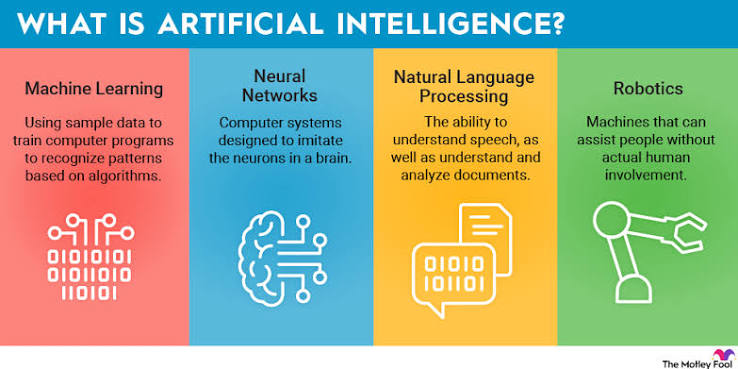
    • Machine Learning (ML): This is the engine of modern AI. Instead of being explicitly programmed for every rule, ML algorithms learn patterns from data. For instance, a machine learning model can be trained on millions of images of cats and dogs to learn the visual features that distinguish them. Once trained, it can classify new images with high accuracy.
    • Deep Learning: A subset of machine learning that uses artificial neural networks with many layers (hence ‘deep’). These networks are loosely inspired by the structure of the human brain. Deep learning powers many of the recent breakthroughs, such as image recognition, speech recognition, and natural language processing. It’s the technology behind self-driving cars and voice assistants.
    • Natural Language Processing (NLP): This field focuses on enabling machines to understand, interpret, and generate human language. Chatbots like ChatGPT, translation services like Google Translate, and even your email’s smart reply feature all rely on NLP. It’s what allows you to talk to your phone and have it understand you.
    • Computer Vision: This enables machines to interpret and process visual information from the world, such as images and videos. Applications include facial recognition, medical imaging analysis, and autonomous vehicles detecting pedestrians. Computer vision is how your phone’s camera can focus on a face or how self-driving cars ‘see’ the road.

    These subfields often work together. For example, a self-driving car uses computer vision to see the road, NLP to understand voice commands, and machine learning to make driving decisions.

    How Does AI Actually Work?

    You don’t need a degree in computer science to understand the basic idea. AI systems learn from data. Here’s a simplified version of the process:

    1. Collect Data: AI needs lots of examples to learn from. This could be images, text, audio, or any other type of data. For a spam filter, it’s emails. For a facial recognition system, it’s photos of faces.
    2. Train the Model: The AI algorithm is fed this data. During training, the model adjusts its internal parameters to minimize errors. Think of it like a student studying for an exam—the more examples they see, the better they get at recognizing patterns. For instance, a model learning to recognize cats might start by randomly guessing, but with each image, it adjusts its ‘understanding’ until it can accurately identify cats.
    3. Make Predictions: Once trained, the model can take new, unseen data and make predictions or generate outputs. For example, after training on thousands of cat photos, the model can look at a new photo and say, ‘This is a cat’ with high confidence.

    It’s important to note that AI doesn’t ‘think’ like a human. It’s essentially pattern recognition at scale. The model is finding statistical patterns in the data, not understanding the world in a conscious way.

    A Brief History of AI: From Theory to Mainstream

    AI might seem like a recent phenomenon, but its roots go back decades. Here are some key milestones:

    • 1950: Alan Turing, a British mathematician, proposes the ‘Turing Test’ to determine if a machine can exhibit intelligent behavior indistinguishable from a human. This sparks the field of AI.
    • 1956: The term ‘Artificial Intelligence’ is officially coined at a conference at Dartmouth College. This is considered the birth of AI as a field.
    • 1997: IBM’s Deep Blue defeats world chess champion Garry Kasparov. This is a major milestone, showing that machines can outperform humans in specific intellectual tasks.
    • 2012: A deep learning model called AlexNet wins an image recognition competition, sparking a revolution in AI. This is when deep learning starts to dominate the field.
    • 2022-Present: The release of ChatGPT and other generative AI tools brings AI to the mainstream. Suddenly, anyone can use AI to write essays, create art, or generate videos. This is the era of generative AI.

    Why Is AI Everywhere Now?

    You might wonder: if AI has been around since the 1950s, why is it suddenly so prominent? The answer lies in three converging factors:

    1. Massive Data: The internet, social media, and digital sensors have created an explosion of data. AI algorithms need data to learn, and now we have more than ever.
    2. Cheap, Powerful Computing: The development of Graphics Processing Units (GPUs) and cloud computing has made it affordable to train complex AI models. What used to require supercomputers can now be done on a laptop.
    3. Algorithmic Advances: Researchers have made significant breakthroughs in algorithms, particularly in deep learning and transformer architectures. These innovations have made AI more accurate and capable.

    These factors have created a perfect storm, enabling AI to move from research labs into everyday products.

    The ‘Black Box’ Problem: Why AI Can Be Mysterious

    One of the challenges with AI is that many advanced models are so complex that even their creators can’t fully explain why they make certain decisions. This is known as the ‘black box’ problem. For example, a deep learning model that predicts whether a loan applicant is creditworthy might deny a loan, but the bank might not be able to pinpoint exactly why. This raises concerns about fairness and accountability.

    Researchers are working on ‘explainable AI’ to make these systems more transparent. But for now, it’s a reminder that AI isn’t magic—it’s a powerful but sometimes opaque tool.

    Types of Machine Learning: How AI Learns

    Machine learning, the core of modern AI, comes in three main flavors:

    • Supervised Learning: The model is trained on labeled data. For example, you give it images of cats labeled ‘cat’ and images of dogs labeled ‘dog.’ The model learns to map inputs to outputs. This is like a teacher grading homework—the model gets feedback on its mistakes.
    • Unsupervised Learning: The model is given unlabeled data and must find patterns on its own. For instance, a retailer might use unsupervised learning to segment customers into groups based on purchasing behavior, without any pre-existing labels. It’s like a student exploring a topic without a syllabus.
    • Reinforcement Learning: The model learns through trial and error, receiving rewards or penalties for its actions. This is how AI learns to play games like chess or Go. It’s like training a dog with treats—good behavior is rewarded, bad behavior is discouraged.

    Each type has its uses, and many real-world AI systems combine them.

    Common Misconceptions About AI

    There are many myths about AI that can lead to confusion. Let’s clear up a few:

    • ‘AI is a single thing.’ As we’ve seen, AI is an umbrella term covering many technologies. It’s not one monolithic entity.
    • ‘AI is conscious.’ Current AI is not conscious. It doesn’t have feelings, thoughts, or self-awareness. It’s a statistical pattern matcher. When ChatGPT generates a response, it’s not thinking; it’s predicting the next word based on patterns in its training data.
    • ‘AI will take over the world.’ This is a fear based on General AI, which doesn’t exist. Narrow AI, the only kind we have, is designed for specific tasks and can’t ‘take over’ anything.
    • ‘AI is always right.’ AI systems make mistakes. They can be biased, misidentify objects, or generate incorrect information. They’re tools, not oracles.

    The Impact of AI: Opportunities and Concerns

    AI has the potential to bring tremendous benefits. It can help discover new drugs, model climate change, personalize education, and improve accessibility for people with disabilities. For example, AI-powered speech recognition can help those with mobility impairments control their environment, and AI-driven medical imaging can detect diseases earlier.

    However, there are also legitimate concerns. One is automation anxiety—the fear that AI will replace human jobs. While AI can automate routine cognitive tasks like data entry and customer service, it also creates new job categories, such as prompt engineers and AI ethicists. History shows that technology often changes the nature of work rather than eliminating it entirely.

    Another concern is bias. AI systems learn from data, and if that data reflects historical inequalities, the AI can perpetuate them. For example, a hiring algorithm trained on past resumes might favor candidates who resemble current employees, leading to discrimination. Addressing bias is a major focus in AI ethics.

    There are also privacy concerns, as AI often relies on vast amounts of personal data. And with generative AI, there’s the risk of deepfakes—realistic but fake images or videos that could be used to spread misinformation.

    The Future of AI: What’s Next?

    AI is evolving rapidly. In the near term, we can expect more sophisticated generative AI, better natural language understanding, and increased integration into everyday devices. Governments are also stepping in to regulate AI, with laws like the EU AI Act aiming to ensure safety and protect consumers.

    Long-term, the question of General AI remains open. Some experts, like Geoffrey Hinton, have warned about the risks of creating superintelligent AI that might not align with human values. Others argue these concerns are speculative and distract from more immediate issues like bias and privacy.

    Regardless of what the future holds, one thing is clear: AI is here to stay. Understanding its basics is the first step to making informed decisions about how we use it and how we let it shape our world.

    AI is a powerful and versatile technology that is already woven into the fabric of our daily lives. By understanding what AI is—and what it isn’t—you can better navigate the modern world and participate in the conversations that will shape its future. Remember, AI is a tool, not a magic wand. It has the potential to do great good, but it also comes with challenges that we must address collectively. As you encounter AI in your own life, keep asking questions, stay curious, and don’t be afraid to dig deeper.

    Summary

    • AI is a field of computer science focused on creating systems that can perform tasks requiring human intelligence, such as learning, reasoning, and language understanding.
    • All current AI is Narrow AI, designed for specific tasks like facial recognition or language translation. General AI, with human-like abilities, does not exist yet.
    • Key subfields include Machine Learning, Deep Learning, Natural Language Processing, and Computer Vision, each contributing to different AI capabilities.
    • AI works by learning patterns from data, not by being explicitly programmed for every rule. It’s pattern recognition at scale, not human-like thinking.
    • AI is not conscious or infallible; it can be biased and make mistakes. Understanding its limitations is crucial for responsible use.

    FAQ

    Q: Is AI the same as a robot?
    A: No, AI and robots are different concepts. AI is the software that enables machines to perform intelligent tasks. A robot is a physical machine that can interact with the world. Many robots use AI, but AI can also exist without a physical body, like a voice assistant on your phone.

    Q: Can AI think for itself?
    A: No, current AI does not think or have consciousness. It processes data and makes predictions based on patterns it has learned. It doesn’t have beliefs, desires, or self-awareness. It’s a sophisticated tool, not a mind.

    Q: Will AI take my job?
    A: AI can automate certain tasks, especially routine ones like data entry or basic customer service. However, it also creates new jobs and changes the nature of work. Historically, technology has shifted employment rather than eliminating it. It’s more about adapting skills than losing jobs.

    Q: How can I learn more about AI?
    A: There are many resources for beginners. You can start with online courses on platforms like Coursera or edX, read books like ‘Artificial Intelligence: A Guide for Thinking Humans’ by Melanie Mitchell, or follow reputable tech news sites. The key is to start with the basics and build from there.

    Q: Is AI dangerous?
    A: AI can be dangerous if misused, such as creating deepfakes or biased algorithms. But it’s not inherently dangerous. The risks come from how we design, use, and regulate it. Responsible development and ethical guidelines are essential to mitigate potential harms.