Tag: Art History

  • The Secret Science of Paint: How Pigments and Binders Shaped Art History

    The Secret Science of Paint: How Pigments and Binders Shaped Art History

    When you stand before a Van Gogh or a Renaissance altar piece, you’re not just seeing an artist’s vision you’re seeing chemistry in action. Every brushstroke is a cocktail of colored particles suspended in a medium that dries, hardens, or evaporates. The choice of pigment and binder has always been a matter of science as much as art, and those choices have quietly steered the course of art history.

    For centuries, painters were limited by what they could grind, mix, and afford. The blue of lapis lazuli was more precious than gold, so it was reserved for the Virgin Mary’s robe. Oil paint’s slow drying allowed Renaissance masters to blend and glaze, creating realism that egg tempera could never achieve. The accidental discovery of a synthetic blue in 1706 democratized color, and the arrival of acrylics in the mid-20th century freed artists from the constraints of oil’s long drying time.

    This is the story of how the materials of paint—pigments and binders—have shaped what we see on museum walls. It’s a tale of trial, error, and innovation, where chemistry and creativity are inseparable.

    What Paint Is Made Of

    Paint seems simple: a colored liquid you brush onto a surface. But on a microscopic level, it’s a carefully balanced mixture of three components. The pigment provides the color. These are fine, insoluble powders that don’t dissolve in the liquid but stay suspended. The binder is the glue that holds pigment particles together and sticks them to the canvas or wall. The solvent thins the paint and evaporates or cures, leaving a solid film.

    Color itself is a matter of physics. When light hits a pigment, some wavelengths are absorbed, and others are reflected back to your eye. That reflected light is the color you see. A red pigment, for instance, absorbs most wavelengths and reflects the red ones. The exact chemical structure of the pigment determines which wavelengths are absorbed.

    Binders also affect appearance. Oil, egg yolk, wax, gum arabic, and acrylic resins each have different optical properties. They control whether paint looks glossy or matte, transparent or opaque, and how light interacts with the pigment particles resting within them.

    The First Synthetic Pigment: Egyptian Blue

    Around 3000 BCE, ancient Egyptians invented the first synthetic pigment. They heated sand, copper compounds, and natron (a naturally occurring sodium carbonate) to create calcium copper silicate, now known as Egyptian blue. This was no accident—they refined the process over centuries to produce a vivid blue that adorned tombs and statues. It’s a milestone in chemical manufacturing, predating modern chemistry by millennia.

    Egyptian blue wasn’t just a color; it was a technology. It spread across the Mediterranean, used by Greeks and Romans. Its recipe was lost after the fall of Rome, and the brilliant blue of Egypt faded from memory until its rediscovery in the 19th century.

    The Toxic White That Dominated for Centuries

    For over two thousand years, if you wanted a good white paint, you used lead white. Chemically, it’s basic lead carbonate. The Romans made it by the “Dutch stack” method: they placed lead strips over vinegar in pots and buried them under animal dung. The vinegar fumes corroded the lead, and the dung released carbon dioxide, gradually forming the white pigment. It was toxic—lead poisoning was an occupational hazard for painters—but its opacity and smooth texture were unmatched.

    Lead white was the standard until the 19th century. It gave the luminous highlights in Dutch still lifes and the creamy whites in Renaissance frescoes. But its toxicity was known even then. Some artists, like Goya, suffered from lead poisoning. It wasn’t until the 1920s that titanium dioxide (titanium white) came along, offering an even brighter, non-toxic alternative. By mid-century, titanium white had replaced lead white, changing the look of modern painting forever.

    The Blue More Expensive Than Gold

    Ultramarine, ground from the semi-precious stone lapis lazuli, was the most coveted pigment in Renaissance Europe. The stone came from a single mine in Afghanistan, and the process of extracting the blue was laborious. The result was a deep, luminous blue that cost more than gold by weight. Painters used it sparingly, often reserving it for the robe of the Virgin Mary, the most precious figure in Christian art. This wasn’t just religious devotion; it was economic logic. The most expensive color went to the most important subject.

    The chemistry of ultramarine is fascinating. The blue comes not from a metal like copper, but from sulfur atoms trapped inside the crystal lattice of the mineral lazurite. When light hits these sulfur radicals, they absorb certain wavelengths and reflect blue. It’s a color that seems to glow from within.

    Naturally, artists wanted a cheaper substitute. In 1706, a Berlin color maker named Diesbach accidentally created one. He was trying to make a red lake pigment, but his batch of potash was contaminated with animal blood. The result was Prussian blue, a deep blue that was cheap, stable, and easy to make. Prussian blue opened the door to affordable blue paint for everyone. It appeared in Hokusai’s Great Wave and Van Gogh’s Starry Night. It was also the first modern synthetic pigment, paving the way for a rainbow of new colors.

    Red from Roots and Mercury

    Red pigments have their own history. Vermilion, a mercuric sulfide, was synthesized by combining mercury and sulfur. It was used from Roman times onward, but it has a problem: it can darken when exposed to light, turning a dull gray as it degrades to metallic mercury. Many old paintings have lost their bright reds over time.

    A different red came from the madder plant. The dye alizarin was extracted from its roots and then precipitated onto an inert substrate like alumina to form a “lake” pigment. Madder lake gave a translucent red that was perfect for glazes. It was the first natural dye to be synthesized artificially in 1868, making it cheaper and more consistent.

    The Binder Revolution: From Egg to Oil to Acrylic

    Pigments are only half the story. The binder determines how artists handle paint and what they can achieve. Ancient Greeks and Romans used encaustic, where pigment was mixed into hot beeswax. It produced a durable, matte surface, but it needed to be kept warm while painting.

    In the Middle Ages, egg tempera became the standard for panel painting. Egg yolk dries by polymerization, forming a tough film. Tempera dries quickly, so artists had to work in small strokes, building up layers. This technique produced the crisp, luminous details of Gothic and early Renaissance art, but it didn’t allow for the smooth blending that oil would later offer.

    Oil paint changed everything. It was known in Northern Europe by the early 15th century, and Jan van Eyck refined its use. Linseed oil dries slowly through a process of oxidative cross-linking—the oil molecules react with oxygen in the air to form a durable, flexible film. This slow drying allowed artists to blend colors on the canvas, create subtle gradients, and apply thin glazes for realism. The Renaissance’s luminous effects were made possible by oil’s chemistry.

    Watercolor and gouache use gum arabic, a natural gum from acacia trees. The pigment is suspended in water, and the gum binds it to paper. Watercolor is transparent; gouache is opaque. Both have been favored by artists for their portability and immediacy.

    Acrylics, developed in the 1940s and 50s, are a modern marvel. They consist of acrylic resin (a synthetic polymer) emulsified in water. When the water evaporates, the resin particles fuse into a flexible plastic film. Acrylics dry quickly, are water-resistant once dry, and can mimic oil or watercolor depending on how they’re used. They enabled the flat, hard-edged look of Pop Art and Color Field painting, and they became the go-to for artists who wanted bright, bold colors without waiting days for oil to dry.

    How Chemistry Shaped Art Movements

    Every major art movement has a material story. The Impressionists in the late 19th century had access to new synthetic pigments like chromium green, cobalt blue, and cadmium yellow. These bright, stable colors allowed them to paint outdoor scenes with a brilliant palette that was previously impossible. Claude Monet’s water lilies and Pierre-Auguste Renoir’s dancing figures owe their vibrancy to these pigments.

    In the 20th century, acrylics freed artists from the constraints of oil. Jackson Pollock could create his drip paintings with fast-drying, cheap house paint and acrylics. Mark Rothko’s luminous color blocks rely on acrylics’ even, matte finish. The scale and gesture of Abstract Expressionism were made possible by materials that dried quickly and didn’t crack.

    The Economics of Color

    Pigment costs influenced more than just subject matter. Ultramarine’s price meant that artists had to plan compositions around its use. When cheaper synthetic blues like Prussian blue and later cobalt blue arrived, the visual hierarchy of painting shifted. Blue was no longer reserved for the holy; it became available to depict skies, oceans, and ordinary clothing. The democratization of color changed what artists could paint and how they painted it.

    Even today, a pigment’s cost can affect an artist’s choices. Some modern pigments are incredibly expensive—cobalt blue, for instance, can cost hundreds of dollars per pound. The choice of color is always a practical decision, balancing aesthetics with economy.

    The next time you admire a painting, take a moment to think about its ingredients. The blue in the sky, the white of a collar, the red of a robe—each tells a story of chemistry and commerce. From Egyptian blue to titanium white, pigments have been shaped by what the earth offers and what human ingenuity can synthesize. And binders—from egg yolk to acrylic—have determined how artists can express themselves. Science and art are not separate; they are partners in creation. The secret science of paint is that it’s all chemistry, and that chemistry has given us the colors of civilization.

    Summary

    • Paint consists of pigment (color), binder (glue), and solvent (thinner).
    • Egyptian blue, the first synthetic pigment, was made around 3000 BCE by heating sand, copper, and natron.
    • Lead white was the standard for centuries but was toxic; titanium white replaced it in the 20th century.
    • Ultramarine (lapis lazuli) was more expensive than gold, so it was reserved for the Virgin Mary’s robe.
    • Prussian blue, discovered by accident in 1706, was the first modern synthetic pigment and made blue affordable.
    • Binders have evolved from egg tempera to oil to acrylics, each enabling different artistic techniques and movements.

    FAQ

    Q: What is the difference between a pigment and a dye?
    A: Pigments are insoluble particles that stay suspended in a binder, whereas dyes are soluble and dissolve in a liquid. Pigments provide opaque or translucent color, while dyes are typically transparent.

    Q: Why was oil paint such a breakthrough?
    A: Oil paint dries slowly, allowing artists to blend colors on the canvas and build up layers with glazes. This enabled a level of realism and luminosity that was impossible with faster-drying tempera.

    Q: How did the cost of pigments affect art?
    A: Expensive pigments like ultramarine were used sparingly, often for important subjects like the Virgin Mary. When cheaper synthetic pigments were invented, artists could use a wider range of colors freely, changing the look of art.

    Q: Are there health risks with old pigments?
    A: Yes, many historical pigments were toxic, such as lead white and vermilion (mercury). Some can still be hazardous if disturbed during restoration, so conservators take precautions.

    Q: What is a ‘lake’ pigment?
    A: A lake pigment is made by precipitating a dye onto an inert substrate like alumina, making it insoluble. This allows natural dyes to be used as pigments.
  • The Secret History of the Color Blue: How a Rare Pigment Shaped Art and Culture

    The Secret History of the Color Blue: How a Rare Pigment Shaped Art and Culture

    Secret history of color: blue - by Rose Florence

    Blue is everywhere now from the jeans you’re wearing to the icons on your phone screen. But for most of human history, blue was the most elusive color in the artist’s palette. Unlike the ochre from earth or the charcoal from fire, true blue pigments were so rare and expensive that they were worth more than gold. This is the story of how a color once reserved for the Virgin Mary’s robes became the world’s favorite hue.

    The Impossible Color

    Try to imagine a world without blue. Not just the sky or the sea those were always there—but blue as a color you could paint with. For ancient artists, blue was a luxury beyond reach. The earliest pigments came from easy sources: red and yellow from ochre, black from charcoal. But blue? There was no blue earth, no blue wood ash. The few natural minerals that held a true blue, like lapis lazuli, were rare and buried in remote mountains.

    Lapis lazuli was mined in the Sar-e-Sang mines of Badakhshan, Afghanistan, as early as 6,000 BCE. It was so precious that it was ground into pigment for Egyptian tomb paintings by 3,000 BCE, but the journey from Afghanistan to Egypt was thousands of miles. This made ultramarine from the Latin ultramarinus, meaning ‘beyond the sea’—the most expensive pigment in the world. In 15th-century Florence, it cost 100 to 200 times more than other paints. Artists would sign contracts specifying exactly how much ultramarine they could use, and patrons often paid for the pigment separately, like a precious gem.

    The Egyptians, ever resourceful, invented the first synthetic blue around 2,500 BCE. Egyptian blue, a calcium copper silicate, was created in kilns and used in tomb paintings to represent the Nile and the heavens. But this technology was lost with the Roman Empire’s decline, and the secret wouldn’t be rediscovered until the modern era. So for centuries, Europeans relied on imported lapis, and blue remained a rare, divine color.

    The Price of Piety

    In medieval and Renaissance Europe, ultramarine was more expensive than gold. It was so costly that its use was a display of both wealth and devotion. The most famous application was the Virgin Mary’s robe. Starting in the 12th century, painters reserved the most intense blue for her mantle, symbolizing purity, heaven, and divine grace. The result was a visual hierarchy in religious art: the most expensive pigment went to the most holy figure.

    But this was a source of frustration for artists. Michelangelo, Leonardo da Vinci, and others reportedly complained about the cost. Sometimes they would cheat, using cheaper azurite—a copper mineral that fades to green over time—for less important areas, saving the true ultramarine for the Virgin. This practice was so widespread that “Marian blue” became a technical term in painting contracts.

    Meanwhile, in France, the monarchy adopted a deep blue as a symbol of royal power. Bleu de France appeared in heraldry and royal regalia, further cementing blue’s association with nobility and divine right. But not all cultures shared this reverence. In ancient Rome, blue was seen as a ‘barbarian’ color, linked to the Celts and Germans who dyed their bodies with woad. In East Asia, the Japanese word ao covers both blue and green, and blue held less sacred weight than in the West. In Islamic art, however, turquoise and cobalt blues became central to ceramics and mosque tiles, symbolizing paradise.

    The Accidental Revolution

    The turning point came in 1704, in a Berlin workshop. A dye-maker named Johann Jacob Diesbach was trying to create a red lake pigment when his batch accidentally turned a deep blue. This was Prussian blue, the first modern synthetic blue. It was cheap, stable, and didn’t fade. Suddenly, blue was no longer a luxury.

    The 19th century brought even more options. In 1802, Louis Jacques Thénard developed cobalt blue, a more vibrant and stable pigment. Then, in 1826, Jean-Baptiste Guimet finally synthesized ultramarine, making the ‘royal’ blue affordable for the first time. The democratization of blue had begun.

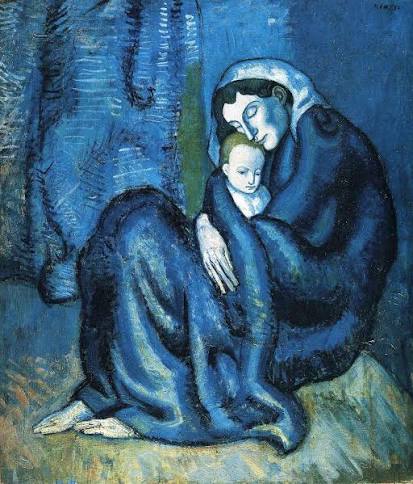
    Artists seized the opportunity. The Impressionists used blue in ways that shocked tradition—Monet painted the Rouen Cathedral in hazy blue light, Renoir captured the dappled blues of the Seine. Picasso’s Blue Period (1901–1904) used the color to express melancholy, not divinity. And in the 20th century, Yves Klein created his own patented International Klein Blue, a matte, ultramarine-like pigment that he declared the essence of space itself. Blue had transformed from a symbol of the divine to a medium for personal expression.

    The Science of Blue

    The scarcity of blue in the natural world is striking. Few animals produce true blue pigments. Blue jays, butterfly wings, and even blue eyes get their color from structural color—light scattering off microscopic structures, not from pigment molecules. This is why blue is so rare in nature: it’s a physical trick, not a chemical one.

    This rarity made the search for new blues a scientific quest. In 2009, a team at Oregon State University accidentally discovered a new blue while experimenting with materials for electronics. YInMn blue, named for its components (yttrium, indium, manganese), is highly reflective and heat-resistant, making it useful for energy-efficient coatings. It was the first new blue pigment in over 200 years.

    Blue for Everyone

    Today, blue is everywhere. Indigo, once a prized dye for royal robes and elite textiles, now colors billions of pairs of jeans. National flags adopted blue en masse in the 19th century, from the United States to France. Corporate brands like IBM and Facebook chose blue to project trust and stability. The color that once took a fortune to produce now costs pennies per pound.

    The journey of blue—from a rare mineral in Afghan caves to a universal favorite—mirrors the story of human innovation and cultural change. It shows how a color’s meaning is shaped by its economics, technology, and beliefs. And it reminds us that the colors we take for granted have extraordinary histories.

    Blue’s story is one of extremes: from the most expensive pigment in history to the most common color in modern branding. Its rarity made it sacred, and its democratization made it ordinary. But its power remains. The next time you see a blue sky in a painting or a blue logo on your screen, remember: you’re looking at a color that once cost more than gold.

    Summary

    • Blue was historically the hardest color to produce, with natural pigments like lapis lazuli being rare and costly.
    • Ultramarine, made from lapis lazuli, was more expensive than gold in medieval Europe and reserved for the Virgin Mary’s robe.
    • The first synthetic blue, Prussian blue, was discovered accidentally in 1704, leading to a democratization of the color.
    • Modern blues like cobalt, French ultramarine, and YInMn blue made blue accessible to all, transforming its cultural meaning.
    • Blue is rare in nature, often resulting from structural color, not pigment.

    FAQ

    Q: Why was blue so hard to produce historically?
    A: True blue pigments were rare because most natural minerals that appear blue, like lapis lazuli, were scarce or impure. Plant-based dyes like indigo faded quickly, and stable synthetic blues required advanced chemistry that wasn’t available until the 18th century.

    Q: What is the difference between Egyptian blue and ultramarine?
    A: Egyptian blue was the first synthetic pigment, created in Egypt around 2,500 BCE, but its technology was lost. Ultramarine, made from lapis lazuli, was a natural pigment imported from Afghanistan and used in Europe from the medieval period onward.

    Q: How did blue become associated with the Virgin Mary?
    A: Starting in the 12th century, the Catholic Church promoted blue as a symbol of purity and heaven, and ultramarine was so expensive that it was used only for the most sacred figures, like Mary. This made the color a symbol of divine grace.

    Q: When did blue become affordable for everyone?
    A: The invention of Prussian blue in 1704 was the first step, but it became truly affordable after the synthesis of French ultramarine in 1826. This allowed artists and manufacturers to use blue freely.

    Q: Why is blue rare in nature?
    A: Few organisms produce true blue pigments. Most blue in nature, such as in blue jays or butterfly wings, is structural color, created by light scattering off microscopic structures rather than by pigments.

  • The Monuments Men: How 345 Art Experts Outwitted the Nazis and Saved Europe’s Cultural Heritage

    The Monuments Men: How 345 Art Experts Outwitted the Nazis and Saved Europe’s Cultural Heritage

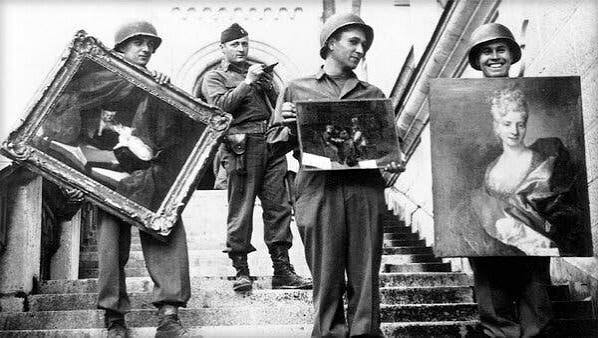
    In the spring of 1945, as Allied tanks rolled into the German countryside, a small group of middle-aged art historians and museum curators drove through the front lines in unarmored jeeps, carrying nothing more than maps, notebooks, and a fierce determination. Their mission was not to capture territory or destroy enemy positions, but to find and rescue the millions of artworks the Nazis had stolen and hidden across Europe. They were the Monuments, Fine Arts, and Archives officers—the Monuments Men—and their work would define how the world protects cultural heritage in times of war.

    The Threat to Civilization

    The Nazis’ systematic looting of Europe’s art was not a sideshow to the war; it was a core part of their ideology. Under the direction of the Einsatzstab Reichsleiter Rosenberg (ERR), special units confiscated Jewish-owned collections across occupied Europe. Hitler planned to fill a grand Führermuseum in Linz, Austria, with the best of these stolen works, while Hermann Göring, second in command of the Third Reich, built his own private collection from the spoils.

    By 1943, the scale of the destruction and theft had become a concern for the Allies. Historic cities were being reduced to rubble, and priceless monuments were disappearing under bombs. The American art world, led by the American Defense Harvard Group, pressured the U.S. government to act. In response, the Roberts Commission was created, and the Monuments, Fine Arts, and Archives program was born.

    The Unlikely Soldiers

    The MFAA was a group of about 345 men and women from 13 nations. They were not trained soldiers; they were art historians, curators, architects, and educators. George Stout, a conservator who pioneered modern art conservation techniques, developed the methods for packing and moving fragile works. James Rorimer, who would later become the director of the Metropolitan Museum of Art, led the group in the European Theater. Sculptor Walker Hancock worked in Italy and later helped recover works from the Altaussee salt mine in Austria.

    One of the most remarkable figures was Rose Valland, a French art historian who was not officially an MFAA officer but whose intelligence was crucial. Working at the Jeu de Paume museum in Paris, which the Nazis used as a sorting depot for looted art, she secretly recorded the details of every shipment—where it came from, where it was going. Her meticulous notes, passed to the Allies, provided the roadmap for recovery.

    These were men and women in their 30s and 40s, often physically unfit for combat, yet they operated near the front lines, sometimes under fire. They faced constant skepticism from military commanders who saw them as a burden. But they persisted, armed with the conviction that civilization’s treasures were worth risking their lives for.

    The Hunt for the Salt Mines

    As the war drew to a close, the Monuments Men received reports that the Nazis had hidden vast quantities of art in salt mines, which offered stable temperature and humidity. The most famous of these was the Merkers salt mine in Germany, where they found not only artworks but the German national gold reserves. But the most extraordinary discovery came in Altaussee, Austria, in May 1945.

    Deep inside the Altaussee mine, the Monuments Men found over 6,500 paintings, including works by Vermeer, Michelangelo, and the Ghent Altarpiece—one of the most important artworks in European history. The Nazis had stored them there, and in the final days of the war, they had placed explosives at the mine’s entrance with orders to destroy everything. But the miners, who had been forced to work there, removed the explosives and saved the treasures.

    The recovery was painstaking. Each work had to be carefully packed and transported to a Central Collecting Point, where it was identified, cataloged, and prepared for return. The Monuments Men worked for years after the war, sorting through over 1,000 repositories—mines, castles, monasteries—and recovering an estimated 5 million cultural objects.

    The Cost of Duty

    The work was not without sacrifice. Two MFAA officers were killed in action: Ronald Balfour, a British art historian, died in 1945 while trying to save a church in Cleves, Germany. Their deaths underscored the danger these scholars faced, not with weapons but with clipboards.

    The Monuments Men also faced moral dilemmas. After the war, some MFAA officers protested the U.S. decision to send German-owned art to America for safekeeping, arguing that it violated the principles they had fought for. Their protest, known as the Wiesbaden Manifesto, was a reminder that the line between protection and looting can be thin.

    A Lasting Legacy

    The Monuments Men’s work did not end with the return of art. Their experience influenced the creation of the 1954 Hague Convention for the Protection of Cultural Property in the Event of Armed Conflict, which established international norms for preserving heritage during war. Today, the U.S. military has a similar unit, the Monuments, Fine Arts, and Archives program, which was deployed in Iraq and Afghanistan.

    The story of the Monuments Men has been told in books and films, most notably the 2014 George Clooney movie. But the real story is more complex and more remarkable. These were not action heroes; they were scholars who believed that a society’s culture is worth protecting, even at the cost of their own safety.

    The Unfinished Work

    Not every piece was recovered. Some works remain missing, their fates unknown. Some restitutions were delayed for decades, and some families never saw their treasures again. The Monuments Men’s work was not perfect, but it set a precedent that the world has followed ever since.

    In the quiet halls of the Central Collecting Points, amid the smell of old canvas and packing straw, a small group of dedicated people ensured that the Nazis’ attempt to erase a culture did not succeed. They were not soldiers in the traditional sense, but they fought a battle that mattered just as much.

    The Monuments Men’s legacy is not just in the millions of artworks they saved, but in the principle they established: that cultural heritage is a universal treasure, worth defending even in the darkest times. Their story is a reminder that even in the chaos of war, there are those who fight to preserve beauty, knowledge, and history for future generations.

    Summary

    • The Monuments, Fine Arts, and Archives (MFAA) program was a group of about 345 art historians, curators, and architects from 13 nations who served in WWII.
    • They were tasked with protecting cultural property from war damage and recovering art looted by the Nazis.
    • Key figures included George Stout, James Rorimer, Walker Hancock, and French art historian Rose Valland.
    • Major recoveries included the Merkers salt mine (with the bust of Nefertiti) and the Altaussee salt mine (with over 6,500 paintings, including the Ghent Altarpiece).
    • The MFAA’s work influenced the 1954 Hague Convention and set a precedent for cultural preservation in conflict.

    FAQ

    Q: Who were the Monuments Men?
    A: They were a group of approximately 345 men and women from 13 nations, mostly art historians, curators, architects, and educators, who served in the Allied armies during World War II to protect cultural property and recover looted art.

    Q: How much art did they recover?
    A: They searched over 1,000 repositories and recovered an estimated 5 million cultural objects, though exact numbers vary by source.

    Q: What was the most significant discovery?
    A: The Altaussee salt mine in Austria, where they found over 6,500 paintings, including works by Vermeer, Michelangelo, and the Ghent Altarpiece.

    Q: Did any Monuments Men die in the line of duty?
    A: Yes, two were killed in action: Ronald Balfour, a British art historian, and another officer whose name is less well-known.

    Q: What impact did they have on modern practice?
    A: Their work influenced the 1954 Hague Convention for the Protection of Cultural Property in Armed Conflict, and the modern U.S. military has a similar unit today.

  • The Great Slaughter’s Absurd Echo: How Dada Turned Nonsense into Protest

    The Great Slaughter’s Absurd Echo: How Dada Turned Nonsense into Protest

    On February 5, 1916, in a smoky back room of a Zurich tavern, Hugo Ball recited a poem that made no sense. He stood in a cardboard costume, wings flapping, and shouted syllables: “gadji beri bimba glandridi laula lonni cadori.” The audience, mostly artists and exiles, didn’t laugh. They understood. The war raging across Europe had turned millions of young men into statistics, and the language that had justified it—patriotism, honor, progress—was a lie. Dada was born not as a style, but as a scream.

    This was not art for art’s sake. It was art against the very idea of art, against the reason that had built machine guns and propaganda. Dadaists didn’t want to soothe or beautify; they wanted to shatter. In the chaos of a world gone mad, they chose nonsense as their weapon, and absurdity as their truth.

    A Nightclub in Neutral Switzerland

    Zurich in 1916 was a strange bubble. While Europe bled in trenches, the Swiss city thrived with spies, refugees, and revolutionaries—Lenin lived a few streets away from the Cabaret Voltaire. Hugo Ball, a German theater director who had fled conscription, rented the space above a seedy bar and turned it into a performance venue. He and his partner Emmy Hennings, a cabaret singer, wanted to create a place where artists could respond to the horror with total freedom.

    The cabaret was a mess of noise, poetry, and dance. Ball recited his sound poems—words stripped of meaning, pure vocal texture. Tristan Tzara, a Romanian poet, shouted manifestos that declared, “Dada means nothing.” Hans Arp, an Alsatian sculptor, glued paper squares at random, letting chance decide the composition. Marcel Janco painted masks that looked like tribal relics. None of it was meant to be beautiful. It was meant to break the spell of a culture that had produced the war.

    “I do not want words that other people have invented,” Ball wrote in his diary. “I want my own stuff, my own rhythm, and vowels and consonants to match.” The destruction of language was a political act. If words like “fatherland” and “glory” had been used to send millions to death, then those words deserved to be shredded.

    The Name That Means Nothing

    The movement’s name, “Dada,” was reportedly discovered on April 18, 1916, when Ball and his friends flipped through a French-German dictionary. They landed on “dada,” the French word for hobbyhorse, a child’s toy. It was meaningless, infantile, and perfect. Tzara later claimed it could mean anything—or nothing at all. The choice was deliberate: a name that defied interpretation, just like the movement itself.

    This anti-meaning stance extended to the group’s publications and performances. Tzara’s 1918 manifesto instructed readers to “take a newspaper, take some scissors, cut out the words… put them in a bag, shake gently, then take out the scraps one after another.” The result was a poem that made no logical sense, but it mirrored the randomness of war—where a shell could land anywhere, on anyone, for no reason.

    Readymades and Revolt

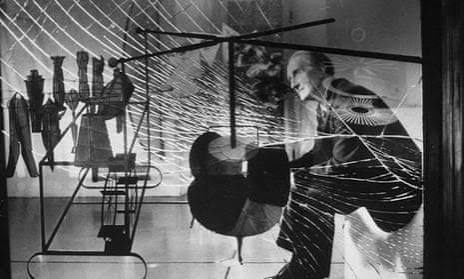
    Meanwhile, in New York, Marcel Duchamp was taking the same idea into the gallery. In 1917, he bought a porcelain urinal from a plumbing supply store, signed it “R. Mutt,” and submitted it to the Society of Independent Artists’ exhibition. The piece, titled Fountain, was rejected—not because it was offensive, but because it was a urinal. Duchamp’s point was sharp: art was whatever an artist chose to call art. The institutions, the critics, the public—they had no real authority. They were just playing a game, and Dadaists refused to play by the rules.

    The readymade was a slap at the art market, but it was also a comment on mass production. A factory-made object had no “aura” of genius, yet Duchamp elevated it by choice. In a world where industrial technology had produced poison gas and tanks, why should art celebrate beauty? Better to force people to look at a toilet and ask: what is art, and who decides?

    Berlin: Politics and Photomontage

    After the war, Dada took a harder turn in Berlin. The November Revolution of 1918 had failed, the Spartacist uprising was crushed, and the new Weimar Republic was shaky. Berlin Dadaists like George Grosz, John Heartfield, and Hannah Höch were explicitly political. They didn’t want to escape the world; they wanted to tear it apart with scissors.

    Höch’s Cut with the Kitchen Knife Dada Through the Last Weimar Beer-Belly Cultural Epoch of Germany (1919-1920) is a visual riot. She pasted together photographs of politicians, wrestlers, dancers, and machinery into a chaotic collage. The title itself is a mockery of the German establishment. The work shows a map of Europe with heads of military leaders, a picture of a woman’s legs, a gearwheel, and the word “Dada” scrawled across. It’s a jumble, but it’s methodical: Höch was attacking the male-dominated, militaristic culture that had led Germany into ruin.

    Photomontage was a new medium, born from the mass media that had mushroomed during the war. Posters, newspapers, and advertisements were everywhere. Dadaists stole these images and recombined them, showing how propaganda manipulated reality. If the press could create a fake world, Dada could create a deliberately fake one that exposed the lies.

    The End and the Echo

    By 1924, the movement had largely dissolved. Tzara moved to Paris, where André Breton was gathering the Surrealists. Some Dadaists joined him, finding a new home in the exploration of the unconscious. Others went into architecture, design, or politics. But the spirit didn’t die. It resurfaced in the 1950s and 1960s as Neo-Dada, influencing Fluxus, Pop Art, and performance art. Every time an artist uses everyday objects, every time a performance shocks an audience, every time a work refuses to mean something—that’s Dada’s echo.

    The movement was a reaction to a specific catastrophe, but its core insight remains: when reason becomes a tool for mass death, absurdity is the only honest response. Dada didn’t offer solutions. It offered a mirror, cracked and distorted, showing the world what it had become.

    Dada was not a style you could hang on a wall. It was a nervous breakdown, a tantrum, a refusal. It lasted only a few years, but it changed how we think about art—not as a decoration, but as a weapon. In the face of a war that made no sense, the Dadaists answered with nonsense. A century later, that answer still stings.

    Summary

    • Dada emerged in Zurich in 1916 as a direct response to the horrors of World War I, rejecting reason and logic as tools of propaganda and slaughter.
    • The movement used absurdist performances, sound poetry, and chance-based art to protest bourgeois values and nationalist culture.
    • Key figures like Hugo Ball, Tristan Tzara, and Hans Arp created works that deliberately defied meaning, such as Ball’s sound poem Karawane and Arp’s chance collages.
    • Marcel Duchamp’s readymades, including the infamous Fountain (a urinal), challenged the institutional definition of art itself.
    • Berlin Dadaists like Hannah Höch used photomontage to critique political and gender oppression, leaving a lasting influence on later movements like Surrealism and Neo-Dada.

    FAQ

    Q: Why did Dadaists choose the name “Dada”?
    A: The name was reportedly found by flipping through a dictionary, landing on “dada,” French for hobbyhorse. It was deliberately meaningless, reflecting the movement’s rejection of fixed meaning.

    Q: Was Dada purely negative?
    A: No. While it rejected traditional values, it was also creative—inventing new forms like sound poetry and photomontage, and opening up art to everyday objects.

    Q: How did Dada respond to World War I specifically?
    A: Dadaists saw the war as the result of nationalist reason and technological progress. They countered with irrationality, nonsense, and anti-art as a moral protest.

    Q: What happened to Dada after 1924?
    A: Many members joined Surrealism, but the movement’s ideas lived on in Neo-Dada and later avant-garde practices, influencing everything from Pop Art to performance art.

    Q: Was Dada successful in its anti-war aims?
    A: It didn’t stop wars, but it changed art—making it a space for political and philosophical protest, and inspiring generations of artists to question authority.

  • Rome vs Florence: Where Did the Renaissance Really Happen?

    Rome vs Florence - Which is Right for You? | Italy4Real

    When you think of the Renaissance, you might picture Michelangelo’s David in Florence or the Sistine Chapel in Rome. But these two cities tell very different stories about the same era. Florence gave birth to the movement; Rome transformed it into something monumental. This article unpacks the rivalry, the art, and the legacy of two of Italy’s most iconic cities.

    The Two Renaissance Capitals

    Florence and Rome both claim the Renaissance, but they experienced it in distinct ways. Florence was the cradle—a city of bankers and merchants who funded a cultural explosion in the 1400s. Rome was the stage—a city of popes who used art to project power and piety in the 1500s. Understanding the difference between these two cities is key to understanding the Renaissance itself.

    Florence’s golden age ran from about 1400 to 1520. Rome’s revival peaked a bit later, from 1500 to 1650, overlapping with the Baroque era. The primary patrons differed: in Florence, it was the Medici family—private, merchant, and humanist. In Rome, it was the Papacy—institutional, religious, and ambitious. These differences shaped the art each city produced.

    Florence: Birthplace of the Renaissance

    Florence’s rise was economic. By the 13th and 14th centuries, banking and wool trade made it one of Europe’s wealthiest cities. The florin, its currency, was the standard across the continent. This wealth created a merchant class that valued education, civic pride, and patronage.

    The political structure was a republic, though the Medici family held outsized influence from 1434 onward. Cosimo de’ Medici and his grandson Lorenzo the Magnificent were the driving forces behind the city’s artistic output. They funded artists like Botticelli, Donatello, and Brunelleschi, and their support extended to thinkers as well.

    Humanism was the intellectual fuel. Florence was the epicenter of the revival of classical Greek and Roman texts, emphasizing human potential and secular learning. This directly shaped art: instead of only religious subjects, artists explored mythology, portraiture, and the human form with new naturalism.

    Artistic competition was built into the city’s culture. The famous 1401 competition for the Baptistery doors, won by Ghiberti over Brunelleschi, set a precedent. Public artistic rivalry became a engine for innovation. Brunelleschi went on to solve the engineering puzzle of the Duomo, the largest brick dome ever built, which remains a triumph of human ingenuity.

    Florence produced defining works like Michelangelo’s David (now in the Accademia), Botticelli’s Birth of Venus and Primavera (in the Uffizi), and Leonardo’s Annunciation. These pieces are celebrated for their perspective, chiaroscuro, and emotional depth. Florence also coined the term “Renaissance”—Giorgio Vasari, a Florentine artist-historian, used “rinascita” in his 1550 Lives of the Artists to describe the city’s rebirth.

    Rome: The Eternal City’s Second Life

    Rome’s story is layered. It was the center of the ancient empire, leaving monuments like the Pantheon and Colosseum. After the empire’s fall, the city declined dramatically—by the 14th century, its population had shrunk to around 20,000. The papacy even moved to Avignon between 1309 and 1377, further draining the city’s prestige.

    But the popes returned, and they had a plan. Starting with Pope Nicholas V in 1447, they embarked on a deliberate campaign to restore Rome’s grandeur. Sixtus IV built the Sistine Chapel and the Vatican Library in the 1470s–80s. Then came Julius II, the “Warrior Pope,” who aggressively commissioned the greatest artists of the age.

    Michelangelo was summoned to paint the Sistine Chapel ceiling (1508–1512) and later the Last Judgment. Raphael decorated the Vatican Stanze with frescoes like The School of Athens, a masterpiece of classical and Christian synthesis. Bramante designed the new St. Peter’s Basilica, which Michelangelo and later Bernini would continue. These works were monumental in scale and ambition, intended to assert papal authority over Christendom.

    Rome’s innovation was in integrating classical antiquity with Christian theology. The city’s ancient ruins served as both inspiration and competition. Artists and architects studied the arches, columns, and proportions of the Colosseum and Pantheon, applying them to new churches and piazzas.

    The Sack of Rome in 1527 was a turning point. Holy Roman Emperor Charles V’s troops sacked the city, scattering artists and ending Rome’s High Renaissance golden age. Yet the city’s artistic legacy endured, evolving into the Baroque under Bernini and Caravaggio.

    The Rivalry: Who Wins?

    Florence and Rome were not just different; they were rivals. Florence trained the artists; Rome attracted them with the grandest commissions. Michelangelo, Raphael, and Leonardo all moved between the two cities. Florence offered intellectual ferment and training; Rome offered scale and prestige.

    If you’re asking which city was more important, it depends on your lens. Florence was the birthplace—the place where the Renaissance began. Rome was the culmination—where it became a global statement. Florence gave us the David, a symbol of human potential; Rome gave us the Sistine Chapel, a vision of divine power.

    For the traveler, both cities are essential. In Florence, you walk the streets where Brunelleschi’s dome changed architecture. In Rome, you stand in the shadow of the Colosseum and then step into St. Peter’s, seeing centuries of history layered. The two cities together tell the complete story of the Renaissance—its origins and its triumph.

    Conclusion: A Tale of Two Cities

    Rome and Florence are not competitors; they are complementary chapters in one of history’s greatest cultural movements. Florence’s intimate masterpieces and Rome’s monumental frescoes represent different responses to the same humanist impulse. Whether you prefer the intimate galleries of the Uffizi or the awe of the Sistine Chapel, both cities offer a window into the rebirth of art and ideas that changed the world.

    TL;DR

    • Florence was the birthplace of the Renaissance (1400–1520), driven by the Medici family and humanist thought.
    • Rome was the stage for the High Renaissance and Baroque (1500–1650), driven by the Papacy’s monumental commissions.
    • Florence excelled in perspective, naturalism, and intimate masterpieces; Rome excelled in fresco cycles, classical revival, and urban scale.
    • Both cities produced unmatched art: Florence’s David and Duomo, Rome’s Sistine Chapel and St. Peter’s.
    • The Sack of Rome in 1527 ended Rome’s golden age, but its influence continued into the Baroque.

    FAQ

    Q: Which city is better for seeing Renaissance art?
    A: Both are essential. Florence has the Uffizi and Accademia (Michelangelo’s David), while Rome has the Vatican Museums and Sistine Chapel. If you must choose, Florence is more concentrated on early Renaissance, Rome on High Renaissance and Baroque.

    Q: Who were the main patrons of art in Florence and Rome?
    A: In Florence, it was the Medici family, particularly Cosimo and Lorenzo. In Rome, it was the popes, especially Julius II, Leo X, and Sixtus IV.

    Q: What is the difference between Renaissance and Baroque art?
    A: Renaissance (14th–16th century) focused on naturalism, perspective, and balance. Baroque (17th century) emphasized drama, emotion, and grandeur. Rome is known for both, but especially Baroque, with artists like Bernini and Caravaggio.

    Q: Why did the Renaissance start in Florence?
    A: Florence had the wealth (banking and wool trade), the political structure (a republic with merchant power), and the intellectual movement (humanism) that fueled artistic innovation. The 1401 Baptistery competition also created a culture of rivalry.

    Q: What is the Sack of Rome?
    A: In 1527, troops of Emperor Charles V sacked Rome, a brutal event that ended the High Renaissance in Rome and scattered artists across Europe. It marked a turning point in both political and artistic history.

    In the end, the Renaissance is not a single story but a dialogue between two cities. Florence provided the spark; Rome turned it into a blaze. To truly understand the era, look at both—the intimate and the monumental, the human and the divine.

    Summary

    • Florence was the birthplace of the Renaissance, driven by the Medici family and humanist thought.
    • Rome was the stage for the High Renaissance and Baroque, driven by the Papacy’s monumental commissions.
    • Florence excelled in perspective, naturalism, and intimate masterpieces; Rome excelled in fresco cycles, classical revival, and urban scale.
    • Both cities produced unmatched art: Florence’s David and Duomo, Rome’s Sistine Chapel and St. Peter’s.
    • The Sack of Rome in 1527 ended Rome’s golden age, but its influence continued into the Baroque.

    FAQ

    Q: Which city is better for seeing Renaissance art?
    A: Both are essential. Florence has the Uffizi and Accademia (Michelangelo’s David), while Rome has the Vatican Museums and Sistine Chapel. If you must choose, Florence is more concentrated on early Renaissance, Rome on High Renaissance and Baroque.

    Q: Who were the main patrons of art in Florence and Rome?
    A: In Florence, it was the Medici family, particularly Cosimo and Lorenzo. In Rome, it was the popes, especially Julius II, Leo X, and Sixtus IV.

    Q: What is the difference between Renaissance and Baroque art?
    A: Renaissance (14th–16th century) focused on naturalism, perspective, and balance. Baroque (17th century) emphasized drama, emotion, and grandeur. Rome is known for both, but especially Baroque, with artists like Bernini and Caravaggio.

    Q: Why did the Renaissance start in Florence?
    A: Florence had the wealth (banking and wool trade), the political structure (a republic with merchant power), and the intellectual movement (humanism) that fueled artistic innovation. The 1401 Baptistery competition also created a culture of rivalry.

    Q: What is the Sack of Rome?
    A: In 1527, troops of Emperor Charles V sacked Rome, a brutal event that ended the High Renaissance in Rome and scattered artists across Europe. It marked a turning point in both political and artistic history.