Tag: architecture

  • Why Your AI Agent’s Memory Is an Architecture Problem, Not a Feature

    Why Your AI Agent’s Memory Is an Architecture Problem, Not a Feature

    Every time an AI agent chats with you, it reads the entire conversation history. That text costs money literally. With API pricing per token, a long-running agent session can rack up dollars in input fees before it ever produces a useful output. But money isn’t the only issue. The model’s attention mechanism slows down as context grows, and quality degrades. This is why context management how an agent stores, retrieves, and forgets information is not a minor implementation detail. It’s a core architectural decision that affects cost, speed, and success.

    The problem is exploding as autonomous agents become common. Coding assistants, research bots, and customer-service agents operate for hours or days, accumulating tool outputs, file contents, and reasoning steps. Even with massive 200K-token windows, agents exhaust context quickly. The paper Agentic Context Management: Memory and Cost as Architecture Problems (arXiv:2607.21503) argues that memory and cost are coupled: every token stored in context has a direct price and a latency cost. Therefore, designing memory is not just about capability—it’s about economics.

    Context Bloat: The Hidden Tax on AI Agents

    Imagine an AI agent tasked with researching a topic for you. It starts by scraping dozens of web pages, saving snippets, and taking notes. Each step adds to the conversation history. After an hour, the context might contain 100,000 tokens—roughly the length of a short novel. Every subsequent request to the model must process all those tokens, even if only the last few are relevant. That’s the context bloat problem.

    With API pricing, input tokens typically cost more than output tokens. For a long-running agent, input dominates. A single session can easily cost tens of dollars if left unchecked. But cost isn’t the only penalty. Attention mechanisms scale with context length, so response times slow down. And research shows that models struggle to use information buried in the middle of long contexts—the ‘lost in the middle’ effect. Even a 1M-token window doesn’t solve this; it just makes the problem more expensive and slower.

    Memory Is More Than Storage

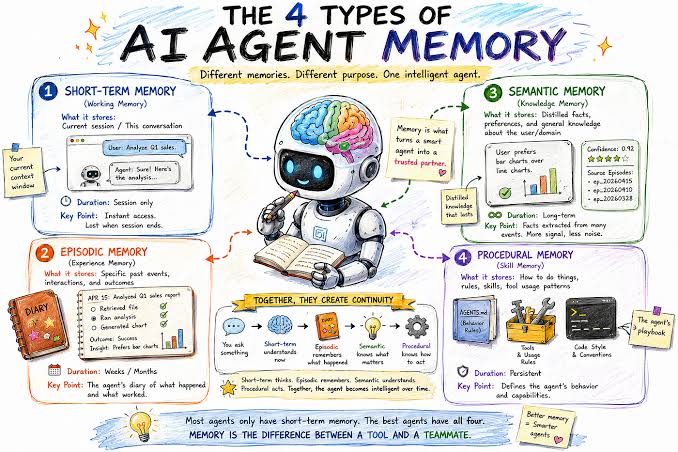
    A common misconception is that memory is just a database. But in agentic AI, memory refers to what you feed into the model at inference time. Storing data on disk is cheap—putting it into context is not. The paper emphasizes this distinction. A vector database full of facts is useless unless the agent retrieves the right facts and includes them in the prompt. That act of inclusion is where cost and latency hit.

    Think of it like a librarian. Storing books in a warehouse is easy. But bringing every book to the reading room for every visitor is absurd. The librarian must decide which books to fetch, which to summarize, and which to leave in the stacks. That decision is the architecture.

    The Cost-Performance Trade-off

    Context management strategies fall into a few broad categories, each with strengths and weaknesses:

    • Sliding windows: Keep only the last N messages. Simple, but the agent forgets early context. If the user mentioned a constraint at the start, it’s gone.
    • Summarization: Periodically compress history into a summary. Saves tokens, but summaries lose detail. A critical nuance might vanish.
    • Retrieval-augmented generation (RAG): Store all data externally, retrieve relevant snippets on demand. Powerful, but retrieval can miss the right snippet. If the query is ambiguous, the agent might fetch the wrong information.
    • Hierarchical memory: Combine summaries and raw details, like a pyramid. The agent uses the summary for big-picture reasoning and drills into details when needed. This is closer to human memory.

    None of these is universally best. The optimal strategy depends on the task. For a customer-service bot, a sliding window might suffice—the last few messages contain the issue. For a research assistant, hierarchical memory with retrieval is better. The paper likely proposes a taxonomy to help engineers choose and combine strategies.

    Why Bigger Context Windows Won’t Save You

    Some argue that context management is a temporary problem—that as models get cheaper and windows get bigger, we won’t need to manage memory. The paper counters this by pointing to fundamental limits. Even with unlimited context length, the cost per token and attention complexity grow. A 1M-token context might cost $10 per call, making it impractical for high-frequency agents. Moreover, attention quality degrades with length, as shown by the ‘lost in the middle’ phenomenon. So management remains necessary.

    Think of context as RAM, not disk. You can never have enough RAM; you always need to manage what’s loaded. The same logic applies to agent context.

    The Economic Imperative

    For startups and enterprises, context management directly hits the bottom line. A poorly designed memory system can make an agent economically unviable at scale. If each task costs $1 in tokens, a million tasks cost a million dollars. Cutting that to $0.10 through smart memory policies is a game-changer.

    Cost-aware memory policies are a design lever. For example, ‘forget cheaply, retrieve expensively’—drop low-value details early, and only spend tokens on retrieval when necessary. This is like a company that archives old emails instead of keeping them in the inbox.

    The paper argues that memory design is a cost-optimization problem. Engineers should measure token cost per task, not just task success rate. A strategy that saves 50% tokens but reduces success by 5% might be worth it—or not, depending on the application.

    Security and Privacy: The Hidden Angle

    Storing more context increases the blast radius of data leaks. If an agent handles sensitive customer data, keeping every detail in memory is a liability. Context management as a privacy feature—minimization—reduces risk. The paper likely touches on this: forgetting is not just a performance tool, but a security feature.

    The Cognitive Science Analogy

    Human memory isn’t perfect, and that’s a feature. We forget details to focus on what matters. Agents that remember everything are not smarter; they are slower and more confused. The paper draws on cognitive science—working memory vs. long-term memory, forgetting curves—to argue that selective amnesia is valuable. An agent that forgets irrelevant details can focus on the task at hand.

    Practical Takeaways for Engineers

    If you’re building an agent, the paper’s message translates to concrete steps:

    1. Measure token cost per task—not just accuracy. Include context management in your metrics.
    2. Choose strategies based on task type—not just what’s trendy. A sliding window might be fine for short sessions; a hybrid retrieval-summarization approach for long-horizon tasks.
    3. Design memory with failure in mind—what happens when retrieval misses? The agent should recover gracefully.
    4. Consider privacy from the start—minimize stored context to reduce breach impact.

    Conclusion

    Context management is not a plugin you bolt on; it’s an architectural pillar. The paper Agentic Context Management makes a strong case that memory and cost are intertwined. As agents become more autonomous and handle longer tasks, the ability to manage context will separate successful systems from bankrupt ones. The next time you see an agent struggle with a long conversation, remember: it’s not the model’s fault—it’s the architecture’s.

    Context management is the unsung hero of agentic AI. It’s not glamorous, but it’s essential. The paper’s core insight—that memory is a cost problem—should change how you build. Start measuring token costs, experiment with hybrid memory strategies, and design for forgetting. Your cloud bill and your users will thank you.

    Summary

    • Context management is an architectural concern, not an implementation detail: memory and cost are directly coupled.
    • Every token in context costs money and slows down the model; even huge context windows don’t solve the economic or quality issues.
    • Common strategies (sliding windows, summarization, RAG, hierarchical memory) each have trade-offs; no one-size-fits-all solution.
    • Cost-aware memory policies (e.g., ‘forget cheaply, retrieve expensively’) are essential for making agents economically viable at scale.
    • Context management also serves as a privacy feature, minimizing data blast radius—forgetting is a security tool.

    FAQ

    Q: What is context bloat in AI agents?
    A: Context bloat happens when an agent accumulates conversation history, tool outputs, and intermediate reasoning, making the input to the model huge. This increases cost and latency, and degrades performance.

    Q: Why can’t we just use a bigger context window?
    A: Bigger windows don’t solve the cost problem—input tokens still cost money, and attention slows down. Also, models lose track of information in the middle of long contexts, so quality suffers.

    Q: What are the main context management strategies?
    A: Sliding windows (keep recent messages), summarization (compress history), retrieval-augmented generation (store externally, fetch relevant snippets), and hierarchical memory (combine summaries with details). Each has trade-offs.

    Q: How does context management affect cost?
    A: Since API pricing is per token, reducing the input tokens per call directly reduces cost. Efficient memory strategies can cut costs significantly, making agents viable at scale.

    Q: Is context management a privacy issue?
    A: Yes—storing more data increases the impact of a leak. Minimizing what’s kept in context is a privacy feature, in addition to improving performance.

  • The Bauhaus School: How a German Art School Redesigned the Modern World

    The Bauhaus School: How a German Art School Redesigned the Modern World

    Bauhaus - Wikipedia

    In 1919, in the German city of Weimar, an architect named Walter Gropius founded a school that would change everything. It was called the Bauhaus, and it had a radical idea: art, craft, and technology could be united to create a new kind of design for a new kind of world. For just 14 years, this small school operated in three German cities, enrolling roughly 1,250 students. Yet its influence has spread far beyond its short life, shaping the look of everything from skyscrapers to desk lamps, and from typefaces to teapots.

    Today, when you see a sleek glass building, a minimalist chair, or a clean, sans-serif font, you’re seeing the Bauhaus legacy. But the school’s story is not just about aesthetics. It’s about a group of artists and thinkers who, in the chaos after World War I, dared to imagine that design could make life better for everyone. Their ideas were controversial, their products sometimes impractical, and their school was shut down by the Nazis. Yet the Bauhaus idea survived, spread across the globe, and continues to shape our world.

    From Cathedral to Machine: The Bauhaus Idea

    The Bauhaus was born from the ashes of World War I. Germany was defeated, economically broken, and politically unstable, but the Weimar Republic was also a time of intense cultural experimentation. Gropius, who had served in the war and been horrified by its destruction, wanted to rebuild society. He merged the Grand-Ducal Saxon Academy of Fine Art and the School of Arts and Crafts to create a school that would break down the traditional hierarchy of fine arts over crafts.

    Gropius’s vision was inspired by the Arts and Crafts movement and the Deutscher Werkbund, but he went further. He imagined a “cathedral of socialism” that would unite all creative disciplines. The school’s motto, later formalized, was “Art and Technology – a new unity.” This was a radical idea: that artists should work with industry to create well-designed, affordable objects for everyday life.

    The Bauhaus was structured around a groundbreaking curriculum. Every student began with the Vorkurs, a six-month preliminary course that explored materials, color, and form. Johannes Itten, a mystic and educator, pioneered this course, but it was later systematized by László Moholy-Nagy and Josef Albers. After the preliminary course, students entered workshops—metal, wood, textiles, ceramics, typography, stage, and wall-painting—where they learned by doing. Each workshop had two masters: a “Master of Form” (an artist) and a “Master of Craft” (an artisan). This dual model emphasized both design and handcraft.

    The ultimate goal was the Gesamtkunstwerk, a total work of art. Architecture was seen as the highest expression of this idea, the ultimate aim of all design. The Bauhaus building itself, designed by Gropius in Dessau, became a physical manifesto of this philosophy.

    The Signature Looks: From the Wassily Chair to the Bauhaus Building

    Certain objects from the Bauhaus have become icons of modern design. Marcel Breuer’s Wassily Chair (1925) was inspired by bicycle handlebars and used tubular steel to create a sleek, minimalist form. Wilhelm Wagenfeld and Carl Jakob Jucker’s MT8 Table Lamp (1924) is a perfect example of the Bauhaus aesthetic: geometric, functional, and beautiful in its simplicity. Josef Hartwig’s Chess Set (1924) reduced the pieces to basic geometric shapes, reflecting the Bauhaus belief that form should follow function.

    Herbert Bayer’s “Bauhaus” typeface (1925) was a universal, geometric sans-serif that stripped away unnecessary ornament. The experimental Haus am Horn (1923) in Weimar was a “prototype house” that showcased the Bauhaus’s ideas for efficient, affordable living.

    Perhaps the most iconic creation was the Bauhaus Building in Dessau (1925–26). Gropius’s design featured a glass curtain wall that revealed the structure’s inner workings, a bold statement of transparency and modernity. It was a building that embodied the school’s principles: functional, clean, and radically new.

    The People and the Politics

    The Bauhaus was a magnet for some of the most innovative artists of the 20th century. Paul Klee, Wassily Kandinsky, Oskar Schlemmer, Lyonel Feininger, and Anni Albers were among the faculty. The school also had a strong contingent of women students, though their experiences were often shaped by gender bias. Women were frequently steered toward textiles and ceramics, and the metal workshop was largely male-dominated. Gunta Stölzl, who led the weaving workshop, had to fight for her position, but her work was groundbreaking.

    The school’s politics were complex. It was criticized by both the left and the right. Some on the left saw it as elitist, despite its rhetoric of design for the people. Many Bauhaus products were expensive, small-batch items that were not accessible to the working class. On the right, the Nazis viewed the school as “degenerate” and “un-German.” This hostility eventually forced the school to move from Weimar to Dessau, and then to Berlin, where it was finally closed in 1933 under pressure from the Nazi regime.

    The school’s second director, Hannes Meyer (1928–1930), emphasized functionalism and architecture over craft, but his Marxist politics made him unpopular. The third director, Ludwig Mies van der Rohe (1930–1933), oversaw the school’s final, architecture-focused years, but it was too late. In April 1933, the Bauhaus was shut down.

    The Bauhaus Goes Global

    After the closure, Bauhaus faculty and students scattered around the world, taking their ideas with them. László Moholy-Nagy founded the New Bauhaus in Chicago in 1937, which later became the Institute of Design. Josef and Anni Albers moved to Black Mountain College in North Carolina, where they became influential teachers. Marcel Breuer and Mies van der Rohe went to the United States, where they became leading figures in modern architecture. Other alumni migrated to Palestine, Mexico, Japan, and beyond.

    This diaspora spread Bauhaus pedagogy and aesthetics across the globe, influencing mid-century modernism, Scandinavian design, and corporate identity. The Bauhaus-Universität Weimar and the Bauhaus Dessau Foundation continue to operate today, and in 1996, UNESCO designated the Bauhaus sites in Weimar and Dessau as World Heritage.

    The Legacy and the Critique

    The Bauhaus is often celebrated as the origin of modern design, and its influence is undeniable. The clean lines, functionalism, and “form follows function” ethos can be seen in everything from Braun and Apple products to contemporary architecture. But there is also a critical view. Some argue that the Bauhaus’s functionalism became an ideology that ignored human needs for ornament and decoration. Others point out that the school’s products were not truly democratic, and that its gender politics were often regressive.

    Despite these critiques, the Bauhaus remains a powerful symbol of creativity and innovation. It was a school that, for a brief moment, brought together art, craft, and technology in a way that had never been done before. Its story is a reminder of what can happen when artists and designers are given the freedom to experiment and imagine a better world.

    The Bauhaus lasted only 14 years, but its impact has been lasting and global. It redesigned the modern world not just by changing the look of objects, but by changing the way we think about design. The Bauhaus idea—that good design can improve everyday life—remains as relevant today as it was in 1919. As you look around at the buildings, furniture, and fonts that shape your world, you may be seeing the Bauhaus legacy, a revolutionary school that dared to unite art and technology.

    Summary

    • The Bauhaus was founded in 1919 by Walter Gropius in Weimar, Germany, and operated until 1933, when it was closed by the Nazis.
    • The school’s revolutionary curriculum included a preliminary course and a workshop model that united art, craft, and technology.
    • Iconic designs like the Wassily Chair, the MT8 Table Lamp, and the Bauhaus Building in Dessau emerged from the school.
    • After the school’s closure, its faculty and alumni spread Bauhaus ideas worldwide, influencing modern design and architecture.
    • The Bauhaus legacy is a mix of innovation and critique, but its impact on the modern world is undeniable.

    FAQ

    Q: What was the Bauhaus school?
    A: The Bauhaus was a German art school founded in 1919 by Walter Gropius. It aimed to unite art, craft, and technology in a new way of design and architecture. Despite being closed in 1933, it had a significant influence on modern design.

    Q: Why is the Bauhaus so influential?
    A: The Bauhaus’s influence comes from its innovative curriculum and its emphasis on functional, geometric design. Its ideas spread through alumni and faculty who emigrated after the school’s closure, shaping mid-century modernism and contemporary design.

    Q: What were the key principles of the Bauhaus?
    A: The key principles included the unity of art and technology, the importance of craft, and the idea that design should be functional and accessible. The school also emphasized a total work of art, with architecture as the ultimate goal.

    Q: How did women contribute to the Bauhaus?
    A: Women were admitted to the Bauhaus, but were often steered into textiles and ceramics. Gunta Stölzl led the weaving workshop and created groundbreaking work. However, gender bias was a challenge, and women had to fight for recognition.

    Q: What happened to the Bauhaus after World War II?
    A: After World War II, the Bauhaus’s legacy continued through the New Bauhaus in Chicago, Black Mountain College, and the work of its emigrant faculty. The Bauhaus-Universität Weimar and the Bauhaus Dessau Foundation also carry on its traditions today.