Tag: ancient history

  • Greek Fire: The Byzantine Weapon That Burned on Water—and Vanished


    Imagine a weapon that could set enemy ships ablaze while floating on water, a fire that refused to die when doused, and a government so terrified of its secret that it was whispered only among a handful of trusted hands. That weapon was Greek Fire, the Byzantine Empire’s most guarded asset, which for centuries kept the world’s most powerful navies at bay. Its formula was so sacred that emperors swore their heirs to secrecy yet today, we don’t know exactly what it was. The story of Greek Fire is not just a tale of ancient warfare; it’s a lesson in how technology, secrecy, and geopolitics can intertwine and how a secret can vanish with the empire that guarded it.

    The Fire That Burned on Water

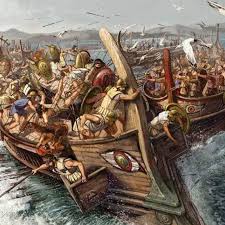
    Greek Fire was not a myth or a legend—it was a terrifying reality. First deployed in the 7th century, this incendiary weapon could burn on the surface of water, making it the ultimate naval nightmare. Byzantine warships, called dromons, were equipped with bronze siphons that shot streams of liquid fire at enemy vessels. The effect was devastating: wooden ships turned to infernos, crews leapt into the sea only to find the flames following them, and entire fleets were reduced to ash and smoke.

    The weapon’s most famous appearances came during the Arab sieges of Constantinople in 673–678 CE and again in 717–718 CE. In both cases, the Byzantine navy, vastly outnumbered, used Greek Fire to break the Arab blockades and save the empire. The Arab fleets, which had expected an easy victory, were repelled with catastrophic losses. For the Byzantines, Greek Fire was not just a military advantage—it was a divine gift, a symbol of God’s favor.

    A Secret Worthy of Death

    The Byzantine government treated Greek Fire’s formula as a state secret of the highest order, perhaps the first example of a weapon of mass destruction kept under lock and key. Emperor Constantine VII Porphyrogenitus, writing in the 10th century, explicitly warned his son in his manual De Administrando Imperio: never reveal the secret, for it was given by God to the Byzantines alone. The formula was reportedly divided among a few trusted families or guilds, and the penalty for disclosing it was death. Some legends even claimed an angel delivered the recipe to Emperor Constantine IV, cementing its sacred status.

    This secrecy had practical consequences. Because the formula was never written down openly, it was passed orally or in coded form. As the empire’s fortunes declined, the knowledge became ever more concentrated—and ever more vulnerable. By the 12th century, references to Greek Fire in battle dwindle, and by the Fourth Crusade in 1204, when Constantinople was sacked by Western Christians, the weapon appears to have been largely lost or degraded.

    What Was Greek Fire? The Scientific Mystery

    Modern historians and chemists have long debated the composition of Greek Fire. The most widely accepted theory is that it was a petroleum-based mixture, likely naphtha (a flammable liquid derived from crude oil, found in the Caucasus or Dead Sea regions), thickened with resins like pine tar to make it stick to targets. Sulfur and quicklime may have been added: quicklime reacts violently with water, generating heat that could ignite the naphtha—a plausible mechanism for a fire that burned on water.

    Other theories propose saltpeter-based mixtures, which would have made it an early form of gunpowder, but evidence for that is thin. Some modern chemists have suggested calcium phosphide, a compound that self-ignites on contact with water, but ancient technology likely couldn’t produce it. The most probable recipe, according to historical consensus, is a blend of naphtha, sulfur, and resin—a sticky, flammable cocktail that could be sprayed from a siphon and would cling to enemy ships, burning even as the crew tried to douse it with water.

    The Decline and Disappearance

    Why did such a formidable weapon vanish? Several factors likely contributed. First, the Byzantine Empire itself was shrinking. The territories that supplied the ingredients—particularly the oil fields of the Caucasus—fell to enemies, cutting off the raw materials. Second, the Byzantine navy, once the empire’s pride, declined in size and importance as the empire focused on land defenses and diplomatic alliances.

    Third, the tight secrecy may have backfired. If the formula was held by a specific family or guild that died out or lost power, the knowledge could have died with them. Finally, new technologies emerged. By the 12th century, Arab and Western navies were developing their own incendiary weapons, and later, gunpowder-based firearms and cannons made Greek Fire obsolete. Some historians argue the formula wasn’t truly “lost” but simply became irrelevant—a weapon replaced by more effective means of destruction.

    The Legacy of Lost Knowledge

    The story of Greek Fire endures as a classic “lost knowledge” narrative. It reminds us that ancient civilizations often possessed technologies we still don’t fully understand, and that the loss of a single formula—or the knowledge of how to build a machine—can alter the course of history. The Byzantine Empire’s rise and fall was shaped in part by this weapon, but its decline was equally shaped by the inability to innovate beyond it.

    For modern readers, Greek Fire is a testament to the power of secrecy and the fragility of knowledge. It also underscores a paradox: the more a state protects its technological secrets, the more vulnerable those secrets become to extinction. In an age of open-source intelligence and rapid innovation, the Byzantine model of guardianship seems archaic—yet it offers a cautionary tale about the risks of over-reliance on a single, closely held advantage.

    Greek Fire was a weapon born of desperation and genius, a secret that helped a dwindling empire survive for centuries. Its formula may be lost, but its mystery persists, fueling both historical debate and our imagination. The next time you see a flame that refuses to die, remember the Byzantines—and the fire that once ruled the seas, only to vanish with the empire that kept it.

    Summary

    • Greek Fire was an incendiary weapon used by the Byzantine Empire from the 7th to 12th centuries, capable of burning on water and used primarily in naval warfare.
    • Its formula was a closely guarded state secret, with emperors swearing heirs to secrecy; the penalty for revealing it was death.
    • The most likely composition was a petroleum-based mixture (naphtha) thickened with resins, possibly with sulfur and quicklime; modern theories include calcium phosphide but are considered unlikely.
    • The weapon’s use declined due to loss of territories for ingredients, decline of the Byzantine navy, and the emergence of new technologies like gunpowder.
    • The story of Greek Fire illustrates the fragility of secret knowledge and the risks of over-reliance on a single technological advantage.

    FAQ

    Q: Was Greek Fire actually fire that burned on water?
    A: Yes, Greek Fire could burn on water, which made it devastating in naval combat. Its exact mechanism is debated, but a mixture of naphtha and quicklime is a plausible explanation: quicklime reacts with water to generate heat, potentially igniting the flammable naphtha.

    Q: Who invented Greek Fire?
    A: It is traditionally attributed to Kallinikos, a Greek-speaking engineer from Heliopolis (modern Baalbek, Lebanon), who fled to Constantinople around 672 CE during the Arab conquests. However, the formula may have been developed earlier or refined by Byzantine chemists.

    Q: Why is the formula lost?
    A: The formula was kept secret and passed down orally or in coded form among a few trusted families. As the Byzantine Empire declined, the knowledge became concentrated and eventually died out. Additionally, the loss of territories that supplied key ingredients like naphtha made production impossible.

    Q: Could Greek Fire be extinguished?
    A: Contemporary sources say it was notoriously difficult to extinguish. Sand, vinegar, or urine were reportedly the only effective countermeasures, though these were not always practical in battle.

    Q: Did Greek Fire lead to the development of gunpowder?
    A: No, Greek Fire was a separate technology. It was primarily based on petroleum, whereas gunpowder is a mixture of saltpeter, charcoal, and sulfur. However, some later recipes in texts like Liber Ignium blended both, but these are considered medieval inventions rather than authentic Byzantine formulas.
  • The Silk Road’s Unsung Traders: How the Sogdians Shaped Eurasian History

    The Silk Road’s Unsung Traders: How the Sogdians Shaped Eurasian History

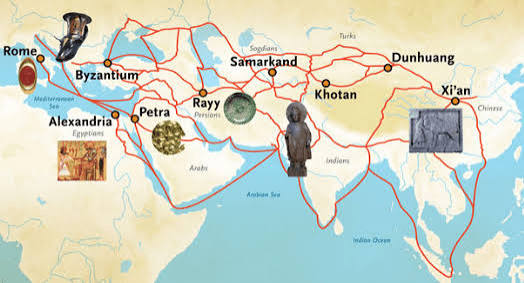
    When we think of the Silk Road, images of camel caravans laden with Chinese silk and Roman glass often come to mind. But who actually drove these caravans? The answer, for centuries, was the Sogdians a people from Central Asia who were the ultimate middlemen of the ancient world. They were not just traders; they were diplomats, translators, and cultural catalysts who linked the great empires of China, Persia, and Byzantium.

    Yet today, their name is barely known outside specialist circles. This article uncovers the story of these unsung traders, from their bustling city-states on the Zeravshan River to their far-flung colonies in China, revealing how they helped shape the course of Eurasian history.

    Who Were the Sogdians?

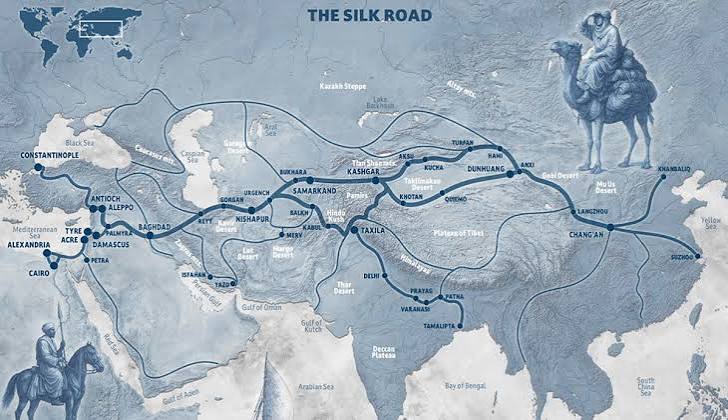
    The Sogdians were an Eastern Iranian people who inhabited Sogdiana, a region centered on the fertile Zeravshan River valley in what is now Uzbekistan and Tajikistan. Their heartland was a patchwork of independent city-states, including Samarkand, Bukhara, and Panjakent. Unlike their neighbors, the Sogdians never formed a unified empire. Instead, they built a network of commercially driven cities, each governed by local lords known as afshins. This decentralized structure proved to be an advantage: it allowed them to act as neutral intermediaries between rival powers, trusted by all sides.

    Their language, Sogdian, was an Eastern Iranian tongue written in a script derived from Aramaic. Remarkably, this script later influenced the development of the Uyghur and Mongolian alphabets, a lasting legacy of their cultural reach. From the 6th century BCE to the 10th century CE, the Sogdians rose and fell, with their golden age spanning the 4th to 8th centuries CE.

    Masters of the Silk Road

    The Sogdians dominated the central section of the Silk Road, controlling trade routes that linked China, India, Persia, and the Byzantine Empire. Their caravans carried a vast array of goods: silk, spices, glassware, precious metals, horses, and even slaves. They established merchant colonies, known as karvansarai networks, along the routes, with significant communities in Dunhuang, Turfan, and Chang’an (modern Xi’an). Some even ventured as far as the Korean Peninsula.

    But their trade was not limited to luxury goods. They were instrumental in the exchange of ideas and technologies. For instance, they helped transmit papermaking technology westward, a revolutionary development that would transform the Islamic world and Europe. They also dealt in horses, which were crucial for the Tang military, and jade from Khotan, prized in China.

    The Sogdians’ rise to prominence began under the Kushan Empire (1st–3rd centuries CE) and peaked during the early Tang Dynasty (7th–8th centuries CE). The Tang’s expansion into Central Asia created a stable political environment that fostered long-distance trade. The Sogdians also forged a vital alliance with the Turkic Khaganates, serving as administrators, scribes, and diplomats. In effect, they managed the political economy of the steppe, bridging the nomadic and sedentary worlds.

    The Cultural Intermediaries

    The Sogdians were more than just merchants; they were the primary translators and cultural brokers between the Indian, Persian, Chinese, and Turkic worlds. Their religious tolerance was remarkable—they practiced Zoroastrianism, Buddhism, Manichaeism, and Nestorian Christianity, often simultaneously. This openness made them uniquely suited to bridge diverse cultures.

    One of their most significant contributions was the transmission of Buddhism from India to China. Sogdian monks, such as Kang Senghui in the 3rd century CE, traveled to China and helped translate numerous Sanskrit texts into Chinese. They played a similar role for Manichaeism and Nestorian Christianity, spreading these faiths along the Silk Road.

    Their artistic legacy is equally rich. The murals of Panjakent and Afrasiab (near Samarkand) provide some of the most vivid visual records of Silk Road life, depicting scenes of trade, feasting, and mythology. These paintings offer a window into the cosmopolitan world the Sogdians inhabited.

    Sogdians in Chinese Courts

    Sogdians wielded significant political power in China, serving as military generals, court advisors, and even imperial consorts. The most dramatic example is An Lushan, a Sogdian-Turkic general who led a massive rebellion against the Tang Dynasty in 755 CE. The An Lushan Rebellion nearly toppled the dynasty and caused millions of deaths, fundamentally weakening Tang authority and disrupting the very trade networks the Sogdians had built.

    The rebellion also marked a turning point for the Sogdians in China. After its suppression, anti-Sogdian sentiment grew, and many Sogdians assimilated into Chinese society, losing their distinct identity over time.

    The Fall of the Sogdians

    The decline of the Sogdians was a gradual process, driven by two major forces. First, the Arab conquest of Transoxiana in the early 8th century CE eroded their political independence. The last ruler of Panjakent, Divashtich, resisted the invasion but was defeated and killed in 722 CE. Many Sogdians converted to Islam and were assimilated into Persian and Turkic cultures.

    Second, the collapse of Tang authority after the An Lushan Rebellion disrupted their trade networks in China. By the 10th century, the Sogdian language had largely died out, replaced by Persian and Turkic dialects. The Samanid Empire (819–999 CE) absorbed the remnants of Sogdian culture, and the once-thriving merchant communities faded into history.

    Yet their legacy endured. The Sogdians left an indelible mark on the regions they touched, from the scripts of Central Asia to the spread of Buddhism and the artistic traditions of the Silk Road. They were the connective tissue of the ancient world, and their story is a testament to the power of trade and cultural exchange.

    The Sogdians may not have built grand empires or left behind monumental architecture, but their impact on Eurasian history is undeniable. As the unsung traders of the Silk Road, they facilitated the exchange of goods, ideas, and beliefs that shaped the development of entire civilizations. Their story reminds us that history is often driven not by kings and conquerors, but by the merchants and middlemen who connect the world.

    Summary

    • The Sogdians were an Eastern Iranian people from Central Asia who dominated Silk Road trade between the 4th and 8th centuries CE.
    • They acted as cultural brokers, transmitting Buddhism, Manichaeism, and Nestorian Christianity, as well as artistic and literary traditions, between East and West.
    • Their decentralized city-states allowed them to remain neutral intermediaries among powerful empires like the Tang, Sassanian Persia, and the Byzantine Empire.
    • Sogdians held significant political power in China, exemplified by An Lushan, whose rebellion in 755 CE nearly toppled the Tang Dynasty.
    • The Arab conquest and the collapse of Tang authority led to their decline, but their legacy persists in scripts, art, and the flow of ideas across Eurasia.

    FAQ

    Q: Why are the Sogdians considered “unsung” traders?
    A: Despite their crucial role as the main middlemen of the Silk Road, the Sogdians are not as well-known as the Romans, Chinese, or Persians. Their decentralized political structure and eventual assimilation into other cultures meant they left no single dominant empire to preserve their fame.

    Q: What did the Sogdians trade besides silk?
    A: They traded a wide variety of goods, including horses, jade, glassware, spices, precious metals, and slaves. They also helped transmit technologies like papermaking.

    Q: How did the Sogdians influence the spread of Buddhism?
    A: Sogdian monks and translators, such as Kang Senghui, played a key role in translating Buddhist texts from Sanskrit into Chinese, making the religion accessible to Chinese audiences. They also facilitated cultural exchange along the trade routes.

    Q: What was the An Lushan Rebellion and why is it significant?
    A: The An Lushan Rebellion (755–763 CE) was a massive uprising led by An Lushan, a Sogdian-Turkic general, against the Tang Dynasty. It nearly toppled the dynasty, caused millions of deaths, and weakened Tang control over Central Asia, disrupting Silk Road trade.

    Q: When did the Sogdian civilization decline?
    A: The Sogdians began to decline in the early 8th century with the Arab conquest of Transoxiana. Their language and culture gradually disappeared over the following centuries, assimilating into Persian and Turkic populations by the 10th century.

  • The Alphabet’s Debt to the Sea: How Phoenician Sailors Rewrote the World

    The Alphabet’s Debt to the Sea: How Phoenician Sailors Rewrote the World

    Around 800 BCE, a simple innovation changed the course of human communication: a script of just 22 characters that could record any word in a language. It wasn’t invented by a scholar in a library or a priest in a temple, but by a seafaring people whose ships crisscrossed the Mediterranean, carrying not just goods, but a revolutionary way of writing. This is the story of the Phoenicians and the alphabet they spread from Lebanon to the shores of Europe and Africa.

    Before the alphabet, writing was an elite craft. Cuneiform in Mesopotamia and hieroglyphs in Egypt required years of training, with hundreds of signs and complex rules. Literacy was a rare skill, confined to a tiny class of scribes who served kings and temples. The alphabet changed that. With a small set of symbols representing individual sounds, it made writing accessible to merchants, sailors, and ordinary people. It was a democratization of knowledge, and it began with a sea trade.

    The Ancient World’s Writing Problem

    Writing was invented around 3200 BCE in Sumer (modern Iraq) with cuneiform—wedge-shaped marks pressed into clay tablets. Egypt developed hieroglyphs around the same time. Both systems were powerful but complex. Cuneiform used hundreds of signs for syllables and whole words. Hieroglyphs mixed logograms (symbols for entire words) with phonograms (symbols for sounds), requiring mastery of over 700 signs. A scribe had to train for years, and most people never learned to read or write. In a world where writing was the tool of state bureaucracy and religious ritual, literacy rates likely stayed below 5%.

    This complexity was a feature, not a bug, for the powerful. Writing was a source of control. But it was also a practical problem for anyone who needed to record information quickly and cheaply—especially traders and travelers. The alphabet emerged as a simpler alternative, but where did it come from?

    The Sinai Clue: Proto-Sinaitic Script

    The earliest known alphabetic writing was discovered in the Sinai Peninsula, at sites like Serabit el-Khadim, a turquoise mining area controlled by Egypt. Inscriptions dating to around 1900–1800 BCE were found there, carved into stone and rock. This script, called Proto-Sinaitic, is the missing link between Egyptian hieroglyphs and the later alphabet.

    How did it work? The script used a principle called acrophony: each symbol represented the first sound of a Semitic word. For example, the picture of an ox (‘aleph) stood for the sound ‘a’, becoming the letter A. A house (beth) became B. Water (mem) became M. These were not arbitrary signs but simplified pictures borrowed from Egyptian hieroglyphs, repurposed to represent sounds. It was a brilliant shortcut: instead of learning hundreds of signs, you only needed a few dozen.

    The people who created this script were likely Semitic-speaking laborers or mercenaries working in the Egyptian mines. They were not Phoenicians, but their innovation set the stage for the alphabet’s later spread. It was a practical tool for recording names and transactions, not a sacred or official script. And because it was simple, it could be adapted by anyone.

    The Phoenicians: Merchants and Mariners

    The Phoenicians were a Semitic civilization that flourished from about 1500 to 300 BCE along the coast of modern Lebanon, in city-states like Tyre, Sidon, and Byblos. They were renowned as the greatest sailors and traders of the ancient Mediterranean. Their ships carried cedar wood, purple dye, glass, and other goods to ports across the region. They established colonies, most famously Carthage in North Africa, and their trade networks stretched from Cyprus to Spain.

    Around 1050 BCE, the Phoenicians standardized the Proto-Sinaitic script into a 22-character consonantal alphabet. It was purely consonantal—no vowels. This was a crucial feature. In Semitic languages like Phoenician, vowels are often predictable from context, so a script without vowels was efficient. The Phoenician alphabet was simple enough to learn quickly, and it was not controlled by any state or religion. That made it highly adaptable.

    Phoenician inscriptions have been found along their trade routes, on Cyprus, Sardinia, and in North Africa. They used the script for commercial records, ship logs, and contracts—practical needs of a merchant class. The alphabet was a tool of trade, not of empire. And because it was tied to commerce, it spread wherever Phoenician ships sailed.

    The Greek Adaptation: Adding Vowels

    The most consequential adaptation of the Phoenician alphabet came around 800 BCE, when the Greeks adopted it. The Greeks were in contact with Phoenician traders, and they saw the value of a simple script. But there was a problem: Greek, an Indo-European language, had vowel sounds that were not predictable without written vowels. The Phoenician script, which had no vowels, would have been ambiguous.

    The Greeks solved this with a stroke of genius. They took Phoenician consonants that had no Greek equivalent and repurposed them as vowels. For example, ‘aleph became A, he became E, yod became I, and ‘ayin became O. This created the first true alphabet, with both consonants and vowels. Now any spoken word could be written with full fidelity. This was a revolutionary step—it meant that Greek could be written precisely, which was essential for recording poetry, philosophy, and law.

    The Greek alphabet then gave rise to the Latin alphabet, via the Etruscans of Italy, and eventually the script used by most of the world today. The Romans adapted the Greek alphabet, and as the Roman Empire expanded, so did its script. Latin became the alphabet of Western Europe, and later, through colonization and globalization, of the Americas, Africa, and Asia.

    The Aramaic Branch: A Sister Tradition

    The Phoenician alphabet also had a sister branch: the Aramaic script, which developed in the Near East. Aramaic became the lingua franca of the Persian Empire and later spread across the Middle East. From Aramaic came Hebrew, Arabic, and the scripts of South and Central Asia, including Brahmi and Devanagari, which are used to write Hindi and Sanskrit. So the Phoenician alphabet is not just the ancestor of Latin and Greek—it is the ancestor of writing systems used by billions of people today.

    The Real Revolution: Democratizing Literacy

    The alphabet’s simplicity was its greatest power. While cuneiform and hieroglyphs required years of study, the alphabet could be learned in weeks. This meant that writing was no longer the exclusive domain of a priestly or scribal elite. Merchants could keep their own records. Sailors could write letters home. Ordinary people could learn to read and write, at least in principle.

    This democratization had profound effects. In Greece, literacy spread beyond the palace and temple, enabling the rise of democratic institutions, public philosophy, and written law. The ability to read and write widely allowed ideas to circulate as never before. The alphabet did not cause democracy, but it made it possible for citizens to participate in governance by reading laws and decrees.

    The Seafaring Debate: How Did the Alphabet Spread?

    The story of the alphabet as a “gift of the sea” is compelling, but some scholars caution against overstating the Phoenicians’ role. The Proto-Sinaitic script was created by land-based miners, not sailors. The Phoenicians may have been transmitters, not inventors. And the alphabet may have spread via land routes—caravans and diplomatic exchanges—as much as by sea. Still, the Phoenicians’ maritime network was a key factor. Their colonies and trading posts provided a vast distribution network for the script. The alphabet was portable, practical, and profitable—perfect for a seafaring people.

    The alphabet is one of humanity’s most transformative inventions, and its roots lie in a seafaring culture that spanned the Mediterranean. From the Proto-Sinaitic experiments of Egyptian miners to the Phoenician merchants who carried a 22-letter script across the sea, and finally to the Greeks who added vowels and created the first complete phonetic system, the alphabet’s journey is a story of adaptation and innovation. It democratized literacy, enabled the spread of ideas, and shaped the intellectual history of the world. The next time you write a message, remember: you are using a tool refined by sailors, traders, and scribes over thousands of years.

    Summary

    • The earliest alphabetic script, Proto-Sinaitic, dates to c. 1900–1800 BCE, found in Sinai, and was created by Semitic workers who simplified Egyptian hieroglyphs using acrophony.
    • The Phoenicians standardized a 22-character consonantal alphabet around 1050 BCE and spread it across the Mediterranean through their trade networks.
    • The Greeks adapted the Phoenician alphabet around 800 BCE, adding vowels to create the first true alphabet with both consonants and vowels.
    • The Latin alphabet, derived from Greek via Etruscan, became the most widely used script, while Aramaic led to Hebrew, Arabic, and Indian scripts like Devanagari.
    • The alphabet’s simplicity democratized literacy, breaking the monopoly of scribal elites and enabling broader participation in society and governance.

    FAQ

    Q: Who invented the alphabet?
    A: The earliest known alphabetic script, Proto-Sinaitic, was likely created by Semitic-speaking laborers or mercenaries in Egypt’s Sinai mines around 1900–1800 BCE. They adapted Egyptian hieroglyphs into a sound-based system. The Phoenicians later standardized it, and the Greeks added vowels, creating the true alphabet.

    Q: Why did the Greeks add vowels?
    A: Greek, an Indo-European language, had vowel sounds that could not be predicted from context alone, unlike in Semitic languages. Without written vowels, Greek writing would be ambiguous. The Greeks repurposed Phoenician consonant signs that had no Greek equivalent to represent vowel sounds.

    Q: How did the alphabet spread around the Mediterranean?
    A: The Phoenicians, a seafaring trading civilization, spread their alphabet through their maritime networks, colonies, and trade routes. Ships carried goods and ideas, and the script was adopted by other cultures, including the Greeks, who further developed it.

    Q: What is acrophony?
    A: Acrophony is the principle where a symbol represents the first sound of the word for the object it depicts. For example, the picture of an ox (‘aleph) represents the sound ‘a’, which became the letter A. This made the alphabet easy to learn and remember.

    Q: Is the alphabet a purely Phoenician invention?
    A: No. The Phoenicians standardized and spread the alphabet, but the Proto-Sinaitic script came first. The alphabet evolved through multiple cultures, with each adapting it to their own language. The Phoenicians were key transmitters, but not the sole inventors.

  • The Incense Route: The Ancient Highway That Built Kingdoms and Fueled Empires

    The Incense Route: The Ancient Highway That Built Kingdoms and Fueled Empires

    Before the Silk Road ever connected China to Rome, another trade network was already shaping the ancient world. The Incense Route a web of desert caravan tracks stretching from the southern coast of Arabia to the Mediterranean carried frankincense and myrrh that were worth more than gold. It built wealthy kingdoms, sparked cultural exchange, and even influenced the stories we tell today.

    Yet this route is often overshadowed by its more famous eastern counterpart. While the Silk Road gets the documentaries and the museum exhibits, the Incense Route was just as transformative arguably more so for the Middle East. It funded grand engineering projects, created legendary cities like Petra, and made Arabian merchants so rich that they controlled the supply of luxury goods for centuries.

    This is the story of that forgotten highway and the kingdoms it built.

    The Scent of Power: What Was the Incense Route?

    The Incense Route was a network of land and sea routes that connected the southern Arabian Peninsula modern-day Oman and Yemen to the Mediterranean world. It operated from roughly the 7th century BCE to the 2nd century CE, with some use continuing into the Islamic period. The primary commodities were frankincense (from the Boswellia sacra tree) and myrrh (from Commiphora myrrha), along with spices, gold, pearls, and textiles.

    The overland route ran about 2,000 to 3,000 kilometers from Dhofar and Hadhramaut through the Hejaz, passing through Petra and ending at ports like Gaza and Alexandria. It wasn’t a single road but a network of seasonal tracks dictated by water sources and political alliances. Camels, domesticated around 1300-1000 BCE, could carry 200-300 kilograms and travel about 40 kilometers a day, making the one-way journey from Yemen to Gaza take 60 to 90 days.

    The Kingdoms That Rose on Aromatics

    The trade didn’t just move goods it built entire civilizations.

    The Sabaeans: Sheba’s Wealth

    The Sabaeans, based in modern Yemen with their capital at Marib, dominated the southern end of the route from around 1000 BCE. They are famous for the legendary Queen of Sheba and the Marib Dam, an engineering marvel that irrigated over 10,000 acres, supporting a population wealthy enough to field armies and build grand temples. Their wealth came from taxing caravans and controlling the source of frankincense.

    The Nabataeans: Desert Masters

    Further north, the Nabataeans a nomadic Arab people built Petra, the rock-carved city in modern Jordan. From the 4th century BCE to 106 CE, they controlled the northern terminus of the route. They mastered water conservation with cisterns and aqueducts, allowing them to thrive in the desert. As middlemen, they bought frankincense from South Arabian caravans and resold it to Greeks and Romans at a markup. Their unique script evolved into modern Arabic.

    The Mineans and Hadramites

    Lesser-known South Arabian kingdoms like the Mineans and Hadramites also controlled segments of the trade. The Hadramite capital at Shabwa was a key stop. These kingdoms, along with the Sabaeans, guarded the secret of frankincense’s source, spreading myths of winged serpents to deter competitors a strategy that kept prices high.

    The Economic Engine: Frankincense Worth Its Weight in Gold

    The scale of wealth generated was staggering. Pliny the Elder complained that Rome spent 100 million sesterces annually on Arabian luxuries, including spices and perfumes. Frankincense was sometimes valued as highly as gold by weight. This demand was driven by religious use: the resin was burned in temples across Egypt, Greece, and Rome, and later in Christian and Jewish rituals. The biblical Magi brought frankincense and myrrh to Jesus a nod to their immense value.

    The trade supported entire industries: harvesting, processing, transport, taxation, and temple rituals. It created a web of economic interdependence that stretched from the Arabian Peninsula to the Mediterranean.

    Cultural Exchange and the Spread of Ideas

    The Incense Route was more than a commercial corridor—it was a conduit for culture. South Arabian polytheism influenced pre-Islamic Arabian religion. Nabataean art blended Greek, Egyptian, and Mesopotamian styles, visible in Petra’s tombs and temples. The route also facilitated the spread of Aramaic as a lingua franca, enabling communication across different peoples.

    These exchanges were not one-way. The Greeks and Romans brought their own goods and ideas back, creating a multicultural milieu along the route. Palmyra, a later oasis city in Syria (1st–3rd century CE), profited from the northern extension, blending Roman and Persian influences.

    Why the Route Declined

    The Incense Route’s dominance didn’t last forever. By the 2nd century CE, the Romans began using Red Sea shipping, bypassing the overland caravans. The rise of the Aksumite kingdom in Ethiopia created competition from the south. And the South Arabian kingdoms, weakened by internal conflicts and the collapse of the Marib Dam, lost their grip on the trade.

    By around 400 CE, the overland route had largely declined, though its legacy persisted. In the Islamic era, trade routes shifted, but the memory of the incense kingdoms lived on in stories and records. The “Year of the Elephant” (c. 570 CE) marked the end of South Arabian dominance, but the route’s impact on the region was permanent.

    The Legacy: More Than a Road

    The Incense Route built kingdoms, funded engineering marvels, and shaped cultural identities. Its decline was not a disappearance but a transformation. The skills in water management, trade, and diplomacy developed along the route were passed down. Petra remained a symbol of Nabataean ingenuity, and the Sabaean legacy echoed in Ethiopian and Arabian traditions.

    Today, the route is a UNESCO World Heritage site, recognized for its role in human history. But it deserves more than a footnote—it was a highway of scent that carried more than perfume; it carried power, ideas, and the seeds of civilizations.

    The Incense Route may lack the fame of the Silk Road, but its impact was no less profound. It turned desert tribes into empires, made a resin worth its weight in gold, and connected worlds that seemed impossibly far apart. As we remember the ancient trade networks that shaped our modern world, it’s time to give this forgotten sister her due.

    Summary

    • The Incense Route predated the Silk Road by centuries, connecting southern Arabia to the Mediterranean from the 7th century BCE.
    • It was driven by demand for frankincense and myrrh, used in religious rituals across ancient civilizations.
    • The Sabaeans and Nabataeans built wealthy kingdoms by controlling the trade and guarding its secrets.
    • The route facilitated cultural exchange, spreading languages, art, and religious ideas.
    • Its decline came from Roman shipping, Aksumite competition, and internal instability, but its legacy endured in the region’s culture and heritage.

    FAQ

    Q: What was the Incense Route?
    A: The Incense Route was a network of land and sea trade routes connecting the southern Arabian Peninsula to the Mediterranean, active from roughly the 7th century BCE to the 2nd century CE. It primarily carried frankincense and myrrh, along with other luxury goods.

    Q: Why was frankincense so valuable?
    A: Frankincense was used in religious rituals across Egypt, Greece, Rome, and later Christian and Jewish traditions. Its supply was limited to specific regions in southern Arabia, and the source was kept secret, making it as valuable as gold by weight.

    Q: What kingdoms were built on the Incense Route?
    A: The Sabaeans (Sheba), Nabataeans (Petra), Mineans, Hadramites, and later Palmyra all rose to power by controlling segments of the route. Their wealth funded monumental architecture and engineering projects.

    Q: How did the Incense Route decline?
    A: The route declined due to Roman use of Red Sea shipping, competition from the Aksumite kingdom, and the weakening of South Arabian states. By the 4th–5th century CE, overland trade had largely shifted to other routes.

    Q: Why is the Incense Route less famous than the Silk Road?
    A: The Silk Road has received more attention in modern popular culture, but the Incense Route was equally important, predating it and shaping the Middle East. Its legacy is now recognized by UNESCO, but it remains less studied in mainstream narratives.

  • How Roman Soldiers Built Real Strength: Training Secrets from the Legions

    How Roman Soldiers Built Real Strength: Training Secrets from the Legions

    Imagine marching 18 miles in five hours while carrying 50 pounds of gear, then spending the afternoon swinging a sword twice the weight of the real thing. That was a typical day for a Roman legionary. Their training wasn’t about looks—it was about building functional strength that could win an empire.

    Modern gym culture often chases hypertrophy and isolation exercises, but the Romans trained for task-specific performance: marching, fighting, digging, and throwing. Their methods, documented by writers like Vegetius and Galen, still hold lessons for anyone who wants to get genuinely strong.

    The Daily Grind: Marching as a Strength Builder

    Roman soldiers trained twice daily, and the foundation was the march. The standard was 20 Roman miles (about 18.4 modern miles) in five hours, with a pack weighing 40 to 60 pounds. That pack—the sarcina—held armor, weapons, rations, and tools. On campaign, they could be forced to cover 30 or more miles in a day.

    This wasn’t just cardio. Marching with heavy weight builds leg and back strength, endurance, and mental toughness. It’s the ultimate loaded carry, a movement that modern strength coaches praise for its carryover to real-world strength.

    Progressive Overload: The Roman Secret

    The Romans understood progressive overload centuries before gyms existed. Weapons practice used wooden swords (rudis) and wicker shields that were deliberately twice the weight of combat gear. This forced soldiers to develop speed and precision that felt effortless when they switched to real weapons.

    They also practiced throwing the pilum (a heavy javelin) at wooden posts (palus). This drill built explosive power in the shoulders, arms, and core—essential for a weapon that was designed to pierce shields and armor.

    The Role of Manual Labor: Building Camps, Building Strength

    Roman soldiers didn’t just fight; they built their own camps. Digging trenches, constructing palisades, and laying roads were daily tasks. This was 4 to 6 hours of heavy labor that functioned as functional strength training. When you dig a ditch for hours, you develop grip strength, core stability, and muscular endurance that no machine can replicate.

    Even artillerymen (ballistarii) developed specialized upper-body strength from loading torsion weapons like catapults and scorpions, which required significant force to operate.

    Gladiators: The Celebrity Athletes

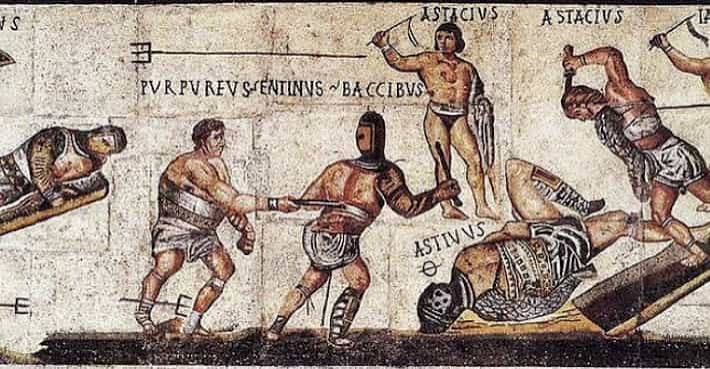
    Gladiators trained in specialized schools (ludi) with a regimen focused on combat skills: swordplay, net-and-trident work, and shield drills. Their training emphasized explosive power, endurance, and pain tolerance. They were fed a high-protein, high-carb diet of barley, beans, and dried fruit—earning them the nickname “barley men” (hordearii).

    Archaeological evidence from gladiator bones shows asymmetric muscle attachments, with the right arm much stronger than the left in many. This confirms the heavy, repetitive unilateral training from wielding weapons. These athletes were also cared for by physicians like Galen, who prescribed specific exercises for recovery and health.

    Exercises You Can Steal from the Romans

    Vegetius and Galen documented specific exercises that you can still do today:

    • Rope climbing: Builds grip and pulling strength.
    • Wrestling: Develops core stability, balance, and full-body strength.
    • Halteres (ancient dumbbells): These crescent-shaped or cylindrical weights (5–10 kg) were used for jumping and arm exercises. Try weighted jumps or overhead presses with a dumbbell for a similar effect.
    • Carrying heavy loads: Whether it’s a sandbag, a kettlebell, or a backpack, loaded carries mimic the Roman march and build real-world strength.

    Recovery: The Roman Baths

    Romans believed in balancing exercise with recovery. The thermae (public baths) were central to this: hot baths, cold plunges, massage, and oiling with strigil scraping. This might sound spa-like, but it was a serious recovery protocol that reduced muscle soreness and promoted healing.

    Modern athletes use ice baths and massage similarly. The Romans were ahead of their time in prioritizing recovery as part of training.

    What We Can Learn Today

    The Roman approach to strength was pragmatic. They trained for the task at hand, not for aesthetics. They used progressive overload, functional movements, and smart recovery. You can apply these principles by:

    • Prioritizing compound movements: marches (loaded carries), presses, pulls, and squats.
    • Using progressive overload: gradually increase weight or reps, just like the Romans did with heavier training weapons.
    • Including manual labor or functional work: carry heavy objects, dig, or chop wood.
    • Don’t neglect recovery: sleep, nutrition, and active recovery are as important as the workout.

    Roman soldiers built real strength because their training was specific, progressive, and functional. They didn’t have gyms, but they had a mission: to dominate the battlefield. Their methods—loaded marches, weighted weapons, manual labor, and smart recovery—can still help you build strength that translates to real life. The next time you’re doing a loaded carry, remember: you’re walking in the footsteps of legionaries who conquered the ancient world.

    Summary

    • Roman soldiers marched 18+ miles daily with 40-60 pound packs, building unmatched endurance and strength.
    • They used progressive overload with wooden swords and wicker shields twice the weight of real equipment.
    • Gladiators trained sport-specifically, developing asymmetric strength from repetitive combat drills.
    • Manual labor (digging, building) was a core part of training, providing functional strength.
    • Recovery methods like the Roman baths and massage were integral to their training system.

    FAQ

    Q: Did Roman soldiers lift weights?
    A: Not in the modern sense. They used halteres (stone or lead dumbbells) for jumping and arm exercises, but most strength came from marching with heavy packs, weapons drills, and manual labor.

    Q: What was the Roman march like?
    A: The standard was 20 Roman miles (about 18.4 modern miles) in 5 hours, carrying a 40-60 pound pack. On occasion, they did faster marches of 24 miles in 5 hours, or forced marches of 30+ miles in a day.

    Q: How did gladiators train?
    A: Gladiators trained in specialized schools (ludi) with weapons drills, endurance work, and a high-protein diet. They used heavier training weapons to build speed and power, much like modern athletes use overspeed training.

    Q: Why did the Romans train with wooden swords?
    A: Wooden swords (rudis) and wicker shields were twice the weight of real weapons. This overloaded muscles during practice, making real weapons feel lighter and faster in combat.

    Q: Can I apply Roman training methods today?
    A: Yes. Focus on loaded carries (like marching with a pack), functional movements (like digging or lifting odd objects), and progressive overload. Don’t forget recovery—Roman baths were the original ice bath.

  • Vanished Worlds: What Lost Civilizations Reveal About Our Own Future

    Vanished Worlds: What Lost Civilizations Reveal About Our Own Future

    Imagine a bustling city with grand palaces, intricate irrigation systems, and a thriving trade network—then imagine it empty, swallowed by jungle or sand, its name forgotten for centuries. This is the story of the world’s lost civilizations: the Indus Valley, the Maya, the Khmer Empire, and many others. Their sudden or gradual disappearances have captivated us for generations, but these are not just tales of mystery and adventure. They are cautionary tales, offering profound insights into the fragility of human societies and the enduring power of human innovation.

    Today, as we face our own global challenges—climate change, resource depletion, and social inequality—the fates of these ancient cultures feel more relevant than ever. By examining why they thrived and why they vanished, we can uncover lessons about sustainability, resilience, and the legacy we leave behind. This is not a story about failure; it’s a story about the enduring influence of those who came before us and the choices we must make to avoid their fate.

    What Makes a Civilization ‘Lost’?

    The term ‘lost civilization’ conjures images of Atlantis or El Dorado—mythical places of advanced technology and hidden wisdom. But in reality, a lost civilization is simply a complex society whose original cultural identity was erased from living memory, often rediscovered only through archaeology. The Maya, for instance, were never truly lost; the Spanish encountered them in the 16th century, but their full achievements—their writing system, mathematics, and astronomy—were suppressed or forgotten until the 19th century. Similarly, the Indus Valley civilization was unknown to the world until the 1920s, when excavations at Mohenjo-daro revealed a sophisticated urban culture that had thrived 4,000 years earlier.

    What unites these societies is not their obscurity but their dramatic transformation. Whether through climate change, invasion, or internal strife, they reached a tipping point where their complex systems could no longer be sustained. The result was not always a complete disappearance—many populations persisted and adapted—but their cultural identity as a distinct civilization faded, leaving behind ruins that would puzzle and inspire future generations.

    The Many Faces of Collapse

    Why do civilizations fall? The answer is rarely simple. Environmental factors often play a starring role. The Classic Maya collapse in the 9th century CE, for example, was likely triggered by a series of severe droughts, compounded by deforestation and soil erosion. The Khmer Empire, which built the magnificent Angkor Wat, faced a similar crisis: its extensive water management system, once a marvel of engineering, became vulnerable to climate variability, leading to food shortages and political instability. The Norse settlers of Greenland, who arrived in 985 CE, vanished by 1450 CE as the Little Ice Age made farming impossible and trade with Europe dwindled.

    But environmental stress is only part of the story. Social and political factors often determine a civilization’s resilience. Joseph Tainter’s influential theory, outlined in The Collapse of Complex Societies, argues that societies collapse when the cost of maintaining their complexity exceeds the benefits. As elites accumulate power and bureaucracies expand, the marginal returns on investment diminish, making the system vulnerable to shocks. The Roman Empire, for instance, stretched its resources too thin, leading to economic decline and vulnerability to invasion.

    External forces—invasion, conquest, disease—can also deliver the final blow, though they often exploit existing weaknesses. The Minoan civilization of Crete, for example, was devastated by the Thera volcanic eruption around 1600 BCE, which triggered tsunamis and ashfall that destroyed crops and trade. The weakened society then fell to the Mycenaeans from mainland Greece. Similarly, the Spanish conquest of the Aztec and Inca empires was aided by the introduction of European diseases, which decimated populations and destabilized political structures.

    Rethinking ‘Collapse’: A Modern Perspective

    In recent decades, scholars have pushed back against the term ‘collapse’ as too absolute. The Maya, for instance, never truly disappeared—millions of Maya people live in the same region today, speaking Mayan languages and maintaining cultural traditions. The Ancestral Pueblo people of the American Southwest, often called the Anasazi, abandoned their cliff dwellings in the 13th century due to drought and social upheaval, but they migrated and formed new communities, such as the modern Pueblo tribes. Even the Indus Valley civilization, which declined around 1900 BCE, left a genetic and cultural legacy that persists in South Asia.

    The ‘collapse’ narrative, critics argue, is a Western framing that obscures continuity and resilience. It implies a linear progression from rise to fall, ignoring the complex ways societies adapt and transform. For indigenous communities today, the framing of their ancestors as ‘lost’ can be offensive, erasing their living heritage. This has led to a growing movement to repatriate artifacts and involve local communities in archaeological research, ensuring that the stories of these civilizations are told with respect and accuracy.

    The Enduring Influence of ‘Lost’ Cultures

    Despite their disappearance, lost civilizations continue to shape our world in profound ways. Their innovations in agriculture, architecture, mathematics, and governance are woven into the fabric of modern life. The Inca’s terraced farming techniques, which allowed cultivation on steep Andean slopes, are now being revived as a sustainable solution to soil erosion and climate change. The Aztec’s chinampas, or floating gardens, are a model for urban agriculture in crowded cities. The Indus Valley’s sophisticated drainage systems, which included covered sewers and public baths, rival those of ancient Rome and inspire modern urban planning.

    In mathematics, the Maya independently developed the concept of zero, a revolutionary idea that underpins modern arithmetic. Babylonian astronomers mapped the stars and developed a base-60 number system that we still use for time and angles. Egyptian medicine, with its surgical techniques and herbal remedies, laid the groundwork for Greek and Roman practice. In governance, Roman law and Greek democracy are direct ancestors of Western political systems, while the Iroquois Confederacy influenced the framing of the U.S. Constitution.

    Even our stories and myths are shaped by these ancient cultures. Flood narratives, such as the Epic of Gilgamesh and the biblical story of Noah, appear across civilizations, suggesting a shared human experience. The hero’s journey, a narrative pattern identified by Joseph Campbell, recurs in myths from Greece to India to Mesoamerica, and it continues to drive modern storytelling in books and films.

    Lessons for Today

    So, what can we learn from the rise and fall of these civilizations? Perhaps the most urgent lesson is the importance of sustainability. The Maya, Khmer, and Norse Greenlanders all faced environmental challenges that were exacerbated by human actions—deforestation, overexploitation of resources, and poor water management. As we confront climate change, these ancient examples serve as stark warnings of what can happen when societies fail to adapt to environmental stress.

    But there is also a message of resilience. Many of these cultures did not simply vanish; they transformed, migrated, and adapted. The Maya people today are a testament to the endurance of cultural identity. The Ancestral Puebloans became the modern Pueblo tribes. The legacy of the Indus Valley lives on in the languages and genetics of South Asia. This resilience offers hope that even in the face of collapse, human societies can find new ways to thrive.

    Finally, the study of lost civilizations reminds us of the impermanence of human achievements. No empire lasts forever, and our own civilization will one day be a subject of archaeological study. The question is not whether we will fall, but what we will leave behind. Will future generations marvel at our cities and innovations, or will they wonder how we squandered our resources and ignored the warning signs? The choice is ours.

    The mysteries of lost civilizations are not just puzzles to be solved but mirrors reflecting our own vulnerabilities and strengths. They remind us that no society is immune to collapse, but they also show us the power of human creativity and adaptation. As we navigate the challenges of the 21st century, we would do well to heed the lessons of the past—to build sustainable systems, to value resilience, and to remember that our legacy is not just what we build, but how we care for the world and each other.

    Summary

    • Lost civilizations are not necessarily unknown to history; they are societies whose original cultural identity was erased from living memory, often rediscovered through archaeology.
    • Collapse is rarely caused by a single factor; it typically involves a combination of environmental stress, social/political mismanagement, economic decline, and external pressures.
    • The term ‘collapse’ is increasingly challenged by scholars who emphasize continuity and resilience, noting that many ‘lost’ cultures persist in modern descendants.
    • These ancient civilizations have left enduring legacies in language, architecture, agriculture, mathematics, governance, and storytelling that shape our world today.
    • The study of lost civilizations offers urgent lessons for sustainability and resilience in the face of climate change and other global challenges.

    FAQ

    Q: What is the most common cause of civilization collapse?
    A: There is no single cause. Most collapses involve a combination of environmental stress (like drought or deforestation), social/political instability, economic decline, and external pressures such as invasion or disease. The relative importance of each factor varies by civilization.

    Q: Are there any lost civilizations that were never rediscovered?
    A: Many civilizations are known only through archaeological evidence and have no written records, so their names and languages are unknown. Examples include the Indus Valley civilization, whose script remains undeciphered, and the builders of Göbekli Tepe in Turkey, which predates writing.

    Q: Did the Maya really disappear?
    A: No. The Classic Maya civilization collapsed politically, but millions of Maya people live in Mexico, Guatemala, Belize, and Honduras today, speaking Mayan languages and maintaining cultural traditions. The term ‘collapse’ refers to the decline of their political and urban centers, not the extinction of the people.

    Q: How do archaeologists decide when a civilization is ‘lost’?
    A: A civilization is considered ‘lost’ when its original cultural identity is no longer remembered by living people, often because it was forgotten, suppressed, or assimilated. Rediscovery typically occurs through archaeological excavation, decipherment of texts, or historical records from other cultures.

    Q: What can we learn from lost civilizations about climate change?
    A: Lost civilizations provide case studies of how societies respond to environmental stress. The Maya, Khmer, and Norse Greenlanders all faced climate challenges that contributed to their decline, offering lessons about the importance of sustainable resource management and adaptive capacity in the face of climate change.