Tag: ancient Egypt

  • The Female King Who Was Erased: What Hatshepsut’s Obelisk Really Tells Us

    The Female King Who Was Erased: What Hatshepsut’s Obelisk Really Tells Us

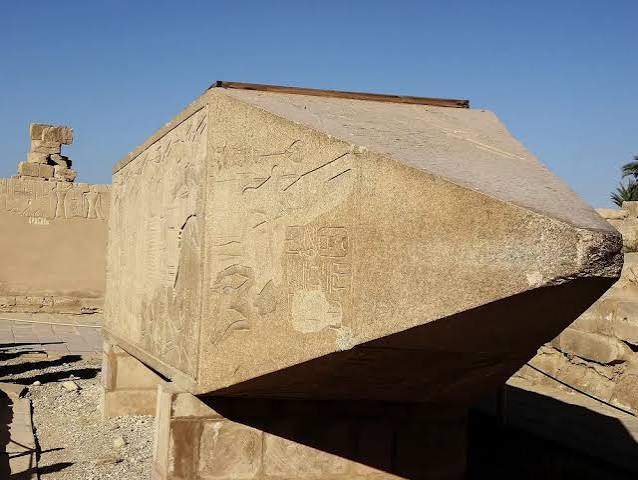
    In the heart of the Karnak temple complex, a single red granite spire rises nearly 100 feet into the sky. It is the largest surviving obelisk from ancient Egypt, and its inscriptions tell a story that someone once tried very hard to erase. This is the story of Hatshepsut, the woman who ruled Egypt as a king, and the monument that survived the damnation of her memory.

    For centuries, her name was missing from king lists. But the obelisk at Karnak never forgot her. Carved into its surface is a bold claim to divine legitimacy, made by a ruler who dared to wear the double crown of Upper and Lower Egypt when tradition demanded a male pharaoh. The obelisk is not just a piece of stone; it is a political manifesto, a theological argument, and a testament to how one woman bent the rules of cosmic order without breaking them.

    Today, archaeologists and historians have pieced together a remarkable picture of Hatshepsut’s reign and her deliberate erasure. The obelisk survived because someone tried to hide it—and that irony preserves a legacy that the erasers meant to destroy.

    A Woman Who Took the Throne

    Hatshepsut was born into the royal family of Egypt’s 18th Dynasty, around 1507 BCE. Her father, Thutmose I, was pharaoh; her mother, Ahmose, was his Great Royal Wife. When her father died, she married her half-brother Thutmose II, as was customary. But Thutmose II’s reign was short, and when he died around 1479 BCE, his heir—Thutmose III—was still a child. Hatshepsut, as the queen and regent, began ruling in his name.

    At first, she was a conventional regent, the kind of woman who had held power before. But within a few years, she did something unprecedented: she crowned herself pharaoh, taking the full fivefold titulary that only kings could claim. She adopted the throne name Maatkare, meaning “The Maat of Ra is the Ka of Hatshepsut.” She began to be depicted in the traditional regalia of a king—the false beard, the kilt, the crowns. In some reliefs, she still appears as a woman, the daughter of the god Amun. In others, she is unequivocally a man. This was not confusion; it was a pragmatic code-switching that let her claim divine birth and legitimate kingship simultaneously.

    The Obelisk as Divine Propaganda

    The obelisk at Karnak was her most audacious statement. It stands about 29 meters (97 feet) tall and weighs an estimated 320–350 tons, making it the largest obelisk ever successfully erected in Egypt. Quarried from red granite at Aswan, it was transported roughly 200 kilometers down the Nile on a barge, then raised in the precinct of Amun-Ra, the god she claimed as her father.

    Obelisks were not just decorative monuments. They were “petrified rays of the sun,” linking the pharaoh directly to Ra and Amun-Ra. By erecting one, a king asserted his divine favor and his right to rule. Hatshepsut’s obelisk went further: its inscriptions describe her divine birth, claiming that Amun himself had disguised as Thutmose I and impregnated her mother. In one famous passage, she declares, “I have done this with a loving heart for my father Amun… I have not forgotten what he commanded.” This was theology deployed for political ends—an argument that her rule was not a usurpation but a divine appointment.

    The Erasure Campaign

    After Hatshepsut died around 1458 BCE, Thutmose III—now ruling in his own right—ordered a systematic campaign to chisel her name, images, and cartouches from monuments across Egypt. Her statues were smashed and buried in pits near her mortuary temple at Deir el-Bahri. Her obelisks were walled up or defaced.

    For centuries, this was seen as the revenge of a stepson who resented his stepmother’s power grab. But modern scholarship suggests a more nuanced motive. Egyptologist Suzanne Onstine and others argue that the erasure was less about personal anger and more about dynastic politics. Thutmose III needed to legitimize his own son’s succession by reasserting the male line. If he erased Hatshepsut from the record, it would appear that he had ruled directly after his father, Thutmose II, with no female king in between. The erasure was targeted, bureaucratic, and incomplete—many inscriptions survived, suggesting it was not a furious rampage but a calculated project, possibly carried out late in Thutmose III’s reign or even under his son Amenhotep II.

    The standing obelisk at Karnak survived because it was partially hidden. Later builders walled around its base, and the upper inscriptions were protected by the enclosure. Ironically, the attempt to hide it preserved it for future generations.

    Rediscovery and the Mummy

    Hatshepsut truly became “forgotten” for millennia, her name missing from king lists. But in 1822, Jean-François Champollion—fresh from deciphering hieroglyphs—noticed the erased cartouches at Karnak. In 1903, Howard Carter, later famous for Tutankhamun, excavated her tomb (KV20). Yet it wasn’t until 2007 that the Egyptian Mummy Project made a dramatic identification: a mummy from a small tomb (KV60A) was confirmed as Hatshepsut via a tooth found in a box bearing her name. The tooth matched perfectly. The female king had been found.

    What the Obelisk Reveals

    The obelisk is more than a record of Hatshepsut’s reign; it is a window into how she navigated a system that was not designed for her. By blending genders in her iconography and claiming divine parentage, she created a space for herself in a role that was ideologically male. She did not try to change the system; she found a way to fit into it, making herself into a king who happened to be a woman.

    The erasure campaign, meanwhile, reveals the fragility of power and memory. Even a pharaoh could be written out of history. But the obelisk stood, hidden in plain sight, and its inscriptions outlasted the chisels of her successors. It remains a monument not only to her reign but to the very idea that history can be manipulated—and that sometimes, the truth endures.

    Hatshepsut’s obelisk at Karnak is a survivor. It survived the quarrying, the transport, the erection, and the deliberate erasure that followed her death. It survived because someone tried to wall it up, and in doing so, they protected it from the chisels that defaced so many other monuments. Today, it stands as a reminder that history is not a fixed record but a battlefield. And in that battle, Hatshepsut—the female king who was nearly forgotten—may have won after all.

    Summary

    • Hatshepsut ruled Egypt as pharaoh in the 18th Dynasty (c. 1479–1458 BCE), taking the full titulary of a king, a step unprecedented for a woman.
    • Her largest surviving obelisk at Karnak stands 29 meters (97 feet) tall, weighs 320–350 tons, and bears inscriptions claiming divine birth and legitimacy.
    • After her death, Thutmose III ordered a campaign to erase her name and images, but the erasure was incomplete and possibly politically motivated rather than personal.
    • The obelisk survived because it was partially walled up, which protected its inscriptions from defacement.
    • Rediscovered in modern times, Hatshepsut was finally identified in 2007 when a tooth matched a mummy in KV60A.

    FAQ

    Q: Why did Hatshepsut have to present herself as a man in some depictions?nA: Egyptian kingship was ideologically male—the pharaoh was the living Horus, son of Ra. To be accepted as pharaoh, Hatshepsut often had to adopt male regalia and pronouns, while in other contexts she remained clearly female, especially in religious narratives that called her the daughter of Amun.nnQ: Was Thutmose III’s erasure of Hatshepsut motivated by hatred?nA: Modern scholarship suggests it was more about dynastic legitimacy than personal revenge. By erasing Hatshepsut, Thutmose III could present his own rule as a direct succession from his father, Thutmose II, without a female king in between. The erasure was targeted and incomplete, not a furious campaign.nnQ: How did the obelisk survive the erasure?nA: The base of the obelisk was walled up by later builders, and the upper inscriptions were protected by the enclosure. This partial hiding preserved it from the chisels that defaced other monuments.nnQ: How was Hatshepsut’s mummy identified?nA: In 2007, the Egyptian Mummy Project matched a tooth found in a box bearing Hatshepsut’s name to a mummy from tomb KV60A. The tooth fit exactly, confirming the identity.nnQ: What does the obelisk inscription say about her rule?nA: The inscriptions describe her divine birth, claiming that Amun disguised as Thutmose I fathered her, and emphasize her loving devotion to Amun. They were a theological justification for her kingship, arguing that the gods had chosen her to rule.
  • The Forgotten Female Pharaohs: Sobekneferu and Tausret

    The Forgotten Female Pharaohs: Sobekneferu and Tausret

    When we think of female rulers of ancient Egypt, two names dominate: Hatshepsut, the great builder of the 18th Dynasty, and Cleopatra, the last Ptolemaic queen. But between them, a handful of other women took the throne of the pharaohs, ruling in their own right during moments of dynastic crisis. Among the most fascinating are Sobekneferu and Tausret, two women who seized power at the twilight of their dynasties, adopted the full regalia of kingship, and then were nearly erased from history.

    Their stories are fragmentary, pieced together from statue fragments, tomb inscriptions, and the grudging mentions in king lists. Yet they reveal a crucial truth: in a civilization where the king was ritually male, female pharaohs were not impossible—they were exceptional responses to political emergencies. These are their stories.

    A Title Fit for a King, Not a Queen

    Ancient Egypt had no word for “queen regnant.” The title nesut-bity, “King of Upper and Lower Egypt,” was grammatically masculine, and the king was considered the living embodiment of the male god Horus. So when a woman took the throne, she had to adopt male titles and iconography. This is why Sobekneferu and Tausret are often depicted with the traditional false beard and wearing the kilt of a pharaoh, not the dress of a queen.

    This wasn’t merely a stylistic choice. It was a theological necessity. The pharaoh was the intermediary between the gods and the people, and that role was conceived as male. A female pharaoh was an anomaly, a break in the cosmic order. To legitimize their rule, these women had to present themselves as kings, not queens.

    Sobekneferu: The Crocodile Princess Who Became King

    Sobekneferu ruled at the end of the 12th Dynasty, around 1806–1802 BCE. Her name means “The beauty of Sobek,” referencing the crocodile god who was worshipped in the Faiyum region. She was the daughter of Pharaoh Amenemhat III, who had ruled for some 45 years, and the sister or half-sister of Amenemhat IV, whose reign lasted only about nine years.

    When Amenemhat IV died without a clear male heir, Sobekneferu stepped in. Her reign was short—just under four years by the Turin King List—but it was a deliberate attempt to maintain the dynasty’s continuity. She took the full titulary of a king, including the throne name Sobekkare, and she was depicted in statuary with a mix of male and female attributes.

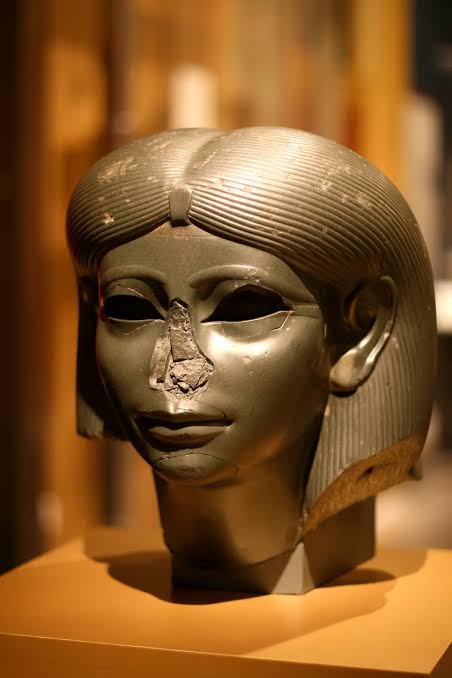
    Evidence for her rule comes from a fragmentary statue head, likely from the Faiyum, a cylinder seal, and inscriptions that mention her name. She appears in the Turin King List and the Saqqara King List, but her monuments are scarce. A pyramid at Mazghuna, south of Dahshur, is often attributed to her, though no definitive proof has been found.

    Her reign did not outlast her. The 13th Dynasty that followed was marked by a rapid succession of short-lived kings, a sign of the instability that her rule had failed to quell. Yet Sobekneferu holds a singular place in history: she is the first confirmed female pharaoh to rule in her own right.

    Tausret: The Queen Who Ruled Through Crisis

    Centuries later, at the end of the 19th Dynasty, another woman rose to power during a period of turmoil. Tausret, whose full name was Sitre-Meryamun, was the Great Royal Wife of Seti II. When her husband died, the throne passed to Siptah, a young boy who may have been her stepson. Tausret became his regent, and when Siptah died after a few years—his mummy shows signs of a club foot, possibly from polio—she assumed the throne herself.

    Tausret’s reign as sole pharaoh lasted only a few years, roughly 1191–1189 BCE, but she left a substantial mark. Her tomb, KV14 in the Valley of the Kings, is one of the largest in the valley, and she built a temple at Amara West in Nubia. She also used both male and female titles and iconography, a testament to the flexibility of Egyptian kingship when necessity demanded it.

    But her reign ended in chaos. The 19th Dynasty collapsed, and Setnakhte, the founder of the 20th Dynasty, seized power. He usurped her tomb, and her name was later erased from some king lists. Like Hatshepsut, she was a victim of damnatio memoriae—the deliberate erasure of a ruler’s legacy to legitimize the new dynasty.

    Why So Few Female Pharaohs?

    If Sobekneferu and Tausret could rule, why were they so rare? The answer lies in the deeply gendered ideology of Egyptian kingship. The king was ritually male, and the divine birth myth held that the god Amun impregnated the queen to produce a male heir. Succession favored able-bodied adult males, not because of strict primogeniture, but because the king was expected to perform rituals that required physical strength and ritual purity.

    Women typically exercised power through men—as regents for sons or as wives of deceased kings. A woman who ruled in her own right was a crisis measure, a last resort when no male heir existed. Sobekneferu and Tausret both stepped in at the end of their dynasties, when the male line had failed or was too young to rule alone.

    The Erasure of Female Pharaohs

    One reason we know so little about these women is that their successors often tried to erase them from history. When Setnakhte took the throne, he had Tausret’s name removed from monuments and her tomb usurped. Sobekneferu’s monuments were also scarce, likely because the kings of the 13th Dynasty wanted to distance themselves from the failure of the 12th.

    Hatshepsut’s case is the most famous. Her stepson, Thutmose III, had her images and inscriptions defaced decades after her death. The reasons are debated—perhaps political, perhaps personal—but the effect was the same: she was written out of the official record until modern archaeologists rediscovered her.

    Other Women Who May Have Ruled

    The stories of Sobekneferu and Tausret are the clearest examples of female pharaohs, but they are not the only candidates. Merneith, from the 1st Dynasty around 3000 BCE, may have ruled as regent for her son Den and was buried with full royal honors at Abydos. Khentkaus I, from the 4th Dynasty, may have ruled as pharaoh or served as a bridge between dynasties; some reliefs show her with a false beard and a uraeus, symbols of kingship.

    Then there’s Nitocris, mentioned by Herodotus and the Turin Canon as a female ruler of the 6th Dynasty. But no contemporary evidence confirms her existence, and most scholars consider her legendary. These figures remain shadowy, their status as pharaohs debated.

    The Legacy of the Forgotten Female Pharaohs

    Sobekneferu and Tausret were not anomalies in the sense of being aberrations. They were products of their time, women who seized an opportunity when the political system was in crisis. Their reigns were short, their legacies partially erased, but they proved that a woman could rule Egypt as pharaoh—if only for a few years.

    Their stories remind us that history is not a simple narrative of male kings and female consorts. The reality was more complex, with women stepping into the highest office when the need arose. And their erasure from the record tells us as much about the politics of memory as it does about the women themselves.

    The forgotten female pharaohs of ancient Egypt were not footnotes but pivotal figures who ruled during moments of dynastic fragility. Sobekneferu and Tausret adopted the full mantle of kingship, led their people, and left their marks on stone—marks that later kings tried to chisel away. Their rediscovery offers a richer, more nuanced view of Egyptian history, one that acknowledges the women who, for a brief time, wore the double crown.

    Summary

    • Sobekneferu (c. 1806–1802 BCE) was the first confirmed female pharaoh, ruling at the end of the 12th Dynasty.
    • Tausret (c. 1191–1189 BCE) ruled as regent and then as sole pharaoh during the turbulent end of the 19th Dynasty.
    • Both women adopted male titles and iconography to legitimize their rule.
    • Their successors often erased their monuments and names from official records.
    • Other possible female rulers include Merneith, Khentkaus I, and the legendary Nitocris.

    FAQ

    Q: Were there other female pharaohs besides Hatshepsut and Cleopatra?
    A: Yes. Sobekneferu and Tausret are the best-documented examples, but Merneith and Khentkaus I may have also ruled in earlier periods.

    Q: Why did female pharaohs adopt male titles and iconography?
    A: The title “King of Upper and Lower Egypt” was grammatically masculine, and the king was the living embodiment of the male god Horus. Women who ruled had to present themselves as kings to fit the theological framework.

    Q: How did Sobekneferu become pharaoh?
    A: She was the daughter of Amenemhat III and took the throne after her brother or half-brother Amenemhat IV died without a clear male heir.

    Q: What happened to Tausret’s tomb?
    A: Her tomb, KV14, was usurped by her successor Setnakhte, who had her name erased from many monuments.

    Q: Why did Thutmose III erase Hatshepsut’s monuments?
    A: The reasons are debated, but it was likely a political move to legitimize his own reign and those of his successors, not a personal vendetta.