Tag: AI Search

  • How Small Brands Win Visibility in AI Search: The GEO Playbook

    How Small Brands Win Visibility in AI Search: The GEO Playbook

    Mastering AI Citations: The Ultimate GEO Playbook | Frase

    When a shopper asks ChatGPT for the best eco-friendly running shoes under $100, the answer rarely lists the biggest athletic brands. Instead, the AI often cites a niche startup with a detailed blog post and a clear spec table. That shift from blue links to AI-generated answers is creating a new competitive arena called Generative Engine Optimization (GEO).

    GEO is the practice of making your content more likely to be cited by AI answer engines like ChatGPT, Perplexity, and Google AI Overviews. For small brands with limited budgets, this is more than a trend: it’s a cost-effective way to appear in front of high-intent shoppers at the exact moment they’re making a decision without paying for clicks.

    What Exactly Is GEO? A Quick Definition

    Generative Engine Optimization (GEO) is the process of structuring and positioning your online content so that AI-powered search tools recognize it as a credible, relevant source to quote in their answers. Unlike traditional SEO, which targets search engine result pages (SERPs) with links, GEO focuses on being the cited source inside an AI-generated response.

    For example, if someone asks Perplexity, “What are the best organic cotton baby clothes?” and your brand’s blog post is quoted in the answer, you’ve won a GEO placement. The user sees your brand name and a snippet of your content often without ever clicking through to your site. That’s the “zero-click” moment, and for small brands, being the named source in that moment is the new currency of visibility.

    Why Small Brands Have an Edge Over Big Retail

    Intuition suggests that large retailers with massive domain authority would dominate AI answers. But research from Princeton and Georgia Tech shows that AI models don’t simply favor the highest-authority domains. They prioritize content that is well-structured, statistically specific, and frequently cited by other trusted sources. That’s a bar small brands can meet.

    Consider a niche brand selling hypoallergenic dog food. A big retailer’s generic “What is dog food?” page won’t answer a specific query like “best grain-free food for a golden retriever with skin allergies.” But a small brand that publishes a detailed article with data, a comparison table, and clear answers can become the go-to source for that exact question. AI models love specificity—it makes their answers more useful.

    Small brands also move faster. A corporate site might take weeks to update a product page or publish a new article. A small team can react to a trending query in days. That agility allows them to capture emerging topics before larger competitors even notice.

    The Technical Side: Structuring Content for Machines

    GEO isn’t about tricking AI—it’s about making your content easy for machines to parse and quote. Three technical elements matter most:

    1. Schema markup: Adding structured data (like FAQPage or Product schema) helps AI engines understand the context of your content.
    2. Clear formatting: Use concise paragraphs, bullet points, and tables to break up information. AI models often extract snippets from these structures.
    3. Direct answers: Include a succinct answer to a common question near the top of your page, then elaborate below. This increases the chance your exact phrasing gets quoted.

    For example, a small skincare brand could add a table comparing ingredients across its products. That table becomes an easy-to-cite element for an AI answering “What’s the difference between hyaluronic acid and niacinamide?”—even if the user isn’t specifically asking about the brand.

    Digital PR: Building Citations Without High Domain Authority

    Traditional SEO often requires backlinks from high-authority sites—a costly and time-consuming process. GEO shifts the focus to citations. If your brand is quoted in a niche industry newsletter, a podcast, or a respected blog, AI models recognize that as a signal of trust. Small brands can build these citations through targeted digital PR, without needing a massive domain authority.

    For instance, a small coffee roaster could pitch a quote about sustainable sourcing to a specialty coffee podcast. If that podcast’s transcript gets indexed by AI, your brand’s name and expertise become part of the model’s knowledge base. When someone asks an AI about ethical coffee brands, your roaster is now a candidate for citation.

    The Financial Case: GEO’s ROI for Tight Budgets

    Paid social and search advertising costs are climbing, and small brands often can’t match the ad budgets of big retail. GEO, by contrast, is less capital-intensive. It requires time and content restructuring more than money. The potential return is high because you’re reaching users at the moment of decision—without paying per click.

    If a small brand’s article gets cited in 100 AI answers that lead to 10 sales, that’s a measurable ROI. And unlike a paid ad that stops when the budget runs out, GEO placements can compound over time as AI models continue to reference your content.

    The Skeptic’s View: Not a Silver Bullet

    Not everyone is convinced that small brands are “crushing” big retail. Critics note that large brands still dominate the transactional end of the funnel—where users click to buy. GEO’s impact is mostly limited to the informational top of the funnel. A user might learn about a brand through an AI answer, but they may still go to Amazon to make the purchase.

    Additionally, GEO is not a replacement for SEO. It’s a complement. If a user does click through to your site, you still need a well-optimized site to convert them. And while GEO can level the playing field, it doesn’t eliminate the need for quality products and customer service.

    Common Pitfalls to Avoid

    • Don’t try to spam AI models: Flooding with low-quality content won’t work. AI engines are designed to filter spam, and being flagged can harm your credibility.
    • Don’t ignore SEO entirely: GEO works alongside traditional SEO. Ensure your site is still optimized for conventional search.
    • Don’t neglect the human reader: Content that’s only designed for machines will fail. Write for people first; make sure your content is genuinely useful.
    • Don’t expect overnight results: GEO is a long-term strategy. It takes time for AI models to recognize your brand as a trusted source.

    GEO represents a genuine opportunity for small brands to gain visibility in an increasingly AI-driven search landscape. By focusing on specific, structured, and citable content, and by building citations through digital PR, smaller players can compete with—and sometimes outrank—big retail in AI answers. The key is to start now, before the window of low competition closes.

    Summary

    • GEO (Generative Engine Optimization) is the practice of optimizing content to be cited by AI answer engines like ChatGPT and Perplexity.
    • AI models prioritize specificity, structure, and citations, giving small brands a chance to outrank high-authority domains.
    • Key technical tactics include schema markup, clear formatting, and direct answers to common questions.
    • Digital PR—getting quoted in niche publications—helps build the citations AI models trust, without needing high domain authority.
    • GEO is not a replacement for SEO, and it primarily targets the informational top of the funnel, not the transactional end.

    FAQ

    Q: What is the difference between SEO and GEO?
    A: SEO targets traditional search engines to improve ranking in ‘blue link’ results. GEO targets AI answer engines to become the cited source within an AI-generated response, often without the user clicking through to your site.

    Q: Is GEO only useful for small brands?
    A: No, but small brands can benefit disproportionately because they can be more agile and specific. Big brands also use GEO, but their size often makes it harder to produce the niche, hyper-detailed content that AI models favor.

    Q: How long does it take to see results from GEO?
    A: It varies, but typically several months. AI models need to index and recognize your content as a trusted source. Consistency and quality are more important than speed.

    Q: Can GEO work for local businesses?
    A: Yes. Hyper-local content (e.g., ‘best coffee shop in Austin for remote work’) is often exactly what AI models quote. Small local brands can create location-specific guides that big chains overlook.

    Q: What are the risks of GEO?
    A: The main risks are investing time and resources without guaranteed results, and the potential for AI models to change their algorithms. It’s also not a replacement for other marketing channels, so it should be part of a broader strategy.

  • AI Search Market Share: What Business Intelligence Teams Need to Know

    AI Search Market Share: What Business Intelligence Teams Need to Know

    The search landscape is shifting under the feet of every business. Traditional link-list search the familiar ’10 blue links’ is being supplemented, and in some cases replaced, by AI-powered answer engines that synthesize information directly. For business intelligence (BI) teams, this isn’t just a tech trend; it’s a fundamental change in how customers find information, how advertising works, and how brand authority is measured.

    As of early 2025, Google still commands roughly 90% of the global search market, but AI-native search engines like Perplexity and ChatGPT Search are carving out a small but rapidly growing niche. More importantly, AI is being embedded into the incumbent’s product itself: Google AI Overviews now appear on a significant share of search results. This article breaks down the current market share data, the strategic positions of key players, and the practical implications for businesses that rely on search for growth and intelligence.

    Defining AI Search: More Than Just a New Engine

    AI search refers to search experiences that leverage large language models (LLMs), generative AI, and retrieval-augmented generation (RAG) to answer queries directly, synthesize information from multiple sources, and provide conversational results. This is distinct from traditional search engines like Google, Bing, or DuckDuckGo, which primarily deliver a list of links ranked by relevance.

    Key players in the AI search space include:

    • ChatGPT Search (OpenAI), launched in October 2024, which integrates real-time web access into the ChatGPT interface.
    • Perplexity, a purpose-built ‘answer engine’ that provides cited, conversational responses.
    • Google AI Overviews and Gemini, which embed AI-generated answers directly into Google’s search results.
    • Microsoft Bing Copilot, which uses GPT-4 to power conversational search on Bing.
    • You.com, Brave Search AI, and emerging entrants like Meta AI search and Amazon Rufus for shopping.

    Market Share: The Numbers Behind the Hype

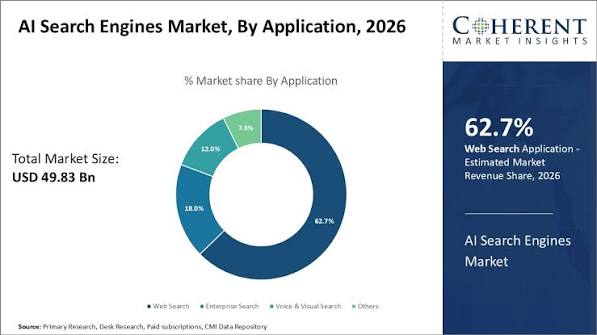
    Despite the buzz, AI-native search engines still hold a tiny slice of the overall search pie. Perplexity, ChatGPT Search, and You.com collectively account for less than 1–2% of global search queries. Google remains the dominant force at ~90%, with Bing at 3–4%, and a long tail of others making up the remainder.

    Yet that small percentage masks significant momentum in specific segments. Perplexity, the leading standalone AI search engine, has grown to an estimated 15–20 million monthly active users, with reported annualized revenue of ~$50 million in late 2024. ChatGPT Search, leveraging OpenAI’s existing base of over 200 million weekly active users, has seen rapid adoption, though OpenAI does not disclose search-specific usage figures.

    Perhaps the most impactful shift is within Google itself. AI Overviews are now estimated to appear on 30–80% of Google search results pages, depending on geography and query type. This means AI is not just a separate market—it’s becoming the default experience for many users on the world’s most-used search engine.

    Why Business Intelligence Teams Should Care

    The rise of AI search has profound implications for how businesses track, attribute, and optimize their online presence.

    1. Ad Spend and the Zero-Click Problem

    If AI search answers a query directly, users may never click through to a website. This ‘zero-click’ behavior breaks traditional pay-per-click (PPC) economics, where advertisers pay for each visit. Marketers need to understand where these zero-click answers dominate and adjust their strategies accordingly. For example, if a user asks ‘best CRM for small business’ and gets a synthesized answer from ChatGPT Search, the opportunity for a traditional ad impression may vanish.

    2. Data and Attribution Shifts

    AI search engines cite sources differently than traditional link lists, and referral traffic patterns are changing. BI teams must develop new tracking methods—such as AI-specific UTM parameters and server-side tracking—to accurately measure the impact of AI search on their web traffic. Monitoring which AI engines surface a brand (or a competitor) first is becoming a key performance indicator.

    3. Competitive Intelligence

    Tracking your brand’s visibility in AI search results—and your competitors’—is a new frontier for competitive intelligence. Are you cited as a source in Perplexity’s answers? Does ChatGPT Search mention your product in a comparison? These metrics can serve as leading indicators of brand authority in the AI era.

    4. Enterprise Search as a Related Market

    Internal AI search tools like Glean and Microsoft Copilot for M365 are a separate but related market, growing at over 30% CAGR. Businesses are deploying these tools to help employees find information faster, and BI teams may need to integrate data from these platforms into their analytics.

    The Incumbent’s View: Google’s Defense

    Google argues that AI Overviews are an enhancement, not a replacement, and points to high user satisfaction metrics. The company’s counter-strategy includes deep integration of its Gemini model, an AI Mode for search, and maintaining default search deals (like the one with Apple) that keep its market share locked in.

    However, Google faces a real risk: AI Overviews reduce click-through rates to publishers, potentially undermining the open web ecosystem that feeds its index. If publishers see less traffic, they may produce less content, which could degrade the quality of Google’s search results over time. Antitrust remedies from the U.S. DOJ case could also force changes to Google’s default search deals, opening distribution windows for competitors.

    The Challenger’s View: Perplexity and OpenAI

    Perplexity positions itself as an ‘answer engine’ with citation transparency, appealing to researchers and business professionals who need verifiable sources. It was the first to launch a standalone AI search product and has built a loyal following among tech-savvy users.

    OpenAI, on the other hand, sees search as a feature within a broader assistant ecosystem, not a standalone product. Its distribution advantage is enormous: over 200 million people already use ChatGPT. The company is also exploring advertising, which would directly compete with Google’s core ad business.

    Both challengers face high compute costs, and their monetization models—subscriptions and nascent ads—are unproven at scale. Perplexity launched ads in 2024, and OpenAI is testing advertising in ChatGPT, but it’s unclear how much revenue these can generate.

    The Publisher’s Dilemma: To Block or to License

    AI search reduces referral traffic to publishers, prompting many to block AI crawlers (e.g., The New York Times, Reuters) or negotiate licensing deals. However, there’s a counter-narrative: AI search can drive high-intent traffic if a brand is cited as a source. In this new paradigm, ‘being the answer’ is the new SEO. For BI teams, tracking AI-citation share can be a leading indicator of brand authority and future organic traffic.

    What This Means for Your BI Strategy

    1. Monitor AI search visibility: Set up tracking to see how often your brand appears in AI search results and from which engines.
    2. Adjust attribution models: Incorporate AI search referrals into your analytics, using custom parameters and server-side tracking to capture data accurately.
    3. Re-evaluate SEO: Traditional keyword optimization is still relevant, but focus on creating content that AI engines are likely to cite as authoritative sources.
    4. Track ad performance: Understand where zero-click answers dominate and adjust your PPC campaigns accordingly.
    5. Stay agile: The market is evolving rapidly—what’s true today may change next quarter. Keep an eye on new entrants and shifts in user behavior.

    AI search is not a distant future—it’s happening now. While AI-native engines still hold a small market share, the integration of AI into Google’s core product means that AI-generated answers are already a significant part of the search experience. For business intelligence teams, the imperative is clear: adapt your tracking, re-evaluate your strategies, and start treating AI search visibility as a critical metric. The search landscape is changing, and those who understand the shift will be better positioned to thrive in it.

    Summary

    • AI-native search engines (Perplexity, ChatGPT Search, You.com) hold <1–2% of global search queries, but Google AI Overviews appear on 30–80% of search results pages.
    • Perplexity leads standalone AI search with 15–20 million monthly active users and ~$50M annualized revenue.
    • ChatGPT Search leverages OpenAI’s 200M+ weekly users, but search-specific usage is undisclosed.
    • AI search disrupts traditional PPC models due to zero-click answers, requiring new tracking and attribution methods.
    • Businesses should monitor AI-citation share as a leading indicator of brand authority.

    FAQ

    Q: What is AI search?
    A: AI search uses large language models and generative AI to answer queries directly with synthesized, conversational results, rather than just providing a list of links.

    Q: How big is the AI search market?
    A: AI-native search engines currently hold less than 1–2% of global search queries, but Google AI Overviews—which are AI-generated—appear on a significant share of Google’s results pages.

    Q: Who are the main players in AI search?
    A: Key players include Perplexity, ChatGPT Search (OpenAI), Google AI Overviews/Gemini, Microsoft Bing Copilot, and You.com.

    Q: How does AI search affect advertising?
    A: AI search can lead to zero-click answers, where users don’t click through to websites, which disrupts traditional pay-per-click advertising models.

    Q: How can businesses track their performance in AI search?
    A: Businesses can use AI-specific UTM parameters, server-side tracking, and monitor AI-citation share to measure visibility and referral traffic from AI search engines.

  • Can You Trust AI Search? The Real Risks of Hallucination and Bias

    Can You Trust AI Search? The Real Risks of Hallucination and Bias

    When you ask an AI search engine a question, you’re not getting a list of links anymore. You’re getting an answer a confident, well-written paragraph that might be completely wrong. That’s the trade-off of the new generation of search: convenience over verification.

    AI search tools like Google’s AI Overviews, Perplexity, and OpenAI’s SearchGPT are reshaping how we find information. But independent tests show these systems can hallucinate making up facts at rates from 3% to 27%, depending on the task. And they carry built-in biases from the data they’re trained on. Here’s what that means for you, and how to navigate a world where the search engine isn’t always right.

    The Shift from Links to Answers

    For two decades, search meant “ten blue links.” You’d type a query, scan the results, and click through to sources you judged credible. AI search changes that. Instead of links, you get a synthesized answer—a paragraph or a conversational reply, drafted on the spot.

    That’s faster. But it also removes a critical step: your own judgment about which sources to trust. When the AI presents an answer with confidence, you’re less likely to question it. And that’s where the problems begin.

    Why AI Search Hallucinates

    LLMs are probabilistic text generators. They don’t have a database of facts; they predict the next word based on patterns in their training data. That means they can produce fluent, authoritative-sounding sentences that are factually wrong. This is called hallucination.

    Vectara’s studies (2023–2024) found hallucination rates between 3% and 27% on summarization tasks. For factual question-answering, error rates can be even higher in niche areas like medical conditions or local laws. Even with retrieval-augmented generation (RAG), which tries to ground answers in retrieved documents, errors persist when retrieval fails or the model misinterprets the source.

    The Bias Problem

    LLMs learn from human text, and human text is full of bias. Research from Stanford and MIT shows measurable demographic, political, and cultural biases in model outputs. For instance, models may associate certain jobs with specific genders or show political leanings on contentious topics.

    Bias isn’t a bug—it’s a feature of statistical learning from imperfect data. And while companies use techniques like RLHF to align models, those processes can introduce their own value judgments. The result is that AI search answers can subtly (or not so subtly) skew your worldview.

    Real-World Consequences

    A hallucinated answer about a medication’s dosage could be dangerous. A biased summary of a news event could misinform your opinion. Surveys from Pew Research show 60–70% of Americans worry about AI-generated misinformation in search. That concern is justified.

    In 2023, a lawyer used AI search to find legal precedents and submitted fake cases to court. The AI had invented them. That’s an extreme example, but it illustrates the stakes: when we trust these systems for health, finance, or legal decisions, errors have consequences.

    What Providers Are Doing

    Google’s own documentation warns that AI Overviews may “hallucinate” and advises verifying critical information. OpenAI’s system cards disclose known failure modes. Companies are investing in safety, but they’re also racing to deploy features. Economic pressure to appear “smart” can incentivize overconfident answers rather than cautious hedging.

    How to Use AI Search Wisely

    Don’t stop using it—just use it as a starting point, not the final word. For critical information, click through to primary sources. Treat AI answers as “drafts” to be verified, just as providers suggest. And be aware of the bias: seek out multiple perspectives on contentious topics.

    The Regulatory Landscape

    The EU AI Act, in force since August 2024, imposes transparency obligations on general-purpose AI. The U.S. has no comprehensive federal law, but the White House Executive Order on AI (October 2023) addresses trustworthiness. Regulation is catching up, but it can’t solve the technical problems of hallucination and bias—only careful engineering and user vigilance can.

    AI search is a powerful tool, but it’s not a reliable oracle. The same features that make it useful—fluency, confidence, synthesis—are the ones that make it dangerous. By understanding the risks of hallucination and bias, and by verifying critical information, you can harness the benefits without falling for the fabrications.

    Summary

    • AI search engines generate answers instead of links, which can be faster but harder to verify.
    • Hallucination rates range from 3% to 27% depending on the task and model.
    • Bias is baked into training data and can influence answers on sensitive topics.
    • Providers acknowledge limitations, but economic pressure leads to overconfident outputs.
    • Always verify critical information from primary sources.

    FAQ

    Q: What is AI search?
    A: AI search refers to search engines that use large language models to generate direct answers or summaries rather than returning a list of links. Examples include Google’s AI Overviews, Microsoft Copilot, Perplexity AI, and OpenAI’s SearchGPT.

    Q: How common are hallucinations?
    A: Independent studies, such as those by Vectara, have measured hallucination rates at roughly 3% to 27% for summarization tasks. For factual question-answering, error rates can be higher in niche domains.

    Q: Why does AI search have bias?
    A: LLMs are trained on human-generated text, which contains historical and societal biases. Alignment processes can also introduce value judgments. This leads to measurable demographic, political, and cultural biases in outputs.

    Q: Can I trust AI search for critical information?
    A: No. Providers themselves advise verifying critical information. For health, financial, or legal decisions, always consult primary sources or professionals.

    Q: What is being done about these issues?
    A: Companies are investing in safety and disclosing limitations. The EU AI Act imposes transparency obligations, and the U.S. has issued executive orders on AI trustworthiness. However, hallucination and bias remain unsolved technical challenges.

  • How to Prepare Your Business for AI Search: A Practical Guide

    How to Prepare Your Business for AI Search: A Practical Guide

    When someone asks an AI assistant for a recommendation, your business might be mentioned—or not. That difference can drive new customers to your door or send them to a competitor. AI search is no longer a futuristic concept; it’s already reshaping how people find information, and businesses that adapt will capture attention that others miss.

    This guide explains what AI search means for your business and offers concrete steps to make sure you’re visible when AI answers questions about your industry. You don’t need to be a tech expert—just willing to make a few strategic adjustments.

    What Exactly Is AI Search?

    AI search refers to search experiences powered by large language models (LLMs) that generate direct answers instead of showing a list of blue links. When you ask ChatGPT, Perplexity, or Google’s AI Overviews a question, the system scours the web, pulls relevant information, and synthesizes a conversational response with citations. For example, a query like “best CRM for a small plumbing business” might trigger a synthesized answer listing a few top options, complete with descriptions and links.

    Key players include ChatGPT (200M+ weekly users), Perplexity (tens of millions monthly), Google AI Overviews (rolling out to billions), and Microsoft Bing Copilot. As of 2024-2025, AI Overviews appear on a significant share of Google search results—estimates range from 10% to 40% depending on query type. This means your customers are increasingly seeing AI-generated answers before they see traditional search results.

    How AI Search Works (and Why It Matters for You)

    AI search engines use a technique called retrieval-augmented generation (RAG). They retrieve snippets from indexed web pages, rank them by relevance and authority, then generate a natural-language answer. Sources are ranked based on factors like freshness, structured data, and how directly the content answers the query.

    The shift is profound: instead of optimizing for ten blue links, you’re now competing for a spot in a three-to-five-source answer. If your business isn’t cited, you lose visibility even if you rank well in traditional results. For local businesses, this is especially critical—AI search might summarize local recommendations without showing a map pack, so being mentioned in the text answer is the only way to get noticed.

    Why This Matters for Business Owners

    If someone asks an AI assistant, “What’s the best plumber in Austin?” and your business isn’t in the answer, you miss out on that customer. Traditional SEO still matters, but it’s no longer enough. AI search often cites fewer sources, making top placement even more competitive. Local businesses face a new challenge: AI might recommend competitors without showing a map, so you need to be part of the conversation.

    Consider the stats: roughly 60% of Google searches now end without a click (up from 50% pre-AI). Voice and conversational queries are growing, with about 1 in 5 mobile searches being voice-based. This means people are asking longer, more natural questions, and AI search is designed to answer them directly.

    Step 1: Optimize Your Google Business Profile

    For local businesses, your Google Business Profile (GBP) is your digital storefront. AI search engines pull from GBP data to answer local queries, so make sure it’s complete and accurate. Fill out every field: address, phone number, hours, services, and photos. Encourage customers to leave reviews—they’re a key signal for local authority.

    Consistency matters. Ensure your Name, Address, and Phone (NAP) are identical across your website, social media, and local directories. Discrepancies confuse AI crawlers and hurt your chances of being cited.

    Step 2: Make Your Website AI-Friendly

    Your website remains the foundation. AI search engines crawl your site, so it needs to be structured for easy understanding. Use clear headings (H1, H2, H3) that reflect the questions your customers ask. For example, if you’re a plumber, use headings like “How to Fix a Leaky Faucet” or “Emergency Plumbing Services in Austin.”

    Implement structured data (schema markup) using JSON-LD. This helps AI understand your content’s context. Key types include:
    Organization (your business name, logo, contact info)
    LocalBusiness (for local SEO)
    FAQ (to get your questions featured in AI answers)
    HowTo (for step-by-step guides)

    Schema isn’t a magic bullet—content quality matters more—but it gives AI a clearer picture of what you offer.

    Step 3: Create Answer-First Content

    AI search favors content that directly answers a question. Write in a way that gets to the point quickly. For each page, ask: “What question does this answer?” Then put the answer in the first paragraph, ideally in a clear, quotable format.

    For example, if you sell CRM software, don’t just describe features—write a page titled “What is the best CRM for small businesses?” and answer it directly. Use bullet points, tables, and concise paragraphs. AI models love structured, data-rich content that’s easy to extract.

    Also, build a FAQ page with common customer questions. AI search engines often pull from FAQ sections to generate answers.

    Step 4: Build Authority and Trust (E-E-A-T)

    AI search ranks sources by authority and trustworthiness. Google’s E-E-A-T framework (Experience, Expertise, Authoritativeness, Trustworthiness) is more important than ever. Demonstrate your expertise through:
    – Author bios with credentials
    – Citing reputable sources in your content
    – Getting backlinks from industry authorities
    – Publishing fresh, up-to-date content

    If you have years of experience in your field, say so. Include case studies, certifications, and testimonials. This signals to AI that you’re a credible source.

    Step 5: Monitor Your AI Visibility

    Traditional rankings don’t tell the full story. Use tools to track how often your business appears in AI answers. For example, you can manually test queries in ChatGPT, Perplexity, and Google AI Overviews. Or use SEO tools that offer AI visibility metrics.

    Set up alerts for your brand name and key products. If you notice you’re not being cited, analyze why—is your content not answering the question? Is your site slow? Adjust accordingly.

    Step 6: Don’t Block AI Crawlers—Unless You Have a Good Reason

    Some businesses worry about AI scraping and consider blocking GPTBot or other crawlers. But doing so reduces your visibility in AI answers. It’s a trade-off: you might protect your content from being used without credit, but you lose the chance to be cited. Unless you have a strong reason (like protecting proprietary content), it’s usually better to allow AI crawlers.

    Step 7: Embrace the Opportunity

    AI search isn’t just a threat—it’s an opportunity. Small businesses can compete on clarity and niche authority rather than domain authority. A well-structured FAQ page can beat a giant corporation’s homepage for a specific query. By focusing on being the clear, authoritative answer to your customers’ questions, you can win visibility you might not have earned in traditional search.

    Start with these steps, and you’ll be better positioned for the AI-driven future of search.

    AI search is changing how customers find businesses, but the fundamentals remain: be clear, be authoritative, and answer the questions your customers are asking. By optimizing your Google Business Profile, making your website AI-friendly, and creating answer-first content, you can ensure your business shows up when AI recommends. The time to act is now—don’t wait until your competitors are already being cited.

    Summary

    • AI search generates direct answers from web content, citing a few sources instead of listing ten results. This makes top placement more critical.
    • Optimize your Google Business Profile with complete, consistent NAP data and encourage reviews to boost local AI visibility.
    • Make your website AI-friendly with clear headings, structured data (JSON-LD), and content that directly answers customer questions.
    • Build authority through E-E-A-T: showcase expertise, get quality backlinks, and keep content fresh.
    • Monitor your AI visibility regularly and don’t block AI crawlers unless you have a strong reason—being cited is valuable.

    FAQ

    Q: Do I need to prepare for AI search if I’m a small local business?
    A: Absolutely. AI search engines like Google AI Overviews and ChatGPT are increasingly used for local queries. Optimizing your Google Business Profile and answering local questions on your website can help you get cited in AI responses.

    Q: Is schema markup necessary for AI search?
    A: It helps, but it’s not sufficient. Schema helps AI understand your content, but content quality and authority matter more. Focus on clear, answer-first content, and use schema as a supporting tool.

    Q: Will AI search replace my website?
    A: No. AI search still cites sources and links out. A strong website is the foundation for being cited. Make sure your site is fast, mobile-friendly, and packed with useful content.

    Q: Should I block AI crawlers from my site?
    A: Only if you have a compelling reason, like protecting proprietary content. Otherwise, blocking reduces your chances of being cited in AI answers. It’s usually better to allow access.

    Q: How can I measure my AI visibility?
    A: You can manually test queries in ChatGPT, Perplexity, and Google AI Overviews, or use SEO tools that track AI visibility metrics. Set up brand alerts to monitor mentions.

  • How Your Reddit Posts and Amazon Reviews Are Shaping AI Search Answers

    How Your Reddit Posts and Amazon Reviews Are Shaping AI Search Answers

    When you ask an AI chatbot for the best budget laptop, it might pull from a Reddit thread where a user complained about a keyboard. Or when you want to know if a skincare product really works, the AI might cite a tweet from a dermatologist. This isn’t a future scenario it’s happening now. AI search tools like ChatGPT, Google’s AI Overviews, and Perplexity are increasingly relying on user-generated content (UGC) reviews, forum posts, and social media to answer your questions.

    For years, we’ve been told to trust peer reviews over brand claims. A 2023 BrightLocal survey found that 77% of consumers read reviews before making a purchase. AI models have absorbed this human preference. They’re trained on vast amounts of web data that include Reddit threads, Quora answers, and Amazon reviews. So when you ask an AI for an opinion, it often turns to the collective voice of internet users—your posts, your complaints, your praise—to craft a response.

    But this shift has side effects. Your casual comment on a forum might now influence thousands of AI-generated answers. Your review could be quoted or paraphrased without your knowledge. And the line between authentic human opinion and manipulated content is blurrier than ever. This article unpacks how UGC feeds AI search, why it matters, and what it means for you as a consumer, creator, and citizen of the internet.

    The Rise of AI Search and the Hunger for UGC

    Traditional search engines like Google ranked web pages based on links and keywords. If a Reddit thread had many backlinks, it would appear high in results. But AI search engines do something different: they synthesize an answer from multiple sources, often without showing you a list of links. To do that, they need text that reads like a human answer, and UGC is perfect for that.

    Consider a query like “best hiking boots for wide feet.” A traditional search might show you a list of articles and forums. An AI search might generate a paragraph: “Many Reddit users recommend the Merrell Moab 2 for wide feet, citing its roomy toe box and arch support. One user mentioned they’ve had theirs for two years with no issues.” That answer draws directly from UGC—the AI read dozens of forum posts and summarized the consensus.

    This approach works because UGC is conversational, opinionated, and specific. It’s the opposite of corporate marketing speak. A 2024 study from BrightLocal confirmed that consumers trust peer reviews 12 times more than brand descriptions. AI companies know this, so they’ve built their systems to prioritize UGC for subjective queries.

    Training Data: The Hidden Influence of Your Posts

    Large language models (LLMs) like GPT-4 are trained on massive datasets that include Common Crawl, a web archive containing billions of pages. That archive includes Reddit, Wikipedia, and review sites. So when the model generates an answer, it’s drawing on patterns it learned from your comments, even if it doesn’t quote you directly.

    The scale is staggering. Reddit alone gets over 500 million monthly visitors and hosts billions of posts. In 2024, Google signed a deal reportedly worth $60 million per year to access Reddit’s data for AI training and search improvements. That means your Reddit posts are literally being fed into Google’s AI systems.

    But not all UGC is equal. Structured Q&A sites like Quora and Reddit’s subreddits are considered “training gold” because they pair questions with high-quality human answers. Social media like TikTok and X are less structured, but they’re increasingly used for trend detection and sentiment analysis. For instance, an AI might scan tweets to gauge public opinion on a new smartphone release.

    The Reddit Effect: Why You Append ‘Reddit’ to Searches

    You’ve probably done it: typed a query into Google and added “reddit” at the end. You want real opinions, not SEO-optimized listicles. AI search formalizes this behavior. For subjective questions—”is this product worth it?”—AI tools often prioritize forum content because it’s seen as more authentic.

    Take Perplexity, an AI search engine that uses live web crawling. If you ask it for the best budget laptop, it might pull from Reddit threads, YouTube comments, and tech review sites. It then synthesizes a balanced answer, citing sources like “According to a Reddit user…” This gives the answer a human touch, but it also means your casual comment might end up in a paid AI response.

    However, there’s a catch: AI sometimes misinterprets UGC. A sarcastic comment like “Yeah, this laptop’s battery lasts forever… in my dreams” could be taken at face value. Or an outlier review—someone who received a defective unit—might be given too much weight. AI is getting better at detecting tone, but it’s not perfect.

    The Economics: Who Profits from Your Words?

    Your UGC is valuable. AI companies are willing to pay for it. Reddit’s deal with Google is one example. OpenAI has licensing agreements with publishers like Shutterstock for images, but for text, they often scrape without explicit consent. This has led to legal battles, such as the New York Times suing OpenAI for using its articles without permission.

    Platforms like Reddit and Quora have changed their API policies to restrict free access, forcing AI companies to negotiate licensing deals. This creates a new revenue stream for platforms, but it also means that individual creators—you—are not compensated. Your review might be used to train an AI that generates profit for a tech giant, and you get nothing but the satisfaction of helping others (if you even know it happened).

    The Dark Side: Fake Reviews and Manipulation

    Not all UGC is authentic. Fake reviews are a known problem. Amazon has filed lawsuits against brokers who sell fake reviews. Social media is full of bots that amplify certain opinions. AI cannot always distinguish between a genuine user and a paid astroturfer. If an AI trains on manipulated UGC, it will produce biased answers.

    For example, a company might flood Reddit with positive comments about its product. An AI scanning that subreddit could conclude the product is excellent, even if the real consensus is negative. Conversely, review bombing—where a mob leaves negative reviews—can skew AI answers against a product. AI companies are aware of this and are developing methods to detect manipulation, but it’s an arms race.

    The Future: Will AI Replace Forums?

    A common fear is that AI search will replace forums and review sites. If users get answers directly from AI, they won’t need to visit Reddit or Amazon to read reviews. This would reduce traffic to those platforms and hurt their ad revenue. However, AI depends on fresh UGC, so platforms remain essential. But the relationship is shifting: platforms become data providers, not destinations.

    Some platforms are adapting. Reddit has embraced its role as an AI data source, seeing it as a business model. Others, like Twitter (X), have restricted scraping to force AI companies to pay. The outcome is uncertain, but one thing is clear: your UGC will only become more influential in AI search.

    What You Can Do

    As a user, you can be mindful of what you post. If you write a review, know that it might be used by AI to inform thousands of decisions. You can also verify AI answers by checking the cited sources. If an AI quote seems off, click the link or search the original source.

    If you’re a content creator, consider the value of your UGC. You might not be paid, but you can use the exposure to build your brand. Some creators have started optimizing their content for AI—writing in clear, factual language that AI can easily parse. This is the new SEO: making your UGC attractive to both humans and algorithms.

    User-generated content has always been a powerful force in search, but AI has amplified its impact. Your reviews, forum posts, and social media musings now directly shape AI-generated answers that people rely on for decisions. This brings both opportunities and risks: your voice can reach a wider audience, but it can also be misused or lost in the noise. As AI search evolves, staying aware of how UGC is used—and how to protect yourself—will be key.

    Summary

    • AI search tools like ChatGPT, Google AI Overviews, and Perplexity rely on UGC (reviews, forum posts, social media) to answer subjective questions.
    • LLMs are trained on datasets that include UGC, so your posts influence AI answers even if not directly quoted.
    • Platforms like Reddit are now licensing their data to AI companies (e.g., Google’s $60M deal), but individual creators aren’t compensated.
    • Fake reviews and astroturfing can bias AI answers, and AI may misinterpret sarcasm or outliers.
    • The future of forums is uncertain: AI needs fresh UGC, but users may stop visiting platforms if AI summarizes everything.

    FAQ

    Q: How does AI search get my Reddit posts?
    A: AI companies scrape public web data, including Reddit, or license data directly from platforms. Google’s deal with Reddit is a prime example.

    Q: Can AI be tricked by fake reviews?
    A: Yes. AI can’t always distinguish fake from genuine UGC, so manipulated content can skew answers. Companies are working on detection, but it’s not perfect.

    Q: Should I worry that my comments are being used without permission?
    A: It’s a legal gray area. Public posts on platforms like Reddit are often considered fair game for scraping, but terms of service may restrict it. Licensing deals offer some compensation to platforms, not individuals.

    Q: Why does AI prefer UGC for some questions?
    A: UGC is seen as more authentic and trustworthy than brand content, so AI uses it for subjective queries like product recommendations or opinions.

    Q: Will AI search kill forums like Reddit?
    A: It’s unlikely. AI needs fresh UGC to function, so platforms remain vital. But the dynamics are changing—platforms may become data providers rather than destinations.

  • The Rise of ‘I’m Looking For…’: How Exploratory Search Is Changing the Web

    The Rise of ‘I’m Looking For…’: How Exploratory Search Is Changing the Web

    When you type “weather in Tokyo” into a search engine, you know exactly what you want. But when you ask, “I’m looking for a good book to read on a rainy day,” the journey is different. You’re not hunting for a specific page; you’re opening a door to exploration. This kind of query vague, curious, open-ended is becoming increasingly common, and it’s reshaping how we interact with information online.

    Exploratory search isn’t new, but its prevalence is surging. Research from the Journal of the American Society for Information Science and Technology suggests that between 40% and 60% of search sessions involve some degree of exploration, learning, or discovery. That’s a massive portion of the billions of searches conducted daily. And it’s not just about finding facts anymore; it’s about understanding, comparing, and synthesizing.

    What Exactly Is Exploratory Search?

    Gary Marchionini, a professor at the University of North Carolina, formalized the concept in a seminal 2006 paper titled “Exploratory Search: From Finding to Understanding.” He distinguished between three types of search:

    • Lookup: Finding a specific fact or known item, like “Netflix login” or “capital of France.”
    • Learn: Acquiring knowledge, comparing options, or understanding a topic.
    • Investigate: Analyzing, synthesizing, and evaluating information to solve a complex problem.

    The latter two categories—learning and investigating—fall under exploratory search. Instead of a single, well-defined target, you have a broad topic. You might not even know what you’re looking for until you see it. Think of it as browsing in a library, letting your eyes wander across the shelves, versus going straight to the call number.

    Why Is Exploratory Search on the Rise?

    Several factors are fueling this shift. First, there’s the sheer abundance of information. With billions of web pages, users often don’t know how to frame their needs. They need help narrowing down options, not just retrieving a single result. A query like “I’m looking for a career change” is a starting point for a journey, not a transaction.

    Second, social media has trained us to expect serendipity. Platforms like TikTok, Instagram, and Pinterest serve content to us based on our behavior, often surprising us with discoveries we didn’t anticipate. This expectation of discovery has bled into search behavior. We now use search engines not just to find, but to explore and be inspired.

    Third, the rise of voice search and conversational AI has made natural-language queries more common. When you speak to a smart speaker or a chatbot, you naturally phrase things as “I’m looking for…” or “What’s a good…”—longer, more conversational queries that reflect exploratory intent.

    The Generative AI Shift

    Search engines have taken notice. The old model of returning ten blue links is giving way to semantic and generative search. Google’s AI Overviews, Bing’s Copilot, and Perplexity AI are direct responses to users who want synthesis, not just links. These tools generate answers, compare options, and offer follow-up suggestions, effectively inviting users to keep exploring.

    For instance, instead of getting a list of articles about “best hiking gifts,” an AI-powered search might synthesize a paragraph explaining what to look for, then suggest related topics like “gifts for beginner hikers” or “budget-friendly gear.” This turns a one-off query into a conversation, encouraging deeper exploration.

    The UX Challenge: Designing for Discovery

    Exploratory search is cognitively demanding. Users often struggle to articulate what they want, and they may not recognize the right answer when they see it. Traditional search interfaces—designed for precision and speed—don’t handle this well. UX researchers argue that interfaces need to support iteration, comparison, and backtracking.

    Features like faceted navigation, visual previews, and “related searches” help. But the real breakthrough is AI-generated summaries that provide context and overview, giving users a map before they dive in. For example, a search for “I’m looking for a gift for my dad” might surface a summary of popular gift categories, along with product recommendations and reviews—all in one place.

    The Business Angle: High Intent, Low Specificity

    For e-commerce platforms, exploratory search represents a lucrative yet challenging segment. A query like “gift for a friend who likes hiking” signals high purchase intent but low specificity. Retailers are investing in recommendation engines, quiz-based shopping, and AI concierges to capture this demand. Etsy, for instance, uses visual search and personalized recommendations to help users discover unique items they didn’t know they wanted.

    However, there’s a risk: over-personalization can create filter bubbles, limiting genuine discovery. If the algorithm only shows you more of what you’ve already liked, you might never stumble upon something truly new. Balancing personalization with serendipity is a key challenge for businesses.

    The Academic Perspective: Search as Learning

    Information scientists study exploratory search as a learning process. Users don’t just retrieve information; they build knowledge. This has implications for search systems, which should support learning over time. For example, a student researching climate change might start with a broad query, then refine it as they learn more. A good search system would help them track their progress and connect related concepts.

    Marchionini’s framework highlights this: exploratory search is about “finding to understanding.” It’s not just about getting an answer; it’s about gaining insight.

    The rise of “I’m looking for…” signals a fundamental shift in how we interact with information. We’re moving from a model of retrieval—where the user knows exactly what they want—to a model of discovery, where the search engine becomes a thinking partner. As generative AI continues to evolve, exploratory search will only become more prevalent, reshaping search engines from simple tools into guides for learning and exploration.

    Summary

    • Exploratory search involves learning or investigating a topic, not just finding a specific fact.
    • Between 40% and 60% of search sessions involve some degree of exploration.
    • The rise of voice search, social media, and generative AI is fueling the increase.
    • Search engines are adapting with AI Overviews and conversational tools.
    • Businesses see exploratory search as high-intent but low-specificity traffic, leading to new recommendation and discovery features.

    FAQ

    Q: What is exploratory search?
    A: Exploratory search is a search behavior where users don’t have a specific target in mind. Instead, they aim to learn, discover, or explore a topic area, as opposed to lookup searches like finding a specific website or fact.

    Q: How common is exploratory search?
    A: Studies suggest that 40-60% of search sessions involve some degree of exploration, learning, or discovery.

    Q: Why is exploratory search increasing?
    A: Factors include the abundance of information (making it harder to know what you want), the influence of social media’s serendipitous discovery, and the rise of voice search and conversational AI that encourage natural-language queries.

    Q: How are search engines responding?
    A: Search engines are shifting from keyword matching to semantic and generative search. Examples include Google’s AI Overviews, Bing’s Copilot, and Perplexity AI, which provide synthesized answers and follow-up suggestions.

    Q: What are the challenges for businesses?
    A: Exploratory search signals high intent but low specificity. Businesses must use recommendation engines and AI to capture this demand, while avoiding filter bubbles that limit discovery.

  • SEO in 2026: 7 Critical Mistakes That Will Tank Your Rankings

    SEO in 2026: 7 Critical Mistakes That Will Tank Your Rankings

    The world of search engine optimization (SEO) is changing faster than ever. By 2026, the rules that worked a few years ago are no longer enough. Google’s AI-powered search results, the rise of zero-click searches, and a greater focus on user experience have transformed the game. If you’re still relying on old tactics, you’re likely falling behind.

    This article breaks down the most common SEO mistakes to avoid in 2026. Whether you’re a seasoned marketer or a small business owner, understanding these pitfalls will help you adapt and thrive in the new search landscape. Let’s dive in.

    1. Ignoring AI Overviews and Generative Engine Optimization (GEO)

    Google’s AI Overviews are now a permanent part of search results. When users search for something, they often see a summary generated by AI at the top of the page, which means they may never click through to a website. This is called a “zero-click search.” To stay visible, your content must be optimized not just for traditional rankings, but for being extracted and cited by AI models. This is known as Generative Engine Optimization (GEO).

    What to do instead:
    – Use structured data (schema markup) to help AI understand your content.
    – Provide clear, concise answers to common questions.
    – Ensure your content is authoritative and well-sourced, as AI models favor reliable information.

    2. Over-Reliance on Organic Clicks as a KPI

    With the majority of searches now ending without a click, measuring success solely by organic traffic is a mistake. If you’re only tracking clicks, you’re missing the bigger picture. Your brand might be visible and influencing users, even if they don’t click through immediately.

    What to do instead:
    – Track impressions, brand searches, and engagement metrics.
    – Focus on building brand awareness and direct traffic.
    – Use tools that measure visibility across AI platforms like ChatGPT and Perplexity.

    3. Creating Thin or Aggregated Content

    Google’s Helpful Content System is now fully integrated into its core algorithm. This means that thin, low-value content—whether written by humans or AI—is systematically devalued. The old strategy of publishing lots of mediocre articles to rank for many keywords is dead.

    What to do instead:
    – Focus on creating in-depth, original content that provides real value.
    – Ensure every piece of content has a clear purpose and answers the user’s intent.
    – Avoid content that simply aggregates other sources without adding new insights.

    4. Neglecting Core Web Vitals and Real User Metrics

    Core Web Vitals have evolved. The metrics now rely on real-world data (field data) rather than lab tests. The Interaction to Next Paint (INP) metric has fully replaced First Input Delay (FID) as the primary measure of responsiveness. If your site is slow or unresponsive, you’ll lose rankings.

    What to do instead:
    – Monitor your Core Web Vitals in Google Search Console.
    – Optimize for mobile and ensure fast loading times.
    – Use real user monitoring (RUM) tools to get accurate performance data.

    5. Overlooking E-E-A-T and First-Hand Experience

    E-E-A-T stands for Experience, Expertise, Authoritativeness, and Trustworthiness. In 2026, “Experience” is no longer optional—it’s mandatory. Content that lacks first-hand experience or clear author credentials is at a significant disadvantage, especially in YMYL (Your Money or Your Life) topics like health, finance, and legal advice.

    What to do instead:
    – Add author bios with credentials and links to their profiles.
    – Include personal experiences, case studies, and original research.
    – Build trust through transparent sourcing and citations.

    6. Using JavaScript That Blocks Indexing

    Google’s rendering queue is slower and more selective than ever. If your site relies heavily on client-side JavaScript without proper server-side rendering (SSR) or static site generation (SSG), your content may be delayed or not indexed at all.

    What to do instead:
    – Use SSR or SSG for critical content.
    – Test your site with Google’s URL Inspection tool to ensure it’s being rendered correctly.
    – Minimize the use of JavaScript for above-the-fold content.

    7. Chasing Keywords Instead of Topics and Entities

    Keywords are not dead, but exact-match keyword stuffing is. Search engines now use natural language processing (NLP) to understand the meaning behind queries. They focus on entities (people, places, things) and topics, not just strings of words.

    What to do instead:
    – Optimize for topic clusters and semantic relevance.
    – Use related terms and synonyms naturally in your content.
    – Build topical authority by covering a subject comprehensively.

    8. Buying Backlinks or Using PBNs

    Backlinks remain a top ranking factor, but the quality bar is higher than ever. Buying links or using Private Blog Networks (PBNs) is easily detected by Google’s SpamBrain. The risk of a penalty is high, and recovery can take months.

    What to do instead:
    – Earn backlinks through high-quality content and outreach.
    – Focus on digital PR and building relationships with authoritative sites.
    – Monitor your backlink profile and disavow toxic links.

    9. Ignoring Local SEO and Google Business Profile

    For small businesses, local SEO is often more valuable than chasing national keywords. Neglecting your Google Business Profile is a huge mistake. It’s one of the easiest ways to appear in local search results and map packs.

    What to do instead:
    – Optimize your Google Business Profile with accurate information, photos, and reviews.
    – Encourage customers to leave reviews.
    – Use local keywords and create location-specific content.

    10. Not Adapting to the Post-Cookie Era

    With third-party cookies fully deprecated, SEO is no longer just about traffic—it’s about first-party data and brand search. If you’re not building your brand and collecting data directly from your audience, you’re losing ground.

    What to do instead:
    – Invest in email marketing and customer relationship management (CRM).
    – Create content that encourages direct visits and bookmarks.
    – Build a strong brand presence on social media and through PR.

    11. Publishing AI-Generated Content Without Editorial Oversight

    AI tools can help you create content faster, but publishing AI-generated content without human review is a recipe for disaster. AI can hallucinate facts, produce biased or inaccurate information, and create content that lacks the nuance of human experience.

    What to do instead:
    – Use AI as a drafting tool, not a final author.
    – Always fact-check and edit AI-generated content.
    – Add your own insights, examples, and expert opinions.

    12. Ignoring the Rise of Answer Engines

    Users are increasingly turning to AI-powered answer engines like ChatGPT, Perplexity, and Google’s Gemini for information. If your content isn’t visible in these platforms, you’re missing out on a growing source of traffic.

    What to do instead:
    – Optimize your content for natural language queries.
    – Ensure your site is crawlable by AI bots.
    – Consider creating content specifically designed to be cited by AI models.

    SEO in 2026 is about adapting to a search landscape where AI plays a central role. By avoiding these common mistakes, you can position your website for success. Focus on creating high-quality, authoritative content, optimizing for user experience, and building a strong brand. The future of SEO is not just about rankings—it’s about being the best answer to your audience’s questions.

    Summary

    • AI Overviews and GEO: Optimize content for AI extraction, not just rankings.
    • Zero-Click Searches: Track more than just clicks; measure visibility and brand impact.
    • Helpful Content: Publish in-depth, original content; avoid thin or aggregated pieces.
    • Core Web Vitals: Focus on real-user metrics like INP and mobile performance.
    • E-E-A-T: Include first-hand experience and author credentials, especially for YMYL topics.
    • JavaScript Indexing: Use SSR or SSG to ensure your content gets indexed.
    • Topics over Keywords: Optimize for entities and semantic relevance, not exact-match phrases.

    FAQ

    Q: Is AI-generated content penalized by Google?
    A: No, not automatically. Google penalizes spammy, low-quality content regardless of who wrote it. Using AI to mass-produce thin content is a mistake, but using it as a drafting tool with human oversight is fine.

    Q: Do backlinks still matter in 2026?
    A: Yes, backlinks remain a top ranking factor. However, the quality threshold is higher, and buying links or using PBNs is risky. Focus on earning links through great content and digital PR.

    Q: What is Generative Engine Optimization (GEO)?
    A: GEO is the practice of optimizing content to be easily understood and cited by AI models like Google’s AI Overviews or ChatGPT. It involves using structured data, clear definitions, and authoritative sourcing.

    Q: How can I improve my Core Web Vitals?
    A: Focus on real-user metrics like LCP, INP, and CLS. Optimize images, use lazy loading, minimize JavaScript, and ensure your server responds quickly. Use tools like PageSpeed Insights to identify issues.

    Q: What is the biggest SEO mistake in 2026?
    A: One of the biggest is ignoring the shift to AI-driven search. If you’re still optimizing only for traditional rankings without considering AI Overviews and answer engines, you’ll miss out on significant visibility.