Tag: AI detection

  • Stop Using Grammarly: This New Tool Spots the ‘AI Tone’ That Gets You Ignored

    Stop Using Grammarly: This New Tool Spots the ‘AI Tone’ That Gets You Ignored

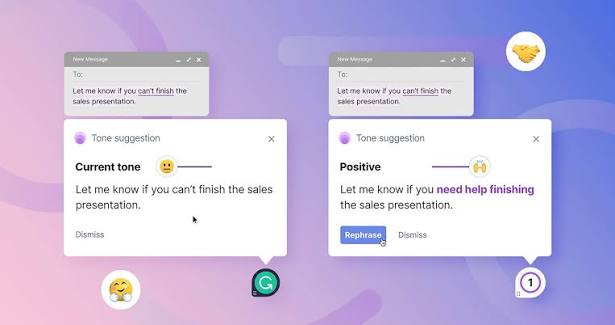
    You’ve felt it. You write an email, run it through Grammarly, hit send and then silence. Or worse, a polite brush-off. It’s not your ideas. It’s your voice. Grammarly, used by 30 million people daily, has a hidden side effect: it flattens your writing into a generic, instantly recognizable ‘AI tone.’ Readers have developed a sixth sense for this style, and they tune it out.

    A new breed of tool promises to spot this tone and help you sound human again. But which tool actually works? And is ‘AI tone’ a real problem or just a marketing bogeyman? Let’s dig into the research.

    The Grammarly Problem: When ‘Correct’ Becomes ‘Forgettable’

    Grammarly isn’t a villain. It’s a brilliant grammar checker that has saved millions from embarrassing typos. But its suggestions often push you toward the most probable phrasing, not the most distinctive. The result is text that’s perfectly correct and utterly colorless.

    Linguists call this ‘statistical averaging.’ Large language models and grammar tools optimize for what most people would say, which means your writing starts to sound like everyone else’s. Add in a safety bias—models trained to avoid offense—and you get hedged, non-committal language that saps your authority.

    Recruiters have caught on. Surveys from ResumeBuilder and Canva in 2023–2024 found that a majority of hiring managers say they can spot AI-written cover letters and often discard them instantly. The tell isn’t grammar—it’s the rhythm. The overuse of ‘delve,’ ‘landscape,’ and ‘it’s important to note.’ The perfectly balanced sentences that feel like they were assembled, not written.

    The Rise of the ‘AI Tone’ Detector-Humanizer

    In response, a cottage industry of tools has emerged. Some, like GPTZero and Originality.ai, focus on detection—telling you if a text was AI-written. Others, like StealthGPT, HIX Bypass, and Humanize AI, claim to rewrite AI text so it sounds more natural and bypasses detectors.

    But here’s the catch: many of these tools are low-quality, SEO-driven products with dubious efficacy. They often swap one set of clichés for another. Blind tests have shown that readers can’t reliably distinguish ‘humanized’ AI text from regular AI text. The tools may fool a detector, but they won’t fool a discerning human reader.

    What Actually Makes Writing Sound ‘AI’?

    Before you ditch Grammarly, it’s worth understanding what we mean by ‘AI tone.’ Researchers and editors point to several markers:

    • Overused transition words: ‘Moreover,’ ‘furthermore,’ ‘in addition’—these appear far more often in AI text than in human writing.
    • Hedging: ‘It’s worth noting,’ ‘arguably,’ ‘in some cases’—language that covers the author’s bases but sounds indecisive.
    • Formulaic structure: Every paragraph starts with a topic sentence, followed by two supporting sentences, and ends with a transition. Humans vary their rhythm; AI often doesn’t.
    • Neutral vocabulary: AI avoids strong words like ‘terrible’ or ‘amazing,’ favoring safe adjectives like ‘important’ and ‘significant.’

    The root cause is statistical averaging. When you accept Grammarly’s suggestion to replace ‘a lot of’ with ‘numerous,’ you’re not just fixing grammar—you’re conforming to the most common phrasing in the model’s training data.

    The New Tool: What to Look For

    So, should you stop using Grammarly entirely? Not necessarily. Grammarly’s core grammar checking is still valuable. The problem is uncritically accepting its style suggestions.

    The better approach is to use a tool that flags AI tone without forcing you into a new template. Look for tools that:

    • Identify specific AI markers: Not just a vague ‘tone score’ but a detailed breakdown of which phrases sound robotic.
    • Offer human alternatives: Instead of swapping ‘delve’ for ‘explore,’ they suggest more natural, context-specific phrasing.
    • Preserve your voice: The best tools learn your style and make suggestions that fit, rather than pushing you toward a generic ‘professional’ register.

    One tool that has gained traction is the Hemingway Editor, which predates the AI boom but focuses on concision and readability. It highlights passive voice, adverbs, and complex sentences—all of which can contribute to an AI-like feel. While it doesn’t specifically target AI tells, it pushes you toward a more direct, human style.

    The Ethics of ‘Humanizing’ AI Text

    Before you run your resume through a humanizer, consider the ethical dimension. In 2024–2025, universities updated honor codes to ban AI-humanization tools, treating them as a form of academic dishonesty. In journalism, passing off AI-generated text as human-written is a breach of trust. If you need to hide that AI wrote it, maybe you shouldn’t use AI in the first place.

    That doesn’t mean AI tools are useless. They’re excellent for brainstorming, outlining, and overcoming writer’s block. But the final product should have your fingerprints on it—your word choices, your rhythm, your quirks.

    A Practical Strategy: Use Grammarly, Then Edit for Voice

    Here’s a workflow that works:

    1. Write a rough draft yourself. Don’t start with AI; start with your own thoughts, even if they’re messy.
    2. Use Grammarly for mechanics only. Turn off style suggestions or ignore them. Focus on fixing typos and grammar errors.
    3. Read your text aloud. If you stumble over a sentence, rewrite it. AI text often reads too smoothly—real human writing has natural hiccups.
    4. Check for AI tells manually. Look for ‘delve,’ ‘landscape,’ ‘it’s important to note,’ and other buzzwords. Replace them with your own words.
    5. If you use an AI detector, take it with a grain of salt. Studies show that detectors are unreliable, especially for non-native English speakers. They’re a starting point, not a verdict.

    The Bottom Line

    The ‘AI tone’ is real, but it’s not a virus you catch from Grammarly. It’s a symptom of lazy editing. Tools can help, but they can’t replace your judgment. The best way to avoid sounding like a robot is to write like a human: vary your sentence length, commit to your ideas, and don’t be afraid to sound like yourself.

    Grammarly isn’t the enemy, but it’s not your voice coach either. The new wave of ‘AI tone’ tools—some helpful, many hype—reflect a broader truth: readers are hungry for authenticity. The fix isn’t a magic tool; it’s a habit of editing for voice, not just correctness. Write like you talk, read your work aloud, and let your personality leak through. That’s the one thing no AI can replicate.

    Summary

    • Grammarly’s style suggestions often flatten your voice into a generic ‘AI tone’ that readers ignore.
    • The ‘AI tone’ is real, marked by overused transitions, hedging, and formulaic structure.
    • New tools claim to detect or ‘humanize’ AI text, but many are unreliable or swap one cliché for another.
    • The best approach: use Grammarly for grammar only, then edit for voice manually.
    • Consider the ethics: humanizing AI text may be dishonest in academic or journalistic contexts.

    FAQ

    Q: Is Grammarly bad for my writing?
    A: No. Grammarly is excellent for catching grammar and spelling errors. The problem is when you blindly accept its style suggestions, which can make your writing sound generic. Use it as a proofreader, not a ghostwriter.

    Q: What tools can detect AI tone?
    A: Tools like GPTZero, Originality.ai, and Writer.com’s AI detector can flag AI-written text, but they’re unreliable. For improving your own writing, Hemingway Editor highlights complexity and passive voice, which can help you sound more human.

    Q: How can I avoid sounding like AI?
    A: Vary your sentence length, avoid overused transition words, and use concrete specifics instead of vague generalizations. Read your writing aloud—if it sounds too smooth, it might sound robotic.

    Q: Are AI humanizer tools ethical?
    A: It depends on the context. In academic or journalistic settings, passing off AI-generated text as human-written is often considered dishonest. In casual business emails, it’s less clear-cut, but transparency is always a safe bet.

    Q: Do AI detectors actually work?
    A: No, not reliably. Studies show they have high error rates, especially with non-native English speakers. They can be a useful starting point, but don’t treat their verdict as final.
  • Can You Really Tell If Text Was Written by AI? The Truth About Detectors

    Can You Really Tell If Text Was Written by AI? The Truth About Detectors

    Since ChatGPT launched in November 2022, a new question has crept into our digital lives: “Is this AI-written?” Whether you’re a teacher grading essays, a recruiter reading cover letters, or just someone scrolling through social media, you’ve probably wondered which parts of the internet were crafted by a human and which were generated by a machine. Google searches for “AI detector” and “how to tell if text is AI-generated” have skyrocketed, and a whole industry of detection tools has sprung up to answer the call. But here’s the uncomfortable truth: these detectors are far from perfect, and the race to catch AI-generated text is more complicated than it seems.

    The Surge in AI Detection Searches

    Interest in AI detection exploded right after ChatGPT went public. Before November 2022, almost nobody was searching for “AI detector.” Now, millions of people are trying to figure out if the text they’re reading or writing is machine-made. This interest has stayed high, with spikes whenever a new AI model like GPT-4 or Gemini hits the market.

    Why the sudden concern? Because AI-generated content has flooded the internet. From blog posts and product reviews to academic papers and news articles, machines are now writing at scale. This has created what some call an “authenticity crisis”: we can no longer assume that words were written by a human. That matters for trust in journalism, fairness in education, and even personal communication like dating profiles and emails.

    How Do AI Detectors Actually Work?

    Most detectors rely on two main signals: perplexity and burstiness. Perplexity measures how “surprised” a language model is by a piece of text. AI-generated text tends to be more predictable, so it has lower perplexity. Burstiness looks at variation in sentence length and structure. Humans naturally mix long and short sentences, while AI text tends to be more uniform.

    Some newer tools use watermarking, which involves embedding invisible statistical patterns in AI output. But that only works if the AI provider cooperates, and it’s not widely deployed yet.

    The Problem: Detectors Are Not Reliable

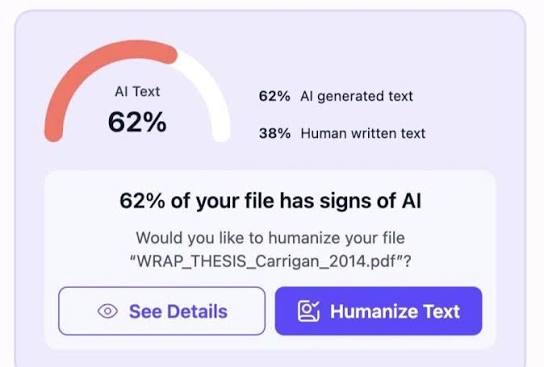
    Here’s the catch: no AI detector is definitively reliable. OpenAI itself shut down its AI Classifier in July 2023, admitting it had a “low rate of accuracy.” Independent studies have found that detectors frequently misclassify non-native English writing as AI-generated. This has real consequences. Students have been falsely accused of cheating, and freelance writers have lost clients because a detector flagged their human-written work.

    The tools claim accuracy rates of 80–99%, but those numbers are contested. In practice, the results can be wildly inconsistent. A text that one detector flags as AI-written might be cleared by another. And as AI models improve, they get better at mimicking human quirks, making detection even harder.

    The Arms Race Between Detectors and AI

    This is a cat-and-mouse game. As detectors get better, AI models are trained to produce more “human-like” text. Users also use paraphrasing tools to evade detection. It’s a continuous loop: one side builds a better trap, the other side finds a way around it.

    Some researchers argue that reliable detection is fundamentally impossible in the long run. As models improve, AI text will become indistinguishable from human text. They advocate for a shift from detection to provenance—cryptographic signing of human-authored content. That way, you could verify a human wrote something, rather than trying to guess if a machine did.

    Who’s Searching, and Why?

    Different groups search for AI detection for different reasons:

    • Students and educators: Teachers want to catch AI-generated essays; students want to avoid false accusations.
    • Employers and recruiters: They check whether cover letters or resumes were AI-written.
    • Content consumers: People want to know if news articles, reviews, or social media posts are machine-made.
    • Writers and creators: They self-check their own work to make sure it passes filters, especially for SEO or academic submission.

    The Educator’s Dilemma

    Teachers and professors are on the front lines. Many see AI detection as a necessary tool to preserve academic integrity. But false positives are a major frustration. Students who write in a straightforward, formulaic style—especially non-native English speakers—are often flagged as AI, even when their work is entirely human.

    Some educators argue that detection is the wrong approach entirely. They say education should adapt to an AI world by emphasizing the process over the product: in-class writing, oral defenses, and project-based assessments. This might be a more sustainable solution than an endless technological arms race.

    The Student’s Double Bind

    Students face a tough situation. Many use AI as a legitimate learning tool—for brainstorming, outlining, or grammar checking. But they fear being falsely accused of cheating. Some report being forced to “prove” their humanity, which is an absurd burden to place on a student.

    Non-native English speakers are disproportionately affected. Their natural writing style often triggers false positives, which is deeply unfair. Imagine writing an essay in a second language, only to be told it’s too “robot-like” to be human.

    The Writer’s Burden of Proof

    Freelance writers and journalists are also caught in the crossfire. Clients increasingly ask them to run their work through AI detectors, even when the work is entirely human-written. This creates a burden of proof and can lead to lost income if a detector falsely flags their work. It’s a strange world where a human has to prove they’re not a machine.

    Platform Responses: Labeling and Enforcement

    Major platforms like Google, Meta, and TikTok have started requiring or encouraging AI-content labeling. But enforcement and detection remain inconsistent. Google has said it will penalize “scaled content abuse,” meaning mass-produced AI content that manipulates search rankings. But distinguishing between helpful AI-assisted writing and spam is tricky.

    As AI-generated content becomes more common, platforms will need clearer policies. But given the unreliability of detectors, any automated enforcement will likely have false positives and negatives.

    What Should You Do?

    If you’re trying to decide whether a piece of text is AI-written, here’s some practical advice:

    • Don’t rely solely on detectors. Use them as one signal, not the final word.
    • Look for context clues. Is the text unusually uniform in tone? Does it lack personal anecdotes or specific examples? These can be hints, but they’re not definitive.
    • Consider the source. If the content comes from a known AI-heavy site, it’s more likely AI-written.
    • When in doubt, ask. If you’re an educator, have a conversation with the student. If you’re a recruiter, talk to the candidate. A human conversation can reveal authenticity better than any algorithm.

    The Future: Detection vs. Provenance

    The AI detection industry is booming, but its future is uncertain. As AI models get better, detectors will struggle to keep up. The most promising long-term solution might be provenance: a way to cryptographically sign human-authored content, so we can verify origin rather than guess.

    For now, the honest answer to “Can you tell if text was written by AI?” is: sometimes, but not reliably. The tools are improving, but they’re not perfect. And as the arms race continues, the question itself might become obsolete.

    The surge in searches for “is this AI-written” reflects a real shift in how we consume and produce text. AI detectors are helpful tools, but they’re not infallible. The best approach is to use them with caution, combine them with human judgment, and push for broader solutions like provenance. As AI becomes even more integrated into our lives, the ability to navigate this new landscape with critical thinking will matter more than any single detection tool.

    Summary

    • Google searches for AI detection terms have surged since ChatGPT’s release, with interest remaining high.
    • Detectors use perplexity and burstiness to identify AI text, but these methods are unreliable and often produce false positives.
    • OpenAI shut down its own AI Classifier due to low accuracy, and studies show detectors disproportionately flag non-native English writing.
    • Different groups—educators, students, employers, writers—use detectors for various reasons, but many face unfair consequences from false positives.
    • The long-term solution may be provenance (cryptographic signing) rather than detection, but for now, we must use detectors with caution.

    FAQ

    Q: How accurate are AI detectors?
    A: Most detectors claim 80–99% accuracy, but these claims are contested. Independent studies have found significant error rates, especially for non-native English speakers. OpenAI’s own classifier was shut down due to low accuracy.

    Q: Can I get falsely accused of using AI?
    A: Yes. Many students and writers have been falsely flagged by detectors. False positives are a known issue, particularly for text that is clear, formulaic, or written by non-native speakers.

    Q: What’s the difference between perplexity and burstiness?
    A: Perplexity measures how predictable the text is to a language model. Burstiness measures variation in sentence length and structure. AI text tends to have lower perplexity and burstiness than human writing.

    Q: Will AI detectors ever be perfect?
    A: Many researchers doubt it. As AI models improve, they become better at mimicking human writing. Some argue that reliable detection is impossible in the long run, and we should focus on provenance instead.

    Q: What should I do if my work is flagged as AI?
    A: If you wrote the text yourself, you can explain the context, show drafts or notes, and discuss your process. Tools like history logs or timestamps can also help prove authorship.