Tag: Adolf Hitler

  • The Bunker, the Bullet, and the Jawbone: What Really Happened to Hitler on April 30, 1945

    The Bunker, the Bullet, and the Jawbone: What Really Happened to Hitler on April 30, 1945

    On April 30, 1945, as Soviet artillery shells pounded central Berlin, a single gunshot echoed through the concrete corridors of the Führerbunker. The man who had plunged the world into war was dead or so the story goes. For eight decades, that story has been picked apart, questioned, and spun into conspiracy theories that refuse to die.

    The official record is clear: Adolf Hitler shot himself in the right temple, his wife Eva Braun died beside him from cyanide, and their bodies were burned in the Chancellery garden. But the mystery persists because the physical evidence has been locked away in Moscow, the Soviet Union played games with the truth, and no body was ever put on public display. What do we actually know, and what remains uncertain?

    The Final Days: A Dictator Trapped Underground

    By late April 1945, the Third Reich was collapsing in on itself. The Soviet Red Army had encircled Berlin on April 25, and the Battle of Berlin was entering its final, brutal phase. Hitler had retreated to the Führerbunker on January 16, 1945, and rarely emerged. From a labyrinth of reinforced concrete rooms beneath the Reich Chancellery, he directed armies that no longer existed, issuing orders to units that had been destroyed days earlier.

    On April 29, Hitler dictated his last will and political testament. In it, he blamed international Jewry for the war and appointed Admiral Karl Dönitz as his successor. He also married Eva Braun, his long-time companion, in a brief civil ceremony. The next day, April 30, after a lunch of spaghetti and a final meeting with his staff, Hitler and Braun retired to their private suite. A single shot was heard in the corridor. When the door was opened, Hitler was slumped on a sofa, dead from a gunshot wound to the right temple. A Walther PPK 7.65mm pistol lay nearby. Eva Braun was dead beside him, her lips blue from cyanide.

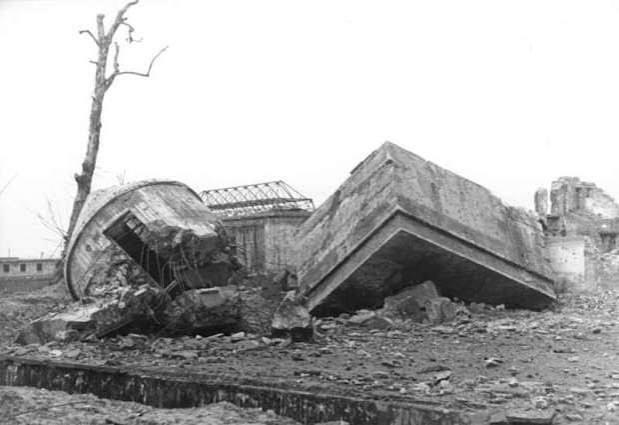
    The bodies were carried upstairs, placed in a bomb crater in the Chancellery garden, doused with petrol, and set alight. The burning was incomplete Soviet forces arriving days later found charred remains that were impossible to fully identify on sight.

    The Soviet Evidence: A Jawbone and a Skull Fragment

    Soviet intelligence, specifically the SMERSH counterintelligence unit, recovered the remains on May 4–5, 1945. They conducted a forensic examination, but the results were classified and hidden for decades. The key evidence was a jawbone and a dental bridge. Hitler’s dental assistants, Käthe Heusermann and Fritz Echtmann, were captured by the Soviets and forced to identify the teeth. They confirmed that the bridge matched Hitler’s dental records and X-rays taken in 1944. This dental match remains the strongest forensic evidence that Hitler died in the bunker.

    A fragment of skull, with a bullet hole on the left side, was also recovered and attributed to Hitler. But in 2009, a U.S. researcher named Nick Bellantoni analyzed the skull fragment and found that it was from a female skull. This cast doubt on the skull fragment, but not on the jawbone. The jawbone remains the authenticating artifact, and it is held in Russian state archives in Moscow, along with the skull fragment.

    The Cold War Fog: Stalin’s Disinformation and Secrecy

    Why did the mystery persist? The Soviet Union held the physical evidence and forensic reports under strict secrecy for decades. Stalin himself told Western leaders that Hitler had escaped, a deliberate disinformation tactic to sow distrust among the Allies. This fed the rumor mill. If the Soviet Union wouldn’t show the body, the reasoning went, maybe there was something to hide.

    Unlike Mussolini, who was hung upside down in a Milan square, Hitler’s body was never publicly exhibited. The Soviets buried and reburied the remains multiple times. In 1970, KGB chief Yuri Andropov ordered the remains exhumed, cremated, and scattered into the Biederitz River in East Germany, to prevent the site from becoming a neo-Nazi shrine. This effectively destroyed any chance of independent verification.

    The Conspiracy Theories: Escape to Argentina and Beyond

    Without a public body, conspiracy theories flourished. The most famous is the “escape to Argentina” narrative, popularized by the 2011 book Grey Wolf: The Escape of Adolf Hitler by Gerrard Williams and Simon Dunstan. The book claims that Hitler and Eva Braun fled to Argentina via submarine, lived on a ranch, and died in the 1960s. Proponents point to FBI and CIA files on Hitler sightings in South America as evidence of ongoing investigations.

    But these files are exactly what they appear to be: investigations of unsubstantiated rumors. The FBI and CIA chased leads that went nowhere. No credible evidence of Hitler’s survival has ever emerged. The consensus among mainstream historians—Ian Kershaw, Antony Beevor, Richard J. Evans—is that Hitler died by his own hand in the bunker. They point to the dental evidence, eyewitness testimony, and the overwhelming logic of a cornered dictator choosing suicide over capture, especially after Mussolini’s corpse was displayed in public.

    What the Evidence Actually Supports

    Let’s separate what we know from what we don’t.

    What we know:
    – Hitler died on April 30, 1945, in the Führerbunker.
    – The cause of death was a self-inflicted gunshot wound, likely combined with cyanide.
    – His jawbone, recovered by Soviet forces, matches dental records.
    – Multiple bunker staff, including Otto Günsche, Heinz Linge, and Rochus Misch, gave consistent accounts of the suicide and burning.

    What we don’t know:
    – The exact sequence of events in the final moments (did he shoot himself before or after biting the cyanide capsule? Was the skull fragment actually Hitler’s?)
    – The final disposition of all remains—the Soviets destroyed most of them in 1970.

    The skull fragment controversy is real, but it doesn’t overturn the dental evidence. The jawbone is the key artifact, and it has never been disputed by credible experts. The mystery of Hitler’s death is not about whether he died in the bunker—it’s about why people continue to doubt it.

    The mystery of Hitler’s death is less about the historical record and more about the human appetite for conspiracy. The evidence—dental records, eyewitness testimony, and the logic of history—points overwhelmingly to one conclusion: Hitler died in the bunker on April 30, 1945. The Soviet secrecy and the destruction of remains created a vacuum, but it was filled with rumor, not fact. The jawbone in Moscow is the final word, and it says what the history books have always said.

    Summary

    • Hitler died by suicide on April 30, 1945, in the Führerbunker, with a gunshot to the right temple and cyanide.
    • The strongest evidence is a jawbone and dental bridge recovered by Soviet forces, matched by Hitler’s dental assistants.
    • Soviet secrecy and the destruction of remains in 1970 fueled conspiracy theories, but no credible evidence of escape has emerged.
    • A 2009 study cast doubt on a skull fragment, but not the jawbone, which remains authentic.
    • Mainstream historians universally accept the suicide account, citing dental evidence and eyewitness testimony.

    FAQ

    Q: Did Hitler really die in the bunker?
    A: Yes. The consensus of historians, based on dental records, eyewitness accounts, and Soviet forensic reports, is that Hitler died by suicide on April 30, 1945.

    Q: Why do some people believe Hitler escaped to Argentina?
    A: The theory, popularized by books like Grey Wolf, relies on unsubstantiated sightings and Cold War-era rumors. FBI and CIA files show investigations but no credible evidence.

    Q: What is the skull fragment controversy?
    A: A 2009 DNA study found that a skull fragment attributed to Hitler was from a female. However, this does not affect the jawbone, which is the key authenticating evidence.

    Q: Where are Hitler’s remains now?
    A: Most were destroyed by Soviet intelligence in 1970. The only surviving official remains are a skull fragment and jawbone held in Russian state archives in Moscow.

    Q: Why did Stalin spread rumors that Hitler escaped?
    A: Stalin used disinformation to sow distrust among Western Allies. It was a Cold War tactic, not a reflection of actual evidence.
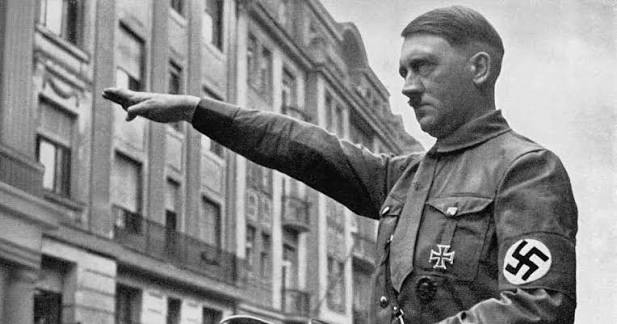
  • Hitler’s Fatal Gamble: Why Germany Declared War on America After Pearl Harbor

    Hitler’s Fatal Gamble: Why Germany Declared War on America After Pearl Harbor

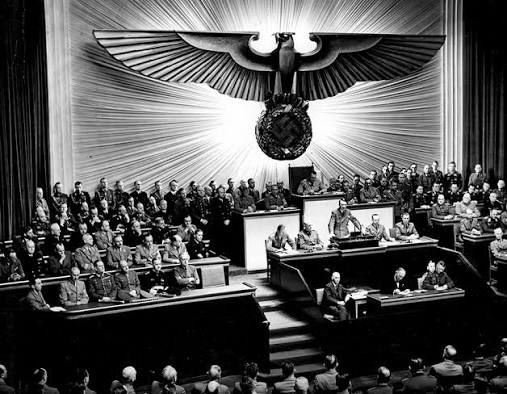
    On December 11, 1941, four days after Japanese bombers devastated the U.S. Pacific Fleet at Pearl Harbor, Adolf Hitler stood before the Reichstag in Berlin and declared war on the United States. It was a decision that would seal the fate of the Third Reich, yet at the time, it seemed to many including Hitler himself like a calculated, even inevitable, move. But why did Hitler, already bogged down in a brutal war against the Soviet Union and Britain, willingly add the industrial might of America to his list of enemies? The answer lies in a toxic mix of ideology, miscalculation, and strategic desperation.

    To understand Hitler’s decision, one must look beyond the formal texts of treaties and into the Führer’s own racial fantasies and geopolitical delusions. He saw America as a weak, mongrelized nation, incapable of fighting a real war. He believed that war with the U.S. was coming anyway, so why not seize the moment? Yet his gamble backfired catastrophically, uniting the world’s greatest powers against Germany and ensuring its ultimate defeat. This is the story of how Hitler’s hubris turned a tactical opportunity into a strategic disaster.

    The Pact That Didn’t Bind

    When Japan attacked Pearl Harbor on December 7, 1941, Hitler had no legal obligation to join the war. The Tripartite Pact, signed in September 1940, committed Germany, Italy, and Japan to defend one another only if one of them was attacked. Japan was the aggressor, not the victim. Germany’s ambassador to Japan, Eugen Ott, had even been instructed to urge Japan to avoid war with the U.S. unless absolutely necessary. Yet within hours of the attack, Hitler’s Foreign Minister, Joachim von Ribbentrop, began pressing for a declaration of war, and Hitler was eager to comply.

    Why? For Hitler, the pact was never just a legal instrument; it was a declaration of solidarity among the “have-not” nations against the Anglo-American world order. In his December 11 speech, he framed the war as a cosmic struggle between the “Jewish-capitalist” world, led by Roosevelt, and National Socialist Germany. He listed grievances: U.S. violations of neutrality, the Lend-Lease program, and Roosevelt’s “warmongering.” He wanted to show that Germany stood by its Axis partners, even at the cost of plunging into a two-front war.

    But there was more than ideology at play. Hitler and his generals genuinely believed that the United States was a paper tiger. They thought the U.S. was militarily weak, politically divided, and would take years to mobilize its industrial might. In Hitler’s racial worldview, America was a “mongrel” nation, dominated by Jews and incapable of true military greatness. He once told his generals, “The American is like a child—he needs to be led, and he has no idea what he wants.” Such contempt blinded him to the reality of American production capacity.

    The Atlantic Undeclared War

    The formal declaration was, in many ways, just a formality. The U.S. and Germany had been fighting an undeclared naval war in the Atlantic for months. U.S. destroyers were escorting convoys to Britain, and they had exchanged fire with German U-boats. In September 1941, the USS Greer was attacked by a German submarine after being tracked by a British plane. In October, the USS Reuben James was torpedoed and sunk with the loss of 100 American sailors. Hitler had ordered his U-boats to avoid provoking the U.S., but Roosevelt was pushing the envelope, ordering the Navy to “shoot on sight” any German warships in U.S. defensive zones.

    Hitler’s restraint was a strategic choice. He hoped to keep America out of the war until the Soviet Union was conquered. But by late 1941, Operation Barbarossa had stalled before Moscow, and the Wehrmacht was suffering massive casualties. The war in the East was not going as planned, and Hitler needed a victory somewhere. Declaring war on America gave him the chance to unleash unrestricted submarine warfare in the Atlantic, cutting Britain’s lifeline before the U.S. could intervene effectively. He also hoped that tying down American forces in the Pacific would relieve pressure on Germany.

    The Great Miscalculation

    Hitler’s decision was based on a profound misreading of the situation. He believed that the U.S. could not project meaningful military power into Europe before 1944 or 1945, by which time he expected to have conquered the USSR and secured Europe. He was convinced that Roosevelt would have entered the war eventually anyway, so why not act first and appear decisive? In his mind, the declaration was a preemptive strike, not a gamble.

    But Hitler underestimated the U.S. in every way. He failed to grasp the speed and scale of American mobilization. Within months, U.S. factories were producing more war materiel than Germany, Japan, and Italy combined. He also misjudged the political will of the American people. While isolationism had been strong before Pearl Harbor, the attack—and Germany’s declaration—united the country behind the war effort. Roosevelt and Churchill were relieved; Churchill later wrote that he “slept the sleep of the saved” upon hearing the news. The German declaration solved the political problem of how to bring the U.S. into the European war when public opinion was focused on revenge against Japan.

    The Aftermath: A United Enemy

    The declaration on December 11, 1941, formally merged the European and Pacific theaters into one global conflict. The U.S. Congress reciprocated with a declaration of war against Germany on the same day. For Hitler, the move was meant to solidify the Axis and encourage Japan to tie down British and American forces. But it had the opposite effect: it ensured that the U.S., Britain, and the Soviet Union would fight as allies against Germany, with the full weight of American industrial power committed to Europe.

    Historians have long viewed Hitler’s declaration as one of the greatest strategic blunders of the war. It was a miscalculation so profound that it turned a difficult war into an impossible one. Hitler’s racial ideology and his contempt for American democracy blinded him to the facts. He saw the U.S. as a weak, divided nation, but in reality, it was a sleeping giant. When it awakened, it destroyed the Third Reich.

    Hitler’s declaration of war on America was not a rational act of statecraft but a product of his ideological delusions and strategic desperation. He believed he was being decisive, but he was actually signing his own death warrant. The decision unified the Allies, unleashed American industrial might against Germany, and ultimately ensured the fall of the Third Reich. It remains a chilling example of how hubris and miscalculation can turn a moment of opportunity into a catastrophe.

    Summary

    • Germany was not obligated by the Tripartite Pact to declare war on the U.S., as Japan was the aggressor at Pearl Harbor.
    • Hitler viewed war with America as inevitable and wanted to appear decisive, while also seeking to unleash unrestricted submarine warfare.
    • Hitler’s racial ideology led him to underestimate American military capability and resolve.
    • The U.S. and Germany were already engaged in an undeclared naval war in the Atlantic before the formal declaration.
    • The declaration backfired strategically, uniting the U.S., Britain, and the USSR against Germany and ensuring American industrial might was turned against the Third Reich.

    FAQ

    Q: Was Germany forced to declare war on the U.S. by the Tripartite Pact?
    A: No. The pact required mutual assistance only if a member was attacked. Japan was the aggressor at Pearl Harbor, so Germany had no legal obligation to declare war.

    Q: Why did Hitler believe the U.S. was weak?
    A: Hitler held a racialized view of America, seeing it as a ‘mongrel nation’ dominated by Jews and incapable of true military greatness. He also believed the U.S. would take years to mobilize and was politically divided by isolationism.

    Q: What was the immediate impact of Hitler’s declaration?
    A: The U.S. Congress declared war on Germany on the same day, formally merging the European and Pacific theaters into one global conflict. It also relieved Roosevelt and Churchill, who saw it as a solution to bringing the U.S. into the European war.

    Q: Did the U.S. and Germany have any prior hostilities before Pearl Harbor?
    A: Yes. The U.S. and Germany were engaged in an undeclared naval war in the Atlantic, with U.S. destroyers escorting convoys and exchanging fire with German U-boats, including incidents like the USS Greer and the sinking of the USS Reuben James.

    Q: How do historians view Hitler’s decision?
    A: Most historians view it as one of the greatest strategic blunders of the war, as it united the U.S., Britain, and the USSR against Germany and ensured the full weight of American industrial power would be brought to bear on the Third Reich.

  • Adolf Hitler: From Failed Artist to Architect of Genocide

    Adolf Hitler: From Failed Artist to Architect of Genocide

    On January 30, 1933, a failed artist and former army corporal was appointed Chancellor of Germany. Within twelve years, that man Adolf Hitler would plunge the world into a war that killed an estimated 70 to 85 million people and orchestrate the genocide of six million Jews. His rise from obscurity to absolute power remains one of history’s most terrifying and instructive stories.

    How did a man rejected from art school twice become the most destructive dictator in history? The answer lies in a toxic mix of personal obsession, national humiliation, and the willingness of conservative elites to cut a deal with a radical they thought they could control.

    The Early Years: Failure and Resentment

    Adolf Hitler was born on April 20, 1889, in Braunau am Inn, a small town on the Austro-Hungarian border. His father, Alois, was a customs official; his mother, Klara, was his third wife. The family moved frequently, and young Adolf had a rocky relationship with his domineering father, who wanted him to follow into civil service. Instead, Hitler dreamed of becoming an artist.

    In 1907, he moved to Vienna, the capital of a sprawling, multi-ethnic empire, to apply to the Academy of Fine Arts. He was rejected twice. The second rejection, in 1908, was definitive. For the next five years, Hitler lived a marginal existence in Vienna, selling postcards and painting watercolors to scrape by. He later described these years as formative, though his account is likely embellished. Vienna was a cauldron of political extremism, and it was there that Hitler absorbed the anti-Semitic, pan-German, and social Darwinist ideas that would define his worldview.

    In 1913, he moved to Munich, and when World War I broke out in 1914, he volunteered for the German Army. He served as a runner on the Western Front, was wounded, and was decorated with the Iron Cross for bravery. The war gave him a sense of purpose and belonging he had never known. The German defeat in 1918, and the subsequent Treaty of Versailles, which imposed harsh reparations and territorial losses, filled him with bitterness and a belief that the army had been “stabbed in the back” by internal enemies chiefly Jews and socialists.

    The Path to Power: From Beer Hall Putsch to Chancellor

    After the war, Hitler remained in the army, working as an intelligence agent. In 1919, he was sent to monitor a small nationalist group, the German Workers’ Party. He joined instead, quickly becoming its leader and renaming it the National Socialist German Workers’ Party the Nazi Party. His talents as an orator and propagandist soon made him a local figure.

    In 1923, emboldened by the chaos of hyperinflation and political instability, Hitler attempted to seize power in Munich in the Beer Hall Putsch. The coup failed. Hitler was arrested, tried for treason, and sentenced to five years in Landsberg prison. He served only nine months, but during that time he wrote Mein Kampf, a rambling, hate-filled autobiography and political manifesto.

    The putsch taught Hitler a valuable lesson: he would not overthrow the state by force; he would use the ballot box instead. After his release, he rebuilt the Nazi Party around a message of national renewal, anti-communism, and revenge for Versailles. For years, the party remained marginal. In the 1928 election, they won just 2.6% of the vote.

    The Great Depression changed everything. The economic catastrophe that began in 1929 devastated Germany, creating mass unemployment and widespread desperation. Hitler offered a simple, scapegoating explanation: the failures of democracy, the machinations of Jews and communists. By July 1932, the Nazis were the largest party in the Reichstag with 37.3% of the vote. Yet they never won an absolute majority. Hitler came to power on January 30, 1933, not through a popular mandate, but through backroom deals with conservative politicians who believed they could use him to crush the left and restore order.

    Dictatorship and the Road to War

    Within months of becoming Chancellor, Hitler dismantled German democracy. The Reichstag Fire in February 1933 gave him a pretext to suspend civil liberties. The Enabling Act, passed in March, allowed him to rule by decree. By the summer, all political parties except the Nazis were banned, and trade unions were crushed. When President Hindenburg died in August 1934, Hitler merged the offices of President and Chancellor, becoming the absolute dictator—the Führer.

    His domestic policies were brutal. Political opponents were sent to concentration camps. Jews were systematically stripped of their rights, property, and livelihoods. The Nuremberg Laws of 1935 made anti-Semitism official state policy. At the same time, Hitler launched massive public works programs, including the construction of the Autobahn, and rearmed the country in open defiance of the Treaty of Versailles.

    Hitler’s foreign policy was equally aggressive. In 1936, he remilitarized the Rhineland. In 1938, he annexed Austria in the Anschluss and demanded the Sudetenland from Czechoslovakia. The Western powers, desperate to avoid another war, conceded at Munich. Hitler promised it was his last territorial demand. It was a lie. In March 1939, he seized the rest of Czechoslovakia. On September 1, 1939, he invaded Poland. Britain and France, finally drawing a line, declared war. World War II had begun.

    The Holocaust and the War’s End

    The war provided Hitler with the cover to implement his most radical ideological goal: the extermination of European Jewry. The Holocaust, as it came to be known, was not a single event but a gradual, escalating process. As German armies advanced across Europe, mobile killing squads—the Einsatzgruppen—massacred Jews in the occupied territories. By 1941, Hitler had authorized the systematic deportation of Jews to ghettos and then to extermination camps like Auschwitz, where they were murdered in gas chambers on an industrial scale.

    In total, approximately six million Jews were murdered, along with five million others: Roma, disabled people, Soviet prisoners of war, political prisoners, homosexuals, and Jehovah’s Witnesses. The machinery of death was coldly bureaucratic, involving ordinary Germans and collaborators from across Europe.

    Hitler’s war in the East was also a war of annihilation. Operation Barbarossa, the invasion of the Soviet Union in June 1941, was intended to conquer living space (Lebensraum) for German settlers and to enslave or kill the Slavic population. The war on the Eastern Front was unimaginably brutal, resulting in the deaths of over 20 million Soviet civilians and soldiers.

    The turning point came in 1943, after the German defeat at Stalingrad. From then on, the war swung inexorably against Germany. The Allied bombing campaigns devastated German cities, killing half a million civilians. Hitler, isolated in his bunker in Berlin, refused to surrender, preferring total destruction over capitulation. On April 30, 1945, with Soviet troops closing in, he shot himself. His empire lasted twelve years and left the world in ruins.

    The Nature of Hitler’s Power: A “Lazy Dictator”?

    Historical debate about Hitler often centers on the question: was he a master planner or an opportunist? The intentionalist school argues that Hitler had a clear, long-term plan for genocide and world conquest, pursued consistently from the 1920s onward. The functionalist school, led by historian Ian Kershaw, offers a more nuanced picture. Kershaw famously described Hitler as a “lazy dictator” who issued broad ideological directives but left the details to his subordinates. Radical officials, eager to “work towards the Führer,” initiated policies that went beyond what Hitler explicitly ordered. The Holocaust, in this view, emerged from a chaotic, competitive Nazi state rather than a single blueprint.

    What is clear is that Hitler’s ideology was coherent, if monstrous. He believed in a racial hierarchy with Aryans at the top and Jews as the ultimate enemy. He saw history as a struggle for survival in which the strong must conquer and the weak must perish. This worldview, rooted in 19th-century racial science and social Darwinism, was not a bizarre aberration but a product of its time—an extreme expression of currents that ran through European culture.

    Hitler’s Legacy: Lessons for Today

    Hitler’s legacy is one of absolute evil, but also of the danger of complacency. His rise was not inevitable. He was brought to power by conservative elites who thought they could control him. He exploited a fragile democracy weakened by economic crisis and social division. He used hate as a political tool, scapegoating minorities for complex national problems. The lesson is stark: democratic institutions must be defended, and hate speech must be taken seriously before it becomes state policy.

    The Nazi regime also demonstrates the banality of evil, in Hannah Arendt’s famous phrase. The genocide was carried out by ordinary people—bureaucrats, soldiers, railway workers, and policemen—who were following orders, obeying the law, or simply going along. The Holocaust was not the work of a few monsters, but of a society that allowed itself to be led by one.

    Hitler’s life and deeds are a warning from history that we ignore at our peril. The dead of the Holocaust and the 70 million victims of the war he started deserve no less than our remembrance and our vigilance.

    Adolf Hitler transformed a personal hatred into a national catastrophe. His life story is a case study in how a charismatic but morally bankrupt individual can exploit political and economic turmoil to seize power and commit unspeakable crimes. Yet it is also a story of human choice: the choices of ordinary Germans to follow, the choices of conservative elites to empower a madman, and the choices of the international community to appease rather than confront. Remembering Hitler is not just about honoring the victims; it is about understanding the mechanisms of tyranny so that we might better resist them.

    Summary

    • Adolf Hitler (1889-1945) was the dictator of Nazi Germany, responsible for the Holocaust and World War II in Europe.
    • He rose from a failed artist to become Chancellor in 1933 through a combination of political maneuvering and exploitation of the Great Depression.
    • The Holocaust resulted in the murder of approximately 6 million Jews and 5 million others.
    • Hitler’s ideology was rooted in racial hierarchy, anti-Semitism, and the concept of Lebensraum.
    • Historians debate whether Hitler had a master plan for genocide or whether it emerged through bureaucratic competition.
    • His legacy serves as a warning about the dangers of hate, complacency, and the fragility of democratic institutions.

    FAQ

    Q: How did Hitler come to power if he never won a majority in free elections?
    A: Hitler was appointed Chancellor on January 30, 1933, as part of a backroom deal with conservative politicians who believed they could control him. The Nazi Party had won 37.3% of the vote in July 1932, making it the largest party, but never an outright majority. Within months, Hitler used the Reichstag Fire and the Enabling Act to establish a dictatorship.

    Q: What was the Holocaust?
    A: The Holocaust was the systematic, state-sponsored persecution and murder of approximately six million Jews by the Nazi regime and its collaborators. It also targeted Roma, disabled people, Soviet prisoners of war, political prisoners, homosexuals, and Jehovah’s Witnesses, bringing the total to about 11 million victims.

    Q: Why did Hitler hate Jews?
    A: Hitler’s anti-Semitism was rooted in a racial ideology that considered Jews to be an inferior race and the primary enemy of the German people. This belief was influenced by 19th-century racial theories and social Darwinism, and it was a central pillar of his worldview, as expressed in Mein Kampf.

    Q: What was Operation Barbarossa?
    A: Operation Barbarossa was the codename for the German invasion of the Soviet Union on June 22, 1941. It was a war of annihilation aimed at conquering living space (Lebensraum) and destroying communism. The Eastern Front became the deadliest theater of World War II, with over 20 million Soviet deaths.

    Q: How did Hitler die?
    A: Hitler committed suicide by gunshot on April 30, 1945, in his Führerbunker in Berlin, as Soviet forces closed in on the city. His wife, Eva Braun, also died by suicide alongside him.

  • The Axis Leaders: Hitler, Mussolini, and Imperial Japan’s Wartime Command

    The Axis Leaders: Hitler, Mussolini, and Imperial Japan’s Wartime Command

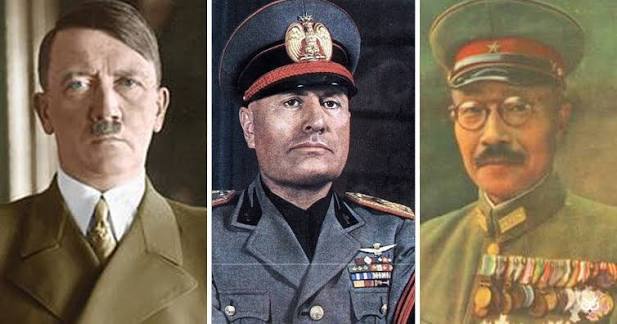
    When World War II broke out in 1939, the Axis Powers Germany, Italy, and Japan united to challenge the Allied forces. Their leaders Adolf Hitler, Benito Mussolini, and Japan’s Emperor Hirohito with Prime Minister Hideki Tojo each shaped the conflict in distinct ways. But their alliance was less a unified bloc and more a pragmatic pact of convenience, driven by divergent ambitions and ideologies. This article examines who these leaders were, how they rose to power, and why their partnership ultimately unraveled.

    The Rise of Dictators

    Adolf Hitler came to power in Germany in 1933, capitalizing on the chaos of the Weimar Republic and the humiliation of the Treaty of Versailles. His Nazi Party fused extreme nationalism, racial antisemitism, and a vision of territorial expansion to win over a desperate population. By 1934, he declared himself Führer, merging the roles of chancellor and president, and began dismantling German democracy.

    Benito Mussolini had already seized control in Italy a decade earlier. In 1922, his March on Rome pressured King Victor Emmanuel III to appoint him Prime Minister. Mussolini’s Fascist ideology emphasized authoritarian nationalism, corporatism, and imperial revival a stark contrast to Germany’s race-based Nazi doctrine. Yet both men shared a thirst for power and a disdain for the post-WWI order.

    In Japan, the path to militarism was different. The 1930s saw the military and ultranationalist factions gain dominance over civilian government, fueled by economic crisis and a desire for resource security. Emperor Hirohito viewed as a divine figure reigned as a constitutional monarch, but his exact role in wartime decisions remains contested. Hideki Tojo, a hardline general, became Prime Minister in 1941 and effectively led the nation’s war efforts, though he always acted in the Emperor’s name.

    The Axis Alliance: A Marriage of Convenience

    The term “Axis” was coined by Mussolini in 1936, referring to the Rome–Berlin line around which other European states might align. The Rome–Berlin Axis was formalized in 1939 with the Pact of Steel, a military alliance between Germany and Italy. Japan joined the following year with the Tripartite Pact, creating the Berlin-Rome-Tokyo axis.

    But this was not a united front. Germany and Italy shared a fascist kinship, yet clashed over ambitions in Austria and the Balkans. Japan was primarily anti-communist and expansionist in Asia, with little ideological affinity for European fascism. The alliance lacked a unified strategy or command each power pursued its own war aims. Hitler, for instance, declared war on the United States after Pearl Harbor, a decision that ultimately dragged Germany into a two-front war and sealed its fate.

    The Personal Dynamics

    Hitler and Mussolini’s relationship evolved from admiration to strain. Mussolini initially viewed Hitler with a mix of respect and rivalry, but Italy’s military failures in Greece and North Africa exposed its weaknesses. In 1943, Allied forces invaded Sicily, and Mussolini was deposed and arrested. Hitler, determined to rescue his ally, sent commandos to free him from the Gran Sasso mountain hotel. Mussolini was then installed as the puppet leader of the Italian Social Republic in northern Italy, but his power was hollow.

    Germany and Japan had even less coordination. They fought separate wars Germany in Europe, Japan in the Pacific with minimal strategic cooperation. The two powers were separated by vast distances and had no shared war plan.

    The Fall of the Axis Leaders

    The end of the war brought violent deaths for most of the Axis leadership. Mussolini attempted to flee to Switzerland in April 1945, but was captured by Italian partisans and executed. His body was hung upside down in Milan, displayed to a vengeful public.

    Hitler, surrounded by Soviet forces in Berlin, committed suicide on April 30, 1945, by gunshot and cyanide. His body was burned in the Chancellery garden, and his ashes were scattered a deliberate attempt to prevent any future shrine.

    Tojo attempted suicide but survived and was captured by Allied forces. He was convicted of war crimes by the International Military Tribunal for the Far East and executed by hanging in 1948.

    Hirohito escaped prosecution. The Allies, eager to maintain stability in occupied Japan, shielded him from trial, arguing that he had been a passive figure manipulated by militarists. This decision remains controversial in East Asia, where many hold him responsible for wartime atrocities.

    The Broader Axis Leadership

    Beyond the “Big Three,” the Axis included a network of lesser leaders with varied motivations. Ion Antonescu of Romania, Miklós Horthy of Hungary, and Ante Pavelić of Croatia led regimes aligned with the Axis, either out of ideological sympathy, territorial gain, or coercion. In China, Wang Jingwei headed a Japanese puppet state, and Thailand’s Plaek Phibunsongkhram collaborated with Japan to expand Thai territory.

    These leaders often had more in common with their own survival instincts than with any shared Axis ideology. Their alliances were pragmatic, shifting with the fortunes of war.

    Ideological Fault Lines

    Nazism was rooted in racial theory, culminating in the Holocaust the systematic murder of six million Jews and millions of others. Italian Fascism was less racially extreme, though Mussolini enacted antisemitic laws in 1938 to align with Germany. Japanese militarism centered on emperor worship and pan-Asianism the idea of “Asia for Asians” but was not based on a racial hierarchy in the same way as Nazism. Instead, it saw Japan as the natural leader of Asia, liberating the region from Western colonialism.

    These ideological differences contributed to the alliance’s fragility. The Axis was never a coherent force; it was a temporary alignment of convenience that collapsed under the weight of its own contradictions.

    The Legacy

    By 1945, all three principal Axis powers had been defeated. Their leaders were dead or disgraced, and their ideologies were thoroughly discredited. The post-war world was rebuilt on the principles of the Allied powers, shaping international institutions like the United Nations.

    The Axis leaders remain a stark reminder of the dangers of totalitarianism, militarism, and unchecked nationalism. Their rise and fall offer lessons about the fragility of democracy and the catastrophic consequences of aggressive expansion.

    The Axis leaders Hitler, Mussolini, and Japan’s wartime command were driven by a shared desire to overturn the existing world order, but their alliance was never more than a marriage of convenience. Their divergent ideologies and ambitions ultimately undermined their cause, leading to their complete defeat. The war they unleashed cost millions of lives and reshaped the global landscape, leaving a legacy that still informs international relations today.

    Summary

    • The Axis Powers were primarily led by Adolf Hitler (Germany), Benito Mussolini (Italy), and Japan’s Emperor Hirohito with Prime Minister Hideki Tojo.
    • The alliance was pragmatic, not ideological, with each power pursuing its own expansionist goals.
    • Personal relationships among the leaders were strained, particularly between Hitler and Italy’s failing military efforts.
    • The fall of the Axis leaders came through suicide, execution, or—in Hirohito’s case—preservation under Allied occupation.
    • The broader Axis included numerous lesser leaders with varied motivations, from ideological alignment to coercion.

    FAQ

    Q: What was the Axis alliance?
    A: The Axis was a military coalition formed by Germany, Italy, and Japan, formalized through agreements like the Pact of Steel (1939) and the Tripartite Pact (1940). It was a pragmatic alliance of convenience rather than a unified ideological bloc.

    Q: Why did Italy join the Axis?
    A: Benito Mussolini sought to revive the Roman Empire’s glory and saw an alliance with Germany as an opportunity for territorial expansion in Africa and the Mediterranean.

    Q: What was Hirohito’s role in Japan’s war effort?
    A: Emperor Hirohito was the constitutional monarch, but historians debate his actual involvement. Some argue he was a passive figurehead manipulated by militarists, while others contend he actively supported key decisions, including the attack on Pearl Harbor.

    Q: How did the Axis leaders die?
    A: Hitler committed suicide in 1945, Mussolini was executed by partisans, and Tojo was executed after a war crimes trial. Hirohito died of natural causes in 1989 after retaining his throne under Allied occupation.

    Q: Were there other Axis leaders besides the ‘Big Three’?
    A: Yes, many other countries and puppet states were part of the Axis, including Hungary (Miklós Horthy), Romania (Ion Antonescu), Croatia (Ante Pavelić), and the Japanese puppet state in China (Wang Jingwei).

  • The Briefcase That Almost Killed Hitler: The July 20th Plot

    The Briefcase That Almost Killed Hitler: The July 20th Plot

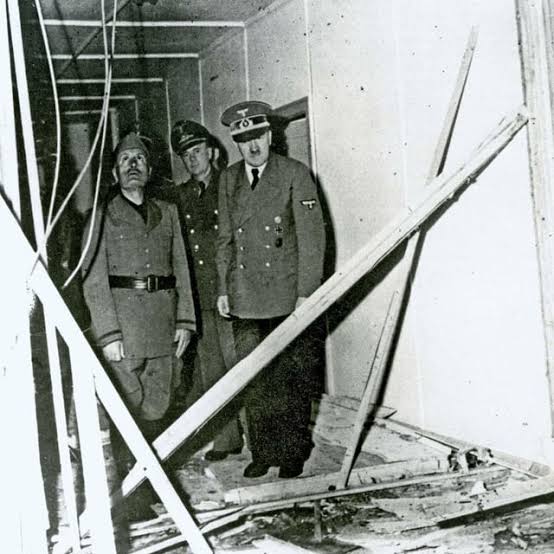
    At 12:42 PM on 20 July 1944, a bomb ripped through a wooden briefing hut at Hitler’s East Prussian headquarters, the Wolf’s Lair. Four men were killed instantly, but the intended target Adolf Hitler stumbled out alive, his trousers torn, his eardrums burst, and his arm bruised. The explosion was the culmination of years of plotting, a desperate, last-ditch attempt by a group of German officers to end the Nazi regime. This is the story of that conspiracy, the men behind it, and why it failed.

    The Man with the Bomb

    Colonel Claus Schenk Graf von Stauffenberg was not an obvious revolutionary. A decorated officer, a count, and a man who had once admired Hitler’s early successes, he had become a leading figure in the military resistance by 1944. He had lost his right hand, two fingers on his left, and an eye while serving in North Africa injuries that would complicate his mission but not deter it.

    Stauffenberg was Chief of Staff to the Replacement Army, a post that gave him direct access to Hitler’s military briefings. He carried two 1-kilogram blocks of British-made plastic explosive in his briefcase, armed with a chemical time fuse. Only one was primed his injuries made it difficult to handle both. That single bomb, placed in a briefcase, would be the instrument of the most serious attempt on Hitler’s life.

    The Plan: Operation Valkyrie

    The assassination was only the first step. The conspirators had adapted a contingency plan originally designed to suppress internal unrest Operation Valkyrie into a mechanism for a military coup. The plan called for the Replacement Army to seize control of Berlin, arrest Nazi leaders, and take over communications, all under the guise of responding to an SS coup attempt.

    Key figures included General Friedrich Olbricht, who was instrumental in operational planning; General Ludwig Beck, a former Chief of the General Staff who was to become head of state; and Major-General Henning von Tresckow, the spiritual leader of the resistance, who had tried to kill Hitler the year before by placing a bomb on his plane it failed to detonate.

    The Failure: A Table Leg and a Kicked Briefcase

    On the day of the attempt, the briefing was moved from a concrete bunker to a wooden hut because of the heat. The wood should have made the blast more effective. Stauffenberg placed the briefcase under the conference table, close to Hitler. Then, with an excuse, he left the room to make a phone call.

    But Colonel Heinz Brandt, an officer attending the briefing, found the briefcase in his way. He kicked it behind the heavy oak table leg. When the bomb exploded at 12:42 PM, that leg deflected the blast away from Hitler. The Führer survived with minor injuries: a bruised arm, burst eardrums, singed hair, and torn trousers. Brandt was not so lucky; he was killed, along with three others.

    Stauffenberg, hearing the explosion from outside, was convinced Hitler was dead. He flew to Berlin to trigger Operation Valkyrie. But the coup failed within hours. Indecision among the conspirators, communication failures, and the news that Hitler was alive unraveled the plan. By nightfall, Stauffenberg, Olbricht, and others were executed by firing squad at the Bendlerblock, the War Ministry in Berlin.

    The Brutal Aftermath

    Hitler’s revenge was swift and merciless. Approximately 200 people were executed, though some estimates suggest up to 5,000 were arrested. The People’s Court under Roland Freisler conducted show trials, with victims hanged from meat hooks, filmed for Hitler’s viewing. Among those killed were Field Marshal Erwin Rommel, who was forced to commit suicide; General Hans Oster; Admiral Wilhelm Canaris; and the theologian Dietrich Bonhoeffer, executed in a concentration camp.

    The conspirators were not democrats in the modern sense. Most were conservative nationalists who wanted to end the war and preserve Germany’s honor, hoping to make peace with the Western Allies while continuing against the Soviets. Some, like Tresckow and Bonhoeffer, were driven by Christian ethics. Tresckow had said: “The assassination must be attempted, whatever the cost. Even if it fails, we must do something in Berlin.”

    The Long Road to Resistance

    Resistance to Hitler had existed since the mid-1930s but was fragmented. The 1938 September Conspiracy, led by General Beck and Admiral Canaris, planned a coup if Hitler invaded Czechoslovakia, but it was abandoned after the Munich Agreement. The early military victories made a coup seem treasonous. The turning point came with the Eastern Front, the Stalingrad defeat, and the growing awareness of war crimes the Einsatzgruppen massacres and the Holocaust.

    Stauffenberg himself had been sympathetic to some Nazi goals early on but was radicalized by the atrocities in the East. The July 20 attempt was the culmination of a long-running conspiracy that included the Kreisau Circle and the Abwehr resistance, with multiple attempts planned since 1938. The briefcase bomb was the closest they ever came.

    The July 20th plot failed, but it remains a testament to the courage of a few who were willing to sacrifice everything to stop a monster. In the words of Tresckow, the attempt had to be made, even if it failed. The conspirators’ names are remembered not for their success, but for their moral stand in the face of tyranny.

    Summary

    • The assassination attempt on 20 July 1944 at the Wolf’s Lair involved a 1-kilogram plastic explosive in a briefcase, placed by Colonel Claus von Stauffenberg.
    • The bomb killed four men but spared Hitler, who survived with minor injuries because the briefcase was kicked behind a heavy table leg.
    • The coup, Operation Valkyrie, failed within hours due to indecision and the news that Hitler was alive.
    • The conspirators included military officers and civilians, many of whom were conservative nationalists or driven by religious ethics.
    • Hitler’s retaliation was brutal: about 200 executions, with some victims hanged from meat hooks, and thousands arrested.

    FAQ

    Q: Why did Stauffenberg only arm one bomb?
    A: Stauffenberg had lost his right hand and two fingers on his left hand in North Africa, making it difficult to handle two bombs. He armed only one due to time constraints and his injuries.

    Q: What was Operation Valkyrie?
    A: Originally a contingency plan to suppress internal unrest, it was adapted by the conspirators to seize control of Berlin after Hitler’s assassination, using the Replacement Army to arrest Nazi leaders and take over communications.

    Q: Who were the key leaders of the conspiracy?
    A: Key figures included Stauffenberg, General Friedrich Olbricht, General Ludwig Beck (designated head of state), General Erich Hoepner, and Major-General Henning von Tresckow.

    Q: How many people were executed after the plot?
    A: Approximately 200 people were executed, though some estimates suggest up to 5,000 were arrested. Notable victims include Field Marshal Erwin Rommel (forced suicide) and Dietrich Bonhoeffer.

    Q: Were the conspirators democrats?
    A: No, most were conservative nationalists who wanted to end the war and preserve Germany’s honor, hoping to negotiate peace with the Western Allies while continuing against the Soviets.