[ Featured Image Placeholder — add image here ]
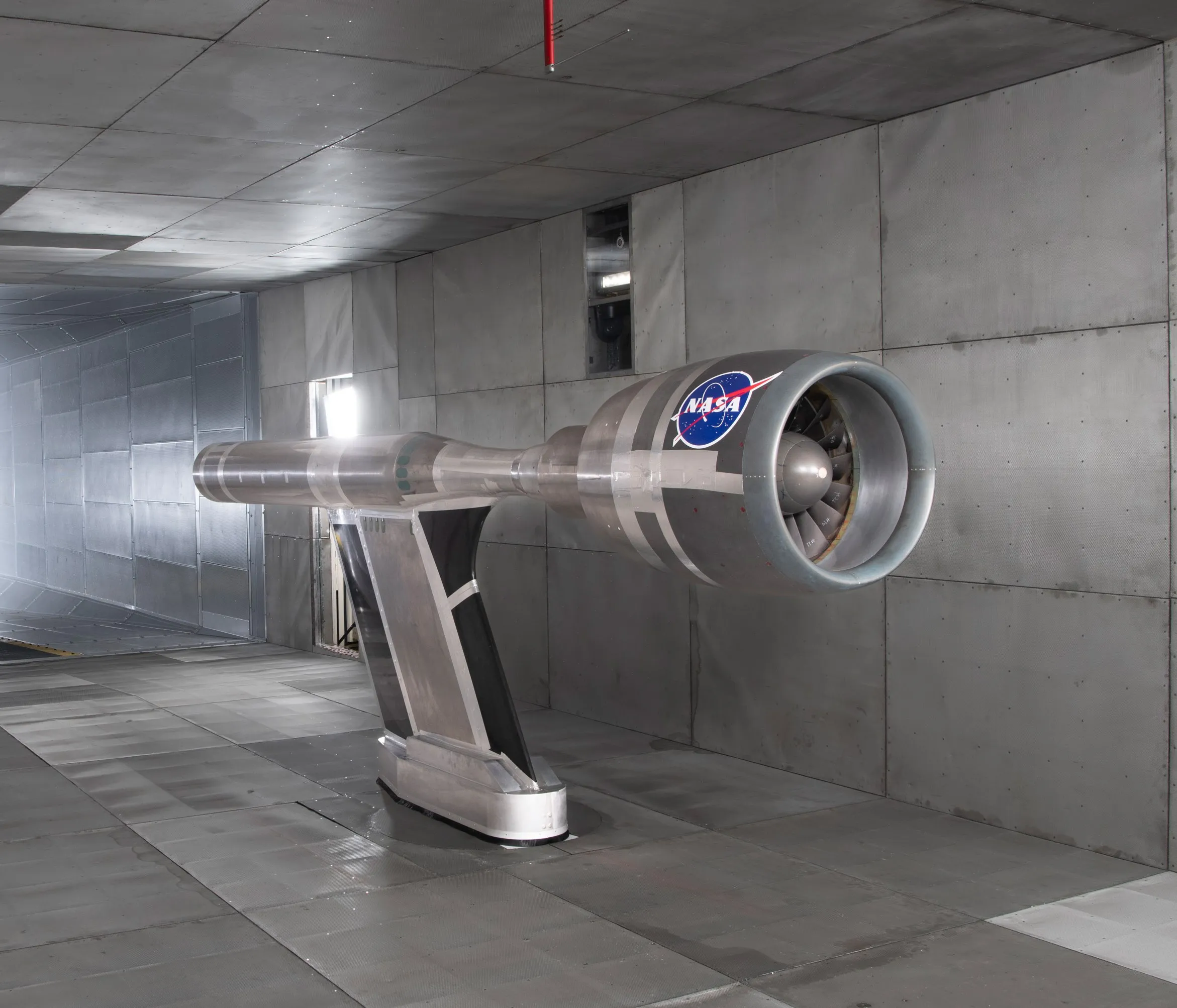
A wide-angle view of NASA’s new Flight Dynamics Research Facility wind tunnel, showing a model aircraft mounted on a dynamic test rig inside the test section.
When you think of NASA, you might picture rockets launching into space or astronauts floating in zero gravity. But behind every successful mission is a vast network of ground-based testing facilities that ensure vehicles can withstand the harsh realities of flight. On a recent Friday, NASA opened its newest wind tunnel—the Flight Dynamics Research Facility (FDRF) at Langley Research Center in Hampton, Virginia. This state-of-the-art facility is set to revolutionize how we test aircraft, rockets, and spacecraft, making them safer and more efficient.
Wind tunnels might sound like relics of the past, but they remain indispensable in aerospace engineering. Even with powerful supercomputers and advanced simulation software, nothing beats the physical reality of air flowing over a model. The FDRF is not just any wind tunnel; it’s specifically designed for dynamic testing—studying how vehicles respond to disturbances like gusts or control surface movements. This capability is crucial for everything from next-generation commercial airplanes to Mars landers. In this article, we’ll explore what makes the FDRF special, why it matters for the future of flight, and how it continues NASA’s legacy of aeronautical innovation.
A New Chapter in a Storied Legacy
NASA Langley Research Center has been at the forefront of aeronautics since 1917. It’s home to historic wind tunnels like the Full-Scale Tunnel, which played a vital role in World War II aircraft development and even tested Apollo capsules. Over the decades, these tunnels have aged, becoming energy-intensive and limited in capability. The FDRF represents a modernization of NASA’s ground-test infrastructure, ensuring that the United States remains a leader in aerospace research.
The new facility is not just a replacement; it’s an upgrade. Older tunnels often require extensive setup time and can only test one configuration at a time. The FDRF is designed for high throughput, with advanced sensors and automation that allow engineers to collect more data in less time. This efficiency is critical as the aerospace industry accelerates its pace of innovation.
Why Wind Tunnels Still Matter in the Age of Computers
You might wonder: with supercomputers simulating airflow so accurately, why do we still need physical wind tunnels? The answer lies in the complexity of real-world aerodynamics. Computational fluid dynamics (CFD) is excellent for predicting smooth, steady airflow, but it struggles with chaotic phenomena like turbulence, stall, and dynamic stability—how a vehicle reacts to sudden changes. Wind tunnels provide empirical data that validate and refine computer models, ensuring that what works in theory also works in practice.
For example, when a plane hits a gust of wind, it must recover smoothly without losing control. This dynamic stability is difficult to simulate accurately because it involves rapid, unsteady movements. The FDRF is specifically built to test these scenarios by mounting models on rigs that can spin, oscillate, or even fly freely within the tunnel. This allows engineers to observe and measure how a vehicle behaves when disturbed, leading to safer designs.
What Makes the FDRF Unique?
Unlike traditional wind tunnels that focus on measuring steady forces, the FDRF is dedicated to dynamic testing. It can simulate a wide range of flight conditions, from subsonic speeds typical of commercial aircraft to the high angles of attack experienced by rockets during launch. The facility features a large test section that can accommodate models of various sizes, from small drones to full-scale components.
One of the key innovations is the use of advanced model mounting systems. These rigs can move the model in multiple axes, replicating the pitch, yaw, and roll motions that occur in real flight. High-speed cameras and sensors capture every detail, providing engineers with a wealth of data to analyze. This capability is invaluable for validating control systems and ensuring that vehicles remain stable under all conditions.
Supporting the Next Generation of Flight
The FDRF is not just for NASA’s own missions; it’s a national resource designed to serve industry, academia, and other government agencies. This collaborative approach is essential for fostering innovation in the rapidly evolving aerospace sector. For instance, companies developing electric vertical takeoff and landing (eVTOL) aircraft—often called flying cars—need to test their designs for safety and performance. The FDRF provides a controlled environment to do just that, reducing risk and accelerating development.
Similarly, space launch vehicles like NASA’s Space Launch System (SLS) and commercial rockets from companies like SpaceX and Blue Origin require rigorous testing to ensure they can withstand the stresses of launch and re-entry. The FDRF’s dynamic testing capabilities are perfect for studying the stability of these vehicles as they traverse the atmosphere. Even Mars landers, which must navigate unpredictable Martian winds, can benefit from the facility’s ability to simulate dynamic conditions.
A Bridge from Apollo to Artemis
The FDRF is a testament to NASA’s enduring commitment to exploration. It stands on the shoulders of giants—the engineers and technicians who built and operated Langley’s historic tunnels. Those tunnels helped put humans on the Moon during the Apollo era, and now the FDRF will support the Artemis program, which aims to return humans to the lunar surface and eventually reach Mars. It’s a symbolic passing of the torch, ensuring that the lessons learned from past successes continue to inform future achievements.
But the impact goes beyond space. The FDRF will also contribute to sustainable aviation, helping to develop more fuel-efficient aircraft that reduce carbon emissions. By testing innovative designs like blended-wing bodies, which offer improved aerodynamics, the facility supports NASA’s goal of making air travel more environmentally friendly. This dual focus on space and aviation makes the FDRF a versatile asset for decades to come.
Addressing Common Misconceptions
Despite its importance, there are several misconceptions about wind tunnels and the FDRF. First, some believe that wind tunnels are obsolete in the age of supercomputers. This is false—physical testing remains essential for validating computer models, especially for complex dynamic scenarios. Second, the FDRF is not just for aircraft; it’s designed for rockets, spacecraft, and re-entry vehicles as well. Third, it’s not a computer simulator; it’s a physical facility that moves real air over real models. Finally, the FDRF is a subsonic tunnel, meaning it operates at speeds below the speed of sound. It’s specialized for dynamic stability testing, not high-speed aerodynamics, which is handled by other facilities like the National Transonic Facility.
The Road Ahead
As the FDRF becomes operational, it will open new possibilities for aerospace research. Engineers will be able to test more complex configurations, gather data faster, and collaborate more effectively with partners. The facility is expected to play a crucial role in NASA’s missions and in the broader aerospace industry, helping to ensure that the United States remains at the forefront of flight innovation.
For the local community, the FDRF brings economic benefits and STEM opportunities. It creates jobs for engineers, technicians, and support staff, and it serves as an inspiration for students interested in science and technology. NASA Langley has a long history of engaging with the public, and the FDRF will likely become a centerpiece for educational outreach, demonstrating the wonders of aerodynamics to the next generation.
The Flight Dynamics Research Facility is more than just a new building; it’s a symbol of NASA’s commitment to pushing the boundaries of what’s possible. By providing a world-class environment for dynamic testing, it will help ensure that the next generation of aircraft and spacecraft are safer, more efficient, and more capable. As we look to the future of flight—from sustainable aviation to Mars missions—the FDRF will be there, quietly enabling the breakthroughs that will shape our world.
Summary
- NASA’s new Flight Dynamics Research Facility (FDRF) at Langley Research Center is a state-of-the-art wind tunnel designed for dynamic testing of aircraft, rockets, and spacecraft.
- Wind tunnels remain essential despite advances in computer simulation because they provide real-world data on complex aerodynamic phenomena like stability and control.
- The FDRF is unique in its focus on dynamic testing, allowing models to spin, oscillate, and move freely to simulate real flight conditions.
- The facility serves as a national resource for industry, academia, and government, supporting innovations in sustainable aviation, commercial space, and advanced air mobility.
- The FDRF continues Langley’s legacy of aeronautical excellence, bridging the Apollo era to the Artemis program and beyond.
FAQ
Q: What is a wind tunnel and how does it work?
A: A wind tunnel is a facility that moves air over a stationary model to simulate flight conditions. By measuring the forces and moments on the model, engineers can predict how a full-scale vehicle will perform in the air. The FDRF is a special type of wind tunnel that focuses on dynamic testing, where the model can move to simulate real-world maneuvers.
Q: Why do we need wind tunnels if we have supercomputers?
A: Supercomputers are great for simulating steady airflow, but they struggle with complex, unsteady phenomena like turbulence and stall. Wind tunnels provide physical data that validate and improve computer models, ensuring that designs are safe and reliable before they’re built.
Q: Is the FDRF only for aircraft?
A: No, the FDRF is designed to test a wide range of vehicles, including rockets, spacecraft, and re-entry vehicles. It’s particularly useful for studying dynamic stability, which is critical for all types of flight.
Q: How does the FDRF differ from other wind tunnels?
A: The FDRF is specialized for dynamic testing, meaning it can move models in multiple axes to simulate pitch, yaw, and roll. It also features modern instrumentation and automation for faster data collection, making it more efficient than older tunnels.
Q: Who can use the FDRF?
A: The FDRF is a national resource, open to NASA, industry partners, academia, and other government agencies. This collaborative approach helps advance aerospace technology and supports the growth of the commercial space and aviation sectors.