Tag: WWII history

  • The Night Witches: How a Squadron of Women in Wooden Biplanes Terrorized the German Army

    The Night Witches: How a Squadron of Women in Wooden Biplanes Terrorized the German Army

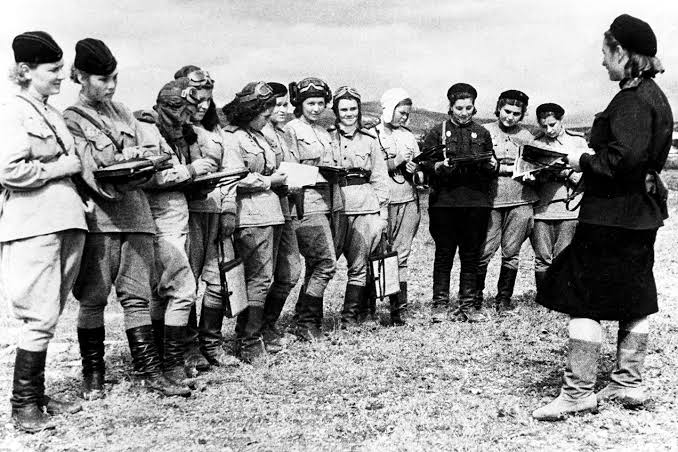
    In the summer of 1942, German soldiers on the Eastern Front began reporting strange sightings: small wooden biplanes that appeared out of the darkness, dropped bombs, and vanished before their anti-aircraft guns could track them. The planes made a soft whooshing sound, like a broom sweeping across a floor, and they seemed to be flown by ghosts. The Germans called them Nachthexen Night Witches.

    But these were not ghosts. They were the women of the 588th Night Bomber Regiment, an all-female unit of the Soviet Air Forces. Over the course of three years, these pilots and navigators would fly more than 24,000 sorties, drop 23,000 tons of bombs, and become one of the most feared—and underestimated—units of World War II.

    A Desperate Gamble: Women Take to the Skies

    In 1941, the German invasion of the Soviet Union, Operation Barbarossa, unleashed a catastrophe. Within months, the Red Army had suffered millions of casualties, and the Luftwaffe controlled the skies. Stalin’s regime, desperate for any advantage, turned to an unlikely resource: its women.

    The Soviet Union was the only major power in WWII to deploy women in active combat roles on a large scale. This wasn’t a progressive experiment—it was a matter of survival. And at the heart of this experiment was Marina Raskova, a celebrated aviator known as the “Soviet Amelia Earhart.” Raskova used her fame to petition Stalin directly, securing permission to form three all-female air regiments. One of them was the 588th Night Bomber Regiment, a unit that would eventually become the 46th Guards Night Bomber Aviation Regiment.

    These were not raw recruits. Most of the women had learned to fly in civilian flying clubs before the war—a passion that had been officially encouraged in the 1930s as part of Soviet aviation culture. They arrived at training with real skill, but they faced an immediate obstacle: the aircraft they were given.

    The Po-2: An Obsolete Wonder

    The Polikarpov Po-2 was a training and crop-dusting biplane designed in the 1920s. It was made of wood and canvas, had an open cockpit, and could barely reach 94 miles per hour. By 1942, it was laughably obsolete. It carried no guns, no armor, and only two bombs at a time—typically 100 kilograms total. To German pilots in their Messerschmitts, it must have seemed like a joke.

    But the Po-2 had hidden advantages. Its slow speed and short takeoff and landing distance made it perfect for low-altitude night raids. It could fly so slowly that German fighters couldn’t engage it—their stall speeds were higher than the Po-2’s cruising speed. Radar had trouble detecting its wooden frame. And its durability was legendary: it could absorb punishment that would down a modern aircraft.

    The women made the most of these quirks. They flew in groups of three: two planes would act as decoys, drawing German searchlights and anti-aircraft fire, while the third would cut its engine and glide silently to drop its bombs. The whooshing sound of the wind over the wings—like a witch’s broom—gave them their name.

    The Price of Silence: Flying in Frozen Darkness

    Life for the Night Witches was brutal. They lived in dugouts near the front lines, often in freezing conditions. They sewed their own flight suits from parachute silk and used makeup and lipstick as small acts of defiance and morale—choices that earned them ridicule from male units who saw them as frivolous.

    The missions themselves were punishing. Because the Po-2 could carry only two bombs, the women had to fly multiple sorties per night—sometimes up to 18 during peak operations. Imagine flying an open-cockpit biplane in the dead of winter, your face numb with cold, navigating by the stars and the dim glow of the horizon, all while German searchlights sweep the sky and anti-aircraft fire crackles around you. One wrong move, one misjudged glide, and you’d be dead. Thirty-two of them were.

    For the German soldiers below, the effect was psychological as much as physical. The constant buzzing of the Po-2s kept them awake and anxious. They couldn’t sleep, they couldn’t relax, and they couldn’t shoot the planes down. German commanders reportedly offered Iron Crosses to anyone who could down a Night Witch—a testament to their desperation. The harassment bombing disrupted supply lines, morale, and rest, and its impact far outweighed the modest tonnage of explosives dropped.

    Proving Themselves: From Ridicule to Respect

    At first, the women faced skepticism from their own side. Some male pilots refused to fly with them. They were issued men’s uniforms, which were ill-fitting and impractical. But the Night Witches didn’t argue—they flew. And they flew well.

    Their combat record spoke for itself. Over the course of the war, they pushed from the Caucasus to Crimea, through Belarus and Poland, and eventually toward Berlin. They earned the respect of their male counterparts and the gratitude of the ground troops they supported. Twenty-three of them were awarded the Hero of the Soviet Union, the country’s highest military honor.

    Yet the war’s end did not bring justice. Many of the women struggled to reintegrate into a society that had no place for female veterans. Some were denied the career opportunities that men enjoyed. Their wartime service was often downplayed or forgotten—until recent decades, when historians and filmmakers began to restore their story.

    The Legacy of the Night Witches

    The Night Witches were more than a propaganda symbol. They were a military reality—a small, determined group of women who used an obsolete aircraft to achieve a disproportionate effect on the enemy’s psyche. Their story challenges the conventional narrative of war, showing that courage and skill can overcome the limits of equipment and prejudice.

    Today, their story serves as a reminder that history is full of overlooked chapters. The women who flew those wooden biplanes into the dark did not just fight a war—they redefined what was possible. And even if their names were buried for decades, the whooshing sound of their wings still echoes in the memory of the men who feared them.

    The Night Witches were a paradox: a unit of women flying obsolete aircraft who became one of the most effective harassment forces of WWII. Their story is not just about bombs and sorties—it’s about resilience, defiance, and the quiet power of those who fight against the odds. As their planes glided silently over German lines, they proved that the most terrifying weapon is often the one you can’t hear coming.

    Summary

    • The 588th Night Bomber Regiment was an all-female Soviet unit that flew over 24,000 sorties in WWII.
    • They flew the Polikarpov Po-2, a 1920s-era wooden biplane that was slow but highly maneuverable.
    • German soldiers called them “Night Witches” due to the whooshing sound of their engines and their radar invisibility.
    • The women used a three-plane decoy tactic: two planes drew fire while the third glided silently to bomb.
    • Despite facing sexism and freezing conditions, 23 members earned the Hero of the Soviet Union award.

    FAQ

    Q: Why were they called Night Witches?nA: German soldiers coined the term Nachthexen because the Po-2’s wooden frame made it nearly invisible to radar, and its engines made a whooshing sound like a broomstick, reminiscent of a witch flying.nnQ: How many women served in the Night Witches?nA: Approximately 400 women served as pilots, navigators, mechanics, and ground crew over the course of the war.nnQ: What kind of aircraft did they fly?nA: They flew the Polikarpov Po-2, a 1920s-era biplane made of wood and canvas. It was slow and unarmed, but highly maneuverable and could fly at very low altitudes.nnQ: How did they manage to bomb with such a small aircraft?nA: They flew in groups of three: two planes acted as decoys, drawing enemy fire, while the third cut its engine and glided silently to drop its bombs. They also flew multiple sorties per night—sometimes up to 18—because the Po-2 could only carry two bombs at a time.nnQ: Were their efforts effective?nA: Yes, both physically and psychologically. They dropped 23,000 tons of bombs, but their constant buzzing disrupted German sleep and morale, and German commanders offered Iron Crosses to anyone who could shoot one down.
  • The Unbreakable Code: How 29 Navajo Men Built a Language of War and Won the Pacific

    The Unbreakable Code: How 29 Navajo Men Built a Language of War and Won the Pacific

    In the spring of 1942, on a windswept parade ground at Camp Pendleton, California, a small group of Navajo men stood at attention. They were not carrying rifles or grenades—they carried something far more powerful: a language that had been banned in American schools, ridiculed by missionaries, and dismissed as primitive. Within months, that language would become the United States’ most closely guarded secret and the key to victory in the Pacific.

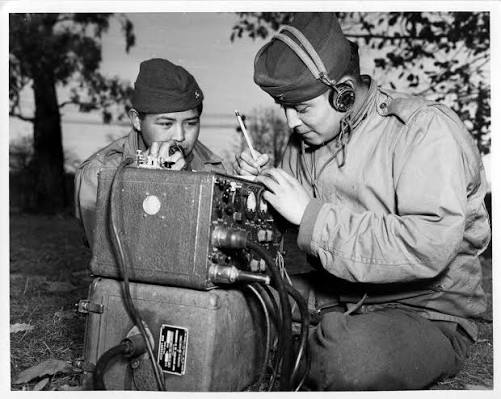
    These were the Original 29—the first Navajo Code Talkers. Their task was to build a code from their native tongue that the Japanese could never break. They succeeded beyond anyone’s imagination. By the end of World War II, more than 400 Navajo men had served as Code Talkers in every major Marine offensive, transmitting thousands of messages with a speed and accuracy that mechanical encryption machines could not match—and the Japanese never cracked it.

    A Language Built for Secrecy

    Navajo—or Diné bizaad—is an Athabaskan language with a grammar so complex, tonal qualities so subtle, and sounds so foreign (glottal stops, gutturals, and sounds that don’t exist in English) that it’s nearly impossible for an adult to learn fluently. At the time, it was unwritten, spoken by fewer than 30,000 people, almost all confined to the Navajo Nation in the American Southwest. To most outsiders, it was an impenetrable mystery. That obscurity made it perfect for a code.

    The idea came from Philip Johnston, a World War I veteran who grew up on the Navajo reservation as the son of a missionary. In early 1942, he walked into a Marine Corps office with a proposal: use Navajo as a secure communication method. The Marines were skeptical, but Johnston gave a demonstration. He set up a test with Navajo speakers, who transmitted a message in Navajo over a field telephone and translated it back in under a minute. The Marines were convinced.

    By May 1942, the first 29 recruits—many of them teenagers fresh from boarding schools where they had been punished for speaking their own language—began training at Camp Pendleton. Their assignment: invent a code from scratch.

    Building the Code: Two Layers of Genius

    The code they created was ingeniously simple and maddeningly complex at the same time. It had two layers. The first was a word-for-word substitution for military terms. A fighter plane became da-he-tih-hi—”hummingbird”—because of its speed and agility. A submarine was besh-lo—”iron fish”—for its metallic hull and silent movement. A grenade became ni-ma-si—”potato”—because it was round and thrown like a potato. These were not arbitrary; they were visual metaphors that any Navajo speaker could instantly grasp.

    The second layer was a letter-substitution system for spelling out words that had no direct equivalent. Each English letter got a Navajo word: A became wol-la-chee (ant), B became shush (bear), C became moasi (cat). To encode a word like “Pacific,” a Code Talker would say “pig, ant, cat, ice, fox, ice, cat”—but in Navajo, and often with multiple choices for each letter to confuse eavesdroppers.

    By the end of the war, the code had grown to about 500 distinct terms. It was not a simple cipher; it was a living language, adapted on the fly as new weapons and tactics emerged. And it was fast. A Code Talker could encode, transmit, and decode a three-line message in about 20 seconds. Mechanical encryption machines took 30 minutes for the same task. In combat, where seconds meant lives, that speed was decisive.

    The Crucible of the Pacific

    The Code Talkers served in all six Marine divisions, from the jungles of Guadalcanal to the coral reefs of Tarawa, from the blood-soaked sands of Peleliu to the volcanic ash of Iwo Jima. At each battle, they proved their worth.

    At Iwo Jima, the fighting was so intense that six Code Talker networks operated continuously. In the first 48 hours, they transmitted over 800 messages—everything from troop movements to artillery coordinates—with zero errors. Major Howard Connor, the signal officer at Iwo Jima, later declared, “Were it not for the Navajos, the Marines would never have taken Iwo Jima.”

    Throughout the war, the Japanese never broke the code. They intercepted the strange, guttural transmissions and tried desperately to decipher them, but the language was too alien, the code too layered, the messages too fast. Some Japanese soldiers even reported hearing “tortured animal sounds” coming from American radios. The code was, and remains, the only military code in modern history that was never cracked.

    The Irony of Service

    The Code Talkers’ story is steeped in irony. Many of these men had been sent to government boarding schools as children, where they were beaten for speaking Navajo. They were told their language was worthless—a relic of a savage past. Yet they used that same language to defeat a formidable enemy and save countless American lives.

    Their service occurred against a backdrop of systemic discrimination. Native Americans served in the U.S. military at a higher per-capita rate than any other ethnic group during WWII, yet they returned home to find their voting rights restricted in several states, their children still forced into English-only schools, and their contributions erased from history.

    The Code Talkers themselves were sworn to secrecy. They could not tell their wives, their children, or their parents what they had done. For decades, the code remained classified. Many carried the burden of that silence—some with pride, others with trauma. One Code Talker, Chester Nez, later recalled that he “felt like a traitor” to his own people for using a language that the U.S. government had tried to kill, even as he fought for that government.

    Decades of Silence, Then Honor

    It took nearly 60 years for the U.S. government to fully recognize the Code Talkers. In 1968, the code was finally declassified. In 1982, President Ronald Reagan declared August 14 as National Navajo Code Talkers Day. But it wasn’t until 2000 that President Bill Clinton signed the Navajo Code Talkers Congressional Gold Medal Act, awarding the Congressional Gold Medal to the Original 29 and silver medals to all other Code Talkers. The following year, the surviving members of the Original 29 received their medals in a ceremony on the Capitol steps.

    By then, many of the heroes were gone. Of the 29 original recruits, only a handful lived to see the recognition. Their story, once hidden, is now taught in schools, memorialized in museums, and celebrated by the Navajo Nation. But the recognition came late—a reflection, many argue, of a nation’s lingering discomfort with acknowledging the contributions of its indigenous peoples.

    The Code That Outlived Its Creators

    Today, the Navajo Code Talkers are remembered as symbols of ingenuity and sacrifice. Their code, once a weapon of war, is now a source of cultural pride. It proved that a language once suppressed could become a nation’s greatest asset. And it stands as a reminder that the people who are often marginalized are also the ones who can save us.

    As the last of the Code Talkers have passed away—including Chester Nez, who died in 2014—their legacy endures. The hummingbirds and iron fish and potato-grenades of their language still echo across the Pacific, a ghostly transmission of courage and cleverness that the enemy never understood and can never forget.

    The Navajo Code Talkers did not just win battles; they rewrote the rules of warfare. In a world of machines and ciphers, they proved that a human language—ancient, unwritten, and nearly extinct—could be the most unbreakable code of all. Their story is not just a chapter of military history; it is a testament to the power of language, the resilience of a people, and the unexpected ways that the oppressed can become heroes. As we remember them, we honor not only their service but also the beautiful, complex language they turned into a weapon of freedom.

    Summary

    • Approximately 400–450 Navajo men served as Code Talkers in the U.S. Marine Corps during WWII, with the first 29 recruits creating the code in 1942.
    • The code had two layers: word-for-word substitutions (e.g., “fighter plane” = “hummingbird”) and a letter-substitution system (A = “ant”).
    • Speed and accuracy were crucial: a Code Talker could transmit a three-line message in 20 seconds vs. 30 minutes for mechanical encryption.
    • The code was never broken by the Japanese, and at Iwo Jima, over 800 messages were sent in 48 hours with zero errors.
    • Recognition came late: declassified in 1968, National Navajo Code Talkers Day in 1982, and Congressional Gold Medals in 2000–2001.

    FAQ

    Q: How many Navajo Code Talkers were there?
    A: Approximately 400–450 Navajo men served as Code Talkers in the U.S. Marine Corps during World War II, starting with the 29 original recruits in 1942.

    Q: Why was the Navajo language chosen for the code?
    A: Navajo was an unwritten, tonal, and extremely complex language spoken by fewer than 30,000 people, almost all within the Navajo Nation. Its obscurity and difficulty made it nearly impossible for the Japanese to understand or decipher.

    Q: How fast could Code Talkers send messages?
    A: A Code Talker could encode, transmit, and decode a three-line message in about 20 seconds, compared to 30 minutes for mechanical encryption machines.

    Q: Was the Navajo code ever broken by the Japanese?
    A: No. The code was never broken by the Japanese during the entire war. It remains the only military code in modern history that was not cracked.

    Q: When were the Code Talkers officially recognized?
    A: The code was declassified in 1968, National Navajo Code Talkers Day was declared in 1982, and the Congressional Gold Medal Act was signed in 2000, with medals awarded in 2001.