Tag: WWI

  • The Harlem Hellfighters: The Most Decorated American Unit of World War I

    The Harlem Hellfighters: The Most Decorated American Unit of World War I

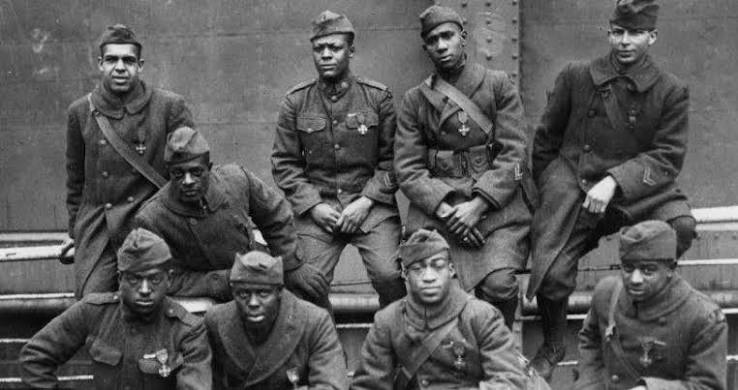
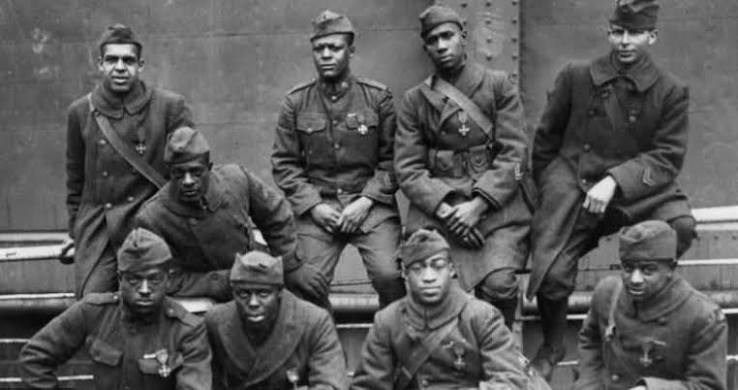
    In the early hours of May 15, 1918, in the Argonne forest of France, two Black American soldiers found themselves surrounded by a German raiding party of nearly twenty men. One of them, Henry Johnson, had run out of ammunition. He used his rifle as a club, then pulled out a bolo knife and attacked. By dawn, the raiders had retreated, leaving Johnson and his partner Needham Roberts wounded but victorious. That night, they became the first Americans of any race to receive France’s highest military honor, the Croix de Guerre with Palm.

    These men were part of the 369th Infantry Regiment, nicknamed the ‘Harlem Hellfighters’ by the Germans they fought against. The unit spent 191 days on the front lines—longer than any other American regiment in World War I—and never lost a foot of ground or a man to capture. Yet when they returned home, they were met not with parades but with the same segregation and violence they had left behind. This is their story, and it’s a story that corrects a common misconception: the Hellfighters were a World War I unit, not a World War II one.

    The Making of the Hellfighters

    When the United States entered World War I in 1917, the military was strictly segregated. African Americans were largely relegated to labor, supply, and stevedore roles, not combat. But the 369th Infantry Regiment—originally the 15th New York National Guard—was different. It was one of the few Black combat regiments, and its soldiers were determined to fight.

    Colonel William Hayward, the regiment’s commanding officer, pushed for his men to see action. But the U.S. Army, reflecting the racism of the era, was reluctant to use Black soldiers in battle. So in 1918, the 369th was ‘loaned’ to the French Army, which was desperate for reinforcements. The French were more egalitarian in their treatment of Black soldiers, and they equipped, fed, and integrated the regiment into their units. The Hellfighters wore French helmets, carried French rifles, and fought under French command.

    The nickname ‘Hellfighters’ reportedly came from the Germans, who called them Höllenkämpfer—hellfighters—for their ferocity. The French had their own name: Hommes de Bronze, or ‘Men of Bronze.’

    191 Days on the Front

    From their deployment in 1918, the 369th spent 191 days on the front lines—more than any other American unit in the war. They fought in some of the bloodiest battles of the final year, including the Second Battle of the Marne and the Meuse-Argonne Offensive, where they played a critical role in halting the German Spring Offensive.

    The toll was staggering. The regiment suffered approximately 1,500 casualties—killed, wounded, or missing—out of a fighting strength of about 3,000 men. That’s a casualty rate of roughly 50%, the highest of any American regiment. Yet they never lost a man to capture, and they never gave up ground they held.

    One of the most famous actions came on May 15, 1918, when Henry Johnson and Needham Roberts were on sentry duty. A German raiding party of at least a dozen men attacked. Both Americans were wounded, and Johnson ran out of ammunition. He clubbed and knifed the attackers, driving them off. The action earned both men the Croix de Guerre with Palm, the highest grade of the award—the first time Americans had received it. Johnson was also posthumously awarded the U.S. Medal of Honor in 2015, more than 95 years after his death.

    The entire regiment received the French Croix de Guerre with Silver Star, and 171 individual members earned the Croix de Guerre. No other American unit in World War I was so decorated.

    The Band That Brought Jazz to Europe

    The Hellfighters weren’t just soldiers—they were cultural ambassadors. The regimental band, led by Lieutenant James Reese Europe, was a sensation in France. Europe, already a famous jazz bandleader in New York, brought his syncopated rhythms to European audiences, performing for troops and civilians alike. The band is widely credited with introducing jazz to France and sparking the Jazz Age in Europe. For many French people, the Hellfighters’ music was their first taste of a uniquely American art form.

    A Bitter Homecoming

    The Hellfighters returned to the United States as heroes—but they were not treated like heroes. The country was still deeply segregated, and the soldiers who had fought for democracy abroad were denied it at home. In the summer of 1919, a wave of racial violence known as the Red Summer swept the nation. Some Hellfighters were attacked for wearing their uniforms, a stark reminder that the fight for equality was far from over.

    The regiment’s legacy is a complex one: they were celebrated in France, decorated by a foreign government, and yet still faced the same systemic racism in America. Their story is a testament to their courage and a reminder of the long struggle for civil rights.

    The Harlem Hellfighters were not just the most decorated American unit of World War I—they were a symbol of what Black soldiers could achieve when given the chance. Their 191 days on the front, their unprecedented decorations, and their cultural impact in France all speak to their extraordinary service. And yet, their homecoming was a bitter reminder of the deep racial divides in America. Their story is one of valor and injustice, of triumph and tragedy. And it’s a story that deserves to be remembered, not for what it wasn’t—a WWII unit—but for what it truly was: a groundbreaking chapter in American military history.

    Summary

    • The Harlem Hellfighters were a World War I unit, not a WWII unit, despite a common misconception.
    • The 369th Infantry Regiment spent 191 days on the front lines, the longest of any American unit in WWI, and suffered a 50% casualty rate.
    • The entire regiment received the French Croix de Guerre, and 171 individuals were also decorated.
    • Henry Johnson and Needham Roberts were the first Americans to receive the Croix de Guerre with Palm.
    • James Reese Europe’s band introduced jazz to France, making the regiment cultural ambassadors as well as soldiers.

    FAQ

    Q: Were the Harlem Hellfighters a WWII unit?
    A: No. The Harlem Hellfighters were a World War I unit, active from 1917 to 1918. They did not serve in World War II.

    Q: Why were they called the Harlem Hellfighters?
    A: The nickname was given by German soldiers, who reportedly called them ‘Höllenkämpfer’ (Hellfighters) due to their ferocity in combat. The French called them ‘Men of Bronze.’

    Q: What was the 369th Infantry Regiment’s combat record?
    A: They spent 191 days on the front lines, longer than any other American unit in WWI. They had about 1,500 casualties (50% of their strength), but never lost a man to capture or gave up ground.

    Q: What decorations did the Hellfighters receive?
    A: The entire regiment received the French Croix de Guerre with Silver Star. 171 individuals received the Croix de Guerre. Henry Johnson and Needham Roberts were the first Americans to receive the Croix de Guerre with Palm. Johnson also received the U.S. Medal of Honor posthumously in 2015.

    Q: How did James Reese Europe contribute to the regiment’s legacy?
    A: James Reese Europe led the regimental band and is credited with introducing jazz to France and Europe, helping spark the Jazz Age.
  • Verdun vs. Somme: Counting the Costs of 1916’s Twin Atrocities

    Verdun vs. Somme: Counting the Costs of 1916’s Twin Atrocities

    The winter of 1916 found the Western Front locked in a stalemate of mud and wire. Two battles, launched within five months of each other, would come to define the brutality of the First World War. At Verdun, the German army sought to bleed France white. On the Somme, the British and French aimed to break the German line. Both failed in their strategic goals, but together they consumed over a million casualties in a single year. Which was more devastating? The answer depends on how you measure devastation—by raw numbers, by daily toll, or by the lasting scar on the nations that fought.

    The Two Battles: A Study in Contrasts

    Verdun and the Somme were not just different battles; they were different kinds of war. Verdun, which raged from February 21 to December 18, 1916, was a compact, grinding siege fought over a 20-kilometer front along the Meuse River. The German chief of staff, Erich von Falkenhayn, planned it as an attritional masterstroke: attack a fortress the French could not abandon, forcing them to pour troops into a meat grinder until their army collapsed. The Somme, from July 1 to November 18, was a broader Allied offensive on a 30-kilometer front, originally conceived as a French-led breakthrough but transformed into a British-led relief effort after Verdun bled the French army dry.

    These differences shaped the experience of the soldiers. At Verdun, the French rotated roughly 70% of their army through the battle, earning it the nickname ‘the mill on the Meuse.’ The entire battle was fought over a few square miles of shell-pocked hills and forts, with the crucial supply road—the Voie Sacrée—kept open by a relentless convoy of trucks. On the Somme, the British launched set-piece attacks after massive preliminary bombardments, and on September 15, they introduced the tank at Flers-Courcelette, a weapon that was too few in number and too unreliable to change the outcome.

    The Arithmetic of Death: Total Casualties

    The most obvious measure of devastation is the raw count of casualties. For Verdun, the widely cited figures are 377,000 French and 337,000 German casualties, totaling about 714,000. Some estimates push the combined toll to a million. For the Somme, the numbers are higher: approximately 420,000 British Empire casualties, 200,000 French, and between 450,000 and 500,000 German, for a total of over 1.1 million. By this metric, the Somme was clearly more devastating in aggregate—roughly 400,000 more casualties than Verdun.

    But raw totals obscure the intensity of suffering. The Somme’s first day alone, July 1, 1916, remains the bloodiest day in British military history: nearly 57,000 British casualties, including about 19,000 dead, most within the first few hours. No single day at Verdun came close to that. Yet Verdun’s 302 days of continuous combat meant that the front was a charnel house for nearly a year, with no respite.

    Daily Toll: The Grinding Horror

    When you divide casualties by days of fighting, a different picture emerges. The Somme lasted 141 days and produced roughly 7,000 to 9,200 casualties per day. Verdun, over 302 days, produced roughly 2,300 to 3,300 per day. The Somme’s daily toll was nearly three times higher. This was due to the density of artillery and the nature of the offensive: on the Somme, the Allies launched repeated infantry assaults against prepared German positions, while at Verdun, the fighting was more evenly matched, with both sides launching counterattacks and defending in a relatively confined space.

    The Somme was also more costly for the British Empire because of the ‘Pals Battalions’—volunteer units recruited from the same towns and factories. On the first day, entire communities lost their young men in a single morning. The psychological shock in Britain was incalculable, and it reverberated through the rest of the war.

    Territorial Change: The Futility of It All

    Both battles ended with front lines that were almost identical to where they started. At Verdun, the Germans initially captured the key forts of Douaumont and Vaux, but the French counter-offensive in October and December 1916 recaptured most of the lost ground. By the end, the front had returned to roughly its original position. The only permanent change was the complete destruction of the landscape—villages were erased, forests reduced to splinters, and the earth itself was churned into a lunar landscape.

    The Somme saw a slightly larger territorial change: the Allies advanced about 7 miles (11 kilometers) at the deepest point, capturing villages like Thiepval and Flers. But this advance fell far short of the planned breakthrough. In terms of strategic value, both battles were equally futile. The German army was severely strained by both, but it did not collapse. The French army was shaken at Verdun but held. The British army gained experience but at a terrible price.

    The Human Cost: Deaths and Lasting Scars

    The number of deaths—killed or missing—is another critical measure. At Verdun, the combined deaths were roughly 300,000: 163,000 French and 143,000 German. At the Somme, deaths were between 300,000 and 350,000 combined. The difference is not as stark as total casualties, partly because the Somme’s wounded-to-killed ratio was higher, due to the nature of the artillery bombardments and infantry tactics.

    But the devastation goes beyond numbers. Verdun became a symbol of French endurance, embodied in General Philippe Pétain’s order ‘Ils ne passeront pas’—’They shall not pass.’ The battle left a permanent scar on the French psyche, a collective memory of sacrifice that would influence French strategy and politics for decades. The Somme, particularly for Britain and the Commonwealth, became a synonym for the horror of trench warfare and the perceived incompetence of commanders like Douglas Haig. The memory of the Somme shaped British attitudes toward war and remembrance, and its cemeteries and memorials—like the Thiepval Memorial to the Missing—are among the most visited sites on the Western Front.

    Conclusion: Which Was More Devastating?

    The answer is not simple. If devastation is measured by total casualties, the Somme was worse, with over a million men killed, wounded, or missing. If measured by daily intensity, the Somme again takes the lead, with nearly 8,000 casualties per day. But if measured by duration and the psychological toll on a single nation, Verdun’s 302 days of relentless attrition on the French army may be more devastating. The Somme was a broader catastrophe, affecting the British, French, and German armies. Verdun was a focused horror that nearly broke the French will to fight. In the end, both battles were part of the same tragedy: the Western Front’s descent into industrialized slaughter, where the only goal was to kill more of the enemy than he could kill of you. Neither battle achieved its strategic objective, and both left a generation in ruins. The true measure of devastation lies not in the numbers, but in the fact that the war continued for two more years after these battles, and the dead were replaced by fresh conscripts who would face the same futility.

    Verdun and the Somme were twin pillars of the 1916 bloodbath, each devastating in its own way. The Somme’s higher casualty figures and daily toll make it numerically worse, but Verdun’s year-long grind and its near-fatal impact on the French army make it a unique symbol of national sacrifice. Neither battle changed the course of the war; they only deepened the tragedy. As we remember the dead, the question of which was more devastating becomes less important than the shared lesson: the human cost of war is always too high, and the promises of decisive victories are too often lies.

    Summary

    • The Battle of the Somme produced more total casualties (over 1.1 million) compared to Verdun (about 714,000).
    • The Somme had a much higher daily casualty rate, around 7,000–9,200 per day versus Verdun’s 2,300–3,300.
    • Both battles ended with minimal territorial changes, but the Somme saw a deeper Allied advance of about 7 miles.
    • Verdun was the longest battle of World War I, lasting 302 days, and nearly broke the French army.
    • The Somme’s first day was the bloodiest in British military history, with 57,000 casualties, including 19,000 dead.

    FAQ

    Q: Which battle had higher total casualties?
    A: The Battle of the Somme, with over 1.1 million casualties, compared to Verdun’s approximately 714,000.

    Q: Why was Verdun so important to France?
    A: Verdun was a symbol of French national pride and a fortress city. The German plan was to force France to defend it at all costs, bleeding their army dry, which is why it became a symbol of French endurance.

    Q: What was the strategic goal of the Somme?
    A: The Somme was a joint Allied offensive to relieve pressure on Verdun and achieve a breakthrough against German lines. It was originally planned as a French-led attack but became primarily a British operation after Verdun diverted French troops.

    Q: How did the daily casualty rates compare?
    A: The Somme averaged about 7,000–9,200 casualties per day, while Verdun averaged about 2,300–3,300. The Somme was more intense on a daily basis.

    Q: Did either battle achieve its objectives?
    A: No. Verdun’s German offensive failed to capture the city and the front returned to its start. The Somme’s Allies advanced just 7 miles, far short of a breakthrough, and the German lines held.

  • Tanks vs Gas: Which Weapon Terrified WWI Soldiers More?

    Tanks vs Gas: Which Weapon Terrified WWI Soldiers More?

    At 6:30 AM on April 22, 1915, near Ypres, a strange yellow-green cloud drifted toward French colonial troops. Within minutes, soldiers were choking, clawing at their throats, and fleeing in panic. It was the first large-scale gas attack in history. Eighteen months later, on September 15, 1916, at the Somme, another new horror emerged: a 28-ton steel box clanking across no man’s land, spitting fire. Both weapons were born of the same desperation to break the trench stalemate, but they terrified soldiers in profoundly different ways. Which was more terrifying? The answer depends on whether you’re talking about the fear of a sudden, agonizing death or the dread of a slow, lingering one.

    The Tactical Problem That Spawned Both Weapons

    By 1915, the Western Front had become a killing field of static horror. Barbed wire, machine guns, and rapid-fire artillery made any frontal assault a suicide mission. The generals needed a way to break the deadlock—something that could cross the wire, crush the trenches, or simply erase the enemy. The tank and the gas cloud were two very different answers to the same question.

    The Tank: A Moving Fortress That Often Broke Down

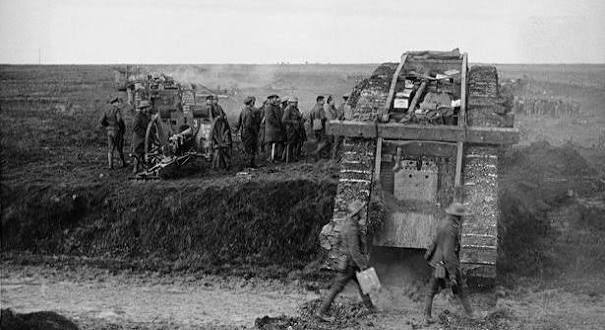
    The British Mark I tank debuted at the Battle of the Somme on September 15, 1916. Of the 49 available, only 32 even reached the start line. Many broke down or ditched in the mud. The specifications were impressive on paper: 28 tons, a top speed of 3.7 mph, a crew of eight, and armor up to 12mm—enough to stop bullets, but not artillery. It was armed with two 6-pounder guns (in the ‘male’ version) or machine guns (in the ‘female’ version).

    But the tank’s real power was psychological. German troops, who had never seen such a machine, often fled at the sight of it. They called it a ‘devil’ or a ‘monster’. For Allied infantry, the sight of a tank was a burst of hope—’our tanks are coming’ became a rallying cry. Yet for the crew inside, the tank was a death trap. Poor ventilation meant heat, fumes, and carbon monoxide poisoning. The noise was deafening, and the fear of burning alive was constant.

    Despite its fearsome appearance, the tank killed relatively few soldiers directly. Its main value was breaking barbed wire, crossing trenches, suppressing machine-gun nests, and demoralizing the enemy. At Cambrai in November 1917, 476 tanks broke through the Hindenburg Line on day one, but the exploitation failed. By the end of the war, Britain had produced about 2,600 tanks, France about 3,900 (including the revolutionary Renault FT with a rotating turret), and Germany only about 20.

    Gas: The Invisible Killer That Could Strike Anytime

    Gas was different. It was invisible, silent, and could strike at any moment—even while soldiers slept. The first large-scale attack at Ypres on April 22, 1915, used chlorine gas released from 5,700 cylinders. The result: about 1,200 killed and 3,000 wounded, but the terror was far greater. French colonial troops broke in panic, creating a gap in the line.

    Gas came in several forms. Chlorine caused choking, coughing, vomiting, and a greenish froth at the mouth. Phosgene, introduced later, was more deadly—it caused delayed pulmonary edema, and it was responsible for about 85% of gas deaths. Mustard gas, first used by Germany in July 1917, was the most terrifying of all. It caused massive blisters, temporary blindness, and agonizing pain. It also contaminated the ground for weeks, forcing troops to wear heavy protective gear that slowed them down and exhausted them.

    Gas was more a disabler than a killer. Total gas casualties across all sides are estimated at 1.2 to 1.3 million, with about 90,000 to 100,000 deaths—only about 2-3% of total war deaths. But gas caused roughly 1 in 4 of all US casualties, and many survivors suffered chronic lung or eye damage for the rest of their lives.

    The Terror of the Invisible vs. The Terror of the Inevitable

    Soldiers feared gas because it was unpredictable and could strike without warning. You couldn’t see it coming, and the countermeasures—gas masks—were uncomfortable and often ineffective. A gas mask could save you from chlorine or phosgene, but mustard gas was designed to defeat masks by attacking the skin. The fear of gas was a constant, low-grade dread that wore on men’s nerves.

    Tanks, on the other hand, were terrifying because they were visible, loud, and seemingly unstoppable. To face a tank was to face a mobile fortress that could crush you under its tracks or cut you down with machine-gun fire. But tanks were also unreliable and vulnerable to artillery. A well-placed shell could turn one into a burning coffin. The terror of a tank was immediate and visceral, but it was also brief—you either survived the encounter or you didn’t.

    Which Was More Terrifying?

    Both weapons were terrifying in their own ways, but for different reasons. Gas was a slow, lingering terror that could strike at any time, even in the safety of a dugout. It was a weapon that disabled more than it killed, leaving survivors with permanent scars. Tanks were a sudden, explosive terror that announced themselves with a roar and a cloud of smoke. They were deadly to face, but they were also a source of hope for the troops who had them on their side.

    In the end, artillery remained the true ‘king of battle,’ causing 60-70% of all casualties. But among the new weapons of WWI, gas and tanks each carved out a unique niche of fear. Gas was the invisible enemy that made soldiers dread the air they breathed. Tanks were the mechanical monsters that made them dread the ground they stood on. Both were horrifying, and both changed the face of warfare forever.

    The question of which weapon was more terrifying may never have a single answer. It depends on whether you fear the unknown or the inevitable. Gas was a weapon of psychological attrition, wearing down soldiers with the constant threat of a silent, painful death. Tanks were a weapon of shock and awe, crushing the enemy with raw mechanical power. Both were born of the same desperation, and both left an indelible mark on the soldiers who faced them. In the end, the true horror of WWI was not any single weapon, but the brutal reality that mankind had found new and inventive ways to kill each other on an industrial scale.

    Summary

    • Gas caused an estimated 1.2-1.3 million casualties, with about 90,000-100,000 deaths; it was more a disabler than a killer.
    • Tanks killed relatively few soldiers directly but were a major psychological weapon, causing German troops to flee at the sight of them.
    • Gas was invisible, silent, and could strike anytime, creating constant dread; mustard gas could defeat gas masks by attacking the skin.
    • Tanks were loud, visible, and terrifying to face, but also unreliable and vulnerable to artillery; they inspired hope in Allied troops.
    • Artillery remained the biggest killer, causing 60-70% of casualties, but both tanks and gas added new dimensions of terror to the battlefield.

    FAQ

    Q: How many tanks were used in WWI?
    A: Britain produced about 2,600 tanks, France about 3,900, and Germany only about 20. The first use was at the Somme in 1916, with only 32 of 49 tanks reaching the start line.

    Q: Why was mustard gas so terrifying?
    A: Mustard gas caused severe blisters, temporary blindness, and agonizing pain. It also contaminated the ground for weeks, forcing troops to wear heavy protective gear, and it could penetrate gas masks by attacking the skin.

    Q: Did gas kill more soldiers than tanks?
    A: Yes, gas caused an estimated 90,000-100,000 deaths, while tanks killed relatively few directly. However, both were secondary to artillery, which caused 60-70% of all casualties.

    Q: How did soldiers protect themselves from gas?
    A: Gas masks, such as the box respirators introduced in 1916, were effective against chlorine and phosgene, but mustard gas could defeat them by causing skin burns.

    Q: What was the main tactical role of tanks?
    A: Tanks were used primarily to break barbed wire, cross trenches, suppress machine-gun nests, and demoralize enemy infantry. Their psychological impact was often greater than their physical destruction.

  • The Fragile Experiment: Liberal Democracy and Capitalism in the Wake of World War I

    The Fragile Experiment: Liberal Democracy and Capitalism in the Wake of World War I

    In the winter of 1918, as the guns fell silent across Europe, a fragile hope took root. The world had just witnessed industrial capitalism’s darkest potential—ten million soldiers and seven million civilians dead, entire economies mobilized for slaughter. Yet from the rubble, a new order was supposed to emerge: liberal democracy, with its parliaments and universal suffrage, and capitalism, with its promise of mass prosperity. For a brief, dazzling moment in the 1920s, that promise seemed real. Then, in a cascade of bank failures and street violence, it collapsed.

    The Weight of the War

    The war had not just killed millions; it had bankrupted the nations that fought it. Britain’s national debt grew tenfold during the conflict; France’s quadrupled. European industrial production fell by roughly 40%. The pre-war faith in progress—the idea that liberal democracy and capitalism were the inevitable destiny of civilized nations—lay buried with the dead.

    The Russian Revolution of 1917 had already offered a stark alternative. The Bolsheviks had seized power, abolished private property, and proclaimed a new socialist state. For many workers and intellectuals across Europe, this was not a distant curiosity but a living proof that capitalism was not eternal. The Comintern, founded in 1919, actively worked to spread revolution westward.

    In Versailles, the victorious powers tried to rebuild the world order. The treaty imposed 132 billion gold marks in reparations on Germany, redrew borders, and created the League of Nations—the first real attempt at global liberal governance. But the United States, the very power that could have anchored it, refused to join. The League was crippled from its first session in 1920.

    The Roaring Twenties: A Temporary Respite

    And yet, against all odds, the 1920s brought a burst of prosperity. The Dawes Plan of 1924 pumped American loans into Germany, stabilizing its currency and restarting its factories. In the United States, GDP grew by about 40% between 1922 and 1929. Automobiles rolled off assembly lines, radios crackled in living rooms, and cinema became mass entertainment. This was capitalism’s triumph—or so it seemed.

    The Weimar Republic, Germany’s first democracy, embodied the experiment. It had universal suffrage, proportional representation, and strong civil liberties. Women voted for the first time in Germany in 1919, as they did in Britain (partially), the United States, and elsewhere. Democracy was expanding, not contracting.

    But the Weimar Republic was born under a curse. The “stab-in-the-back” myth—the lie that democratic politicians had betrayed the army—poisoned its legitimacy from the start. Violence was constant: Spartacist communists rose in 1919, right-wing nationalists attempted the Kapp Putsch in 1920, and Hitler’s Beer Hall Putsch followed in 1923. The republic survived each assault, but the wounds never healed.

    The Crash and the Cascade

    Then came October 1929. The Wall Street Crash turned a boom into a bust with shocking speed. By 1932, U.S. industrial output had fallen by 47%; unemployment hit 25%. The crisis jumped the Atlantic. In 1931, Austria’s largest bank, Credit-Anstalt, collapsed, and the contagion spread across Europe.

    Democracies fell like dominoes. Between 1929 and 1933, Spain, Portugal, Poland, Yugoslavia, Hungary, and the Baltic states all slid into authoritarianism. Italy had already been fascist since 1922, when Mussolini marched on Rome. In January 1933, Hitler was appointed Chancellor of Germany. By the end of that year, liberal democracy had been extinguished across most of the European continent.

    Why did the system fail so completely? The structural weaknesses were plain. Proportional representation in Germany and Italy produced fractured parliaments and unstable coalitions—the Weimar Republic had over twenty cabinets in fourteen years. Democratic culture was shallow; many states had only adopted democracy after the war and had no tradition of peaceful power transfer. And the old elites—landowners, generals, industrialists—never accepted the republics, actively working to undermine them.

    The economic collapse was the final blow. Keynes had warned in 1919 that the Versailles reparations would destroy capitalism and democracy in Europe. He was right, but not even he foresaw how quickly the crash would unleash the demons of fascism.

    The Intellectual Reckoning

    This was not just a political failure but an intellectual one. The war had already shattered the liberal belief in inevitable progress. Now the Depression seemed to prove that capitalism was inherently crisis-prone. Marxists, from Lenin to ordinary workers, argued that this was the final crisis of the system. Fascists offered a “third way”—corporatism, national unity, and a rejection of both liberal democracy and communist internationalism. In the chaos, that brutal simplicity won.

    The interwar experiment taught a harsh lesson: liberal democracy and capitalism are not self-sustaining. They require institutions, trust, and economic stability. When those fail, the alternatives—communism and fascism—stand ready to fill the void.

    The liberal democratic order that emerged from World War I was not doomed from the start, but it was fragile. It survived the 1920s only to be crushed by the Depression. The lesson of those years is not that capitalism inevitably leads to fascism, but that democracy cannot survive when its economic foundations collapse and its citizens lose faith in its institutions. The story of the interwar years is a warning: the path from prosperity to tyranny can be terrifyingly short.

    Summary

    • WWI killed roughly 17 million people and left European economies in ruins, shattering pre-war faith in liberal progress.
    • The Russian Revolution (1917) and the Treaty of Versailles (1919) created new political realities: a socialist alternative and a fragile League of Nations without U.S. participation.
    • The 1920s saw a temporary recovery fueled by American loans, but the Weimar Republic and other new democracies were weak, facing violence from both left and right.
    • The Great Depression after 1929 triggered banking collapses and mass unemployment, leading to democratic breakdowns across Europe and the rise of fascism.
    • The interwar collapse showed that liberal democracy and capitalism need strong institutions and economic stability to survive.

    FAQ

    Q: What was the League of Nations and why did it fail?
    A: The League of Nations was the first international organization aimed at maintaining peace, founded in 1920. It failed partly because the U.S. never joined, and later because it lacked enforcement power against aggressive nations like Germany, Italy, and Japan.

    Q: How did the Treaty of Versailles contribute to the crisis of democracy?
    A: The treaty imposed harsh reparations (132 billion gold marks) and humiliation on Germany, fueling the “stab-in-the-back” myth and economic instability. This weakened the Weimar Republic’s legitimacy and helped the rise of Hitler.

    Q: What were the main weaknesses of interwar democracies like the Weimar Republic?
    A: They faced proportional representation leading to fragmented parliaments, weak democratic traditions, hostility from old elites, and constant political violence from communists and fascists.

    Q: How did the Great Depression affect political systems in Europe?
    A: The Depression caused bank collapses, industrial decline, and mass unemployment, which led voters to turn to radical parties. Between 1929 and 1933, most interwar democracies fell to authoritarian regimes.

    Q: What was the “stab-in-the-back” myth?
    A: It was a false belief in Germany that democratic politicians had betrayed the army by signing the armistice. This myth delegitimized the Weimar Republic from its birth and was used by right-wing forces to attack democracy.

  • How the Trenches Forged Modern Medicine: The Medical Transformation of WWI

    How the Trenches Forged Modern Medicine: The Medical Transformation of WWI

    On July 1, 1916, the first day of the Battle of the Somme, British forces suffered over 57,000 casualties—the bloodiest day in British military history. The wounded came in waves, often with limbs torn by shrapnel, faces shattered by machine-gun fire, and bodies contaminated by the filth of the trenches. The existing medical system, designed for an earlier era of warfare, was overwhelmed within hours.

    Yet out of this catastrophe emerged a new kind of medicine. The war forced innovation at a pace peacetime would never have allowed. From the formalization of triage to the birth of plastic surgery, the lessons learned on the Western Front and beyond reshaped how we treat trauma, infection, and psychological injury—and their impact is still felt in every emergency room today.

    The Surgeon Closes In: Mobile Units

    Surgeons realized that time was the enemy. The French developed the autochir, a mobile surgical hospital that could be moved close to the front lines. The British and Americans followed with casualty clearing stations, which brought surgical teams within a few miles of the trenches. This reduced the time between injury and surgery from days to hours, dramatically improving survival rates for abdominal and chest wounds that had previously been almost always fatal.

    Wound Care: The Debridement Revolution

    The war taught surgeons that antiseptics alone were not enough. The standard practice became debridement—surgically cutting away all dead and contaminated tissue—followed by delayed primary closure. Wounds were left open to drain for several days before being closed. This approach, though painful and labor-intensive, reduced the incidence of gas gangrene and sepsis. It remains a fundamental principle in trauma surgery today.

    Blood Transfusion: From Risk to Routine

    Before WWI, blood transfusions were rare and often fatal due to incompatible blood types. The earlier work of Karl Landsteiner on blood typing, combined with the discovery of sodium citrate as an anticoagulant, made safe indirect transfusions possible. By 1917, the British Expeditionary Force had mobile blood transfusion teams. This innovation meant that soldiers who would have bled to death could be resuscitated and taken to surgery. The principles of blood banking and transfusion established during the war became standard in civilian medicine.

    Faces Rebuilt: The Birth of Plastic Surgery

    Trench warfare produced a devastating new type of injury: facial mutilation. Shrapnel and machine-gun fire tore away jaws, noses, and cheeks. These soldiers survived but faced lives of isolation and horror. New Zealand-born surgeon Harold Gillies established a dedicated hospital at Sidcup, England, where he performed over 11,000 operations. He developed techniques for rebuilding faces using skin grafts and bone transplants, many of which are still in use today. Gillies is considered the father of plastic surgery.

    X-Rays at the Front: Marie Curie’s Petites Curies

    Marie Curie, already famous for her work on radioactivity, recognized that X-rays could help surgeons locate bullets and shrapnel before operating. She developed mobile X-ray units, nicknamed “petites Curies,” which were driven to field hospitals. These units allowed surgeons to operate with precision, removing foreign objects with less tissue damage. Curie herself trained radiologists and drove ambulances to the front, bringing cutting-edge technology to the battlefield.

    The Recognition of Shell Shock

    The term “shell shock” entered medical vocabulary during WWI, describing the psychological collapse of soldiers under prolonged artillery bombardment. Initially, many commanders and doctors dismissed it as cowardice or malingering, fearing that evacuation would encourage others to fake symptoms. But the sheer number of cases—men who trembled uncontrollably, were paralyzed without physical cause, or lost their speech—forced the medical establishment to acknowledge combat-related psychological injury. Early psychiatric treatment programs were flawed, often using electric shock or hypnosis, but they laid the groundwork for modern combat psychiatry.

    Nurses: The Backbone of Care

    Over 20,000 British nurses served overseas, and their role expanded dramatically. Beyond basic care, they administered anesthesia, dressed wounds, and assisted in surgery. The war accelerated the professionalization of nursing, leading to formal training and credentials. Nurses like Edith Cavell, who helped soldiers escape occupied Belgium, became symbols of sacrifice and skill. The war demonstrated that nursing was not just compassion but a highly skilled profession essential to medical care.

    Fighting Disease: Vaccination and Sanitation

    Disease had killed more soldiers than bullets in previous wars. During WWI, mass vaccination campaigns against typhoid and tetanus were implemented. The U.S. Army’s typhoid vaccination program reduced typhoid deaths from 5,000 during the Spanish-American War to fewer than 100 in WWI. Lice control, sanitation measures, and mobile laboratories also helped prevent trench fever and other diseases. These public health measures were as important as surgery in keeping soldiers alive.

    The Great War was a crucible that forged modern medicine. The innovations—triage, debridement, blood transfusion, plastic surgery, mobile X-rays, psychiatric care, professional nursing, and mass vaccination—were born of necessity and refined under fire. They transformed military medicine and, in the decades after the war, seeped into civilian practice, saving millions of lives. The next time you see an emergency room triage team, a trauma surgeon cleaning a wound, or a face transplant, you are seeing the legacy of those who fought and healed in the trenches.

    Summary

    • WWI’s casualty scale forced a dramatic overhaul of military medicine, reducing mortality among the wounded from ~14% (Civil War) to under 8%.
    • Triage was formalized to prioritize surgical resources for the most savable patients.
    • Mobile surgical units and casualty clearing stations shortened the time from injury to surgery, saving lives.
    • Debridement and delayed primary closure became standard wound care, reducing infections.
    • Blood typing and anticoagulant-citrate made safe transfusions possible, leading to mobile transfusion teams.
    • Plastic surgery emerged to rebuild shattered faces, with Harold Gillies pioneering techniques used today.
    • Marie Curie’s mobile X-ray units brought radiology to the front, aiding surgical precision.
    • “Shell shock” forced recognition of psychological trauma, laying groundwork for combat psychiatry.
    • Nursing became professionalized, with women taking on advanced roles.
    • Mass vaccination against typhoid and tetanus dramatically reduced disease deaths.

    FAQ

    Q: What is triage and how did it start?
    A: Triage is the sorting of patients by severity of injury to prioritize treatment. In WWI, French and British armies formalized it, categorizing the wounded as immediate, delayed, expectant, or walking. It became standard in emergency medicine.

    Q: How did blood transfusion become safe during WWI?
    A: Earlier work on blood typing by Karl Landsteiner, combined with sodium citrate as an anticoagulant, allowed blood to be stored and transfused safely. By 1917, mobile transfusion teams deployed near the front.

    Q: What was the role of Marie Curie in WWI?
    A: Marie Curie developed mobile X-ray units, called “petites Curies,” that brought radiology to field hospitals. She also trained radiologists and personally drove ambulances to the front, helping locate bullets and shrapnel in wounded soldiers.

    Q: How did WWI change plastic surgery?
    A: Facial injuries from trench warfare led to pioneering reconstructive surgery. Harold Gillies established a dedicated hospital at Sidcup, performing over 11,000 operations and developing techniques still used in plastic surgery today.

    Q: What was “shell shock” and how was it treated?
    A: Shell shock was a term for psychological trauma caused by the horrors of trench warfare. Initially dismissed as cowardice, the huge number of cases forced recognition of combat-related PTSD. Early treatments were flawed but led to modern psychiatric care for veterans.

  • The Harlem Hellfighters: The Untold Story of America’s Most Decorated WWI Regiment

    The Harlem Hellfighters: The Untold Story of America’s Most Decorated WWI Regiment

    In the early hours of May 15, 1918, a 26-year-old railway porter from Albany, New York, found himself alone in a French forest, facing a German raiding party of nearly two dozen men. His rifle jammed after the first shot. His comrade lay wounded beside him. So Henry Johnson did what seemed impossible: he fought with a bolo knife and his bare fists, killing at least four Germans and driving off the rest—all while suffering 21 wounds. The French would call him ‘the bravest man in the world.’ The Germans gave his entire regiment a nickname: the Hellfighters.

    This was the 369th Infantry Regiment, a unit of Black American soldiers from Harlem who spent 191 days in continuous front-line combat—longer than any other American regiment in World War I. They never lost a foot of ground to the enemy. They never had a soldier captured. Yet when they returned home, they were met not with gratitude, but with the same racism they had fought to defeat overseas.

    Their story is one of extraordinary bravery, institutional prejudice, and a cultural legacy that reached far beyond the battlefield. It’s the story of men who had to fight two wars: one against the Germans, and one against the color line in their own army.

    The Making of a Regiment

    The 369th Infantry Regiment began as the 15th New York National Guard Regiment, formed in 1916. Over 90% of its soldiers were Black Americans, many drawn from the vibrant community of Harlem. But the officer corps was initially all-white—a source of deep controversy. Colonel William Hayward, a white lawyer and politician, commanded the regiment. While Hayward was a staunch advocate for his men, the racial dynamics of the era meant that Black soldiers were rarely trusted to lead.

    The regiment was federalized in 1917 and sent to Camp Wadsworth in South Carolina for training. There, they encountered intense racial hostility from local whites and from the Army itself. Instead of preparing for combat, they were often assigned menial labor. The War Department, already nervous after the 1917 Houston Riot involving Black soldiers, was reluctant to deploy Black combat units. The prevailing belief among many white officers was that Black men lacked the courage or intelligence for war.

    From Laborers to Front-Line Fighters

    When the 369th finally arrived in France in late 1917, they were initially relegated to stevedore and dockworker duties. The men had volunteered to fight, not to unload ships. Frustration grew.

    General John J. Pershing, commander of the American Expeditionary Forces, refused to ‘lend’ Black troops to the French for combat. He feared it would create expectations of equality. But the French were desperate for manpower, and under political pressure, Pershing relented—with a caveat. The French were told to treat the Black soldiers as equals, which they did. This created a striking contrast: Black soldiers experienced more respect and less racism from the French than from their own army.

    Attached to the French 161st Division, the 369th finally got their chance to fight. They would go on to participate in the Champagne-Marne Defensive, the Aisne-Marne Offensive, the Meuse-Argonne Offensive, and the Second Battle of the Marne. For 191 days, they held the line—longer than any other American regiment. Of the roughly 3,000 men in the regiment, about 1,500 were killed or wounded. Yet not a single soldier was captured, and no ground was lost while they held the line.

    The Battle of Henry Johnson

    The action that made Johnson a legend occurred on the night of May 14–15, 1918. Johnson and Pvt. Needham Roberts were on sentry duty when a German raiding party of about 20 men attacked. Roberts was hit and fell. Johnson’s rifle jammed after the first shot. With no working firearm, he used his bolo knife and fists, killing at least four Germans, wounding others, and driving the raiders off. He suffered 21 wounds but survived. The French awarded both men the Croix de Guerre, and Johnson earned the nickname ‘Black Death.’

    Johnson became a national hero in the U.S. and France. But his story took a bitter turn. After the war, he returned to a segregated America, struggled with disabilities from his wounds, and died in 1929 at age 32, largely forgotten. It took decades of advocacy to correct the record. In 2015, President Barack Obama posthumously awarded Johnson the Medal of Honor. In 2021, the entire regiment received the Congressional Gold Medal.

    Jazz and the Cultural Bridge

    One of the most unexpected legacies of the 369th was musical. Lt. James Reese Europe, a famed jazz bandleader, led the regimental band. They became a sensation in France, performing for French and Allied troops and civilians. They are credited with introducing jazz and ragtime to European audiences, influencing French culture for decades. Europe’s band also boosted morale and served as a cultural bridge between Black Americans and the French.

    The Hellfighters’ music was a reminder that their contribution wasn’t just military—it was cultural. They didn’t just fight for democracy; they brought a new art form to the world.

    The Homecoming That Wasn’t

    On February 17, 1919, the 369th marched up Fifth Avenue in New York City in a triumphant homecoming parade—the first African-American unit to be honored with such a parade. But the celebration was short-lived. Black veterans returned to a segregated, racist America. The ‘Red Summer’ of 1919 saw race riots and lynchings, including attacks on Black veterans in uniform. The Hellfighters had proven their courage on the battlefield, but they couldn’t escape the color line at home.

    Their story was largely erased from mainstream history for decades. But in recent years, the Hellfighters have received the recognition they always deserved, through books, documentaries, and the posthumous honors for Henry Johnson and the regiment.

    The Harlem Hellfighters were not just soldiers; they were pioneers who challenged the racist assumptions of their era with every act of bravery. Their 191 days in the trenches, their refusal to yield, and their cultural contributions in France stand as a powerful rebuke to the prejudice they faced. Their delayed honors—the Medal of Honor, the Congressional Gold Medal—are not just corrections of history; they are an acknowledgment that heroism knows no color. The Hellfighters’ legacy is a reminder that true courage is not measured by the color of one’s skin, but by the strength of one’s resolve.

    Summary

    • The 369th Infantry Regiment, known as the Harlem Hellfighters, was the first African-American regiment to see combat in WWI.
    • They spent 191 days in continuous front-line combat, longer than any other American regiment, and never lost ground or had a soldier captured.
    • Sgt. Henry Johnson’s heroic stand against a German raiding party earned him the Medal of Honor posthumously in 2015.
    • The regiment was attached to the French Army because the American military refused to use Black combat units, and they experienced less racism from the French.
    • Lt. James Reese Europe’s band introduced jazz to France, leaving a lasting cultural impact.

    FAQ

    Q: Why were they called the Harlem Hellfighters?
    A: German soldiers reportedly called them ‘Höllenkämpfer’ (Hellfighters) because of their ferocity in combat and refusal to surrender or retreat. The name was later popularized by the American press.

    Q: How many soldiers were in the regiment, and what were their casualties?
    A: The regiment had about 3,000 men. Roughly 1,500 were killed or wounded in combat.

    Q: Did the regiment receive any awards?
    A: Yes. The regiment was awarded the French Croix de Guerre with silver star as a unit, and 171 individual members received the Croix de Guerre or Légion d’Honneur. In 2021, the regiment collectively received the Congressional Gold Medal.

    Q: Why were they attached to the French Army?
    A: The American Expeditionary Forces, under General John J. Pershing, refused to use Black combat units. However, due to political and logistical pressure, and because the French needed manpower, they were attached to the French 161st Division.

    Q: What was the significance of the jazz band?
    A: Lt. James Reese Europe’s band introduced jazz and ragtime to European audiences, influencing French culture and music for decades. It also boosted morale and served as a cultural bridge.

  • The Machine Gun: How a Single Invention Redefined Warfare

    The Machine Gun: How a Single Invention Redefined Warfare

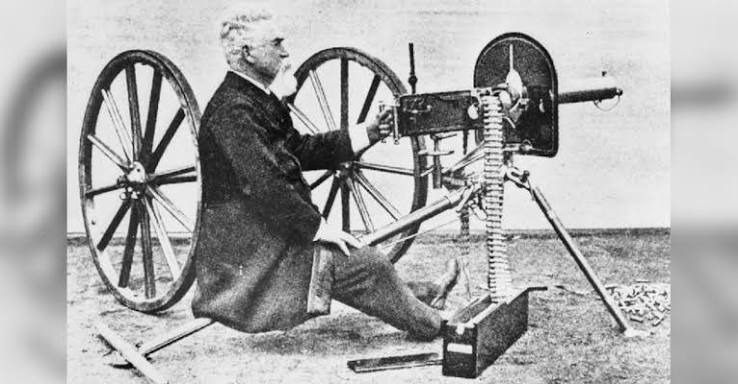
    In 1884, Hiram Maxim patented a weapon that could fire 500 rounds per minute—a rate equivalent to the firepower of dozens of riflemen. Within three decades, it would mow down massed infantry charges, entrench armies in mud, and kill more soldiers than any other weapon of its era. The machine gun didn’t just change battlefields; it upended centuries of military doctrine and reshaped the very nature of conflict.

    This article traces the machine gun’s journey from a mechanical curiosity to the centerpiece of modern warfare. We’ll explore its technical evolution, its brutal debut in colonial wars, its role in the stalemate of World War I, and how it continues to influence tactics today.

    The Pre-Machine Gun Battlefield: A World of Volleys and Charges

    Before the machine gun, infantry tactics revolved around massed volley fire. Muskets and rifles had effective ranges of 100–300 meters, and a trained soldier could fire 2–4 rounds per minute with a muzzle-loader, or 10–15 with a bolt-action repeater. Battles were often decided by disciplined volleys, cavalry charges, and bayonet assaults. Artillery provided indirect fire, but it was slow to adjust and vulnerable to counter-battery fire.

    The machine gun shattered this world. It wasn’t just a faster rifle—it was a fundamentally different tool. A single Maxim gun could lay down a continuous stream of lead, turning open ground into a kill zone. The implications were clear to anyone paying attention, but the weapon’s true impact wouldn’t be felt until it met the massed armies of the 20th century.

    The Industrial Revolution and the Maxim Breakthrough

    The machine gun was a child of the Industrial Revolution. Precision machining, mass production of cartridges, and advances in metallurgy made reliable automatic fire possible. But one invention was crucial: smokeless powder. Introduced in the 1880s, it produced less smoke and fouling than black powder, allowing sustained fire without obscuring the gunner’s view or revealing his position.

    Hiram Maxim, an American-born inventor living in Britain, combined these elements in 1884. His design used the recoil energy of the fired round to eject the spent cartridge, chamber a new round, and cock the hammer—all automatically. The Maxim gun could fire 500–600 rounds per minute, roughly the firepower of 30–50 riflemen. It was a self-contained cycle requiring no external power. This was the first true machine gun.

    Colonial Wars: The Weapon as a Grim Reaper

    The machine gun found its first brutal application in European colonial expansion. At the Battle of Omdurman in 1898, British forces with Maxim guns killed thousands of Sudanese Dervishes while suffering only dozens of casualties. In the Matabele War (1893–94), 50 British soldiers with four Maxims held off thousands of Ndebele warriors. These one-sided victories created a myth of European invincibility and demonstrated the weapon’s devastating potential. But they also set a grim precedent: the machine gun could turn a battlefield into a slaughterhouse.

    World War I: The Machine Gun’s Coming of Age

    When World War I broke out in 1914, every major power had machine guns, but military doctrine lagged. They were treated as artillery or special weapons, not integrated into infantry tactics. The reality of 1914–1918 was brutal: defensive machine gun fire, especially from German MG 08s, made frontal infantry assaults suicidal. The machine gun was the primary cause of the trench warfare stalemate. Some estimates suggest it caused 50–60% of all battlefield deaths in the war.

    The machine gun didn’t just cause casualties—it changed the geometry of warfare. It forced armies underground, creating the vast trench systems that stretched from the English Channel to the Swiss border. The weapon’s defensive power made offensive breakthroughs nearly impossible without overwhelming artillery support or innovative new tactics like infiltration and armor.

    Interwar and WWII Developments: The General-Purpose Machine Gun

    Between the wars, designers sought to make machine guns more mobile and versatile. Germany led the way with the MG 34 and MG 42, which introduced the concept of the general-purpose machine gun (GPMG)—a single weapon usable as a light, medium, or heavy machine gun. The MG 42’s rate of fire of 1,200–1,500 rounds per minute earned it the nickname “Hitler’s Buzzsaw.” Its sound was so distinctive that it struck fear into Allied soldiers.

    The United States relied on the Browning M1919 (medium) and the M2 .50 cal (heavy), the latter still in service today. The Soviet Union produced the DP-27 and later the PKM, providing rugged, reliable squad-level firepower. These weapons were lighter, air-cooled, and more portable than their WWI predecessors, allowing them to be used in mobile offensives rather than just static defense.

    Post-WWII and Modern Systems: From SAWs to Miniguns

    After World War II, the machine gun continued to evolve. Squad automatic weapons (SAWs) like the M249 and light machine guns like the RPK provided infantry squads with portable automatic fire using intermediate cartridges like 5.56×45mm NATO. These weapons were lighter and more controllable, but they retained the core principle of automatic fire.

    Modern systems have pushed the concept even further. The M134 Minigun, an electric-powered Gatling-style weapon, can fire 2,000–6,000 rounds per minute, devastating at close range. Advanced optics, suppressors, and smart fire-control systems have made machine guns more accurate and versatile. Yet the fundamental calculus remains: a machine gun multiplies the firepower of a few soldiers into that of a much larger force.

    The Machine Gun’s Legacy: A Weapon That Changed Everything

    The machine gun’s legacy is profound. It made massed infantry assaults obsolete, forced armies to adopt new tactics like fire-and-maneuver, and accelerated the development of tanks, aircraft, and other countermeasures. It also raised the human cost of war to unprecedented levels. In a sense, the machine gun is a mirror of 20th-century warfare: efficient, industrial, and utterly unforgiving.

    Today, machine guns remain a staple of every military force, from the M249 to the PKM. They are no longer the dominant weapon they once were—guided munitions and drones have taken that role—but they still hold a vital place on the battlefield. The machine gun changed battlefields forever because it solved a timeless problem: how to deliver maximum firepower with minimum manpower. That solution came at a terrible price, but it reshaped warfare in ways that continue to echo.

    The machine gun is more than a weapon; it’s a turning point in military history. From Maxim’s first recoil-operated design to the electric-powered Minigun, it has forced armies to adapt, innovate, and confront the grim arithmetic of industrial warfare. Its legacy is visible in every modern infantry squad, every defensive position, and every military doctrine that prioritizes firepower. The machine gun didn’t just change battlefields—it defined them for a century and continues to shape how wars are fought today.

    Summary

    • The first true machine gun was patented by Hiram Maxim in 1884, using recoil energy to automate the firing cycle.
    • Machine guns caused 50–60% of World War I combat casualties and were the primary driver of trench warfare stalemate.
    • Colonial wars like the Battle of Omdurman demonstrated the weapon’s devastating one-sided effectiveness.
    • Germany’s MG 34 and MG 42 introduced the general-purpose machine gun, which could serve as a light, medium, or heavy weapon.
    • Modern machine guns range from squad automatic weapons like the M249 to electric-powered Miniguns firing 2,000–6,000 rounds per minute.

    FAQ

    Q: What was the first true machine gun?
    A: The Maxim gun, patented by Hiram Maxim in 1884, is widely considered the first true machine gun because it was self-powered, using recoil energy to automate the firing cycle.

    Q: How did the machine gun affect World War I tactics?
    A: The machine gun’s defensive firepower made frontal infantry assaults suicidal, forcing armies to dig trenches and creating a stalemate that lasted for years. It also spurred the development of tanks and new infantry tactics.

    Q: What is a general-purpose machine gun?
    A: A general-purpose machine gun (GPMG) is a single weapon that can serve multiple roles—light, medium, or heavy—by changing its mount and feed system. Examples include the German MG 42 and the modern PKM.

    Q: Why was smokeless powder important for machine guns?
    A: Smokeless powder produced less smoke and fouling than black powder, allowing sustained fire without obscuring the gunner’s view or revealing the weapon’s position. It was essential for the machine gun’s practicality.

    Q: Are machine guns still used in modern warfare?
    A: Yes, machine guns like the M249 SAW, M2 .50 cal, and PKM remain standard equipment in most militaries. They provide suppressive fire and are used in both offensive and defensive roles, though their dominance has been challenged by guided munitions and drones.

  • The Battle of Amiens: The Black Day That Doomed the German Army

    The Battle of Amiens: The Black Day That Doomed the German Army

    At 4:20 AM on August 8, 1918, a sudden barrage of over 2,000 artillery pieces erupted along a 12-mile front east of Amiens, France. Under the cover of fog and the roar of guns, hundreds of tanks and 120,000 Allied troops surged forward. By nightfall, they had advanced up to 8 miles, captured 12,000 prisoners, and shattered the German front line. It was the largest single-day territorial gain on the Western Front since 1914, and it triggered a crisis in the German high command. General Erich Ludendorff would later call it ‘the black day of the German Army.’ This was the beginning of the end for Germany.

    Amiens was not just another battle; it was a masterclass in modern combined-arms warfare. The Allies had finally figured out how to coordinate infantry, tanks, artillery, and aircraft into a cohesive fighting machine. For the Germans, it was a devastating blow that exposed their exhaustion and signaled that the war was lost. The battle set the stage for the Hundred Days Offensive, which would end with the Armistice on November 11, 1918.

    The Strategic Gamble: Why Amiens Mattered

    By mid-1918, the German Spring Offensives had gained ground but at a terrible cost. After Russia’s collapse, Germany had thrown everything into a series of massive attacks to win before American troops arrived in strength. But by July, the offensives had stalled. The German army was exhausted, understrength, and demoralized. The Allies saw their chance.

    The front near Amiens was a salient—a bulge created by the German advances. Amiens itself was a vital railway hub for the Allies, and the surrounding high ground was key to any future advance. If the Allies could retake it, they would not only secure the city but also open a gateway to the open country beyond.

    Field Marshal Sir Douglas Haig and General Sir Henry Rawlinson conceived a bold plan: a surprise attack without the customary days-long artillery bombardment. Instead, they would use a short, intense ‘hurricane’ barrage just before zero hour. Secrecy was paramount. Troops moved at night, radio silence was enforced, and the Canadians were brought in under strict security, with leave cancelled and mail censored. Even dummy tanks were deployed to mislead German intelligence.

    The Plan: A Textbook in Combined Arms

    The plan was a radical departure from the slogging matches of previous years. The British Fourth Army, including the elite Australian and Canadian Corps, would lead the assault, with the French First Army on the southern flank. The Australians were commanded by Lieutenant General Sir John Monash, and the Canadians by Lieutenant General Sir Arthur Currie—two of the most innovative commanders of the war. Together, they orchestrated a coordinated attack that integrated every arm of the military.

    At 4:20 AM on August 8, the artillery opened fire. Over 2,000 guns laid down a creeping barrage that moved forward in precise increments, protecting the infantry as they advanced. Behind them came 430 British Mark V and Whippet tanks—the largest tank deployment of the war to that point. The tanks crushed barbed wire, silenced machine-gun nests, and provided mobile firepower. Above, about 1,000 Allied aircraft dominated the skies, outnumbering the Germans nearly three to one. They strafed ground targets and gathered intelligence.

    This was combined-arms warfare at its finest. The infantry, tanks, artillery, and airpower worked in synchronized waves, each supporting the others. The Germans, with only about 30,000–40,000 front-line defenders, were overwhelmed. They had expected a long bombardment, not this sudden, coordinated onslaught.

    The Black Day of the German Army

    The first day was a disaster for the Germans. They lost 12,000 prisoners and 450 guns. The front line was pushed back 8–12 miles, the deepest advance in a single day since 1914. German divisions were shattered, and reserves were too far back to respond. Ludendorff, the de facto German commander, was stunned. He later wrote, ‘August 8th was the black day of the German Army in the history of this war.’

    But the battle was not without cost. The Allies suffered about 22,000 casualties over the five days of the main offensive, including 13,000 British and 9,000 French. The Germans lost about 30,000, including the prisoners. The fighting continued sporadically until August 17, but the damage was done. The German army’s morale was broken. As one German officer wrote, ‘The men were no longer what they had been; they had lost their confidence in their leaders.’

    The victory at Amiens marked the start of the Hundred Days Offensive, a relentless series of Allied attacks that would push the Germans back to the Hindenburg Line and eventually force the Armistice. For the Germans, there was no recovery. The battle proved that the Allies had mastered modern warfare, and the German army could not counter it.

    The Aftermath: A Turning Point in History

    The Battle of Amiens was a decisive victory for the Allies, but its significance goes beyond the battlefield. It demonstrated that the stalemate of trench warfare had been broken. The coordination of tanks, infantry, artillery, and aircraft was a model for future military operations. Monash and Currie became national heroes in Australia and Canada, where the battle is still celebrated as a key moment in their nations’ histories.

    For Germany, Amiens was a psychological blow from which it never recovered. The army’s exhaustion and the arrival of American troops signaled that the war was unwinnable. Ludendorff resigned in October, and the German government began seeking an armistice. When the guns finally fell silent on November 11, 1918, it was the end of a war that had claimed millions of lives. Amiens was the beginning of that end.

    The Battle of Amiens was more than a military victory; it was a turning point that changed the course of the First World War. By mastering combined-arms tactics, the Allies broke the deadlock and set the stage for the final offensive. For Germany, it was the moment when defeat became inevitable. August 8, 1918, was indeed the black day of the German Army—and the beginning of the end.

    Summary

    • The Battle of Amiens (August 8–12, 1918) was a decisive Allied victory, with the largest single-day territorial gain on the Western Front since 1914.
    • Allied forces used a surprise attack without a long bombardment, coordinating infantry, tanks, artillery, and aircraft for the first time effectively.
    • German casualties were about 30,000, including 12,000 prisoners on the first day, leading Ludendorff to call it ‘the black day of the German Army.’
    • The battle launched the Hundred Days Offensive, which ended with the Armistice on November 11, 1918.
    • Commanders Monash (Australia) and Currie (Canada) became national heroes, and the battle is seen as a model of modern combined-arms warfare.

    FAQ

    Q: What was the significance of the Battle of Amiens?
    A: It was the start of the Allied Hundred Days Offensive, broke the German army’s morale, and demonstrated the effectiveness of combined-arms tactics, leading to the Armistice in November 1918.

    Q: How many tanks were used at Amiens?
    A: About 430 British Mark V and Whippet tanks, the largest tank deployment of the war up to that point.

    Q: Who commanded the Allied forces at Amiens?
    A: Field Marshal Sir Douglas Haig oversaw the offensive, with General Rawlinson commanding the British Fourth Army, and Lieutenant Generals Monash and Currie leading the Australian and Canadian Corps, respectively.

    Q: Why did Ludendorff call August 8, 1918, ‘the black day of the German Army’?
    A: Because the German front line collapsed under a surprise attack, resulting in massive losses and a blow to morale from which the German army never recovered.

    Q: How long did the main battle last?
    A: The major offensive phase lasted from August 8 to August 12, with fighting continuing sporadically until August 17.

  • Passchendaele: The Battle Where Men Drowned in Mud

    Passchendaele: The Battle Where Men Drowned in Mud

    The Third Battle of Ypres, known to history as Passchendaele, lasted 103 days and produced one of the most haunting images of the First World War: soldiers, horses, and even entire guns sinking into a sea of mud. The battle was fought over a few kilometers of Belgian farmland that became a swamp, and its name is now synonymous with the brutality and futility of trench warfare.

    But Passchendaele was not just a meaningless slaughter—it was a calculated, if flawed, strategic gamble. The British commander, Sir Douglas Haig, believed he could break the German line and relieve pressure on the exhausted French army. Instead, the offensive became a brutal war of attrition, costing hundreds of thousands of casualties for a strip of ground that would be abandoned in the German spring offensives of 1918.

    This article explores the facts, the mud, and the human cost of Passchendaele, and asks why the battle remains a symbol of the Great War’s tragedy.

    A Salient That Became a Trap

    The battle was fought around the Ypres Salient, a bulge in the Allied line that had been held since 1914. The town of Ypres was a symbol of Belgian resistance, but it was surrounded on three sides by German-held ridges. The most important of these was Passchendaele Ridge, a low rise that gave the Germans perfect observation over the British positions.

    For two years, the Allies had tried to break out of the salient, but every attack was met with devastating German fire. Haig’s plan in 1917 was to capture the ridge and then push on to the Belgian coast, where German submarine bases at Zeebrugge and Ostend were strangling Britain’s supply lines. He also needed to keep the Germans busy while the French recovered from a series of mutinies that had left their army in disarray.

    The Artillery That Destroyed the Ground

    The offensive began with a massive artillery bombardment. Over 4.25 million shells were fired in ten days, more than in any previous battle. The idea was to destroy German barbed wire, trenches, and gun positions, and to allow the infantry to advance with minimal opposition.

    But the bombardment had a devastating side effect. The area around Ypres was reclaimed marshland, drained by a network of ditches and pumps. The shells tore up the drainage system and churned the clay soil into a waterlogged moonscape. Every shell hole became a potential death trap, filling with water and mud. When the infantry attacked on 31 July 1917, they found the ground already turning to sludge.

    The weather made things worse. August 1917 was the wettest in thirty years. Rain began on the first day of the battle and continued almost without letup. The mud became so deep that men and animals drowned in shell holes. Rifles jammed, artillery pieces sank, and wounded soldiers were lost in the mire.

    The Phases of the Battle

    The battle was not one continuous push but a series of separate engagements, each with its own name and its own tragedy.

    Pilckem Ridge and Langemarck: The Hopes and the Rain

    The opening attack, the Battle of Pilckem Ridge (31 July – 2 August), made some initial gains. British, French, and Belgian troops advanced up to 1.8 kilometers in places, capturing German positions and taking thousands of prisoners. But German counterattacks, combined with the rain, halted the advance.

    The Battle of Langemarck (16–18 August) was a follow-up attempt. It achieved little, and the mud was already slowing movement and making artillery support unreliable. The infantry struggled to keep up with the creeping barrage, and many attacks failed in the morass.

    Plumer’s ‘Bite and Hold’: A Brief Success

    In September, Haig handed command of the main effort to General Herbert Plumer, who adopted a different tactic: ‘bite and hold.’ Instead of trying to break through, the Allies would advance in small, well-supported steps, each one capturing a limited objective and then digging in to repel counterattacks.

    This approach worked. At the Battle of Menin Road (20–25 September) and Polygon Wood (26 September – 3 October), the Allies gained ground with relatively low casualties. The Battle of Broodseinde (4 October) was the most successful day of the entire offensive: Australian and New Zealand troops overran German positions and captured the ridge’s crest.

    But then the rain returned with a vengeance. The low ground turned into a quagmire, and the next attacks bogged down.

    The Mud at Poelcappelle and Passchendaele

    The Battle of Poelcappelle (9 October) was a disaster. The infantry could barely move, and many men fell into shell holes and drowned. The First Battle of Passchendaele (12 October) was fought by the ANZACs, who suffered heavy casualties for no gain. The mud was so deep that the wounded could not be evacuated, and many died where they lay.

    The Canadian Corps, under Lieutenant-General Arthur Currie, was brought in for the final push. Currie had initially opposed the attack, calling it ‘not a matter of military skill but of pure endurance.’ But he obeyed orders. The Second Battle of Passchendaele (26 October – 10 November) was a series of bloody, step-by-step advances. On 6 November, Canadian troops finally captured the ruined village of Passchendaele. The ridge was in Allied hands.

    The Cost of the Ridge

    By the time the battle ended on 10 November, the Allies had gained about eight kilometers of ground. The cost was staggering: between 275,000 and 325,000 Allied casualties (killed, wounded, or missing). German casualties are harder to estimate, but they were likely between 220,000 and 260,000, with some sources suggesting as many as 400,000.

    In some sectors, the ground gained was measured in yards. The official British history calculated that the offensive cost about one man per square yard of ground taken. The village of Passchendaele, which had been the objective, was a pile of rubble. The ridge was captured, but it was a hollow prize: the Germans simply withdrew to a new defensive line, and the ground was abandoned in 1918.

    The Generals and the Men

    The battle raised questions that are still debated today. Haig argued that it was necessary to wear down the German army and prevent a collapse of the Allied war effort. He believed the Germans were near exhaustion. But his critics, including Prime Minister David Lloyd George, called it a reckless gamble. Lloyd George later wrote that the battle was ‘a reckless gamble’ that could have been avoided.

    The German perspective was different. They adopted a defense-in-depth strategy, using concrete pillboxes and counterattack divisions to inflict maximum casualties on the Allies. They, too, suffered heavily, but they could afford it less. Ludendorff later wrote that the battle ‘placed the German army under a strain from which it never recovered.’

    For the men who fought, the mud was the enemy. One soldier wrote: ‘The mud is not just mud—it is a living thing that grips you, pulls you down, and swallows you.’ The battle became a byword for the horror of the Western Front.

    The Legacy of Passchendaele

    Passchendaele did not win the war. It did not break the German line, and it did not capture the submarine bases. It was a tactical success, in that the Allies held the ground they had gained, but it was a strategic failure. The German army was damaged, but it was not destroyed, and the war would drag on for another year.

    Yet the battle had a profound effect on the course of the war. It forced the Germans to commit reserves that they could not replace. It also demonstrated the limits of attrition as a strategy. And it gave the world a new symbol of the futility of war: the image of a soldier sinking into the mud, unable to move, waiting for death.

    The battle is remembered today through the Menin Gate Memorial in Ypres, which bears the names of 54,000 missing British and Commonwealth soldiers. Every night at 8 p.m., the Last Post is sounded under the arch, a ceremony that has taken place almost without interruption since 1928. The names on the gate are a reminder of the cost of the battle, and of the folly of war.

    In the end, the ground gained at Passchendaele was given back in 1918. But the men who died there are not forgotten. Their sacrifice, like the mud, remains a part of the landscape.

    Passchendaele is a lesson in the limits of military power. It shows what happens when ambition outruns the terrain, the weather, and the endurance of soldiers. The battle was not just a defeat or a victory—it was a tragedy that consumed hundreds of thousands of lives for a few kilometers of mud. And yet, it was also a testament to the courage of the men who fought, and to the resilience of the human spirit in the face of unimaginable horror. The memory of Passchendaele should serve as a warning, not just about war, but about the dangers of pursuing an objective at any cost.

    Summary

    • Dates and Duration: The Third Battle of Ypres lasted from 31 July to 10 November 1917, a total of 103 days.
    • Casualties: Allied casualties were between 275,000 and 325,000; German casualties were between 220,000 and 260,000.
    • Terrain: The battle was fought over reclaimed marshland that was destroyed by artillery and rain, turning into a swamp.
    • Key Tactics: The ‘bite and hold’ tactics under General Plumer were initially successful, but the rain and mud made later attacks impossible.
    • Outcome: The Allies captured Passchendaele Ridge, but the gain was small and was abandoned in 1918. The battle is remembered as a symbol of the futility of trench warfare.

    FAQ

    Q: Why is the battle called ‘Passchendaele’?
    A: The battle is named after the village of Passchendaele, which was the final objective. The village was on a ridge that gave the Allies a vantage point over the German lines. The name became synonymous with the battle and its horrors.

    Q: How many people died at Passchendaele?
    A: Estimates vary, but the total number of casualties (killed, wounded, and missing) for both sides is around 500,000 to 600,000. The exact number is difficult to determine due to the nature of the fighting and the mud.

    Q: What was the ‘bite and hold’ tactic?
    A: This was a tactic used by General Plumer in September 1917. Instead of a full breakthrough, the Allies would advance in small steps, capture a limited objective, and then dig in and defend it against German counterattacks. This was initially successful, but the rain and mud made it impossible to maintain.

    Q: Did the battle have any strategic impact?
    A: The battle did not achieve its main objectives of breaking the German line or capturing the submarine bases. It did, however, inflict heavy casualties on the German army and forced them to use reserves. Some historians argue that it contributed to the eventual Allied victory in 1918.

    Q: What is the Menin Gate?
    A: The Menin Gate is a memorial in Ypres, Belgium, that commemorates the missing British and Commonwealth soldiers who died in the Ypres Salient. It lists over 54,000 names. The Last Post is played there every evening as a tribute.