In December 2023, Rebecca Welch stepped onto the pitch at Craven Cottage to referee a Premier League match between Fulham and Burnley. It was a first for England’s top flight, but the journey to that moment began decades earlier, with women who faced hostility, institutional bans, and outright disbelief that they could enforce the laws of the game. Their stories are not just footnotes in football history they are a testament to how authority, competence, and gender collide in the world’s most popular sport.
For most of the 20th century, women were actively excluded from football’s governance. The FA banned women’s football in England from 1921 to 1971, and similar bans existed elsewhere. Refereeing was seen as a male domain, not because of physical capability, but because of institutional sexism that assumed women couldn’t command respect from players or crowds. Yet, despite these barriers, a handful of pioneers began officiating in the 1960s and 1970s, often in informal matches where their authority was contested from the first whistle.
The Early Trailblazers: Pat Dunn and the Fight for Recognition
Pat Dunn’s story is emblematic of the early struggle. In 1981, she became the first recorded woman to officiate a senior men’s competitive match in England, taking charge of a non-league game. The FA had only allowed women to referee men’s matches from the 1980s, and Dunn faced relentless skepticism. Players questioned her decisions, crowds mocked her presence, and officials doubted her ability. Yet she persisted, becoming a mentor for future generations and proving that refereeing was about knowledge and judgment, not gender.
Dunn’s path was paved by women who officiated informally in the 1960s and 1970s, often without formal recognition. These early referees were frequently met with verbal abuse and physical intimidation, yet they laid the groundwork for institutional change. Their persistence forced football associations to confront their own biases, even if progress was agonizingly slow.
Crossing the Line: Women in Men’s Football
The 1990s marked a turning point. In 1991, Canada’s Sonia Denoncourt became the first woman to referee a FIFA-recognized men’s international match, a youth tournament. She later became FIFA’s first female referee instructor, using her position to advocate for more women in the sport. France’s Nelly Viennot followed in 1999, becoming the first woman to referee a men’s UEFA competition match. These appointments were symbolic, but they also normalised the idea that women could officiate at the highest levels of the men’s game.
Germany’s Bibiana Steinhaus broke new ground in the 2000s. In 2003, she became the first woman to referee in the German men’s second division, and in 2017, she made history by officiating in the Bundesliga, Germany’s top flight. Steinhaus faced intense scrutiny, with critics questioning her fitness and authority. But she passed the same fitness tests as her male counterparts and earned respect through her consistent performances. Her success demonstrated that competence, not gender, determines a referee’s effectiveness.
The Modern Era: Frappart, Welch, and the World Stage
The 2019 UEFA Super Cup between Liverpool and Chelsea was a landmark moment. Stephanie Frappart became the first woman to officiate a major men’s European final, a role that placed her under global scrutiny. Frappart had already refereed in France’s Ligue 2 and later in Ligue 1, but the Super Cup was a different magnitude. She handled the pressure with aplomb, and her performance silenced many doubters. Since then, Frappart has officiated men’s World Cup qualifiers and a Champions League match, further breaking barriers.
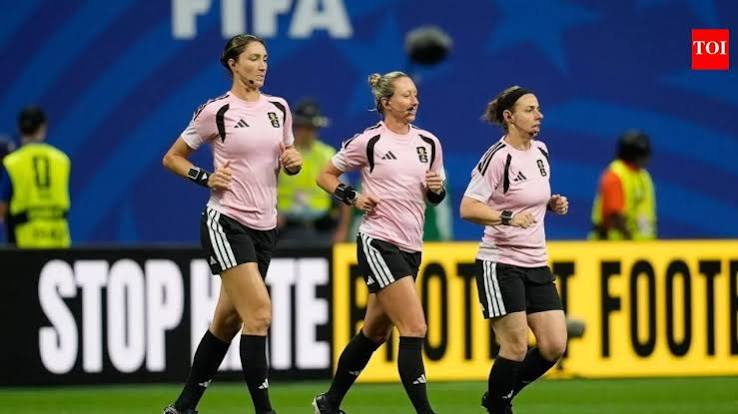
The 2022 Men’s World Cup in Qatar was another historic milestone. Frappart, along with Japan’s Yoshimi Yamashita and Rwanda’s Salima Mukansanga, served as officials—the first women to do so at a men’s World Cup. Their presence was not symbolic; they were fully qualified and performed their duties professionally. This moment was the culmination of decades of advocacy and policy change, but it also highlighted how far women still have to go.
Rebecca Welch’s Premier League debut in December 2023 was the latest in this lineage. Welch had already refereed in the English Football League, but the Premier League was the final frontier. Her appointment was met with a mix of celebration and skepticism, but her performance was unremarkable—which is exactly the point. When a female referee’s gender becomes a non-issue, that’s when real progress has been made.
The Structural Barriers: How Governance Both Hindered and Helped
Women’s entry into refereeing was not just a matter of individual perseverance; it required institutional change. FIFA’s Refereeing Assistance Programme, introduced in the 2000s, explicitly included female officials, providing them with training and mentorship. UEFA’s ‘Women in Football’ initiatives and the creation of a dedicated women’s refereeing pathway helped normalise female officials in European competitions. National associations, such as the FA in England, introduced diversity and inclusion strategies that targeted refereeing specifically.
However, these changes were often reactive. It took legal challenges and sustained activism to force associations to open their doors. The FA’s ban on women’s football from 1921 to 1971 had a ripple effect, stunting the development of female players and referees for decades. When the ban was lifted, women had to start from scratch, and refereeing was no exception. The progress we see today is the result of both top-down reform and bottom-up pressure.
The Double Standard: Judged on Appearance, Voice, and Authority
Female referees face a unique set of challenges. They are often judged on their appearance, voice, or ‘authority’ in ways that male referees are not. A female referee who is assertive may be labelled ‘aggressive’, while a male referee with the same style is praised for his control. This double standard is a reflection of broader societal attitudes toward women in authority roles.
Research suggests that female referees pass the same fitness tests and are assessed by the same criteria as their male counterparts. Yet they still face sexist commentary from fans, players, and even pundits. The media’s coverage of female referees in men’s games has shifted from novelty to normalcy, but incidents of sexism persist. For example, when Stephanie Frappart officiated the Super Cup, some commentators focused on her appearance rather than her performance.
The Impact on the Next Generation
Despite these challenges, the presence of female referees has a profound impact on young girls and women watching. Seeing a woman enforce the laws of the game in a male-dominated arena challenges traditional gender roles. It sends a message that authority and competence are not gendered traits. Role model effects are well-documented: when girls see women in leadership positions, they are more likely to aspire to those roles themselves.
The growth of women’s professional football has also created more opportunities. The popularity of the Women’s World Cup and domestic leagues has increased the demand for female referees, providing a pipeline from amateur to professional levels. Many pioneers started in women’s leagues and then crossed over to men’s football, often facing more scrutiny in the men’s game. But each successful appointment makes it easier for the next woman to follow.
The Road Ahead: Progress, but Not Perfection
The number of female referees globally remains a small fraction of the total. FIFA and UEFA have active programs to develop female referees, including dedicated training camps and mentorship schemes. But there is still resistance, both overt and subtle. Some players and coaches refuse to accept a female referee’s authority, and some fans use sexist language to undermine them. The football establishment has made significant strides, but cultural change is slower.
What the pioneers have shown is that change is possible. Pat Dunn, Sonia Denoncourt, Bibiana Steinhaus, Stephanie Frappart, Rebecca Welch—each one broke down a barrier that seemed insurmountable at the time. Their stories are not just about football; they are about challenging assumptions and proving that competence knows no gender. As more women take the whistle, the beautiful game becomes more inclusive, and the idea of a ‘female referee’ becomes an anachronism.
The journey of women referees is a story of persistence against institutionalized sexism. From Pat Dunn’s non-league match in 1981 to Rebecca Welch’s Premier League debut, these pioneers have not only changed the game but also challenged our perceptions of authority. While there is still work to be done, the growing presence of women in refereeing is a sign that football is slowly becoming a sport for everyone. The forgotten pioneers are no longer forgotten—they are the foundation upon which a more inclusive future is built.
Summary
- Women were excluded from football governance for most of the 20th century, with the FA banning women’s football in England from 1921 to 1971.
- Pat Dunn became the first woman to referee a senior men’s match in England in 1981, facing hostility and skepticism.
- Sonia Denoncourt (1991) and Nelly Viennot (1999) broke international barriers, officiating men’s FIFA and UEFA matches.
- Bibiana Steinhaus and Stephanie Frappart achieved historic firsts in the Bundesliga and major European finals, respectively.
- The 2022 Men’s World Cup featured female officials for the first time, and Rebecca Welch’s Premier League debut in 2023 marked another milestone.
FAQ
Q: Who was the first woman to referee a men’s international match?
A: Sonia Denoncourt of Canada became the first woman to referee a FIFA-recognized men’s international match in 1991, a youth tournament.
Q: What was the significance of Stephanie Frappart’s appointment to the 2019 UEFA Super Cup?
A: Frappart was the first woman to officiate a major men’s European final, breaking a significant barrier and demonstrating that women could referee at the highest levels of men’s football.
Q: How did the FA’s ban on women’s football affect female referees?
A: The ban, in place from 1921 to 1971, stunted the development of women’s football and refereeing in England, delaying progress for decades.
Q: Do female referees face different standards than male referees?
A: Yes, female referees often face double standards, being judged on appearance, voice, or authority in ways that male referees are not, despite passing the same fitness tests and assessments.
Q: What institutional changes have helped increase the number of female referees?
A: FIFA’s Refereeing Assistance Programme, UEFA’s ‘Women in Football’ initiatives, and national FA diversity strategies have all helped create pathways for female officials.