Tag: WNBA

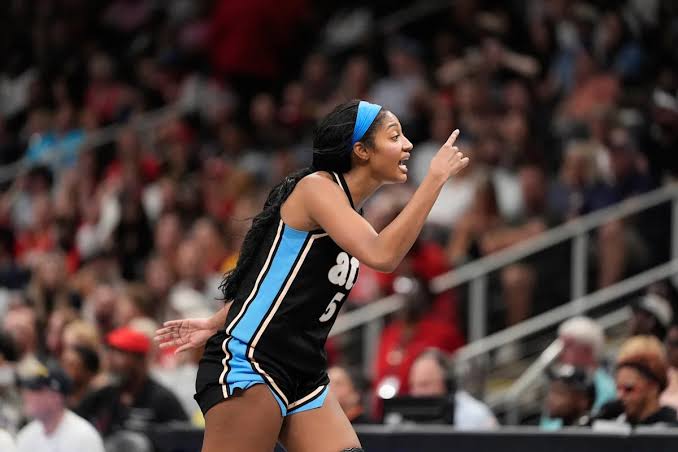
  • Angel Reese’s 26-Rebound Masterclass: A Record That Redefines the WNBA’s Glass-Cleaning Elite

    Angel Reese’s 26-Rebound Masterclass: A Record That Redefines the WNBA’s Glass-Cleaning Elite

    On a late-July night in Los Angeles, Angel Reese did something no one in WNBA regular-season history had ever done. She grabbed 26 rebounds, breaking a record that had stood for over two decades. The Atlanta Dream beat the Sparks 78-71, completing a perfect West Coast road trip, but the scoreboard was almost an afterthought.

    Reese’s performance wasn’t just a statistical outlier—it was a statement. In her second season, after a controversial trade from Chicago, the 6’3″ forward/center is proving that her rebounding prowess is not a gimmick but a transformative skill. This record isn’t just a line in the box score; it’s a marker of how the WNBA’s new generation of bigs is redefining dominance.

    Breaking a Two-Decade-Old Record

    The previous single-game rebound record of 25 was shared by Chamique Holdsclaw (2002), Courtney Paris (2009), and Sylvia Fowles (2018). For 22 years, no one had grabbed more than 25 boards in a regular-season game. Reese’s 26-rebound outburst not only breaks that tie but also sets a new single-season mark, further cementing her name in the record books.

    What makes this feat even more impressive is the context. The Dream were on the road, facing a Sparks team that, despite its struggles, had size and athleticism. Reese didn’t pad her stats in garbage time; she dominated from start to finish, hauling in rebounds on both ends of the floor. While the exact split between offensive and defensive rebounds hasn’t been officially confirmed, reports suggest a significant number came on the offensive glass, giving the Dream second-chance points that proved crucial in a tight game.

    From Rookie Sensation to Sophomore Juggernaut

    Reese’s rookie year with the Chicago Sky was historic in its own right. She set the WNBA rookie record for total rebounds in a season (446) and averaged a double-double (13.6 points, 13.1 rebounds). But her efficiency was often questioned, with critics pointing to low field-goal percentages and a perceived focus on stats over winning.

    The 2025 offseason trade to Atlanta changed everything. The Dream, a team in the midst of a rebuild, gave up significant assets to acquire Reese, signaling they saw her as a cornerstone. This record-breaking performance is a vindication of that investment. It’s also a reminder that rebounding—often underrated in a league that values scoring—can be a game-changing skill.

    The Deeper Meaning: A New Era of Bigs

    Reese’s achievement is part of a larger trend. The WNBA is experiencing a renaissance of dominant post players, from A’ja Wilson’s all-around brilliance to Jonquel Jones’ versatility. Reese’s rebounding, however, is in a class of its own. Her motor, instincts, and physicality are reminiscent of Dennis Rodman—a player who won championships without being a primary scorer.

    This record also reignites the narrative rivalry with Caitlin Clark, her 2024 draft class counterpart. While Clark is a generational playmaker, Reese’s rebounding dominance offers a counterpoint: there’s more than one way to change a game. As both players lead their teams toward playoff contention, their individual battles will continue to drive league interest.

    What This Means for the Dream’s Season

    The perfect road trip (the exact number of games is not yet confirmed) and this marquee win signal that Atlanta is a legitimate playoff threat. Reese’s rebounding gives the Dream a safety net on misses, allowing guards like Rhyne Howard to take risks on offense. The team’s chemistry is building, and this record performance will only boost confidence.

    But the record also raises expectations. Every future game will be judged against this standard, and opponents will game-plan specifically to box her out. How Reese responds to that challenge will define her sophomore season.

    The Bottom Line

    Angel Reese didn’t just set a record; she made a declaration. In a league that has seen legends like Lisa Leslie, Tina Charles, and Sylvia Fowles dominate the boards, Reese’s 26-rebound game stands alone. It’s a performance that will be remembered not just for the number, but for what it represents: the arrival of a new era of WNBA frontcourt dominance.

    As the final buzzer sounded in Los Angeles, Angel Reese had already made history. But for a player who thrives on proving doubters wrong, this is likely just the beginning. The record is hers, but the season is far from over—and Reese’s rebounding binge may not be done yet.

    Summary

    • Angel Reese set a WNBA regular-season record with 26 rebounds in a single game.
    • The Atlanta Dream defeated the Los Angeles Sparks 78-71, completing a perfect West Coast road trip.
    • The previous record of 25 rebounds was shared by Chamique Holdsclaw, Courtney Paris, and Sylvia Fowles.
    • Reese, in her second season, was traded from Chicago to Atlanta in the 2025 offseason.
    • The performance validates Reese’s elite rebounding and the Dream’s investment in her.

    FAQ

    Q: Is 26 rebounds the all-time WNBA record?
    A: It’s the regular-season record. The all-time record, including playoffs, may differ, but 26 is the most in a regular-season game.

    Q: What does “season mark” mean in this context?
    A: It refers to the most rebounds in a single game this season, which is also a new WNBA record for a single season.

    Q: How many offensive rebounds did Reese have?
    A: The exact split isn’t confirmed, but reports indicate a significant number were on the offensive glass.

    Q: Did Reese have a big scoring night too?
    A: Her scoring line hasn’t been fully detailed, but the focus was on her rebounding dominance, not a scoring outburst.

    Q: What does this mean for the Dream’s playoff chances?
    A: The win and the perfect road trip signal momentum, making Atlanta a more credible playoff contender in a competitive league.
  • Sparks Trade Kelsey Plum to Mercury: A Win-Now Move and a Rebuild Signal

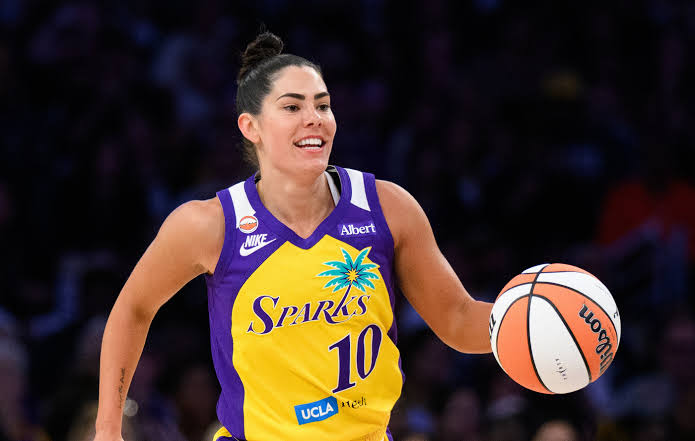
    Sparks Trade Kelsey Plum to Mercury: A Win-Now Move and a Rebuild Signal

    The WNBA trade deadline delivered a seismic shock on Sunday as the Los Angeles Sparks sent five-time All-Star guard Kelsey Plum to the Phoenix Mercury. The move, which comes just months after Plum was traded from the Las Vegas Aces to Los Angeles, reshapes the playoff picture and signals a clear strategic divergence between two franchises with very different ambitions.

    For the Sparks, this is a pragmatic acknowledgment of a lost season and a commitment to a long-term rebuild. For the Mercury, it’s an aggressive bet on a championship run. And for Plum, it’s another twist in a whirlwind year that has seen her change teams twice and face an uncertain free agency this summer. The trade is a microcosm of the modern WNBA: player movement is accelerating, and no star is untouchable.

    The Trade: What We Know

    The Los Angeles Sparks traded five-time All-Star guard Kelsey Plum to the Phoenix Mercury ahead of Sunday’s WNBA trade deadline. The Sparks will receive compensation from the Mercury, though the exact details of the return—whether draft picks, young players, or a combination—remain unconfirmed. What is clear is that the Sparks are prioritizing future assets over short-term competitiveness.

    Plum, the No. 1 overall pick in the 2017 draft, has been one of the league’s most prolific scorers since entering the WNBA. She was a cornerstone of the Las Vegas Aces’ back-to-back championships in 2022 and 2023, earning All-Star honors five times. In January 2025, she was traded to the Sparks in a three-team deal, signing a one-year contract that made her an unrestricted free agent after this season. That expiring deal is the key to understanding this trade.

    The Sparks’ Perspective: A Rational Rebuild

    At first glance, trading a player of Plum’s caliber might seem like a white flag. But the Sparks’ decision is rooted in cold, hard logic. Los Angeles is sitting near the bottom of the standings in 2025, and Plum’s contract expires at the end of the season. If the Sparks had kept her, they risked losing her in free agency for nothing. By trading her now, they’ve turned an expiring asset into something of value—draft picks, young players, or both.

    This is not a salary dump; it’s asset management. The Sparks are signaling a full rebuild, prioritizing long-term flexibility over a meaningless push for the playoffs. The return, while not yet disclosed, will likely include future draft capital that can be used to build a new core. For a franchise that has struggled to find consistency since its championship era, this is a necessary step.

    Critics might say the Sparks “gave up on a star,” but that framing misses the point. Plum’s talent was never in question; the question was whether she fit the timeline. In a lost season, keeping her would have been sentimental, not strategic. The Sparks are making a calculated bet on the future, and Plum was the most valuable chip they had.

    The Mercury’s Perspective: All-In on a Title

    The Phoenix Mercury are in win-now mode, and adding Plum is a clear statement of intent. Phoenix has been aggressive in recent years, building around veteran stars and adding high-profile talent. Plum gives them a proven scorer and playoff performer who can create her own shot and thrive in high-pressure moments. Her experience in back-to-back championship runs with the Aces is invaluable.

    However, it’s important to temper expectations. Adding Plum doesn’t automatically make the Mercury title favorites. Phoenix still has questions about depth, defense, and health. The team has relied heavily on its veteran core, and integrating another ball-dominant guard will require adjustments. Can Plum coexist with the Mercury’s existing stars? Will there be enough shots to go around? These are legitimate concerns.

    But the upside is undeniable. Plum is more than just a scorer—she’s improved as a playmaker and defender over her career. She’s a winner, and she gives Phoenix a legitimate chance to compete for a championship. For a franchise that has consistently pushed its chips to the center of the table, this is another bold move.

    Plum’s Perspective: A Year of Whiplash

    For Kelsey Plum, this trade is the latest chapter in a year of upheaval. She spent her entire career with the Aces before being traded to the Sparks in January. She reportedly wanted to be in Los Angeles, and now she’s on the move again. That has to be jarring.

    But there’s a silver lining: Plum is joining a contender. She gets a chance to compete for another title, which is what any competitor wants. And her free agency this summer remains a major storyline. Will she sign a long-term extension with the Mercury, or is this a short-term rental? The answer will shape how this trade is ultimately judged.

    Plum’s situation also highlights the reality of the modern WNBA. Players have more leverage than ever, but they’re also more expendable. The new collective bargaining agreement, expansion teams, and increased salary cap flexibility have made trades more common. Plum is a star, but she’s also an asset, and assets get moved.

    League-Wide Implications: A New Era of Movement

    This trade is part of a broader trend in the WNBA. The league is evolving, with expansion (Golden State Valkyries joining in 2025, Toronto and Portland in 2026) and increased financial flexibility leading to more player movement. Teams are more willing to make bold moves than in previous eras, and the trade deadline has become a focal point of the season.

    For the Sparks, this trade is a signal that they’re embracing the rebuild. For the Mercury, it’s a signal that they’re all-in on winning now. And for the league, it’s a reminder that no player is untouchable. The WNBA is entering a new era, and trades like this are just the beginning.

    The Bottom Line

    This trade is a win-win in the short term: the Sparks get future assets, and the Mercury get a proven star. But the long-term evaluation will depend on the details. What did the Sparks actually receive? Will Plum stay in Phoenix? Can the Mercury make a deep playoff run? These questions will be answered in the coming months.

    For now, the trade is a fascinating case study in franchise strategy. The Sparks are thinking about 2027; the Mercury are thinking about 2025. Both are making rational decisions based on their circumstances. And Kelsey Plum, once again, is at the center of it all.

    The Kelsey Plum trade is more than just a headline—it’s a reflection of the WNBA’s evolving landscape. The Sparks made a pragmatic decision to rebuild, the Mercury made an aggressive move to contend, and Plum finds herself in a new city with a chance to chase another title. As the season unfolds, the true winners and losers of this deal will become clear. But one thing is certain: the WNBA trade deadline just got a lot more interesting.

    Summary

    • The Los Angeles Sparks traded five-time All-Star Kelsey Plum to the Phoenix Mercury ahead of the WNBA trade deadline.
    • The Sparks are rebuilding, trading Plum on an expiring contract for future assets rather than losing her in free agency.
    • The Mercury are in win-now mode, adding a proven scorer and playoff performer to their veteran core.
    • Plum has been traded twice in less than a year and faces free agency this summer, making her long-term future uncertain.
    • The trade reflects a broader trend of increased player movement in the WNBA, driven by expansion and new CBA rules.

    FAQ

    Q: Why did the Sparks trade Kelsey Plum?
    A: The Sparks are in a rebuilding phase, sitting near the bottom of the standings. Plum was on an expiring contract, so trading her now allowed them to get assets in return rather than losing her for nothing in free agency.

    Q: What did the Sparks get in return?
    A: The exact compensation has not been officially disclosed, but it is expected to include draft picks and/or young players as part of the Sparks’ long-term rebuild strategy.

    Q: Will Kelsey Plum stay with the Mercury long-term?
    A: Plum is set to become an unrestricted free agent this summer. Whether she signs a long-term extension with Phoenix or tests the market remains to be seen.

    Q: Does this trade make the Mercury title favorites?
    A: Not automatically. While Plum adds significant scoring and playoff experience, the Mercury still have questions about depth, defense, and chemistry. They are contenders, but not guaranteed champions.

    Q: How does this trade affect the Sparks’ future?
    A: The trade signals a full rebuild for the Sparks. By acquiring future assets, they are prioritizing long-term flexibility and aiming to build a new core around young talent and draft picks.