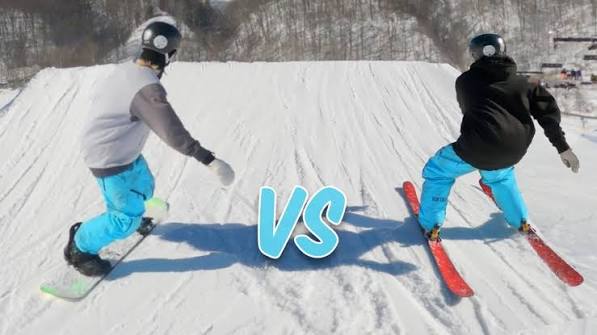
You’re standing at the rental shop, skis in one hand, snowboard in the other. The decision feels big, and it is—not because one is inherently better, but because your first few days on the mountain will be radically different depending on which you choose. The question isn’t just ‘which is easier?’ but ‘which is easier for you?’
The short answer, according to ski instructors and industry data: skiing is easier to start but harder to master; snowboarding is brutal at first but clicks faster once you’re past the beginner phase. But that’s a simplification. The real difference lies in biomechanics, equipment, and your own physical and psychological makeup.
Why Skiing Feels More Natural at First
Skiing uses a stance that mirrors how you walk: feet forward, body facing downhill, legs moving independently. That’s why most beginners can make controlled turns within a day or two of lessons. The famous ‘pizza’ wedge (where you point your ski tips together) gives you immediate speed control—a psychological safety net that lets you focus on balance rather than panic.
You can also ride the chairlift on your first day without learning a special skill. Skiers just shuffle off and slide. Snowboarders, by contrast, must unstrap one foot and ‘skate’—a wobbly, awkward motion that causes many a first-timer to eat snow at the unload ramp.
Falls also feel different. Skiers slide when they fall; snowboarders catch an edge and slam. That’s part of why beginner snowboarders fall 2–3 times more often in the first 48 hours than skiers, according to instructor reports. More falls mean more soreness—in the wrists, butt, and core—and more frustration.
The Snowboard’s Steep Start
Snowboarding forces you into a sideways stance, like a skateboard or surfboard. Your body faces across the hill, not down it. For most people, that’s a complete retraining of balance and visual perception. There’s no ‘pizza’ equivalent—you have to commit to either your heel edge or toe edge, with no halfway safety position.
Getting up from a seated position is a major hurdle. With both feet strapped to one board, you have to roll over, push up with your arms, and swing your board around—all while on a slope. It’s exhausting, especially on Day 1.
But here’s the flip side: once you survive the first 2–3 days, the learning curve flattens dramatically. Many riders report a ‘breakthrough’ moment where everything clicks. After that, progression to carving and advanced terrain often happens faster than on skis. Because you only have one edge to manage, there’s less to think about at speed. The sideways stance becomes second nature, and some riders say it feels more natural at high speeds than skiing.
The Numbers Behind the Learning Curves
Industry data paints a clear picture of the trade-off. With professional instruction, most skiers achieve their first controlled stop in 1–2 hours; snowboarders need 2–4. Skiers link turns in 2–3 days; snowboarders take 3–5. But by the time you’re aiming for black diamond runs, snowboarders have closed the gap—and even pulled ahead. Skiers typically need 20–40 days to feel confident on advanced terrain; snowboarders often do it in 15–30.
Retention stats tell a similar story. Ski schools report that 70–80% of first-time skiers return for a second lesson, versus 50–60% for snowboarders. The drop-off isn’t because snowboarding is worse—it’s because the first two days are so punishing that many people quit before the breakthrough.
Injury patterns also differ. Skiing has a higher rate of knee injuries, especially ACL tears, which often happen at higher speeds. Snowboarding has more wrist and ankle injuries, mostly from falling on outstretched hands. Overall injury rates are similar, but the mechanism and prevention strategies differ.
How Your Body and Mind Affect the Choice
Your age, fitness, and athletic background matter more than you’d think. Children under 10 often learn snowboarding faster than adults because of their lower center of gravity and less fear. But for very young kids (ages 3–5), skiing’s simpler equipment still wins.
Adults over 40 generally find skiing easier on the body initially. The fall-heavy learning curve of snowboarding is harder on joints and recovery. Skiing, however, is a constant quad workout—your thighs will scream after a day of pizza-ing.
If you’re a skateboarder, surfer, or wakeboarder, you’ll likely pick up snowboarding much faster than the average person—your balance and edge control instincts already exist. Ice skaters and rollerbladers often have a head start on skis.
Fear also plays a role. If you’re anxious about speed or falling, skiing’s wedge gives you a sense of control that can help you relax and learn. Snowboarding’s early falls can amplify fear. But if you’re the type who gets bored with cautious progress and wants a challenge, the snowboard’s steep start might be exactly what you need.
The Verdict: Which Should You Choose?
There’s no universal winner. If you want the fastest path to cruising down a green run with minimal pain, choose skiing. You’ll be making turns by day two and feeling like a skier on day three.
If you’re willing to suffer through two days of falling and frustration for a smoother intermediate progression, choose snowboarding. The ‘aha’ moment is one of the most satisfying in sports—and once it hits, you’ll likely progress faster than your ski friends.
Your physical condition matters too. If you have bad knees, skiing’s ACL risk and quad burn might be a concern. If you have weak wrists or a sore back, snowboarding’s fall-heavy start could be miserable.
Talk to a local instructor, rent gear for a day, and try both if you can. The best choice is the one that keeps you coming back to the mountain—and that’s about your personality as much as your body.
Ultimately, the ‘easier’ sport is the one that matches your tolerance for frustration and your physical strengths. Skiing offers a gentle on-ramp; snowboarding offers a steep climb with a rewarding view. Whichever you pick, take a lesson, wear a helmet, and give yourself at least three days before judging. The mountain will be there either way.
Summary
- Skiing is easier to start: most beginners can make turns in 1–2 days, thanks to the natural forward stance and the wedge for speed control.
- Snowboarding is harder at first: expect 2–3 days of frequent falls (2–3x more than skiing) before things click.
- Progress flips after the beginner phase: snowboarders often reach intermediate and advanced levels faster than skiers.
- Injury patterns differ: skiing has more knee injuries (ACL); snowboarding has more wrist and ankle injuries.
- Your background matters: surfers/skaters pick up snowboarding faster; skaters/ice skaters have an edge in skiing.
FAQ
Q: Which sport is less painful to learn?
A: Skiing generally involves fewer falls in the first two days, so it’s less physically jarring. Snowboarding’s early falls can lead to sore wrists and tailbones.
Q: Can I learn snowboarding if I’m over 40?
A: Yes, but be prepared for a tougher first few days. Consider extra padding (wrist guards, crash shorts) and take lessons to minimize falls.
Q: How long until I can go down a blue run?
A: With lessons, most skiers feel comfortable on blues after 5–10 days; snowboarders often get there in 5–8 days, once past the initial hurdle.
Q: Do I need to be fit to start?
A: Basic fitness helps, but neither sport requires elite conditioning. Skiing uses quads heavily; snowboarding uses core and ankles. You’ll get sore either way—it’s part of the fun.
Q: What’s the best way to decide?
A: Try both if you can. Rent gear for a day, take a beginner lesson in each, and see which one you enjoy more. The ‘easier’ one is the one you’ll stick with.