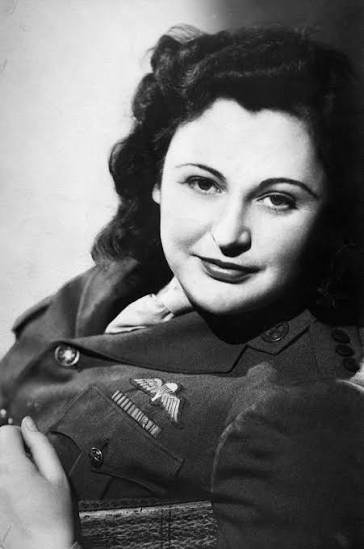
In the spring of 1944, a woman with a price on her head pedaled a bicycle through the French countryside. German checkpoints dotted the roads, and every patrol car carried her photograph. Nancy Wake—known to the Gestapo as the White Mouse—was on a mission that would cover 500 kilometers, crossing enemy lines to deliver a radio codebook that would link the Maquis to London.
She was 31 years old, a former journalist who had traded her typewriter for a Sten gun. The Germans had put a 5-million-franc bounty on her head, a sum that made her the most wanted person in the Marseille region. But Wake never stopped moving. ‘I was never afraid,’ she later said. ‘I was too busy to be afraid.’
From Sydney to the Shadows
Nancy Grace Augusta Wake was born in Wellington, New Zealand, in 1912, the youngest of six children in a poor family. When she was still a child, her family moved to Sydney, Australia. At 16, she left home to work as a nurse, but a small inheritance gave her a chance to escape. She used it to travel to Europe, where she trained as a journalist.
By the mid-1930s, Wake was working for the Hearst press in Paris. Her assignments took her to Vienna and Berlin, where she watched the rise of Nazism firsthand. The violence and hatred she witnessed radicalized her. ‘I made up my mind then that if I ever had the chance, I would do something about it,’ she recalled.
The chance came sooner than she expected. In 1939, she married Henri Fiocca, a wealthy French industrialist, and settled in Marseille. When France fell to the Germans in June 1940, Wake didn’t flee. Instead, she joined the Resistance.
The Escape Line
Marseille became a hub for the Resistance, and Wake found her niche in an escape network that smuggled Allied airmen and refugees over the Pyrenees into neutral Spain. She used her charm, her looks, and her fluency in French to move through checkpoints and bribe officials. ‘I was the most feminine thing that ever was,’ she once said, ‘and I could out-drink any man.’
The Gestapo began to notice. They gave her the nickname ‘White Mouse’ because she slipped through their traps time and again. By 1943, they had placed a 5-million-franc bounty on her head—an astronomical sum. Henri urged her to leave, but she refused. When the net tightened, he stayed behind in Marseille while she escaped over the mountains to Spain, then to Britain.
It was the last time she would see him alive.
The SOE and the Maquis
In London, Wake joined the Special Operations Executive, the secret organization Churchill had created to ‘set Europe ablaze.’ The SOE trained her in sabotage, wireless communication, and hand-to-hand combat. In April 1944, she parachuted into the Auvergne region of central France as a courier.
Her mission was to arm and organize the Maquis—rural guerrilla bands of young men who had fled to the hills to avoid forced labor in Germany. By the time she arrived, they were scattered and poorly equipped. Wake changed that. She coordinated airdrops of weapons and explosives, trained fighters, and helped unite the groups into a force of some 7,000 men.
Her methods were direct. When a radio codebook was needed urgently, she cycled 500 kilometers across German checkpoints to deliver it. When an SS sentry raised the alarm during a raid, she killed him with a karate chop to the neck. ‘I’d never done anything like that before,’ she admitted, ‘but it had to be done.’
In June 1944, she led a 150-strong Maquis attack on the Gestapo headquarters in Montluçon. The raid was a success, but the Germans were closing in. Wake and her men were forced to retreat, but they had proved that the Resistance was a force to be reckoned with.
The Cost of War
When the war ended, Wake was celebrated as the most decorated servicewoman of WWII. She received the George Medal from Britain, the Médaille de la Résistance and the Croix de Guerre with Palm from France, and the US Medal of Freedom. But the accolades couldn’t erase the personal cost.
In 1949, she learned the truth about her husband. Henri had been captured by the Gestapo in 1943. He was tortured for information about her whereabouts, but he refused to talk. The Gestapo executed him. Wake was devastated. ‘I thought I had nothing left to live for,’ she said.
She spent the next decades working for British intelligence, then moved to Australia, where she ran unsuccessfully for Parliament. The war never left her. She admitted to nightmares and heavy drinking. ‘I was a bloody awful woman,’ she once said, ‘but I was the right person for the job.’
The Forgotten Heroine
In her later years, Wake moved to a retirement home in London, largely forgotten by the public. She died in 2011 at the age of 98. But her story has endured, not just as a tale of bravery, but as a reminder of the roles women played in the war—roles that were often dismissed or ignored.
Wake herself was blunt about the double standard. ‘I don’t see why we women should just wave our men a proud goodbye and then knit them balaclavas,’ she said. She refused to be defined by gender, and she refused to be forgotten.
Nancy Wake’s war was not a matter of abstract ideology. It was a series of concrete choices—to stay in Marseille, to climb the Pyrenees, to parachute into France, to ride a bicycle through checkpoints, to kill a man with her bare hands. She did not act out of a love of violence, but out of a conviction that fascism had to be stopped. ‘Freedom is the only thing worth living for,’ she once said. ‘I wasn’t afraid to die for it.’
Summary
- Nancy Wake was a New Zealand-born journalist who joined the French Resistance after the fall of France, helping smuggle Allied airmen over the Pyrenees.
- The Gestapo gave her the nickname ‘White Mouse’ and placed a 5-million-franc bounty on her head, making her the most wanted person in the Marseille region.
- As an SOE agent, she organized and armed 7,000 Maquis fighters in the Auvergne, cycled 500 kilometers to deliver a radio codebook, and killed an SS sentry with a karate chop.
- Her husband, Henri Fiocca, was executed by the Gestapo in 1943 for refusing to reveal her whereabouts.
- Wake became the most decorated servicewoman of WWII, but was largely forgotten in later life, dying in 2011 at 98.
FAQ
Q: Why was Nancy Wake called the ‘White Mouse’?
A: The Gestapo gave her the nickname because she repeatedly eluded their traps, slipping through their nets like a mouse. The name stuck, and it was used on wanted posters.
Q: How did Nancy Wake kill an SS sentry?
A: During a raid on the Gestapo headquarters in Montluçon, a sentry raised the alarm. Wake killed him with a karate chop to the neck, an action she later described as necessary but shocking.
Q: What was the 5-million-franc bounty on Wake?
A: The Gestapo offered 5 million francs for her capture, a sum that made her the most wanted person in the Marseille region. She evaded it by escaping to Spain and then to Britain.
Q: What happened to Nancy Wake’s husband?
A: Henri Fiocca was captured by the Gestapo in 1943. He was tortured for information about Wake’s whereabouts but refused to talk. He was executed, and Wake didn’t learn of his death until 1949.
Q: What awards did Nancy Wake receive?
A: She received the George Medal (UK), the Médaille de la Résistance and the Croix de Guerre with Palm (France), and the US Medal of Freedom, making her the most decorated servicewoman of WWII.