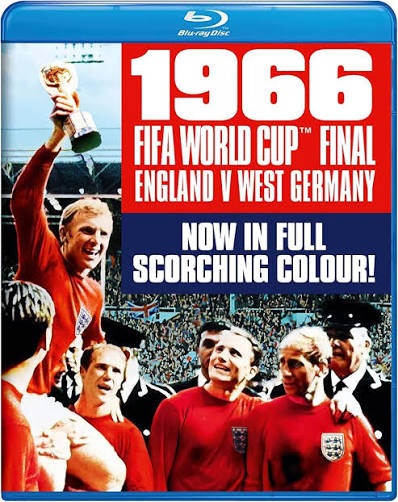
On a sweltering Saturday afternoon in July 1966, Wembley Stadium held its breath. England and West Germany were locked at 2–2 in extra time of the World Cup final, and Geoff Hurst had just struck a shot that thumped against the underside of the crossbar. The ball bounced down. Did it cross the line? To this day, no one can say with certainty—but Swiss referee Gottfried Dienst looked to his Azerbaijani linesman, Tofiq Bahramov, who nodded. Goal. The roar that followed changed English football forever.
That 3–2 lead, secured by a decision that has been debated for nearly six decades, set the stage for Hurst’s famous hat-trick and the most iconic commentary line in sports history. England won 4–2 after extra time, claiming their first—and still only—World Cup. This is the story of that match, the tactical revolution behind it, and the controversies that refuse to fade.
The Road to Wembley: A Nation’s Expectations
England had never won the World Cup. In fact, they hadn’t even bothered to enter before 1950, and their subsequent attempts were mediocre at best—group-stage exits in 1950 and 1958, quarter-final losses in 1954 and 1962. The 1966 tournament, held on home soil, was supposed to change that, but the pressure was immense.
Alf Ramsey, appointed manager in 1963, made a bold public declaration before the tournament: “We will win the World Cup.” In the buttoned-up English football culture of the time, that was borderline arrogant. Yet Ramsey backed it up with a radical tactical shift. He abandoned traditional wingers—a heresy to English football purists—and deployed a narrow 4-4-2/4-3-3 hybrid that became known as the “wingless wonders.” Full-backs George Cohen and Ray Wilson pushed forward, Bobby Charlton roamed as a deep-lying playmaker, and the strike partnership of Geoff Hurst and Roger Hunt provided relentless mobility.
England’s path to the final was steady rather than spectacular: a 0–0 draw with Uruguay, then wins over Mexico (2–0) and France (2–0). The knockout rounds brought tougher tests—a contentious 1–0 quarter-final against Argentina, where Ramsey famously called the opposition “animals,” and a 2–1 semi-final win over a Eusébio-led Portugal. West Germany, meanwhile, had cruised through with a 5–0 demolition of Switzerland, a 0–0 draw with Argentina, and a 2–1 win over Spain. Their semi-final against the Soviet Union was a 2–1 grind. Both teams arrived at Wembley having conceded just three goals (England) and six (Germany) respectively, but it was the Germans who looked more fluid in attack.
The Final: A Game of Two Halves (and Extra Time)
Wembley on 30 July 1966 was packed to its 98,000 capacity, with millions more watching on television. The match started at a frantic pace. West Germany struck first in the 12th minute when Helmut Haller pounced on a defensive mix-up to slot home. England’s response was immediate: just six minutes later, Bobby Moore’s quick free-kick released Hurst, who powered a header past Hans Tilkowski. The score stayed 1–1 through a tense second half, with both goalkeepers—Gordon Banks and Tilkowski—making crucial saves.
Then, in the 78th minute, Martin Peters tapped in a cross from Hurst to put England ahead. It looked like the trophy was theirs. But West Germany, showing the resilience that would define their football for decades, equalised in the 89th minute. Wolfgang Weber’s shot deflected off a defender and trickled over the line. 2–2. Extra time. The weight of a nation hung on the next thirty minutes.
The first period of extra time brought the moment that still divides football fans. Hurst, receiving the ball on the edge of the area, turned and fired a left-footed shot that clipped the crossbar and bounced down onto the line. The ball spun back into play, but Bahramov, the linesman, was adamant: it had crossed. Goal. England 3–2. Replays have never provided a definitive answer. In 2018, a team of scientists at Lancaster University used computer graphics to conclude that the ball did not fully cross the line. But in 1966, there was no VAR, only a Swiss referee and a Soviet linesman from Azerbaijan—whose nationality is still often misreported as “Russian.”
If that goal was controversial, the fourth was pure theatre. In the final minute of extra time, with fans already spilling onto the pitch, Hurst broke clear and hammered the ball into the roof of the net. BBC commentator Kenneth Wolstenholme delivered the immortal line: “Some people are on the pitch… they think it’s all over. It is now!” The whistle blew. England were world champions.
The Men Behind the Triumph
Alf Ramsey’s tactical gamble paid off, but the final was won by individual brilliance. Geoff Hurst, a West Ham forward who had only made his England debut earlier in the tournament, scored a hat-trick—the only one ever in a World Cup final, a record that still stands. His four goals in the tournament all came in the last two matches: one in the semi-final, three in the final. Bobby Moore, the 25-year-old captain, marshalled the defence with a composure that belied his age, earning the respect of even the Brazilian great Pelé, who later called him “the greatest defender I ever played against.”
Bobby Charlton, the midfield engine, was named the tournament’s best young player. And Gordon Banks, the goalkeeper, conceded just three goals in six matches. But it was the team’s collective discipline that Ramsey had instilled—the “wingless wonders” who sacrificed flair for structure—that proved decisive. West Germany, managed by Helmut Schön and led by Uwe Seeler, played a more conventional 4-2-4 with Franz Beckenbauer as a libero. Their approach was not wrong; it simply met a team that had prepared for every eventuality.
The Aftermath: A Legacy of Joy and What-Ifs
The trophy presentation was a moment of pure pageantry. Queen Elizabeth II handed the Jules Rimet Trophy to Bobby Moore, who famously wiped his hands on his shorts before shaking her hand—a gesture that became iconic, not as a snub but as a pragmatic wipe of sweat and dirt. England became the third host nation to win the World Cup, after Uruguay in 1930 and Italy in 1934.
But the victory’s legacy is bittersweet. It remains England’s only major international trophy, and every subsequent failure—1970, 1990, 1996, 2006, 2018, 2024—has been measured against 1966. The goal that wasn’t a goal has become a national obsession, a symbol of both triumph and what-ifs. For West Germany, the loss was a bitter pill, but they would go on to win the World Cup in 1974 and again in 1990, while England have never come close to a second title.
The controversy also raised questions about officiating that echo into the modern era. Bahramov’s decision, made in a split second, has been dissected endlessly. Most modern analyses suggest the ball did not fully cross the line, but in 1966, that didn’t matter. The goal stood, and history was written.
Why It Still Matters
For English fans, 1966 is a golden age, a touchstone of national identity. For neutrals, it’s a story of how a single decision can alter the fate of nations. The match is also a tactical time capsule—a clash between Ramsey’s pragmatic wingless wonders and Schön’s more traditional German setup. It was the last World Cup final before the era of total football and the tactical revolutions that followed.
And then there’s the commentary. “They think it’s all over” has entered the lexicon, used in everything from election nights to cricket matches. It’s a phrase that evokes not just a goal, but a moment when a nation exhaled. Sixty years later, England still haven’t won another World Cup, but they have that moment—and it’s still all over.
The 1966 World Cup final was not just a match; it was a crucible of skill, controversy, and raw emotion. England’s 4–2 victory over West Germany delivered their only World Cup, but it also gave the world one of football’s greatest debates—the Wembley Goal—and a piece of commentary that will outlive us all. Whether the ball crossed the line or not, the legacy is secure: on that July afternoon, England conquered the world, and football gained a story for the ages.
Summary
- England won their first and only World Cup on 30 July 1966, beating West Germany 4–2 after extra time at Wembley.
- Geoff Hurst scored a hat-trick, the only one in a World Cup final, including the controversial “Wembley Goal” in the 101st minute.
- Alf Ramsey’s “wingless wonders” formation, which abandoned traditional wingers, was a radical tactical shift that paid off.
- The final has been debated for decades, particularly the decision by linesman Tofiq Bahramov to award England’s third goal, which modern analysis suggests may not have crossed the line.
- Kenneth Wolstenholme’s commentary line “They think it’s all over… it is now!” has become a cultural touchstone.
FAQ
Q: Was the ball over the line for Geoff Hurst’s third goal?
A: The debate remains unresolved. Modern computer analysis from Lancaster University in 2018 concluded the ball did not fully cross the line, but no definitive proof exists. The goal was awarded by linesman Tofiq Bahramov and stood.
Q: Who was Tofiq Bahramov?
A: He was a linesman from the Soviet Union, specifically from Azerbaijan. He is often incorrectly referred to as “the Russian linesman,” but his nationality was Azerbaijani. His decision to award the goal made him a controversial figure in football history.
Q: What was Alf Ramsey’s “wingless wonders” tactic?
A: It was a 4-4-2/4-3-3 hybrid formation that did not use traditional wingers. Instead, Ramsey relied on narrow midfield play, attacking full-backs, and a mobile strike partnership, which was a radical departure from conventional English football at the time.
Q: How many goals did Geoff Hurst score in the 1966 World Cup?
A: He scored four goals in total: one in the semi-final against Portugal and a hat-trick in the final against West Germany. All his goals came in the last two matches of the tournament.
Q: What is the significance of “They think it’s all over”?
A: It’s the famous commentary by BBC’s Kenneth Wolstenholme during Hurst’s final goal, when fans were already invading the pitch. The line has become a ubiquitous phrase in British culture, used in various contexts beyond football.