Tag: war crimes

  • The Firestorm Over Dresden: Was It a War Crime?

    The Firestorm Over Dresden: Was It a War Crime?

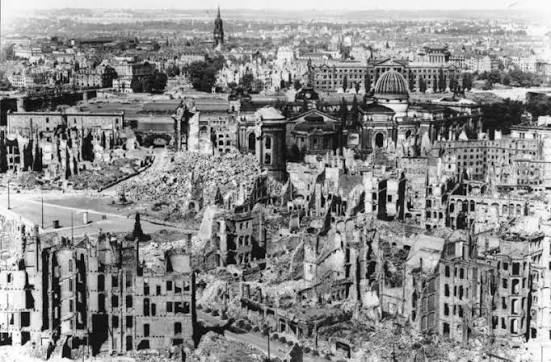
    On the night of February 13, 1945, the sky over Dresden turned orange. Within 24 hours, more than 1,300 bombers from the Royal Air Force and the US Army Air Forces had dropped nearly 4,000 tons of explosives and incendiaries. The resulting firestorm a self-sustaining inferno with winds like a hurricane and temperatures exceeding 1,000°C consumed the baroque heart of a city known as ‘Florence on the Elbe.’ By the time the last plane left on February 15, an estimated 22,000 to 25,000 people lay dead. Three-quarters of the built-up area was rubble.

    Seventy-five years later, the question still smolders: Was the bombing of Dresden a war crime? The answer depends on how you weigh military necessity against civilian suffering, and on which facts you choose to emphasize. This article lays out the arguments on both sides, grounded in the historical record, and lets you decide where the line falls.

    The City Before the Storm

    Dresden in early 1945 was not the untouched cultural jewel of Allied propaganda. It was a functioning military hub. The city’s factories produced fuses, optics, and aircraft parts. Its rail yards moved troops and supplies toward the Eastern Front, where the Red Army was pushing westward. The German military used Dresden as a garrison and a communications center.

    But it was also a city swollen with refugees. Its normal population of about 600,000 had grown to perhaps double or triple that, as civilians fled the Soviet advance from the east. They packed the streets, the parks, and the cellars. Many had no homes left. They had come to Dresden because it had been spared the bombing that had flattened other German cities. That safety was about to end.

    The Attack: Four Waves, One Firestorm

    The raid unfolded in four distinct waves over three days. The first two were RAF night raids, beginning on February 13. The bombers dropped a mix of high-explosive and incendiary bombs. The high explosives blew off roofs and shattered windows, exposing the wooden beams and flammable interiors of the old buildings. The incendiaries ignited them.

    The result was a firestorm, a rare and terrifying phenomenon. The fire created its own wind system, sucking in oxygen from the surrounding streets and fueling the flames. Temperatures reached over 1,000°C. People in cellars suffocated as the fire consumed the oxygen. Others were incinerated in the open. The USAAF followed with two daylight raids on February 14 and 15, targeting marshalling yards and industrial areas, but the city was already a blazing ruin.

    The death toll is disputed. The official German commission in 2010 estimated up to 25,000 dead. Earlier claims of 100,000 or more, popularized by the British writer David Irving, have been discredited by historians. The modern consensus is 22,000–25,000, although some argue for slightly higher figures. The destruction was staggering: about 75% of the built-up area was damaged or destroyed, including 23,000 houses and the historic Altstadt.

    The Case for Military Necessity

    The defenders of the raid argue that Dresden was a legitimate target. It was a rail and communications hub, an industrial center, and a garrison city. The attack was coordinated with the Soviet command, which saw Dresden as a strategic priority to disrupt German logistics on the Eastern Front. The raid was part of a broader Allied strategy of area bombing, designed to destroy German morale, industry, and transportation—and to hasten the end of the war.

    In the context of total war, civilian casualties were an accepted consequence. The Allies believed that bombing, even area bombing, would shorten the war and save overall lives. Arthur Harris, the head of RAF Bomber Command, defended area bombing as a way to break Germany’s will and capacity to fight. Dresden was not uniquely singled out; it was one of many German cities subjected to this policy. The Nuremberg Trials, which judged the crimes of the Nazi regime, did not charge anyone for the Dresden bombing. That silence, defenders argue, is telling.

    The Case for War Crime

    Those who call the bombing a war crime point to the principle of proportionality. By February 1945, the war was effectively decided. Germany was crumbling. The strategic value of Dresden—a city crowded with refugees, many of them women and children—was negligible compared to the civilian carnage. The raid served little military purpose and may have been intended as a show of force to the Soviets, a signal of Allied air superiority as the post-war map was being drawn.

    The attack violated the laws of war as they were understood at the time. The Hague Conventions and customary international law prohibited attacks that caused disproportionate harm to civilians. Dresden was not a military target in the narrow sense; it was a city of people, and the firestorm killed them indiscriminately. Some argue this was terror bombing—deliberately targeting civilians to break morale, which is a war crime under any definition.

    The refugee factor compounds the charge. These were not soldiers or munitions workers. They were families fleeing an army. They had no military value, and their deaths were not a necessary consequence of a legitimate military operation. The sheer scale of destruction—a city of baroque beauty reduced to ash—suggests an intent to annihilate, not just to disrupt.

    The Moral Fog of War

    Neither the military nor the legal case is clean. The Allies did not formally classify Dresden as a war crime. No one was prosecuted. But the debate is not settled by a tribunal. It is a moral question, and it refuses to go away.

    In the immediate aftermath, the bombing was a propaganda tool. Joseph Goebbels used it to rally German resistance. Later, Soviet-aligned East Germany used it to criticize Western Allied conduct, framing their own suffering as a moral indictment of capitalism. In the West, the bombing was initially defended, but the publication of Kurt Vonnegut’s Slaughterhouse-Five in 1969—a novel based on his own experience as a prisoner of war in Dresden—forced a new generation to confront the human cost.

    The debate today is not just about Dresden. It is about the nature of war itself. Modern conflicts continue to raise the same questions: What is a legitimate target? How many civilian deaths are acceptable? When does military necessity become a crime? Dresden is a test case, a moment when the line seemed to blur.

    The firestorm was real. The deaths were real. The question is whether they were justified.

    The bombing of Dresden remains a haunting example of the moral compromises of war. It was not a simple act of evil, nor was it a clean military operation. It was a policy decision made by men who believed they were ending war faster, and it killed tens of thousands of civilians in a firestorm of their making. Whether that constitutes a war crime depends on where you place the burden of proof—on the necessity of the target or on the proportionality of the harm. The historical record does not give a final answer. It gives us the facts, and the choice to weigh them.

    Summary

    • The bombing of Dresden took place February 13–15, 1945, in four waves by the RAF and USAAF, killing an estimated 22,000–25,000 people and destroying 75% of the city.
    • Defenders argue Dresden was a legitimate military target—a rail hub, industrial center, and garrison—and that the raid was part of a broader strategy to shorten the war.
    • Critics argue the attack violated proportionality under the laws of war, especially given the city’s crowded refugee population and the war’s nearing end.
    • No international tribunal classified the bombing as a war crime; the Nuremberg Trials did not charge anyone for it.
    • The debate remains unresolved, reflecting the enduring tension between military necessity and civilian protection in war.

    FAQ

    Q: How many people died in the Dresden bombing?
    A: Modern estimates range from 22,000 to 25,000 deaths, based on the official German commission’s 2010 report. Earlier claims of 100,000+ have been discredited.

    Q: Was Dresden a legitimate military target?
    A: Yes, Dresden had military significance as a railway and communications hub, with factories producing military equipment. However, its value as a target is disputed given the war’s status in February 1945.

    Q: Why did the Allies bomb Dresden?
    A: The raid was part of the Allied area bombing strategy and Operation Thunderclap, aimed at disrupting German logistics, supporting the Soviet advance, and demonstrating air superiority.

    Q: Was the Dresden bombing ever classified as a war crime?
    A: No. The Nuremberg Trials did not charge anyone for the bombing, and no international tribunal has classified it as a war crime.

    Q: What was the firestorm?
    A: A firestorm is a self-sustaining conflagration caused by incendiary bombs, creating hurricane-force winds and temperatures over 1,000°C. It caused most of the casualties in Dresden.
  • Hideki Tojo: The General Who Led Japan into Pearl Harbor and Paid the Ultimate Price

    Hideki Tojo: The General Who Led Japan into Pearl Harbor and Paid the Ultimate Price

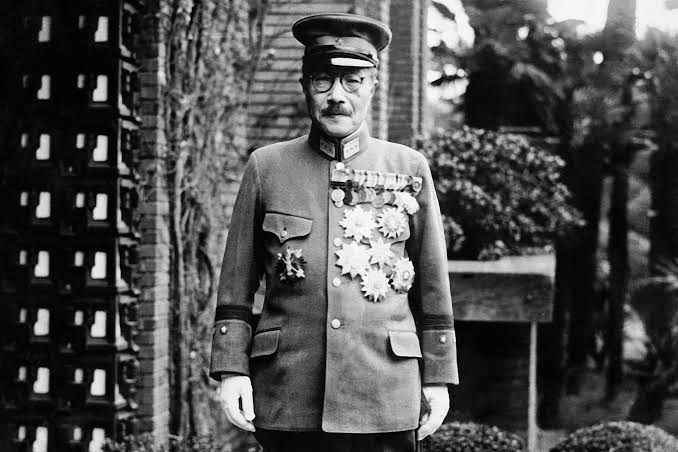
    On December 7, 1941, Japanese carrier aircraft devastated the U.S. Pacific Fleet at Pearl Harbor, killing over 2,400 Americans and dragging the United States into World War II. The man who authorized that attack was Hideki Tojo, Japan’s Prime Minister and a general whose name became synonymous with wartime atrocities. But Tojo was not simply a cartoon villain; he was a product of a militarized state, a dogged bureaucrat who rose through the ranks by embracing expansionism, and a leader whose legacy remains fiercely contested in Japan today.

    Tojo’s story is not just about one man’s ambition. It’s about how a nation’s political system can be hijacked by military hardliners, how a single decision can reshape the global order, and how the aftermath of war forces us to confront questions of guilt, responsibility, and justice. From his samurai lineage to his execution by hanging in 1948, Tojo’s life offers a stark lens into the darkest chapters of the 20th century.

    From Samurai Son to Military Hardliner

    Hideki Tojo was born on December 30, 1884, in Tokyo’s Kōjimachi district, into a family with deep military roots. His father, Hidenori Tojo, was a lieutenant general in the Imperial Japanese Army, and young Hideki was groomed for a martial career from the start. He graduated from the Imperial Japanese Army Academy in 1915 and later the Army War College, quickly distinguishing himself as a disciplined, no-nonsense officer.

    Tojo’s early career included a stint in the Siberian Intervention (1918–1922), where Japanese forces joined an international effort to topple the Bolsheviks. But it was his time as a military attaché in Germany in the early 1920s that left a lasting impression. He observed firsthand the rise of Nazi militarism its discipline, its aggression, and its ideological fervor. These lessons would later shape his own worldview.

    Back in Japan, Tojo aligned himself with the Kōdōha, or Imperial Way faction, a group of ultranationalist officers who believed in aggressive expansionism and spiritual discipline over the more cautious, pragmatic approach of the rival Tōseiha (Control) faction. The Imperial Way saw Japan as destined to lead Asia, by force if necessary. Tojo’s rise was steady: he became Chief of the Kempeitai (military police) in Manchuria in 1935, where he ruthlessly suppressed dissent and oversaw harsh occupation policies. By 1938, he was Vice-Minister of War, and in 1940, he became Army Minister under Prime Minister Fumimaro Konoe.

    The Road to Pearl Harbor

    As Army Minister, Tojo was a driving force behind Japan’s aggressive foreign policy. He pushed for the Tripartite Pact with Nazi Germany and Fascist Italy in September 1940, formally aligning Japan with the Axis powers. He also championed the “Greater East Asia Co-Prosperity Sphere,” a propaganda slogan that masked Japanese imperial domination over Southeast Asia and the Pacific.

    But the critical issue was China. Japan had been bogged down in a brutal war there since 1937, and the United States, alarmed by Japanese expansion, imposed oil and steel embargoes in 1941. Tojo saw these embargoes as a threat to Japan’s very survival. Negotiations with Washington stalled, and the Japanese military leadership including Tojo concluded that war with the West was inevitable.

    In October 1941, Tojo replaced Konoe as Prime Minister, largely because he was seen as the strongest advocate for war. He also held the portfolios of Army Minister and Home Minister, accumulating unprecedented power. On December 7, 1941, he authorized the attack on Pearl Harbor, along with simultaneous strikes on Malaya, Singapore, Hong Kong, and the Philippines. The goal was to cripple the U.S. Pacific Fleet and give Japan a free hand to conquer resource-rich territories.

    Wartime Dictator and Brutal Policies

    In the first six months after Pearl Harbor, Japanese forces swept across the Pacific, achieving a string of stunning victories. Tojo wielded more power than any civilian leader in modern Japanese history, effectively becoming a dictator. He also authorized some of the most brutal policies of the war.

    The Bataan Death March in the Philippines, where thousands of American and Filipino POWs died from abuse and starvation, happened under his watch. He implemented the sankō sakusen, or “kill-all, burn-all, loot-all” policy in China, which caused the deaths of countless civilians. He also oversaw the forced labor of POWs and Asian civilians on projects like the Burma Railway, and he failed to apply the Geneva Conventions to POWs, leading to widespread mistreatment.

    But Tojo’s military fortunes turned after the Battle of Midway in June 1942, when the U.S. Navy dealt a devastating blow to Japanese carrier forces. The subsequent Allied island-hopping campaign, culminating in the fall of Saipan in July 1944, made Japan’s defeat inevitable. Tojo resigned on July 22, 1944, taking responsibility for the war’s failures, but he remained a powerful figure until Japan’s surrender in August 1945.

    The Attempted Suicide and the Tokyo Trials

    After Japan surrendered, Tojo knew his fate was sealed. On September 11, 1945, as U.S. military police approached his home, he shot himself in the chest with a pistol. The bullet missed his heart, and he survived—only to be arrested, tried, and convicted.

    The International Military Tribunal for the Far East, known as the Tokyo Trials, began in 1946. Tojo was charged with war crimes, crimes against peace, and crimes against humanity. He accepted responsibility for Japan’s wartime actions but argued that he was following orders from Emperor Hirohito and acting in Japan’s self-defense. The court rejected his defense, and he was convicted on seven of 55 counts, including waging aggressive war.

    On December 23, 1948, Tojo was hanged at Sugamo Prison in Tokyo. His ashes were scattered at sea, though some remains were reportedly taken by supporters and enshrined at Yasukuni Shrine, Japan’s controversial war memorial.

    Three Perspectives on Tojo’s Legacy

    Tojo’s legacy is not monolithic. In the West, he is almost universally condemned as the architect of the Pacific War—a militaristic, expansionist leader who personally ordered Pearl Harbor and authorized atrocities. This perspective sees his execution as justice.

    Some historians, however, offer a more structuralist view. They argue that Tojo was not a lone madman but a product of a militarized state. The decision for war was collective—the Emperor, the Privy Council, and the military leadership all shared responsibility. Tojo was more of an administrator than a strategic genius, and he inherited a war machine already in motion. This perspective doesn’t excuse his actions but complicates the simple villain narrative.

    In Japan, a vocal minority of nationalists and revisionists, associated with groups like Nippon Kaigi, portray Tojo as a tragic patriot who defended Japan against Western imperialism. They argue that his actions, while misguided, were motivated by a desire to protect Japan’s interests. This view is deeply contested, and many Japanese and international observers reject it as a whitewash of war crimes.

    Why Tojo Still Matters

    The story of Hideki Tojo is a reminder of how quickly a nation can descend into militarism and how individual leaders can bear immense responsibility for catastrophic decisions. It also highlights the ongoing struggle over historical memory—how we remember wartime leaders and their actions shapes national identity and international relations.

    Today, visits by Japanese politicians to Yasukuni Shrine, where Tojo is enshrined, continue to provoke diplomatic tensions with China and South Korea. The question of whether Tojo was a criminal or a patriot remains unresolved in some quarters, but the historical record is clear: his decisions led to the deaths of millions and the suffering of countless others. That is not a matter of interpretation; it is a fact.

    Hideki Tojo was neither a genius nor a madman—he was a product of a militarized system that he helped to strengthen, and he made choices that had devastating consequences. His execution in 1948 marked the end of an era, but his legacy continues to shape debates about war, responsibility, and justice. As we reflect on Tojo’s life, we are reminded that leadership carries a heavy weight, and that the decisions made in times of crisis can echo for generations.

    Summary

    • Hideki Tojo was Prime Minister of Japan from 1941 to 1944 and ordered the attack on Pearl Harbor.
    • He held multiple portfolios simultaneously, effectively becoming a dictator during wartime.
    • Tojo authorized brutal policies, including the Bataan Death March and the ‘kill-all, burn-all, loot-all’ strategy in China.
    • After Japan’s surrender, he attempted suicide but survived and was tried by the International Military Tribunal for the Far East.
    • He was convicted of war crimes and executed on December 23, 1948.
    • His legacy remains contested: condemned internationally, but viewed by some Japanese nationalists as a tragic patriot.

    FAQ

    Q: What was Hideki Tojo’s role in the attack on Pearl Harbor?
    A: As Prime Minister of Japan, Tojo authorized the attack on Pearl Harbor on December 7, 1941, which brought the United States into World War II.

    Q: Why did Tojo attempt suicide after the war?
    A: Tojo attempted suicide on September 11, 1945, to avoid capture and trial by the Allied forces. He shot himself in the chest but survived and was later arrested.

    Q: What crimes was Tojo convicted of?
    A: Tojo was convicted on seven of 55 counts at the Tokyo Trials, including waging aggressive war and crimes against humanity, and was sentenced to death.

    Q: How is Tojo viewed in Japan today?
    A: In Japan, Tojo’s legacy is contested. Some nationalists view him as a patriot who defended Japan against Western imperialism, while others and the international community condemn him as a war criminal.

    Q: Why is Tojo enshrined at Yasukuni Shrine?
    A: Tojo’s remains were reportedly taken by supporters and enshrined at Yasukuni Shrine, a war memorial that has become a source of diplomatic tension because it honors convicted war criminals.

  • The Katyn Massacre: How Stalin’s Secret Police Murdered 21,857 Poles and Blamed Hitler

    The Katyn Massacre: How Stalin’s Secret Police Murdered 21,857 Poles and Blamed Hitler

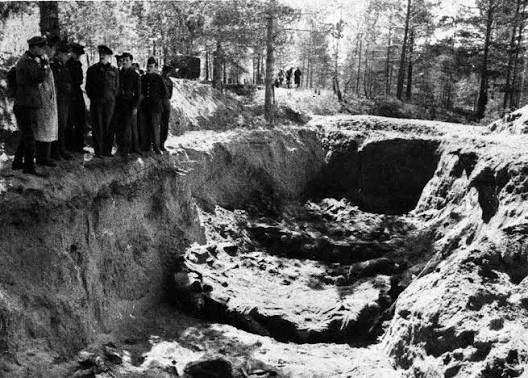
    In April 1943, German soldiers advancing through the Smolensk region stumbled upon a horror that would haunt the twentieth century. In the Katyn Forest, they found mass graves filled with the bodies of Polish officers, their hands bound, each shot in the back of the head. The discovery set off a propaganda war between two totalitarian regimes, each eager to pin the atrocity on the other. But the truth, buried for fifty years, pointed to a crime ordered by Joseph Stalin himself.

    The Forest and the Graves

    The Katyn Forest, a quiet expanse of birch and pine near the Russian city of Smolensk, became the silent witness to one of the largest single massacres of World War II. In the spring of 1940, Soviet secret police—the NKVD—executed nearly 22,000 Polish prisoners of war and civilians. Most were military officers, but the dead also included intellectuals, police officers, and clergy. They were shot in the back of the head in soundproofed rooms, loaded onto trucks, and buried in layered pits, their bodies stacked like cordwood.

    The victims came from three main POW camps: Kozelsk, Starobelsk, and Ostashkov. The largest group, about 8,000 to 8,500 officers, was held at Kozelsk. Families back in Poland received no word of their fate; they were simply told the men had been moved to unknown locations. Many assumed their loved ones were still alive in Soviet camps, unaware that the NKVD had already carried out the executions.

    The Order and Its Rationale

    The decision to murder these men was not the act of a rogue commander but a deliberate policy approved at the highest level of the Soviet state. On March 5, 1940, NKVD chief Lavrentiy Beria submitted a formal note to the Politburo, recommending the execution of the Polish prisoners. He described them as “hardened and uncompromising enemies of Soviet power” who posed a permanent threat—potential leaders of a future Polish resistance or an Allied-backed army. The Politburo approved unanimously, and Stalin signed the order.

    The executions took place over several weeks in April and May 1940. In Katyn, and at two other sites—Kalinin (now Tver) and Kharkiv—the NKVD carried out the killings with brutal efficiency. The selection of Katyn was deliberate: the forest’s remoteness made it easy to conceal the crime.

    The Nazi Discovery and the Propaganda War

    For three years, the massacre remained a secret. Then, in April 1943, German forces occupying the region discovered the graves. They immediately announced the find, inviting international forensic experts, including a delegation from the Polish Red Cross, to examine the site. The Germans used the discovery as a propaganda weapon against the Soviet Union, broadcasting details to the world.

    The Soviet response was swift and indignant. They accused the Germans of committing the atrocity themselves, claiming the Nazis had occupied the area in 1941 and killed the prisoners then. To bolster their case, the Soviets broke diplomatic relations with the Polish government-in-exile in London when it requested an investigation by the International Red Cross—a move that only deepened Polish suspicions.

    In 1944, after Soviet forces recaptured the region, a Soviet-led commission headed by Nikolai Burdenko concluded that the Germans were guilty. This version—the “Burdenko Commission” report—became the official Soviet narrative, taught in schools and repeated in histories for decades. The Nazis, for their part, were no less cynical; Joseph Goebbels used the massacre to stoke anti-Soviet sentiment, but his propaganda machine had no interest in the truth.

    The Cover-Up That Lasted Half a Century

    The lie held for nearly fifty years. During World War II, the Western Allies, knowing the Soviets were guilty, chose to suppress the issue to maintain unity against Germany. Winston Churchill privately admitted Soviet responsibility but publicly avoided the topic. At the Nuremberg Trials in 1945-46, the Soviets included Katyn in their indictment against German defendants, but the prosecution’s case collapsed when the defense produced evidence pointing to Soviet guilt. The tribunal never ruled on the matter.

    For Poles, Katyn became a symbol of Soviet oppression—a wound that festered through the Cold War. The Polish government-in-exile and later the anti-communist opposition kept the memory alive, but the official Soviet line remained unchanged.

    Acknowledgment and Its Limits

    The truth finally emerged with the collapse of the Soviet Union. In April 1990, Soviet President Mikhail Gorbachev formally admitted Soviet responsibility and handed over documents to Polish President Wojciech Jaruzelski. Two years later, Russian President Boris Yeltsin released the key archival documents, including the Beria note, confirming Stalin’s personal involvement.

    In 2010, the Russian State Duma officially recognized the massacre as a Stalinist crime. But the acknowledgment has been partial and fraught. In 2015, Russia’s Investigative Committee closed the case without naming any perpetrators as defendants. And in 2022, Russia’s Supreme Court refused to recognize the massacre as a crime against humanity, citing the “rehabilitation” of its perpetrators. The echoes of the Katyn lie persist in Russia’s official memory.

    The Weight of the Dead

    The Katyn massacre remains one of the most brutal chapters of World War II—a crime that was not only hidden but deliberately blamed on the enemy. For Poland, the massacre and its cover-up shaped national identity and memory. The 2010 Smolensk air disaster, which killed Polish President Lech Kaczyński and 95 others en route to a Katyn memorial ceremony, deepened the trauma. The forest at Katyn, once a place of death, now stands as a cemetery and a reminder of what happens when power is wielded without accountability.

    The Katyn massacre is a case study in the mechanics of denial. For fifty years, a lie was maintained by a superpower, and the truth was sacrificed for political expediency. The dead, however, could not be silenced forever. Their memory, kept alive by families and historians, finally forced the world to confront the crime. Yet the recent rulings in Russia show that the battle over history is never truly over. Katyn stands as a permanent warning: when a state commits atrocity and blames another, the truth may be delayed, but it cannot be buried forever.

    Summary

    • In spring 1940, the Soviet NKVD executed approximately 21,857 Polish prisoners of war and civilians, including officers, intelligentsia, police, and clergy, at Katyn and other sites.
    • The executions were authorized by the Soviet Politburo on March 5, 1940, on the recommendation of NKVD chief Lavrentiy Beria, and signed by Stalin.
    • The massacre was discovered by German forces in April 1943, who used it for propaganda; the Soviets blamed the Nazis, a lie maintained until 1990.
    • The Soviet cover-up collapsed with Gorbachev’s 1990 admission and Yeltsin’s 1992 release of key documents.
    • Russia’s recent legal rulings have refused to recognize the massacre as a crime against humanity, leaving the legacy of the crime contested.

    FAQ

    Q: Who ordered the Katyn massacre?
    A: The executions were ordered by the Soviet Politburo on March 5, 1940, on the recommendation of NKVD chief Lavrentiy Beria, and signed by Joseph Stalin.

    Q: How many people were killed?
    A: Approximately 21,857 Polish prisoners of war and civilians were executed, with the largest group—around 8,000 to 8,500 officers—killed at Katyn.

    Q: Why did the Soviets blame the Nazis?
    A: The Soviet government denied responsibility for decades, claiming the Germans committed the massacre in 1941. This false narrative was maintained officially to avoid political fallout and was reinforced by the 1944 Burdenko Commission.

    Q: When did the Soviet Union admit guilt?
    A: In April 1990, Soviet President Mikhail Gorbachev formally admitted Soviet responsibility and handed over documents to Polish President Wojciech Jaruzelski.

    Q: What is Russia’s current position on Katyn?
    A: In 2010, the Russian State Duma recognized the massacre as a Stalinist crime, but in 2015 the Investigative Committee closed the case without naming perpetrators, and in 2022 the Supreme Court refused to recognize it as a crime against humanity.

  • Even If Hamas Disarms, Gaza’s Hardest Battle Will Be Accountability

    Even if Hamas disarms, the challenge in Gaza will be accountability

    The guns may fall silent, but the harder question will remain: who answers for the dead? As ceasefire negotiations in late 2025 hinge on Hamas surrendering its weapons, the deeper challenge of post-conflict Gaza is not just disarmament but accountability. Without a mechanism to address war crimes on both sides, the cycle of violence that has defined Gaza for decades is likely to repeat. This article explores the thorny issue of accountability, why it’s being postponed, and what models might offer a path forward.

    The Disarmament Dilemma

    Hamas’s conditional willingness to disarm in exchange for a ceasefire has been a central pillar of every major peace framework floated by Qatar, Egypt, and the US. Yet even if that happens, it would only solve the military question. The deeper, more intractable problem is accountability. Over 45,000 Palestinians have died in the Israeli campaign that followed Hamas’s October 7, 2023 attack, which killed about 1,200 Israelis and took 250 hostages. Those numbers cry out for justice, but no formal mechanism—no tribunal, no truth commission, no reparations framework—has been established for either side.

    Why Accountability Keeps Getting Postponed

    The logic of “pragmatic sequencing” has dominated diplomatic efforts. The argument goes: first secure a ceasefire, deliver humanitarian aid, and stabilize the security situation. Justice can come later. This was the approach in the Dayton Accords for Bosnia, where war criminals remained in power for years to ensure peace. But the risk is that “later” never comes, and grievances fester. In Gaza, each prior round of conflict—2008-09, 2012, 2014, 2021—ended with ceasefires but no accountability, and violence returned with greater intensity.

    The ICC as a Flashpoint

    The International Criminal Court has issued arrest warrants in May 2024 for Hamas leaders and Israeli Prime Minister Benjamin Netanyahu and Defense Minister Yoav Gallant, alleging war crimes including starvation as a method of warfare. But the ICC’s reach is limited. The US has shielded Israel from ICC jurisdiction, and neither Israel nor Hamas recognizes the court’s authority. The warrants are symbolic, not operational. They set a precedent but offer no immediate avenue for justice in Gaza itself.

    Models from History: What Could Work?

    History offers contrasting templates. South Africa’s Truth and Reconciliation Commission prioritized restorative justice over punishment, allowing victims to confront perpetrators in exchange for amnesty. The Nuremberg Trials imposed punitive justice on defeated leaders. Rwanda’s gacaca courts engaged local communities in judging lower-level perpetrators. None maps neatly onto Gaza, where the power imbalance between Israel and Hamas is immense, and the international community is deeply divided.

    The Palestinian Authority’s Credibility Gap

    The PA, slated to play a central role in post-war governance, is itself a problem. Polls show a majority of Palestinians want President Abbas to resign. Its historical corruption and human rights abuses, documented by Amnesty International and HRW, went unaddressed under the Oslo framework, eroding any trust in its ability to deliver accountability. A post-war PA that cannot offer justice will be seen as a collaborator, not a liberator.

    Structural Accountability: Beyond Individual Guilt

    Some argue that individual criminal accountability is less important than addressing the structural conditions that enabled the conflict: the blockade, occupation, settlement expansion, and the collapse of the two-state framework. In this view, accountability should focus on institutional reform, economic justice, and ending the siege. Without such structural change, any tribunal would be a band-aid on a festering wound.

    The Road Ahead: No Easy Answers

    There are no easy answers. Demanding accountability upfront makes negotiations impossible—neither Hamas nor Israeli leadership can agree to terms that would see them prosecuted. But deferring it indefinitely risks rewarding violence and delegitimizing any new government. The international community remains divided, with the US shielding Israel and the Global South pushing for UN mechanisms. As the dust settles, the challenge will be to build a process that acknowledges victims on both sides, addresses structural drivers, and offers a credible path to justice—without which the next round of violence is all but certain.

    Disarming Hamas is only the beginning. The harder task is building a system of accountability that can break the cycle of violence. Without it, the dead will have no voice, and the living will have no reason to believe that peace is possible. The world must find a way to deliver justice not just for one side, but for all victims—or watch Gaza burn again.

    Summary

    • Accountability mechanisms for war crimes on both sides are absent, risking future cycles of violence.
    • The ICC has issued warrants for Hamas and Israeli leaders, but they are symbolic and lack enforcement.
    • Historical models like South Africa’s TRC and Nuremberg offer different approaches, but none fit Gaza’s complex power imbalance.
    • The Palestinian Authority’s credibility crisis undermines its role in post-war governance and accountability.
    • Structural accountability addressing blockade, occupation, and economic injustice is as important as individual criminal justice.

    FAQ

    Q: Why hasn’t there been a war crimes tribunal for Gaza?
    A: No formal mechanism has been established due to political divisions, the US shielding Israel, and the practical difficulty of prosecuting both state and non-state actors. The ICC has issued warrants but lacks enforcement power.

    Q: Can Hamas disarm and still be held accountable?
    A: In theory, yes, but Hamas leadership views accountability for October 7 as a non-starter for survival. Any post-war government that tries to prosecute Hamas faces potential backlash or renewed violence.

    Q: What role can the Palestinian Authority play in accountability?
    A: The PA’s role is complicated by its unpopularity and historical failures. To be credible, it would need to reform itself and demonstrate a commitment to justice, which seems unlikely given its current leadership.

    Q: Is accountability a precondition for peace?
    A: Some argue yes, that without justice, grievances will fester. Others argue for sequencing: first peace, then accountability. History shows that delay often leads to no accountability at all, perpetuating cycles of violence.

    Q: What could a realistic accountability process look like?
    A: A hybrid model could include a truth commission to document abuses, reparations for victims, and targeted prosecutions for the most serious crimes, combined with structural reforms to address the blockade and occupation. But such a process requires international support and political will that is currently lacking.