Tag: voice search

  • The Long Tail Is Getting Longer: What 4+ Word Queries Mean for Search

    The Long Tail Is Getting Longer: What 4+ Word Queries Mean for Search

    In the entertainment category, search queries of four or more words grew by 62.1% in a recent analysis. That’s not a minor blip—it’s a signal that how people search is fundamentally changing. These long-tail queries, once the quiet backwater of SEO, now dominate search volume and convert at rates head terms can’t touch.

    But what’s driving this growth? And what does it mean for businesses, marketers, and anyone trying to be found online? The answers lie in the intersection of voice search, smarter algorithms, and a user base that’s getting more specific about what they want.

    What Exactly Is a Long-Tail Query?

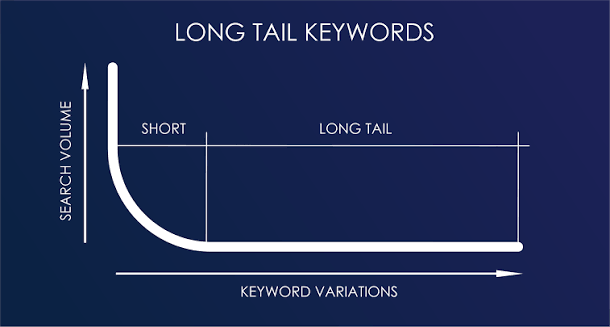
    A long-tail query is a search phrase with at least four words. Think “best noise-cancelling headphones under $100 for commuting” versus “headphones.” The former is a long-tail query; the latter is a head term.

    These phrases are highly specific, which means they capture precise user intent. Someone typing that long query isn’t just browsing—they’re comparison shopping with a budget and a use case in mind. That specificity is why long-tail queries convert at two to three times the rate of generic head terms.

    They also make up the bulk of all searches. Industry estimates put long-tail queries at 70–80% of total search volume on major engines. Each individual query might get only a handful of searches a month, but together they form a massive aggregate.

    Why the Sudden Surge?

    The 62.1% jump in entertainment long-tail queries isn’t happening in a vacuum. Several forces are at play.

    Voice Search Changes the Game

    Voice search is a primary driver. When people talk to their phones or smart speakers, they naturally use full sentences. The average voice query runs four to six words, compared to two or three for typed searches. Ask your assistant “what’s the best way to remove red wine stains from a white shirt?” and you’ve just issued a long-tail query.

    Smarter Search Engines

    Google’s algorithm shifts—Hummingbird in 2013, BERT in 2019, MUM in 2021—moved the engine from matching keywords to understanding intent. That makes long-tail queries easier to rank for, because the engine now parses meaning rather than exact word matches. A page that answers the intent behind “movies like Inception on Netflix” can rank even if it never uses that exact phrase.

    Users Get More Sophisticated

    Users are also getting better at searching. Instead of fragmented keywords like “wine stain removal,” they type or speak full questions: “what’s the best way to remove red wine stains from a white shirt?” This behavior shift is especially pronounced in entertainment, where the explosion of streaming platforms has fragmented content across dozens of services. People don’t just search for “movies”—they search for “movies like Inception on Netflix” or “best sci-fi series on Hulu 2024.”

    What This Means for SEO and Content Marketing

    For anyone trying to attract organic traffic, long-tail queries are a low-competition, high-conversion opportunity. Because these queries are so specific, they face less competition than head terms. A small blog can rank for “best budget espresso machine for beginners” when it couldn’t touch “espresso machine” in a million years.

    The catch is volume. Each long-tail query attracts few searches, so you need a portfolio of many pages targeting many different long-tail phrases. That means building out FAQ sections, blog posts, and product pages that answer specific questions.

    But the payoff goes beyond rankings. Long-tail queries reveal what your audience actually cares about. Analyzing them can uncover pain points and micro-intents that inform product development and content strategy. If you see a surge in “how to fix a leaky faucet without a plumber,” you know there’s a market for DIY repair guides.

    Not All Long-Tail Queries Are Informational

    A common misconception is that long-tail queries are always informational—people asking questions. But many are transactional or navigational. “Buy organic dog food 20lb bag free shipping” is a long-tail query with clear purchase intent. “YouTube app update for Samsung TV 2024” is navigational, searching for a specific update.

    Understanding the intent behind your target queries is crucial. An informational query might call for a blog post; a transactional one might call for a product page with a strong call-to-action.

    The Entertainment Example: Fragmentation Drives Specificity

    The 62.1% growth in entertainment is a textbook case. With streaming services multiplying, users face an overwhelming array of choices. They don’t just search for “what to watch”—they search for “movies like Inception on Netflix” or “best Korean dramas on Amazon Prime 2024.”

    The content libraries are fragmented, so users need help navigating. This drives long-tail queries as people seek specific recommendations, plot details, or release dates.

    A Note of Caution: Don’t Overhype the Numbers

    While the growth is real, some skepticism is warranted. The 62.1% figure comes from a single analysis and may not be generalizable. Different categories grow at different rates; entertainment is outpacing finance or B2B, for instance. Always check the source and methodology before acting on such data.

    Also, the growth is partly an artifact of search engines’ improved understanding. As algorithms get better at classifying queries, they may label more queries as “long-tail” even if user behavior hasn’t shifted. And while individual long-tail queries have less competition, the aggregate competition is fierce—Google’s quality algorithms favor authoritative sites even for niche queries.

    The Bottom Line for Your Strategy

    Long-tail queries are not a new phenomenon, but their importance is growing. They’ve existed since search began; what’s new is their share of total queries and the tools to track them.

    For businesses and content creators, the message is clear: specific beats generic. Target the questions your audience is actually asking. Build content that answers those questions thoroughly. And don’t ignore the transactional long-tail—those queries convert.

    Voice search will only accelerate this trend. As more people talk to their devices, queries will get longer and more conversational. The long tail is getting longer, and those who adapt will reap the rewards.

    The 62.1% growth in entertainment long-tail queries is more than a statistic—it’s a reflection of how search has evolved. Users are more specific, engines are smarter, and voice is changing the game. For anyone looking to be found online, the path forward is clear: embrace the long tail, answer real questions, and let specificity be your guide.

    Summary

    • Long-tail queries (4+ words) account for 70–80% of all searches and convert at 2–3x the rate of head terms.
    • Growth in entertainment (+62.1%) is driven by voice search, smarter algorithms, and fragmented streaming content.
    • Long-tail queries are low-competition but require a portfolio approach to capture aggregate volume.
    • Intent varies: long-tail can be informational, transactional, or navigational.
    • Treat growth figures with caution—they’re category-specific and partly an artifact of improved search classification.

    FAQ

    Q: What is a long-tail query?
    A: A search phrase with four or more words, like “best noise-cancelling headphones under $100 for commuting.” It’s highly specific and signals precise user intent.

    Q: Why are long-tail queries growing so fast?
    A: Voice search is a major driver—spoken queries are naturally longer. Also, search engines now understand intent better, making it easier to rank for these specific phrases. Users are also getting more sophisticated in how they search.

    Q: Are long-tail queries always informational?
    A: No. Many are transactional (“buy organic dog food 20lb bag free shipping”) or navigational (“YouTube app update for Samsung TV 2024”). Intent varies widely.

    Q: Does the +62.1% growth apply to all categories?
    A: No, that figure is specific to the entertainment category. Other categories may grow slower or even decline. Always check the source and methodology.

    Q: How can I target long-tail queries in my SEO strategy?
    A: Build a portfolio of content targeting specific questions and phrases—FAQ sections, blog posts, product pages. Use keyword research tools to find long-tail opportunities with manageable competition.

  • How Can I…? The Search Phrase That Reveals Our Intentions

    How Can I…? The Search Phrase That Reveals Our Intentions

    When you type “How can I” into a search bar, you’re not just asking a question you’re signaling that you’re ready to act. This tiny phrase, often spoken aloud to a voice assistant or tapped into a phone, belongs to a powerful class of queries that drive over 20% of all searches. Unlike vague informational queries, “How can I” queries are personal, urgent, and solution-seeking. They reveal a moment of frustration, curiosity, or planning, and they demand a direct answer.

    Search engines have evolved to understand this nuance. With natural language processing and machine learning, Google now treats “How can I” as a high-intent signal, often rewarding content with featured snippets and rich results. For content creators and businesses, these queries are goldmines — they attract users who are actively looking for a solution, not just browsing. But what makes these queries so special, and how can you harness them? This article unpacks the anatomy of “How can I” queries, from their psychological roots to their impact on SEO and AI.

    The Anatomy of a “How Can I” Query

    “How can I” queries are a subset of “how-to” searches, but they carry a distinct flavor. The first-person pronoun “I” makes the query personal. When someone asks “How can I fix a leaky faucet?”, they’re not looking for a generic plumbing guide — they want a solution they can apply right now, in their own home. This personal framing often means the user has already tried something and failed, or they’re facing a specific obstacle.

    Search intent researchers categorize these queries into several subtypes:

    • Procedural: “How can I change a tire?” — a step-by-step process.
    • Troubleshooting: “How can I fix my Wi-Fi?” — a diagnostic problem.
    • Advisory: “How can I improve my resume?” — strategic advice.
    • Exploratory: “How can I get into coding?” — a career or lifestyle change.

    Each subtype requires a different content approach. A procedural query needs numbered steps; a troubleshooting query needs a decision tree or common causes; an advisory query needs expert opinions and examples; an exploratory query needs a roadmap and encouragement.

    Why “How Can I” Triggers Featured Snippets

    Google loves these queries because they have clear intent. When a user asks “How can I…”, the search engine knows they want a direct answer, not a sales page or a scholarly article. That’s why “How can I” queries often trigger featured snippets — the box at the top of search results that gives an instant answer. According to industry studies, how-to content is among the most likely to win these snippets, especially when the content is formatted as a concise list or a short paragraph.

    To capture a featured snippet, your content must directly answer the query in a structured way. For example, if someone searches “How can I remove a stain from a shirt?”, a snippet might show: “Mix one part white vinegar with two parts water, apply to the stain, let sit for 10 minutes, then blot with a clean cloth.” The key is clarity and brevity.

    The Mobile and Voice Search Boom

    Mobile searches for “how to” have doubled in recent years, and voice search has accelerated this trend. When you speak to Siri or Google Assistant, you naturally use full sentences: “Hey Siri, how can I get rid of fruit flies?” Voice queries are longer and more conversational than typed ones, and “How can I” fits perfectly into this pattern.

    This has profound implications for content optimization. If you’re targeting “How can I” queries, you need to write in a natural, spoken style. Use conversational language, answer follow-up questions, and structure content for quick consumption. Voice search users often want immediate, actionable answers, so get to the point fast.

    The Psychology Behind the Phrase

    The phrasing “How can I” implies agency and possibility. It suggests the user believes a solution exists and is searching for the path. This positive framing contrasts with queries like “Why doesn’t…” or “What causes…”, which are more analytical. “How can I” is action-oriented — it’s a request for a method.

    But it also carries emotional weight. Many “How can I” queries arise from frustration (“How can I stop my dog from barking?”) or anxiety (“How can I reduce my mortgage payments?”). Understanding this emotional context can help content creators empathize with their audience. If someone is frustrated, they want a quick fix, not a lengthy theory. If they’re planning, they want options and comparisons.

    Content Strategy for “How Can I” Queries

    If you’re creating content to rank for these queries, there are proven tactics:

    1. Answer the question directly. Put the answer at the top of your page, not buried after a long intro. Use a clear heading that mirrors the query.
    2. Use structured data. While Google deprecated HowTo markup, FAQ and Q&A markup can still help you appear in rich results.
    3. Target long-tail variations. “How can I” queries are often long-tail, meaning they have low competition and high conversion. For example, “How can I fix a broken zipper” is more specific and easier to rank for than “zipper repair.”
    4. Include step-by-step instructions. Break down the solution into numbered steps. This is not only user-friendly but also aligns with Google’s preference for clear, scannable content.
    5. Add visuals. Screenshots, diagrams, or videos can dramatically improve user engagement, especially for procedural tasks.

    One caution: avoid over-optimizing for every possible “How can I” variation. Focus on the queries that match your audience’s actual needs and your content’s genuine expertise. Google’s algorithms are sophisticated enough to detect keyword stuffing, and users will bounce if your content doesn’t deliver.

    AI Assistants and the Future of “How Can I” Queries

    ChatGPT and other large language models handle “How can I” queries exceptionally well. They generate step-by-step instructions, offer troubleshooting advice, and even provide personalized recommendations. This has created a new frontier: many users now bypass traditional search engines and ask AI assistants directly.

    This shift is reshaping SEO. Instead of optimizing for a single query, you may need to optimize for AI’s training data. That means creating authoritative, well-structured content that an LLM would cite or summarize. It also means being aware of AI’s limitations — for dangerous or niche tasks, AI can hallucinate inaccurate steps. This is a growing concern, especially in medical, legal, and safety-critical domains.

    For now, the best strategy is to produce high-quality content that answers questions accurately. Whether a user finds you through Google or an AI, your content’s value will shine through.

    Cultural and Linguistic Variations

    “How can I” is not the only way to ask. In different contexts, users might say “How do I,” “What’s the best way to,” or “Can you show me.” Each phrasing carries subtle differences. “How do I” is more direct and procedural, while “How can I” suggests a search for possibilities. In some cultures, “How can I” might be more polite or hesitant.

    For international audiences, these nuances matter. A query that works in American English might not translate directly. Localizing your content for different regions means adapting the language, not just translating it.

    The Bottom Line for Marketers and Creators

    “How can I” queries are a window into your audience’s immediate needs. They reveal what people are struggling with, planning for, or curious about. By addressing these queries with clear, actionable content, you can attract high-intent traffic, build trust, and position yourself as a helpful resource.

    Remember, the goal is not to trick search engines but to genuinely help users. When you answer a “How can I” query effectively, you’re not just earning a click — you’re solving a problem. That’s the kind of content that earns shares, links, and loyal readers.

    The next time you type “How can I” into a search bar, notice the intent behind it. You’re not just looking for information — you’re looking for a path forward. For creators and marketers, these queries are opportunities to be that path. By understanding the psychology, the search behavior, and the content formats that work, you can turn a simple question into a meaningful connection.

    Summary

    • “How can I” queries are a subset of how-to searches, characterized by high intent to act and personal framing.
    • They often trigger featured snippets, especially when content is structured as clear, concise steps.
    • Mobile and voice search have accelerated the use of conversational queries like “How can I”.
    • These queries come in subtypes (procedural, troubleshooting, advisory, exploratory) that require tailored content approaches.
    • AI assistants are increasingly answering these queries, making authoritative content more important than ever.

    FAQ

    Q: What is the difference between “How can I” and “How do I”?
    A: “How do I” is more direct and procedural, often asking for a specific method. “How can I” implies searching for possibilities or advice, and may indicate the user has already tried something or is facing an obstacle.

    Q: Why do “How can I” queries often show up in featured snippets?
    A: Because these queries have clear, actionable intent, Google prioritizes content that directly answers them with concise, structured steps. A well-optimized page can earn a featured snippet by providing a direct answer at the top.

    Q: How can I optimize my content for “How can I” queries?
    A: Answer the question directly at the top, use step-by-step instructions, add visuals, target long-tail variations, and use FAQ/structured data where appropriate. Avoid over-optimization and focus on genuinely helpful content.

    Q: Are voice searches more likely to use “How can I” phrasing?
    A: Yes, because voice queries mirror natural spoken language, and “How can I” is a common conversational phrase. This means optimizing for voice search often involves answering these queries in a direct, spoken style.

    Q: Can AI assistants like ChatGPT replace traditional search for these queries?
    A: They are increasingly used for “How can I” queries because they generate conversational, step-by-step answers. However, they can hallucinate inaccurate steps, especially for niche or dangerous tasks, so a careful user may still verify with traditional search results.

  • The New Shopper’s Mantra: How ‘Find a Product for My Problem’ Is Rewriting Search

    The New Shopper’s Mantra: How ‘Find a Product for My Problem’ Is Rewriting Search

    The days of typing ‘best blender’ into a search bar and hoping for the best are fading. Today, shoppers are more likely to ask, ‘What blender can crush ice without adding liquid?’ or ‘Is there a vacuum for pet hair that doesn’t clog?’ This shift from generic product searches to problem-oriented queries marks a fundamental change in how we shop online.

    This evolution is driven by smarter search engines, the rise of voice assistants, and a growing distrust of generic top-10 lists. Instead of hunting for a product, modern shoppers hunt for a solution. They want a tool that fits their exact constraints—budget, space, dietary needs, or use case—not a one-size-fits-all recommendation.

    For brands and retailers, this is both a challenge and an opportunity. Those who adapt to problem-based search will capture high-intent traffic; those who don’t risk becoming invisible in a sea of tailored results.

    The Query That Changed Everything

    Back in 2010, a typical search looked like “best running shoes.” By 2018, it had become “best running shoes for flat feet with ankle support.” Today, it’s “how to find running shoes for overpronation that don’t cause knee pain.” Each shift represents a deeper layer of specificity—and a clearer expression of the shopper’s underlying problem.

    This isn’t just a quirk of language. It’s a response to information overload. With millions of products and endless reviews, generic “best” lists no longer provide useful guidance. They don’t account for the fact that the best blender for a smoothie enthusiast is useless to someone who primarily crushes ice. Shoppers have learned that the only way to cut through the noise is to define their problem precisely.

    Why Generic Searches Fail

    Generic searches fail because they treat all shoppers as identical. A “best laptop” query might surface a powerful gaming machine that’s terrible for a student who needs all-day battery life. The shopper then has to wade through dozens of options, reading specs and reviews, to find what actually fits. This is exhausting—and increasingly unnecessary.

    Search engines now understand this. Google’s BERT and MUM updates, rolled out from 2019 to 2021, allowed the algorithm to parse natural language and intent. When you type “how to find a blender for crushing ice without liquid,” Google knows you’re looking for a specific capability, not just any blender. It serves up results that directly address the problem, often featuring long-form guides and niche reviews.

    The Rise of Voice Search

    Voice assistants have accelerated this trend. When people talk to Alexa or Siri, they speak in full sentences: “Hey Siri, what’s a good vacuum for pet hair that won’t clog?” This conversational phrasing is now the norm in text search too. About 50% of all searches are predicted to be voice-based by 2025–2027, according to industry estimates. That means the problem-oriented query isn’t a passing fad—it’s the future.

    Voice search also forces a shift in how content is written. Instead of targeting keywords like “best vacuum,” brands must answer questions directly and conversationally. The winners will be those who create content that addresses specific problems with clear, concise solutions.

    The Trust Factor

    Generic reviews have lost their luster. Fake reviews and sponsored content have eroded trust in ratings. Shoppers now seek validation from communities like Reddit and Quora, where real people share real experiences. The language of these forums—”Has anyone found a [product] that works for [specific issue]?”—has migrated directly into search queries.

    This has profound implications for brands. A product may solve a problem, but if its marketing speaks in generic terms, it won’t be discovered. Conversely, a brand that publishes a guide titled “How to Choose a Blender for Crushing Ice” and actually addresses the mechanics of ice crushing will attract high-intent shoppers who are ready to buy.

    How Retailers Are Adapting

    Smart retailers are redesigning their sites to mimic problem-based search. Advanced filters now let shoppers narrow by attribute: “for sensitive skin,” “for small spaces,” “for high-mileage runners.” This is an attempt to bridge the gap between the shopper’s mental model and the retailer’s product taxonomy.

    Some marketplaces are going further. Amazon’s A9 algorithm increasingly rewards relevance to the stated problem, not just keyword density. And niche sites like Wirecutter have pivoted from “best overall” to “best for [specific use case]”—a direct response to this evolution.

    The Consumer’s New Power

    For shoppers, this shift is empowering. You no longer have to settle for a product that’s “good enough.” You can articulate your exact need and find a solution that fits. But there’s a downside: analysis paralysis. If your problem is too niche, you might find only a handful of options—or none at all. Then you’re left wondering if the product even exists.

    In those cases, the search engine often does a better job than the retailer’s own site. A well-tuned Google query can surface a forum thread or a blog post that mentions a product you’d never have found otherwise. This is why content marketing is so important for brands: it’s often the only way to reach shoppers who don’t know your product exists.

    The Brand Challenge

    Brands face a unique challenge. Product names and categories often lag behind consumer language. A company might market a “high-speed blender” when shoppers are searching for “ice crusher.” The disconnect means lost traffic and lost sales.

    There’s also the risk of over-fragmenting your message. If you create a separate landing page for every possible problem, you dilute your brand and confuse broader audiences. The key is to find the sweet spot: create problem-specific content for the most common use cases, and ensure your product pages use language that mirrors how people actually talk.

    The Role of Generative AI

    Tools like ChatGPT and Perplexity are changing the game again. Instead of wading through search results, shoppers can ask an AI for a direct answer: “What blender should I buy to crush ice without liquid?” The AI scans the web and synthesizes a personalized response.

    This forces brands to optimize for “answer engines” as well as search engines. Content that is clear, factual, and well-structured is more likely to be cited by AI. And since AI’s answers are often conversational, the problem-oriented query becomes even more important.

    What This Means for the Future

    The evolution of the shopper is not about technology—it’s about expectations. Consumers have been trained by recommendation engines like Amazon and Netflix to expect tailored results. That expectation now extends to all of shopping.

    For brands, the message is clear: stop selling products, start solving problems. Create content that addresses specific pain points, use language that reflects how your customers talk, and design your site to meet them where they are—with a problem, not a product category.

    For shoppers, the future is bright. The search engine is becoming a personal shopping assistant, one that understands your constraints and finds solutions that fit. The days of settling for “good enough” are over. The era of the problem-driven shopper has arrived.

    The way we search for products has transformed. We no longer ask “What’s the best?”—we ask “What solves my problem?” This shift is powered by smarter search engines, the rise of voice, and a collective demand for relevance. Brands that adapt will thrive; those that don’t will fade into obscurity. As for shoppers, they’ve never been more empowered to find exactly what they need, down to the last detail.

    Summary

    • Search queries have shifted from generic (“best blender”) to problem-oriented (“blender for crushing ice without liquid”)
    • Long-tail queries now account for ~70% of all web searches, and voice search is expected to hit 50% by 2025–2027
    • Google’s BERT and MUM updates enable search engines to understand intent, not just keywords
    • Shoppers trust problem-specific content from communities and niche reviewers more than generic ratings
    • Retailers are adding filters and solution hubs to match problem-based search
    • Brands must create content that speaks to specific problems to remain discoverable

    FAQ

    Q: Why are generic product searches less effective now?
    A: Generic searches like “best laptop” ignore individual needs—budget, use case, preferences. They return broad lists that require extra filtering. Problem-based queries (“laptop for video editing under $1000”) yield results that directly match the shopper’s specific situation.

    Q: How has voice search influenced this shift?
    A: Voice assistants encourage full-sentence queries, which naturally include problem descriptions. As voice search grows—projected to reach 50% by 2025–2027—shoppers become accustomed to phrasing searches as questions, further entrenching problem-based language.

    Q: What can brands do to adapt?
    A: Brands should create content that addresses specific problems (e.g., guides, FAQs) and use customer language in product descriptions. They should also consider dynamic landing pages that align with the user’s query intent.

    Q: How does AI, like ChatGPT, affect product searches?
    A: AI chatbots provide direct, synthesized answers, bypassing traditional search results. Brands must optimize content for AI citation by making it clear, factual, and well-structured.

    Q: Are there downsides to problem-based searching?
    A: It can lead to analysis paralysis if the problem is too niche and products are scarce. Also, not all retailers optimize for this, so sometimes the search engine provides better results than the retailer’s own site.

  • How Do I… The Rise of Action-Oriented Search Queries in Finance

    How Do I… The Rise of Action-Oriented Search Queries in Finance

    When someone types “How do I open a Roth IRA?” into Google, they’re not just looking for information they’re looking for a step-by-step path to action. This type of query, known as an action-oriented or transactional search, has become increasingly common in finance. Unlike the older informational queries like “What is a bond?” which seek knowledge, these commands ask the search engine to help complete a task.

    This shift reflects broader changes in how people manage money: the rise of mobile devices, the growth of self-service fintech tools, and a generational preference for doing things yourself. As search engines and AI assistants get better at understanding natural language, the line between searching and doing is blurring. This article explores what action-oriented queries are, why they’ve grown, and what they mean for consumers and the financial industry.

    What Are Action-Oriented Queries?

    Action-oriented queries are search phrases that function as direct requests or commands. They often start with “How do I…”, “Make me…”, or “Find me…”. In finance, examples include:

    • “How do I invest in index funds?”
    • “Make me a budget spreadsheet”
    • “Find me the best high-yield savings account”

    These sit alongside two other classic query types. Informational queries seek knowledge (e.g., “What is an ETF?”), while navigational queries aim to locate a specific website (e.g., “Vanguard login”). Action-oriented queries are distinct because they imply a desire to complete a task, not just learn about it.

    The Growth of Action-Oriented Search

    Action-oriented queries have grown significantly in recent years, driven by several factors. First, the rise of voice search has changed how people phrase queries. Studies show that voice searches are 3 times more likely to be full questions or commands than typed searches. When you speak to a phone or smart speaker, you naturally say, “Hey Siri, how do I transfer money to my brokerage?” instead of typing “transfer money brokerage”.

    Second, the mobile-first behavior means users often search on the go and want immediate, executable answers. They’re not sitting at a desk researching for hours; they’re on a bus, wondering how to start saving for retirement.

    Third, the rise of self-service finance—fintech apps like Robinhood, Chime, and TurboTax—has made DIY finance the norm. Users expect to complete tasks entirely online without talking to a human advisor. The search query is often the first step in that process.

    Finally, generational change plays a role. Millennials and Gen Z are more likely to search for “how to” content than to read long-form educational articles. They prefer actionable, step-by-step guidance.

    The Role of Search Engines and AI

    Search engines have adapted to this trend. Google’s algorithm updates, such as BERT and MUM, have improved natural language understanding, allowing the engine to parse conversational, action-oriented phrasing. This is why you now see featured snippets and “People Also Ask” boxes that provide step-by-step answers to queries like “How do I consolidate debt?”

    AI chatbots have accelerated the shift. Users now ask ChatGPT or Perplexity things like “Make me a debt payoff plan” and receive a customized output—no search results page needed. This represents a fundamental change: instead of searching for information and then acting, the AI can guide the user through the action in real time.

    The Consumer Empowerment Angle

    Action-oriented search democratizes financial knowledge. A person with no prior investing experience can go from “How do I start investing?” to a funded brokerage account in under an hour. This is especially valuable for underserved groups—low-income individuals, first-generation investors, or non-native English speakers—who may lack access to traditional financial advisors.

    For example, a query like “How do I file taxes for free?” can lead a user to IRS Free File or a nonprofit tax assistance program, saving them hundreds of dollars. This type of direct, actionable information was harder to find before the rise of action-oriented content.

    The Financial Industry and Marketing Perspective

    For banks, brokerages, and fintechs, action-oriented queries represent high-intent leads. A user asking “How do I open a CD?” is much closer to opening an account than someone asking “What is a CD?” This has shifted SEO and content marketing strategies. Companies now create conversational, step-by-step guides that directly answer “how do I” questions, rather than keyword-stuffed informational articles.

    However, there’s a risk. Over-optimization can lead to generic, low-value content that doesn’t actually help users. Regulators and consumer advocates have expressed concern about content that prioritizes search rankings over genuine utility. The challenge for the industry is to create content that is both SEO-friendly and genuinely helpful.

    Privacy and Data Security Concerns

    Action-oriented queries can reveal sensitive financial intentions. For example, a search like “How do I hide money from my spouse?” could indicate marital problems, and “How do I consolidate debt?” might suggest financial distress. This data is valuable to marketers, but it also raises privacy concerns.

    Search engines and AI assistants collect vast amounts of data on these queries, which could be used for targeted advertising or even shared with third parties. Users may not realize how much they’re revealing when they type a personal financial question. This is an emerging issue that regulators are starting to examine.

    The Future of Action-Oriented Search

    As AI continues to improve, action-oriented queries will likely become even more common. We may see a shift from typing queries to speaking them, and from searching to directly asking an AI assistant to complete a task. Instead of “How do I open a Roth IRA?”, a user might say, “Open a Roth IRA for me”—and an AI could do it, if given the right permissions.

    This could further blur the line between searching and doing. For the financial industry, it means optimizing not just for search engines, but for AI systems that might recommend products or services. For consumers, it offers the promise of even more seamless financial management—though it also raises questions about trust and control.

    What This Means for You

    If you’re a consumer, understanding action-oriented queries can help you get better results from your searches. Instead of typing vague terms, try to be specific and action-focused. For example, instead of “best savings account”, search “How do I open a high-yield savings account?” This is more likely to yield step-by-step guides and direct links to sign-up pages.

    If you work in finance or content marketing, the takeaway is clear: create content that answers questions and provides actionable steps. The days of purely informational articles are numbered. Users want to know not just what something is, but how to do it.

    In short, action-oriented search is not a passing trend. It reflects a fundamental shift in how people interact with information—from passive consumption to active doing. And in finance, that shift is particularly pronounced.

    Action-oriented queries are reshaping the financial search landscape. They represent a move from passive information gathering to active task completion, driven by mobile technology, self-service finance, and AI. For consumers, this means more accessible and actionable financial guidance. For the industry, it presents both opportunities and challenges. As search continues to evolve, the divide between searching and doing may vanish entirely—and finance will be at the forefront of that change.

    Summary

    • Action-oriented queries are direct commands like “How do I open a Roth IRA?” and are distinct from informational and navigational queries.
    • They have grown due to voice search, mobile behavior, self-service fintech, and generational preferences.
    • Search engines and AI chatbots now prioritize step-by-step answers to these queries.
    • For consumers, they democratize financial knowledge, especially for underserved groups.
    • For the industry, they represent high-intent leads but also raise privacy concerns and risks of low-quality content.

    FAQ

    Q: What is an action-oriented search query?
    A: An action-oriented query is a search phrase that acts as a direct request or command, such as “How do I invest in index funds?” or “Make me a budget spreadsheet.” It implies a desire to complete a task, rather than just learn about a topic.

    Q: Why are action-oriented queries becoming more common?
    A: Several factors contribute, including the rise of voice search (which is 3x more likely to be phrased as a question), mobile-first behavior, the growth of self-service fintech tools, and a generational preference for actionable content among Millennials and Gen Z.

    Q: How do search engines handle these queries?
    A: Search engines like Google use AI algorithms (e.g., BERT, MUM) to understand natural language and provide featured snippets, step-by-step guides, and “People Also Ask” boxes that directly answer action-oriented questions.

    Q: What are the benefits of action-oriented search for consumers?
    A: It makes financial information more accessible and actionable, allowing users to go from a query like “How do I file taxes for free?” to completing the task quickly. This is especially helpful for people without access to traditional financial advisors.

    Q: What are the risks of action-oriented search?
    A: For the industry, there’s a risk of creating low-value content that’s optimized for search but not genuinely helpful. For consumers, there are privacy concerns, as these queries can reveal sensitive financial intentions. Additionally, reliance on AI-generated answers may lead to errors or oversimplification.